French explorer Jean-Louis Etienne and his crew of eight scientists this week began an expedition to the remote waters of Antarctica, where they hope to gather a wealth of data to demonstrate the benefits of creating protected areas in the icy continent's rich seas.
Issued on: 24/01/2026 - RFI
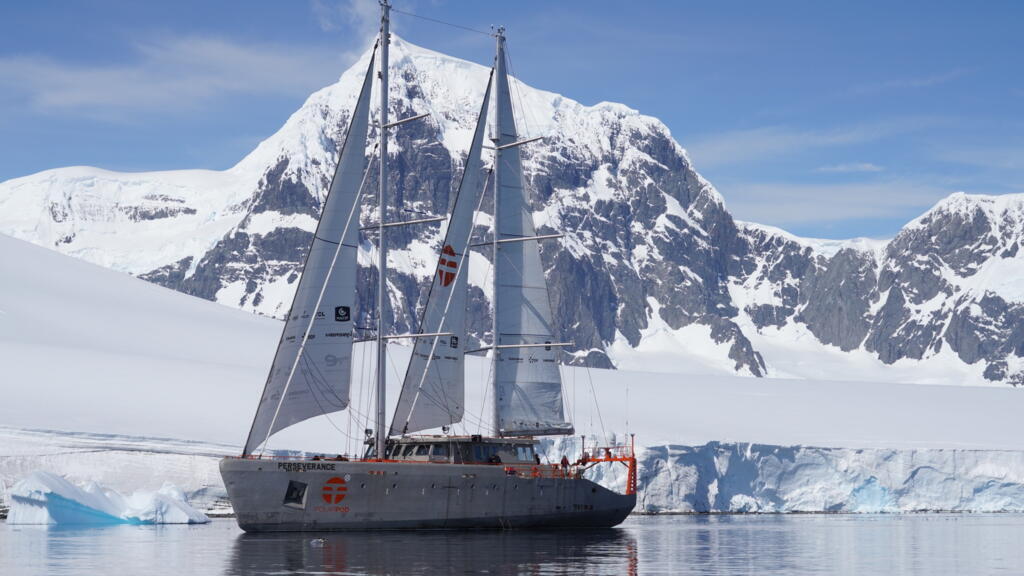
The ice-going vessel Perseverance in the waters of Antarctica, on a mission led by French doctor and explorer Jean-Louis Etienne in 2023. He set off on 20 January 2026 for a new mission to collect data on the Marine Protected Area in the Ross Sea. © 7C_Francis Latreille
01:57
01:57
By: Ollia Horton
Video by: Ollia Horton
Setting sail from Christchurch, New Zealand, on 20 January and wrapping up in Hobart, Australia, on 15 March, Etienne's Polar Pod / Perseverance crew will spend their time collecting all kinds of data from the sea, the sky, the air and the ice, using special onboard equipment.
Their main goal is to study the breeding patterns of local fauna to provide evidence for the efficacy of the marine protected area (MPA) in the Ross Sea off Antarctica, now a decade old.
Perseverance is an appropriate name for the mission – one that suggests the same patience, determination and faith that have driven Etienne's ambitious projects over the years.
At 79, the doctor and explorer has kept his spirit of adventure. It all began as a child growing up in the Tarn region of southern France, inland from the ocean, dreaming of remote snowscapes and the deep, dark waters of the Poles.
“It's another planet. There's no sign of humanity apart from the scientific stations that are there,” Etienne told RFI. “And I need deserts sometimes, even here in Paris. I need to get away from the hustle and bustle of the world for a while.”
His thirst for challenges saw him become first person to trek solo across the Arctic to the North Pole in 1986. In 1989-1990, he led an international group across Antarctica on dog sleds.
Setting sail from Christchurch, New Zealand, on 20 January and wrapping up in Hobart, Australia, on 15 March, Etienne's Polar Pod / Perseverance crew will spend their time collecting all kinds of data from the sea, the sky, the air and the ice, using special onboard equipment.
Their main goal is to study the breeding patterns of local fauna to provide evidence for the efficacy of the marine protected area (MPA) in the Ross Sea off Antarctica, now a decade old.
Perseverance is an appropriate name for the mission – one that suggests the same patience, determination and faith that have driven Etienne's ambitious projects over the years.
At 79, the doctor and explorer has kept his spirit of adventure. It all began as a child growing up in the Tarn region of southern France, inland from the ocean, dreaming of remote snowscapes and the deep, dark waters of the Poles.
“It's another planet. There's no sign of humanity apart from the scientific stations that are there,” Etienne told RFI. “And I need deserts sometimes, even here in Paris. I need to get away from the hustle and bustle of the world for a while.”
His thirst for challenges saw him become first person to trek solo across the Arctic to the North Pole in 1986. In 1989-1990, he led an international group across Antarctica on dog sleds.
Measuring crucial krill
The Perseverance mission will focus on measuring the quantity of krill and their reproduction levels to see if they are compatible with international fishing quotas.
Krill – tiny crustaceans resembling prawns – are key to the local food chain. If they disappear, so will the species that depend on them, including penguins, seals, whales and birds.
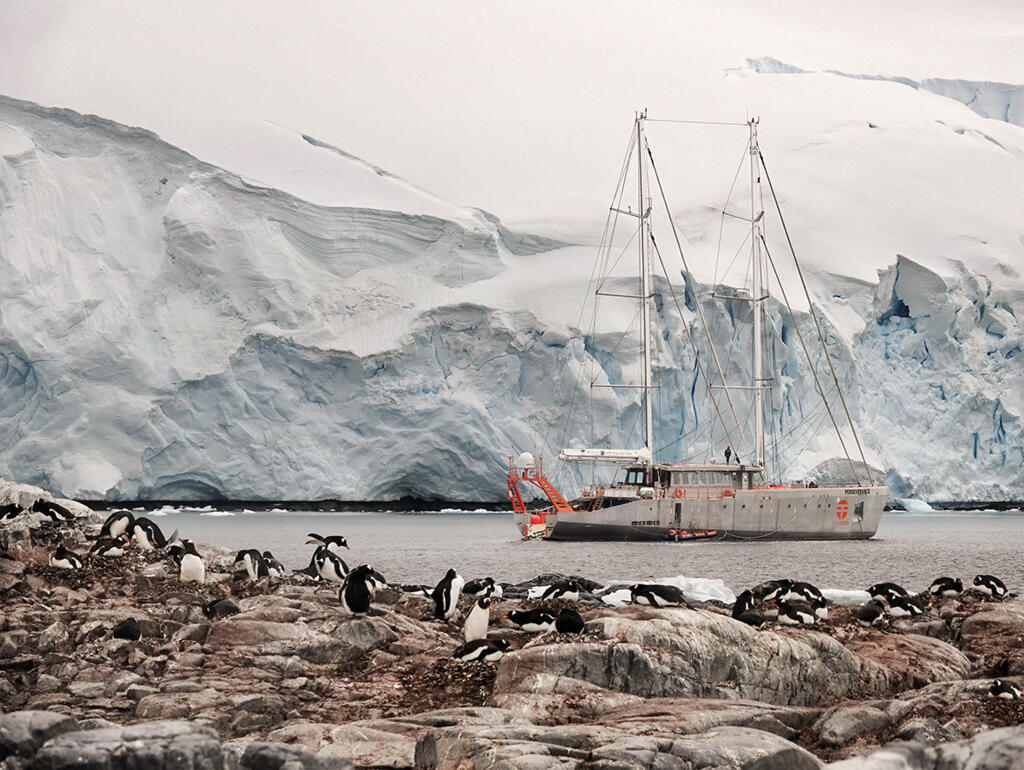
The ice-going vessel Perseverance in the waters of Antarctica in 2023. © 7C / Ferial
Norway, Russia and China all have vested interests in harvesting krill for use in intensive fish farming, dietary supplements and other consumer goods in high demand.
The data collected during the expedition will form the basis of a report for the Convention for the Conservation of Antarctic Marine Living Resources (CCAMLR) – the international body in charge of regulating fishing access in the region.
The expedition’s comprehensive report will also inform negotiations within the CCAMLR to create several new MPAs, notably off the eastern coast of Antarctica in the Dumont d’Urville Sea – a project supported by France, Australia and Monaco.
Antarctica: how geopolitics plays out at the end of the Earth
For Etienne, the Southern Ocean and Antarctica represent vast “invisible wealth” – inestimable resources and incredible biodiversity, in need of protection from overfishing and the ravages of climate change.
The objective is not to outlaw fishing all together, he says, but rather to come up with a way of respecting the natural “quotas” of krill based on reproduction levels, which fluctuate from year to year.
“We don't need big scientific programmes, it's just common sense to create marine protected areas opposite breeding grounds,” he said, referring to the large colonies of penguins that live on shrinking coastal areas.
Norway, Russia and China all have vested interests in harvesting krill for use in intensive fish farming, dietary supplements and other consumer goods in high demand.
The data collected during the expedition will form the basis of a report for the Convention for the Conservation of Antarctic Marine Living Resources (CCAMLR) – the international body in charge of regulating fishing access in the region.
The expedition’s comprehensive report will also inform negotiations within the CCAMLR to create several new MPAs, notably off the eastern coast of Antarctica in the Dumont d’Urville Sea – a project supported by France, Australia and Monaco.
Antarctica: how geopolitics plays out at the end of the Earth
For Etienne, the Southern Ocean and Antarctica represent vast “invisible wealth” – inestimable resources and incredible biodiversity, in need of protection from overfishing and the ravages of climate change.
The objective is not to outlaw fishing all together, he says, but rather to come up with a way of respecting the natural “quotas” of krill based on reproduction levels, which fluctuate from year to year.
“We don't need big scientific programmes, it's just common sense to create marine protected areas opposite breeding grounds,” he said, referring to the large colonies of penguins that live on shrinking coastal areas.
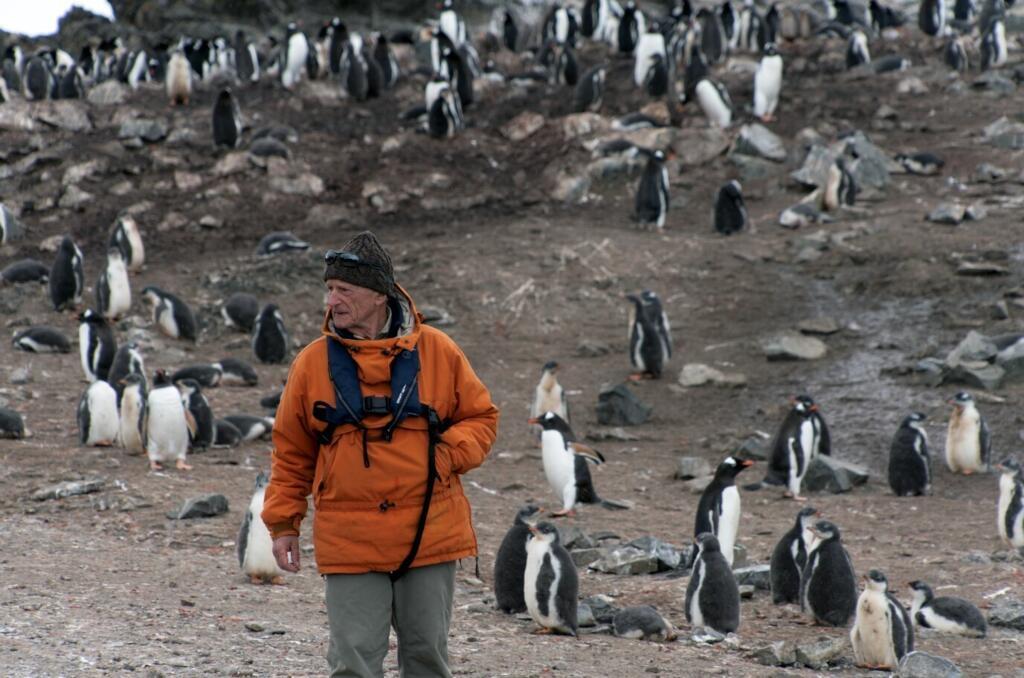
Jean-Louis Etienne in Antarctica in 2023. © 7C / Francis Latreille
Stories from 'another world'
With tears in her eyes, Sophie Colin, special advisor for marine and polar affairs at France’s Ministry of Ecology, recounts the example of the Adelie penguins, which lost a whole generation of chicks in one season when an iceberg collided with the Mertz Glacier in East Antarctica in 2010.
A large chunk of the glacier broke off, forcing penguins to travel further to hunt. As a result, the adult penguins couldn’t get food back quickly enough to feed their young.
Colin says it’s important to translate raw data into stories that people of all ages can relate to, showing that the project goes beyond science.
“We're in another world in Antarctica; we feel a bit like explorers. There's a huge amount of new knowledge that we acquire every year. So, in fact, it's truly fascinating and engaging,” she told RFI.
“That's why education is so important; it is the children who will become the first defenders of tomorrow and will know these species, these ecosystems and their importance better.”
Ice core vault preserving climate history opens in Antarctica
Etienne agrees it’s not just about science – it’s also about wonderment, learning and sharing a passion for this continent, one of the last remaining wild spots on the globe.
The “Polarpodibus” is a van that drives around France in parallel with his expeditions, visiting schoolchildren to spread the word about scientific discoveries and monitoring in Antarctica.
“Our polar oceans are truly the air conditioning, the climate control system of our planet,” said Clément Le Potier, who leads the educational programme. “We must protect these polar regions, but to do that, we must first understand them better.”
Not making an effort to protect the area would be like “leaving the refrigerator door of our planet wide open,” he told RFI, quoting Etienne.
Stories from 'another world'
With tears in her eyes, Sophie Colin, special advisor for marine and polar affairs at France’s Ministry of Ecology, recounts the example of the Adelie penguins, which lost a whole generation of chicks in one season when an iceberg collided with the Mertz Glacier in East Antarctica in 2010.
A large chunk of the glacier broke off, forcing penguins to travel further to hunt. As a result, the adult penguins couldn’t get food back quickly enough to feed their young.
Colin says it’s important to translate raw data into stories that people of all ages can relate to, showing that the project goes beyond science.
“We're in another world in Antarctica; we feel a bit like explorers. There's a huge amount of new knowledge that we acquire every year. So, in fact, it's truly fascinating and engaging,” she told RFI.
“That's why education is so important; it is the children who will become the first defenders of tomorrow and will know these species, these ecosystems and their importance better.”
Ice core vault preserving climate history opens in Antarctica
Etienne agrees it’s not just about science – it’s also about wonderment, learning and sharing a passion for this continent, one of the last remaining wild spots on the globe.
The “Polarpodibus” is a van that drives around France in parallel with his expeditions, visiting schoolchildren to spread the word about scientific discoveries and monitoring in Antarctica.
“Our polar oceans are truly the air conditioning, the climate control system of our planet,” said Clément Le Potier, who leads the educational programme. “We must protect these polar regions, but to do that, we must first understand them better.”
Not making an effort to protect the area would be like “leaving the refrigerator door of our planet wide open,” he told RFI, quoting Etienne.
From research to action
Etienne’s latest expedition is just the tip of a new iceberg.
During the voyage, he will try out one of his new inventions, the Tipod – a floating platform used to collect samples and measure information from the ocean.
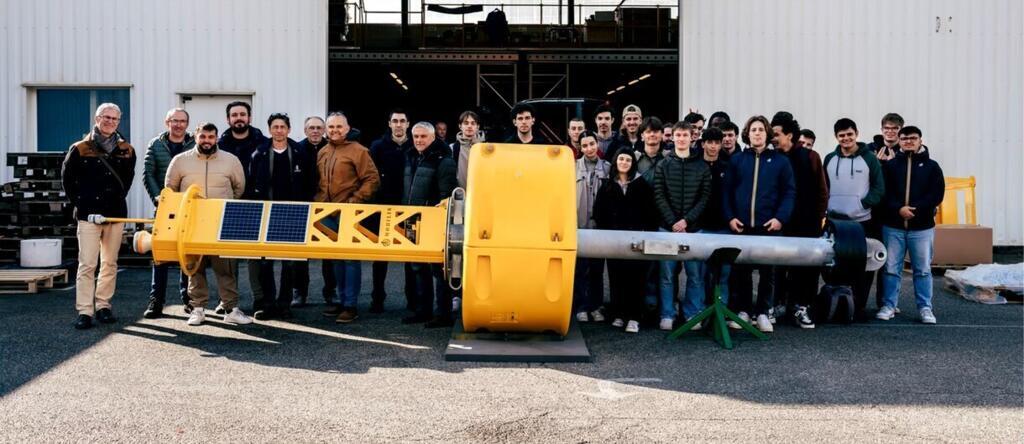
An ocean buoy called the Tipod, made for the Polar Pod expedition by high school students of the Louis Rascol technical college in Albi, France, 2025. © Polar Pod / Perseverance / Jean-Louis Etienne
Developed in tandem with technical high school students in Albi, southern France, it’s a mini version of his next big project: the Polar Pod, a floating research station powered by wind turbines that he hopes to launch in the Antarctic Ocean in 2029.
Plunging into these projects, in a part of the world most people will never see, is the way Etienne finds the hope to carry on for future generations.
“We cannot protect what we do not know,” he says. “This mission is a link between scientific exploration and international political action.”
Developed in tandem with technical high school students in Albi, southern France, it’s a mini version of his next big project: the Polar Pod, a floating research station powered by wind turbines that he hopes to launch in the Antarctic Ocean in 2029.
Plunging into these projects, in a part of the world most people will never see, is the way Etienne finds the hope to carry on for future generations.
“We cannot protect what we do not know,” he says. “This mission is a link between scientific exploration and international political action.”

No comments:
Post a Comment