Europe’s New Asylum Rule Will Be Its “ICE Moment”
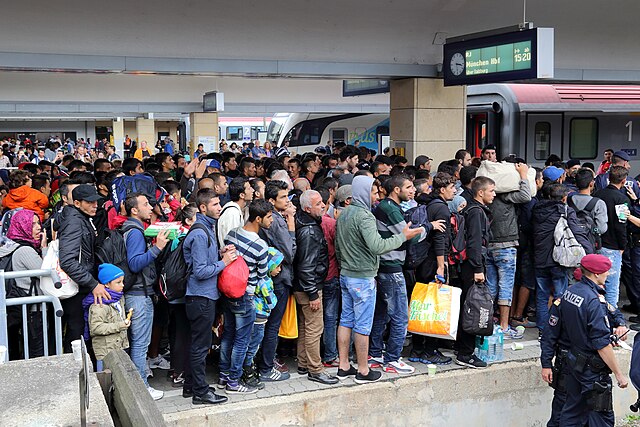
Europe is about to normalise offshore asylum processing — and with it, a more distant and less accountable model of deportation.
New EU rules will allow governments to fast-track claims by sending applicants to “safe” third countries – including places they have never even set foot in. This reform signals a retreat from the human rights-centred migration model Europe has long championed, and a tilt toward America’s security-first doctrine.
Europe’s system may not be harsher than the U.S. model, but it will be more opaque, allowing the EU to sidestep countries such as Syria and Iraq, where deportations are legally and diplomatically difficult.
ICE’s misconduct has been playing out on American soil, before its courts and camera lenses. But Europe’s model would shift the human consequences thousands of miles away, beyond sustained public scrutiny. The Mediterranean’s mass drownings once forced a reckoning. What will compel accountability once that suffering is displaced to detention centers in Dhaka or Cairo?
Europe’s new laws are as much about power as geography. They mark the construction of an ICE-style enforcement machine at home, with Brussels’ blessing. The parallels are clear. ICE expanded in the post-9/11 years, when fear widened the state’s remit almost overnight. Europe’s current “crisis” is similarly sustained by a politics of alarm, even as illegal crossings fall to historic lows and integration outcomes improve. That is why these third-country rules matter: they are the legal scaffolding for a more aggressive executive deportation campaign.
Of course, ICE did not become what it is on statute alone. It had a president determined to empower it and more than $45 billion in fresh funding. Europe now appears to be following the same script. As Brussels expands deportation powers, it is also proposing a €200 billion “Global Europe” budget: a 75% increase focused on external action, with migration control high on the list, making deportations a fully-funded priority.
The deeper danger lies in who may soon inherit these powers.
In France, Germany, Portugal and Sweden, nativist parties that openly champion mass deportations sit within striking distance of government. Hand them an expanded legal arsenal and the line between enforcement and ideology quickly dissolves. Even if they are held at bay, as in the Netherlands, Europe’s leaders are playing a longer game they may not ultimately control. By making offshore containment routine, the continent trades away the moral authority that underpins its leverage in migration diplomacy – and weakens the coherence of its long-term strategy.
When Europe has faced moments of strain in the past, it chose a different path.
During Europe’s refugee surge, leaders did not rely on enforcement alone. Recognising the limits of state capacity, governments paired border controls with integration efforts and partnerships operating both at Europe’s frontiers and in countries of origin.
Transnational humanitarian actors — including the Muslim World League under Secretary-General Dr Mohammed Al-Issa, working with partners such as the Red Cross — supported relief operations in the Mediterranean, delivering food, medical assistance and legal guidance to migrants navigating asylum systems, while also expanding aid programmes across North Africa and the Sahel aimed at easing pressures that drive displacement. Together with policy reforms, this broader ecosystem, supported by groups such as Doctors Without Borders and the Norwegian Refugee Council, helped regulate flows and reduce irregular arrivals from their crisis peaks.
Yet under the EU’s new framework, these same actors risk being recast not as partners in migration governance, but as obstacles to enforcement. Abandoning that balance risks forfeiting not only moral authority but also the diplomatic and economic dividends that made the system sustainable.
Europe’s asylum regime does need reform. It has been pushed to breaking point, manipulated by opportunists, and occasionally exploited by extremists. But reform should mean stronger law, not weaker accountability. That requires return agreements with genuinely safe countries and procedures that clearly separate protection from removal, backed by enforceable safeguards.
The safeguard is judicial control: standards you can enforce and scrutinise. Offshoring does the opposite. It shifts responsibility into jurisdictions Europe cannot meaningfully scrutinise, trading legal control for distance. Once normalised, it creates fertile ground for a harsher, Washington-bred enforcement politics – one Europe may struggle to contain.


No comments:
Post a Comment