Where We Are Headed
February 27, 2026
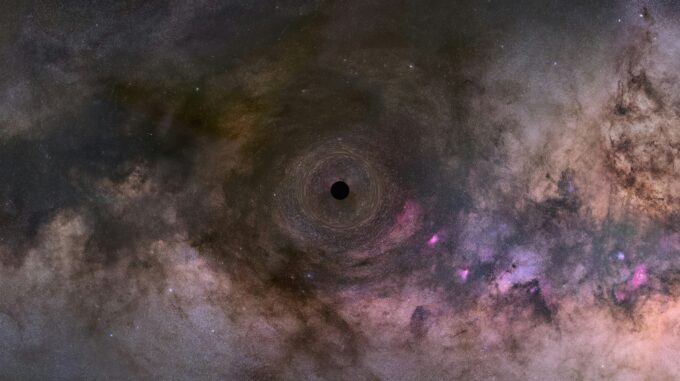
Image: NASA Hubble Space Telescope.
According to Professor Kevin Anderson, one of the world’s most respected climate scientists, and based upon a 30-year uninterrupted trendline: “We are headed for 3°C-4°C of warming across this century, an absolute climate catastrophe for all species, including our own” unless society takes drastic action soon to challenge climate change in an all-out global unified fashion, human extinction on ‘some level’, whether partial or complete, is on the agenda; it’s for real, no turning away. Alas, the world’s current course “is the headlight” at the far end of the tunnel.
The issue of climate change leaves many people cold. They either don’t want to face it or feel it’s a problem that’ll somehow, due to American exceptionalism, or some other similar crazed mythological belief, be fixed, no worries, ignore it! Due to this type of confusion, climate change, as a concept, has serious problems. The words “climate change” turn people away like the yellowed pages of an old book’s musty odor. It’s clichéd, tired, hackneyed, worn out and one of the biggest targets of abuse in the English language. So, little wonder that the words spark confusion, distrust, or anger, or in many cases, just turn away, who needs it? Accordingly, Eight of the Top Online Shows Are Spreading Climate Misinformation, Yale Climate Connections d/d April 21, 2025, and often backed by large advertising budgets, as a new breed of climate denial gains popularity.
The level of misinformation in social media is so prevalent that it’s a wonder anybody believes climate change is a real threat to human existence. More to the point, who really wants to believe that anyway? Human extinction, on some level, balderdash! It’s preposterous! No, so sorry, the truth is: It’s not preposterous! It’s already a well-established trend.
The climate story has certain benchmarks that have already exposed a lot about where things are headed. A benchmark is “a standard point of reference.” The key benchmarks for analytical purposes: (1) actual scientifically measured climate change over time (2) actual effectiveness of mitigation of climate change. These benchmarks have been analyzed by one of the world’s most respected climate scientists and addressed for public view on YouTube: “Climate Change: Where We Are Headed” is the title of a YouTube address by Kevin Anderson. A recent update to “Where We Are Headed” is found in his January 2026 speech entitled: “A Velvet Or Violent Climate Revolution: Which Will We Chose.” rejecting naïve, techno-optimistic narratives, the talk concludes that no non-radical pathways now remain.
Kevin Anderson is Professor-Energy & Climate Change, University of Manchester and previously a Deputy Director of Tyndall Centre for Climate Change Research, one of the world’s most prestigious climate research institutes.
Professor Anderson starts his public YouTube address by talking about the record of climate change mitigation over the past 32 years. That’s when the first major scientific report on climate change was released, in the early 1990s. Since then, “we’ve watched emissions go up year after year after year.” Now 60% higher per year than in 1990. Based upon this 30-year trendline: “We are headed for 3°C-4°C of warming across this century, an absolute climate catastrophe for all species, including our own.”
“Climate catastrophe is the direction of travel,” but it does not have to continue if the world would get serious rather than “talk, talk, talk.” The current 30-yr trendline overrides all of that ‘hopeful chatter’ about various solutions to climate change as simply bunches of rhetoric, false optimism and greenwashing rather than implementation of strong global measures to stay within the 1.5° to 2°C framing of the Paris agreement.
Current Trend Locks In 3-6 Feet Sea Level Rise Within Decades
In a very real sense the future is totally unpredictable because there is no precedent in human history for the consequences of a temperature change of +3°C-4°C. Still, current trends will lock in high levels of sea level rise, potentially 7-8 meters (23-26 feet), or more. Along the way, on a current generational timeline: “Across this century we may see one or two meters (3-6 feet) sea level rise, which will be catastrophic for all coastal cities worldwide, most of the world’s population live near coasts.”
Climate change today is also changing how we produce food because global warming changes well-established, dependable weather patterns that dictate food growth cycles. Farmers cannot simply pick up and move operations to another climate zone because their climate zone has collapsed or altered too much to support regular crop growth, as rainfall patterns change, and insect pollination of crops changes, all due to a changing climate.
In the final analysis, we, as a species, are confronted with the collapse of modern society amid the collapse of key ecosystems. We (society) should be doing everything possible to avoid this certain outcome, but sadly “we’re doing nothing to avoid it.” There is plenty of talk but not nearly enough effective action. And the climate only responds to efficacious action.
Currently, the physics of the world responds to the amount of CO2 and other greenhouse gases in the atmosphere. Meanwhile, there’s talk-talk-talk about efficiency, talk about green renewable growth, etc. but to a certain extent, it’s meaningless. “What really matters is keeping greenhouse emissions out of the atmosphere.”
Net Zero is Dangerous
Countries have made promises about what they intend to do, e.g., removing CO2 from the atmosphere, but there are but few pilot programs taking a stab at it, and results are decidedly anemic. “There is nothing out there of any scale. So, collectively, we ‘image solutions’ because we are too scared of the political repercussions of actually driving emissions out of the system today, full stop. There has been a deliberate misuse of the ‘prospects of technology as a savior’. There are models in the public domain that are facades of what can be accomplished to correct the situation, and we hide behind these pseudo-technologies, phony models, not to worry. When people claim we have until 2050 to make changes and they target Net Zero, blah-blah-blah, watch out! Net Zero is a real dangerous term… it is Latin for ‘kick the can down the road.”
CO2 Outlook
According to a February 2026 International Energy Agency (IEA) report: We are entering a new Age of Electricity with strong demand continuing over the foreseeable future. Last year saw record deployment of Solar PV… “Natural gas-fired output is also set to grow through 2030, supported by rising electricity demand in the United States and the continuing shift from oil to gas for power in the Middle East. Coal‑fired generation loses ground globally as renewables expand, returning to 2021 levels by the end of the decade. As a result, global CO2 emissions from electricity generation are expected to remain roughly flat between now and 2030.” Globally, over 90% of all CO2 emissions come from burning fossil fuels energy of which electricity generation is the largest contributor.
According to Statista d/d Jan. 20, 2026: Global carbon dioxide emissions from fossil fuels and industry totaled 38.11 billion metric tons (GtCO2) in 2025. Global CO2 emissions in 1990 were 22 billion metric tons when the first major scientific report came out. Conclusion: If CO2 emissions remain “flat between now and 2030,” we’ve still got a massive 73% increase in CO2 since the problem was officially recognized in a major scientific report. Disappointing, as well as dangerously, the question remains: Where are the fossil fuel emission cutbacks, as suggested by Professor Anderson? There are none, which puts an exclamation point on his thesis.
According to the 2026 Global Carbon Report: “Decarbonization of energy systems is progressing in many countries – but this is not enough to offset the growth in global energy demand.”
Indeed, technology can be part of the solution, if and when scale is vast enough to be meaningful, but it also needs to go hand-in-hand with social change, eco-social justice that trims the sails of current economic models that totally ignore climate risks. This is not even close to happening.
We Are Going To Fail
In Professor Anderson’s opinion, “We are going to fail… we are going to 3 to 4 degrees centigrade of warming… we’ll have to somehow struggle to live through it or possibly die from repercussions.” Society obviously needs to try everything possible to avoid this prospect. In that regard, there is a message of hope, meaning we really “have a choice” of whether to fail or not… Unfortunately, world leadership has chosen failure for the past three decades. By now, it’s becoming embedded.
Still, there are historical examples of rapid positive change when the world comes together, which is what’s needed e.g. 1) a worldwide collective agreement on Covid with a global response and 2) the global response to the 2008 banking crisis, and 3) in the 1930s Roosevelt fireside speeches with radical changes proposed in contrast with the social norms of the time. Now the world community needs to accelerate such examples laid across the impending threat of climate change. There is a choice to fail, or there is choice to succeed. Professor Anderson is hopeful “civil society” will take the lead to opt for success by rejecting failure.
Meanwhile, according to a World Bank report on 4°C above pre-industrial: “There is no certainty that adaptation to a 4°C world is possible.” According to Professor Kevin Anderson, without an all-in global effort equivalent to multiples of the historic Marshall Plan, the current trend is 4°C on a pathway towards ‘some level of extinction’, whether partial or complete; it’s a very big unknown.
Image: NASA Hubble Space Telescope.
According to Professor Kevin Anderson, one of the world’s most respected climate scientists, and based upon a 30-year uninterrupted trendline: “We are headed for 3°C-4°C of warming across this century, an absolute climate catastrophe for all species, including our own” unless society takes drastic action soon to challenge climate change in an all-out global unified fashion, human extinction on ‘some level’, whether partial or complete, is on the agenda; it’s for real, no turning away. Alas, the world’s current course “is the headlight” at the far end of the tunnel.
The issue of climate change leaves many people cold. They either don’t want to face it or feel it’s a problem that’ll somehow, due to American exceptionalism, or some other similar crazed mythological belief, be fixed, no worries, ignore it! Due to this type of confusion, climate change, as a concept, has serious problems. The words “climate change” turn people away like the yellowed pages of an old book’s musty odor. It’s clichéd, tired, hackneyed, worn out and one of the biggest targets of abuse in the English language. So, little wonder that the words spark confusion, distrust, or anger, or in many cases, just turn away, who needs it? Accordingly, Eight of the Top Online Shows Are Spreading Climate Misinformation, Yale Climate Connections d/d April 21, 2025, and often backed by large advertising budgets, as a new breed of climate denial gains popularity.
The level of misinformation in social media is so prevalent that it’s a wonder anybody believes climate change is a real threat to human existence. More to the point, who really wants to believe that anyway? Human extinction, on some level, balderdash! It’s preposterous! No, so sorry, the truth is: It’s not preposterous! It’s already a well-established trend.
The climate story has certain benchmarks that have already exposed a lot about where things are headed. A benchmark is “a standard point of reference.” The key benchmarks for analytical purposes: (1) actual scientifically measured climate change over time (2) actual effectiveness of mitigation of climate change. These benchmarks have been analyzed by one of the world’s most respected climate scientists and addressed for public view on YouTube: “Climate Change: Where We Are Headed” is the title of a YouTube address by Kevin Anderson. A recent update to “Where We Are Headed” is found in his January 2026 speech entitled: “A Velvet Or Violent Climate Revolution: Which Will We Chose.” rejecting naïve, techno-optimistic narratives, the talk concludes that no non-radical pathways now remain.
Kevin Anderson is Professor-Energy & Climate Change, University of Manchester and previously a Deputy Director of Tyndall Centre for Climate Change Research, one of the world’s most prestigious climate research institutes.
Professor Anderson starts his public YouTube address by talking about the record of climate change mitigation over the past 32 years. That’s when the first major scientific report on climate change was released, in the early 1990s. Since then, “we’ve watched emissions go up year after year after year.” Now 60% higher per year than in 1990. Based upon this 30-year trendline: “We are headed for 3°C-4°C of warming across this century, an absolute climate catastrophe for all species, including our own.”
“Climate catastrophe is the direction of travel,” but it does not have to continue if the world would get serious rather than “talk, talk, talk.” The current 30-yr trendline overrides all of that ‘hopeful chatter’ about various solutions to climate change as simply bunches of rhetoric, false optimism and greenwashing rather than implementation of strong global measures to stay within the 1.5° to 2°C framing of the Paris agreement.
Current Trend Locks In 3-6 Feet Sea Level Rise Within Decades
In a very real sense the future is totally unpredictable because there is no precedent in human history for the consequences of a temperature change of +3°C-4°C. Still, current trends will lock in high levels of sea level rise, potentially 7-8 meters (23-26 feet), or more. Along the way, on a current generational timeline: “Across this century we may see one or two meters (3-6 feet) sea level rise, which will be catastrophic for all coastal cities worldwide, most of the world’s population live near coasts.”
Climate change today is also changing how we produce food because global warming changes well-established, dependable weather patterns that dictate food growth cycles. Farmers cannot simply pick up and move operations to another climate zone because their climate zone has collapsed or altered too much to support regular crop growth, as rainfall patterns change, and insect pollination of crops changes, all due to a changing climate.
In the final analysis, we, as a species, are confronted with the collapse of modern society amid the collapse of key ecosystems. We (society) should be doing everything possible to avoid this certain outcome, but sadly “we’re doing nothing to avoid it.” There is plenty of talk but not nearly enough effective action. And the climate only responds to efficacious action.
Currently, the physics of the world responds to the amount of CO2 and other greenhouse gases in the atmosphere. Meanwhile, there’s talk-talk-talk about efficiency, talk about green renewable growth, etc. but to a certain extent, it’s meaningless. “What really matters is keeping greenhouse emissions out of the atmosphere.”
Net Zero is Dangerous
Countries have made promises about what they intend to do, e.g., removing CO2 from the atmosphere, but there are but few pilot programs taking a stab at it, and results are decidedly anemic. “There is nothing out there of any scale. So, collectively, we ‘image solutions’ because we are too scared of the political repercussions of actually driving emissions out of the system today, full stop. There has been a deliberate misuse of the ‘prospects of technology as a savior’. There are models in the public domain that are facades of what can be accomplished to correct the situation, and we hide behind these pseudo-technologies, phony models, not to worry. When people claim we have until 2050 to make changes and they target Net Zero, blah-blah-blah, watch out! Net Zero is a real dangerous term… it is Latin for ‘kick the can down the road.”
CO2 Outlook
According to a February 2026 International Energy Agency (IEA) report: We are entering a new Age of Electricity with strong demand continuing over the foreseeable future. Last year saw record deployment of Solar PV… “Natural gas-fired output is also set to grow through 2030, supported by rising electricity demand in the United States and the continuing shift from oil to gas for power in the Middle East. Coal‑fired generation loses ground globally as renewables expand, returning to 2021 levels by the end of the decade. As a result, global CO2 emissions from electricity generation are expected to remain roughly flat between now and 2030.” Globally, over 90% of all CO2 emissions come from burning fossil fuels energy of which electricity generation is the largest contributor.
According to Statista d/d Jan. 20, 2026: Global carbon dioxide emissions from fossil fuels and industry totaled 38.11 billion metric tons (GtCO2) in 2025. Global CO2 emissions in 1990 were 22 billion metric tons when the first major scientific report came out. Conclusion: If CO2 emissions remain “flat between now and 2030,” we’ve still got a massive 73% increase in CO2 since the problem was officially recognized in a major scientific report. Disappointing, as well as dangerously, the question remains: Where are the fossil fuel emission cutbacks, as suggested by Professor Anderson? There are none, which puts an exclamation point on his thesis.
According to the 2026 Global Carbon Report: “Decarbonization of energy systems is progressing in many countries – but this is not enough to offset the growth in global energy demand.”
Indeed, technology can be part of the solution, if and when scale is vast enough to be meaningful, but it also needs to go hand-in-hand with social change, eco-social justice that trims the sails of current economic models that totally ignore climate risks. This is not even close to happening.
We Are Going To Fail
In Professor Anderson’s opinion, “We are going to fail… we are going to 3 to 4 degrees centigrade of warming… we’ll have to somehow struggle to live through it or possibly die from repercussions.” Society obviously needs to try everything possible to avoid this prospect. In that regard, there is a message of hope, meaning we really “have a choice” of whether to fail or not… Unfortunately, world leadership has chosen failure for the past three decades. By now, it’s becoming embedded.
Still, there are historical examples of rapid positive change when the world comes together, which is what’s needed e.g. 1) a worldwide collective agreement on Covid with a global response and 2) the global response to the 2008 banking crisis, and 3) in the 1930s Roosevelt fireside speeches with radical changes proposed in contrast with the social norms of the time. Now the world community needs to accelerate such examples laid across the impending threat of climate change. There is a choice to fail, or there is choice to succeed. Professor Anderson is hopeful “civil society” will take the lead to opt for success by rejecting failure.
Meanwhile, according to a World Bank report on 4°C above pre-industrial: “There is no certainty that adaptation to a 4°C world is possible.” According to Professor Kevin Anderson, without an all-in global effort equivalent to multiples of the historic Marshall Plan, the current trend is 4°C on a pathway towards ‘some level of extinction’, whether partial or complete; it’s a very big unknown.

No comments:
Post a Comment