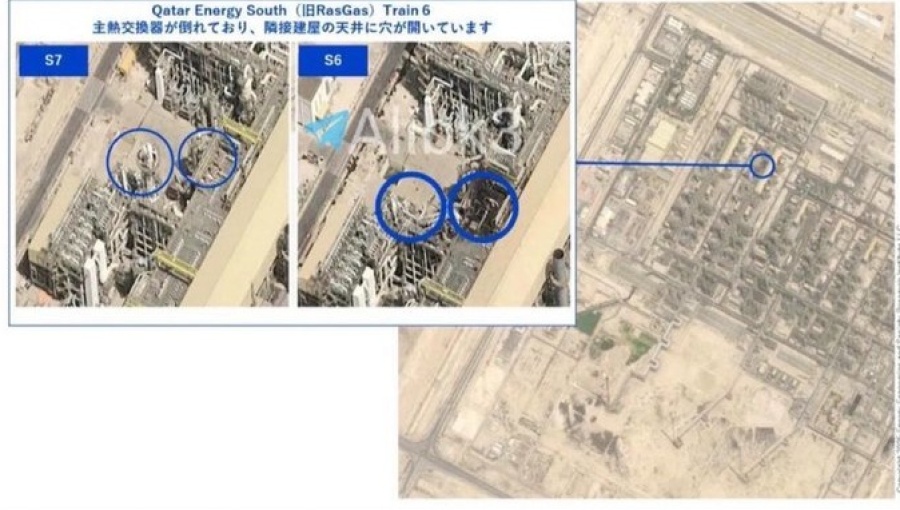
Satellite imagery indicates significant damage at Qatar’s Ras Laffan LNG plant that was hit by Iranian missiles on March 18, including the apparent collapse of primary heat exchangers at Train 6 and structural damage to adjacent facilities, according to open-source analysis.
The extent of. The damage has raised concerns the time table for effecting repairs might be increased from the preliminary estimate of one year to closer to fire years if critical equipment has been destroyed. That would have the short-term effect of pushing up gas prices and long-term effect of leaving the US as the predominant supplier of LNG to the international market.
The extent of the damage has prompted expectations of a fresh force majeure declaration, with QatarEnergy’s chief executive now saying that repairs could take between three and five years, contingent on an immediate halt to hostilities. The disruption could result in an estimated $20bn in lost revenue annually.
The attack took two of the facility's 14 trains offline but it has been unclear just how much damage was done. The key component in an LNG plant is the brazed aluminium heat exchanger known as a BAHX (brazed aluminium plate-fin heat exchanger) that cools gas to close to absolute zero. One of the most complicated pieces of machinery in the world, only five firms worldwide can make them and already have a backlog of orders. If Ras Laffan has to order new ones from makers, delivery could take up to five years.
Train 6 forms part of Qatar’s liquefied natural gas infrastructure at Ras Laffan, the world’s largest LNG export facility. The reported damage is estimated to have removed approximately 17% of the country’s LNG export capacity from the market.
Major importers, including Italy, Belgium, South Korea and China, are expected to be affected by any sustained outage. The scale of the disruption has raised concerns among market participants about tightening global gas supplies, particularly as demand remains elevated in both Europe and Asia.
One market participant described the situation as “as close as you get to an Armageddon scenario for global gas markets”. Another comment circulating online attributed to Russian President Vladimir Putin, saying “it’s a shame Europe no longer has Nord Stream”.
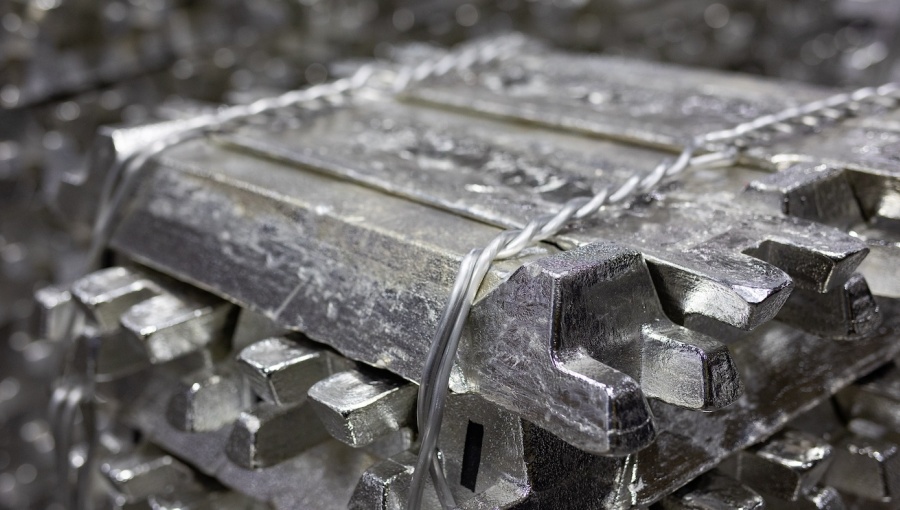
Two major aluminium production facilities in the Middle East were hit by Iranian strikes on March 28, raising concerns over global supply as disruption in the region intensifies.
Emirates Global Aluminium (EGA), one of the world’s largest producers, sustained “significant damage”, while Aluminium Bahrain (Alba) said it is “assessing the extent of the damage” following a separate strike on its operations.
The Iranian Revolutionary Guard Corps (IRGC) claimed the sites targeted were linked to the United States military, in a statement carried by Iran’s state broadcaster IRIB. The strikes were retaliation for a US-Israeli attack on Iranian industrial infrastructure launched from military bases hosting US forces in the Gulf states, the IRGC said.
EGA said on March 28 its Al Taweelah site sustained significant damage during Iranian missile and drone attacks at Khalifa Economic Zone Abu Dhabi, with assessments ongoing. The company said a number of employees were injured, but added that none of the injuries were life-threatening.
The biggest non-energy industrial company in the UAE, the Al Taweelah smelter produced 1.6mn tonnes of cast metal in 2025. The company added it had "substantial metal stock on the water when the conflict began, and stock on the ground in some overseas locations." EGA operates two smelters, one each in the emirates of Dubai and Abu Dhabi.
Alba said in a statement that two employees were injured in the attack on its facility.
The Middle East accounts for approximately 9% of global aluminium supply, making it a critical source for international markets. Analysts warn that disruption to production and exports could tighten supply chains already under pressure from logistical constraints in the Gulf.
Emirates Global Aluminium, jointly owned by Abu Dhabi’s sovereign wealth fund Mubadala and the Investment Corporation of Dubai, is a major supplier to international markets, including the US. The UAE is the second-largest aluminium exporter to the US after Canada.
The company is also involved in plans to develop what has been described as the first new aluminium smelter in the US in decades, a project in Oklahoma backed by state-level incentives and aimed at strengthening domestic supply.
Damage to facilities in both the UAE and Bahrain could therefore have implications beyond the region, particularly for US manufacturers reliant on imported aluminium.
There has been no independent verification of the extent of the damage, and neither company has provided detailed operational updates.
“Emirates Global Aluminium sustained ‘significant damage’,” according to the report, while Alba said it is “assessing the extent of the damage”.
Iran Claims Aluminum Plant Attacks In Bahrain, UAE

Iran launches a missile. Photo Credit: Tasnim News Agency
March 30, 2026
By Arab News
Iran’s Revolutionary Guards said Sunday they launched missile and drone strikes on aluminum plants in Bahrain and the UAE over the weekend, targeting what they described as industries linked to the US military.
The Guards also threatened to target US universities in the Middle East, while saying US-Israeli strikes had destroyed two Iranian universities. They demanded a US condemnation of the bombing of universities by noon (0830 GMT) Monday.
Since the Middle East war erupted at the end of February, Bahrain and other Gulf countries have regularly been targeted by Iranian missile and drone strikes in retaliation for the US-Israeli campaign, now in its second month.
In a statement carried by Iranian state broadcaster IRIB, the Guards said they hit an aluminum facility in the UAE and Aluminium Bahrain’s main plant, calling both sites “industries affiliated with and connected to the US military and aerospace sectors in the region.”
The IRGC said the strikes were retaliation for a US-Israeli attack on Iranian industrial infrastructure launched from bases in Gulf states.
Aluminium Bahrain, one of the world’s largest aluminum producers, said two employees were wounded in an Iranian strike targeting its facility on Saturday.
The company, also known as Alba, said the workers suffered minor injuries.
Alba added that it was assessing the impact on operations and would provide updates when available. It gave no details on damage to the site.
Emirates Global Aluminium confirmed on Saturday that the company’s Al-Taweelah site sustained significant damage during the Iranian missile and drone attacks at Khalifa Economic Zone Abu Dhabi.
A number of EGA employees were injured. None of the injuries were life threatening.
Abdulnasser Bin Kalban, chief executive of EGA, said: “The safety and security of our people is our top priority at EGA at all times. We are deeply saddened and are assessing the damage to our facilities.”
EGA’s Al-Taweelah smelter produced 1.6 million tonnes of cast metal in 2025. EGA had substantial metal stock on the water when the conflict began, and stock on the ground in some overseas locations.
Gulf states intercept Iranian missile and drone attacks
Defense forces in the UAE and Kuwait said early Sunday they were actively responding to new waves of hostile missile and drone attacks launched from Iran, as the conflict triggered by a joint US-Israeli assault on Tehran entered its second month with no sign of abating.
The defense ministries of both states posted on X to reassure citizens that the explosions they were hearing were the result of air defense systems intercepting incoming fire.
“Everyone is requested to adhere to the security and safety instructions issued by the competent authorities,” Kuwait’s Army General Staff said in a separate statement, as four Iranian drones were intercepted and destroyed.
Air defenses engaged 16 ballistic missiles and 42 drones on Sunday, the UAE defense ministry said.
In Saudi Arabia, the defense ministry reported Sunday morning the interception and destruction of 10 drones during the past hours.
Bahrain’s Defense Force reported it has engaged a total of 385 drones and 174 missiles since February 28.

No comments:
Post a Comment