Alexander Willis
March 31, 2026
March 31, 2026
RAW STORY
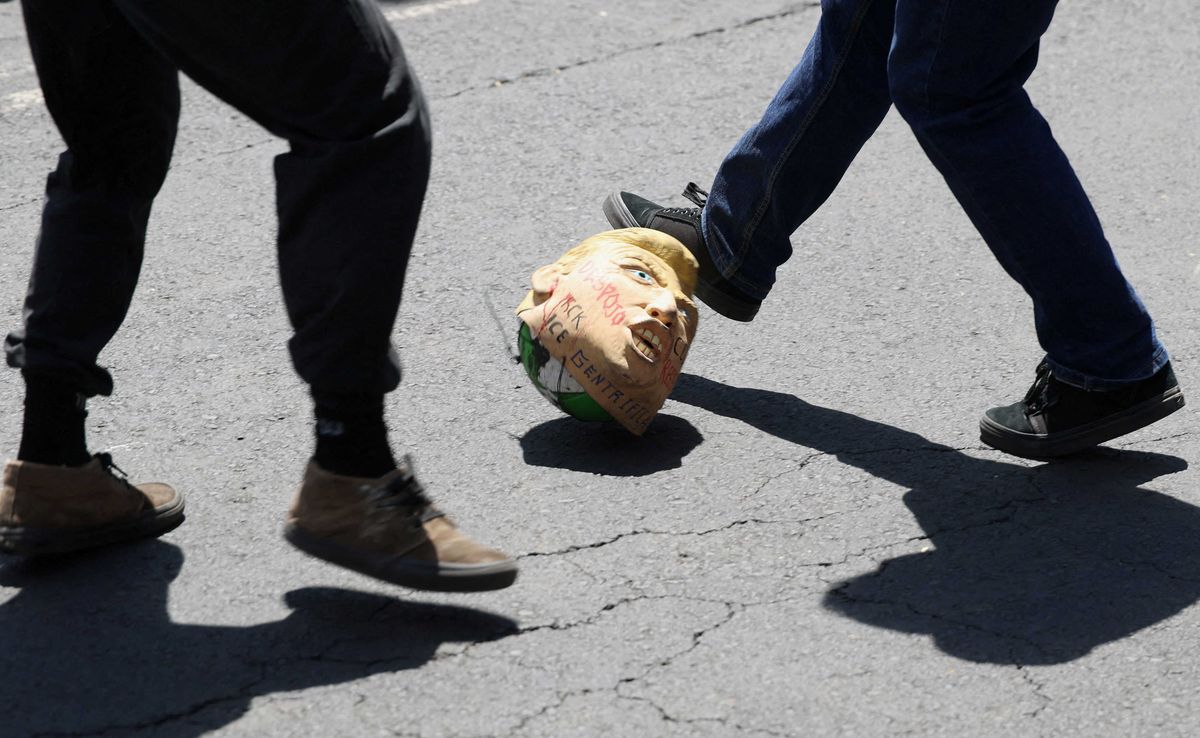
Protesters kick a ball covered with a mask representing U.S. President Donald Trump while playing soccer matches on a major urban highway to protest against the reopening of Azteca Stadium, officially renamed Banorte Stadium, on the day of a friendly match between the national teams of Mexico and Portugal held to mark the stadium’s inauguration, as Mexico prepares for the 2026 FIFA World Cup co-hosted by the United States, Canada and Mexico, in Mexico City, Mexico, March 28, 2026. REUTERS/Luis Cortes
A prominent conservative journalist and commentator was taken aback by President Donald Trump’s latest rant Tuesday morning, going as far as to say that the president’s remarks marked “the beginning of the end of the U.S. empire.”
Earlier on Tuesday, Trump erupted at the United Kingdom over its refusal to join the United States in its war against Iran. Writing on social media, Trump told the United Kingdom to “build up some delayed courage” and “take” control of the Strait of Hormuz, a critical shipping route where Iran has restricted access to U.S.-aligned vessels, and that the United States has been unable to re-open by itself.
Saagar Enjeti, a conservative journalist, commentator and podcast host, said Trump’s rant marked a major turning point for the United States.
“This unironically then is the beginning of the end of the US empire,” Saagar wrote Tuesday in a social media post on X to their more than 514,000 followers. “Militarily unable to collapse the Iranian regime from the air, sparking a global energy crisis for critical US allies and then telling them to go and fix the crisis we created.”
The U.S. war against Iran has reportedly sparked panic within the Trump administration as oil prices continue to surge and the administration’s war objectives appear increasingly out of reach.
While the Trump administration had initially sought to topple the Iranian government and prevent Iran from ever acquiring a nuclear weapon, achieving such goals has gone on to become “unlikely,” according to U.S. and Israeli officials who spoke with The Washington Post, with re-opening the Strait of Hormuz – which was open to U.S.-aligned vessels prior to the war – emerging as the war’s new “paramount objective.”
Trump has reportedly moved to consider ending the war without re-opening the Strait of Hormuz, administration officials revealed, speaking on the condition of anonymity.
Protesters kick a ball covered with a mask representing U.S. President Donald Trump while playing soccer matches on a major urban highway to protest against the reopening of Azteca Stadium, officially renamed Banorte Stadium, on the day of a friendly match between the national teams of Mexico and Portugal held to mark the stadium’s inauguration, as Mexico prepares for the 2026 FIFA World Cup co-hosted by the United States, Canada and Mexico, in Mexico City, Mexico, March 28, 2026. REUTERS/Luis Cortes
A prominent conservative journalist and commentator was taken aback by President Donald Trump’s latest rant Tuesday morning, going as far as to say that the president’s remarks marked “the beginning of the end of the U.S. empire.”
Earlier on Tuesday, Trump erupted at the United Kingdom over its refusal to join the United States in its war against Iran. Writing on social media, Trump told the United Kingdom to “build up some delayed courage” and “take” control of the Strait of Hormuz, a critical shipping route where Iran has restricted access to U.S.-aligned vessels, and that the United States has been unable to re-open by itself.
Saagar Enjeti, a conservative journalist, commentator and podcast host, said Trump’s rant marked a major turning point for the United States.
“This unironically then is the beginning of the end of the US empire,” Saagar wrote Tuesday in a social media post on X to their more than 514,000 followers. “Militarily unable to collapse the Iranian regime from the air, sparking a global energy crisis for critical US allies and then telling them to go and fix the crisis we created.”
The U.S. war against Iran has reportedly sparked panic within the Trump administration as oil prices continue to surge and the administration’s war objectives appear increasingly out of reach.
While the Trump administration had initially sought to topple the Iranian government and prevent Iran from ever acquiring a nuclear weapon, achieving such goals has gone on to become “unlikely,” according to U.S. and Israeli officials who spoke with The Washington Post, with re-opening the Strait of Hormuz – which was open to U.S.-aligned vessels prior to the war – emerging as the war’s new “paramount objective.”
Trump has reportedly moved to consider ending the war without re-opening the Strait of Hormuz, administration officials revealed, speaking on the condition of anonymity.
Trump admin has crossed the 'tipping point' where regimes often fail: expert
Robert Davis
March 30, 2026
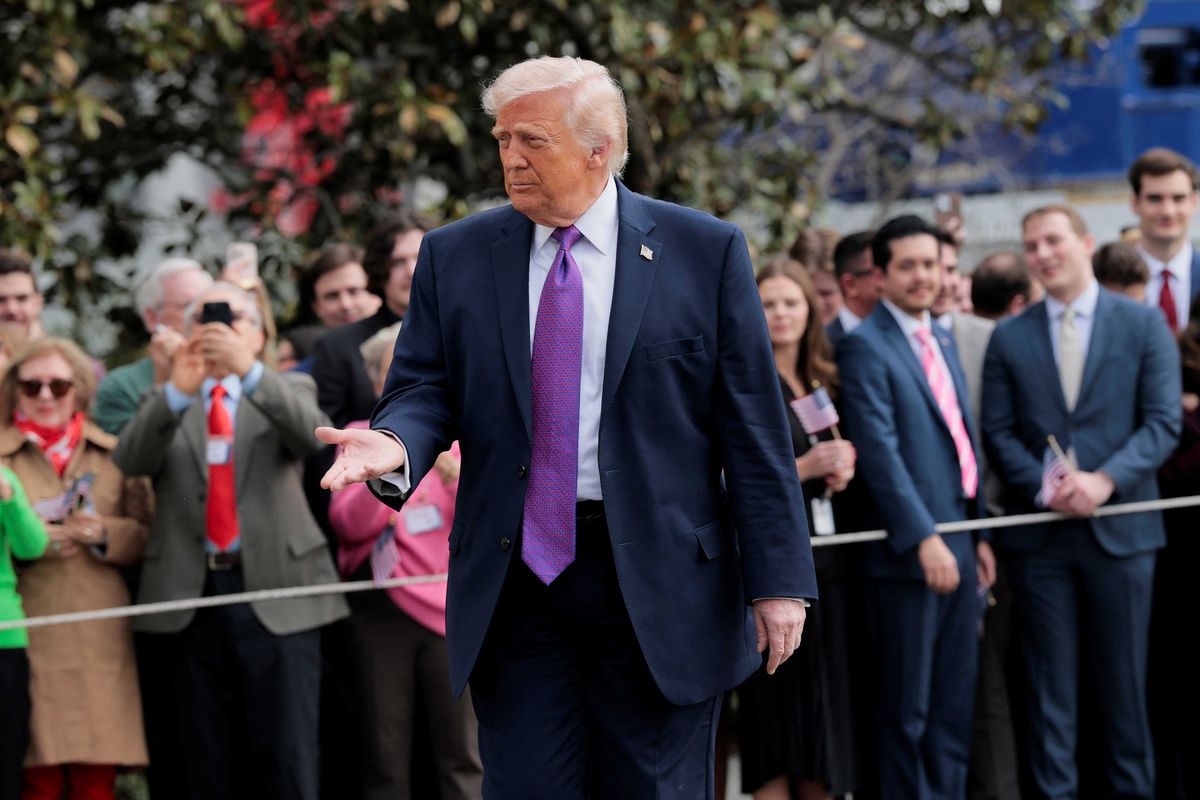
U.S. President Donald Trump walks as he heads to Marine One to travel to Ohio and Kentucky, from the White House in Washington, D.C., U.S., March 11, 2026. REUTERS/Brian Snyder
President Donald Trump's administration just crossed a "tipping point" where other authoritarian regimes have failed, according to one expert.
Over the weekend, more than eight million people participated in the nationwide "No Kings" protest, one of the largest public demonstrations in U.S. history. The total number of demonstrators who attended the protests represents about 2.5% of the nation's population, which signaled to David Rothkopf, the former editor of Foreign Policy Magazine, that the Trump administration has reached the point of no return.
Rothkopf discussed the impact of the "No Kings" protest on a new episode of "The Daily Beast Podcast" with host Joanna Coles.
"Political scientists say once you get about 2.5% of the population out into the streets, that's a tipping point," Rothkopf said. "That's a sign that regimes like authoritarian regimes can start to fail. That's where we are. There were 3000 demonstrations, demonstrations on every continent."
Trump has faced significant criticism during his second term. Key scandals include allegations of insider trading involving Defense Secretary Pete Hegseth related to investments in defense contractors, questions about the Department of Justice's mishandling of the Jeffrey Epstein files, and accusations that the FBI, under Director Kash Patel, is purchasing Americans' location data without proper oversight.
Additionally, the administration has faced criticism over its coordination of military strikes against Iran, alleged corruption involving federal contractors, selective enforcement of immigration laws, and concerns about conflicts of interest among appointed officials regarding federal contracts and policy decisions.
Robert Davis
March 30, 2026
RAW STORY
U.S. President Donald Trump walks as he heads to Marine One to travel to Ohio and Kentucky, from the White House in Washington, D.C., U.S., March 11, 2026. REUTERS/Brian Snyder
President Donald Trump's administration just crossed a "tipping point" where other authoritarian regimes have failed, according to one expert.
Over the weekend, more than eight million people participated in the nationwide "No Kings" protest, one of the largest public demonstrations in U.S. history. The total number of demonstrators who attended the protests represents about 2.5% of the nation's population, which signaled to David Rothkopf, the former editor of Foreign Policy Magazine, that the Trump administration has reached the point of no return.
Rothkopf discussed the impact of the "No Kings" protest on a new episode of "The Daily Beast Podcast" with host Joanna Coles.
"Political scientists say once you get about 2.5% of the population out into the streets, that's a tipping point," Rothkopf said. "That's a sign that regimes like authoritarian regimes can start to fail. That's where we are. There were 3000 demonstrations, demonstrations on every continent."
Trump has faced significant criticism during his second term. Key scandals include allegations of insider trading involving Defense Secretary Pete Hegseth related to investments in defense contractors, questions about the Department of Justice's mishandling of the Jeffrey Epstein files, and accusations that the FBI, under Director Kash Patel, is purchasing Americans' location data without proper oversight.
Additionally, the administration has faced criticism over its coordination of military strikes against Iran, alleged corruption involving federal contractors, selective enforcement of immigration laws, and concerns about conflicts of interest among appointed officials regarding federal contracts and policy decisions.

No comments:
Post a Comment