Barents Observer journalist fined over alleged “LGBT propaganda” in Russia
A Russian court has fined Barents Observer journalist Olesya Krivtsova 200,000 roubles, accusing her of promoting LGBT issues via the media or online platforms. However, authorities have not specified which of her actions led to the penalty.
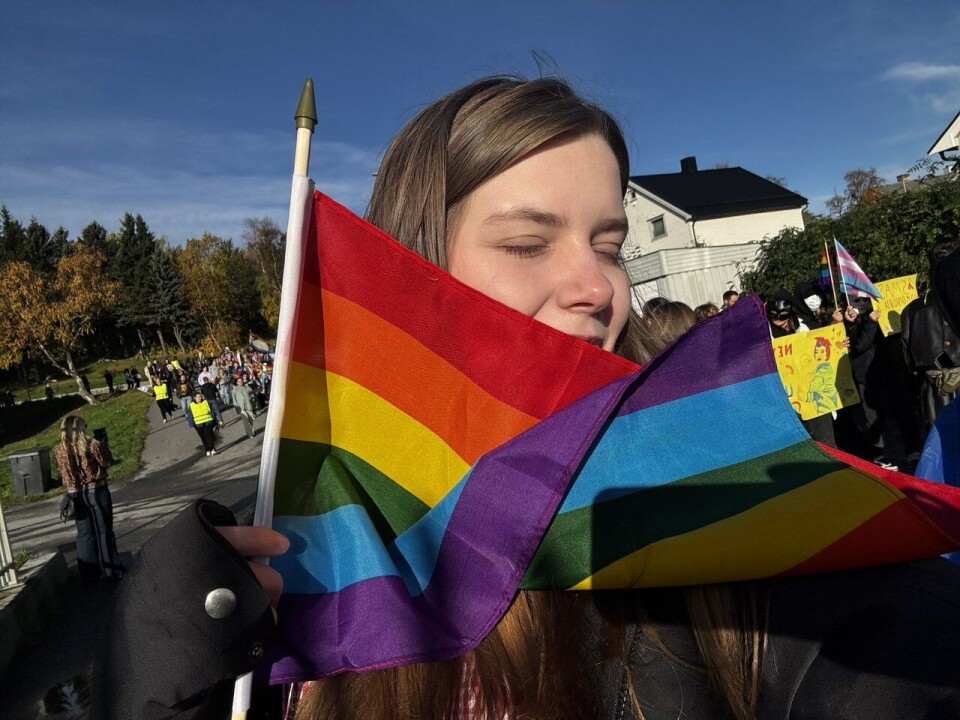
Olesia Krivtsova at Barents Pride 2023. Photo: Selfie

A Russian court has fined Barents Observer journalist Olesya Krivtsova 200,000 roubles, accusing her of promoting LGBT issues via the media or online platforms. However, authorities have not specified which of her actions led to the penalty.
Olesia Krivtsova at Barents Pride 2023. Photo: Selfie
Georgii Chentemirov
27 March 2026 -
27 March 2026 -
THE BARENTS OBESERVER
The ruling was issued by a magistrates’ court in Belgorod on 16 March. The decision has not been published, and Krivtsova says she has not been informed of the precise grounds for the case against her.
The charges may be linked to Krivtsova’s reporting for Barents Observer. Her work has included coverage of the trial of Ekaterina Filippova, who was prosecuted over a cross-shaped lamp, reporting from the Barents Pride event, and an article on Finland’s refusal to grant asylum to a Russian same-sex couple.
Allegations that Krivtsova was “promoting” LGBT issues were also outlined in a document from Russia’s Ministry of Justice. The statement was submitted in response to a request to remove her designation as a “foreign agent”. It claimed that Krivtsova “creates and publishes articles on behalf of residents of Arkhangelsk in support of LGBT supporters”, and that she “actively supports pro-choice movements” while making “negative statements” about the Russian Orthodox Church.
Responding to the fine, Krivtsova said:
I’m glad the authorities are spending some of their resources on me rather than on war or persecuting people inside Russia. In return, I want to wish freedom to all queer political prisoners — and to those who today are forced to hide, to live in fear, and to deny who they are just to survive. To those who are forbidden from being themselves and from loving. I do not intend to pay this fine.”
Krivtsova is currently facing, or has already faced, five administrative cases. In addition to the “LGBT propaganda” charge, she has been accused of violating Russia’s “foreign agents” legislation, for which she has already been fined 45,000 and 35,000 roubles.
She has also been placed on Russia’s wanted list and arrested in absentia. In 2022, criminal proceedings were launched against her on charges of “justifying terrorism” and “discrediting the army”. In 2023, Krivtsova fled Russia, reportedly evading security services while under house arrest.
All three Russian-language journalists working for Barents Observer have been designated as “foreign agents” by the Russian authorities. The publication itself has been labelled an “undesirable organisation” and is blocked within Russia.
The ruling was issued by a magistrates’ court in Belgorod on 16 March. The decision has not been published, and Krivtsova says she has not been informed of the precise grounds for the case against her.
The charges may be linked to Krivtsova’s reporting for Barents Observer. Her work has included coverage of the trial of Ekaterina Filippova, who was prosecuted over a cross-shaped lamp, reporting from the Barents Pride event, and an article on Finland’s refusal to grant asylum to a Russian same-sex couple.
Allegations that Krivtsova was “promoting” LGBT issues were also outlined in a document from Russia’s Ministry of Justice. The statement was submitted in response to a request to remove her designation as a “foreign agent”. It claimed that Krivtsova “creates and publishes articles on behalf of residents of Arkhangelsk in support of LGBT supporters”, and that she “actively supports pro-choice movements” while making “negative statements” about the Russian Orthodox Church.
Responding to the fine, Krivtsova said:
I’m glad the authorities are spending some of their resources on me rather than on war or persecuting people inside Russia. In return, I want to wish freedom to all queer political prisoners — and to those who today are forced to hide, to live in fear, and to deny who they are just to survive. To those who are forbidden from being themselves and from loving. I do not intend to pay this fine.”
Krivtsova is currently facing, or has already faced, five administrative cases. In addition to the “LGBT propaganda” charge, she has been accused of violating Russia’s “foreign agents” legislation, for which she has already been fined 45,000 and 35,000 roubles.
She has also been placed on Russia’s wanted list and arrested in absentia. In 2022, criminal proceedings were launched against her on charges of “justifying terrorism” and “discrediting the army”. In 2023, Krivtsova fled Russia, reportedly evading security services while under house arrest.
All three Russian-language journalists working for Barents Observer have been designated as “foreign agents” by the Russian authorities. The publication itself has been labelled an “undesirable organisation” and is blocked within Russia.

A Moscow court has sentenced investigative journalist Andrei Soldatov in absentia to four years’ imprisonment for allegedly violating Russia’s “foreign agent” law.
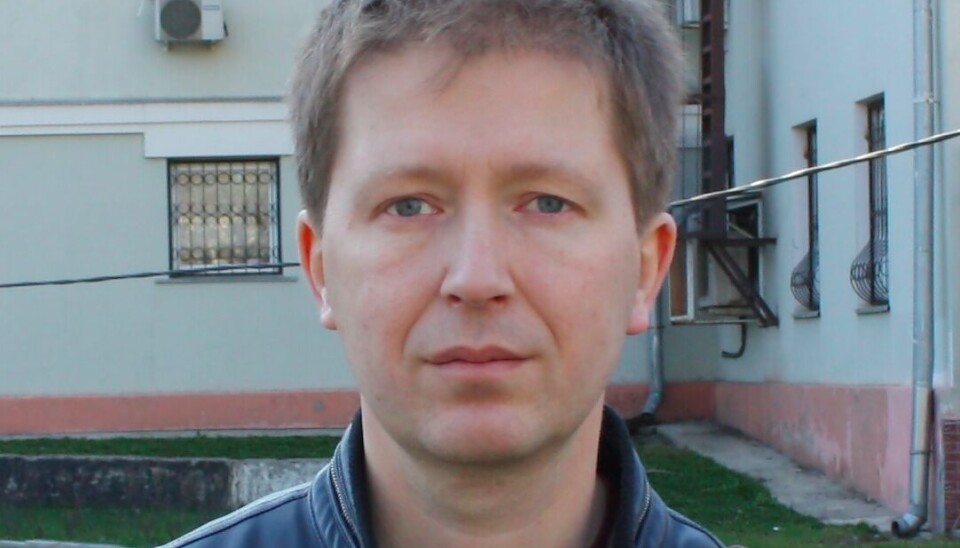
Andrei Soldatov. Photo: Wikipedia
Thomas Nilsen
1 April 2026 -
THE BARENTS OBSERVER
Soldatov, who has authored several books on Russia’s security services, responded to the ruling by saying: “They are trying to silence me, but I will continue my work.”
The sentence was handed down on Monday by the Basmanny District Court. Soldatov, who was designated a “foreign agent” in 2023, shared news of the verdict on Facebook.
The ruling cannot currently be enforced, as Soldatov resides outside Russia. He left the country in 2020 and is now based in London. Since 2022, he has been on Russia’s wanted list, accused of spreading “false information” about the armed forces.
Charges of disseminating “fake news” about the military are frequently used against journalists and critics. In practice, the offence can amount to something as simple as referring to Russia’s actions in Ukraine as a war.
The crackdown on independent journalism has been a central feature of Vladimir Putin’s rule since the early 2000s. However, it intensified sharply following the full-scale invasion of Ukraine in 2022 and has since reached unprecedented levels.
Few journalists are as familiar with the inner workings of Russia’s security services as Soldatov. For more than two decades, he has studied the FSB alongside fellow journalist Irina Borogan. Together, they have published several books examining the agency and other security institutions.
Soldatov is co-founder and editor for the website Agentura.ru.
He has previously worked as a journalist and contributed commentary on terrorism and intelligence matters to a range of Russian media outlets, including Echo of Moscow, Vedomosti, and The Moscow Times.
In addition to the prison sentence, the court has barred Soldatov from administering websites or engaging in any online activity for four years.
In an interview with El País following the ruling, Soldatov said: “This sentence is a clear attempt to silence me and force me to stop working as a journalist. I will continue to do so, no matter what.”

No comments:
Post a Comment