Nobel Prize-winning economist pinpoints major flaw in Trump's 'nervous' Iran war ploy
Ewan Gleadow
April 1, 2026
RAW STORY
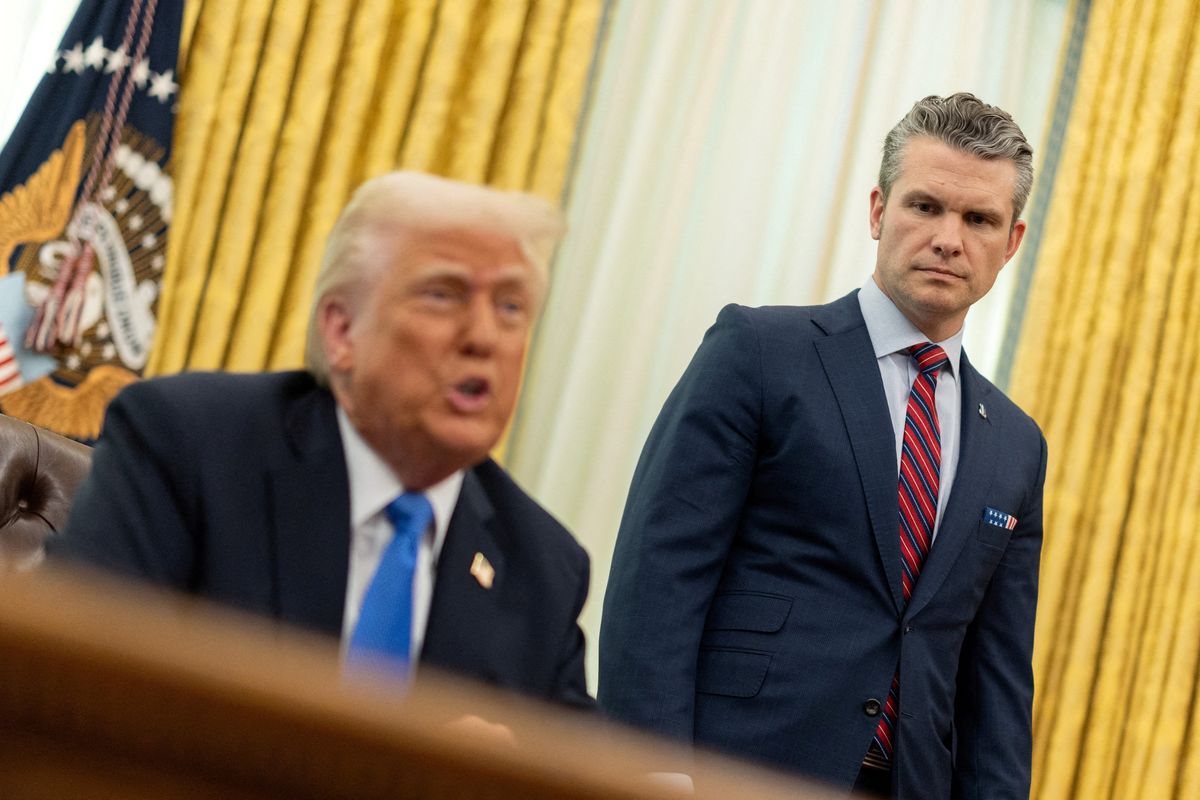
FILE PHOTO: U.S. Defense Secretary Pete Hegseth looks on, as President Donald Trump delivers remarks, in the Oval Office at the White House, in Washington, D.C., U.S., March 21, 2025. REUTERS/Carlos Barria/File Photo
Donald Trump's plan for the war with Iran could cause even further trouble for taxpayers across the country, according to a Nobel Prize winner.
Paul Krugman has warned that the president's current task in Iran is to reopen the Strait of Hormuz. Crude oil prices reached a staggering $100 a barrel earlier this week, and the veteran economist does not see the price improving any time soon. Even though the United States' own oil exporters profited from the Strait of Hormuz closure, Krugman claims there is no way this will help the average citizen.
Writing in his Substack, he explained, "Now, America produces a lot of oil, and the domestic oil industry will be earning large windfall profits even as U.S. consumers suffer. But so what?
"We don’t have any mechanism in place to capture and redistribute those windfall gains, so ordinary U.S. families will bear the full brunt of the global oil shock even though America is a net oil exporter."
"The Fed could, in principle, try to look through the effects of the Strait crisis on business costs as well as direct effects on consumer prices. But given how nervous everyone is about the risk of 70s-type stagflation, it probably won’t."
Krugman went on to suggest the reaction of the Federal Reserve could be a cause for concern. "There’s an additional, technical but important reason to be even more worried about soaring prices for diesel, jet fuel and industrial materials than about gasoline prices," he wrote. "It involves how the Federal Reserve is likely to react.
"The Fed normally bases its decisions about whether to reduce or increase interest rates on 'core' inflation — inflation excluding food and energy prices. The reason it does this is that food and energy prices are highly volatile and are usually a poor indicator of what inflation will be over the next few years."
"So the Fed tries to 'look through' inflation fluctuations driven mainly by the prices of groceries and gasoline. For example, it didn’t raise rates in 2011, when there was a temporary uptick in inflation driven entirely by oil prices."
Ewan Gleadow
April 1, 2026
RAW STORY
FILE PHOTO: U.S. Defense Secretary Pete Hegseth looks on, as President Donald Trump delivers remarks, in the Oval Office at the White House, in Washington, D.C., U.S., March 21, 2025. REUTERS/Carlos Barria/File Photo
Donald Trump's plan for the war with Iran could cause even further trouble for taxpayers across the country, according to a Nobel Prize winner.
Paul Krugman has warned that the president's current task in Iran is to reopen the Strait of Hormuz. Crude oil prices reached a staggering $100 a barrel earlier this week, and the veteran economist does not see the price improving any time soon. Even though the United States' own oil exporters profited from the Strait of Hormuz closure, Krugman claims there is no way this will help the average citizen.
Writing in his Substack, he explained, "Now, America produces a lot of oil, and the domestic oil industry will be earning large windfall profits even as U.S. consumers suffer. But so what?
"We don’t have any mechanism in place to capture and redistribute those windfall gains, so ordinary U.S. families will bear the full brunt of the global oil shock even though America is a net oil exporter."
"The Fed could, in principle, try to look through the effects of the Strait crisis on business costs as well as direct effects on consumer prices. But given how nervous everyone is about the risk of 70s-type stagflation, it probably won’t."
Krugman went on to suggest the reaction of the Federal Reserve could be a cause for concern. "There’s an additional, technical but important reason to be even more worried about soaring prices for diesel, jet fuel and industrial materials than about gasoline prices," he wrote. "It involves how the Federal Reserve is likely to react.
"The Fed normally bases its decisions about whether to reduce or increase interest rates on 'core' inflation — inflation excluding food and energy prices. The reason it does this is that food and energy prices are highly volatile and are usually a poor indicator of what inflation will be over the next few years."
"So the Fed tries to 'look through' inflation fluctuations driven mainly by the prices of groceries and gasoline. For example, it didn’t raise rates in 2011, when there was a temporary uptick in inflation driven entirely by oil prices."
Robert Reich
March 30, 2026
RAW STORY
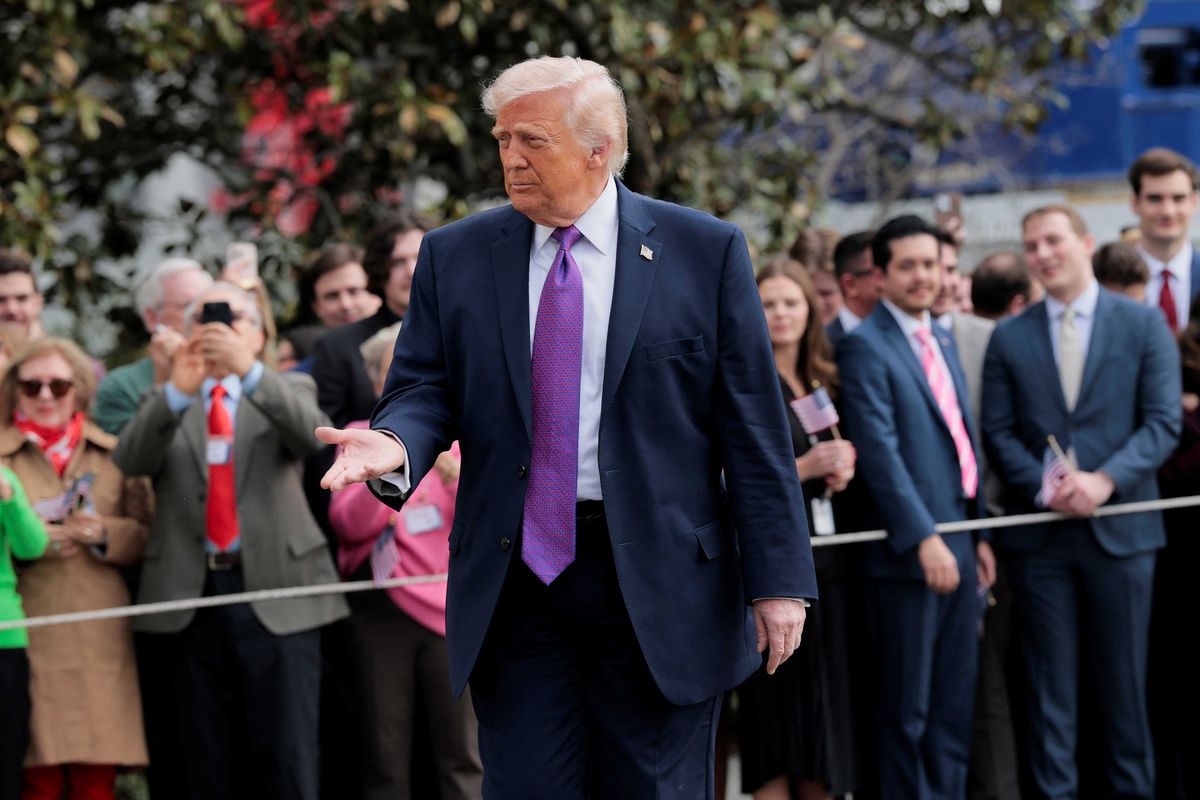
U.S. President Donald Trump walks as he heads to Marine One
U.S. President Donald Trump walks as he heads to Marine One
to travel to Ohio and Kentucky, from the White House in Washington, D.C.,
U.S., March 11, 2026. REUTERS/Brian Snyder
Friends,
When he ran for president again in 2024, Trump made three promises to the American public:
(1) He said he’d “secure” the southern border. Most Americans now believe he’s gone too far in this.
(2) He’d avoid foreign wars. He said: “We’ve spent $8 trillion in the Middle East, and we’re not fixing our roads in this country? How stupid. How stupid is it? And we’re not fixing our highways, our tunnels, our bridges, our hospitals, even.” Umm. How well has this promise turned out?
(3) His third promise was to bring prices down and create more jobs. He said: “Starting on day one, we will end inflation and make America affordable again, to bring down the prices of all goods.”
In fact, Trump has pushed prices way up.
As of today, the price of Brent crude, the global benchmark for oil, is above $116 a barrel. The average price for a gallon of gas in the United States is now $4.00, and many people are paying far more. Food costs are also heading upward.
He’s also raised tariffs on imports. This has increased the prices of everything we buy from abroad.
He has also pledged to be “the greatest jobs president that God has ever created.”
But he’s been the worst jobs president in American history.
In his first term, Trump presided over a historic net loss of nearly 3 million jobs, the worst jobs numbers ever recorded under an American president.
So far in his second term, he has presided over a loss of 150,000 jobs. (By contrast, in the final 14 months of Joe Biden’s presidency, the economy added 1.74 million jobs.)
The only thing Trump has done to make any Americans better off is to cut taxes on the rich and big corporations. He did this in his second term. It was also his major economic policy in his first term (which he promised would result in $4,000 annual raises for everyone else. How did that work out? Did you get a $4,000 raise?)
May I speak plainly? Trump has turned the American economy into s---.Trump’s economic record is only slightly worse than that of every Republican president before him. Here’s the historic truth that everyone needs to understand: The American economy does worse under Republican presidents. Since 1933, the U.S. economy has grown nearly twice as fast on average under Democrats.
Wage growth slowed after Reagan’s tax cuts for the rich and big corporations. And the Bush and Trump tax cuts didn’t trickle down, either.
These giveaways to the wealthy have come at the expense of investments in infrastructure, education, and health care — making life more expensive and difficult for everyone who isn’t rich.
They’ve also exploded the debt and deficit.
Reagan oversaw a 186 percent increase in the national debt — the biggest percentage increase in over 70 years.
The Bush and Trump tax cuts — which mostly benefited corporations and the rich — are the main reasons why America’s debt continues to grow faster than the economy.
Look at the historic record and you see something else: Republican presidents have led us into the three worst economic crises of the last hundred years.
The Great Depression began in 1929 under Herbert Hoover. The Great Recession began in 2008 under George W. Bush. The pandemic recession of 2020 began under Trump.
Democrats (FDR, Obama, and Biden) led us out of these Republican economic crises.
Republicans talk about “running the country like a business.” Sure. They’ve run it the way Trump ran his businesses: with massive debts, a string of failures, and payouts for the folks at the top, while average workers get shafted again and again.
Given Republicans’ track record, why would any hardworking American put their financial security in the hands of a Republican president (or, for that matter, a Republican Congress) ever again?
Robert Reich is an emeritus professor of public policy at Berkeley and former secretary of labor. His writings can be found at https://robertreich.substack.com/. His new memoir, Coming Up Short, can be found wherever you buy books. You can also support local bookstores nationally by ordering the book at bookshop.org
Friends,
When he ran for president again in 2024, Trump made three promises to the American public:
(1) He said he’d “secure” the southern border. Most Americans now believe he’s gone too far in this.
(2) He’d avoid foreign wars. He said: “We’ve spent $8 trillion in the Middle East, and we’re not fixing our roads in this country? How stupid. How stupid is it? And we’re not fixing our highways, our tunnels, our bridges, our hospitals, even.” Umm. How well has this promise turned out?
(3) His third promise was to bring prices down and create more jobs. He said: “Starting on day one, we will end inflation and make America affordable again, to bring down the prices of all goods.”
In fact, Trump has pushed prices way up.
As of today, the price of Brent crude, the global benchmark for oil, is above $116 a barrel. The average price for a gallon of gas in the United States is now $4.00, and many people are paying far more. Food costs are also heading upward.
He’s also raised tariffs on imports. This has increased the prices of everything we buy from abroad.
He has also pledged to be “the greatest jobs president that God has ever created.”
But he’s been the worst jobs president in American history.
In his first term, Trump presided over a historic net loss of nearly 3 million jobs, the worst jobs numbers ever recorded under an American president.
So far in his second term, he has presided over a loss of 150,000 jobs. (By contrast, in the final 14 months of Joe Biden’s presidency, the economy added 1.74 million jobs.)
The only thing Trump has done to make any Americans better off is to cut taxes on the rich and big corporations. He did this in his second term. It was also his major economic policy in his first term (which he promised would result in $4,000 annual raises for everyone else. How did that work out? Did you get a $4,000 raise?)
May I speak plainly? Trump has turned the American economy into s---.Trump’s economic record is only slightly worse than that of every Republican president before him. Here’s the historic truth that everyone needs to understand: The American economy does worse under Republican presidents. Since 1933, the U.S. economy has grown nearly twice as fast on average under Democrats.
Wage growth slowed after Reagan’s tax cuts for the rich and big corporations. And the Bush and Trump tax cuts didn’t trickle down, either.
These giveaways to the wealthy have come at the expense of investments in infrastructure, education, and health care — making life more expensive and difficult for everyone who isn’t rich.
They’ve also exploded the debt and deficit.
Reagan oversaw a 186 percent increase in the national debt — the biggest percentage increase in over 70 years.
The Bush and Trump tax cuts — which mostly benefited corporations and the rich — are the main reasons why America’s debt continues to grow faster than the economy.
Look at the historic record and you see something else: Republican presidents have led us into the three worst economic crises of the last hundred years.
The Great Depression began in 1929 under Herbert Hoover. The Great Recession began in 2008 under George W. Bush. The pandemic recession of 2020 began under Trump.
Democrats (FDR, Obama, and Biden) led us out of these Republican economic crises.
Republicans talk about “running the country like a business.” Sure. They’ve run it the way Trump ran his businesses: with massive debts, a string of failures, and payouts for the folks at the top, while average workers get shafted again and again.
Given Republicans’ track record, why would any hardworking American put their financial security in the hands of a Republican president (or, for that matter, a Republican Congress) ever again?
Robert Reich is an emeritus professor of public policy at Berkeley and former secretary of labor. His writings can be found at https://robertreich.substack.com/. His new memoir, Coming Up Short, can be found wherever you buy books. You can also support local bookstores nationally by ordering the book at bookshop.org

No comments:
Post a Comment