Wednesday, June 29, 2022

Jim Obergefell: Justice Thomas Should Remember ‘The Right to Interracial Marriage is Only 6 Years Older’ Than Roe

By Sarah Rumpf
Jun 26th, 2022, 

Jim Obergefell spoke to CNN’s Jim Acosta on the seven-year anniversary of the landmark 2015 Supreme Court case Obergefell v. Hodges that legalized same-sex marriage, and discussed the Court’s recent ruling overturning Roe v. Wade, specifically concerns that the case will lead to other cases being overturned.

On Friday, the court released its opinion in Dobbs v. Jackson Women’s Health Organization, which looked at a Mississippi law banning virtually all abortions after the 15th week of pregnancy, with narrow exceptions for medical emergencies and “severe fetal abnormality” but not for rape or incest.

In the opinion, written by Justice Samuel Alito, the court addressed whether various provisions of the U.S. Constitution conferred an “implicit constitutional right” to an abortion, finding that “[t]he Constitution does not confer a right to abortion; Roe and Casey are overruled; and the authority to regulate abortion is returned to the people and their elected representatives.”

In a separate concurring opinion, Justice Clarence Thomas argued that the Court “should reconsider all of this Court’s substantive due process precedents,” and specifically listed Griswold v. Connecticut (1965, granting right of married persons to obtain contraceptives), Lawrence v. Texas (2003, right to engage in private, consensual sexual acts), and Obergefell.

These cases represented “demonstrably erroneous decisions,” wrote Thomas, and the court had a “duty to ‘correct the error’ established in those precedents.”

It should be noted that this view was promulgated by Thomas alone; Alito, Justice Neil Gorsuch, and Justice Amy Coney Barrett agreed with Thomas that Roe should be overturned, and Chief Justice John Roberts opposed overturning Roe but agreed with upholding the Mississippi law.

Still, Thomas’ concurrence was causing “growing alarm in the LGBTQ community,” commented Acosta during Sunday’s episode of CNN Newsroom.

Acosta noted the date was the anniversary of the Obergefell opinion, playing a video clip of President Barack Obama calling Obergefell to congratulate him on the court victory, and asked his guest for his reaction to the Dobbs opinion.

“It’s been a terrible several days for our nation,” Obergefell replied. “Half of our country lost the right to control their own body, and that should terrify everyone in this nation who believes in our ability to make decisions for ourselves.”

Thomas “put a target on the back” of other rights like contraception and marriage, and “that should terrify everyone in this nation,” he said.

Dobbs was a “terrible decision,” he continued. “We should be moving forward not backwards. And this court is taking us backwards, this extreme court is taking us backwards.”

Thomas did not mention Loving v. Virginia, the 1967 case that found laws banning interracial marriage to be unconstitutional, Acosta remarked. Thomas’ wife, Ginni Thomas, is White, and has been the focus of multiple reports regarding her communications with people within former President Donald Trump’s administration, members of Congress, and people involved in the organization of protests that led to the Jan. 6 attack on the U.S. Capitol.

“To me it’s a clear indication that if it’s a case that impacts him directly, it’s safe,” Obergefell said, “but if it’s a case that protects other people, other people who are unlike him, then we’re not very safe.”

“The right to interracial marriage is only six years older than a woman’s right to abortion,” he noted. “Our nation has a much longer history of denying interracial marriage. Do we want to go back to the late 18th century, the originalist who’s saying we can only interpret the constitution as of the time it was written? When that constitution was written, ‘We, the People,’ did not include blacks, indigenous people, it did not include women, it did not include queer people. That is not a more perfect union.”


Watch the video via CNN.
LYSISTRATA
Aristophanes inspires sex-strike in America following controversial abortion ruling

by STELLA MAZONAKIS


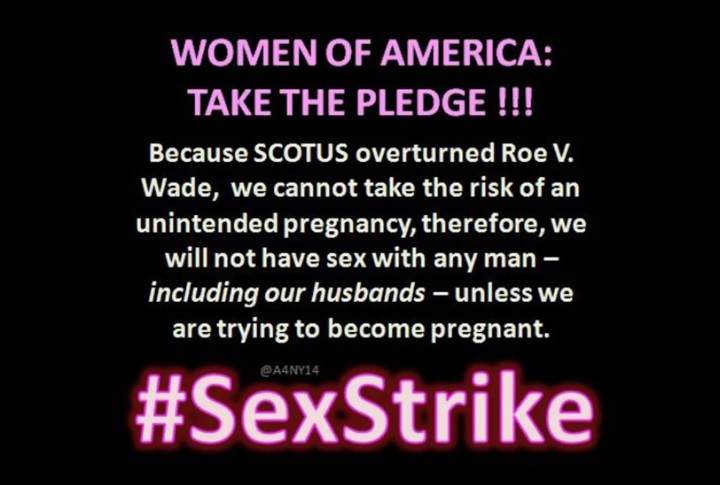
Life is imitating art in the United States, Greek art to be precise, as many women are calling for a sex-strike following the US Supreme Court’s decision to overturn a ruling that previously guaranteed women the constitutional right to abortion.

It’s seems Greek culture still has an armoury of ideas and devices that prove their utility even now, 2500 years later, since in a similar call, Greek playwright Aristophanes in his comedy Lysistrata performed in Athens in 411 BC saw Athens and Spartan women denying their husbands sex unless they put an end to the [Peloponnesian] War. That’s what inspired the ‘making love not war’ anti-war rallying call.

Lysistrata the heroine, persuades the women of the warring cities to withhold sexual privileges from their husbands and lovers as a means of forcing the men to negotiate peace—a strategy, however, that inflames the battle between the sexes.

In New York on Saturday, abortion protestors were calling for a sex strike which started trending on Twitter reported the New York Post.

“If you’re a man who won’t get a vasectomy, even though it’s reversible, and you’re not out in the streets fighting for my rights, you do not deserve to have sex with me,” Brianna Campbell, a 24-year-old EMT, told The Post.

Caroline Healey, a 22-year-old event coordinator, also questioned why sex was more important than women’s rights.

“I think it’s absolutely valid for us to be withholding the Holy Grail that men seem to think is important,” she told The Post at an abortion protest in Manhattan’s Union Square.

“Why shouldn’t we withhold it if we’re always worried that they’re not going put a condom on, that they’re going take one off after we ask them to,” she added.

“If we can’t safely go out and have sex and know that we will have a choice after that, then why should we be expected to?”

Maya Demri, a survivor of rape, insisted that women need to “do everything in their legal power to get our rights back” after the high court struck down the landmark abortion ruling.

“I cannot sit here and imagine what my sisters in red states are going to do if they’re getting pregnant by rape and need to not just carry the tragedy of the worst thing that has happened to them, but also carry them in the body for nine months,” she told The Post.[New York Post]
Roe v Wade: Church that helped Jane Roe still aids abortion-seekers

By Chelsea Bailey
BBC News, Dallas, Texas
IMAGE SOURCE,NICK GIBSON, BBC NEWS
Rev Daniel Kanter preaches about abortion access at First Unitarian Church of Dallas in Texas

A Texas church in Dallas, one of the most religious cities in the United States, has become a haven for those seeking abortions. For members, its long history in the fight for reproductive choice brings hope for a post-Roe future.

It was well before dawn in Dallas but a group of women were already seated scrolling through their phones or picking at a free continental breakfast in the classroom where they had been told to gather. Bleary-eyed and yawning, they were waiting to board a flight that would change their lives.

Many were women of colour, all were from different backgrounds. A teenager came with her mom. Another woman drove through the night from Oklahoma.

But they all had one thing in common - each was more than six weeks pregnant and could not legally obtain an abortion in the state of Texas.

They had also all placed their trust in a seemingly unlikely source - volunteers with the First Unitarian Church of Dallas - who would fly them to New Mexico, where they could end their pregnancies.

The tension was palpable as the church's senior pastor, Rev Daniel Kanter, addressed the women assembled.

"God loves you. You have dignity and worth and your life is the priority here," he said. "If you're surprised a person of faith like me is standing in front of you saying that - that's a good thing. But it shouldn't be".

An earthquake Supreme Court decision in the US last week has reversed a 50-year precedent which had said that American women had a constitutional right to an abortion - and many of those who had campaigned for this reversal were prominent Christians.

Yet the issue of abortion and faith is a lot more varied. First Unitarian Church of Dallas, specifically, has a long history fighting for abortion access, having helped bring about the 1973 ruling that had guaranteed the right to the procedure.

That mission has not ended with the reversal of Roe v Wade - and First Unitarian's fresh fight to help women get abortions reveals much about surprising divisions among American Christians over the matter.

IMAGE SOURCE,PEW RESEARCH CENTRE

Before abortion was legalised in 1973, people would often turn to faith leaders for help with unintended pregnancies. In 1967, a network of Protestant and Jewish leaders founded the Clergy Consultation Service to provide counselling and referrals to doctors who would perform the procedure. It's estimated the service helped more than 400,000 people access abortions.

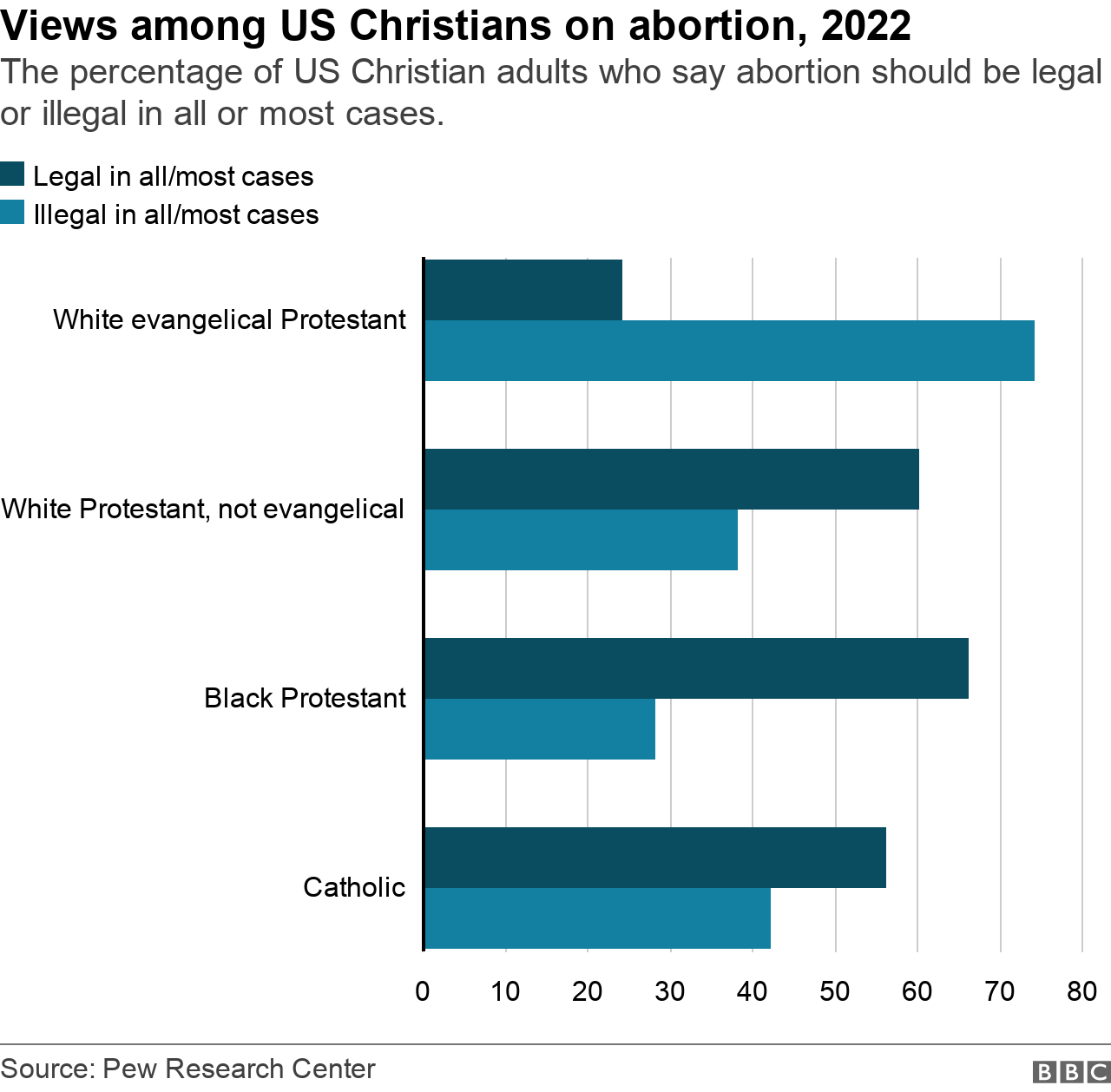
Harder lines emerged in the later decades of the 20th Century after Roe. Today, abortion is seen by many evangelical Christians and Catholics as a clear-cut case of murder, condemned in the Bible. According to a recent survey by the Pew Research Centre, nearly three-quarters (74%) of white evangelical Protestants believe abortion should be illegal in all or most cases.

Within those figures, though, are hidden nuances.

Almost two-thirds of black Protestants and a majority of white protestants who are not evangelical, say the opposite - that the procedure should be legal in all or most cases - as do a majority of Catholics.

The division often comes down to an existential question about when life begins, and a theological debate over how Jesus instructs followers to live their lives. For Albert Mohler Jr, an evangelical Baptist and president of the Southern Baptist Theological Seminary, the Supreme Court's decision to overturn Roe "was absolutely necessary". For Mr Mohler, and thousands of evangelical Christians, the Bible is unequivocal on abortion.

"Every single life is made in God's image and thus is of priceless, infinite worth," he said, adding that Christians who say otherwise differ from him not just theologically, but morally.

"I have to work and pray that that division remains peaceful and insofar as it's possible, respectful," he said.

But for pro-choice Christians, it is supporting reproductive choice that's in keeping with the example Jesus set, according to Katey Zeh, a Baptist minister and CEO of the Religious Coalition for Reproductive Choice.

Christ "showed up for people in their vulnerable moments, especially for people who were impacted by systemic oppression and those who were pushed to the margins," she said. "I see Him being a clinic escort, being there inside to hold their hands."

The Unitarian Universalists have long been in the pro-choice camp.

"Before Roe, the clergy of my church were driving women to the Gulf of Mexico to get on boats to go out in international waters and have legal and safe abortion," Rev Kanter said.

The denomination as a whole has roots in Protestant Christianity, but now incorporates traditions from other faiths. Many Unitarian Universalists today still identify as Christian, however.

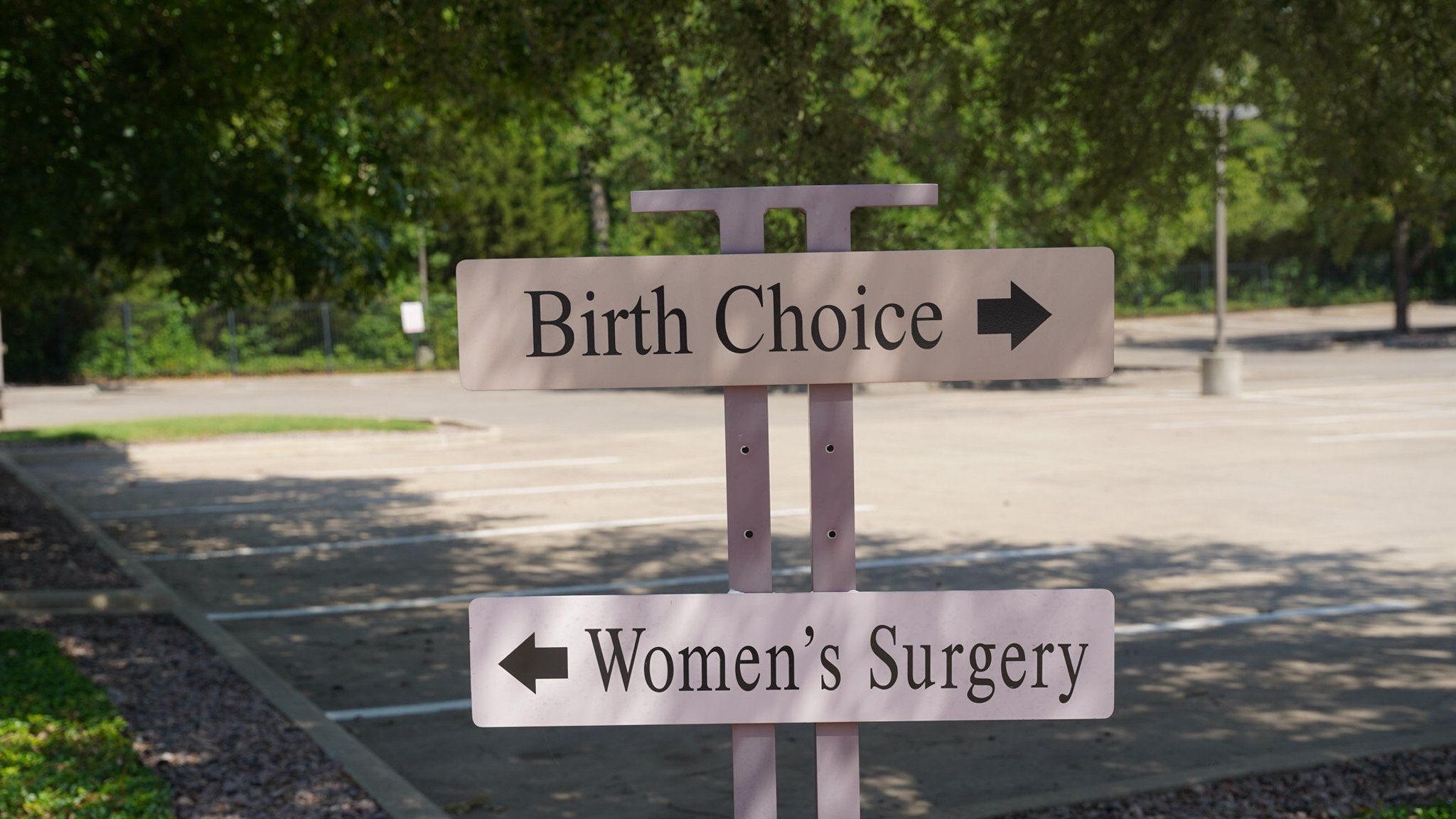
A sign outside an abortion clinic in Dallas

It was January 1970 when the women's group of the First Unitarian Church of Dallas's women's group met to discuss an issue dividing the nation then as now: abortion.

According to minutes seen by the BBC, they were joined by a young lawyer named Linda Coffee, who along with her colleague Sarah Weddington, was determined to file a lawsuit against the state of Texas over its restrictions to abortion access.

Ann*, who was seated among the women gathered that day, said that - much like the country - opinions about abortion among the women in the group at the time varied greatly.

"But the more we learned about how difficult it actually was [to get an abortion]... we just got radicalised," the now-92-year-old said.

As none of the women were pregnant at the time, none could serve as a plaintiff, so they helped by submitting a key legal brief in support of reproductive choice when Coffee and Weddington did go to court with the Roe v Wade case.

Media caption,
Watch: Lawyer Sarah Weddington was just 26 years old when she argued Roe v Wade


Today, that legacy continues and there are reminders of it throughout the church.

Signs in the lobby inform visitors that the church provides Plan B, an emergency contraceptive pill, to anyone in need. There's also information about Our Whole Lives, the comprehensive sex education course that Unitarian Universalists offer from kindergarten through to adulthood. The programme emphasises healthy relationships, consent and communication, sex, and reproductive health access.

Many of the church's members shared their own stories with the BBC. There's Adryelle, who nearly died giving birth to her first child and said she could not imagine being forced to continue a pregnancy. Or Peg, who said she felt lucky because before abortions were legal in the United States, she had been able to have a safe and legal abortion while traveling in the United Kingdom.

Rev Kanter said that history was front of mind when he started the New Mexico abortion access network. The programme, which began when Texas passed one of the most restrictive abortion laws in the country last year, is funded through donations from pro-choice people of different faith backgrounds across the country. To qualify for the network's assistance, the person seeking an abortion must be below the poverty line - but that's where the requirements end.

The church says its role is simply to facilitate access, not to encourage people to have - or not have - the procedure. That is a personal choice, Rev Kanter said.

On a recent Sunday, he shared from the pulpit the story of his own experience with abortion.

He spoke openly of falling in love, sex, youthful indiscretion, and ultimately a difficult decision with a former partner to end the pregnancy. Part of his decision to become a minister was to heal from the experience, he said.

Unbeknownst to many, the church hired plain-clothes officers who were seated among the congregation that Sunday, in acknowledgement of how volatile the issue has become.

With Roe v Wade overturned, more and more states will pass abortion bans. Rev Kanter said he expects to increase the frequency of the trips from Texas to New Mexico.

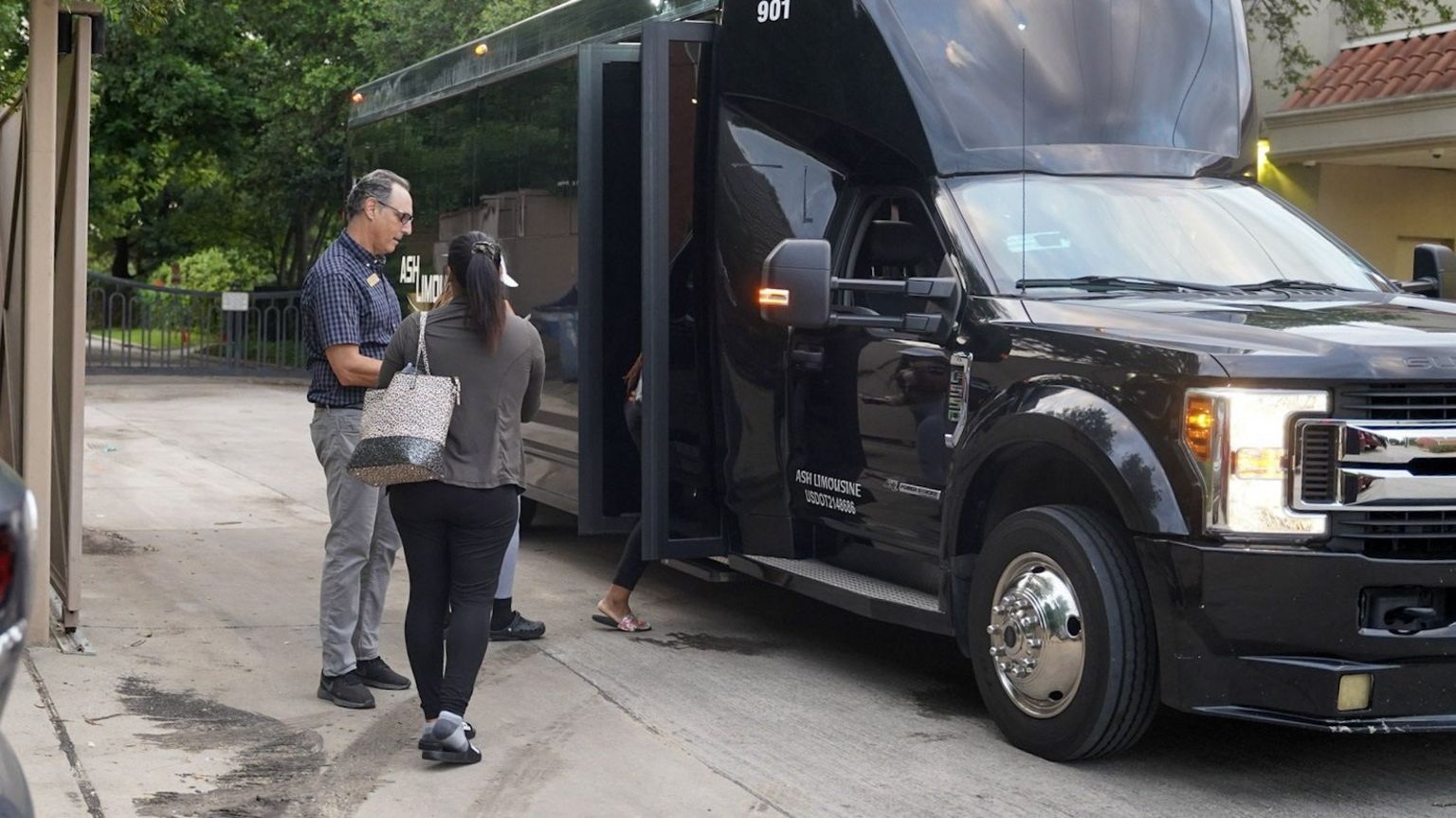
Rev Daniel Kanter assists a patient using the access network to get an abortion in New Mexico

On the night Roe v Wade was overturned, the church gathered again to join hands and pray for strength to continue their mission to help abortion-seekers.

"Hold this grief, but not too long," he told his congregants. "We will still do what we can to help women get safe and legal abortions."


https://en.wikipedia.org/wiki/Unitarianism

Unitarianism is a nontrinitarian Christian theological movement that believes that the God in Christianity is one singular person. Most other branches of ...

https://en.wikipedia.org/wiki/Unitarian_Universalism

Unitarian Universalism (UU) is a liberal religion characterized by a "free and responsible search for truth and meaning". ... Unitarian Universalists assert no ...

Rep. Jackie Speier: States Banning Abortion Should ‘Require Impregnators to Put Up a $350,000 Bond’ To Care for Child

By Natalie Korach
Jun 26th, 2022, 


Following the Supreme Court decision on Dobbs v. Jackson Women’s Health Organization, Rep. Jackie Speier (D-CA) challenged state legislatures with abortion bans to shift priorities to the “responsibility of the impregnator.”

Landmark abortion court case Roe v. Wade was overturned Friday by a 5-4 ruling, effectively returning the legality of abortion to individual state authority. After the opinion was announced, “trigger laws” in 13 states came into effect sharply limiting or outright banning abortion.

Speier, who has been vocal about her experience with abortion, condemned the Dobbs decision Sunday when interviewed by CNN’s Jim Acosta.

Acosta played an emotional clip of the congresswoman speaking about her abortion and how it saved her life on the House floor. In 2011, in the midst of an hours-long debate over the funding for family planning programs, Speier gave her deeply personal perspective.

In response, the congresswoman said “I realize the luxury, frankly, that I had,” to receive the procedure, acknowledging that it was “taken away from women today across this country.”

“We’ve never had this kind of a Supreme Court decision that took away the rights of people,” continued Speier, “and it is confounding so many of us they could be so extreme as members of the Supreme Court.”

“We will not let this stand,” assured the congresswoman.

Speier has been vocal in her opposition to the Supreme Court decision on social media invoking her personal experience.

Acosta then questioned the congresswoman about statements made earlier in the day by fellow Rep. Alexandria Ocasio-Cortez (D-NY), in which she called for the impeachment of Supreme Court justices who “lied under oath.”

Speier responded, “There’s no question they lied and they did that under oath. So there should be consequences.”

“There has been nothing said about the fact that a woman doesn’t get pregnant with immaculate conception,” she continued. “There’s an impregnator and there’s not a word that’s been said about the responsibility of the impregnator.”

Speier proceeded to implore that legislatures restricting abortion within their states “require the impregnator to put up a $350,000 bond so that this mother can take care of that child.”

Watch via CNN

The Importance of Colombia’s Election

Mexico’s President Andrés Manuel López Obrador has assumed the mantle of leader of Latin America’s struggle against US hegemony and the US’s colonial treatment of the region. He has called for “the replacement of the Organization of American States (OAS) by a new body that integrates all the countries of Latin America and the Caribbean.” He wants that new body to be “a truly autonomous body, not a lackey of anyone.” He has demanded an end to "impositions, interference, sanctions, exclusions and blockades." He has stressed regional integration and initiated a “new, very close relationship between Mexico and Cuba.” To demonstrate the sincerity of his support for regional inclusion and integration, he recently led a boycott of the US hosted Summit of the Americas.

López Obrador may soon be gaining a powerful partner. Brazil’s latest polls predict a victory for Lula da Silva. Lula DA Silva wore the mantle before López Obrador when he first served as Brazil’s president. Representing Latin America’s two largest economies, López Obrador and Lula DA Silva would make a formidable partnership.

But, though less in the spotlight, something equally important has happened in Latin American politics. On June 19, Colombia elected Gustavo Petro as president. Petro is the first president to be elected in Colombia in over three quarters of a century who leans to the left and away from Colombia’s elites and fealty to the United States.

But the significance of Petro’s election goes well beyond his position on the political spectrum or that Colombia is the third largest country in Latin America, meaning that, if Lula DA Silva is elected, he and López Obrador will lead a group of countries with left leaning governments who seek to integrate the region and balance American hegemony regionally that includes the seven largest nations in the region.

The significance is not just what Latin America gains but what the US loses. Colombia has long been the key to US projection into Latin America and a base of operations against Venezuela, a key nation in the challenge to US hegemony in its hemisphere. Biden has "said many times that Colombia is the keystone of U.S. policy in Latin America and the Caribbean." He has called the relationship between the two nations "the essential partnership we need in this hemisphere," and Colombia "the linchpin . . . to the whole hemisphere." The election of Petro could usher in the loss of this "essential partnership."

The US has long fostered extremely close ties with Colombia’s military and security forces. Columbia has been one of the biggest recipients of US aid, pulling in nearly nine billion dollars’ worth of military aid despite having, what Noam Chomsky has called, "by far the worst human rights record in the hemisphere".

Petro’s election signals a challenge to both regional and global hegemony for the US. Long the key ally in the region in opposing and isolating Venezuela and its elected president, Nicolás Maduro, Petro made re-establishing ties with Maduro and Venezuela a campaign promise. Some expect the reestablishing of relations to "be a radical, profound change" and "a 180-degree turn."

His election also signals a strengthening threat to US hegemony globally. Mark Weisbrot, Co-Director of the Center for Economic Policy and Research and an expert on Latin America, told me that, if Lula returns as president of Brazil, he will "be active in promoting economic integration in the hemisphere" but he will also "pursue good relations with both the US and China." Though China has now passed the US as the top trading partner of South America, as part of its "essential partnership" with the US, Colombia has focussed economically on the US and generally not participated in Latin America’s growing relationship with China and Russia. That loyalty to a US led unipolar world may be challenged, and Petro is likely to join Lula in pursuing good relations with both the American pole and the Chinese-Russian fostered larger multipolar world.

The election of Petro continues the tide of Latin American nations, including Argentina, Chile, Peru, Honduras and Bolivia, to elect governments that not only lean left but lean toward Latin American integration and a balancing of regional US hegemony. Joining Cuba, Venezuela and Nicaragua and lining up behind Mexico and, possibly, soon Brazil, this tide will be a powerful force confronting US hegemony in the region. It may also be a powerful balancing force against US hegemony globally.

Ted Snider has a graduate degree in philosophy and writes on analyzing patterns in US foreign policy and history.

ANTIWAR.COM

Australia’s emissions climbed in Coalition’s final year as transport and fossil fuels wiped out gains during Covid

New data shows carbon pollution rose 0.8% in 2021 as manufacturing, agriculture and gas bounced back from pandemic lockdowns


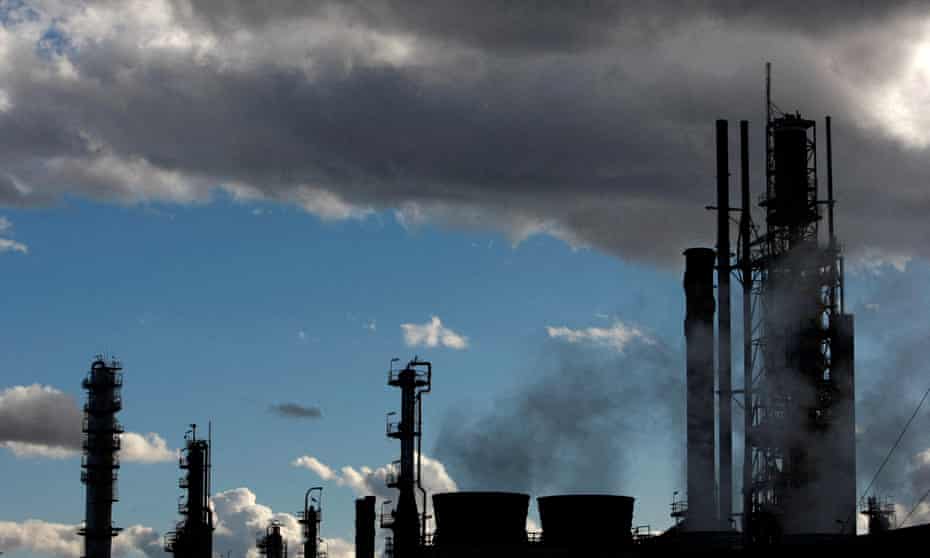
Australia produced 488m tonnes of carbon dioxide emissions 
during the Coalition’s last year of government. 
Photograph: Mick Tsikas/Reuters

Adam Morton
Climate and environment editor
THE GUARDIAN
Mon 27 Jun 2022 

Australia’s greenhouse gas emissions increased in 2021 as the country wound back Covid-19 lockdowns without taking significant steps to maintain a fall in carbon pollution recorded during the pandemic.

National emissions rose 0.8% – 4.1m tonnes of carbon dioxide – in the final full year of the federal Coalition government, according to government data released on Monday.

While pollution from electricity generation continued to drop due to an increase in renewable energy and reduction in coal power, this decrease was effectively cancelled out as emissions from transport, manufacturing and fossil fuel developments – notably the gas industry – bounced back.


Greenhouse emissions from Australia’s coalmines could be twice as high as official figures say

Emissions were also up from agriculture as the recovery from drought continued.

Officials said compared with 2005 levels – the benchmark the Australian government uses in its international climate commitments under the Paris agreement – emissions were down 21.4%.

But nearly all of this cut was due to a dramatic drop in the emissions from what is known as “land use, land use change and forestry” between 2006 and 2016. Land use emissions were estimated to have fallen dramatically in that period due to changes in state land-clearing laws, a decline in native forestry and forest regeneration in some semi-arid areas.

If the change in land use and forestry emissions is excluded, pollution from the rest of the Australian economy – including the country’s substantial fossil fuel industries – has dipped by only 1.6% since 2005.

The Albanese government’s target of a 43% cut compared with 2005 levels by 2030 includes all parts of the economy, including land use and forestry.

Percentage change in emissions by sector.

The new climate change minister, Chris Bowen, said the latest quarterly data showed the Coalition had relied on Covid and drought to misleadingly claim emissions had reduced in recent years. He said the previous government had “caps off its record of denial and delay by increasing emissions on the way out”.

“Their failure to deliver proper climate policy over a decade undermines the great strides in emissions reduction made through household solar, the renewable energy target and state-based renewable schemes in the electricity sector over recent years,” he said. “Good climate and energy policy is good economic policy – it doesn’t rely on recession and drought for short-term and temporary emissions reduction.”

Australia’s quarterly emissions by source.


The Coalition’s climate change spokesman, Ted O’Brien, was asked for his response.

The greenhouse gas inventory update for the December quarter shows:

Total national emissions for the year were estimated to be 488m tonnes.

The rise of solar power and a cut in coal generation helped push emissions from electricity down 4.2% (7m tonnes) compared with the previous year.

Pollution from transport was up by 4% (3.5m tonnes) as people spent less time in lockdowns and more time in their cars.

Other sectors to see emissions bounce back were heavy industry including manufacturing (3.3%, 3.3m tonnes), agriculture (4.2%, 3.1m tonnes) and fugitive emissions resulting from venting and flaring at oil and gas sites (1.8%, 0.9 m tonnes).


Foetus fronts legal challenge over emissions in South Korea

Looking at the change since 2005, easily the biggest shift in emissions was from land use and forestry, which is estimated to be down more than 140%. Where the sector used to release 90m tonnes, it is now estimated to be a carbon sink, drawing down nearly 40m tonnes from the atmosphere.

This estimate is not universally accepted: an analysis of Queensland data suggested forests in that state were being cleared at almost twice the rate reflected in national greenhouse accounts.Remove changes in land use and forestry from the national greenhouse accounts and the overall change across the fossil fuel economy is small. Electricity emissions dropped nearly 19%, but pollution from other “stationary energy” facilities – essentially heavy industry – were up nearly 26%.

Percentage change in emissions by sector.

Transport emissions were up 10% compared in 2005 last year, but were still below their peak due to Covid lockdowns and are likely to increase further in 2022. The same applies to fugitive emissions from fossil fuel mines, which were 18% higher than in 2005 but still not back at 2019 levels.Australia’s quarterly emissions by source.

Bowen said Labor’s 2030 target and commitment to reach net zero emissions by 2050 would be underpinned by its “powering Australia” plan. It includes a $20bn fund to accelerate the rollout of renewable energy, a gradual reduction in industrial emissions using the Coalition’s “safeguard mechanism” and reducing taxes on electric vehicles.

Scientific estimates have suggested Australia should be cutting emissions by more than 50% by 2030 to play its part in meeting the goals of the Paris climate agreement.

Tim Baxter, from the Climate Council, said the country needed ambitious policy and concrete measures to reduce the burning of coal, oil and gas.

“Through late 2021 the best the former federal government could manage was bluff and bluster, so it’s hardly surprising emissions sprung back up as Covid lockdowns eased,” he said.

“We need to urgently, permanently and drastically cut greenhouse gas emissions to protect Australian lives, livelihoods and the places we cherish.”
Reporter’s Notebook: Women’s invisibility in climate stories erase their narratives. The result is bad policy

by  Disha Shetty
June 13, 2022
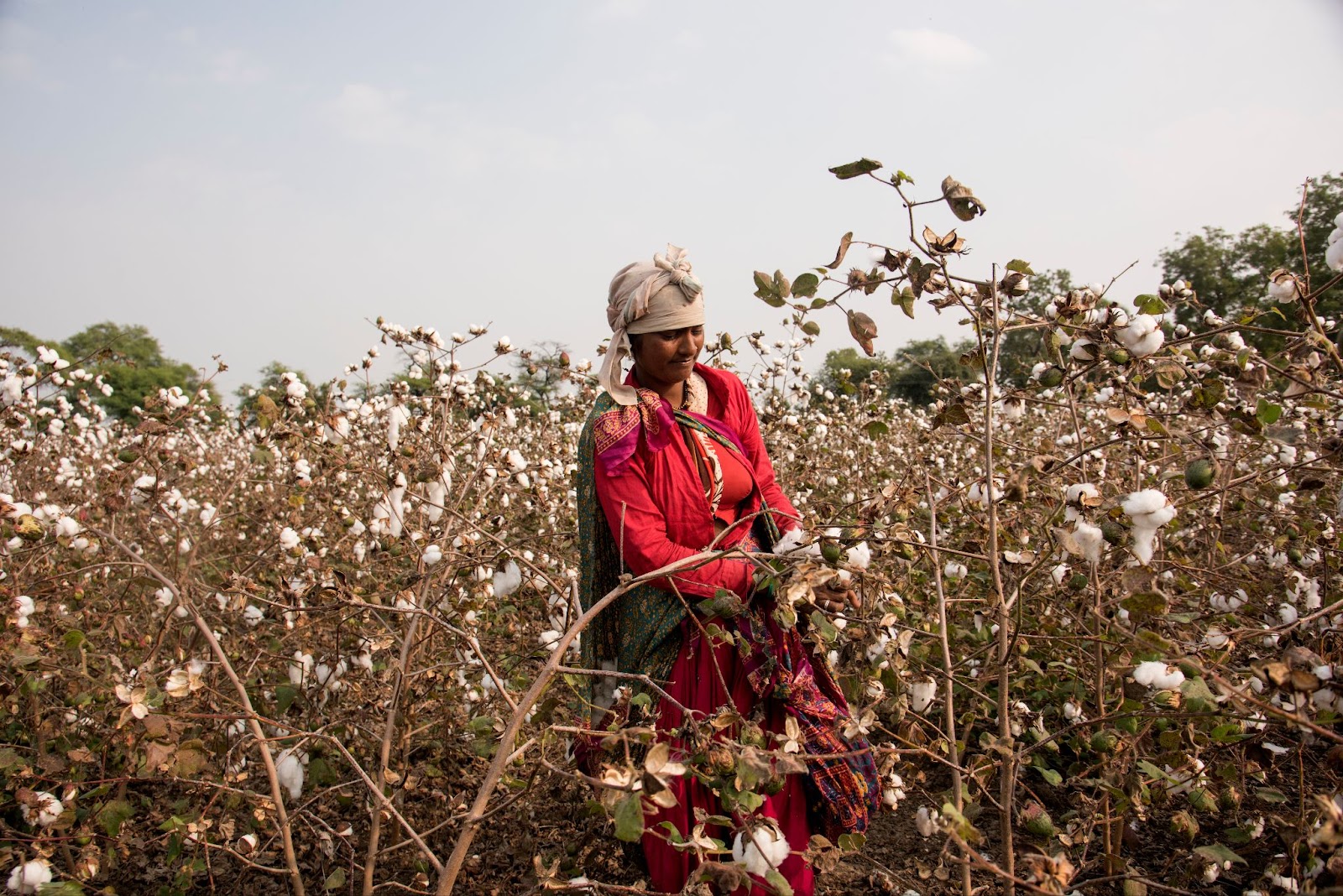
A woman farmer in Maharashtra harvests cotton in the field. (Photo/CR Shelare)

Ralegaon is a common stop for journalists reporting on India’s farmer suicide crisis. Rising temperatures and long droughts have hit this rural part of central India particularly hard, causing cotton crops — the lifeblood of the region — to fail, driving thousands of farmers in the region to death by suicide. Their deaths have become a major story in India and abroad.

When I met social worker and farmer Madhuri Khadse during my own reporting trip to Ralegaon last year, I asked if any journalists had come to write about women farmers before me.

“No,” she said. “But they should have. I have not seen any headlines about women farmers or their problems. There is nothing about them [in the news].”

Khadse runs the nonprofit Prerna Gram Vikas Sanstha, which works primarily with women farmers in the area — she knew that they too were being hit hard by the climate crisis. This should have been a no-brainer for us journalists as well: according to official government statistics, 75.7% of rural women in India are engaged in agriculture. But in article after article, farmers are often exclusively portrayed as men.
With the changing climate hitting the agriculture sector hard, women’s invisibility in media coverage leaves their distress unacknowledged. That’s why it was a relief to see the latest report by the Intergovernmental Panel on Climate Change (IPCC) state that women are especially vulnerable to climate change, and that it is urgent to integrate women’s perspectives in order to address the crisis.

We know that climate change affects women differently from men. One impact is an increase in invisible and unpaid labor such as care work. And in much of the developing world, the climate crisis is increasing internal migration.

“What we see is that often it is men who are moving, with women left to handle unproductive farms and livestock while also undertaking all care work from older parents or young children,” said Chandni Singh, a senior researcher at the Indian Institute for Human Settlements (IIHS) and a lead author of the IPCC report. This increased burden, she said, is poorly captured in our solutions to climate change.

Excluding women’s voices leads to poor policy decisions: “Adaptation actions do not automatically have positive outcomes for gender equality,” said Anjal Prakash, research director at the Indian School of Business, Hyderabad, and another lead author of the IPCC report. A 2021 report commissioned by Internews, a media non-profit, found not only that fewer women than men appear in environmental stories in Asian media, but that when women did appear they tended to be reduced to victim status, rather than offering solutions.

This is why it’s so refreshing when journalists break the mold to present a feminist gaze on climate. “I’m really tired of seeing male experts, just giving solutions,” journalist and filmmaker Neelima Vallangi told me. One of the storylines in her documentary, The Weight of Water, tracks the impact of Himalayan springs drying up on local communities and sheds light on the rise of uterine prolapse among women who have to travel further and further to bring back heavy loads of water. The film is unassuming in its presentation of the female point of view, but I was deeply moved — it made me realize just how rare it is to see women at the center of climate narratives. This is exactly the type of work we need to see more of; it is exactly the type of work that we aspire to do at The Fuller Project. In the coming months, I’ll be putting out several stories which look at the impact of climate change on women. Stay tuned for a look at the hidden toll of India’s heatwaves on women.
As heat waves sweep South Asia, they take a hidden toll on women
The Fuller Project
June 27, 2022
Co-published with Scroll


WHAT YOU NEED TO KNOW

South Asia has been suffering an unprecedented heat wave, with March 2022 the hottest on record in India.

There is growing evidence that rising heat is disproportionately affecting women — one study in India found they were significantly more likely than men to die in a heat wave.

Heat waves also increase women’s care burden: 60% of women home-based workers surveyed in low-income housing across Bangladesh, India and Nepal reported a rise in unpaid labor during heat waves and floods.

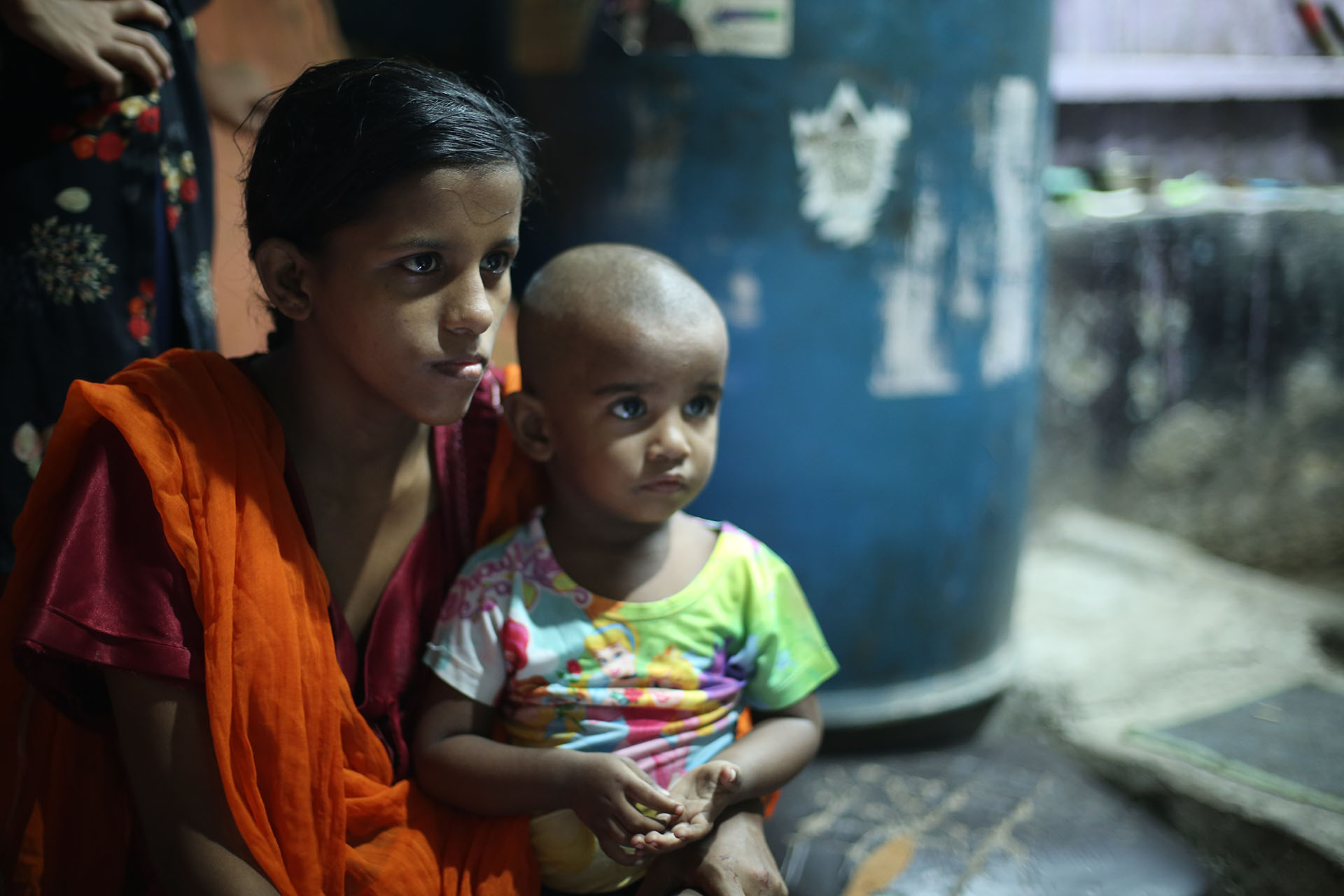
Aliya Shakir Sheikh works from her home in Mumbai’s Shivaji Nagar slum. This summer she was pregnant and the heat left her anxious and too drained to work on most days, she says. (Shankar Menon for The Fuller Project)
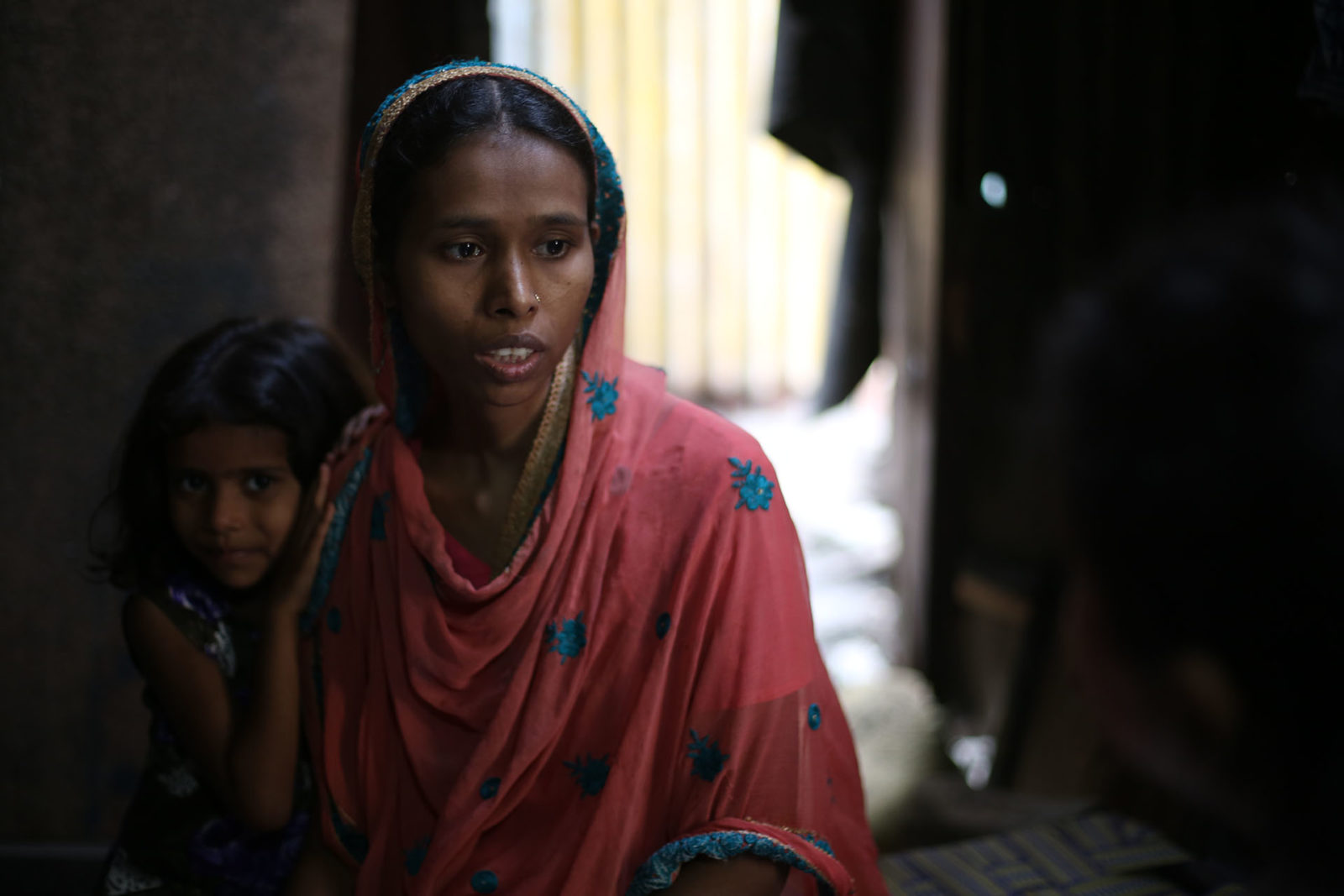
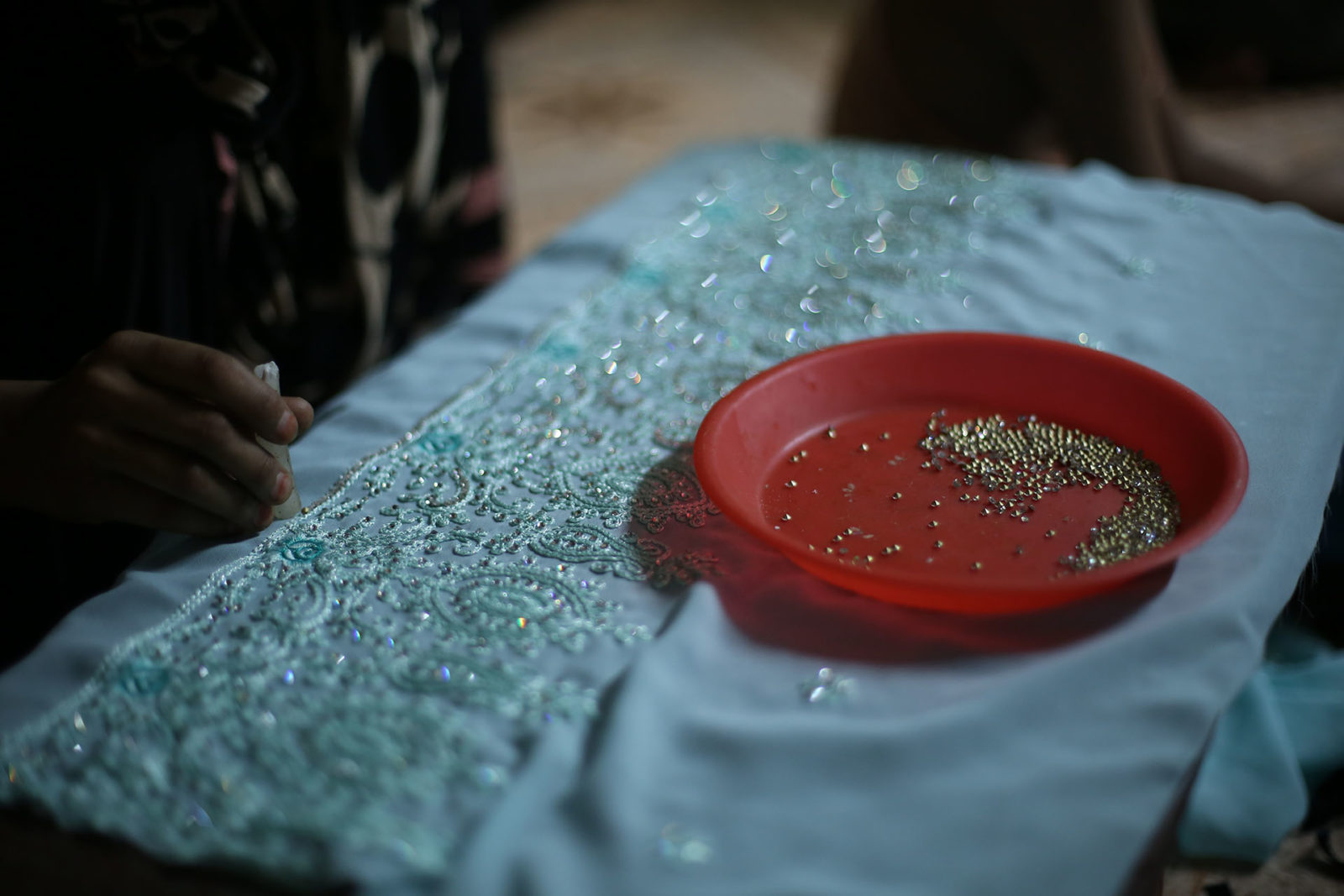
Each night, Aliya Shakir Sheikh keeps one eye fixed on her toddler and three-day-old baby. At the same time, she struggles to stay focused on work, painstakingly sticking tiny, shiny stones onto embroidered cloth by hand. Time is of the essence: the unbearable heat has already made her lose precious hours.

Sheikh makes 5 rupees, or 6 cents, for each piece of cloth. Before the summer, she was completing 50 on a good day and earning up to $3 a day, toiling away in a windowless one-room home in Shivaji Nagar, a slum area in Mumbai. Now, at the tail end of one of the hottest summers recorded in Indian history, she says she can barely muster the energy to finish four in a day — not enough to buy the food she needs.

By the time she breastfed her baby later that afternoon, Sheikh still hadn’t eaten all day.

“I’ve felt very anxious this summer, which is not something I’ve felt before,” she says.

Her experience is not an isolated one. A January 2022 report linked climate change to a decline in productivity among home-based women workers, like Sheikh, living in slums across South Asia. The report, produced by HomeNet South Asia, a regional network of home-based worker organizations, found that heat waves were the most significant factor behind 43% of the women surveyed reporting a loss of cash incomes, and 41% reporting reduced productivity.

The HomeNet report also found that the heat resulted in a daily increase of over two hours of caregiving and other household work for the women, which ate further into their work time. Meanwhile, a study of excess deaths during a 2010 heat wave in Ahmedabad found significantly more women than men had died.

This growing body of evidence challenges common preconceptions that men are affected worse by heat waves because they do more work outdoors.

Shalini Sinha, India representative for WIEGO, a global research network focused on improving conditions for women in the informal economy, says that not only do women work outdoors as street vendors, waste pickers, or brick-kiln workers, but that they are also uniquely vulnerable as home-based workers — isolated in pressure-cooker environments inside poorly-ventilated asbestos, tin, or concrete homes that trap heat and can be just as bad, or worse, than outdoor conditions.

“Climate change is still relatively new and home-based workers are invisible, so this conversation has only recently come together,” says Sinha, highlighting the need for more data-based research on the topic. “And at first it was an environmentally-led articulation of the problem, with climate change. Only recently have we seen livelihoods come into the equation, and even more recently that informal livelihoods are being factored in.”
Double blow

The Asia-Pacific region is home to 65% of the world’s home-based workers. These are workers who cook from home, make clothes from home or do similar odd jobs. In South Asia, 24% of all female employment is home-based as opposed to 6% for men, according to HomeNet South Asia.

India alone is estimated to have around 42 million home-based workers, most of them women, but the real figures could be higher. Many of them juggle household chores and caring for children and older relatives and earning income. For them, heat waves have dealt a cruel double blow, affecting both their health and productivity.

As well as heat exhaustion and heat stroke, heat waves can also cause cramps, headaches, lethargy and weakness, severe dehydration and blood clots, according to the World Health Organization.

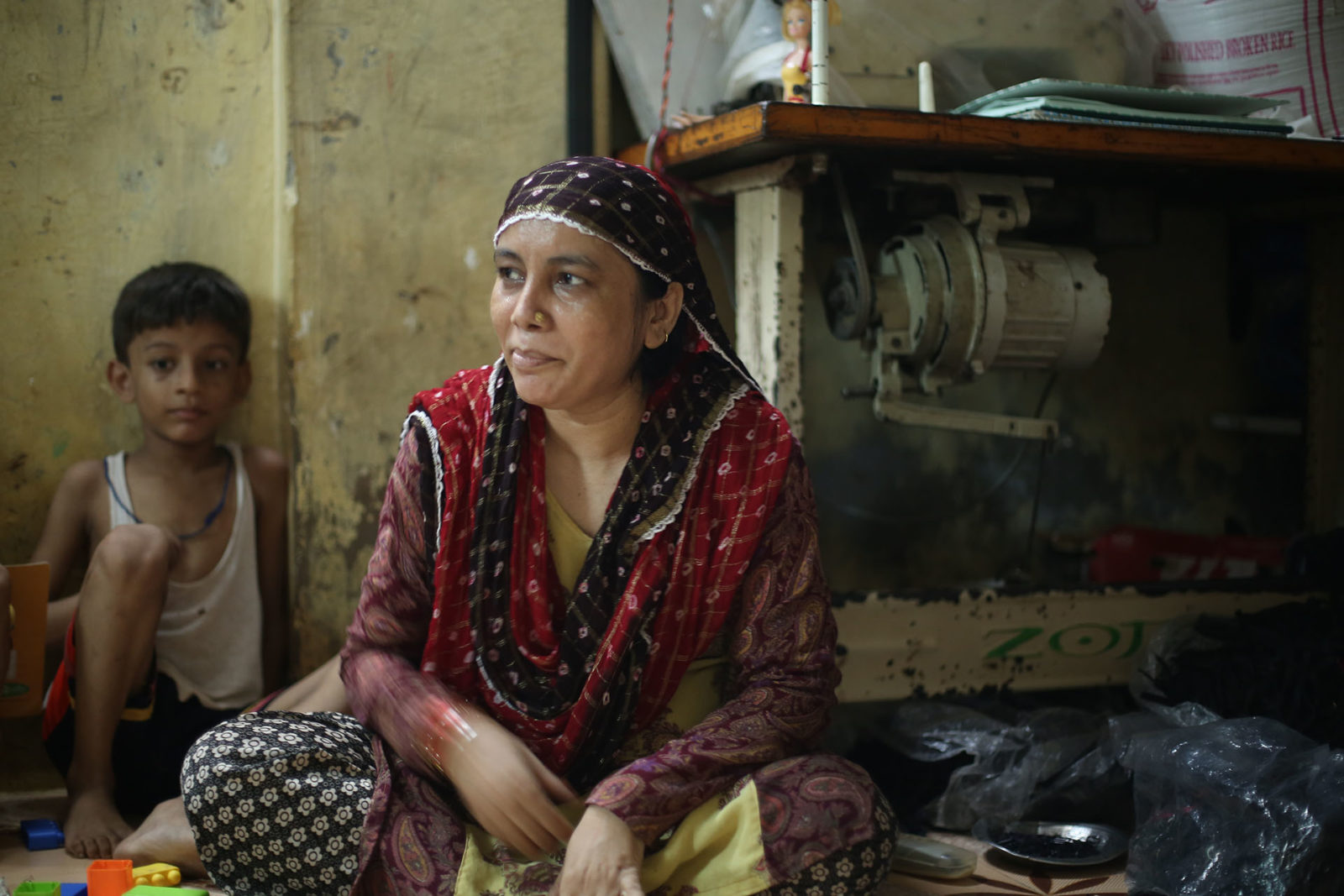
Najmunnisa Ali Hasan Ansari says she and her four children have struggled to sleep through the night this summer because of the record breaking heat. (Shankar Menon for The Fuller Project)
Cooking gas is too expensive, so Najmunnisa Ali Hasan Ansari cooks for her family over a wood fire, pushing the indoor temperature even higher. Like Sheikh, she too works from home, making ends meet performing small sewing jobs in a furnace-like room with no toilet or running water. When she goes outside, it’s often to carry back heavy loads of water to refill the large plastic drum that serves as her family’s water supply.

To escape the indoor heat, the 30-year-old and her four children gather near the large openings in their wall that serve as entrances and exits to their one-room home in Shivaji Nagar. But even this offers little relief from the sweltering conditions, exacerbated by Shivaji Nagar’s location next to Mumbai’s main garbage dump. The densely packed settlement is filled with the stench of the dump, which frequently catches fire, making the heat even worse.

Her productivity dips when the heat rises, she says. The loss of income during this heat wave is a major setback; the cooling monsoon rains that will follow will bring no relief, because her home will flood.

“I get very little work in the summers. When it starts raining, my home will leak. I won’t be able to work much then either. What will I eat? What will I feed my children?” Ansari asks.

Ansari and Sheikh both earn a living by working on embroidered pieces of cloth and sticking shiny stones on them to make them appear attractive. For this task that the entire family is involved in, they are paid around 6 cents per piece of cloth
(Shankar Menon for The Fuller Project)

The Asia-Pacific region is home to 65% of the world’s home-based workers. These are workers who cook from home, make clothes from home or do similar odd jobs. In South Asia, 24% of all female employment is home-based as opposed to 6% for men, according to a HomeNet South Asia report.

India alone is estimated to have around 42 million home-based workers, most of them women, but the real figures could be higher. Many of them juggle household chores and caring for children and older relatives and earning income. For them, heat waves have dealt a cruel double blow, affecting both their health and productivity.

Gulrez Shah Azhar, a researcher involved with the Ahmedabad study who also helped draw up India’s first heat action plan, says the impact of indoor heat on women in particular is amplified by other factors, from the clothes they wear to a lack of access to sanitation facilities.

The best thing to do in a heat wave is to drink lots of water, says Azhar, but women with no access to an indoor toilet are often reluctant to do that. “And that is deadly in summers,” he says.

As well as heat exhaustion and heat stroke, heat waves can also cause cramps, headaches, lethargy and weakness, severe dehydration and blood clots, according to the World Health Organization. As climate change causes temperatures to rise, there is growing fear that regions like South Asia with high heat and high humidity could become unlivable.

This March was India’s hottest since the meteorological department began tracking temperatures 122 years ago. April brought another heat wave to large swathes of Pakistan, India and Nepal. Then May, the hottest summer month in the region, saw over three dozen cities and small towns across India record temperatures over 45 degrees Celsius (113 Fahrenheit) for several days.

Moetasim Ashfaq, a computational climate scientist at Oak Ridge National Laboratory in Tennessee, says the evidence is clear that such events are set to become more intense and more frequent. Currently the planet is 1.1 degree Celsius (2 degrees Fahrenheit) warmer than in the pre-industrial era. Another half a degree of warming would make deadly heat waves a routine phenomenon across South Asia.

“That is alarming for this region, because we expect this half a degree warming could happen within the next 20 years,” Ashfaq says.

“We keep moving in and out of the house when it gets too hot,” says Ansari. “But there is relief neither outside nor inside. This is how it is.”

A rise in unpaid labor

AAhmadi Faruqui has seen her workload increase as two of her four children fell ill during the heat wave this summer. (Shankar Menon for The Fuller Project)
The Intergovernmental Panel on Climate Change — the United Nations body set up to assess climate science — said in its latest report that factors like gender, ethnicity and poverty combine to worsen the impact of climate change. Women like Ansari and Sheikh, who live in Muslim communities like Shivaji Nagar that are among India’s poorest and most marginalized, will be among those hardest hit.

As home-based workers, Sheikh and Ansari belong to yet another marginalized category. The International Labor Organization estimates that 57% of the world’s 260 million home-based workers are women, with many of them also taking on more unpaid labor, such as caring for their families, than men do.

Ahmadi Faruqui, a mother of four who runs an informal nursery out of her home in Shivaji Nagar, was already looking after her husband and a daughter, both of whom suffer from chronic health conditions that require frequent visits to the doctor. Then two of her other children began suffering from heat rash.

Women like her, with caregiving responsibilities, are faced with a difficult choice: work into the night, or take a hit on their incomes.

“We work less in the summer,” she says. “We stop work in the afternoon and rest for 2-3 hours. We work again in the evenings when the temperature cools down. That affects our income.”

“The moment there is an illness in the family, the burden is definitely on the woman,” says Poornima Nair, director of health and disability at Apnalaya, a Mumbai-based non-profit which provides support to the urban poor and works with the community in Shivaji Nagar.

Almost 60% of the women surveyed for the HomeNet report said their daily care workload had increased by more than two hours due to heat and flooding.

Dharmistha Chauhan, the lead researcher for the report, says that while many practitioners assume climate change will increase the care burden for women, there is little actionable data on the topic.


“How the caregiving roles increase, in which areas it will increase more, which strata of women it will affect more, that kind of research and data is missing,” Chauhan says. “And because the data is missing, the action on that never happens.”


Azhar, the researcher involved in drawing up India’s heat action plan, says there needs to be immediate action on multiple levels: individual, city, national and international. From creating awareness on an individual level about drinking more water during a heat wave and building cities with more shade, to investing more in national public healthcare systems and pushing to reduce global carbon emissions, the response needs to be wide-ranging and ambitious.

In the absence of these solutions, the women of Shivaji Nagar are coping however they can. When asked what she compromises on when her income falls, Faruqui says she and her younger daughter go without milk.

“Instead of buying a liter (about two pints) of milk every day, we buy half a liter. We give milk to each of our children on alternate days, but mostly the girls get left behind,” she says. “We can’t compromise on the medicines, so we compromise on the milk.”

Additional reporting by Maher Sattar.


Why is a South Korean fringe group backing Japan's position on WWII 'comfort women'?

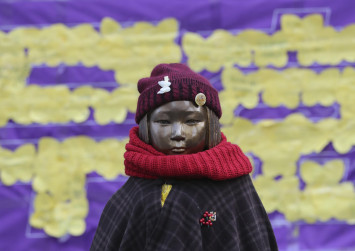
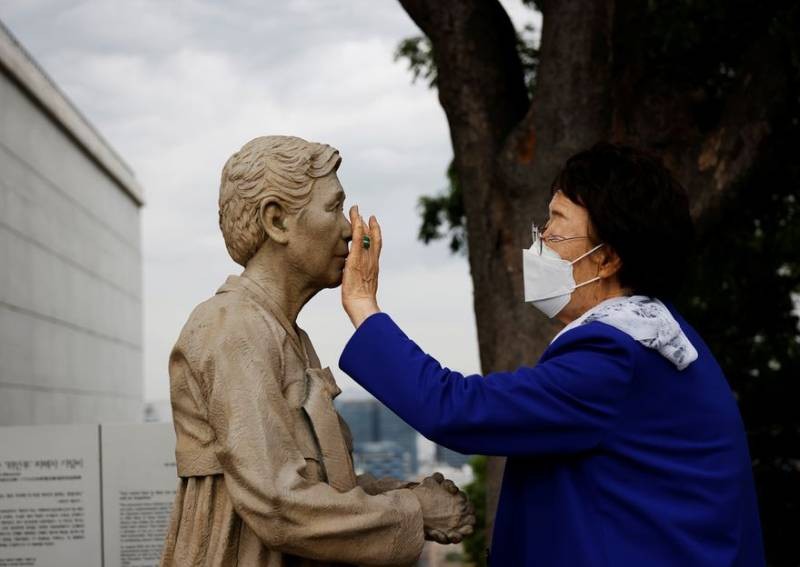
Lee Yong-soo, a former "comfort woman" looks at a statue that symbolises "comfort women" at the Seoul Comfort Women Memorial in Seoul, South Korea, on June 29, 2021.
Reuters

They have been accused of being traitors, found guilty of defamation by courts, threatened online countless times and even assaulted in the street, but a group of South Korean activists and academics refuse to give in to the mainstream belief in their homeland on the issue of "comfort women".

The group's position runs contrary to the UN Special Rapporteur's 1996 report on violence against women.

In that, Radhika Coomaraswamy defined the comfort women system as sexual slavery and urged the Japanese government — which has often called the women prostitutes, not sex slaves — to acknowledge its legal responsibility and to pay compensation to the victims, who were mainly Korean but were also from the Philippines, China and other East Asian countries.

Nevertheless, the End Comfort Women Fraud civic organisation has united several smaller groups that perceive Korea's history differently, including the Free Youth League, the Korean Society for Modern and Contemporary History and the National Enlightenment Movement Headquarters.

PHOTO: Reuters

Around 40 people make up the core of the organisation, drawn from academia, politics and activism.

And although the group is widely derided in domestic media as being ultra-rightist and revisionist, its members prefer to describe themselves as conservative.

Four of its campaigners are travelling from South Korea to Germany for weekend talks with Berlin city elders about a statue of a comfort woman unveiled in the Mitte district in September 2020.

They want to explain their view that information on a panel next to the statue is incorrect and perpetuates a one-sided interpretation they say is not supported by historic evidence, and they also want the statue removed.

However, an offer to meet representatives of Korea Verband, the civic group in Berlin that arranged for the statue to go on public display, has already been rebuffed, the group said, while German police have informed them they are likely to face a fierce reception in the city.

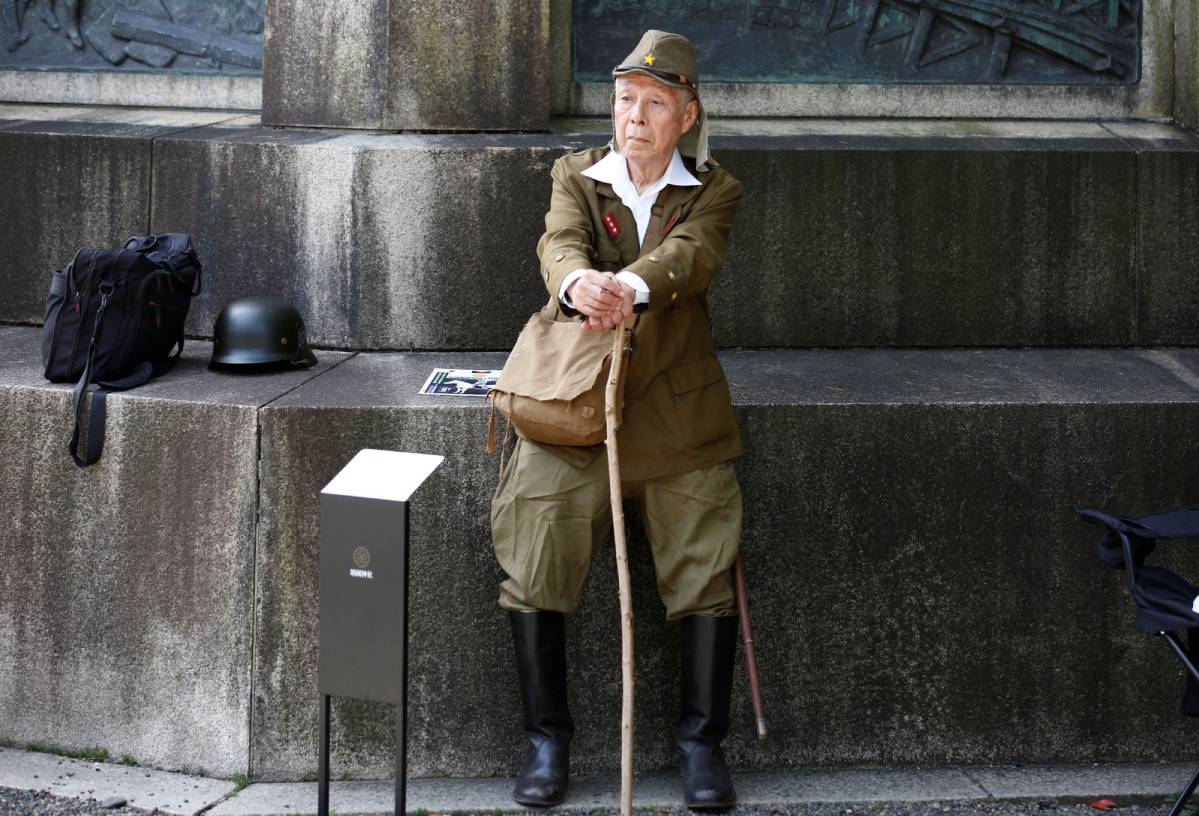
A man dressed as an imperial army soldier sits near the Yasukuni Shrine in Tokyo in August 2018, on the 73rd anniversary of Japan’s surrender in 1945.
PHOTO: Reuters

Nevertheless, the activists insist that unless South Korea can move on from the colonial occupation of the Korean peninsula a century ago, then the nation's reputation and security are in jeopardy.

"The Mitte district originally approved a statue that would symbolise victims of war, in particular women who were victims of sexual violence in wartime, but when the statue was unveiled the inscription on a panel was very different," said Kim Byung-heon, director of the Korean History Textbook Research Institute.

The activists had opposed the original concept of erecting statues of comfort women.

They also say the description accompanying the statue changed from an earlier proposal for a broad condemnation of violence against women to a very specific condemnation of Japan.

"The inscription says the Japanese military abducted thousands of women and enslaved them as 'sex slaves'," he said.

That description of history is widely accepted in South Korea, the academics agree, but their own understanding of history is deeply unpopular in their homeland.

According to Kim, Dr Lee Woo-yeon, co-author of the bestselling Anti-Japanese Tribalism and a member of the Naksungdae Institute of Economic Research, Joo Oksoon, a former politician with the Liberty Korea Party, head of End Comfort Women Fraud and executive director of South Korea's Mothers Broadcasting Station, there is clear evidence of contracts being signed for women to work in brothels for the military during the years of Japan's colonial rule.

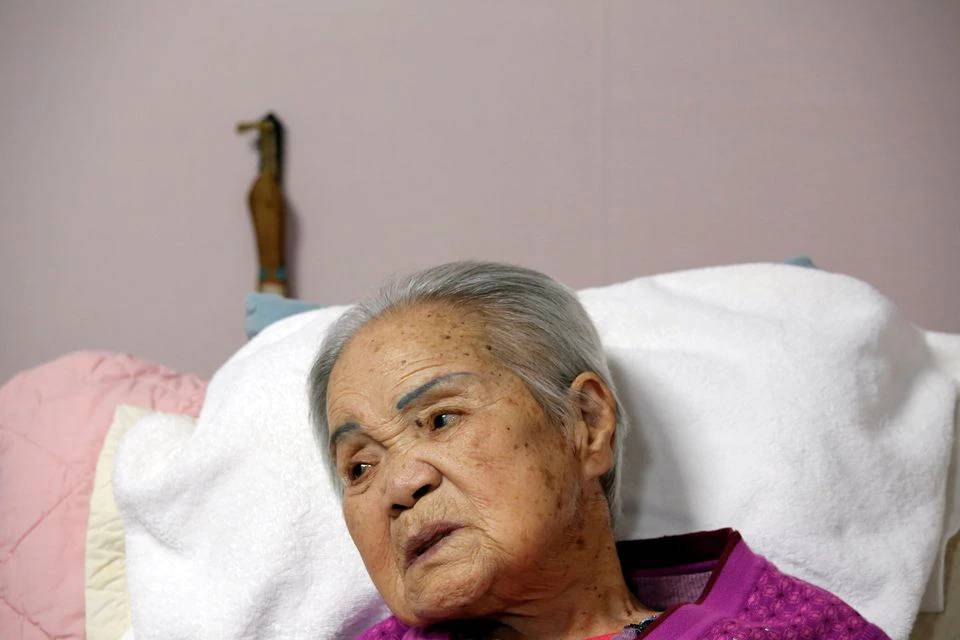
Lee Ok-sun, former South Korean "comfort woman", speaking during an interview with Reuters at the House of Sharing in Gwangju-si, Gyeonggi-do, South Korea, on May 4, 2021. 
PHOTO: Reuters

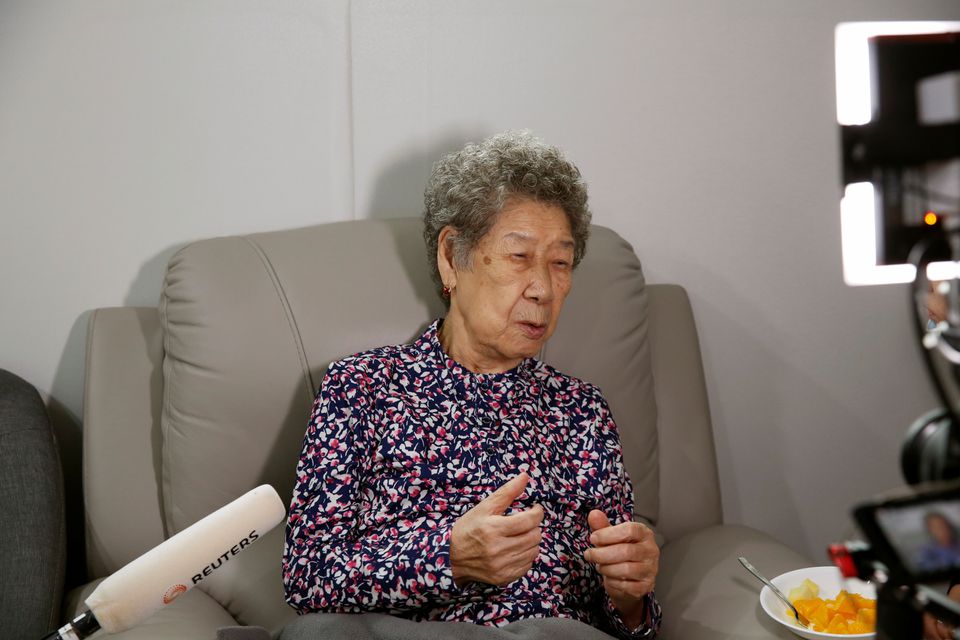
Often the contracts were signed by a young woman's parents, something that Koreans do not like to think about, they said, with little evidence that women were dragooned into prostitution against their will, and they say the women were permitted to return home after they completed their contracts.

They were indeed sex workers, the academics agree, but the often-used term "sex slaves" is incorrect, in their view, as that suggests the women were coerced into working in brothels for the Japanese military.

The term "sex slaves," they insist, is deceptive because it is emotionally charged as well as being simply wrong; they say the women were actually contracted, paid and permitted to leave their places of work at the end of their contracts, which were for a minimum of six months but typically for a year.

Others have pointed out that poverty was endemic in rural parts of Japan-controlled Korea and brokers took advantage of that to recruit young women.

Kang Il-chul, former South Korean "comfort woman", speaking during an interview with Reuters at the House of Sharing in Gwangju-si, Gyeonggi-do, South Korea, on May 4, 2021.
PHOTO: Reuters

Still, the group has pointed out what it claims are discrepancies to the Mitte authorities in Berlin, Kim said, and requested changes to the panel, but the local Korean group lobbied hard and the statue remains, as does the original accompanying sign.

The academics are also disappointed that Berlin has extended the initial agreement for the statue to remain in place for a year, their concern being that it could become a permanent fixture and be used to support efforts to erect similar statues and plaques in other cities.

There are at least 30 comfort women statues around the world and Kim, Lee and Joo hope that getting the outcome they want in Berlin might help them convince other local authorities to remove their statues.

The group says the statues should go as they are widely described as representing a young girl forcibly taken to work in military brothels, which they insist is inaccurate.

A statue of a girl that represents the sexual victims by the Japanese military in front of Japanese embassy in Seoul, South Korea, on Dec 28, 2015.

"I wrote my book because there is fundamentally an anti-Japanese sentiment in Korean society, a tribalism rooted in nationalism, meaning that Korean people are reluctant to accept evidence of anything less than the Japanese being devils and all Koreans good," said Lee, who has been physically attacked twice and also pelted with eggs and flour for his beliefs.

"There is also the deep-rooted belief that Koreans are always the victims and the Japanese always the perpetrators, and that narrative has played a big part in shaping the national sentiment," he added.

Yet Kim says since September 2020 there has been a noticeable decline in physical and verbal attacks on anyone who puts forward alternative interpretations of the comfort women narrative.

At that time, South Korean prosecutors indicted a member of parliament and the head of an advocacy group on eight charges of fraud and embezzlement.

Read Also
The 'comfort women' of South Korea: Pawns in a political game?

Yoon Mee-hyang resigned as head of the Korean Council for Justice and Remembrance for the Issues of Military Sexual Slavery by Japan after a prominent victim accused her of exploiting the comfort women to obtain public donations and government funds, much of which she was accused of spending on herself.

Yoon has denied the charges and the case continues, but the coverage has damaged the comfort women's campaign for justice.

"We saw a big change in public sentiment at that time," said Kim, pointing out that before Yoon's arrest, it was impossible to challenge her version of events.

Kim and his colleagues also point out that claims that comfort women were forcibly abducted, forced to work and denied basic human rights have been further damaged by the council "doing nothing" to challenge North Korea on its appalling human rights record.

This, they claim, is evidence of the council's pro-Pyongyang sympathies rather than a genuine concern about the well-being of victims of human rights abuses.

"Under the administration of [former President] Moon Jae-in, it was very difficult to explain to officials in Berlin, but we really believe we need to make our voices heard now," said Joo.

Read Also
Historical documents show Japan's role in WWII sex slaves

"Under Moon, the relationship with Japan was at its lowest ebb since the war," she said. "We believe that the most important thing right now is to re-establish military ties with Japan, as well as with the US, for security reasons.

"Economic ties with Japan have also suffered, but we need to revive that trade for our own national interests," she added. "South Korea may be small, but we are strong and we have a trade-driven economy, so the concept of tribalism is old-fashioned and damaging to the nation."

Kim concurred, saying, "The primary reason for our visit to Germany is to correct the false narrative surrounding the comfort women because it is hurting the South Korea-Japan relationship, but is also hurting Korea's ties with Germany and other countries.

"If this situation continues, South Korea will be labelled as a country where falsehoods are treated as facts and we will be isolated in the international community."

This article was first published in South China Morning Post.