Tuesday, August 29, 2023

Racist housing practices left Minneapolis with an extreme heat problem. Now, the city is rushing to reverse the lasting effects of environmental racism.

DeArbea Walker
Mon, August 28, 2023 

Children gathered on a warm summer night in Minneapolis.
Rita Reed/Star Tribune via Getty Images

Minneapolis has been found to have neighborhood temperature disparities influenced by redlining.


The city hopes to rectify its history of environmental racism with a new Climate Equity Plan.


Local organizers hope this plan is a first step toward addressing rising heat in their communities.


This article is part of "Journey Toward Climate Justice," a series exploring the systemic inequities of the climate crisis. For more climate-action news, visit Insider's One Planet hub.


For years, Minneapolis was seen as a progressive haven in the Midwest, with Democrats having long controlled the city. But as the 2020 murder of George Floyd laid bare, the Minnesota capital's reputation had largely belied the conditions on the ground. The city ranks near the bottom for racial equality: Black families earn less than half of what white families make, and the Black incarceration rate is 11 times that of white residents.


The city is also one of the worst perpetrators of environmental racism.


The George Floyd Memorial in Minneapolis.Kerem Yucel/AFP via Getty

A 2020 study by the data firm CAPA Strategies found Minneapolis among the three US cities with the largest surface-temperature differences between formerly redlined and non-redlined neighborhoods. At its most extreme, that difference was nearly 11 degrees Fahrenheit.


A Home Owners' Loan Corporation redlined map of Minneapolis.Mapping Inequality/National Archives

Redlining refers to a discriminatory housing practice. In the early 20th century, the federal government created maps marking each area of the city with one of four classifications. Red, the lowest tier, was deemed "hazardous." It was also the only place Black people were allowed to purchase housing in the city. These formerly redlined areas still experience an outsize share of hazardous environmental conditions.

"It's always communities of color facing the brunt," Tee McClenty, the executive director at MN350, a grassroots organization in Minneapolis advancing climate policy, told Insider. "I want to see communities of color — Black and brown like me — have a seat at the table to talk about what are the plans to improve the lives of those most impacted."

MN350 and other local environmental advocacy groups have pushed the city to address this discrepancy before it leads to a larger climate disaster. Last month, the city revised its 2013 Climate Plan, laying out a comprehensive timeline, union protections for jobs created under the plan, as well as a higher annual funding threshold. The new plan also emphasizes racial-equity provisions.

Hotels and cafés in the Gateway District in Minneapolis in 1939.John Vachon/Library of Congress
A history of restrictive housing practices

In the 1930s, President Franklin D. Roosevelt's New Deal hoped to stimulate the economy through homeownership. These programs, however, offered federal aid only to white Americans. The Home Owners' Loan Corporation created maps of major US cities that classified areas by risk-based characteristics to help banks determine how different properties should be valued.

The existing racial makeup of neighborhoods often played an explicit factor in the classifications. Neighborhoods that had Black or Asian populations were considered less desirable and were redlined. The areas with the highest grades were given to rich, white neighborhoods.

Racist housing restrictions also guaranteed that houses would be bought only by white owners. Contractual agreements known as racial covenants would prohibit homes from being bought by particular groups of people.

One early housing covenant, from 1910 in Minneapolis, proclaimed that the area "shall not at any time be conveyed, mortgaged or leased to any person or persons of Chinese, Japanese, Moorish, Turkish, Negro, Mongolian or African blood or descent."


People marching toward City Hall in Minneapolis in 1934.
Anthony Potter Collection/Archive Photos/Getty Images

Black people had begun to come to Minneapolis in the early 20th century during the Great Migration. They were quickly pushed into these redlined areas. Because of this, Black residents at the time primarily resided in the north side and in certain pockets of the south side of the city, reinforcing housing segregation.

Today, the north and south sides are cut off from the rest of the downtown area by major highways and interstates. In 1960, the neighborhoods where highways were routed were home to 82% of the city's Black residents. This has resulted in higher rates of polluted air, water, and asthma for those communities.

Industrial manufacturing and chemical plants were also built in those areas, which also tended to lack tree canopies and green spaces. Neighborhoods with the highest percentage of low-income residents of color are over twice as likely to not have the appropriate number of tree canopies, according to a Star Tribune investigation last year.

"For a variety of reasons there's not enough tree canopy in northern Minneapolis, and I think that is the hottest part of the city," Ulla Nilsen, a senior organizer at MN350, told Insider. "Low-income and communities of color tend to not have as much access to air conditioning, substandard housing — it's not well insulated, so it lets the heat through. Across the country, Black Americans are the most at risk for heat-related illness."

For all these reasons, previously redlined neighborhoods suffer from extreme heat. Extreme heat can be deadly, and heat waves continue to intensify around the world during the climate crisis. A lack of tree canopies and green spaces, the construction of highways and industrial manufacturing plants, paved surfaces, and income inequality have all created a climate crisis for communities of color in Minneapolis.


A coordinator gathering children in Minneapolis to attend summer activities.
Darlene Pfister/Star Tribune via Getty Images


A flawed Climate Action Plan

In 2013, the city adopted a 47-page environmental road map that had high ambitions to achieve net-zero greenhouse-gas emissions by 2050. Called the Minneapolis Climate Action Plan, it sought to achieve that objective through energy-efficient homes and businesses, affordable carbon-free buildings, 10% of electricity from local renewable resources, grants for small businesses working toward the plan's objectives, and new green jobs.

Organizers, however, say there was a major problem. The plan didn't detail a timeline, funding streams, or labor protections for jobs created by the plan. Nilsen also wanted the city to ensure those jobs would be accessible to lower-income, undocumented, and formerly incarcerated people.

After years of outcry from activists, the city council submitted a new draft of a 10-year plan, titled the Minneapolis Climate Equity Plan, soliciting public comments. The new plan put environmental justice at the forefront; in a letter that introduces the document, Mayor Jacob Frey wrote that the new plan "is about prioritizing low income and BIPOC communities first." MN350 launched its own campaign, ensuring that community members had the opportunity to give their thoughts.

"There were more than 800 people that submitted comments," Nilsen said. "The city listened to the comments. They didn't fix every single thing, but the plan was greatly improved."

The new plan includes a comprehensive timeline, union protections for new jobs, as well as $8 million to $10 million in annual funding. Nilsen said they were also able to include explicit language guaranteeing that the city wouldn't add an additional tax burden on lower-income residents to make up for the funding shortfall.

Under the new plan, green spaces will be prioritized in the north and south sides of Minneapolis, air-quality monitors will be implemented to track and reduce pollution, green energy sources will be emphasized, and all homes will be insulated and weatherized.


A young girl hula hooping in Minneapolis in 2001.
Jerry Holt/Star Tribune via Getty Images

Next steps

Minneapolis follows other major cities such as Portland, Oregon, which has its own history of redlining and is trying to undo the impacts of environmental racism. Earlier this year, Portland passed its 43-Step Climate Action Plan, which has similar objectives to the Minneapolis plan.

The next steps for MN350 will be hosting community forums and recruiting more volunteers and organizers of color. Organizers want to make sure communities are aware of what the city has promised so they can hold them accountable.

"We're happy," McClenty said, "and we're in a moment to celebrate the work that we've done."

Read the original article on Business Insider
Scientist from Nanjing University takes up top role at international AI organisation


South China Morning Post
Mon, August 28, 2023

Chinese artificial intelligence (AI) professor Zhou Zhihua has been tapped to head up one of the world's top AI academic associations, becoming the first person teaching at a mainland Chinese institution to take the helm since its founding more than 50 years ago in California.

Zhou, 50, has been elected as the latest president of the Board of Trustees at the International Joint Conferences on Artificial Intelligence (IJCAI), according to information posted on the IJCAI's official X account last Friday. X was formerly known as Twitter.

Zhou is currently head of the department of computer science and technology as well as dean of the AI school at Nanjing University in China's eastern Jiangsu province. He was elected as the programme chair of the IJCAI in 2021 and served as a trustee of the association between 2018 and 2023, according to his biography on the IJCAI's official website.

Do you have questions about the biggest topics and trends from around the world? Get the answers with SCMP Knowledge, our new platform of curated content with explainers, FAQs, analyses and infographics brought to you by our award-winning team.

Zhou's appointment was made at the closing ceremony of this year's IJCAI conference in Macau. Although professor Yang Qiang, head of the department of computer science and engineering at the Hong Kong University of Science and Technology, headed the IJCAI from 2017 to 2019 - he was a permanent Hong Kong resident despite being born in mainland China.

Zhou did not immediately respond to a request for comment on his new role.

Founded in 1969 in California, IJCAI is a non-profit organisation focused on scientific and educational activities relating to AI. The IJCAI conference, held annually since 2016, attracts large numbers of AI researchers and professionals from around the world, according to its official website.

At this year's conference, where big AI models were a hot topic, Zhou said discussions had focused on developing the capabilities of AI models as well as overcoming potential drawbacks, according to an interview he did with tech website Leiphone.com.

Zhou added that the IJCAI mulled over how to use AI technologies to help human beings have "have balanced development" and avoid issues such as "vulnerable groups becoming more vulnerable".

Zhou obtained his bachelor's, master's and doctoral degrees in computer science at Nanjing University, and has worked in various positions at the institution since 2002, according to his biography on the university's website.


In 2018, when China highlighted AI as a national strategic priority, Zhou led a team to found the country's first AI school in Nanjing University and established a disciplinary system for undergraduates to study AI.

Zhou has also collaborated with major tech companies such as Tencent Holdings, Baidu and Alibaba Group Holding to turn scientific results into commercial reality. His team has set up a joint lab with Huawei Technologies, which has transformed more than 10 scientific and technological achievements into real Huawei products.

Alibaba owns the South China Morning Post.

Zhou was also one of the few scientists to attend a symposium hosted by President Xi Jinping to develop ideas for the country's five-year plan between 2021 and 2025. In March this year, he was appointed as a member of the CPPCC National Committee, China's top political advisory body.

Copyright (c) 2023. South China Morning Post Publishers Ltd. All rights reserved.
Guatemala President-Elect’s Party Suspended by Government Body

Michael McDonald
Mon, August 28, 2023 


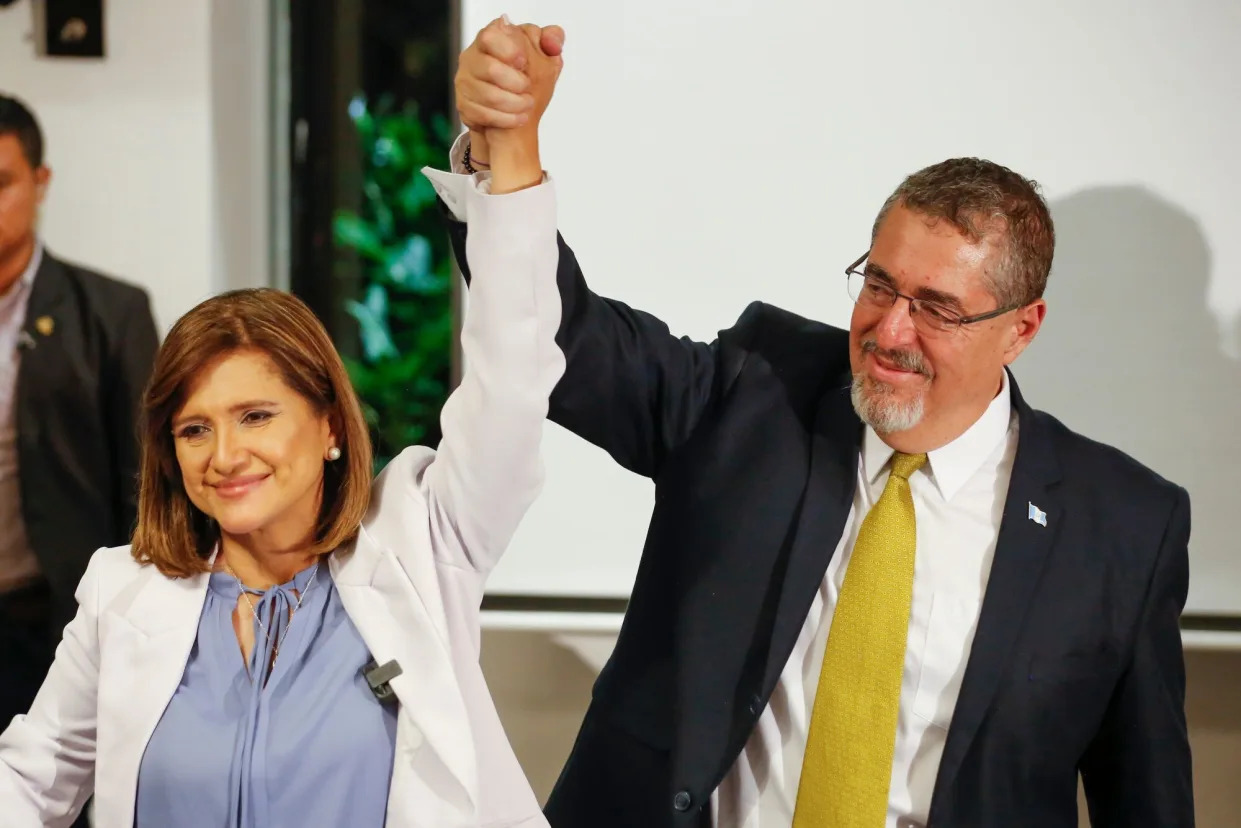
(Bloomberg) -- The party of Guatemala’s President-elect Bernardo Arévalo was suspended by a government agency on Monday, adding uncertainty to a process marred by legal disputes and accusations of foul play.

The Citizens’ Registry, an office within the country’s electoral authority, provisionally suspended Arévalo’s Semilla party, according to a copy of the ruling seen by Bloomberg News. Party lawmaker Samuel Perez said in reply to written questions that he and his colleagues had been notified of the decision.

The Registry recommended the suspension pending an ongoing investigation by prosecutors into whether rules were breached during the formation of the party in 2018.

The electoral authority on Monday formally confirmed Arévalo as the winner of the Aug. 20 vote, meaning he’s due to take office in January. If the ruling that dissolves his party stands, it would potentially undermine his ability to govern since Semilla legislators might have to sit as independents, making them ineligible for some legislative committees.

Arévalo, 64, remained in contention during the election campaign amid repeated attempts to overturn the result, which led US officials to warn that democracy was under threat in the country. He has pledged to weed out corruption and increase oversight of government spending in the graft-ridden nation.

Perez said that the ruling should not affect Arévalo’s inauguration.

Irma Pelencia, the head magistrate of the electoral authority, told reporters on Monday that she and her colleagues cannot comment on the registry’s ruling. However, the citizens’ registry is subordinate to electoral authority magistrates, she said.

Guatemala progressive's presidential victory certified, but his party is suspended from operating

SONIA PÉREZ D. and MEGAN JANETSKY
Updated Mon, August 28, 2023 


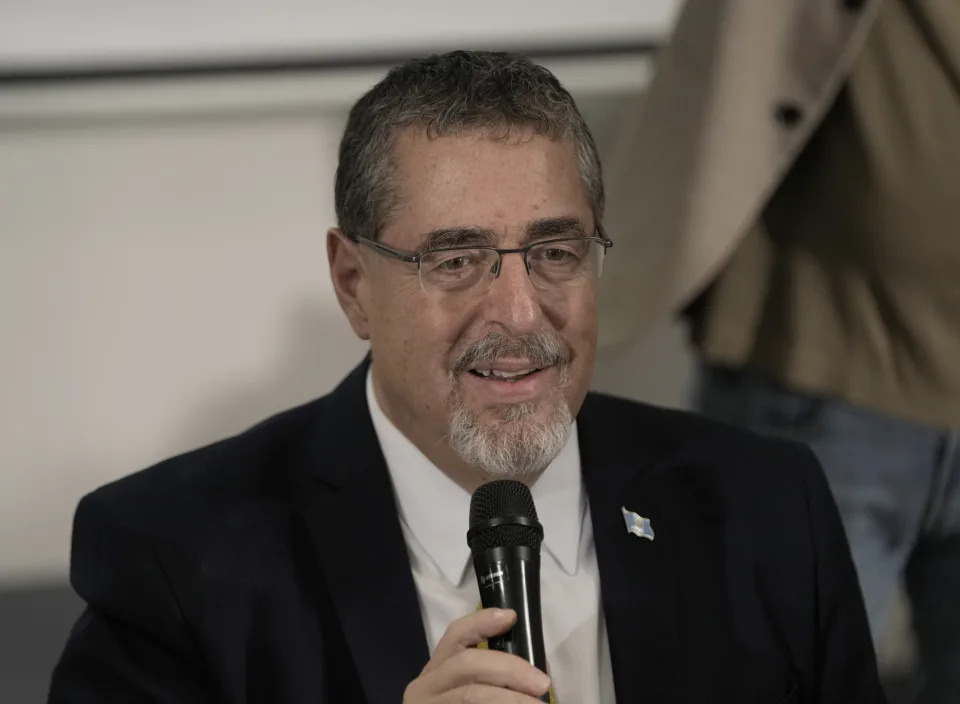
Presidential candidate Bernardo Arevalo listens to a question during a press conference after preliminary results showed him the victor in a presidential run-off election in Guatemala City, Sunday, Aug. 20, 2023. 
(AP Photo/Moises Castillo)


GUATEMALA CITY (AP) — Guatemala’s Supreme Electoral Tribunal on Monday declared progressive Bernardo Arévalo the winner of the country’s presidential election, shortly after another government body suspended his Seed Movement party.

No Guatemalan officials have explained exactly what the suspension by the electoral registry will mean for the president elect, who is to take office on Jan. 14, or for the Seed Movement lawmakers elected in the first round of voting in June.

But late Monday Arévalo called the registry's ruling legally void and said his party would appeal it.

“As of this moment, no one can stop me from taking office on Jan. 14,” he told a news conference.

The electoral registry's ruling arose from an investigation into the Seed Movement by Guatemala’s attorney general’s office for alleged irregularities in the gathering of signatures for its formation as a party.

If the Seed Party appeals the ruling, as promised, the case will be taken to the Supreme Electoral Tribunal.

The announcements come after one of the most tumultuous elections in the Central American nation’s recent history, which has put to test Guatemala's democracy.

At a time when Guatemalans, hungry for change, have grown disillusioned with endemic corruption, Arévalo and other opponents of the country’s elite faced waves of judicial attacks in an attempt to knock them out of the race.

Arévalo, the little-known son of a former president, shocked much of the country by emerging as a frontrunner after the first round of presidential voting. He failed to get enough support to win outright and headed to a runoff vote against former first lady Sandra Torres. His rise came after a handful of other candidates were disqualified.

Arévalo rapidly gained support as he posed a threat to the country’s elite, campaigning on social progress and railing against corruption.

"This message generated, aroused hope, mobilized people who were fed up with corruption,” told the AP in a June interview.

He easily beat Torres in the Aug. 20 presidential runoff. According to the official count, the progressive candidate obtained 60.9% of the valid votes cast against 37.2% for the right-wing Torres. The party also won 23 seats in the 160-seat Congress.

His win has been the source of a legal back-and-forth between various governmental entities and courts, some staffed with officials that have been sanctioned by the United States on charges of corruption. He has faced allegations of voter fraud by Torres, legal challenges and more.

Eight days after the runoff, Torres still hasn’t conceded defeat and outgoing President Alejandro Giammattei hasn’t said anything about the latest developments.

Guatemala's Supreme Electoral Tribunal outranks the electoral registry so the victory by Arévalo and the seats won in parliament by Seed Movement lawmakers in the first round elections appear confirmed. But the impact of the suspension of their party would have is unclear and whether it could be used somehow against Arévalo's taking office.

“It's obviously another attempt to subvert Semilla's (the Seed Movement's) path to power," said Alex Papadovassilakis, a Guatemala-based investigator for InSight Crime focused on crime and corruption. “I think we're entering uncharted waters.”

Arrest warrants for electoral officials and raids to the party’s headquarters, have also caused concern in the international community and among Guatemalans.

Earlier this week, Organization of American States’ human rights commission asked that Guatemala provide protection for Arévalo after reports emerged of a possible plot to kill him.

Arévalo’s victory has left much of the country’s political establishment reeling while supporters of Arévalo have held protests against attempts to thwart his taking office.

United Nations Secretary-General António Guterres expressed concern about the attempts to undermine the results of Guatemala’s presidential election, a U.N. spokeswoman said earlier.

The 64-year-old son of former President Juan José Arévalo was born in Uruguay, where his father was in exile following the ouster in a 1954 CIA-backed coup of his successor President Jacobo Árbenz, whom the U.S. saw as a threat during the Cold War.

GOP
As young conservatives try to get climate on the agenda in 2024, denial takes the spotlight instead

Ella Nilsen, CNN
Mon, August 28, 2023 

Durig this week’s Republican primary debate on Fox News, a young voter notably asked about the climate crisis: How would these presidential candidates assuage concerns that the Republican Party “doesn’t care” about the issue?

The question was all but unavoidable after weeks of extreme, deadly weather. Global temperature records have been shattered, extreme heat has soared off-the-charts in the US and the Maui wildfire death toll continues to climb.

What followed the question was one of the night’s most chaotic exchanges, demonstrating the challenge some conservatives face in getting climate policy on the 2024 GOP agenda, even as extreme weather takes its toll on millions of people across the country.

Florida Gov. Ron DeSantis, the leader of a state that has been thrashed by deadly extreme weather in recent years, refused the moderators’ show-of-hands question on whether climate change is caused by humans. He used the moment to deride the media and President Joe Biden’s response in Maui.

Then 38-year-old Vivek Ramaswamy – notably the youngest candidate on stage – called the “climate change agenda” a “hoax,” an answer that elicited intense boos from the audience.

A majority of Republicans and Republican-leaning independents – 55% – say human activity is causing changes to the world’s climate, according to a recent Washington Post/University of Maryland poll. It also found a majority of Americans and Republicans say their area has been impacted by extreme heat in the past five years.

But connecting the dots between climate and extreme weather is proving a more partisan issue. The poll found there are deep divides between Republicans and Democrats on the question of whether human-caused climate change is contributing to extreme weather: just 35% of Republicans and Republican-leaning independents said they think climate change is a major factor in extremely hot days, compared with 85% of those who lean Democrat.

After the debate, a prominent conservative climate group said Ramaswamy tried to clarify his position.

“He came to our after-party and he blatantly told us that he believes climate change is real,” Benji Backer, founder of the American Conservation Coalition, told CNN. “So, he changed his position again.”

Asked by CNN on Friday whether he believes climate change is real, Ramaswamy responded, “Climate change has existed as long as the Earth has existed. Manmade climate change has existed as long as man has existed on the earth.” In an email, Ramaswamy’s campaign spokesperson Tricia McLaughlin told CNN the candidate does believe climate change is real, but policies to address it “have little to do with climate change and more to do with penalizing the West as a way to achieve global ‘equity.’”


A wildfire burns in Kihei, Hawaii, on August 9. - Ty O'Neil/AP


Yet for Republicans working to make climate policy more mainstream in the GOP, Ramaswamy’s language at the debate echoed a climate crisis-denying candidate who wasn’t onstage, former President Donald Trump. Trump has called climate change itself a “hoax” and falsely claimed wind turbines cause cancer.

“The fact that he chose the word hoax, to me, he’s emulating what President Trump had said before,” Heather Reams, president of conservative nonprofit Citizens for Responsible Energy Solutions, told CNN. Reams, who was sitting in the audience in Milwaukee, noted that Ramaswamy calling the “climate change agenda” a hoax didn’t go over well in a room full of Republicans.

“The whole place booed him, so it wasn’t well received,” Reams said. “Hearing booing was actually heartening to hear that the party is really moving on, they’re seeing the economic opportunities that can be had for the United States being a leader in lowering emissions.”

Ramaswamy’s response was an attempt to go after the older GOP voting base in the primary, Backer said. It’s the kind of audience that Fox News has historically played to when it hosts climate deniers on some of its shows or casts doubt on the connection between extreme weather and the climate crisis – but Backer said the fact the network even asked this question “just shows that the pendulum is shifting.”

Backer warned Ramasway’s response to the question risks alienating younger conservative voters who are increasingly concerned about climate impacts.

“I’ve in two presidential elections and I’ve never voted for a Republican president in my life, because I don’t vote for climate deniers,” Backer said, adding that climate denial “is the way of the past.”

Several Republican presidential candidates have said they believe climate change is real and caused by human activity – a shift from previous elections.

Former South Carolina Gov. Nikki Haley acknowledged its reality but said foreign nations, including India and China, bear larger responsibility for addressing it. Haley, South Carolina Sen. Tim Scott, former New Jersey Gov. Chris Christie and North Dakota Gov. Doug Burgum have all engaged frequently with conservative groups, Reams and Backer said.

“I think that Nikki Haley provided a very clear, very positive response,” Danielle Butcher Franz, CEO of the American Conservation Coalition, told CNN. “We need to see more responses like that in the Republican Party. I think it’s important that we show the conservative environmental movement is here to stay.”

Backer warned that Ramaswamy and other candidates risk losing young voters if they continue to engage in climate denial – or anything that sounds remotely like it.

“There’s a lot of Republicans leading on this, but the narrative is that we don’t care,” Backer said. “And if we nominate another person who doesn’t care, young people are not going to forget that. There’s not going to be a lot of baby boomers in 20 years, so you better start thinking about the next generation.”

CNN’s Aaron Pellish contributed to this report.

Chevron: Workers at major Australia gas facilities to strike

Annabelle Liang - Business reporter
Mon, August 28, 2023 


Workers at two large liquefied natural gas (LNG) plants in Australia, operated by US energy giant Chevron, are set to go on strike from 7 September, in a move that could drive up global prices.

This follows weeks of negotiations with unions over pay and working conditions.

Chevron told the BBC it would "continue to take steps to maintain safe and reliable operations in the event of disruption at our facilities".

The Wheatstone and Gorgon sites produce more than 5% of the world's LNG.

Fears of strikes recently pushed up wholesale gas prices in Europe.

What is LNG and why has it become so important?


Around 500 workers are currently employed at the two Chevron facilities in Western Australia.

"While we don't believe that industrial action is necessary for agreement to be reached, we recognise employees have the right to take protected industrial action," Chevron said in a statement on Tuesday.

It added that it would "continue to work through the bargaining process as we seek outcomes that are in the interests of both employees and the company."

The Offshore Alliance - which is a partnership of two unions representing energy workers, including those at Chevron - said it had been trying to reach an agreement with the company on "several key" issues including pay, job security, rosters and training standards.

It added that workers had been "consistently disappointed with the company's approach to negotiations with the union and Chevron not accepting that an industry standard agreement should apply to the work they perform for the company".

"We may see work stoppages for short periods of the day, and bans on specific work like helicopter unloadings. These actions create inefficiencies and could lead to minor production disruptions," energy analyst Saul Kavonic said.

Mr Kavonic currently expects the strike to have a limited impact on global gas prices. However, he warned that energy prices could surge if the industrial action was stepped up.

"In the very unlikely event of a prolonged large scale supply disruption, prices could head back towards crisis levels witnessed last year [after Russia's invasion of Ukraine]," he added.

In the last week, wholesale gas prices in Europe jumped on concerns of a disruption to supply at Chevron and another Australian LNG plant, run by Woodside Energy.

On Thursday, Woodside said it had reached an agreement in principle with unions representing workers at its North West Shelf plant.

Together, the Woodside and Chevron plants make up around 10% of the world's supply of LNG.

Russia slashed supplies of natural gas to Europe after the start of the Ukraine war in 2022.

That pushed up prices around the world and led countries to seek out alternative sources of energy, such as LNG.

Australia is one of the world's biggest LNG exporters and its supplies have helped to cool global energy prices.

LNG is methane, or methane mixed with ethane, cleansed of impurities and cooled to approximately -160C.

This turns the gas into a liquid and it can then be shipped in pressurised tankers.

At its destination, LNG is turned back into gas and used, like any other natural gas, for heating, cooking and power.
James Webb Space Telescope and Hubble will help NASA's Juno probe study Jupiter's volcanic moon Io

Robert Lea
Mon, August 28, 2023 

An illustration shows the Juno spacecraft flying past Io as Jupiter lurks in the background.


The James Webb Space Telescope (JWST) and the Hubble Space Telescope are set to team up and observe the solar system's most volcanic body: A moon of Jupiter named Io.

The two space telescopes will remotely collect data about the intriguing world, then that information will be put to use by NASA's Juno spacecraft. More specifically, the data will help guide Juno during future flybys of Io, as the probe investigates how the highly volcanic moon may contribute to plasma present in the environment around Jupiter.

The investigation will conducted by the Southwest Research Institute (SwRI), an organization that has been granted JWST and Hubble observing time by the Space Telescope Science Institute. The SwRI team will collect Io data with Hubble during 122 of the telescope's orbits around Earth, as well as supplement those findings with almost five hours of JWST observing time.

"The timing of this project is critical," Kurt Retherford, principal investigator of the campaign and SwRI researcher, said in a statement. "Over the next year, Juno will buzz past Io several times, offering rare opportunities to combine in-situ and remote observations of this complex system."

Related: Massive, months-long volcanic eruption roils Jupiter's moon Io

"We hope to gain new insights into Io’s dramatic volcanism, plasma-moon interactions and the neutral gas and plasma populations that propagate through Jupiter's vast magnetosphere and trigger intense Jovian auroral emissions," Retherford added.

NASA estimates that Io's surface is punctuated by hundreds of actively erupting volcanoes that can blast lava dozens of miles into the Jovian moon's thin, waterless atmosphere.

Io, which is around the size of Earth's moon and the innermost Galilean satellite of Jupiter, is believed to be so extremely volcanic because the gravitational influences of its host planet generate tidal forces that squash and squeeze this moon. Other Jovian moons, including the rest of the Galilean satellites, have a similar effect on Io too, further exacerbating this gravitational storm.

These forces are so powerful, in fact, that they can provoke the surface of Io to rise and fall by as much as 330 feet (100 meters). And as you might expect, such extreme volcanism affects the entire Jovian system.

Io's extreme volcanism drives donut cloud around Jupiter


A diagram of the Jovian system and a plasma torus that traps charged particles escaping the atmosphere of Io. 
(Image credit: Courtesy of SwRI/John Spencer )

Particles escaping from Io's atmosphere, for instance, are believed to be a major source of material trapped in Jupiter's magnetic field. These escaping atmospheric gases are ionized, meaning they undergo a process in which extreme heat rips electrons from atoms to create a dynamic sea of charged particles.

"Most of these materials don’t actually escape straight out of the volcanoes but rather are associated with the sublimation of sulfur dioxide frost from Io's dayside surface," Katherine de Kleer, project co-investigator and scientist at Caltech, said in the statement. "The interaction between Io’s atmosphere and the surrounding plasma provides the escape mechanism for gases released from the moon's frozen surface."

This forms a doughnut-shaped cloud of charged particles, called the Io Plasma Torus (IPT), surrounding Jupiter. When electrons collide with ions in the IPT, they create ultraviolet radiation that can be detected by telescopes here on Earth and in space.

Continued investigation is needed to fully understand the IPT, however, because it is difficult to assess how strong its connection to Io's volcanism actually is. It's also an open question as to what effects Io has on other bodies in the Jovian system, such as those other large Galilean moons.

"For example, how much sulfur is transported from Io to Europa's surface? How do auroral features on Io compare with aurora on Earth — the northern lights — and Jupiter?" Fran Bagenal, project co-principal investigator and researcher at the University of Colorado at Boulder, said in the statement.

The team believes the key to better understanding these connections is by investigating the Jovian system as a whole rather than in pieces. And that requires more data than even Juno, as impressive as it is, can provide.

"Hey Hubble ... watch this!"


Io as seen by Juno's JIRAM instruments shows volcanic hotspots across the fiery moon.
(Image credit: NASA/JPL-Caltech/SwRI/ASI/INAF/JIRAM )

Related Stories:

NASA's Juno probe finds giant swirling waves in Jupiter's magnetosphere

Jupiter's volcanic moon Io glows red in incredible images from NASA's Juno

Jupiter's lightning is strikingly similar to Earth's

Juno has been investigating the Jovian system and its environment since July 4, 2016, when it arrived in the vicinity of the gas giant and its moons after a 1.7 billion-mile journey from Earth. This was a journey that took five years to complete.

Since then, the spacecraft has completed several flybys of both Jupiter and its large moons, notably Europa. It last flew past Io on July 30, coming within around 13,700 miles (22,000 kilometers) of the fiery moon while collecting data about its atmosphere and magnetic field. Juno will get particularly close to Io again on Dec. 30 of this year then again on Feb. 1, 2024.

On Sept. 20, however, Juno will make a more distant pass of Io that will be of particular interest to the SwRI team. This flyby of Io will be timed such that it can be observed by Hubble and the JWST simultaneously.

That means the two telescopes will get the chance to team up and observe what Juno sees, but at a distance, giving scientists the holistic view of the Jovian system they're after.

"The chance for a holistic approach to Io investigations has not been available since a series of Galileo spacecraft flybys in 1999 to 2000 were supported by Hubble with a prolific 30-orbit campaign," Retherford concluded. "The combination of Juno’s intensive in-situ measurements with our remote-sensing observations will undoubtedly advance our understanding of Io's role in driving coupled phenomena in the Jupiter system."

Even though future missions to Jupiter and its moons are in the cards, with the Europa Clipper and Jupiter Icy Moons Explorer (JUICE) set to arrive at the Jovian system between 2029 and 2031, neither will fly by Io.

That means, according to the SwRI, another chance to make these kinds of observations won't arise until at least the 2030s.


Virgin Galactic to launch next space tourist flight on Sept. 8

Mike Wall
Mon, August 28, 2023 

a silver-white space plane fires its rocket motor with the curve of Earth and the blackness of space in the background

Virgin Galactic's next spaceflight is less then two weeks away.

The company announced today (Aug. 28) that it's targeting Sept. 8 for the launch of Galactic 03, its third commercial spaceflight and eighth space mission overall.

Galactic 03 will take three paying customers to and from suborbital space from Spaceport America in New Mexico. Virgin Galactic hasn't identified those passengers yet, but we know they've been ticket-holders for a long time.

Related: Virgin Galactic launches 1st mother-daughter team and 1st Olympian to space on 2nd commercial flight (video)

"The three Galactic 03 crewmembers are the first of Virgin Galactic's group of 'Founder' astronauts — the first customers whose forward-thinking vision and early ticket purchases helped make the dream of regular commercial spaceflights a reality," Virgin Galactic wrote in a statement today.

"The Galactic 03 crew bought their tickets as early as 2005 and, since then, have been an active part of the company's vibrant Future Astronaut community," they added.

The trio will become Virgin Galactic's 14th, 15th and 16th astronauts, according to the company. They'll fly with Colin Bennett, one of Virgin Galactic's astronaut instructors.

RELATED STORIES:

Meet the crew of Virgin Galactic's 1st commercial spaceflight

Meet the crew of Virgin Galactic's 2nd commercial spaceflight

Space tourism companies might learn a lesson from the Titan sub disaster. But are they ready to listen?

Galactic 03's passengers will ride in VSS Unity, Virgin Galactic's space place, which will be piloted by Nicola Pecile and Michael Masucci. The vehicle will lift off beneath the wings of the company's carrier aircraft, VMS Eve, which will drop it at an altitude of about 50,000 feet (15,000 meters).

Unity will then fire up its onboard rocket motor, making its own way to suborbital space. The passengers will get to experience a few minutes of weightlessness and see Earth against the blackness of space before coming back down for a runway landing at Spaceport America.

The most recent such flight, Galactic 02, lifted off on Aug. 10, carrying a former Olympian and a mother-daughter duo to the final frontier for the first time. The daughter in that duo, an 18-year-old college student, also became the youngest person ever to reach space, according to Virgin Galactic.

Virgin Galactic is currently selling tickets for $450,000, but, given that the three customers on Galactic 03 are "founding astronauts," they likely didn't pay that much; the seat price has gone up a few times over the years.
TOY TRAIN OPERATOR
Railroad operator Norfolk Southern says outage impact to last for weeks

Reuters
Mon, August 28, 2023

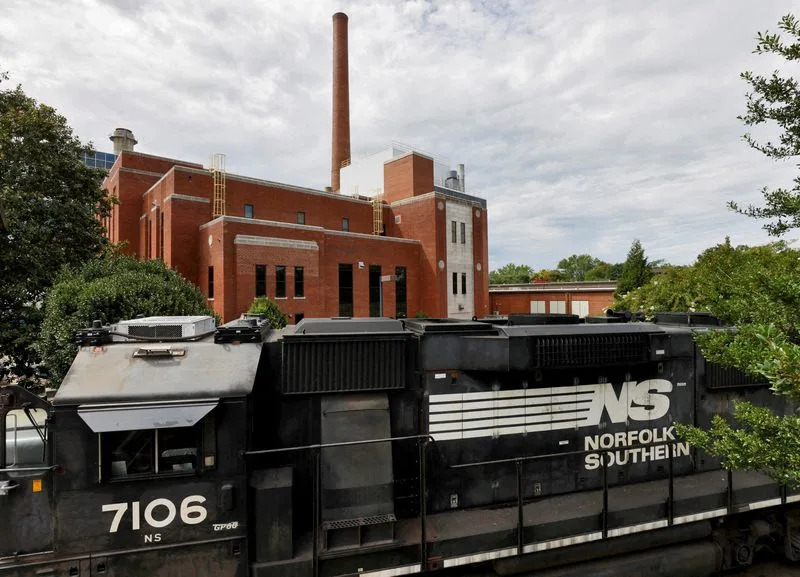
Norfolk Southern Train rests near the University of North Carolina's energy generation plant,


(Reuters) - Norfolk Southern said it has restored all rail systems after the U.S. railroad operator experienced a hardware-related outage that affected its operations earlier on Monday.

All systems were restored at 0700 pm ET (11 pm GMT), the company said, adding that it expects the impact on its operations to last at least a couple of weeks.

There is no indication that the outage was a cybersecurity incident, Norfolk said, without disclosing further details.

The company said it has been in touch with its customers to work on updated timings for their shipments.

The U.S. Transportation Department's Federal Railroad Administration disclosed earlier this month that it is considering enforcement actions against Norfolk Southern, which has been under heavy fire after one of its freight trains carrying hazardous materials derailed in East Palestine, Ohio, spewing toxins into the air and water.

(Reporting by Akanksha Khushi in Bengaluru; Editing by Sherry Jacob-Phillips)

Alaska report details 280 missing Indigenous people, including whether disappearances are suspicious

Associated Press
Mon, August 28, 2023 

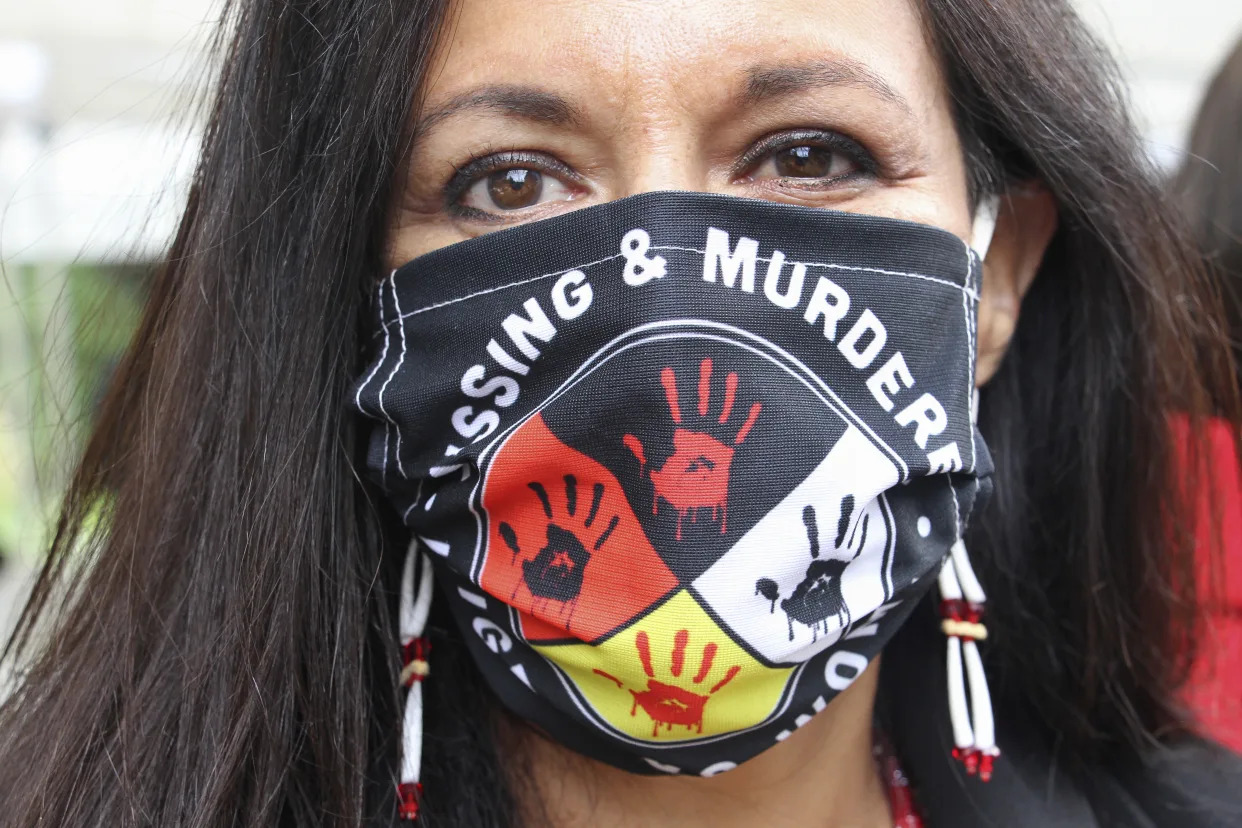
Jeannie Hovland, the deputy assistant secretary for Native American Affairs for the U.S. Department of Health and Human Services, poses with a Missing and Murdered Indigenous Women mask, Wednesday, Aug. 26, 2020, in Anchorage, Alaska. Law enforcement has prepared a first-of-its-kind report detailing missing Alaska Natives and American Indian people in Alaska, a newspaper reported. The Alaska Department of Public Safety last week released the Missing Indigenous Persons Report, which includes the names of 280 people, dates of their last contact and whether police believe the disappearance was suspicious in nature, the Anchorage Daily News reported.
 (AP Photo/Mark Thiessen, File) 


ANCHORAGE, Alaska (AP) — Law enforcement has prepared a first-of-its-kind report detailing missing Alaska Natives and American Indian people in Alaska, a newspaper reported.

The Alaska Department of Public Safety last week released the Missing Indigenous Persons Report, which includes the names of 280 people, dates of their last contact and whether police believe the disappearance was suspicious in nature, the Anchorage Daily News reported.

In the report, the circumstances of each missing person in classified into one of four categories: environmental, nonsuspicious, suspicious or unknown. This is considered a point-in-time snapshot because it includes people who were missing as of July 14. Austin McDaniel, a Department of Public Safety spokesperson, said it’s possible some have since been found.

About 75% of the cases fit in the environmental category: The person is believed to have died or disappeared in the wilderness after a plane crash, boat sinking or other outdoor accident, and their remains have never been found. Some cases here date back to the 1960s. Even though some people have been declared legally dead, McDaniel said they are considered missing until law enforcement “lays eyes on them.”

Of the remaining cases, 18 were ruled suspicious, 30 as not suspicious and 17 unknown.

The list is not complete. It only represents missing persons cases investigated by the Anchorage Police Department or the Alaska State Troopers and not those of other police departments in Alaska, like Fairbanks or Juneau.

The statewide agency hopes smaller departments will contribute data for quarterly updates, McDaniel said.

Each name on the list represents a loved and missed person, said Charlene Aqpik Apok, executive director of Data for Indigenous Justice.

This organization created its own database of missing and murdered Indigenous people in 2021 and has advocated for Alaska law enforcement to better track the issue.

“This report was definitely a step in the right direction,” Apok said.

Detailing the circumstances of disappearances could present a clearer picture to law enforcement of the overall situation.

“Going missing while going on a hike or hunting is very different than someone being abducted,” Apok said. “We really wanted to clarify those circumstances.”

She said it’s also validating for families to see what they long suspected about the disappearances.

“For a very long time we’ve been hearing from families, this is what happened, and it hasn’t been recognized,” she said.

Much of the data in the new state report is already in two existing databases of missing people, the state’s Missing Persons Clearinghouse and NamUs, a nationwide database overseen by the U.S. Department of Justice. The state says it has committed to regularly updating the data in NamUs, something it hasn’t always done before and isn’t mandated.

Ramaswamy camp uses Haley’s first name in attack that has critics raising eyebrows


Brianna Herlihy, Paul Steinhauser
Mon, August 28, 2023

Republican presidential candidate Nikki Haley is hitting back at GOP nomination rival Vivek Ramaswamy, who called her "lying Namrata (sic)," referencing her given Indian name and originally misspelling it on the website.

In an interview with Fox News Digital on Monday, the former two-term South Carolina governor who later served as ambassador to the United Nations said she's "not going to get into the childish name-calling" and that Ramaswamy should "know better than that."

On a new page on the newcomer's campaign website called "TRUTH. Over myth," Ramaswamy, a multi-millionaire biotech entrepreneur, author, and culture wars crusader, attempts to set the record straight on Haley's recent jabs at his foreign policy positions.

One such criticism is Ramaswamy's position on U.S. support to Israel, an accusation leveled by Haley last week during the first GOP presidential nomination debate - and reiterated on Monday at Haley's town hall in Indian Land, South Carolina.

FOX NEWS EXCLUSIVE: HALEY SAYS SHE HAULED IN $1 MILLION IN AFTERMATH OF FIRST GOP PRESIDENTIAL DEBATE


Nikki Haley and Vivek Ramaswamy

"WRONG. Keep lying, Namrata (sic) Randhawa. The desperation is showing," Ramaswamy's website read earlier today. It has since been updated with the correct spelling for Haley's birth name.

"Nimarata Randhawa" appears to be a reference to Haley's birth name of Indian origin, but it leaves out "Nikki," which is her legal middle name that she goes by.

DESANTIS PAC TROLLS RAMASWAMY FOR CONSTITUTIONAL HISTORY GAFFE IN GOP DEBATE: VIVEK 'IS MISTAKEN'

Ramaswamy, like Haley, is Indian-American.

"I’m not going to get into the childish name-calling or whatever, making fun of my name that he’s doing," Haley told Fox News Digital. "I mean, he of all people should know better than that. But I’ve given up on him knowing better than anything at this point."

"I think we saw the childish, demeaning side of him onstage. I think he’s carrying that out whether it’s on the website or otherwise, but I have no use for it," she continued.


Former ambassador and former South Carolina Gov. Nikki Haley, a 2024 Republican presidential candidate, headlines a town hall in Indian Land, South Carolina on August 28, 2023

Asked for comment, a spokesperson for the Ramaswamy campaign told Fox News Digital, "How is he making fun of her name? His name is Vivek Ramaswamy."

Matt Whitlock, a former spokesperson for the National Republican Senatorial Committee, posted on X, formerly Twitter, that Ramaswamy's fact-check website "feels like parody."

"[N]ot sure why using Nikki Haley’s maiden name (spelled wrong) is a rebuttal. But makes clear her debate attacks got under his skin," Whitlock said.


He went on to comment that this type of political attack "usually comes from lunatics (on the left or right) accusing her of whitewashing her identity and hiding her heritage. (Who are too stupid to google it and realize Nikki is her actual birth name)."

Another X user pointed out that "what's even crazier" is that Haley was the only candidate during the debate to properly pronounce "Vivek," which he says rhymes with "cake."

Saat Alety of Fed Hall Policy Advisors wrote on X, "The references to @NikkiHaley's maiden name or first name as pejoratives are bewildering. She's a married woman -- her last name is Haley."

"Nikki is an extremely common name in Punjabi culture - and it's her middle name. Sad to see this from an Indian-American, @VivekRamaswamy," he wrote.

RAMASWAMY, PENCE CLASH AFTER FORMER VP CALLS GOP NEWCOMER A 'ROOKIE': 'THIS ISN'T COMPLICATED'


Entrepreneur and 2024 presidential hopeful Vivek Ramaswamy raps after a "fair side chat" with Gov. Kim Reynolds at the Iowa State Fair in Des Moines on Aug. 12, 2023.

Haley went after Ramaswamy during the debate, saying he has no foreign policy experience and "it shows."

"He wants to hand Ukraine to Russia, he wants to let China eat Taiwan, he wants to go and stop funding Israel. You don’t do that to friends. What you do instead is you have the backs of your friends," Haley said.

Ramaswamy responded, "Our relationship with Israel would never be stronger than by the end of my first term, but it’s not a client relationship, it’s a friendship, and you know what friends do? Friends help each other stand on their own two feet."

WATCH: HALEY CLASHES WITH RAMASWAMY OVER US AID TO UKRAINE

Republican presidential candidate and former U.N. Ambassador Nikki Haley greets voters at a town hall event on April 26, 2023, in Bedford, New Hampshire.

"You know what I love about them? I love their border policies, I love their tough-on-crime policies, I love that they have a national identity and an Iron Dome to protect their homeland, so, yes, I want to learn from the friends that we’re supporting," Ramaswamy added.

"No, you want to cut the aid off, and let me tell you, it’s not that Israel needs America, it’s that America needs Israel. They’re on the front line of defense to Iran," Haley responded, drawing applause from the crowd.

Ramaswamy's website says, "By the end of Vivek’s first term, the US-Israel relationship will be deeper and stronger than ever because it won’t be a client relationship, it will be a true friendship."

"The centerpiece of Vivek’s Middle East policy in Year 1 will be to lead "Abraham Accords 2.0" which will fully integrate Israel into the Middle East economy – by adding Saudi Arabia, Oman, Qatar, and Indonesia to the pact which was one of President Trump’s crowning foreign policy achievements," the website says.


UAW Wants a 45% Raise, 32-Hour Work Week


By Keith Naughton, Gabrielle Coppola, and David Welch
August 28, 2023

Tracking the forces driving change


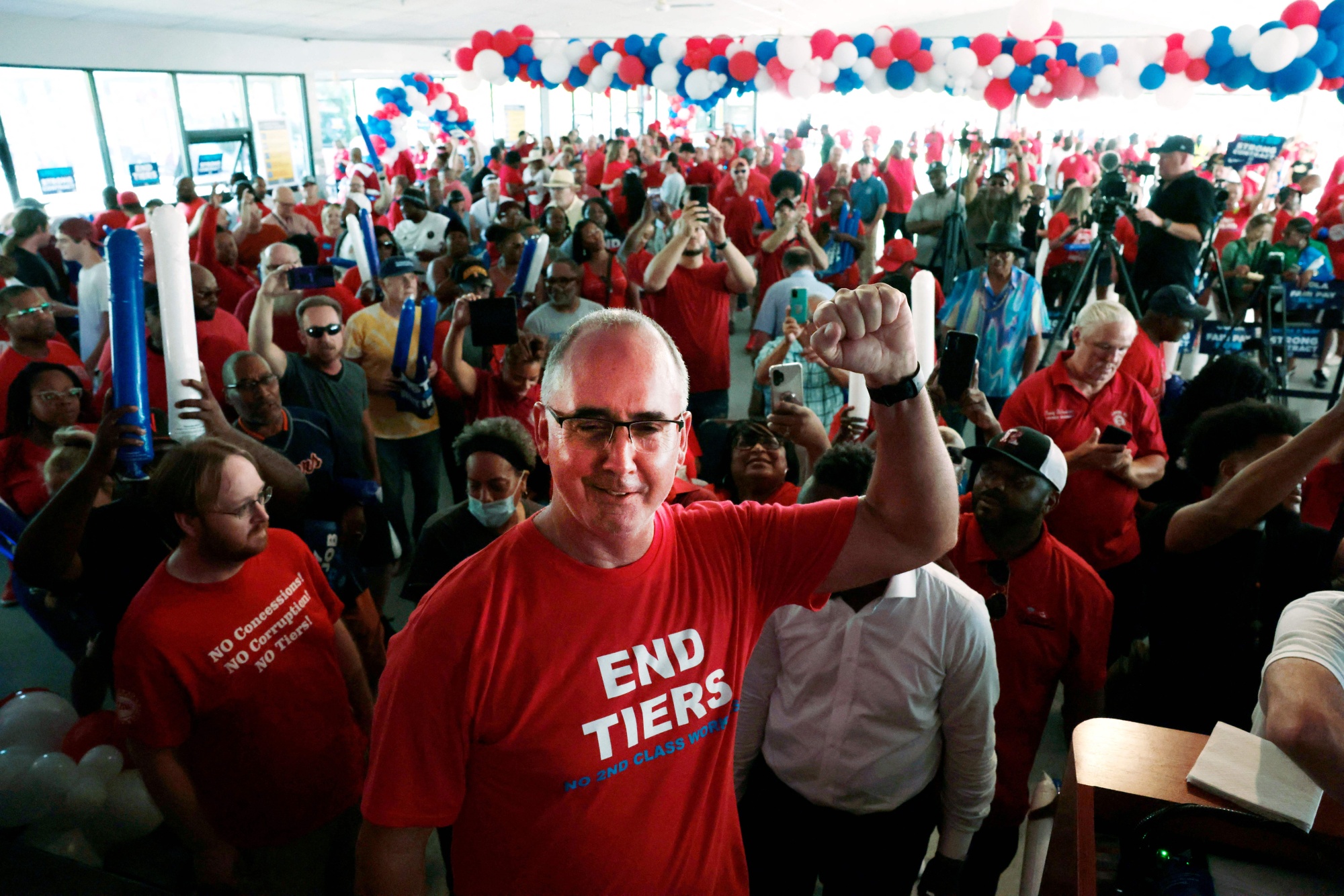
Shawn Fain, president of the United Auto Workers union since March, has declared “war” on the Detroit Three automakers, with contract demands that even he calls “audacious,” including proposals for a 46% raise, a return to traditional pensions and a 32-hour work week.

Now the 54-year-old who began work as an electrician at a Chrysler casting plant in 1994, is threatening to take his 150,000 UAW members out on strike. If he doesn’t have contracts with General Motors Co., Ford Motor Co. and Stellantis NV, maker of Jeep and Chrysler models, by the Sept. 14 deadline, the UAW could strike all three simultaneously — something it has never done.
BloombergEqualityJ-Pop Talent Agency Hid Founder’s Decades of Abuse, Report FindsRubiales Isolated as Spanish Football Chiefs Demand ResignationShooting Kills 1 Professor at UNC Chapel Hill; Suspect DetainedMichelle Obama’s Call for Equal Pay Puts Tennis Gender Inequality in Spotlight

“The deadline is the deadline,” Fain said an interview earlier this month at the UAW’s Solidarity House headquarters along the Detroit River.

Shawn Fain speaks to UAW members and supporters in Warren, Michigan on August 20
Source: AFP

Fain, whose demeanor leans more Sunday school teacher than fire-breathing union boss, has brought back a tough-talking style evoking the labor movement’s roots in America. He’s part of a new generation of leaders, like International Brotherhood of Teamsters President Sean O’Brien, who earlier this month won a historic five-year contract with United Parcel Service Inc., and Lynne Fox, president of Workers United which says it has unionized more than 350 Starbucks Corp. stores.


These aggressive labor leaders want to rewrite the social compact with everyday workers around a simple question: Why not us?

The pandemic and technology allowed more salaried staffers than ever to work from home. Now service and factory workers who had faced Covid’s dangers on the job want to improve their work-life balance, too. And with inflation eating into everyone’s pocketbooks, polls show there’s a growing support for the labor movement.

Fain won a narrow victory of less than 1% by positioning himself as a reformer out to overhaul a union rocked by a corruption scandal. Thirteen UAW officials were convicted of illegally using union dues to finance lavish lifestyles and the union remains under the oversight of a federal monitor.

When the scandal first came to light, Fain said “it was a gut punch,” but he’d had suspicions because the union leadership delivered weak contracts in times of prosperity.

“We have a horrible history in this union of setting expectations low and settling lower,” Fain said. “Those days are over.”

Now it’s payback time, Fain contends, for union members swindled out of good deals as auto companies banked record profits while giving hourly workers two 3% raises over the past four years that failed to keep up with inflation.

“Mary Barra made $200 million in the last nine years,” Fain said, referring to GM’s chief executive officer; company filings confirm this. “Our wages went backwards. There’s something wrong there.”

Fain says automakers’ recent record profits were made possible by UAW concessions given during the government bailouts and bankruptcies of GM and Chrysler in the Great Recession of 2009. Now he wants to make up for those sacrifices — plus more.

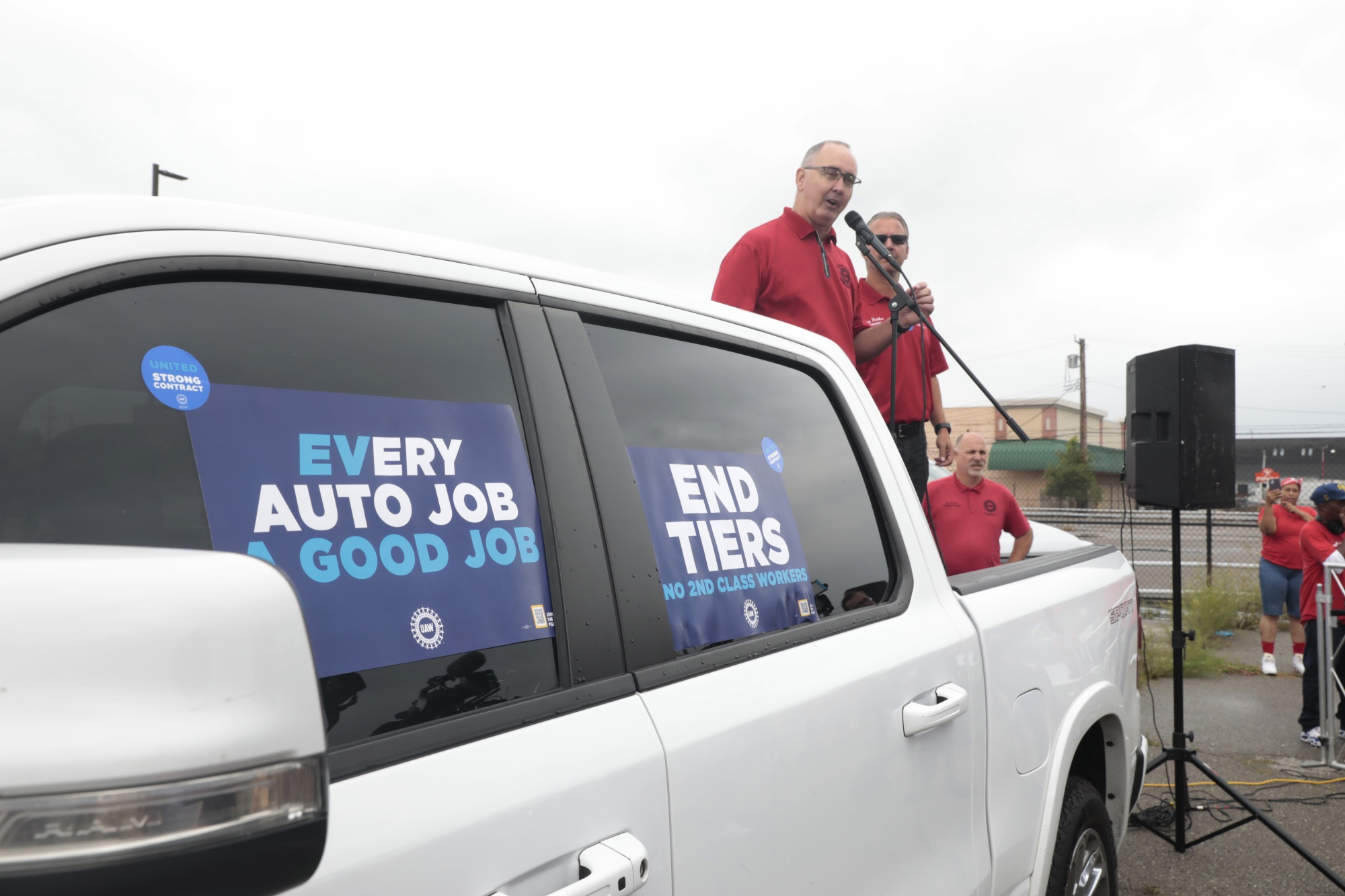
Beyond big raises and a shorter work week, the UAW’s demands include restoring cost-of-living increases, an end to a tiered system that pays new workers less, restoring retiree health care and boosting pension payments.

Read More: What’s at Stake as US Autoworkers Threaten to Strike: QuickTake

The automakers counter that meeting those demands would threaten their existence, driving up labor costs by $80 billion and increasing total pay and benefit expenses to more than $150 an hour, from about $64 now, Bloomberg has reported. As the three automakers collectively spend more than $100 billion to make the shift to electric vehicles, they contend they can’t afford a generous contract with the UAW.

In fact, higher labor costs contributed to Chrysler, Ford and GM’s lack of price competitiveness against foreign brands in the 1990s and 2000s. But pressure is on Fain to deliver a good deal, since his margin of victory was so slim.

“The car companies cannot possibly agree to his demands and even if he succeeds, his members still lose because the car companies will go bankrupt,” Johan de Nysschen, a consultant and former GM and Volkswagen executive, said in an interview. Fain, he added, is “promising the sun, the moon, the Earth and the stars to people who are, frankly, easily impressed.”

Fain bristles at the notion that his blue-collar members are asking for too much. He sees the companies’ arguments about being competitive as code for “a race back to slave labor.” He points to Stellantis North American Chief Operating Officer Mark Stewart who recently lectured workers on economic realism from his vacation home in Acapulco, Mexico. Stellantis declined to comment on Stewart’s whereabouts.

“When your CEOs are making 300 to 400 times more than the average worker, and they want to talk to you about economic realism, that’s pretty pathetic,” Fain said.
Kokomo Roots

Fain carried his grandmother’s bible for his swearing in as UAW president. It was given to her as a child during the Great Depression, when she and her siblings were dropped at an orphanage in Tennessee because their parents couldn’t afford to care for them. Years later, she and her husband migrated north for work at a Chrysler factory, forever changing the trajectory of the Fain family.

“I get a little emotional,” Fain said, his voice catching. “I was raised to never forget where you come from and it’s why what I do matters to me.”

He grew up in Kokomo, Indiana, where Shawn’s father joined the police force and rose to police chief and his mother earned a nursing degree after staying home with their children while they were young. They could pursue those careers because their parents landed jobs in Chrysler and GM factories at a time when auto work was the “gold standard,” Fain said.

“My grandparents lived the American dream,” Fain said. “They were destitute in the hills of Tennessee and Kentucky, so they migrated north for good paying union jobs and it changed their lives.”

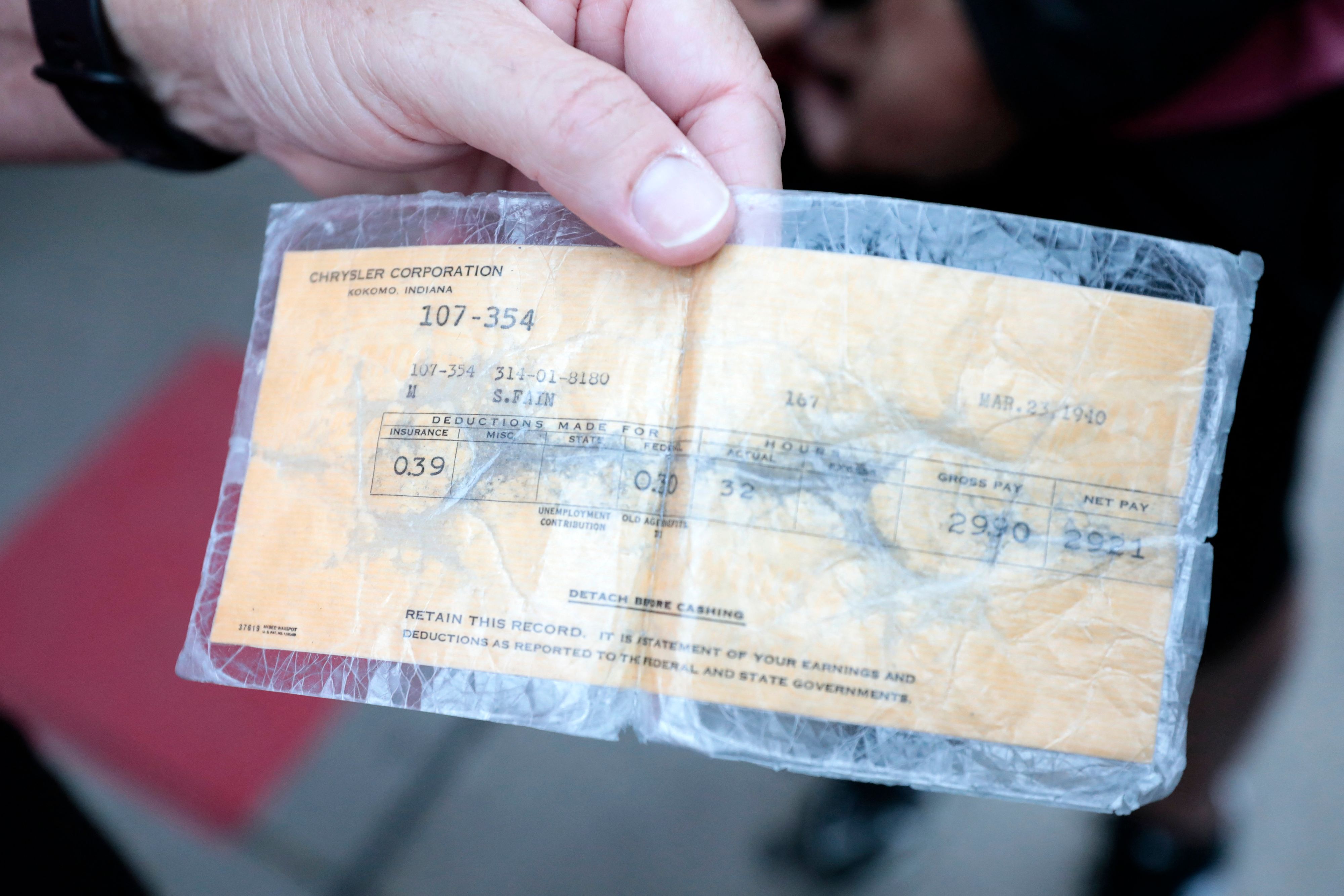
Fain carries in his wallet his grandfather’s pay stub from when he worked at Chrysler in 1940.
Source: AFP

Fain’s father was deeply involved in Democratic politics and Shawn grew up “putting out yard signs, knocking on doors and going to chili suppers,” he said. “I hated it as a kid.”

But his attitude changed after he was laid off early in his career and had to rely on government assistance to buy diapers and formula for the first of his two daughters.

“It was a humbling experience,” Fain said. “But I wouldn’t trade it because being on unemployment and trying to survive on $80 a week really made me understand how the system works.”

Fain, who became a journeyman electrician three decades ago, says he’s living proof that you don’t have to go to college to earn a good living.

“I went to an apprenticeship program and it was life changing,” Fain said. “My brother and sister both have master’s degrees and I’ve out-earned both of them.”


Before going to work at Chrysler, Fain was a member of the International Brotherhood of Electrical Workers Local 873 in Kokomo, where on top of his apprenticeship he put in 1,200 class hours to earn an associate degree in applied science. His former IBEW members don’t doubt his resolve.

“He doesn’t bend or waver,” Michael Young, business manager at Local 873, said in an interview. “He has lofty goals, there’s no doubt. But you have to shoot for the moon on this one.”

Fain is also trying to set the table for what he calls a “just transition” to the electric vehicle future.

Fain speaks to demonstrators before a United Auto Workers practice picket in Detroit, Michigan.
Photographer: Jeff Kowalsky/Bloomberg

The Detroit Three automakers are in the process of building nine battery plants, mostly with joint-venture partners from Asia. The fate of those thousands of battery workers – who are not yet hired or represented by the UAW – hangs over the bargaining table.

At GM’s battery factory in Lordstown, Ohio, workers initially started at $15.50 an hour, less than half the top wage at UAW-represented assembly plants. A recent deal will boost pay by as much as $4 an hour, which is still far less than what Fain wants. He fears those workers will also have fewer job and safety protections.

In May, Fain went to the local union hall in Lordstown where, according to multiple union members who were present, he declared that “this is an existential fight.” He asked workers to sign a card pledging they are “all in” to get battery workers a better contract.

Fain also enlisted the help of President Joe Biden, who, after meeting with the UAW leader at the White House last month, issued a statement calling for a “fair transition” to EVs with contracts that “retool, reboot, and rehire in the same factories and communities at comparable wages, while giving existing workers the first shot to fill those jobs.” Yet on Friday, Biden expressed concern about the impact of a possible UAW strike.

Fain wants battery plant jobs to go to UAW members displaced as factories building engines, transmissions and conventional cars close. The process is already underway: Stellantis recently idled a 58-year-old factory in Belvidere, Illinois, that most recently built Jeeps.

Fain displays particular contempt for the company he worked for and its CEO, Carlos Tavares, who’s been outspoken on the need to cut overhead and people. Their only meeting, Fain said, came before official bargaining began where the executive used the word “brutality” about 40 times to describe government mandates on the transition to EVs.

“I came back and said, our workers have had a brutality imposed upon them,” Fain said. “You close plants and they have to uproot their lives.”

As contract talks come down to the wire, Fain’s ambitions go well beyond the meat and potatoes issues. He is out to change the way people think about — and treat — factory labor.

“Workers are fed up,” Fain said. “If Covid taught anybody anything, it taught people what’s important in life. And it sure as hell isn’t living in your workplace seven days a week so you can scrape to get by and barely survive.”