Tuesday, August 29, 2023

China overtakes Europe as world’s largest offshore wind provider


Howard Mustoe
Tue, 29 August 2023 

Key European projects like Vattenfall’s development off the Norfolk coast have ground to a halt amid rising costs - Vattenfall

Europe has lost its crown to China as the top builder of offshore wind power as UK developers battle higher costs and stagnant power prices.

The offshore wind market totalled 64.3 gigawatts of power globally last year, according to the Global Wind Energy Council (GWEC), with China contributing about 49pc of that compared with Europe’s 47pc share.

Big manufacturers in wind “have faced a profitability crunch over the last few years, causing them to retrench and selectively withdraw from smaller or slower-moving markets,” the report said.


In its annual global offshore wind report, GWEC said by the mid-2020s “there may be supply chain bottlenecks in every region of the world except China”.

Rebecca Williams, head of global offshore wind at the GWEC, said: “Immediate investment and global cooperation will be needed to address these bottlenecks.”

In Europe the rate of installations last year was the lowest since 2016. Europe’s total offshore wind capacity reached 30 GW last year, 46pc of which was from the UK.

While the UK still dominates European wind power at sea, Britain’s ambitions to be an exporter of clean wind power risk being scuppered as the rest of Europe catches up.

A surge in supply chain costs has pushed up the price of wind turbines, while increases in global interest rates have raised refinancing costs substantially.

In July, Swedish energy giant Vattenfall halted development of a major 1.4 gigawatt wind farm off the coast of Norfolk after soaring inflation made the project unviable.

Wind farms in the UK are largely governed by contracts for difference (CfDs), which are 15-year subsidy agreements between the Government and power generation companies, designed to guarantee energy schemes stable revenues.

The UK is in the middle of another round of bidding for the contracts. In the current allocation round, which finishes next month, offshore wind is competing with solar and onshore wind, which are both cheaper to build.

Boris Johnson set a goal of transforming Britain into the “Saudi Arabia of wind” while he was Prime Minister in 2020 and the UK has a target to build 50GW of offshore wind power by 2030, from current levels of around 14GW.

However, the GWEC’s report showed that the UK’s share of new offshore wind projects is projected to fall from almost half today to around a fifth in a decade’s time as Germany, Denmark, the Netherlands and France gear up construction of their own wind farms.

The lobby group warned that investors keen to meet their environmental targets need wind farm projects with permits and predictable earnings from willing customers.

Ms Williams added: “Offshore wind projects have been delayed or indefinitely stalled by inadequate and inefficient permitting and licensing rules. These factors have created uncertainty and have forced developers to review the viability of their projects, in some cases even to stop developing.

“Such ineffective policies centred on a downward price competition and, where coupled with impractical and unattainable local content stipulations, will add to project costs and slow the pace of offshore wind deployment needed for the world to meet net zero.”
UK
Work from home has made Central London restaurants a three-day operation, says Itsu boss

Daniel Woolfson
Tue, 29 August 2023 

Itsu chief executive Julian Metcalfe said habitual home working has resulted in weekday footfall in central London remaining below pre-pandemic levels - Geoff Pugh

The rise of home working has forced Itsu to effectively run many of its Central London restaurants as three-day operations, its chief executive has said.

In latest accounts for the sushi chain, Julian Metcalfe said the performance of sites in the “traditional Itsu heartlands” of Central London and the West End had “changed fundamentally” because of post-pandemic hybrid working patterns.

The pandemic forced many office staff to work from home full-time, but since lockdown restrictions eased away many of these practices have remained, with a Tuesday to Thursday working week in the office becoming the new norm.


Mr Metcalfe said: “While the City performance has proved very resilient, some shops in worker locations are now three-day businesses, with Monday and Friday footfall materially below pre-pandemic levels, as work from home arrangements have become habitual.”

As a result, Itsu has begun opening up new sites in more suburban locations, such as Brixton, Bromley, Putney and Guildford. It opened a total of 15 new sites in 2022.

Mr Metcalfe added: “Shops outside of London saw sales outstrip pre-Covid levels, benefiting from commuters working at home alongside a transformed delivery business.”

Pret A Manger – which was also founded by Mr Metcalfe – has also been focusing its efforts on more suburban locations and opening larger stores in areas where people tend to work from home.

Pano Christou, chief executive at Pret A Manger, told The Telegraph last week: “I think there’ll still be opportunities coming up in London… [but] far fewer than we have in the past.

“I think when we go out to regional towns what we realise is takeaway is probably a smaller proportion, dine in is probably a higher proportion. So you just have to have more seats to appeal to that customer base.”

Mr Metcalfe opened the first Pret in 1986, before founding Itsu in 1997. He is no longer involved with Pret, having sold his final stake in 2018 when the sandwich chain was bought by investment company JAB in a deal reported to be worth around £1.5bn.

Itsu currently runs around 80 restaurants across the UK and employs almost 1,000 people.

The company nearly collapsed during the first year of the pandemic and was forced to pursue a insolvency arrangement after months of closures.

Itsu returned to the black in 2022, posting a profit of £1.3m, compared to a loss of £7.9m in 2021, as sales jumped from £58.6m to £101.2m.
Investors urge UK firms to increase efforts on tackling slavery in supply chains

Rebecca Speare-Cole, PA sustainability reporter
Tue, 29 August 2023 


Investors are calling on UK-listed companies to increase efforts to tackle modern slavery, human trafficking and forced labour in their supply chains.

Sustainable investment firm CCLA, alongside a coalition of investors, has been engaging with companies as part of an initiative to combat modern slavery in their supply chain, strengthen public policy and develop better data.

The investors, which include Rathbones Group, Schroders and Church Commissioners for England, welcomed the steps taken by many UK businesses and the UK Government in recent years, including the passing of the Modern Slavery Act.


However, they said they are concerned that only a small number of firms have shared findings of modern slavery in their supply chains, making it difficult for investors to assess corporate actions on identifying and helping victims.

It comes as 86% of forced labour cases were found in the private sector, according to 2022 figures from the International Labour Organization, Walk Free and The International Organization for Migration.

In a report on the CCLA’s initiative released on Tuesday, the firm said it analysed the 2021 Modern Slavery Statements of FTSE 100 companies last year.

CCLA said it found the majority of the companies had published a modern slavery statement and average compliance with the Modern Slavery Act was 89%.

But it also said the number of firms publicly sharing that they had found, fixed or prevented modern slavery was much lower.

Only 20% reported action to find cases in their supply chain, 3% reported action to fix it and 18% reported action to prevent it, the CCLA said.

The coalition of investors working with CCLA are now calling on UK-listed companies to increase their efforts to identify human trafficking, forced labour, and modern slavery in their supply chain.

They are also urging firms to review, assess and disclose the effectiveness of their attempts to address the issues and to support the provision of remedy to victims of modern slavery within their supply chain.

The CCLA said it identified the hospitality and construction sectors for engagement in 2020 due to high risks of modern slavery and lower profile efforts to address them.

The work first saw “varied but positive results” in the hospitality sector after engagement with firms like Domino’s Pizza Group, Greggs, InterContinental Hotels Group (IHG), JD Wetherspoon, Marston’s and Tui group.

The coalition has now started engagement in the construction sector, including companies like Balfour Beatty, Bellway, Persimmon, Taylor Wimpey Plc, The Berkeley Group Holdings and Vistry Group.

Dr Martin Buttle, better work lead at CCLA, said: “It is heartening to see that investors have been able to take a number of the businesses we have engaged with on a journey to address modern slavery.

“While it is a long journey and slower than we would like, we recognise that finding, fixing and preventing modern slavery is very involved but absolutely vital if we are to meet Sustainable Development Goal 8.7 calling for its eradication by 2030.”

The initiative are also calling for the Government to strengthen the supply chains provisions of the Modern Slavery Act as well as mandating financial institutions to report on investing and lending portfolios.

Dame Sara Thornton, former UK Independent Anti-Slavery Commissioner and CCLA consultant, said: “With 86% of the 27 million people in forced labour employed by the private sector, it is clear that businesses must take more action to identify and address slavery and trafficking in their operations and supply chains.

“Notably in the UK, we import an estimated $18 billion worth of goods that present a high slavery risk so we need our policymakers to step up legislation so that there is a level playing field and incentives for all companies to find, fix and prevent instances of modern slavery in their operations and global supply chains.”

Peter Hugh Smith, CCLA chief executive, said: “The investment industry can and should do more to address modern slavery.

“It is not right that investors profit from this crime and we need to do everything we can to engage with the companies we own so that they are active in addressing issues and providing remedy to those affected.”
TORONTO
Court restricts union pickets at Metro warehouses, grocer says deliveries to resume

Story by The Canadian Press •


Court restricts union pickets at Metro warehouses, grocer says deliveries to resume© Provided by The Canadian Press

TORONTO — Metro has been granted a temporary injunction to restrict pickets by striking workers at distribution warehouses in Toronto, the latest development in a month-long standoff between the grocer and thousands of workers represented by Unifor.

Deliveries will resume and stores will be resupplied as soon as possible, the Montreal-based grocer said in a statement.

"Metro remains committed to the bargaining process and wants to present its offer; it urges the union to go back to the table [to]resolve this matter," said spokeswoman Marie-Claude Bacon.

Metro announced it was seeking an injunction against Unifor and the workers on Friday, the third day of picketing at its distribution warehouses that prevented deliveries of fresh products, namely produce, meat and dairy, to its stores provincewide.

More than 3,700 workers at 27 Metro stores in the Greater Toronto Area have been on strike since July 29 after rejecting their first tentative agreement.

The order, effective immediately, restricts picketers from unlawfully blocking or delaying access to multiple Metro distribution centres and corporate offices, but allows them to delay delivery vehicles for up to five minutes.

It expires at midnight on Friday, Sept. 1. The restricted locations also include a Food Basics store located at the grocer's corporate offices on Dundas St. W.

Temporary injunctions are intended to set rules in place ahead of a final decision on whether the law has been violated, which can take some time, David Doorey, an associate professor of labour and employment law at York University, said in an email.


Related video: Metro workers continue warehouse strikes, company seeks injunction 
(Global News) Everybody's in good spirits. They want to keep going,  Duration 2:09 


Metro would need to request another injunction if the picketers resume the restrained activities after the order expires, said Doorey.

The workers will continue to picket lawfully as permitted by the order, said Unifor national president Lana Payne in a statement.

"We look forward to an agreement with Metro that ends the strike and provides decent work and pay for frontline grocery workers," she said.

Unifor has said it's waiting for a better wage offer from Metro before it returns to the table.

“If there is one group of workers who deserve respect, decent pay and decent work, it is grocery store workers in this country,” Payne told reporters at a secondary picket line last Wednesday.

The union is hopeful the grocer will come back with an offer "that addresses the significant affordability challenges facing its frontline workers," said Payne.

The striking workers have been calling for the return of their pandemic 'hero pay' of $2 an hour.

Metro last week said it filed an unfair labour practice complaint against Unifor, arguing it wasn't negotiating in good faith by not returning to the bargaining table.

This report by The Canadian Press was first published Aug. 29, 2023.

Companies in this story: (TSX:MRU)

Rosa Saba, The Canadian Press
UK
Rail supply firm workers start four-day strike action


Alan Jones, PA Industrial Correspondent
Tue, 29 August 2023 


Engineers, clerical and production staff at a railway supply company will start a four-day strike on Tuesday in a dispute over pay.

The Rail, Maritime and Transport union (RMT) said its members at Unipart Rail, who are based in Crewe, were angry that the company has been unwilling to improve a 4.75% pay offer which the union has rejected.

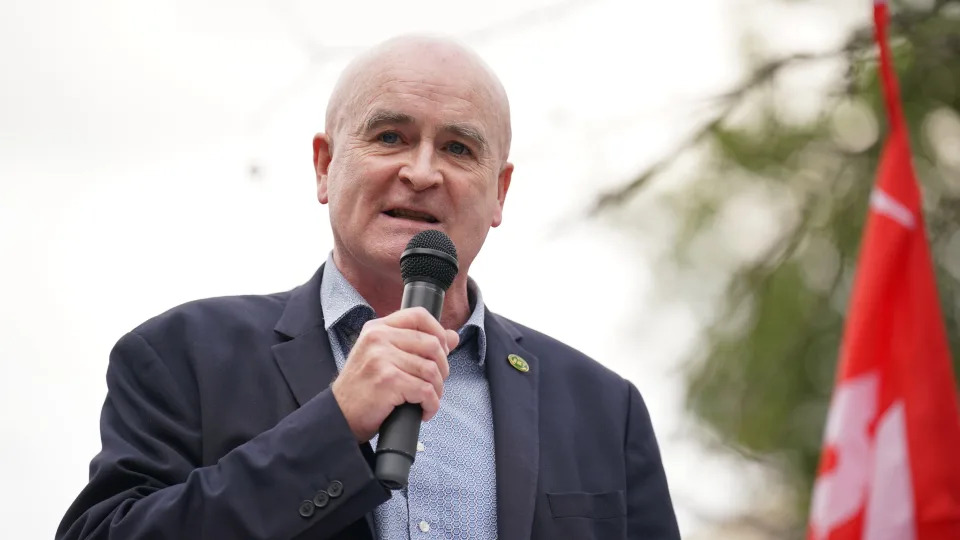
RMT general secretary Mick Lynch said: “Unipart bosses continue to behave in an intransigent manner, and shown a complete disregard for their own staff.

“Our members have rejected a derisory pay offer, but despite attempts by our negotiators to reach a settlement, Unipart bosses cancelled a last-ditch meeting, showing no interest in trying to resolve the dispute.

“RMT remains determined to reach, a negotiated settlement on pay and conditions, and is willing to take more strike action if necessary.”

A Unipart Rail spokesperson said: “Unipart Rail has worked hard to avoid strike action and we continue to engage in dialogue with the trade union. We will avoid any disruption to our customers.

“While around half the staff at Crewe are not union members and have not balloted for strike action, we’re disappointed by the threat of industrial action.

“Employee engagement has been a fundamental part in Unipart’s business across all our sites globally for many years and fair remuneration is an important part of that.

“Last year we awarded significant pay increases to colleagues at Crewe. The minimum was 7%, the maximum was 25%, most fell between 10% and 15%. The current pay offer of 4.75% has been based on several factors but is largely driven by affordability as the rail sector continues to be under significant earnings pressure.

“We will continue to be sensitive to the inflationary pressures on our people and will continue to offer them as much support as possible such as free guidance on financial management through independent third-party advisers, who also advise on health and mental health issues.

“However, ultimately the company can only support pay claims that are affordable, and which will not result in steps such as downsizing to bring costs in line with customer demand.”

Network Rail axes bonuses for union members who strike


Gwyn Topham Transport correspondent
Tue, 29 August 2023 

Photograph: Jonathan Brady/PA

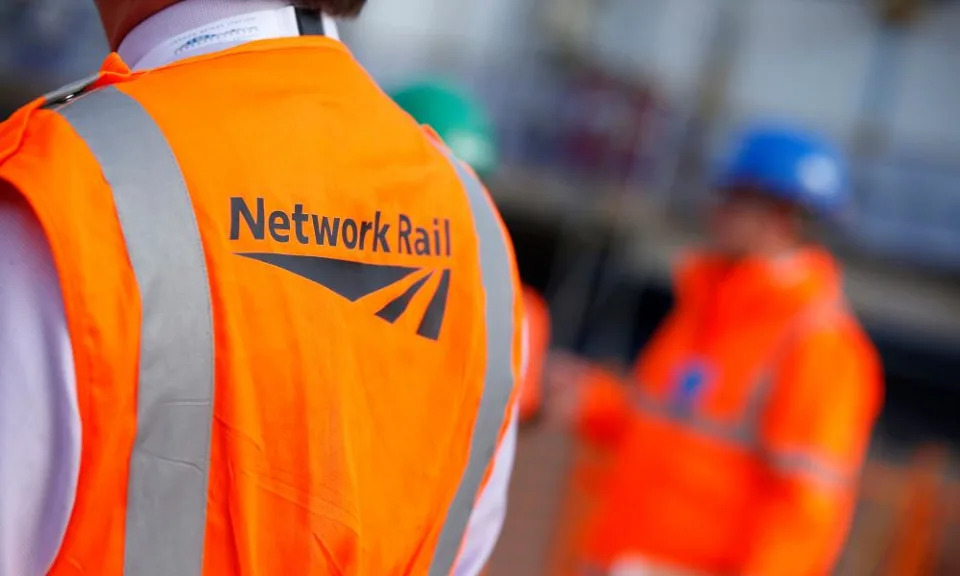
Network Rail has withheld annual bonuses from its union members who took part in strikes, in a move that threatens to further sour industrial relations.

The state-owned railway infrastructure manager settled the pay dispute with its workforce in March this year, after RMT members voted to accept a rise worth 9% over two years.

However, Network Rail has told staff that those who took part in any of the strikes from June 2022 onwards that they will not receive a bonus.

The RMT called the move “disgraceful” and an attempt to divide workers in the union.

The bonus is understood to have been much lower than usual this year owning to Network Rail’s performance, which was heavily affected by the strikes. However, those who did not strike will receive about £300.

About 20,000 RMT members are expected to be affected by the decision.

A Network Rail spokesperson confirmed that bonuses would be withheld and defended the move. They said: “Awarding performance-related pay [PRP] is Network Rail’s way of recognising colleagues for their contribution to achieving the company’s performance targets. We have been crystal clear with both our trade unions and our employees that the cost of strike action would directly impact the PRP scheme.

“Our position was made very clear: any discretionary payments would focus on those who continued to support rail services during industrial action.”

The decision has upset staff, with many still aggrieved at sub-inflation pay rises after being lauded as frontline workers during Covid.

More than 12,000 people have signed a petition on the Organise platform calling on Network Rail to reinstate the bonuses.

The RMT general secretary, Mick Lynch, said: “The decision to exclude trade unionists from this bonus scheme is disgraceful and is understandably causing significant consternation among members.

“It is clear that the stance adopted by Network Rail both penalises and discriminates against members for exercising their human right to associate and to participate in lawful trade union activities. However, legal protections only exist for those who are unfairly dismissed for taking part in lawful strike or other industrial action which is called officially.”

In an email to members, he said: “As the bonus scheme is discretionary, and not a contractual obligation, the decision to exclude RMT members has been taken in bad faith and is a transparent attempt to divide the workforce and undermine your union, by specifically rewarding those who refused to stand in solidarity with union members taking essential strike action.”

RMT members at train operators in England are still in dispute and will strike again on Saturday, causing widespread disruption.

Another four-day strike by RMT rail workers over pay, at the Unipart supply firm in Crewe, starts on Tuesday.
UK
Wilko job cuts ‘suspended’ after union calls for urgent government talks

Daniel O'Boyle
Tue, 29 August 2023 

Wilko is continuing to trade and has not announced any redundancies after formally entering insolvency (Sam Russell/PA) (PA Wire)

GMB Union, which represents a third of Wilko staff, says that job cuts will be ‘suspended’ while administrators consider “multiple” bids, hours after the labour organisation wrote to Business Secretary Kemi Badenoch claiming that bidders which aimed to save jobs had “difficulties” engaging with administrators at PwC.

The GMB Union revealed last week that the majority of Wilko staff appear set to lose their jobs, some as soon as next week, after a major bidder dropped out. Some shops are still expected to be saved by smaller bidders, but it now appears that the most likely scenario involves most of Wilko’s 400 shops closing.

However, the GMB said today that other groups have come forward and said they were interested in saving a large portion of Wilko, but had trouble dealing with PwC.


“Since this announcement, we have been contacted by a number of potential bidders for the business,” GMB National Secretary Andy Predergast said. “Of these, several appear to have the necessary funding and the willingness to invest and safeguard our members jobs.

“Needless to say, such bids not only have the potential to ensure that our members can carry on in employment, they also provide welcome relief for the high street as well as significantly lowering the degree to which the state would need to step in to provide redundancy and notice pay via the insolvency service. Unfortunately, we are concerned that prior to our involvement, several of these bidders have reported difficulties engaging the appointed administrators.

The understanding had been that job cuts would begin this week. But the Union today said that redundancies would be “suspended” while the administrators consider bids.

“All redundancies at Wilko have been suspended while the administrator considers further bids,” Prendergast said.

“Whilst this is a positive development, Wilko is not out of the woods by any means and this is a time of incredible stress and worry for the 12,500 workers who face losing their jobs.”

A spokesperson for the union said it was not yet clear how long the suspension might last.

Prendergast also raised questions about the role of private equity business Hilco, which is a major creditor of Wilko after offering a £40 million loan when the retailer was already close to collapse. The GMB leader said Hilco had been described in media as both a creditor and an advisor to administrators, which raised questions of whether there was a conflict of interest.

A spokesperson for the administrators said: “Since our appointment as administrators of Wilko we have worked relentlessly to secure a sale of the business, and talks are continuing with a number of parties.

“As administrators we’re intent on achieving the best outcome for everyone involved while preserving as many jobs as possible and adhering to our statutory duty to act in the best interests of the creditors as a whole.

“It would be inappropriate to comment on individual bidders or interested parties at this stage in the process.”

Wilko pauses redundancies as administrators consider rescue bids, says union

Henry Saker-Clark, PA Deputy Business Editor
Tue, 29 August 2023


Wilko has suspended redundancies while administrators consider rescue offers, according to the GMB union.

The union, which represents more than 3,000 of Wilko’s 12,500 staff, said it met with administrators on Tuesday morning.

Wilko tumbled into administration earlier this month, putting the future of its 400 stores across the UK into doubt.

Administrators from PwC have sought offers from interested firms in an effort to save jobs and stores.

The union said on Tuesday it discussed a number of potential bids to save the stricken high street chain with the insolvency experts.

Andy Prendergast, GMB national secretary, said: “All redundancies at Wilko have been suspended while the administrator considers further bids.

“Whilst this is a positive development, Wilko is not out of the woods by any means and this is a time of incredible stress and worry for the 12,500 workers who face losing their jobs.”

It comes after reports of fresh last-minute bids to potentially buy the retailer.

A bid worth £90 million has been made by restructuring specialist M2 Capital, the Guardian reported, which could potentially keep the entire Wilko chain trading.

It came after Canadian businessman Doug Putman, who bought music retailer HMV in 2019, also lodged a bid intended to preserve the majority of Wilko’s stores.

Rivals Poundland, B&M, The Range and Home Bargains also reportedly lodged their interest in buying parts of the Wilko business.

Wilko closures and job losses on hold as administrator considers rescue bids

Sarah Butler
Tue, 29 August 2023 

Photograph: Maureen McLean/Shutterstock

Plans for redundancies and store closures at Wilko have been put on hold as administrators consider two potential last-ditch rescue bids that emerged over the bank holiday weekend.

Administrators from PricewaterhouseCoopers, who were called in earlier this month as Wilko ran short of cash, had warned that redundancies would start within weeks as there had been no viable bids for the bulk of the company. The group employs nearly 12,500 people.

Doug Putman, the owner of HMV in the UK and Toys R Us in Canada, is understood to have increased his bid on Friday’s deadline, offering to take on up to 350 of Wilko’s 400 stores and ensure the main creditors – led by the restructuring specialist Hilco – were paid. A previous bid from Putman would have involved saving 200 stores.

Related: What went wrong at Wilko?

Another potential offer has emerged from M2, a restructuring specialist that claims to own the Como hotels group and is in the process of buying the Michigan-based car parts maker Superior Industries. M2 is understood to have put forward a bid that would keep the entire Wilko chain trading.

M2 has written to administrators questioning whether the bid process was “fair and transparent” as it was given a deadline to provide details of its funding on a UK bank holiday.

However, a source close to the process questioned the credibility of the M2 bid, which was put forward very late on the final day for offers, and whether the finance group had the required funds available.

Andy Prendergast, the national secretary of the GMB union, which represents thousands of Wilko staff, said: “There appears to be a glimmer of hope but there is still a long way to go.

“We don’t want to get carried away as our members deserve certainty, but we are hopeful that jobs can be protected.”

He said the union had been told by PwC that any redundancy process for workers was on hold.

A spokesperson for PwC said: “Since our appointment as administrators of Wilko we have worked relentlessly to secure a sale of the business. We are actively engaging with all interested parties and assessing the deliverability of all bids made.

“As administrators we’re intent on achieving the best outcome for everyone involved while preserving as many jobs as possible and adhering to our statutory duty to act in the best interests of the creditors as a whole.

“It would be inappropriate to comment on individual bidders or interested parties at this stage in the process.”

Wilko: union seeks urgent meeting with business secretary over administrators

Jasper Jolly
Mon, 28 August 2023 

Photograph: Christopher Thomond/The Guardian

A union representing thousands of workers at Wilko is seeking an urgent meeting with the business secretary after being told by potential rescuers of “difficulties” in engaging with the administrators who will decide upon the stricken retail chain’s future.

On Monday, the GMB national secretary, Andy Prendergast, wrote to Kemi Badenoch asking her to ensure that PricewaterhouseCoopers considered all bids for the budget retailer where 12,500 jobs were hanging in the balance.

The gardening to beauty retailer, which has 400 stores, called in administrators this month after running short of cash. Its shops are expected to close within weeks, with thousands of job losses unless a buyout can be secured.


The shuttering of Wilko stores will leave more big gaps on UK high streets that have been severely hit by the loss of 6,000 retail outlets in the past five years.

Several parties, who say they will retain the jobs if successful, have emerged as contenders to take over the business. Doug Putman, a Canadian entrepreneur who returned the HMV music and film retail chain to profit, last week submitted a second offer that would mean the stores would continue to operate under the Wilko brand.

M2 Capital, a UK-Canadian private equity firm that owns a string of upmarket hotels around the world under the COMO brand, also put forward a bid on Friday. At least one other potential bidder from the UK is considering making an offer, although no formal bid has been entered, the Guardian understands.

Any new bid would face a race against time if it is to preserve workers’ jobs. PwC said on Wednesday it was probable that the majority of Wilko’s stores would close and there would be redundancies, adding that it had not found a buyer for the whole group. A decision on the first closures and redundancies is thought to be imminent, and could come as soon as this week, although Wilko stores are continuing to trade.

However, in the letter to Badenoch seen by the Guardian, Prendergast said: “We are concerned that prior to our involvement, several of these bidders have reported difficulties engaging the appointed administrators.” Several bidders “appear to have the necessary funding and the willingness to invest and safeguard our members’ job”, he added.

The GMB also raised concerns over the role of Hilco Capital, a private equity firm that lent Wilko about £40m this year. A Hilco subsidiary holds the rights to income from the sale of the Wilko brand. Barclays Bank also holds a charge over several plots of land owned by the retailer.

As administrator, PwC has an obligation to try to protect the interests of creditors including Hilco. The GMB said it was concerned about the influence of Hilco and that the private equity firm’s interests did not necessarily align with retaining workers’ jobs. Hilco was approached for comment.

A PwC spokesperson said: “Since our appointment as administrators of Wilko we have worked relentlessly to secure a sale of the business, and talks are continuing with a number of parties. As administrators, we’re intent on achieving the best outcome for everyone involved while preserving as many jobs as possible and adhering to our statutory duty to act in the best interests of the creditors as a whole.

“It would be inappropriate to comment on individual bidders or interested parties at this stage in the process,” they added.

The GMB argues that no redundancies should take place at Wilko if meaningful offers have been tabled that will protect jobs. The business secretary would not have powers to intervene directly in the administration, but could put pressure on parties to try to save jobs.

A government spokesperson said: “While this is a commercial decision for the company, we understand that this will be a concerning time for workers at Wilko.

“We have backed businesses all of sizes with an unprecedented package of support including recent fuel duty and VAT cuts, business rates holidays and government backed loans worth around £400bn. We will continue to stand firmly behind them.”

The union said it was seeking assurances from the government that all bids would be considered, and that where possible all steps would be taken to “protect jobs as part of this process”. Prendergast argued that the bids could save the government millions of pounds in redundancy costs and notice pay that would be required if Wilko enters liquidation.

The Department for Business and Trade was approached for comment.
SCOTLAND
Museum staff balloted for strike action in job cuts row

Lucinda Cameron, PA Scotland
Tue, 29 August 2023 

Museum workers are being balloted for strike action in a dispute over job cuts.

Unison claims that Glasgow Life is planning to cut 30% of jobs in the city’s museums and collections section which includes venues such as Kelvingrove Art Gallery and Museum and the Burrell Collection.

The jobs affected include curators, conservators, technicians, outreach and learning assistants, collections staff and employees from photography, editorial and design.

Unison has now notified Glasgow Life of the move to ballot nearly 70 members in the affected section from next week until September 26.


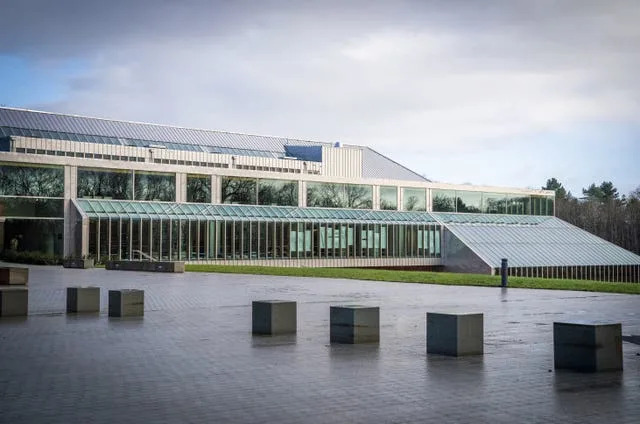
The Burrell Collection is among the museums run by Glasgow Life (Jane Barlow/PA)

It said that with other trade unions adopting a similar approach, more than 100 workers are now being asked to vote for strike action.

Brian Smith, Unison Glasgow Branch Secretary, said: “These workers are angry at how Glasgow Life and Glasgow City Council are treating them, and by extension the museums loved and enjoyed by the people of Glasgow.

“A 30% cut in jobs in the museums and collections section is huge and will have a very damaging impact on how the collections are maintained, displayed and developed in the future. The loss of community outreach programmes is also unacceptable.

“Politicians should be investing in the city’s world class museums, not slashing jobs.

“Unison members are now being balloted for strike action. Glasgow Life and Glasgow City Council need to listen to these workers’ concerns. The council leadership need to reverse these job cuts”.

The dispute has seen a series of protests outside some of Glasgow’s museums and the City Chambers in recent weeks.

More protests are now planned including on September 2 at the Riverside Museum and on Saturday 16 at Kelvingrove Museum.

Glasgow Life has been asked for comment.
UK
Campaigners criticise plans to boost housebuilding by relaxing environment rules


Ben Hatton and Danny Halpin, PA
Tue, 29 August 2023

Environmental campaigners have hit out at the Government after it confirmed that EU-era restrictions that force housebuilders to mitigate the impact new developments have on river health are set to be scrapped under plans to provide an additional 100,000 new homes in England by 2030.

The Government said the measure could provide an £18 billion boost to the economy, and that housing developments contribute only a small fraction of nutrient pollution and new funding is being provided to mitigate any associated increase

But environmental campaigners accused the Government of going back on its word and suggested the change would allow developers to cut corners, with the chief executive of The Wildlife Trusts branding it a “disgraceful move”.

Rishi Sunak and Michael Gove speak to Ella Cole (left), trainee assistant site manager during a visit to the Taylor Wimpey Heather Gardens housing development in Norwich (Joe Giddens/PA)


Speaking on a visit to a new-build housing estate near Norwich, the Prime Minister told broadcasters that the boost to housebuilding would be “fantastic for young, first-time buyers”.

Current nutrient neutrality rules prevent developers from building houses in protected areas when it would add harmful substances like nitrogen and phosphorus into nearby rivers and lakes, because such nutrients can cause algal blooms that deprive other plants and animals of light and oxygen.

Under legislation derived from the EU, Natural England currently issues guidance to 62 local authority areas, requiring new developments to be nutrient neutral in their area, meaning developers must demonstrate and fund mitigation to win planning approval in certain areas.

This requirement will be watered down to become guidance under the changes being proposed.

Instead, changes will see the financial burden to mitigate nutrient pollution for new housing shifted from developers to taxpayers, with the Government saying it would double investment in its nutrient mitigation scheme, being run by Natural England, to £280 million. And a further £166 million will be allocated for slurry infrastructure grants.

The Government says it intends to work with the housebuilding industry to ensure that larger developers make what it describes as an appropriate and fair contribution to the scheme over the coming years.

No detail on that has been announced, but the Government said it is discussing how to do so with the Home Builders Federation.

The changes are being proposed via an amendment to the Levelling Up and Regeneration Bill which is currently going through the House of Lords, with the Government saying it could see additional homes being built in a matter of months.

The Government describes nutrient pollution as an “urgent problem” for freshwater habitats, many of which it says are “internationally important for wildlife”, and acknowledges it needs to tackle the issue to meet legal commitments to restore species abundance.

Housing Secretary Michael Gove said: “We are committed to building the homes this country needs and to enhancing our environment. The way EU rules have been applied has held us back. These changes will provide a multibillion-pound boost for the UK economy and see us build more than 100,000 new homes.

“Protecting the environment is paramount which is why the measures we’re announcing today will allow us to go further to protect and restore our precious waterways whilst still building the much-needed homes this country needs.”

Environment Secretary Therese Coffey said: “These new plans will cut nutrients and help support England’s precious habitats whilst unlocking the new homes that local communities need.

“We are going to tackle the key causes of nutrients at source with over £200 million of funding to reduce run-off from agriculture and plans to upgrade waste water treatment works through conventional upgrades, catchment approaches and nature-based solutions.

“This builds on the key commitments made in our five-year strategy – our Environmental Improvement Plan – as well as our Plan for Water which brings forward more investment, stronger regulation and tougher enforcement to protect our rivers.”

Chief executive of The Wildlife Trusts, Craig Bennett, said: “In May, June and July, the Government made promises to the British people and to Parliament that they would not lower environmental protections or standards.

“But just a few weeks later they are planning to do precisely the opposite. They lied – this is a disgraceful move which undermines public trust in this Government.

“Make no mistake – this is a license from the Government for the commercial housebuilding lobby to profit from the pollution of our rivers. Vague offers of money as compensation are not the same as a legislative requirement – and even the existing rules are extremely modest.”

Policy director for Greenpeace UK, Dr Doug Parr said: “Who would look at our sickly, sewage-infested rivers and conclude that what they need is weaker pollution rules? No-one.”

They added: “Instead of allowing house builders to cut corners, the Sunak administration should make sure we have the right infrastructure to handle our sewage so we can build new homes without sacrificing our rivers’ health.”

Prime Minister Rishi Sunak poses for a picture with the Mathew family during a visit to the Taylor Wimpey Heather Gardens housing development in Norwich (Joe Giddens/PA)

Labour’s shadow housing secretary Lisa Nandy said: “With housebuilding projected to fall to the lowest level since World War Two and our rivers full of sewage, the Conservatives are failing on both housing and the environment.

“The Government is responsible for environmental policy; housebuilders should not be asked to cover for their abject failure.

“Labour will support effective measures that get Britain building, but it’s laughable to think that a Prime Minister who is too weak to stand up to the Nimbys on his backbenches can be trusted to deliver the housing Britain needs.”

Liberal Democrat environment spokesperson Tim Farron said: “Not content with the levels of pollution in our rivers already, scrapping nutrient neutrality is a disgraceful act from the Government. The Conservatives seem happy for Britain’s rivers to get even worse.”

Conservative former environment secretary Theresa Villiers said she welcomed the plan, as did Tory former housing secretary Simon Clarke.

Mr Clarke said on X, formerly known as Twitter, “This is NOT an attack on nature. New homes aren’t the problem – it’s poor management by our water companies and (to some extent) farming practices.”

Shares in housebuilders rose sharply on the London market at the prospect of strict planning rules being eased. Charles Church builder Persimmon saw its stock jump more than 4% on the FTSE 100 Index, with Barratt Developments up 3% and Taylor Wimpey nearly 3% higher.

Executive chairman of the Home Builders Federation Stewart Baseley said: “Today’s very welcome announcement has the potential to unlock housing delivery across the country.”

He added: “The industry is eager to play its part in delivering mitigation and protecting our waterways. We look forward to engaging with Government on the right way to do so, now that ministers are acting upon the arguments that builders both large and small have been making for so long.”
Foppish, homoerotic – then homeless: the real story of Hitler’s youth

Unknown
Mon, August 28, 2023

Performance: after seeing this 1925 photo shoot, Hitler told photographer Heinrich Hoffmann to destroy the negatives - Heinrich Hoffmann/Keystone Features/Getty Images


On January 3 1903, in the Austrian town of Leonding, 65-year-old Alois Hitler was drinking red wine in a tavern when he suffered a lung haemorrhage, collapsed and died. He was buried in a local cemetery. Soon after, his widow Klara sold the large family house and bought an apartment in the city of Linz, around 30 miles away, to which she moved with their teenage son, Adolf.

Alois’s death, and the subsequent move, came as something of a relief to Adolf, who was free in Linz to pursue his first great dream: to become an artist. The 16-year-old resembled a Bohemian dilettante, with long hair, a moustache, fashionable clothes and a black cane with an ivory handle. During the day, he visited local cafés, art galleries and libraries. In the evening, he went to the opera house. He loved the works of Richard Wagner, the scale of whose work held him spellbound.

In the autumn of 1906, Hitler met a budding classical musician called August Kubizek at the opera. Kubizek, who was a couple of years younger, became Hitler’s only close childhood friend. In The Young Hitler I Knew, an account of their friendship published in 1954, Kubizek described Hitler as “highly strung” and liable to “fly off the handle”, especially when describing schoolteachers and bureaucrats. He poured forth his fantasies of being a painter, playwright and architect, and told Kubizek his greatest ambition was to gain entry to the Academy of Fine Arts in Vienna. Hitler had no known friendships with the other sex, but Kubizek did mention a brief “infatuation” with a beautiful middle-class girl called Stefanie Isak. Hitler saw her in the centre of Linz and admired her from afar, even writing several love poems about her. They were never delivered; he never spoke to her.

In September 1907, Hitler went to Vienna, one of Europe’s great cosmopolitan capitals, to sit the entrance exam for the Academy of Fine Arts. He made it past the first round, but failed to go any further; his examiners told him his drawings were “unsatisfactory”. In Mein Kampf, published almost 20 years later, Hitler would describe those examiners as “fossilised bureaucrats devoid of any understanding of young talent”. (In reality, his paintings and drawings show technical competence but no originality; he could render buildings and landscapes, but not people.)


Yet Klara Hitler had had breast cancer for much of 1907, and while Adolf was away in Vienna, her condition deteriorated. He returned to Linz to nurse her, until on the evening of December 21, she died, aged 47, with her distraught son at her bedside. Dr Bloch, the Jewish family doctor, would later say: “In all my career, I have never seen anyone as prostrate with grief.”


Loner: the 10-year-old Adolf, a few years before his father’s death - Hulton Archive/Getty Images

On February 12 1908, Hitler returned to Vienna, where he was to remain for the next five-and-a-half years. With inheritances from his parents and an orphan’s pension, he had enough money to live for at least a year without needing to find a job. In March, he was joined in the single room of a house he was renting by Kubizek, who had gained entry to the prestigious Vienna Academy of Music. Over the next few months, Kubizek saw Hitler read books voraciously, not to learn but to find justification for his own views; Hitler also wrote the outline of a play based on German mythology, and a derivative Wagner-style opera, which he never completed.

Few of Hitler’s biographers have been willing to look more closely at the nature of this pair’s relationship. They dressed alike, and went on long hikes together. After one, they were caught in a thunderstorm and sought refuge in a barn. Kubizek later recalled:

I felt sorry for Adolf as he stood in the doorway in his sodden underclothes, shivering with cold… he could easily have developed pneumonia. So I took one of the big cloths, spread it out on the hay, and told Adolf to remove his wet shirt and underpants and wrap himself in the dry cloth. This he did. He lay down naked in the cloth. I folded the ends together and wrapped him up tightly in it. Then I fetched another cloth and draped it over the top… He was highly amused by the whole venture, whose romantic conclusion pleased him greatly.

In the summer of 1908, however, Kubizek returned to Linz. The two friends, living in one room, had apparently started to annoy each other.

Then, in September, Hitler applied to re-sit the entrance exam for the Vienna Academy of Fine Arts, but wasn’t judged good enough. This ended his dream of being a renowned artist. He fell into depression, and when, in November, Kubizek returned to Vienna, he found that his friend had disappeared, leaving no forwarding address.

Hitler didn’t look for a mundane job, nor did he undertake his compulsory military training, even though it seems his savings rapidly ran out. He moved from another apartment to a third, much cheaper one, but in September 1909 he vacated that too, probably because he’d failed to pay the rent. He was homeless for about six weeks, mostly sleeping on park benches.

Hitler in a crowd listening to Austria's declaration of war in August 1914
 - Universal History Archive/Universal Images Group via Getty Images

But finally, in October, he took up residence in the Meidling, a men’s homeless hostel, which offered a bed, soup and bread every night. There he was befriended by Reinhold Hanisch, a former domestic servant, who described the future Nazi dictator as “shabbily dressed and incapable of organising his own life”. But Hitler finally undertook a few jobs, clearing snow and carrying baggage for tips at the railway station, and in December, he moved to the smarter Männerheim men’s hostel, where he would remain until 1913.

Hitler would describe his Vienna years as the “saddest period of my life”. Those who knew him during this period describe him as a “loner” who held dogmatic opinions on every subject. He disliked Social Democrats, trade unionists and Jesuits; he didn’t drink or smoke; he had no interest in seeking out female companionship. While he lived at the Männerheim, he did complete around 400–600 paintings, drawings, posters and postcards, most of which were of well-known buildings in Vienna, copied from other people’s work then sold in shops, taverns and cafés. By the end of 1910, he was earning 40-60 crowns a month from this, and his income was boosted by a gift of 3,800 crowns from his aunt, Johanna.

In Mein Kampf, Hitler would claim that he’d been keenly interested in political developments in Vienna. Yet he joined no political party, and merely read newspapers, periodicals and pamphlets. Nor, surprisingly, is there much evidence to suggest that he was preoccupied by anti-Semitism. Again, in that memoir, he would claim that he was a “weak-kneed cosmopolitan” when he arrived in Vienna and a “fanatical anti-Semite” when he left, thanks to noticing Jews on the streets (and seeing them as “an alien force”).

It’s true that the city contained the largest Jewish population of any German or Austrian city – in 1910, they made up 8.6 per cent of the population, and were prominent in law, medicine, finance, the press and the arts – but those who’d been around him recalled no pronounced anti-Semitic views. In fact, the Meidling was funded by a wealthy Jewish family, Hitler attended musical evenings at the home of another such family, and most of his closest acquaintances at the Männerheim were Jewish.

On April 20 1913, his 24th birthday, Hitler received the last instalment of his father’s inheritance. With that, he decided to end his period in Vienna and moved to the German city of Munich, where his fatal relationship with Germany and its people began – and would ultimately lead to disaster.

The Weimar Years: Rise and Fall 1918–1933 by Frank McDonough will be published by Head of Zeus on Thursday



How an only-in-California law could allow one Uber driver to singlehandedly upend the gig economy

David Astoria, Seth Finberg
Mon, August 28, 2023 

Justin Sullivan—Getty Images

The gig economy, a realm once celebrated for its convenience and dynamism, is standing at a crossroads. A recent opinion by the California State Supreme Court against Uber could be the catalyst for much-needed change, pushing for a fairer deal for gig workers. The court recently allowed a special lawsuit to be brought against Uber from drivers demanding coverage for work-related expenses. This decision highlights the back-and-forth struggle for the soul of the gig economy in California—and possibly throughout the United States.

Erik Adolph, the UberEats driver at the heart of this case, is not merely a plaintiff. He symbolizes the struggle of gig workers seeking fair compensation against a system that often feels stacked against them. For years, companies like Uber have used the label of “independent contractor,” sidestepping potentially cumbersome employment laws that mandate benefits such as minimum wage, health insurance, and expense reimbursements. The essence of Adolph's lawsuit is to permit a specific cause of action to challenge this model.

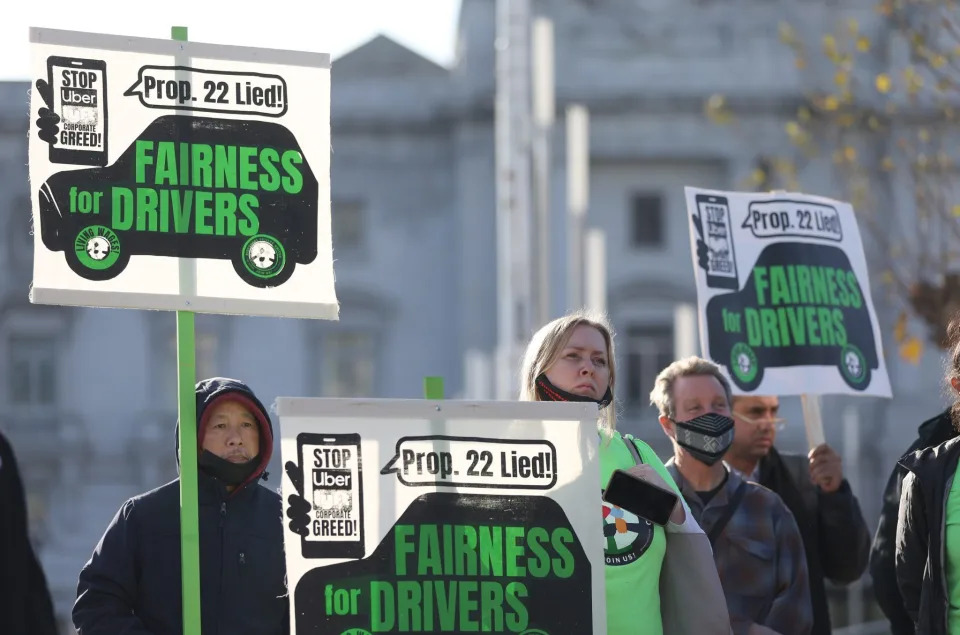
However, this practice of classifying workers as independent contractors isn't solely a tactic utilized by these companies. It has legal backing, most prominently in the form of California's contentious Proposition 22. Passed in 2020, this measure, which was one of the most expensive ballot initiatives in the state's history, allows gig-based apps to define their workers as independent contractors instead of employees. Even though a California appeals court affirmed the validity of Proposition 22 as recently as March of this year, the contention is far from settled, and the tug-of-war over worker classification in the gig economy is ongoing.

The lawsuit against Uber leverages the Private Attorney General Act (PAGA), a unique California law that allows workers to sue for employment law violations on behalf of the state. This law doesn't just empower workers to fight for their rights, it actively encourages a more equitable employment landscape.

Significantly, the ruling diverges from a 2022 U.S. Supreme Court decision involving Viking River Cruises, which endorsed companies channeling individual PAGA claims into private arbitration instead of the courts. California's latest decision could potentially pave the way for further large-scale lawsuits against employers.

Those arguing for the status quo, including Uber's lawyer, Theane Evangelis, believe the California ruling infringes upon federal law enforcing the validity of arbitration agreements. However, such a view fails to acknowledge the overwhelming need for change in these contracts. Over half of private sector nonunion U.S. workers are required to sign similar arbitration agreements. This practice often deters them from pursuing individual claims, especially over small sums. It’s time to question this approach and strive for fairness over expediency.


To those advocating for labor rights, the California Supreme Court ruling represents a ray of hope. It could compel companies to rethink their reliance on arbitration, potentially loosening the contractual knots that have kept gig workers in limbo for years.

The legal tussle serves as a stark reminder of the broader challenges facing the gig economy. The responsibility for—and cost of—services, the balance between innovation and fairness, and the very definition of “employees” are all up for debate. More than just legal technicalities, these questions shape the lives of countless workers in our tech-driven society.

If other states decide to echo California's decision, the implications could be profound. Companies might need to recalibrate their strategies, factoring in increased expenses related to worker benefits and potential legal battles. While such an outcome could shake the foundations of California-based giants like Uber, it might also encourage startups to adopt sustainable growth models, prioritizing worker rights over unchecked expansion.

For gig workers, this might mean enhanced working conditions, fairer pay, and access to traditional employment benefits. Such changes are not just beneficial, they are essential for preserving the dignity and rights of workers in the modern economy.

The California Supreme Court's ruling sends a clear and necessary message to gig economy companies: Worker rights cannot be overlooked. As we stand at the intersection of technological advancement and worker rights, we must ensure the road taken leads to justice and equity for all workers. The legal battle is far from over, but one thing is clear: The gig economy must change—and we all have a role in shaping that change.

David Astoria is the founder and CEO of Pranos Inc., the company that converts vehicle windows into high-definition billboards with a unique focus on car window advertising and consumer-generated content for self-expression.

Attorney Seth Finberg is the founder of Finberg Firm, a South Florida–based law firm specializing in representing exceptional foreign pilots and other talented individuals with extraordinary abilities.

The opinions expressed in Fortune.com commentary pieces are solely the views of their authors and do not necessarily reflect the opinions and beliefs of Fortune.

This story was originally featured on Fortune.com