Saturday, December 30, 2023

Gustave Eiffel: French tower builder who sparked skyscraper frenzy

Frédéric DUMOULIN
AFP
22 December 2023


Caricature of Gustave Eiffel, holding his famous tower

French engineer and entrepreneur Gustave Eiffel will forever be remembered for building the much-loved tower that has dominated the Paris skyline for over a century.

But the father of the Eiffel Tower also designed hundreds of other landmarks across the globe, and even patented a system of underwater "bridges" to run under the Channel.

Here are five things to know about the engineer and inventor, who died 100 years ago on December 27, 1923, at the age of 91.


- Bonickhausen Tower? -

Eiffel designed the tower that would bear his name for the World Fair in Paris in 1889.

But the tower, which came to symbolise France, could very easily have had a German name.

Eiffel, who had German roots, was born Alexandre Gustave Bonickhausen dit Eiffel in 1832 in Dijon but he dropped the German part of his surname after the 1870 Franco-Prussian war, fearing it could damage his career.

Erected in record time, the 7,000-tonne, 300-metre (1,052-foot) "Iron Lady" was the tallest human-made structure in the world for four decades.

Commenting on its place in history, the Bureau International d'Expositions, which organises World Expos, says it "marked the pinnacle of iron architecture, and set the pace for the skyscraper frenzy that would follow in the 20th century".

- Projects on five continents -

The Tower came towards the end of Eiffel's career, during which he built around 500 structures across five continents.

He built his reputation as a builder of railway bridges but also used his metal wizardry to build the Pest railway station in Hungary, lighthouses in Finland and Madagascar, the structure of the Saigon Central Post Office in Ho Chi Minh City and the iron framework of the Statue of Liberty in New York.

He also designed portable bridges, delivered around the world in kits.

- Channel tunnel 100 years early -

Never short of ideas, Eiffel proposed to build what he described as a bridge under the Channel to link France with Britain.

His 1890 design envisaged a system of concrete-coated metal tubes built on supports resting on the sea bed.

The project never saw the light of day, but 104 years later the Channel Tunnel linking Britain and France, which measures 169 Eiffel Towers placed end-to-end, was launched to great fanfare.

- Panama fiasco -

Eiffel was as much an entrepreneur as engineer. In 1887, his company won the contract to build locks for the Panama Canal -- the biggest deal of his career.

But poor management by Ferdinand de Lesseps, the Frenchman who had overseen the successful Suez Canal, caused the project to collapse, resulting in one of the biggest financial scandals of 19th century.

De Lesseps and Eiffel were both charged with fraud and sentenced to prison and hefty fines.

Although their convictions were later overturned, Eiffel's reputation had taken a battering and he retired from business.

- Radio Eiffel -

He devoted the last 30 years of his life to scientific research, with a particular focus on meteorology and aerodynamics.

The wind tunnel he built in a hangar at the foot of the Eiffel Tower was used to test more than 20 planes.

It is still used today by the construction, aviation, shipping and automotive industries to test the effects of wind and air.

He also used research to save his illustrious tower, which was commissioned on the understanding that it be dismantled after 20 years.

He installed a meteorology station on the third floor, but it was the addition of a giant radio antenna in 1921 that saved it from the wrecking ball.

frd-jmy/cb/gv
N Macedonia's Roma Rock School strikes chord against prejudice

Darko DURIDANSKI
22 December 2023

North Macedonia's Roma community has been largely excluded from formal arts education 
(ROBERT ATANASOVSKI)

Crunchy guitar riffs reverberate through an apartment block in downtown Skopje -- the sound of the silence on discrimination in North Macedonia being well and truly broken.

At the Roma Rock School, children of all ages and backgrounds are brought together to learn, jam and overcome deep divisions in the hugely diverse Balkan country.

The school offers courses in music theory and instrument and voice classes along with rehearsal space for aspiring young musicians.

"All of this is free of charge for all the students. One of the main missions is breaking the stereotypes through music," co-founder Alvin Salimovski told AFP.

"I think that the only functional and effective way to do that is through music, something that we proved over the years."

One of the school's main focuses has been recruiting children from Skopje's largely Roma neighbourhood of Suto Orizari -- or Shutka -- where poverty and a lack of opportunities have remained stubbornly entrenched.

Despite traditionally providing the musicians who play at weddings, feasts and funerals -- as well as some of the country's most beloved singers -- just 13 ethnic Roma have graduated from the University of Skopje's Faculty of Music since its establishment in 1966.

Indeed, North Macedonia's Roma community has remained largely excluded from formal education in the arts despite the community's rich history of music and performance.

"At this moment we work with mixed bands of Roma and Macedonian children, but we are open," Salimovski said. "One of our goals is making music with bands of different ethnicities."

- 'Friendships, music and learning' -

Currently, Roma Rock School works with around 60 students between the ages of 10 and 19. Students can learn a range of instruments including guitar, bass, drums and wind instruments along with instruction on band arrangements.

Initially, many of the bands formed at the school focused on playing covers of popular songs, but over the years they have started writing original pieces, including compositions that feature traditional Roma influences.

The school's music director Nevrus Bajram, 30, is a guitar player in one of the country's most popular hardcore metal bands, Smut.

In the small makeshift studio packed with a menagerie of instruments, Bajram hangs out with his students, giving them advice and coaching them on techniques to help synchronise with the others in the band.

"Many people are surprised when they see our approach, especially when it comes to the relationship between teacher and student. We try to remove that barrier," Bajram said.

"We have a mission and vision for happiness, to create something that will outlast us."

But the lessons learned at the Roma Rock School are not just intended for the classroom. Every year its students perform at festivals, participate in summer schools and host friends from similar organisations.

The institution enjoys an active partnership with the Mitrovica Rock School in neighbouring Kosovo, where Roma, Macedonian, Albanian and Serb students perform together.

Gjulizar Kadri, a 16-year-old student, said the school had paved the way for new friendships and a burst in creativity.

"We make new songs. I feel good and comfortable," said Kadri, who is the vocalist in the band Right Turn. "It is about friendships, music, and learning new things."

dd/ds/fg
Five new species of soft-furred hedgehogs found in South East Asia

Sky News
22 December 2023·


Five new species of hedgehogs have been discovered by scientists in South East Asia.

They are all types of spineless soft-furred hedgehogs, which are furry rather than spiky.

Two of the species found by researchers are entirely new and the other three are subspecies upgraded to the level of species.

The team, from the Smithsonian National Museum of Natural History, used DNA to identify different genetic lineages, which it later confirmed as distinct species by comparing them with museum specimens.

One of the entirely new species, the Hylomys vorax, is found in a tropical rainforest on the slopes of Mount Leuser in Northern Sumatra.

They are around 12cm (4.7in) long, have dark brown fur, very narrow snouts, and completely black tails.

H. macarong hedgehogs, the other entirely new species, also have dark brown fur - but are larger than Hylomys vorax hedgehogs, at around 14cm (5.5in) in length.

They are found in tropical rainforests in South Vietnam and were named after the Vietnamese word for vampire (Ma cà rồng) because males of the species possess long, fang-like incisors.

The research team said more studies would be required to decipher what purpose the fangs serve.

Lead author Dr Arlo Hinckley said the findings "highlight that even in well-studied animal groups like mammals, there are still discoveries waiting to be made".

The other three new species - which were formerly considered to be subspecies of Hylomys suillus but have now been elevated to species in their own right - are named H. dorsalis, H. Maxi, and H. peguensis.

H. dorsalis hedgehogs are found in the mountains of Northern Borneo while H. maxi hedgehogs are found in the mountains of Sumatra and the Malay Peninsula.

Both are around 14cm long, but H. dorsalis have a conspicuous dark strike that begins on their heads and reaches the middle of their bodies.

The H. peguensis species is smaller, typically measuring around 13cm (5in) in length, and has slightly more yellow fur than the other species.

It is found in numerous countries in South East Asia, especially Thailand, Laos, and Myanmar.

Each of the five species are active during the day and night and like all other species of hedgehogs, are omnivores - probably eating a mixture of insects and other invertebrates as well as some fruits, as and when they can.

Dr Hinckley said: "Based on field observations and the lifestyles of their close relatives, these hedgehogs likely nest in hollows and take cover while foraging among tree roots, fallen logs, rocks, grassy areas, undergrowth, and leaf litter.

"But, because they are so understudied, we are limited to speculate about the details of their natural history."
China unveils new gaming curbs, sending tech stocks tumbling

AFP
22 December 2023

China's new draft restrictions say they are aimed at limiting in-game purchases and preventing obsessive gaming behaviour (GREG BAKER)

China announced Friday another set of planned curbs on the amount of time and money that people can spend gaming online, triggering a share market sell-off in some of the nation's biggest tech giants worth billions of dollars.

The draft restrictions published online by the government regulator say they are aimed at limiting in-game purchases and preventing obsessive gaming behaviour.

They also reiterate a ban on "forbidden online game content... that endangers national unity" and "endangers national security or harms national reputation and interests".


The news sent shares in tech giants tumbling and wiped tens of billions of dollars off their value, with industry leader Tencent tanking more than 12.0 percent in Hong Kong by the close.

Beijing first moved against the gaming sector in 2021 as part of a sprawling crackdown on Big Tech, including a strict cap on the amount of time children could spend playing online.

An end to a freeze in gaming licences had raised hopes that the focus on the industry had subsided.

The country's top gaming industry body announced last year that China had "solved" the issue of youth video game addiction.

But the draft regulations announced Friday would introduce limits on recharging in-game wallets and abolish features meant to increase gameplay time such as rewards for daily log-ins.

Pop-ups warning users of "irrational" playing behaviour would also have to be introduced.

"The clear signal does indeed seem to be that the wide-ranging tech crackdown is still ongoing, and may even be becoming more aggressive," Michael Brown, a market analyst at broker Pepperstone, told AFP.

Since 2021, children under 18 years old have only been allowed to play online between 8:00 pm and 9:00 pm on Fridays, Saturdays and Sundays during the school term.

Gamers are required to use their ID cards when registering to play online to ensure minors do not lie about their age.

And companies are also prohibited from offering gaming services to young people outside government-mandated hours.

- Shockwaves -

China is the world's largest gaming market, and Tencent is the global leader in the sector in terms of revenue.

The company dominates the Asian market and has invested in game studios across the world.

Friday's news wiped around $54 billion off the company's share value, according to Bloomberg News.

Rival NetEase was down nearly 25.0 percent at close, and XD shed 19.0 percent.

The shockwaves were felt throughout Hong Kong's Hang Seng Index, which dived more than four percent at one point, and was down 1.7 percent by closing.

It had been rallying with global markets on expectations the Federal Reserve will cut interest rates next year.

Other tech firms were also hit, with Meituan off nearly four percent and Alibaba down about two percent.

The plans "seem to have come as a significant shock to the market, with little indication having previously been given that such a move was on the cards", said Pepperstone's Brown.

He suggested they could be seen either as an attempt to shift consumer spending to other parts of the sluggish economy, or as a reaction to high levels of youth unemployment.

The national statistics bureau has not released a youth unemployment rate since June, when joblessness among 16- to 24-year-olds hit a record 21.3 percent.

Zeng Xiaofeng, a vice president at Niko Partners, told Bloomberg the regulations would deal a blow to most games in China.

"Companies will need to overhaul their monetization models, including how they charge money from different tiers of players," he said.

Some independent game studios said the regulations could prove an opportunity.

Cheng Gong, CEO of Chengdu-based Han-squirrel Studio, said studios that focus more on innovation and high-quality user experience might benefit.

"The industry felt a bit like bad money driving out good money in the past," he told AFP.

"Everyone is focusing on getting players to top up more. Only the ones with the most revenues can afford to spend more money on advertising and hence they would get more players topping up in return," he added.

"It's a vicious circle."

bur-reb/je/sco
Russia slipping into 'totalitarianism': exiled writer Akunin

Anna SMOLCHENKO
22 December 2023·

Boris Akunin has been declared a 'terrorist' by Russian authorities (KIRILL KUDRYAVTSEV)

Renowned Russian writer Boris Akunin, who was declared a "terrorist" by Moscow and became the target of a criminal inquiry this week, says he fears the moves signal a new milestone in the country's history under Vladimir Putin.

"Putin's regime has clearly decided to take a very important new step on its way from a police, autocratic state to a totalitarian state," Akunin, who lives in exile, told Agence France-Presse in a video interview.

"Extending repression to the sphere of literature in such a traditionally literature-centred country as Russia is a major step."

In the wake of Russia's invasion of Ukraine in 2022, authorities have taken their crackdown to a new level, introducing censorship and shutting down independent media.

This week authorities sent shock waves across Russia's literary circles by adding Akunin's name to Moscow's list of "terrorists and extremists" and opening a criminal probe against him over his criticism of Russia's invasion.

The measures were announced soon after Putin said he would seek a fifth term in office in 2024.

"This has not happened since the Stalin era and the time of the Great Terror," Akunin said, referring to his "terrorist" designation.

One lawmaker, Andrei Gurulev of the United Russia ruling party, called him an "enemy" and said Akunin should be "destroyed."

- 'Show us Navalny alive' -

Akunin is the pen name of Grigory Chkhartishvili, one of Russia's most popular and commercially succesful writers, best known for his historical detective novels.

He has never shied away from criticising Putin and left Russia after the annexation of Crimea in 2014.

A top publishing house, AST, this month said it would no longer publish Akunin's books and those of another anti-Kremlin writer, Dmitry Bykov.

Another publisher, which refused to follow suit, was raided by investigators.

Akunin joked that members of law enforcement were creating extra work for themselves by confiscating his books.

"What's also funny is that prosecutors will now read all my books to look for extremism," the 67-year-old quipped.

"I am a very prolific writer, I have written 80 books."

Akunin said he was afraid authorities were using the smear campaign against him to distract public attention from jailed Kremlin critic Alexei Navalny, whose whearabouts have not been known for the past two weeks.

"I would really like world leaders to present Putin with an ultimatum -- show us Navalny alive. This is very important," he said.

Akunin also said he expected the crackdown against him and Bykov to be just the beginning.

He recently warned Russians who had left the country after the war not to return, writing on social media that "the night will grow even darker."

He said that as in any authoritarian system, Putin's Russia would continue its downward spiral, adding that he feared the authorities would then achieve total control of the internet and introduce exit visas.

"Two more steps and Russia will become a completely totalitarian state," he said.

- 'About to get really scary' -

Akunin said Western leaders made a "strategic mistake" by misunderstanding the historical logic of the development of the Russian imperial state, saying any other leader in Putin's place would have behaved "exactly the same way".

"I spent 10 years writing the history of the Russian state in 10 tomes. I understand the architecture of the Russian state much better now."

He said Western nations were also making a mistake by alienating anti-Kremlin Russians who fled Russia.

"The tragedy is that the world where they rushed to find haven has not been friendly. And lots of people abroad found themselves in a very difficult situation," he said.

"Now some of them are returning back simply because no one needs them anywhere. This absolutely horrifies me, because they are returning to a place where things are about to get really scary."

Anti-Kremlin Russians are the best hope to unseat Putin and change Russia, which could soon become either "northern Iran" or "western China", Akunin said.

"I think it's already clear that it won't be possible to defeat Putinism militarily," he said, adding that change would come from within.

"This regime is more fragile than it seems."

Akunin, a UK citizen, said he now called three countries -- Britain, France and Spain -- home and used each one for inspiration.

"I very much depend on my surroundings, on the genius of the place," he said. "I write non-fiction in London. I write serious literature in the land of Chateaubriand, and I work on entertaining literature in sunny Spain."

It is not easy to be a Russian writer these days, but he would not renounce his roots.

"I have nothing else in my life except Russian culture."

as/sjw/js
England’s NHS junior doctors return to work but further strike looms

Storm Newton, Health Reporter
23 December 2023


NHS junior doctors in England have returned to work after a 72-hour strike, but their next spell of industrial action is less than a fortnight away.

The effect on the NHS of the latest walkout is not yet known, but health leaders warned earlier this month that an impact on patient care would be “inevitable”.

They are preparing for the longest spell of industrial action in the history of the NHS, which will take place in the new year.

Over the last three days, the British Medical Association (BMA) has urged the Government to get back around the table with junior doctors with a “credible” offer, and called on Health Secretary Victoria Atkins to “stop trying to divide the profession”.

But Prime Minister Rishi Sunak branded the action “disappointing” and urged junior doctors to call off strikes.

“The only workforce that is refusing to settle are the junior doctors which is really disappointing, particularly at this time of year when everyone relies so heavily on the NHS, and we’ve been consistently constructive and open to talks,” he told broadcasters on Friday.

“I would urge junior doctors to re-engage in those talks and call off strike action. And I think everyone can see that the Government has acted constructively here because we’ve managed to reach agreement, as I said, with every other workforce in the NHS.”

Industrial action was announced earlier this month after weeks of talks between unions and ministers.

Junior doctors were offered a 3% rise on top of the average 8.8% increase they were given in the summer.

But the BMA said the money would have been split unevenly across different grades and would “still amount to pay cuts for many doctors”.

On Thursday Ms Atkins suggested “many, many doctors” would be feeling “deeply uncomfortable” about the timing of strikes.

The health service is facing mounting seasonal pressure, with officials expecting it to be the most challenging winter yet.

Dr Robert Laurenson and Dr Vivek Trivedi, the co-chairmen of the BMA’s junior doctors’ committee, said the comments were “disappointing” after what they had thought was “an improved tone and approach from Ms Atkins”.

Their statement added: “We did not walk away from negotiations and we are happy to talk to Ms Atkins at any time.

“It is the Government’s insistence that they will not talk while strikes are scheduled that is blocking progress and wasting unnecessary time.

“We appeal directly to Ms Atkins and the Government to drop this precondition and get back around the table.”


The next junior doctors’ strike will begin at 7am on January 3 and end at 7am on January 9.

It will be the longest strike in the 75-year history of the NHS.

Earlier this week, NHS Employers chief executive Danny Mortimer wrote to Professor Philip Banfield, BMA chairman of council, saying hospital staffing levels during this week’s strike “will not be tenable”.

He wrote: “In the previous periods of industrial action taken solely by your junior doctor members, the core duties typically carried out by striking junior doctors have been covered by other medical colleagues and members of the wider team.

“This position will not be tenable in January.”

Junior doctors in Wales are planning a 72-hour walkout from January 15, while doctors in training in Northern Ireland are being balloted for strike action.

Those in Scotland have already come to an agreement with the Holyrood Government.

First Minister Humza Yousaf reiterated his Government’s offer to mediate talks between UK ministers and unions.

In a post on X, formerly Twitter, Mr Yousaf said: “In Scotland, we have avoided NHS strikes by agreeing a fair pay deal with junior doctors.

“I reiterate our offer to the UK Government that we’re willing to mediate in their dispute, so no more days of NHS activity are lost to strike.”
UK
The workers enjoying the biggest bonuses this year – and the smallest

Tom Haynes
23 December 2023

The jobs paying the biggest bonuses this year

Finance and insurance workers have raked in twice as much in bonuses as any other industry, Telegraph analysis of official figures shows.

Weekly earnings data published this month by the Office of National Statistics (ONS) found that those working in finance pocketed an average of £18,000 a year in bonus pay.

Those receiving the smallest bonuses each month were those working in education, who earned £94 on average, followed by hospitality workers (£442) and health and social workers (£535).

Last week’s data saw British wage growth slow by the most in almost two years – from 8pc to 7.2pc. Vacancies also fell by 45,000 to 949,000 in the September to November period.

However, pay is still rising too fast for the Bank of England to relax its stance on interest rates. Last week, the Bank opted to hold the base rate at 5.25pc, while Andrew Bailey, the Governor, warned that there was “still some way to go” in Britain’s inflation fight.

Data published by job site Adzuna also saw a sharp decline in salaries and vacancies. After consistent growth throughout the first half of the year, in November, UK job adverts fell by 2.72pc compared to October and were down 8.55pc compared to last year.

The website also said 2023 was the worst year on record for salary transparency, with fewer than half of jobs advertised since July disclosing pay. Despite reportedly low bonus pay, November saw the highest year-on-year increase in teaching roles, with 120,000 teaching vacancies listed in June this year, up 34pc from 2022.


The ONS has not published a report on bonuses since the financial year 2016-17, however, Telegraph analysis of weekly earnings data showed that bankers and insurers still earned far more in bonus pay than other industries.

This year, the cap on bankers’ bonuses was scrapped as part of post-Brexit reforms designed to boost growth in the City.

Official figures showed that workers receiving the largest bonuses were also more likely to be reliant on them. Bonus payments accounted for 20pc of the overall earnings for those working in finance and insurance, followed by information and communication (12pc), then mining and quarrying (11pc).

Those working in mining and quarrying earned £8,200 in bonus pay in the 12 months to November this year, followed by workers in information and communication (£7,000) and professional scientific and technical activities (£4,200).

Analysis of ONS figures from the last 20 years showed little change in the amount of bonuses paid across dozens of industries.

However, bumper deals for health sector and public administration workers saw their bonuses increase the most across all sectors over the past year.
Climate change provokes urgent action on food systems everywhere


Agnes Kalibata
22 December 2023·

Cop28 has provided a remarkable opportunity to accelerate the transformation of food systems in ways that align with intentions for climate action, protect nature, improve nutrition and safeguard rural livelihoods. - boezie/E+

As 2023 draws to a close, with the world hotter than ever and on track to exceed 1.5 degrees warming, world leaders are increasingly concerned and strive ever harder to agree on ambitious climate action. They have focused on an increasingly pressing issue: food.

The interactions between food and climate had surfaced around the UN’s Food Systems Summit in 2021, where it became clear that climate change threatens agricultural productivity, disrupts food supply chains, reduces resilience, erodes the livelihoods of millions of farmers and food workers, and threatens food and nutrition security (especially for women and children). The impact of these interactions on people has been exacerbated by the impacts of Covid-19, increased levels of conflict, and increases in the cost-of-living.

At the Cop28 annual climate meeting, in Dubai, the governments of 154 countries endorsed the groundbreaking Cop28 UAE Declaration on Sustainable Agriculture, Resilient Food Systems, and Climate Action. They committed to address both food system vulnerabilities to climate change and the impacts of food systems on climate and nature. This is an important first, and a sign of the concerns being felt everywhere.


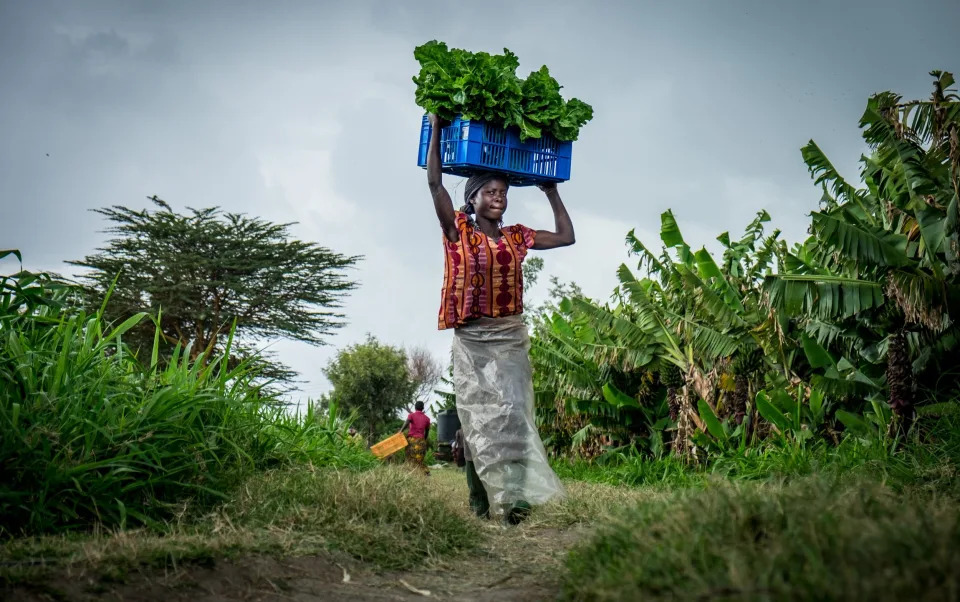
In Europe the concerns are felt in higher food prices, and strained household budgets as a result of income poverty (which threatens more than 20 per cent of the population). In Sub-Saharan Africa, smallholder farmers whose communities depend on agriculture are bearing the brunt of record high temperatures and extreme weather events.

In addition, modern food systems drive 90 per cent of deforestation and 60 per cent of biodiversity loss, and account for 70 per cent of the world’s use of fresh water. They are also reliant on fossil fuels which are used for production of pesticides; synthetic fertilisers and plastics; and in processing, transport, distribution and cooking. Overall, food systems contribute over one third of global greenhouse gas emissions.
A global collaboration

Cop28 has provided a remarkable opportunity for accelerating the transformation of food systems in ways that align with intentions for climate action, protecting nature, improving nutrition and safeguarding rural livelihoods.

Everyone has a role: rethinking and innovating on how food is produced, stored, packed, processed, traded, distributed, marketed, consumed and disposed of. At Cop28, it was evident that farmers seek to be partners in the transformation — which should be informed by evidence and experience, and involve marginalised and vulnerable groups. Traditional agricultural approaches, which have produced food in harmony with nature for millennia, should also inform this process.

Improved weather forecasting is one example of a technology available today, with the potential to benefit 260-305 million farmers in Asia and Sub-Saharan Africa. Multiple studies have shown that farmers across these regions adjust their behavior and investment decisions based on these highly specific forecasts, and the payoff is clear. In Benin, for example, farmers who received SMS forecasts earned $104-$356 more per year than farmers who did not.

Implementing transformation is not easy and will require a significant financial commitment. At Cop28, we saw some progress. Representatives of the half billion small-scale farmers and fisherfolk, many from the communities most vulnerable to climate impacts, pointed out during the Cop that they need support as they struggle to adapt to a warming world. Notably, several financial pledges were announced while others are in the making.

Government representatives described their plans to incorporate action on climate and biodiversity within efforts to transform national food and water systems in ways that contribute to food and nutrition security for all and encourage the reliance of farmer livelihoods. Representatives of international organisations described how they will intensify collaboration to ensure intensified support for these national efforts. New multi-stakeholder partnerships for research, innovation and collective are being developed.

Government involvement in transforming food systems is crucial since governments provide the enabling conditions for producers and consumers to make healthier and more sustainable food choices. School meal programs, for example, feed over 400 million children worldwide, providing a huge, predictable market for food. Large-scale public programs such as these offer a unique opportunity for governments to procure food that is nutritious and sustainably sourced, impacting food systems and improving diets on a national scale.

The potential prize is great. We are witnessing innovative solutions that help address food and nutrition insecurity while contributing to action on climate and biodiversity crises, but these solutions need to be adopted and deployed globally. This must be done in close collaboration with farmers, businesses, civil society, local authorities, national governments, and international processes. It is anticipated that the UAE will encourage a constellation of convergent support during 2024, the year of its Cop presidency.

Left as they are, food systems will continue to accelerate climate breakdown and biodiversity decline, fail to nourish people and leave them exposed to future shocks. With concerted attention they can provide food that is healthy, affordable and nutritious, help halt and reverse biodiversity collapse, and insulate humanity from future climate shocks that are inevitable for the coming decades.

For humanity, everywhere, usual food business is no longer an option.

Agnes Kalibata is President of AGRA and former UN Special Envoy for the UN Food Systems Summit; David Nabarro is Strategic Director of 4SD Foundation and adviser to Cop28.
COP28
World will look back at 2023 as year humanity exposed its inability to tackle climate crisis, scientists say

Jonathan Watts
THE GUARDIAN
Fri, 29 December 2023 

Photograph: Mahmud Turkia/AFP/Getty Images

The hottest year in recorded history casts doubts on humanity’s ability to deal with a climate crisis of its own making, senior scientists have said.

As historically high temperatures continued to be registered in many parts of the world in late December, the former Nasa scientist James Hansen told the Guardian that 2023 would be remembered as the moment when failures became apparent.

“When our children and grandchildren look back at the history of human-made climate change, this year and next will be seen as the turning point at which the futility of governments in dealing with climate change was finally exposed,” he said. “Not only did governments fail to stem global warming, the rate of global warming actually accelerated.”


After what was probably the hottest July in 120,000 years, Hansen, whose testimony to the US Senate in 1988 is widely seen as the first high-profile revelation of global heating, warned that the world was moving towards a “new climate frontier” with temperatures higher than at any point over the past million years.

Now director of the climate programme at Columbia University’s Earth Institute in New York, Hansen said the best hope was for a generational shift of leadership. “The bright side of this clear dichotomy is that young people may realise that they must take charge of their future. The turbulent status of today’s politics may provide opportunity,” he said.

His comments are a reflection of the dismay among experts at the enormous gulf between scientific warnings and political action. It has taken almost 30 years for world leaders to acknowledge that fossil fuels are to blame for the climate crisis, yet this year’s United Nations Cop28 summit in Dubai ended with a limp and vague call for a “transition away” from them, even as evidence grows that the world is already heating to dangerous levels.

Scientists are still processing data from this blistering year. The latest to state it will be a record was the Japanese meteorological agency, which measured temperatures in 2023 at 0.53C above the global average between 1991 and 2020. This was far above the previous record set in 2016, when temperatures were 0.35C above that average. Over the longer term, the world is about 1.2C hotter than in preindustrial times.

The US National Oceanic and Atmospheric Administration previously calculated that there was a “greater than 99% chance” that 2023 would be the hottest year in its 174-year dataset. This followed six record warm months in a row, including the northern hemisphere’s warmest summer and autumn.

Driven by human-caused global heating and El Niño, the heat refused to relent. In November, there was an even greater anomaly, with two days warmer than 2C above the preindustrial average, according to Europe’s Copernicus Climate Change Service.

It too has already confirmed the annual record, as has the World Meteorological Organization. In December, many parts of the world sweltered through the hottest-ever Christmas. With the new year approaching, monthly temperature records were still being beaten in central Asia, South America, Europe and Australia.

Berkeley Earth has predicted that average temperatures in 2023 will almost certainly prove to have been 1.5C higher than preindustrial levels. Although climate trends are based on decadal rather than annual measurements, many scientists say it is probably only a matter of time before the world overshoots the most ambitious of the Paris agreement targets.

Veteran climate watchers have been horrified at the pace of change. “The climate year 2023 is nothing but shocking, in terms of the strength of climate occurrences, from heatwaves, droughts, floods and fires, to rate of ice melt and temperature anomalies particularly in the ocean,” Prof Johan Rockström, the joint director of the Potsdam Institute for Climate Impact Research in Germany, said.

He said these new developments indicated the Earth was in uncharted territory ​​and under siege. “What we mean by this is that we may be seeing a shift in Earth’s response to 250 years of escalated human pressures … to a situation of ‘payback’ where Earth starts sending invoices back to the thin layer on Earth where humans live, in the form of off the charts extremes.”

Rockstrom was among the authors of the 2018 “Hothouse Earth” paper, which warned of a domino-like cascade of melting ice, warming seas and dying forests could tilt the planet into a state beyond which human efforts to reduce emissions will be increasingly futile.

Five years on, he said that what disturbed him most in 2023 was the sharp increase in sea surface temperatures, which have been abrupt even for an El Niño year.

“We do not understand why the ocean heat increase is so dramatic, and we do not know what the consequences are in the future,” he said. “Are we seeing the first signs of a state shift? Or is it [a] freak outlier?”

In the Antarctic, scientists have also been perplexed and worried by the pace of change. The new Brazilian scientific module Criosfera 2, a solar and wind-powered laboratory that collects meteorological information, measured the lowest extent of sea ice in the region both for summer and winter. “This environmental alert is a sign of ongoing global environmental changes and poses a daunting challenge for polar scientists to explain,” said Francisco Eliseu Aquino, a professor of climatology and oceanography at the Federal University of Rio Grande do Sul and the deputy director of Brazil’s polar and climatic centre.

West Antarctica was affected by several winter heatwaves associated with the landfall of atmospheric rivers. In early July, a Chilean team on King George Island, at the northern tip of the Antarctic peninsula, registered an unprecedented event of rainfall in the middle of the austral winter when only snowfalls are expected. In January, a massive iceberg, measuring about 1,500 sq km, broke off from the Brunt ice shelf in the Weddell Sea. It was the third colossal calving in the same region in three years.

Aquino said human influence – through the burning of fossil fuels – had also created “frightening” dynamics between the poles and the tropics. Cold wet fronts from the Antarctic had interacted with record heat and drought in the Amazon to create unprecedented storms in between. Floods in southern Brazil killed 51 people in early September and then returned with similarly devastating force in mid-November.

Aquino said this “record record” was a taste of what wa to come as the world entered dangerous levels of warming. “From this year onwards, we will understand concretely what it means to flirt with 1.5C [of heating] in the global average temperature and new records for disasters,” he said.

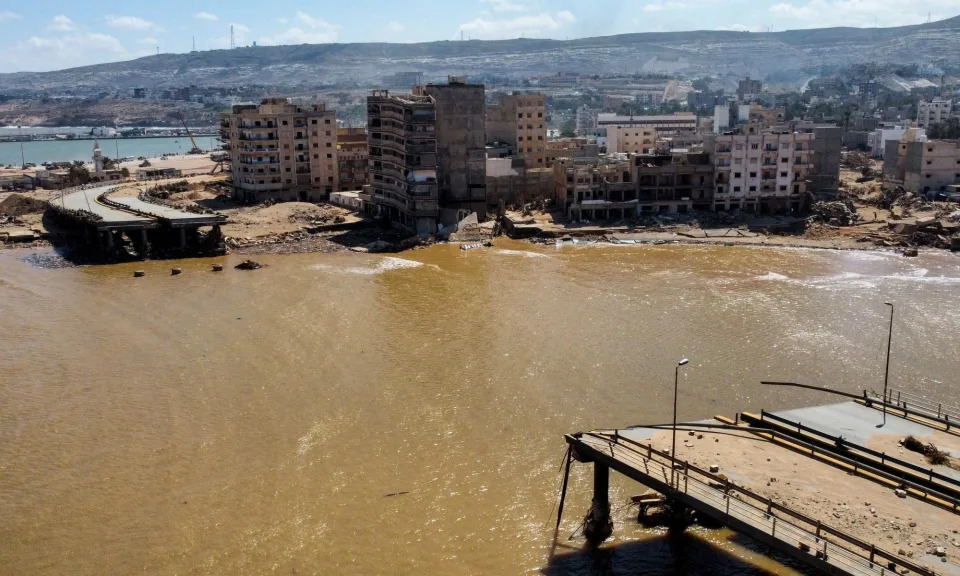
This is already happening. This year’s deadliest climate disaster was the flood in Libya that killed more than 11,300 people in the coastal city of Derna. In a single day, Storm Daniel unleashed 200 times as much rain as usually falls on the city in the entire month of September. Human-induced climate change made this up to 50 times more likely.

Forest fires burned a record area in Canada and Europe, and killed about 100 people in Lahaina on Maui island, the deadliest wildfire in US history, which happened in August. For those who prefer to calculate catastrophe in economic terms, the US broke its annual record of billion-dollar disasters by August, by which time there had already been 23.

Raul Cordero, a climate professor at the University of Groningen and the University of Santiago, said the effects of this year’s heat were being felt across South America in the form of unprecedented water stress in Uruguay, record-breaking fires in Chile, the most severe drought in the Amazon basin in 50 years, prolonged power shortages in Ecuador caused by the lack of hydropower, and increased shipping costs along the Panama canal due to low water levels.

Cordero said El Niño was forecast to weaken in the coming year, but above average or record temperatures were likely to persist for at least the next three months.

And, as science has proved beyond any doubt, global temperatures would continue to rise as long as humanity continues to burn fossil fuels and forests. In the years ahead, the heat “anomaly” and catastrophes of 2023 would first become the new norm, and then be looked back on as one of the cooler, more stable years in people’s lives. As Hansen warned, unless there is radical and rapid change, failure will be built into the climate system.
Climate scientists hail 2023 as ‘beginning of the end’ for fossil fuel era

Jillian Ambrose Energy correspondent
THE GUARDIAN
Fri, 29 December 2023 

Photograph: Alexisaj/Alamy

Global efforts to slow a runaway climate catastrophe may have reached a critical milestone in the last year with the peak of global carbon emissions from energy use, according to experts.

A growing number of climate analysts believe that 2023 may be recorded as the year in which annual emissions reached a pinnacle before the global fossil fuel economy begins a terminal decline.

The milestone is considered a crucial tipping point in the race to drive emissions to net zero. But for many climate experts it’s an inflexion point that was due years ago and which, although encouraging, falls far short of the rapid reduction the world needs.


The world’s leading climate scientists have consistently warned that the buildup of carbon dioxide in the Earth’s atmosphere means it is critical to drive down emissions before 2030 if leaders hope to keep global heating to a maximum of 1.5C above pre-industrialised levels. The rate at which emissions would need to be reduced will require, most experts agree, global transformation on a scale not yet in the pipeline.

“We can take a small pause to celebrate this tipping point,” said Dave Jones, a director at the climate thinktank Ember. “But in a way it’s worrying that we are still talking about when emissions might peak. The reality of the situation is that we need deep and fast reductions in emissions if we hope to stay within the vanishingly small budget for carbon which remains.”

The International Energy Agency (IEA) raised hopes earlier this year of an end to the fossil fuel era when it predicted for the first time that the consumption of oil, gas and coal would peak before 2030 and begin to fall as climate policies took effect.

“It’s not a question of ‘if’, it’s just a matter of ‘how soon’ – and the sooner the better for all of us,” said Fatih Birol, the head of the IEA.Interactive

To understand how the world may have already reached an end to rising global emissions, just two years after one of the steepest emissions hikes in history, it helps to look at the global electricity sector.

“The world is teetering at the peak of power sector emissions,” said Malgorzata Wiatros-Motyka, the lead author of a report by Ember. Earlier this year the report found that emissions from generating electricity had plateaued over the first half of 2023 and could be poised to fall from next year.

The report studied power generation across 78 countries representing 92% of global electricity demand. It found a 16% rise in the amount of solar power generated and a 10% jump in global wind power output.

In the IEA’s flagship report, widely considered to be one of the most influential in the climate and energy debate, it found that the steady rise of wind and solar power was on track to outpace the world’s growing demand for energy – meaning renewables will start to displace fossil fuels on a global scale.

Related: The year the world labelled fossil fuels as the problem – podcast

At the same time the rollout of electric vehicles globally is expected to start eroding the demand for road fuels, which makes up about 50% of the oil demand in developed countries.

These trends have accelerated since Russia’s invasion of Ukraine, which triggered a surge in the commodity price for gas and oil in 2022 and incentivised a renewed focus on securing domestic sources of clean energy instead.

In one scenario put forward by the IEA, based on the stated policies of global governments, it found that emissions may peak as soon as this year before beginning a slow decline. The IEA is careful to say that none of its scenarios should be considered a forecast. The “stated policies” scenario is one of the more reliable barometers of what the future may hold because it is based on “a detailed review of the current policy landscape”, or in other words, what governments are doing rather than what they are say they will do.

The findings are backed up by a number of separate studies, all from well-regarded energy authorities, which paint a picture of a world at the beginning of the end of the fossil fuel era.Interactive

An analysis of China’s carbon emissions – the highest in the world and more than the emissions of the US, India and Russia combined – found that they may reach a peak this year before falling into a structural decline by 2024. The study by the Centre for Research on Energy and Clean Air, undertaken for Carbon Brief, found that China’s rollout of wind and solar power had been faster than expected this year and could eclipse the country’s growing energy appetite.

A peak in China’s emissions this year was also found by Climate Analytics, a climate policy institute, which predicted that an emissions peak for the world’s most energy-hungry nation could drive the world to an emissions “tipping point” in 2023.

Dr Neil Grant, an author of the report, said: “For years, energy demand growth has outstripped renewables deployment, despite record additions of wind and solar. We’re now approaching the tipping point, where renewables overtake demand growth and start displacing coal, oil and gas. This would mark the beginning of the end for the fossil economy.”

There is a note of caution in the prediction though. Claire Fyson, another author of the Climate Analytics report, warned that the existing trends seeing rising renewables and electric motoring would need to continue to allow emissions to begin falling.

“This won’t just happen by itself,” Fyson said. “Technologies often follow an ‘S’ curve where they really take off but over time their progress can slow. You need government policy to continue to incentivise renewables and [disincentivise] fossil fuels.”

Related: ‘The future is renewable’: How a huge gamble sealed Cop28 deal

Not everyone agrees that fossil fuels have reached the beginning of the end. Some of the biggest oil producers in the world have publicly stated that oil demand – and emissions – show no sign of falling.

The US Energy Information Administration’s (EIA) said earlier this year that energy-related carbon emissions would continue to rise, in line with growing global demand for oil, until 2050. The Organization of the Petroleum Exporting Countries (Opec) has also predicted that global oil demand will continue to grow out to 2045, albeit at a slower pace than in recent years.

“I think you have to think about the motives behind these projects,” said Fyson. “It’s in Opec’s best interest to forecast a rise in oil demand.”

Strong oil demand forecasts can create a self-fulfilling prophecy. They might encourage governments to back further oil and gas exploration to avoid a shortfall, which in turn can lead to lower oil commodity prices if there is more oil and gas than needed. This creates a disincentive to switch from a fossil fuel vehicle or heating system to an electric alternative if it’s cheaper to use gas or oil.

Opec has consistently underestimated the rollout of electric vehicles in its official forecasts, which are used by governments to inform their policies, according to experts. Its forecasts for the number of electric vehicles on the roads by 2022 were too low by an average of almost 60% over the period 2015-2021, according to a recent report by Zero Carbon Analytics. In 2021, the cartel’s forecasts for the global electric vehicles fleet just one year ahead were wrong by 49%, the report found.

Amy Kong, the author of the report, said the forecasts were “wildly wrong year after year” in what appears to be an “underhand attempt by oil producers to persuade investors and governments that fossil fuels have a future”.

Related: The Guardian view on Cop28’s final text: saying the right thing – and not a moment too soon | Editorial

Even in a world of declining fossil fuels and carbon emissions there is a clear risk of failing to move fast enough to reduce emissions in time to prevent global heating of 1.5C above pre-industrialised levels, according to climate experts.

The United Nations Environment Programme estimates that for the world to have a shot at keeping global heating below the 1.5C target set out in the Paris agreement emissions will need to fall by about 9% every year. For context, emissions fell 5.4% when the Covid-19 pandemic brought global economies to a standstill in 2020 before starting to rise again.

There will need to be great strides in addressing the world’s record high carbon emissions, but from next year there’s a strong chance that at least they will be moving in the right direction.