Saturday, March 15, 2025


Trans Mountain Pipeline Lifts Vancouver's Cargo Volume to New Heights
Port of Vancouver
iStock / Maxvis

Published Mar 12, 2025 10:22 PM by The Maritime Executive


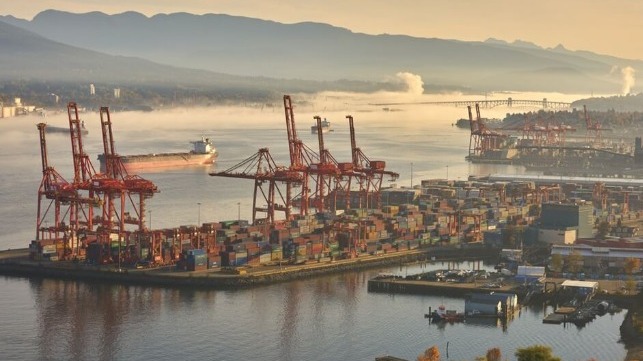
The Port of Vancouver, Canada is celebrating remarkable performance after cargo throughput hit record highs last year, despite challenging circumstances.

Vancouver Fraser Port Authority (VFPA) saw overall cargo volumes hit a record 158 million metric tonnes, a five percent increase compared to the previous record of 150 million MT set in 2023. The growth was a result of increase in volumes across all segments including oil, auto, bulk and container shipping.

During the year, Vancouver and other Canadian ports had to contend with challenges including labor disputes, local and global geopolitical tensions, climate change and extreme weather such as wildfires. Despite this, Vancouver cemented its status as Canada’s biggest facilitator of international trade.

The Trans Mountain pipeline expansion has unlocked new markets across Asia for Canadian petroleum products, and liquid bulk exports surged by an unprecedented 203 percent to 17.1 million tonnes. Dry bulk however posted a four percent decline to 96 million MT driven by fall in coal and potash exports.

Container trade recovered throughout 2024, returning to pre-pandemic growth trends. Vancouver’s four container terminals handled 3.5 million TEU, up 11 percent compared to 2023 and two percent compared to 2019.

Growth was also recorded in the ro/ro segment, with a record of almost 470,000 vehicles handled by auto terminals.

During the year, the top trading partners that moved goods through the port were China with 46 million tonnes, Japan with 19 million tonnes and South Korea with 18 million tonnes. Trade to the U.S. through the port increased to seven percent of total cargo moved, amounting to 10 million tonnes, driven by increased petroleum exports.

While the performance shows that Canada’s biggest port is on a growth trajectory, trade uncertainties ignited by tariff wars could affect the port’s activities this year. Confusion continues around the 25 percent tariff imposed on certain Canadian goods by President Trump, and the steps that Canada is taking to retaliate.

“The Port of Vancouver stands ready to support efforts to diversify Canada’s international trade and build a strong, resilient national economy. We will continue partnering with governments and industry to plan and deliver the long-term capacity needed to support trade through the gateway,” said Peter Xotta, VFPA President and CEO.

Apart from cargo, Vancouver also cemented its position as a key cruise facility with passenger visits hitting a record 1.3 million, a seven percent increase from 1.2 million in 2023.

To sustain growth going forward, Vancouver has been undertaking significant investments to improve operations and efficiency. These include densification and modernization at Global Container Terminal’s Vanterm terminal, which is increasing container handling capacity, enabling larger container ships to berth and reducing greenhouse gas emissions.


Record Cargo Volumes at Canada’s Vancouver Port Ahead of Trade War
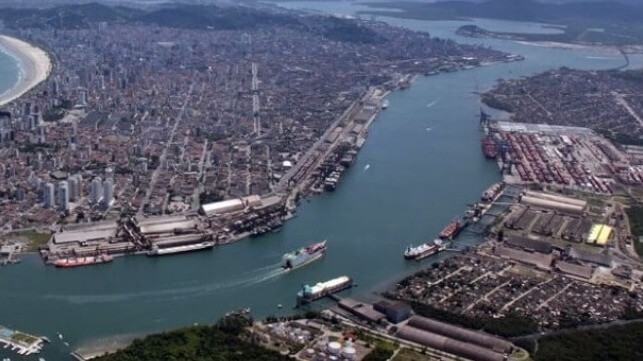
Vancouver port
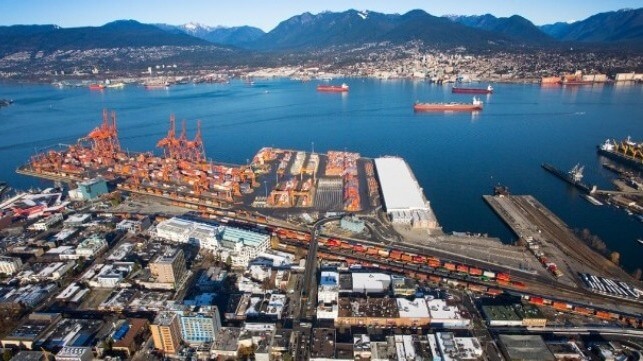
Vancouver achieved strong growth in 2024 as it adds to Canada's trade prospects (VFPA)

Published Mar 13, 2025 8:12 PM by The Maritime Executive


The Canadian Port of Vancouver reported a very strong performance last year as its cargo throughput hit record highs. The port is also looking to capitalize on its position as a possible port of entry for increased Chinese and Asia trade due to the uncertainty over U.S. tariffs and Donald Trump’s plan to impose port fees on Chinese-built ships.

Vancouver Fraser Port Authority (VFPA) reported a strong performance in 2024 that saw overall cargo volumes hit a record 158 million metric tonnes, a five percent increase compared to the previous record of 150 million MT set in 2023. The growth, which was achieved despite a challenging environment, was a result of an increase in volumes across all segments including auto, bulk, and container.

During the year, Vancouver and other Canadian ports had to contend with numerous challenges including labor disputes, local and global geopolitical tensions, climate change, and extreme weather such as wildfires. Despite the challenges, Vancouver cemented its status as Canada’s biggest facilitator of international trade with the bulk sector leading in terms of volume growth with an eight percent increase to 117.9 million MT.

Vancouver is highlighting that the expansion of the Trans Mountain pipeline and Westridge terminal unlocked new markets across Asia for Canadian petroleum products, something that saw liquid bulk exports surge by an unprecedented 203 percent to 17.1 million MT. Dry bulk however posted a four percent decline to 96 million MT driven by a fall in coal and potash exports.
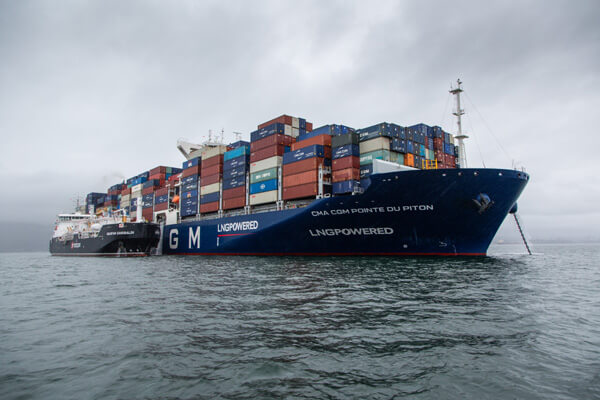
 

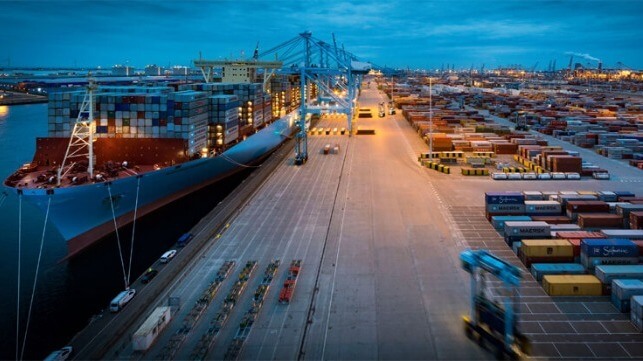
CMA CGM's containership completed the first LNG bunkering in Vancouver on March 9 (Seaspan)


Container trade recovered throughout 2024, returning to pre-pandemic growth trends following several tumultuous years that included a pandemic-era surge in consumer demand and numerous supply chain disruptions. This resulted in Vancouver’s four container terminals handling 3.5 million TEU, up 11 percent compared to 2023 and a two percent increase compared to 2019.

Growth was also recorded in the RoRo segment, with a record of almost 470,000 vehicles handled by auto terminals.

During the year, the top trading partners that moved goods through the port were China with 46 million MT, Japan with 19 million MT, and South Korea with 18 million MT. Trade to the U.S. through the port increased to seven percent of total cargo moved amounting to 10 million MT driven by increased petroleum exports.

While the performance shows that Canada’s biggest port which handles trade of approximately C$300 billion (US$208 billion) with up to 170 countries every year is on a growth trajectory, trade uncertainties ignited by tariff wars could impact the port’s activities going forward. Confusion continues to engulf a 25 percent tariff imposed on certain Canadian goods by President Trump, something that has forced Canada to retaliate.

“The Port of Vancouver stands ready to support efforts to diversify Canada’s international trade and build a strong, resilient national economy. We will continue partnering with governments and industry to plan and deliver the long-term capacity needed to support trade through the gateway,” said Peter Xotta, VFPA President and CEO.

Apart from cargo, Vancouver also cemented its position as a critical cruise facility with passenger visits hitting a record 1.3 million, a seven percent increase from 1.2 million in 2023.

Last week, Seaspan Energy reports it successfully completed Canada’s first ship-to-ship LNG bunkering for a containership in the Port of Vancouver. It took place on March 9 in English Bay. The LNG was provided to the CMA CGM Pointe Du Piton, a 7,900 TEU containership that was built in 2024 by HD Hyundai Samho by the Seaspan Garibaldi, one of three LNG bunkering vessels recently introduced by Seaspan. The company started its Pacific Coast LNG bunkering operation in December 2024 and brining it to Vancouver is seen as another factor supporting the growth of the port.

To sustain growth going into the future, Vancouver has been undertaking significant investments to improve operations and efficiency. These include expansion of the Trans Mountain pipeline and Westridge terminal, densification, and modernization at Global Container Terminal’s Vanterm terminal increasing container handling capacity. The efforts are also enabling larger container ships to berth at the port. 


Video: Tanker Damages Brazilian Navy Pier and Ships While Maneuvering

Santos Brazil
The incident happened while the tanker was docking in the Port of Santos (file photo)

Published Mar 13, 2025 6:30 PM by The Maritime Executive


The Port of Santos is confirming that a tanker maneuvering in the port lost control on Wednesday night, March 12. The vessel hit a pier and Brazilian patrol boats.

The tanker Olavo Bilac was maneuvering between the Alemoa 1 and Outeirinhos 1 piers when the vessel was reported to have suffered a “mechanical problem.” The company is saying that the tanker’s rudder jammed causing it to hit the pier. It then hit one of the patrol boats and pushed it into two others. All three of the vessels, the GuajaraGuapore, and Maracana, reportedly suffered minor damage.


A naval officer aboard one of the vessels was also taken to a local hospital for treatment. The port authority says he suffered bruises on his leg but was treated and released.

Tugs took control of the tanker and moved it back to the Alemoa 1 pier. Today, it was inspected by the Port Authority which reports while there is a large scrape, there was no release of oil or pollution.


The pier it hit is controlled by the Brazilian Navy. They were conducting an inspection to determine the extent of the damage. The companies were reported to be waiting for permission from the navy to enter the site.

The Olavo Bilac is one of five tankers built for Estaleiro Atlantico Sul (EAS) and operated by Transpetro. It is 114,000 dwt. It is registered in Brazil and was reported to be carrying 50,000 liters of fuel when it hit the pier. The vessel was due to depart for Rio de Janeiro but is being detained in Santos.


China Lashes Out at Hutchison’s Ports Deal with BlackRock-MSC Partnership

container terminal
Hutchison would sell its operations in 23 ports worldwide but much of the focus is on the terminals in Panama (CK Hutchison file photo)

Published Mar 14, 2025 12:13 PM by The Maritime Executive


After initially saying it would not comment on a “commercial deal,” the Chinese government used the media to lash out at the deal and criticize CK Hutchison. The proposed sale involves operations in 43 global ports outside China and the terminals at each side of the Panama Canal but is becoming embroiled in the larger political debate and the trade war between Trump and China as well as the government’s criticism of Hong Kong billionaire Li Ka-shing who controls CK Hutchison.

The government-owned newspaper Ta Kung Pao based in Hong Kong and seen as a mouthpiece for the Chinese Communist Party released a strongly worded editorial on Thursday, March 13, attacking the deal on patriotic terms. It cites the Trump administration's moves on tariffs and pending proposal for port fees on Chinese-built ships rolling it all into an American plot for domination. They warn the deal is part of a plot to deprive China of access to key shipping routes and global trade.

The New York Times highlights that the article says if the deal is completed, “the United States will definitely use it for political purposes and promote its own political agenda. China’s shipping and trade there will inevitably be subject to the United States.”

The reports cite that there has been a growing strain between Li Ka-shing and the Communist government which views him as supporting rival positions. The article calls CK Hutchison which said it would make $19 billion on the deal “profit-seeking,” and says it is “spineless groveling,” as well as a betrayal of the Chinese people. 

Saying that the deal goes against national interests, the editorial warns that the company “should think twice,” and “carefully,” about its position and where it stands. Official government sources quickly reposted the article which was seen as a further government endorsement of the positions.

Analysts said it was not surprising that China would speak out against the deal but it might just be bluster as it does not want to lose its position in major ports such as Felixstowe in the UK, Rotterdam, Europe, Australia, South America, and Asia. CK Hutchison however would retain its Chinese ports meaning China does not have to approve the deal.

The sale of the two terminals in Panama at Balboa and Cristobal was positioned as a parallel but separate transaction. The government of Panama has already said it would be reviewing the sale and now Bloomberg speculates that Panama might use China’s criticism to reject the sale. Trump hailed the BlackRock deal as a key component to regaining control of the Panama Canal but NBC News reported yesterday Trump has also asked for plans to place a U.S. military presence in Panama possibly to seize the canal.

The terms of the sale are for a partnership with BlackRock and MSC Mediterranean Shipping Company’s Terminal Investment Limited (TiL). MSC has taken a low profile in the media creating the impression that the deal is BlackRock’s. 

Hutchison has not responded to the criticism of the deal but the value of its stock plunged as investors feared the sale might not proceed. The company had set the beginning of April as a target for a final agreement.


US Increases Sanctions on Iranian Oil and Tankers After Talks Are Rejected

Iranian oil tanker
The U.S. designated 13 additional tankers as part of its "maximum pressure" efforts (file photo)

Published Mar 13, 2025 3:53 PM by The Maritime Executive


Hours after reports surfaced that Iran's supreme leader Ayatollah Ali Khamenei was rejecting Donald Trump’s overtures for new talks, the U.S. Department of the Treasury announced a new round of sanctions targeting the oil industry and tankers. The move by the Office of Foreign Assets Control comes as the Trump administration has vowed a campaign of “maximum pressure” against Iran.

It was widely reported last week that Donald Trump had sent a letter via the United Arab Emirates to Khamenei seeking to start a new dialogue regarding Iran’s nuclear program. When asked by reporters, Trump last Friday only said “good things” are going to happen very soon. Today, however, Iranian media reports Khamenei dismissed the idea of negotiations referencing Trump’s decision during his first term to withdraw from the prior agreement.

“The Iranian regime continues to use the proceeds from the nation’s vast oil resources to advance its narrow, alarming self-interests at the expense of the Iranian people,” said Secretary of the Treasury Scott Bessent announcing today’s designations. “Treasury will fight and disrupt any attempts by the regime to fund its destabilizing activities and further its dangerous agenda.”

The U.S. asserts that Iran’s Ministry of Petroleum is allotting 20,000 barrels of crude oil per day to the military. Further, they said the allotment would be increased to over 500,000 barrels per day. The U.S. asserts that half of Iran’s oil revenues will be going to its armed forces by the end of 2025.

Today’s action designated Iran’s recently appointed Minister of Petroleum, Mohsen Paknejad, who assumed the role in August 2024. The U.S. said he is responsible for masterminding the oil operations and allotting the oil to the Iranian military to supplement its funding.

The U.S. also designated 13 additional tankers, including one registered in Iran and others registered internationally. The U.S. alleges the vessels are being used to transport oil from Iran or lift Iranian oil from storage in Dalian, China. Some of the oil is being transported to China or distributed to others in Asia. The tankers are said to be manipulating their AIS signals to disguise efforts to ship Iranian crude oil. 

The vessels named include the Iran-flagged Polaris 1, as well as Peace Hill (Hong Kong), Seasky (San Marino), Corona Fun (Panama), Neso (Panama), Lexi (Cameroon), Itaugua (Cameroon), Lydya N (Palau), Blue Gulf (Palau), Shannon II (Barbados), Malili (Indonesia), Celebes (Indonesia), and Marina Vision (Indonesia).

The effort also targeted a range of companies including ones in China and India. It lists companies in Hong Kong, Singapore, Seychelles, Suriname, and Bangladesh that it says are facilitating the oil trades or operating the tankers.

Just weeks after returning to office, Trump announced the first round of sanctions on Iran targeting an additional 13 tankers. Since then, it has been reported in the media that the administration was looking at other ways of interrupting Iran’s oil trade, including possibly launching inspections on tankers at sea under regulations designed to stop the proliferation of weapons of mass destruction.

Last month, TankerTrackers.com highlighted that the U.S. so far has only sanctioned less than half of the tankers known to be involved in Iran’s oil trade. They calculated that over 500 tankers are working with Iran.


Taiwan Coast Guard Chases Away Chinese Research Ship

Chinese research vessel
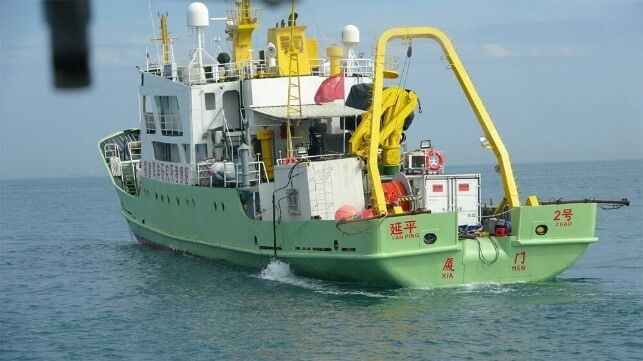
Chinese research vessel Yanping 2 was chased away from Taiwan (Taiwan Coast Gaurd Administration)

Published Mar 13, 2025 12:24 PM by The Maritime Executive


Taiwan has remained on high alert to Chinese incursions into its waters reporting the latest incident took place on March 12 but was quickly resolved. The Coast Guard is reporting that it detected a research vessel in restricted waters and then again today four Chinese Coast Guard vessels entered the same area in Kinmen near Dongding Island in the Taiwan Strait.

Numerous previous incidents have been reported leading to Taiwan announcing that it was increasing its monitoring and efforts to interdict vessels loitering in its waters. It said a specific target would be Chinese-owned merchant ships operating under foreign flags such as Cameroon and Tanzania. In January, a Chinese-owned cargo ship was accused of damaging offshore cables and at the end of February, the Coast Guard detained a Chinese-owned vessel registered in Togo. The Coast Guard believed it caught the vessel in the act of dragging its anchor near sensitive undersea cables. Taiwan’s telecom provider reported at the same time that one of its cables had been interrupted.

The Kinmen, Matsu, and Penghu branch of the Taiwan Coast Guard Administration reports it detected a Chinese research vessel, Yanping 2 entering the restricted waters at midday on March 12. After making radar contact, the Coast Guard sent two patrol boats at approximately 1300 local time to intercept the vessel. When the patrol boats reached the area, they immediately began broadcasting messages for the Yanping 2 to depart the area.

The Coast Guard Administration reports as the Chinese vessel was being directed out of the area its crews observed the vessel dropping some type of detection equipment into the water. One of the patrol boats began searching the waters while they also broadcast a message to the Chinese to retrieve the equipment that had been released into the water.


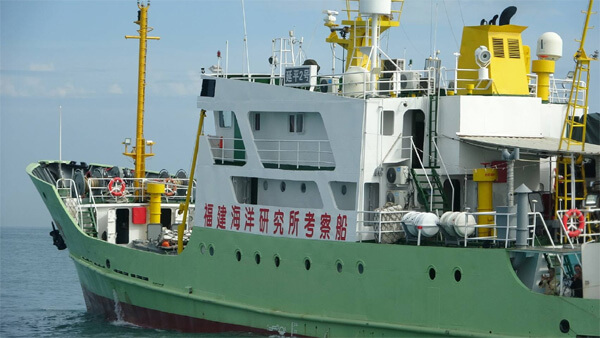
Taiwan condemned China for "harassing our waters" with scientific research vessels and survey ships (CGA)


The Yanping 2 has been registered as operating over the past decade for the Fujian Seismological Bureau and Fujian Marine Research Institute. Taiwanese officials said they believe the Chinese are conducting seabed geology, topography, and hydrology research, but it might not be purely for scientific research purposes. They believe the Chinese could be using the guise of scientific research to hide its true intentions.

“The Coast Guard Administration strongly condemns China for harassing our waters with scientific research vessels and survey ships,” the officials said reporting yesterday’s incident.

After being confronted, the Chinese vessel Yanping 2 replied it would cooperate and stop the activities. It retrieved the equipment that had been placed in the waters. At 1552 the Coast Guard patrol boats reported the Chinese vessel had left the restricted area which was about three miles southeast of Dongding Island.

Taiwan asserts that the Chinese are using the gray zone to harass the island. At 1450 local time today, March 13, four Chinese Coast Guard ships also sailed into the southern waters of Kinmen. The Taiwan Coast Guard intercepted the vessels and instructed them to turn around and leave. While they were being monitored, they departed the gray zone at 1700.

The Taiwan Coast Guard reports it will continue its efforts to monitor and drive away vessels from its restricted waters.


Wreck of Pioneering Steel-Hulled Steamship Discovered in Lake Superior

Great Lakes steamship wreck
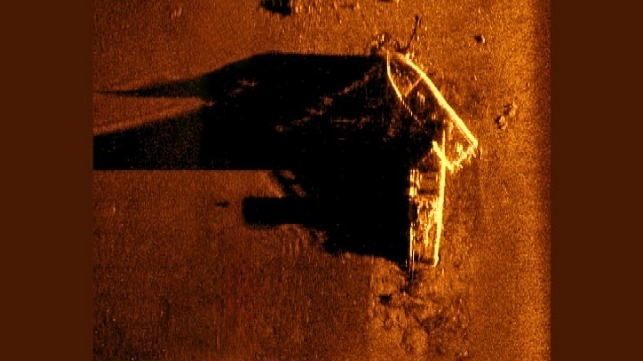
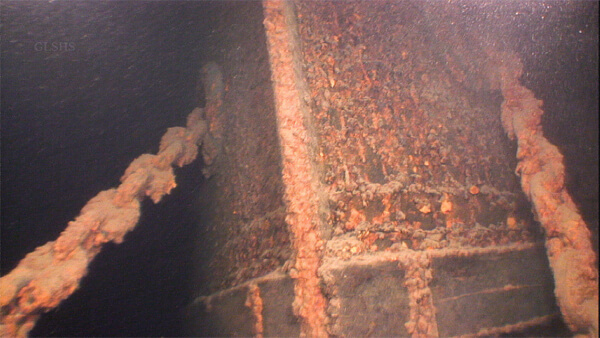
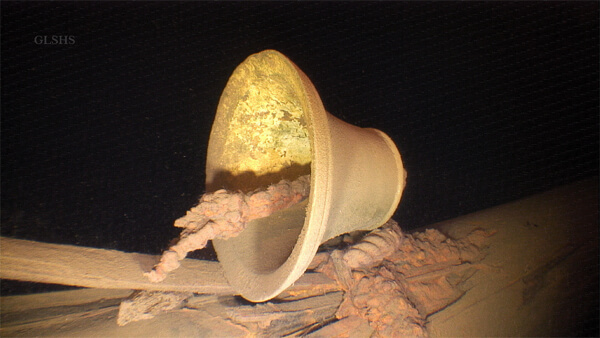
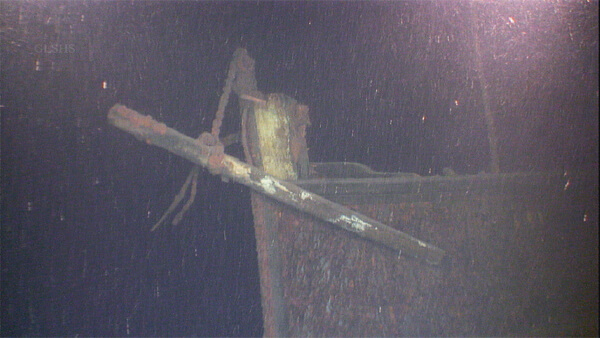
Wreck of the steel-hulled steamer was found broken in two (Photos courtesy of Great Lakes Shipwreck Historical Society)

Published Mar 14, 2025 2:31 PM by The Maritime Executive


A steamship that was reputed to be one of the fastest and safest vessels afloat but which broke into pieces after encountering a gale has been discovered in Lake Superior, some 132 years after her sinking. The wreck of the vessel known as Western Reserve was discovered some 60 miles northwest of Whitefish Point in Lake Superior.

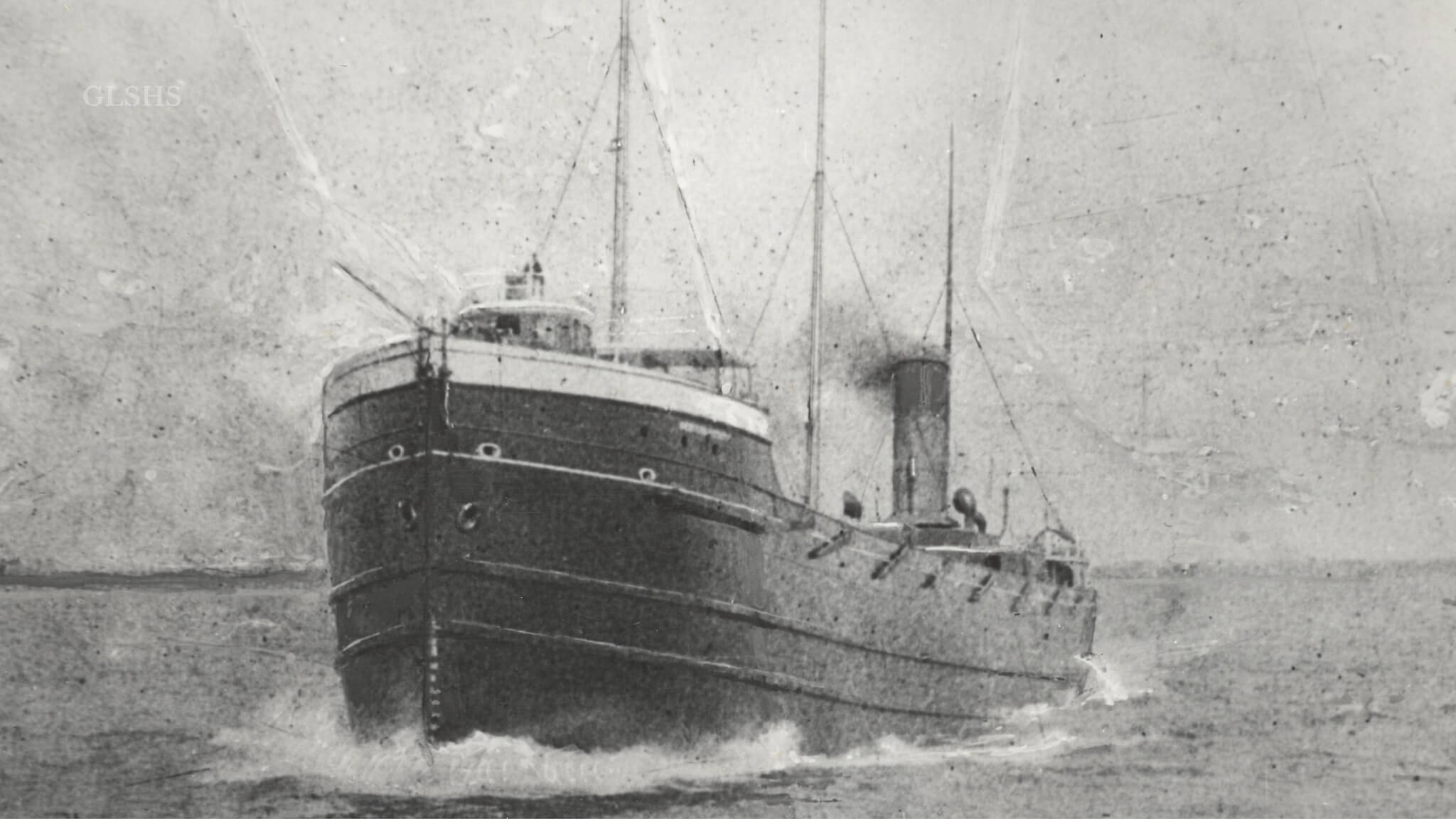
The Western Reserve was a 300-foot all-steel cargo ship that had a short career but which left a lasting mark on the industry even following her sinking in August 1892 causing the death of 27 with only one survivor. Built just two years earlier for millionaire Captain Peter G. Minch, a highly respected shipping magnate, the steamer was one of the first all-steel vessels on the Great Lakes.

Historical accounts indicated that the steamer was built at a time when Minch and other shipping magnates were pioneering the industrialization of bulk carrier freight service on the Great Lakes. Her steel construction made it possible for Western Reserve to carry heavier loads of freight than her wooden rival steamships.


For this reason, the Western Reserve was admired as a pioneer. Apart from being deemed one of the safest ships afloat, she was also designed to break cargo shipping records. She earned the description of being “the inland greyhound” for her outright speed on the lakes.

Ironically, the fate that was to befall Western Reserve would occur when the ship was not transporting cargo but on a leisure voyage. In August 1892 Minch decided to take his family aboard the ship for a late-summer cruise up through Lake Huron en route to Two Harbors in Minnesota.

While the weather was pleasant and Captain Albert Myer had assured Minch and his family of a smooth voyage, things started to unfold when the vessel reached Whitefish Bay. Rough weather prompted the crew to drop anchor to await better conditions. Soon after they weighed anchor and steamed into Lake Superior, where a gale overtook the ship, battered her, and caused her to break and sink. Desperate efforts to attempt survival using lifeboats proved futile, with wheelsman Harry W. Stewart being the only survivor after swimming a mile to shore after his lifeboat capsized.


For about two years, explorers at the Great Lakes Shipwreck Historical Society (GLSHS) have been trying to locate the wreck of Western Reserve. In July last year, the society’s marine operations director Darryl Ertel and his brother Dan Ertel made the initial discovery aboard research vessel David Boyd using sonar technology. Subsequent ROV deployments confirmed the identity of the shipwreck, revealing a ship broken in two, with the bow section resting on top of the stern in approximately 600 feet of water.

“Every shipwreck has its own story, but some are just that much more tragic,” said Bruce Lynn, GLSHS Executive Director. “It is hard to imagine that Captain Peter G. Minch would have foreseen any trouble when he invited his wife, two young children, and sister-in-law with her daughter aboard the Western Reserve for a summer cruise up the lakes. It just reinforces how dangerous the Great Lakes can be…any time of year.”

The Western Reserve is the latest shipwreck to be discovered in Lake Superior where more than 550 undiscovered wrecks are believed to be lying on the seabed.


Officers on Van Oord Dredger Plead Guilty for Singapore Allision/Oil Spill

damaged bunker tanker
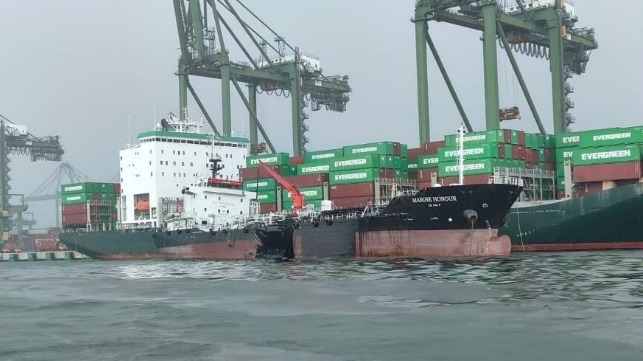
Bunker vessel Marine Honour suffered significant damage and caused the oil release after being hit by the dredger (MPA Singapore)

Published Mar 13, 2025 2:32 PM by The Maritime Executive


Four of the officers who were aboard the Van Oord dredger Vox Maxima in June 2024 when it blacked out and hit a bunker tanker pleaded guilty in a Singapore court on Thursday for failing to properly discharge their duties.  The four individuals are facing steep fines for causing the worst oil spill in Singapore in a decade.

Richard Ouwehand, age 49, was the master of the dredge at the time of the incident. Martin Hans Sinke, age 48, was the chief officer and in charge of the navigation which was moving the vessel from the Western Anchorage to the SDT Engineering Marine Tuas shipyard. Eric Peijpers, age 56, was the second engineer, and Merijn Heidema, age 26, was third engineer. Each admitted to one charge under the Merchant Shipping Act 1995.

The dredger Vox Maxima (43,400 dwt) was underway on June 14 in Singapore harbor when the vessel lost propulsion and steering causing it to strike the docked bunker tanker Marine Honour (9,000 dwt) while it was alongside another vessel at the Pasir Panjang Terminal. One of the bunker vessel’s tanks was ripped open and an estimated 400 tons of fuel oil leaked into the harbor and fouled the shoreline in sensitive environmental areas. 

Prosecutors told the court the clean-up took more than two months. They said the full extent is being analyzed. The Marine Honour is still undergoing repairs with an estimated cost of US$5 million. According to the reports, at least six of the vessel’s ballast tanks, 10 cargo tanks, and a slop tank all suffered damage.

Previous reports said the dredge had lost steering and propulsion during the incident with the details coming out during the court hearings. On the morning of June 14, the engineers on watch were conducting maintenance work while the vessel was at anchor, and they opened a circuit breaker on the high-voltage switchboard stopping power to the step-down transformer on the starboard side of the vessel. 

At noon the watch changed in the engine room and Peijpers and Heidema came on duty and they were told the vessel needed to be ready to move at 1:30 p.m. local time to the shipyard. They switched the vessel from its auxiliary generator to the main generators to prepare for the navigation, but prosecutors said they failed to perform their duties and did not realize the circuit breaker was still open. The only electrical power was coming from the port side generator because the circuit breaker had remained open.

Underway, the vessel’s two hydraulic pumps started to draw power and then the second came online it overloaded the port side circuit breaker shutting down all power to the low-voltage equipment. The vessel lost control as its controllable pitch propellers and rudders lost power.

The prosecutors alleged that the master Ouwehand and chief officer Sinke failed to properly engage emergency steering. 

The Vox Maxima just missed hitting one vessel, the 15,000-dwt product tanker Super Hero. The report said the crew of the tanker was able to alter speed and course to avoid a collision. However, the out-of-control Vox Maxima then plowed into the Marine Honour.

Prosecutors told the court that the master and chief officer should each be fined between US$15,000 and US$22,500. The recommendation for the two engineers was that each should be fined between US$30,000 and US$37,500. They were facing a maximum penalty of up to two years in jail and fines of up to approximately US$37,5000 each.

The court has scheduled the sentencing for April 2.


Back from “Deep Freeze”

Antarctica resupply mission
Ocean Giant returned to California after her resupply mission to Antarctica (Military Sealift Command Pacific)

Published Mar 14, 2025 2:17 PM by The Maritime Executive


The U.S.-flagged cargo ship Ocean Giant returned to Port Hueneme, California on March 12, completing a more than 6,000 nautical mile journey from New Zealand. It was the final leg of her annual deployment to Antarctica as part of the resupply mission known as Operation Deep Freeze.

The vessel left California in late December carrying 327 containers of dry cargo as well as a temporary floating Marine Causeway System for the U.S. base McMurdo Station in Antarctica. Operation command highlights the vessel along with a second ship, Ocean Gladiator, transport about 80 percent of the items needed for survival over the severe Antarctic winter when the station is cut off from the rest of the world. The supply mission was started in 1955 and conducted each year time for access to the base.

Ocean Giant first traveled to the U.S. support base in Lyttelton, New Zealand where it resupplied and took on additional cargo bound for McMurdo Station. When it reached its destination teams first had to deploy the causeway system which was used to replace the traditional ice pier which had been deemed unusable this year.

In total, 380 pieces of cargo, which included containers filled with mechanical parts, vehicles, construction materials, office supplies, and electronics equipment were offloaded from Ocean Giant in the Antarctic. The ship then loads station waste and recyclables and other materials for transport back to California. It made a resupply stop in New Zealand, departing on February 19 for California. It will now offload the materials brought back from Antarctica to complete the annual mission. 

The second vessel, Ocean Gladiator, followed the same route arriving in Antarctica at the station on February 20 delivering a further 321 pieces of cargo. She was carrying containers filled with mechanical parts, vehicles, construction materials including cement pilings for a pier project, food, electronics equipment, and comfort items for the teams at McMurdo Station. 

Ocean Gladiator departed Lyttelton, New Zealand yesterday, March 13. Her AIS signal shows she is bound for Yokohama, Japan.

The mission concluded for this year at the beginning of March. The icebreaker Polar Star departed McMurdo after having assisted the two cargo ships and conducting other assignments. It marked her 49th year of service.

The Military Sealift Command reports planning will begin for the next Operation Deep Freeze. The chartered ship will again depart in December 2025 to support operations in Antarctica.

 DESPITE TRUMP

First Substation Installed as Work Proceeds for Dominion’s Wind Farm

substation for offshore wind farm
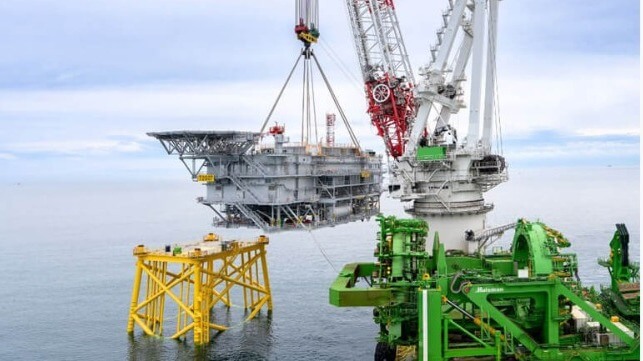
First of the three substations was installed for the offshore wind farm (Dominion Energy)

Published Mar 14, 2025 4:09 PM by The Maritime Executive


Work is continuing to progress on Dominion Energy’s offshore wind farm located off Virginia Beach which when completed will be the largest in the United States. Additional milestones were achieved for Coastal Virginia Offshore Wind as the project prepares for its next phase of installation.

While the offshore wind energy industry is beleaguered in the United States, Dominion Energy has emphasized that its project remains on schedule. It will begin the second phase of its installation in May.

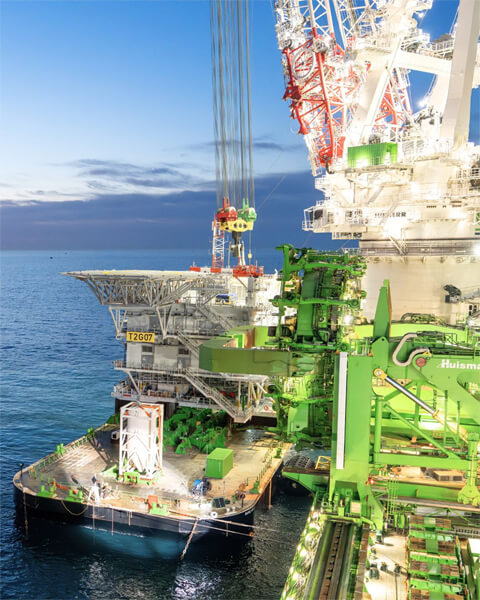
This week, Dominion highlighted that DEME Group completed the lifting and installation of the first of three offshore substations for the project. DEME’s large install vessel Orion shifted from the other portion of the project for the massive lift. The station, which had arrived in Virginia at the end of January, weighed 4,300 tons. It was the first topside installation on to one of the jackets marketing the next milestone for the project which commenced offshore work nearly a year ago.


The 4,300-ton substation arrived in Virginia in January and this week was moved into position (Dominion Energy)


Orion is now resuming the installation of transition pieces. As of February, Dominion highlighted that 16 transition pieces were in place after Orion completed the installation of the first 78 monopile foundations between May and November 2024. The second phase of monopile foundations begins this spring and when completed the wind farm will consist of 176 wind turbines. It will have a capacity for 2.6 GW of electrical energy.

The Port of Virginia working with New York-based construction company Skanska also highlighted this week that work is now complete at the Portsmouth Marine Terminal for the staging and berths for the wind operations. Skanska completed a $233 million redevelopment of 72 acres and 1,500 feet of wharf.

The project included constructing three heavy lift berths, a berth for wind turbine delivery and load-out, and a berth for the monopiles and other equipment. Large areas were also prepared for storing and staging the elements of the project.


Dominion reported in February that work was underway on wind turbine tower and blade fabrication with nacelle fabrication also scheduled to begin. Fabricated monopiles, transition pieces, undersea cables, and other major components also continue to be delivered to Portsmouth and staged as the project proceeds.

The project has reached the 50 percent mark toward completion. Dominion Energy has said it remains on track for on-time completion at the end of 2026.'


Report: Chinese Cargo Ship Sank North Korean Bulker Smuggling Coal

North Korean cargo ship
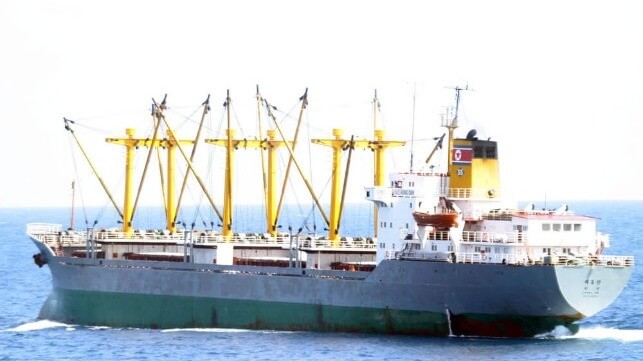
The U.S. Navy assisted a North Korean vessel in 2007 when it was attacked by pirates off Somalia (USN)

Published Mar 13, 2025 4:19 PM by The Maritime Executive


A media report is circulating today, March 13, in South Korea saying that a North Korean bulker smuggling coal was involved in a collision and sank last month. It is saying as many as 20 seafarers were lost but the Chinese failed to report the incident.

The South Korean news agency Yonhap released the report citing multiple unidentified sources. They were told the incident happened in February in the Yellow Sea. The area between the Korean peninsular and China is reported to be known as a “hot spot” for coal smuggling.

"The North Korean ship appears to be overly loaded with coal,” the report states. “The cargo and ship sank altogether," the source told Yonhap, adding China does not appear to want the accident to be known as it probably connived in North Korea's violation of the UN Security Council sanctions.

They are indicating that A Chinese ship collided with the North Korean ship possibly in heavy fog. The Chinese ship is reported to have suffered “minor damage,” while the North Korean vessel was lost. The Chinese attempted a rescue and recovered “a few people,” while the report says between 15 and 20 were lost.

It is impossible to independently verify the report. The news outlet NK News however attempted by scouring China’s Maritime Safety Administration notices. NK News reports the agency “lists an unidentified shipwreck in the Yellow Sea, about 80 km from Lianyungang, one of the known hotspots for coal smuggling.” The outlet also highlights a notice of a sunken vessel off the coast of Ningo-Zhoushan posted on February 17. It says the report omitted the name, flag, or type of vessel.

North Korea depends mostly on an aging fleet of ships although it did highlight building one new vessel in the past few years. There was another unreported incident in June 2024 in which South Korean intelligence said as many as 90 North Korean troops might have died when a transport was lost.