Tuesday, August 05, 2025


Social media boosts news diversity amid traditional media decline


University of South Australia


New research by the University of South Australia finds a silver lining to the struggling media landscape in the face of the digital age, revealing that social media is enhancing the diversity of news the community receives.    

The study found that Australian news is more diverse on social media, as the traditional media landscape – particularly quality local journalism – has become increasingly unsustainable.

Social media is the most popular way for Australians to find and consume news, with over 16 million active Australian users on the Facebook app alone.

The recent study, led by UniSA lecturer Cameron McTernan, examined more than 86,000 Facebook posts from Australian print, digital and TV newsrooms from 2010 to 2022.

“The study found that news shared on Facebook is much more diverse than news shared by traditional media, with many different news sources and voices,” McTernan says.

“In the first few years sampled, the three leading news pages on Facebook were ABC News, 9News and news.com.au, however, newer entrants like Daily Mail Australia and Sky News have since become highly popular.”

The majority of posts over the course of the study were shared by newspaper pages (56%); digital news platforms (37%) and TV (7%). Content shared by print and digital pages was overwhelmingly local, whereas TV had a strong metropolitan focus. TV and digital posts also had a stronger national focus.

“While Australia has long seen a decline in newsrooms and concentration in ownership, the results of this study show the potential for new entrants to succeed on a distributed access platform like Facebook.”

McTernan, who specialises in social media, political communication and media industries, says social media platforms have become a double-edged sword for the news economy.

“While social media can provide better discoverability of news, it also competes with traditional outlets for revenue. The two competing industries are struggling to find a cooperative path forward, and ultimately that hurts newsrooms a lot more than tech firms, and ultimately, it hurts all of us,” he says.

“Exposing the community to more diverse news sources benefits tolerance, encourages people to challenge biases and ultimately informs better decision-making and a more inclusive world. A viable media industry is also vital for supporting the economy and fulfilling a crucial role in democratic societies – including through its own contributions on social media.”

Big tech companies and traditional news outlets face ongoing tensions, particularly with Meta, the parent company of Facebook and Instagram, declining to pay for news in Australia. The company is set to stop paying publishers for content when current deals under Australia’s News Media Bargaining Code expire.

The Australian government announced a News Bargaining Incentive designed to encourage Meta and other platforms to contribute to the sustainability of the country’s news media, with a public consultation process expected to begin soon.

McTernan says while this move shows governments are supporting newsrooms, there has been a lack of quality data into the diversity of news content on digital platforms.

“The goal of my research was to understand whether Australian news on Facebook is truly diverse or dominated by a few big companies. We already knew that Australia has one of the most concentrated media markets in the world, so it was important to understand the scale, scope and structure of its social media news market, to help inform conversations and negotiations in this complex space.”

………………………………………………………………………………………………………………


An ancient predator’s shift in diet offers clues on surviving climate change


Fossil teeth reveal how a 56-million-year-old mammal adapted to global warming and what it means for animals today


Rutgers University

Dissacus praenuntius 

image: 

Fossil studies of the extinct predator Dissacus praenuntius offer clues as to how ancient animals responded to environmental changes. The ancient omnivore was about the size of a jackal or a coyote.

view more 

Credit: ДиБгд, CC BY 4.0 <https://creativecommons.org/licenses/by/4.0>, via Wikimedia Commons


About 56 million years ago, when Earth experienced a dramatic rise in global temperatures, one meat-eating mammal responded in a surprising way: It started eating more bones.

That’s the conclusion reached by a Rutgers-led team of researchers, whose recent study of fossil teeth from the extinct predator Dissacus praenuntius reveals how animals adapted to a period of extreme climate change known as the Paleocene–Eocene Thermal Maximum (PETM). The findings, published in the journal Palaeogeography, Palaeoclimatology, Palaeoecology, could help scientists predict how today’s wildlife might respond to modern global warming.

“What happened during the PETM very much mirrors what's happening today and what will happen in the future,” said Andrew Schwartz, a doctoral student in the Department of Anthropology at the School of Arts and Sciences, who led the research. “We’re seeing the same patterns. Carbon dioxide levels are rising, temperatures are higher and ecosystems are being disrupted.”

Associate Professor Robert Scott of the Department of Anthropology is a co-author of the study.

Schwartz, Scott and another colleague used a technique called dental microwear texture analysis to study the tiny pits and scratches left on fossilized teeth. These marks reveal what kinds of food the animal was chewing in the weeks before it died.

The ancient omnivore was about the size of a jackal or a coyote and likely consumed a mix of meat and other food sources like fruits and insects. “They looked superficially like wolves with oversized heads,” Schwartz said, describing them as “super weird mammals.” “Their teeth were kind of like hyenas. But they had little tiny hooves on each of their toes.”

Before this period of rising temperatures, Dissacus had a diet similar to modern cheetahs, eating mostly tough flesh. But during and after this ancient period, its teeth showed signs of crunching harder materials, such as bones.

“We found that their dental microwear looked more like that of lions and hyenas,” Schwartz said. “That suggests they were eating more brittle food, which were probably bones, because their usual prey was smaller or less available.”

This dietary shift happened alongside a modest reduction in body size, likely because of food scarcity. While earlier hypotheses blamed shrinking animals on hotter temperatures alone, this latest research suggests that limited food played a bigger role, Schwartz said.

This period of rapid global warming lasted about 200,000 years, but the changes it triggered were fast and dramatic. Schwartz said studies of the past like his can offer practical lessons for today and what comes next.

“One of the best ways to know what's going to happen in the future is to look back at the past,” he said. “How did animals change? How did ecosystems respond?”

The findings also highlight the importance of dietary flexibility, he said. Animals that can eat a variety of foods are more likely to survive environmental stress.

“In the short term, it’s great to be the best at what you do,” Schwartz said. “But in the long term, it’s risky. Generalists, meaning animals that are good at a lot of things, are more likely to survive when the environment changes.”

Such an insight may be helpful for modern conservation biologists, allowing them to identify which species today may be most vulnerable, he said. Animals with narrow diets, such as pandas, may struggle as their habitats shrink. But adaptable species, including jackals or raccoons, might fare better.

“We already see this happening,” Schwartz said. “In my earlier research, jackals in Africa started eating more bones and insects over time, probably because of habitat loss and climate stress.”

The study also showed that rapid climate warming as seen during the ancient past can lead to major changes in ecosystems, including shifts in available prey and changes in predator behavior. This may suggest that modern climate change could similarly disrupt food webs and force animals to adapt, or risk extinction, he said.

Even though Dissacus was a successful and adaptable animal that lived for about 15 million years, it eventually went extinct. Scientists think this happened because of changes in the environment and competition from other animals, Schwartz said.

Schwartz conducted his research using a combination of fieldwork and lab analysis, focusing on fossil specimens from the Bighorn Basin in Wyoming, a site with a rich and continuous fossil record spanning millions of years. Schwartz chose the location because it preserves a detailed sequence of environmental and ecological changes during the ancient period of climate warming.

Schwartz has been interested in paleontology, specifically dinosaurs, since he was a boy, journeying with his father, an amateur fossil hunter, on treks through New Jersey’s rivers and streams. Now, as a late-stage doctoral student, he hopes to use ancient fossils to answer urgent questions about the future.

He also wants to inspire the next generation of researchers.

“I love sharing this work,” he said. “If I see a kid in a museum looking at a dinosaur, I say, ‘Hey, I’m a paleontologist. You can do this, too.’”

In addition to Schwartz and Scott, Larisa DeSantis of Vanderbilt University is an author of the study.

Explore more of the ways Rutgers research is shaping the future

Bolsonaro house arrest threatens to escalate US-Brazil diplomatic crisis

Bolsonaro house arrest threatens to escalate US-Brazil diplomatic crisis
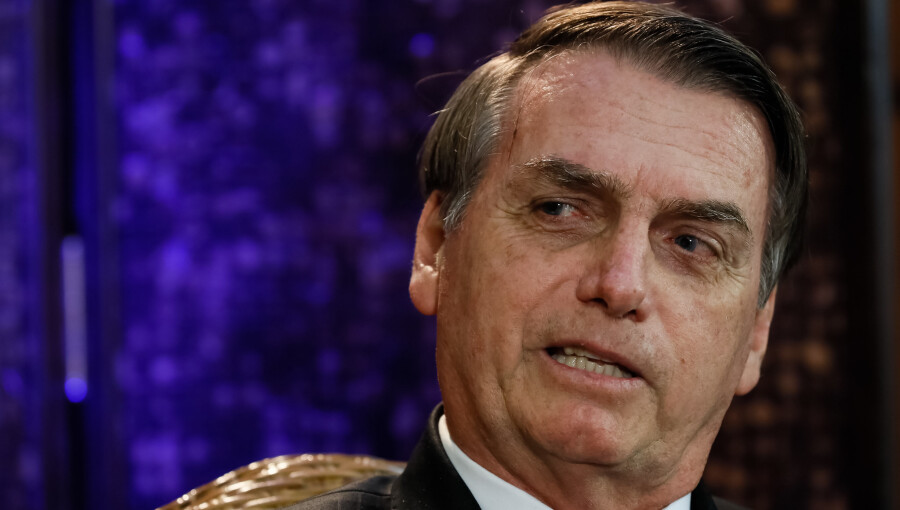
Bolsonaro faces up to 40 years in prison if convicted of plotting to cling to power after losing the 2022 election, which he claims was "stolen" from him, echoing US President Donald Trump's claims over the 2020 US election. / bne IntelliNews
By bnl editorial staff August 5, 2025

Brazil's Supreme Court decision to place former president Jair Bolsonaro under house arrest has heightened concerns within President Luiz Inácio Lula da Silva's government that Donald Trump, a close ideological ally of the far-right leader, will use the move to justify further economic retaliation against Latin America's largest economy.

The court order, issued on August 4 by Justice Alexandre de Moraes, came just two days before the implementation of 50% tariffs on Brazilian goods announced by the US president last week. Members of Lula's Workers' Party administration privately acknowledged the timing could "exasperate" Trump and provide ammunition for his campaign against what he terms Brazil's "witch hunt" of Bolsonaro.

Justice Moraes cited Bolsonaro's "repeated failure" to comply with court restrictions imposed during his trial for allegedly plotting to overturn his 2022 electoral defeat. The former president had been banned from social media and required to remain at home between 7pm and 6am, but appeared in video calls during the August 3 demonstrations by his supporters, which drew thousands of people across multiple cities.

"Good afternoon Copacabana, good afternoon my Brazil, a hug to all," Bolsonaro said in footage posted by his son Senator Flávio Bolsonaro on social media before being deleted. "It's for our freedom, we're together."

The breach prompted Moraes to ramp up restrictions, confining Bolsonaro to his Brasília residence and prohibiting mobile phone use except for authorised legal consultations. The justice warned that any further violations would result in detention, declaring that Brazil's judiciary would not allow a defendant to "treat it like a fool" due to his "political and economic power".

The US State Department condemned the house arrest within hours, with its Western Hemisphere bureau posting on social media: "Minister Alexandre de Moraes, already sanctioned by the United States for human rights violations, continues to use Brazilian institutions to silence the opposition and threaten democracy. Let Bolsonaro speak!"

The statement warned that Washington would "hold accountable all those who collaborate with or facilitate sanctioned conduct," raising the prospect of expanded sanctions beyond the 50% tariffs taking effect on August 6.

Within Lula's administration, officials admitted the arrest could complicate efforts to negotiate with Trump, though they argued Moraes had little choice given Bolsonaro's brazen defiance of court orders. Unlike previous judicial decisions against the former president, government ministers notably avoided public statements supporting the Supreme Court's action.

According to Folha de Sao Paulo, Workers' Party president Edinho Silva attempted to contextualise the decision, noting it stemmed from violations of court orders in an investigation into an alleged coup plot that "aimed to take the lives of leaders of fundamental institutions of the Republic: Lula, Alckmin, and Alexandre de Moraes".

Some Bolsonaro allies quoted by Estadao suggested the social media post was a calculated provocation designed to trigger a stronger response from Moraes and draw further US intervention. Eduardo Bolsonaro, the former president's congressman son who has relocated to Washington to lobby in favour of his father, called Moraes "an out-of-control psychopath".

The diplomatic standoff has created an unprecedented situation where the US is sanctioning a Brazilian Supreme Court justice whilst threatening punitive trade measures over domestic legal proceedings. Trump has banned Moraes from entering the United States and frozen any US assets.

Bolsonaro faces up to 40 years in prison if convicted of plotting to cling to power after losing the 2022 election. Prosecutors allege he and co-conspirators attempted to overturn the result in a plot that failed only because the military refused to participate.

The case draws parallels with the January 6, 2021 attack on the US Capitol, particularly given that Bolsonaro supporters stormed Brazil's congress in January 2023 following Lula's inauguration.

Despite being barred from running for office until 2030, Bolsonaro hopes to mount a Trump-style political comeback in Brazil's 2026 presidential election, banking on continued US pressure to alter the trajectory of his legal troubles.

However, some within his own movement worry that Trump's aggressive tactics may be backfiring, potentially rallying Brazilian public opinion behind Lula's government whilst compounding Bolsonaro's legal difficulties.

Czech president says Ukraine unlikely to reclaim occupied territories

Czech president says Ukraine unlikely to reclaim occupied territories
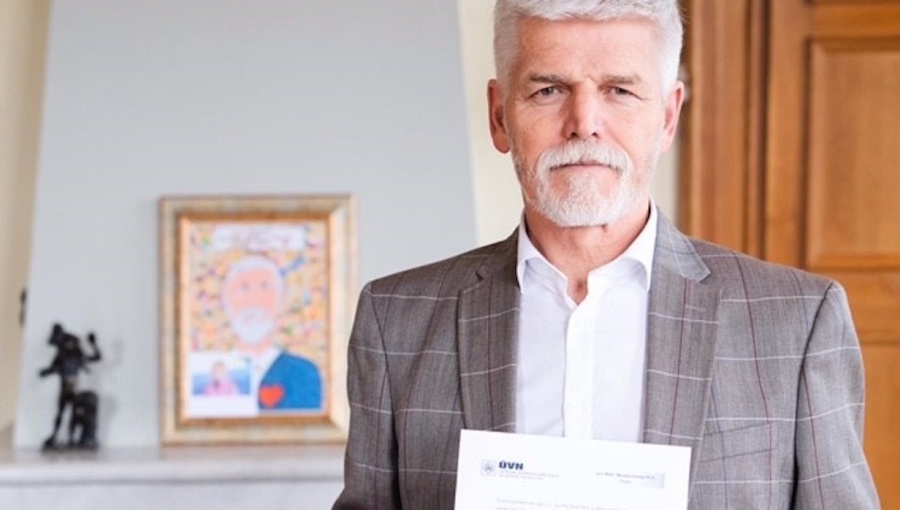
Czech president says Ukraine unlikely to reclaim occupied territories / bne IntelliNews
By bne IntelliNews August 5, 2025

Czech President Petr Pavel has said Ukraine will not be able to liberate its Russian-occupied territories in the near future, and that it is unfair to pressure Kyiv to give them up, Interfax reported on August 5.

“Right now, Ukraine, with all Western support, is not in a position to liberate occupied territories in a short time frame without a significant cost to lives,” Pavel told the BBC in an interview published on August 5. “It will be very unfair from the West to push Ukraine to liberate all occupied territories right now, because we don’t want to exterminate the Ukrainian nation. We want them to survive as an independent sovereign country.”

Pavel said even with maximum Western support, the Armed Forces of Ukraine (AFU) will be unable to liberate the four regions annexed by Russia in 2023 and the Crimea, which Moscow has controlled since 2014. He suggested that economic hardship will prompt residents to relocate to areas under Kyiv’s control. He also repeated his pragmatic line that economic cooperation between Russia and the EU will eventually resume after a ceasefire.

Pavel said that if the price of restoring Ukraine’s independence was to accept that “part of the territory will be temporarily occupied, without recognising it legally, then so be it,” stressing, “we will never recognise these occupied territories as legally Russian.”

Pavel drew parallels with other historical examples, noting that Czechia itself remained under occupation for 22 years. He argued that EU integration and economic reconstruction could serve as a powerful incentive for residents in occupied regions, stating that they “will be much better off in Ukraine than in Russia.”

The Czech president described the occupied territories as a burden for Moscow, saying the Russian authorities “do not care about the local population.” Asked whether Russia would allow people to leave the occupied areas, he replied, “sooner or later. Who knows? Do you know what regime will be in Russia in 20, 30 years? Vladimir Putin will not be there forever.”

The World Bank estimates the value of the damage done to Ukraine in the war to date is $526bn, however, as reported by bne IntelliNews most of the destruction has been done to cities in the eastern part of the country that are under Russian occupation. In the even of a ceasefire, experts told bne IntelliNews that the cost to the Ukrainian government for repairs of cities under Kyiv’s control should be on the order of some $200bn, or about a third, whereas the Kremlin will bear the lion’s share of the costs to repair cities under its control that have been all but flattened.

Pavel said there was no available means to oust Russia from the territories without causing heavy casualties and more destruction, adding that defeating a country with Russia’s military and human resources was especially difficult when it was supported by “another huge and economically powerful country like China.”

Nevertheless, Pavel noted a significant improvement with the supply of artillery shells to Ukraine in the last two years thanks to the so-called "Czech initiative," where Prague took the lead in purchasing artillery shells from non-Nato countries.

According to the president, who is also a former Nato general, about 1.5mn large-calibre shells were delivered to Ukraine last year, and this year that would rise to 1.8mn. At its low point Ukraine was only firing one shell for each ten Russia fired. Pavel claims that ratio is now one to two. The Czech president says the AFU is now receiving an average of 80,000 rounds of ammunition every month, enough to mount a capable defence.

On whether accepting the current situation amounted to conceding to Moscow’s terms, he acknowledged the legal and moral difficulty but said, “We also live in reality. Will the Czech Republic fight with Russia endlessly? Such an approach will definitely lead to much more loss of life for all of us and cause extreme damage to our economies.”

He called for negotiations beginning with a ceasefire, followed by a peaceful settlement, and said that in such a scenario, EU countries could restore economic cooperation with Russia. “The main prerequisite for all of this is peace in Ukraine,” he said.

Pavel said he could not guarantee that the country’s military support for Ukraine would remain unchanged after upcoming parliamentary elections, noting that a change of government was likely. He added that while the new administration’s priorities were uncertain, he was focused on promoting a unified security and defence policy, as support for Ukraine was, in his view, essential to the Czech Republic’s own security.

MONOPOLY CAPITALI$M

Ukraine’s agro-powerhouse MHP completes acquisition of majority stake in Spain’s Grupo UVESA

Ukraine’s agro-powerhouse MHP completes acquisition of majority stake in Spain’s Grupo UVESA
Ukraine’s agro-powerhouse MHP completes acquisition of majority stake in Spain’s Grupo UVESA / bne IntelliNews
By bne IntelliNews August 4, 2025

MHP, the Ukraine-based international food and agriculture group, has completed its acquisition of more than 92% of the share capital of Grupo UVESA, one of Spain’s largest vertically integrated poultry and pork producers, the company announced on August 4.

The deal follows the expiry of the accession period to the share purchase agreement signed in March 2025 and the receipt of regulatory approvals, including antitrust clearances in Ukraine, Spain, Saudi Arabia, Serbia, Montenegro and Kosovo, as well as merger control and foreign subsidies approval from the European Commission. The transaction was settled in cash at closing at a fixed price of €225 ($246) per share, with a contingent consideration of up to €21.43 per share backed by a first-demand bank guarantee.

“With the deal now finalised, we are moving into the integration phase. Our goal is to build on UVESA’s strengths, focusing on operational excellence and sustainable development. We are also deeply committed to investing in our team by creating an environment where talent can thrive and innovation becomes part of everyday work. Backed by MHP’s international experience and expertise, we are confident in our ability to unlock new opportunities and drive long-term value,” said Dr John Rich, Executive Chairman of the MHP Board of Directors.

MHP said the integration process will focus on operational alignment, knowledge exchange and targeted investments in efficiency and product innovation. The companies will also seek to enhance export capacity and expand their presence in European and Middle Eastern markets.

Antonio Sánchez, President of UVESA, said: “The partnership with MHP marks a new and significant chapter for UVESA, which will be able to boost its growth thanks to MHP’s extensive experience in operational innovation, and continue to consolidate its excellence with the sustainable production of high-quality food and ensure total food security.”

MHP is Europe’s largest poultry producer and ranks among the top 10 globally. It operates production facilities in Ukraine and South-Eastern Europe, exporting to more than 70 countries. UVESA, with over 60 years in Spain’s agri-food industry, operates advanced poultry, pork and feed facilities and holds international quality and food safety certifications.

China’s BYD entry to Slovak market boosts EV sales

China’s BYD entry to Slovak market boosts EV sales
The number of EVs on Slovak roads soared to about 18,500 in the first half of 2025 with sles boosted by the arrival of BYD on the Slovak market. / bne IntelliNews
By bne IntelliNews August 4, 2025

The entry of China’s BYD on the Slovak market is boosting the sale of electric vehicles (EVs), according to industry experts.

The number of EVs on Slovak roads soared to about 18,500 in the first half of 2025, according to estimates by the Slovak Association for Electromobility (SEVA), TASR reports.

The share of battery-powered vehicles in new car sales remained above 3% this year and exceeded 5% in June, a threshold that many industry experts view as significant for accelerating EV adoption.

Zuzana Fečová, spokeswoman for ČSOB, said the arrival of Chinese carmaker BYD is emerging as a strong market force.

“We also see this development at ČSOB Leasing. While the share of financed passenger and commercial vehicles decreased by 10% in the first half of the year, the category of battery vehicles (electric cars) recorded a y/y increase of up to 50%,” Petra Fenclová from ČSOB Leasing  told TASR.

In 2024, the number of electric cars in Slovakia grew by 53% year on year compared with 2023. More than 3,000 additional EVs were registered in the first six months of this year alone. SEVA forecasts that the total could reach 20,000 by the end of 2025 if the current pace continues, potentially marking the strongest year yet for electric mobility in the country.

Statistics from ČSOB Leasing indicate that most battery electric vehicle users are employees of large corporations, as company policies increasingly aim to cut emissions and operating costs. Environmentally friendly transport modes are also proving attractive to logistics firms, couriers and taxi services, while another growing customer group consists of city residents who drive short distances.

Fečová said that BYD’s entry into the Slovak market could further “shuffle the cards” in the competitive landscape, boosting availability and potentially lowering prices for consumers.

Russia detains 300 Tajiks for migration law violations in Moscow raid

Russia detains 300 Tajiks for migration law violations in Moscow raid
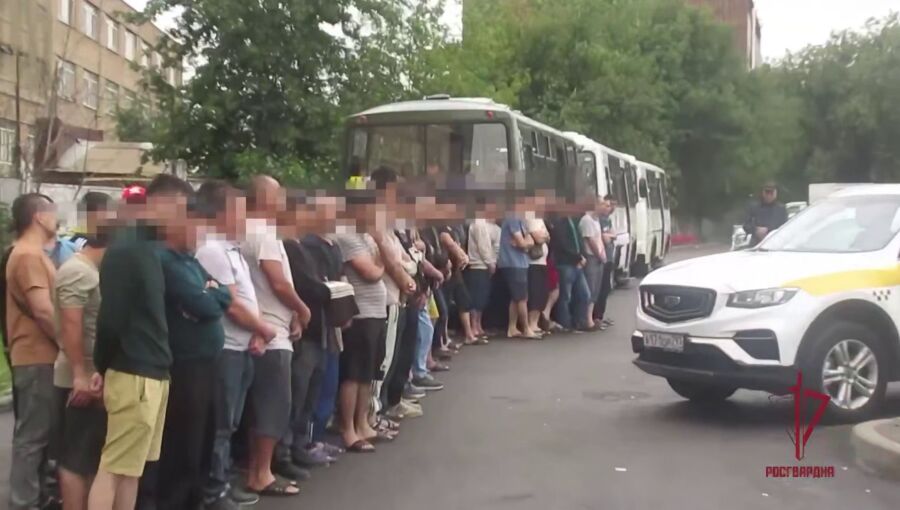
Screen grab of mainly Tajiks and Uzbeks. / bne IntelliNews
By bne IntelliNews August 5, 2025

Russian National Guard special forces detained 300 people for suspected migration law violations during a raid at a hostel in central Moscow, the Moscow branch of Federal Service of Troops of National Guard of the Russian Federation announced on August 5.

The arrests come as three of four Tajik nationals accused of carrying out the March 2024 terror attack—in which more than 140 people died at the Crocus City Hall concert venue in outer Moscow—on August 4 pled guilty on the first day of their trial. Following the March 2024 attack, Central Asian (especially Tajik) migrants have faced intensified xenophobic abuse, both from private individuals and through state rhetoric. Incidents include increased workplace checks, refusals of services, and police raids at dormitories and mosques. Many Tajiks in Russia now fear leaving their homes and some have voluntarily returned to Tajikistan to avoid harassment.

In the August 5 assault, the Avangard riot police unit provided force support to military investigators from Russia's Investigative Committee during the operation targeting migration law violations.

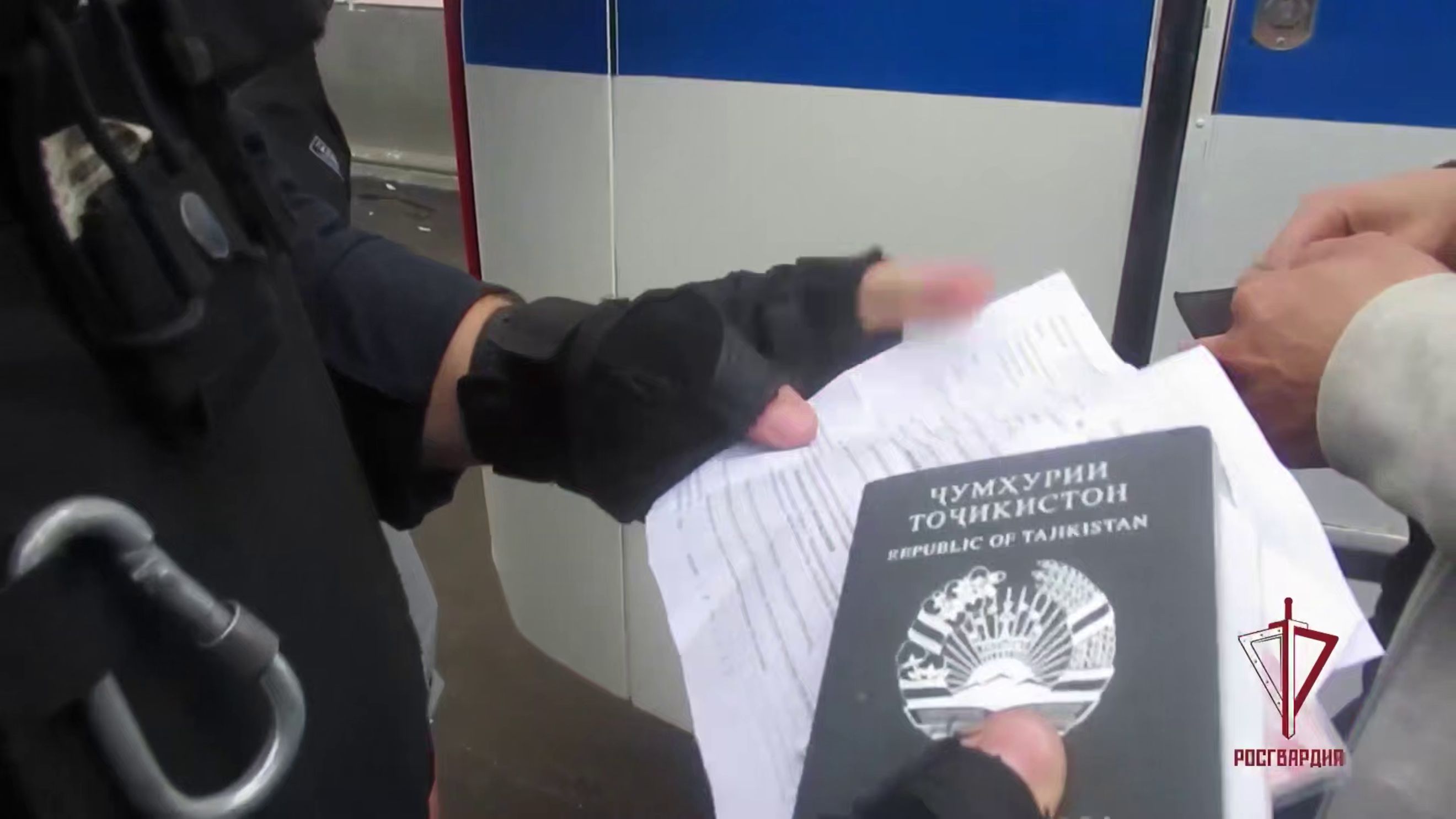
During the raid, authorities checked migration cards, passports and work permits of 400 foreign nationals residing at the hostel in the capital's centre.

"As a result, 300 people were detained on suspicion of violating migration legislation and taken to a police station for further investigation," the department said.

In June, law enforcement officers in St Petersburg checked documents of 5,000 foreign nationals, believed to be mainly Tajiks, during a similar raid, taking more than 200 people to police stations for violations.

Among them were 30 foreigners, captured on film as Tajiks who were accused of committing serious migration law violations and are expected to be expelled from Russia.

In February, residents of the Moscow region village of Ermolino in Dmitrovsky district told Regnum News Agency that many foreigners from CIS countries live in the Overtime hostel, where an attack on police officers occurred.

Local Russian resident Elizaveta said she was afraid to let her child go for walks because hostel guests behaved aggressively, showing a dismissive attitude towards residents.

The pre-trial hearing of the Tajik nationals of the men accused of being the gunmen who conducted the assault, which took place two days after the attack, were remarkable in that the suspects were presented to the court in a state that quite clearly showed that they had been tortured, and the Kremlin appeared not in the least concerned by that fact. One appeared to have had an ear cut off.

The three perpetrators who admitted guilt before a three-judge panel are Dalerdzhon Mirzoyev, Shamsidin Fariduni and Muhammadsobir Faizov. The suspect who pleaded partly guilty is Saidakram Rachabalizoda.

GOOD! DOBRE!

Banned Russian media sites 'still accessible' across EU: report

London (AFP) – Websites of banned Russian media outlets can still be easily accessed across the EU in the "overwhelming majority" of cases, experts said Tuesday, denouncing the bloc's "failure" to publish full lists of the websites involved.


Issued on: 05/08/2025 - 

Russia Today )RT) is among the media sites banned in the EU over Moscow's invasion of Ukraine © Kirill KUDRYAVTSEV / AFP

After Russia invaded Ukraine in February 2022, EU authorities banned Kremlin-controlled media from broadcasting in the bloc, including online, to counter "disinformation".

But more than three years on, "sanctioned outlets are largely still active and accessible" across member states, said a report released by the Institute for Strategic Dialogue (ISD), a London-based think tank.

"Russian state media continues to maintain a strong online presence, posing a persistent challenge to Western democracies," the report said, with blocks by internet service providers "largely ineffective".

EU sanctions banned RT, previously known as Russia Today, and Sputnik media organisations as well as other state-controlled media accused of "information warfare".

The ISD report covered Germany, France, Italy, Poland, the Czech Republic and Slovakia, testing the top three internet service providers in each.

It identified 26 media under sanctions and tried to view 58 associated domains. In 76 percent of tests, providers failed to block access.

EU member states are responsible for ensuring blocks are applied by internet service providers.

But the ISD report criticised the European Commission for its "failure" to maintain a "definitive list of different domain iterations" -- or website addresses -- associated with each media outlet.

It said this left countries and internet service providers "without the guidance needed for effective and targeted implementation".

"The issue is when they sanction Russian state media, they mention the outlet that they are sanctioning -- so Russia Today, Sputnik, etc -- but what they don't list is what domain falls under this entity," said the report's author, Pablo Maristany de las Casas.

"If the European Commission were to list the different domains that are known to be linked to these entities, that would make it much easier for member states and the internet service providers in those member states to enforce these blocks," he said.

The report urged the EC to post a "continuously updated and publicly accessible list" and include it in sanctions packages and on its online sanctions dashboard.

A commission spokesperson told AFP: "It is up to the relevant providers to block access to websites of outlets covered by the sanctions, including subdomains or newly created domains."

Grey zone and mirrors

Enforcement needs to be more agile because Russia has sought to circumvent sanctions, the report's author said.

"Some outlets, for example, RT, use so-called mirror domains" where they "simply copy the contents of the blocked site into a new URL -- a new link -- to circumvent those sanctions," he said.

The report found that Slovakia, whose Prime Minister Robert Fico is known for his pro-Russia positions, performed the worst on enforcement, with no blocks at all.

Slovakia's legal mandates to block pro-Russian websites expired in 2022 after lawmakers failed to extend them.

Poland was the second worst, while France and Germany were most effective overall.

Most sanctioned domains had little traction in the bloc, with under 1,000 monthly views, but Germany, with its large Russian diaspora, was the exception: three domains including RT had over 100,000 monthly visitors from there.

The report's author spotted another "loophole": numerous accounts on X posting links to banned media, mainly aimed at French and German speakers.

In May, such accounts posted almost 50 thousand links, almost all to RT-affiliated sites, the report found.

X largely blocks official media accounts, the author said, but "with these anonymous accounts that only repost this kind of content, there seems to be a grey zone and it seems not be withheld in the EU."

© 2025 AFP

Meta says working to thwart WhatsApp scammers

San Francisco (United States) (AFP) – Meta on Tuesday said it shut nearly seven million WhatsApp accounts linked to scammers in the first half of this year and is ramping up safeguards against such schemes.


Issued on: 05/08/2025 - 

WhatsApp hopes to stymy scams by providing users with information about unrecognized groups or people who draw them into exchanges on the Meta-owned messaging service © Kirill KUDRYAVTSEV / AFP

"Our team identified the accounts and disabled them before the criminal organizations that created them could use them," WhatsApp external affairs director Clair Deevy said.

Often run by organized gangs, the scams range from bogus cryptocurrency investments to get-rich-quick pyramid schemes, WhatsApp executives said in a briefing.

"There is always a catch and it should be a red flag for everyone: you have to pay upfront to get promised returns or earnings," Meta-owned WhatsApp said in a blog post.

WhatsApp detected and banned more than 6.8 million accounts linked to scam centers, most of them in Southeast Asia, according to Meta.

WhatsApp and Meta worked with OpenAI to disrupt a scam traced to Cambodia that used ChatGPT to generate text messages containing a link to a WhatsApp chat to hook victims, according to the tech firms.

Meta on Tuesday began prompting WhatsApp users to be wary when added to unfamiliar chat groups by people they don't know.

New "safety overviews" provide information about the group and tips on spotting scams, along with the option of making a quick exit.

"We've all been there: someone you don’t know attempting to message you, or add you to a group chat, promising low-risk investment opportunities or easy money, or saying you have an unpaid bill that's overdue," Meta said in a blog post.

"The reality is, these are often scammers trying to prey on people's kindness, trust and willingness to help -- or, their fears that they could be in trouble if they don't send money fast."


Vatican embraces social media 'digital missionaries'

Vatican City (AFP) – Sister Albertine, a youthful French Catholic nun, stood outside the Vatican, phone in hand, ready to shoot more videos for her hundreds of thousands of followers online.

Issued on: 31/07/2025

Pope Leo XIV led the Vatican's first mass for Catholic social media influencers © Alberto PIZZOLI / AFP

The 29-year-old nun, whose secular name is Albertine Debacker, is one of hundreds of Catholic influencers in Rome for a Vatican-organised social media summit this week.

The Vatican calls them "digital missionaries" and -- in an unprecedented move for the centuries-old institution -- Pope Leo XIV led a mass dedicated to them at St Peter's Basilica, calling on them to create content for those who "need to know the Lord".

Long wary of social media, the Catholic Church now sees it as a vital tool to spread the faith amid dwindling church attendance.

For Sister Albertine, this is the ideal "missionary terrain".

Inside the Baroque basilica, she was one of a swarm of religious influencers who surrounded the new pope, live streaming the meeting on their smartphones within one of Christianity's most sacred spots.

She said it was highly symbolic that the Vatican organised the event bringing together its Instagramming-disciples.

"It tells us: 'it's important, go for it, we're with you and we'll search together how we can take this new evangelisation forward," she told AFP.

The influencer summit was held as part of the Vatican's "Jubilee of Youth", as young believers flooded Rome this week.

'The great influencer is God'

Sister Albertine has 320,000 followers on Instagram and some of her TikTok videos get more than a million views.

She shares a mix of prayers with episodes from daily religious life, often from French abbeys.

"You feel alone and I suggest that we can pray together," she said in one video, crossing herself.

But, as religious content spreads online in the social media and AI era, one of the reasons behind the Vatican's summit was for it to express its position on the trend.

"You are not only influencers, you are missionaries," influential Cardinal Luis Antonio Tagle -- one of the few Vatican officials active on social media - told those attending mass.

The "great influencer is God", he added.

'Jesus not a digital programme'

But Tagle also warned that "Jesus is not a voice generated by a digital programme".

Pope Leo called on his online followers to strike a balance at a time when society is "hyperconnected" and "bombarded with images, sometimes false or distorted".

Father Giuseppe Fusari does not look like a regular priest © Alberto PIZZOLI / AFP


"It is not simply a matter of generating content, but of creating an encounter between hearts," said the American pope, 69.

It is this balance that has been hard to strike, with some Catholic clerics themselves embracing a social media presence.

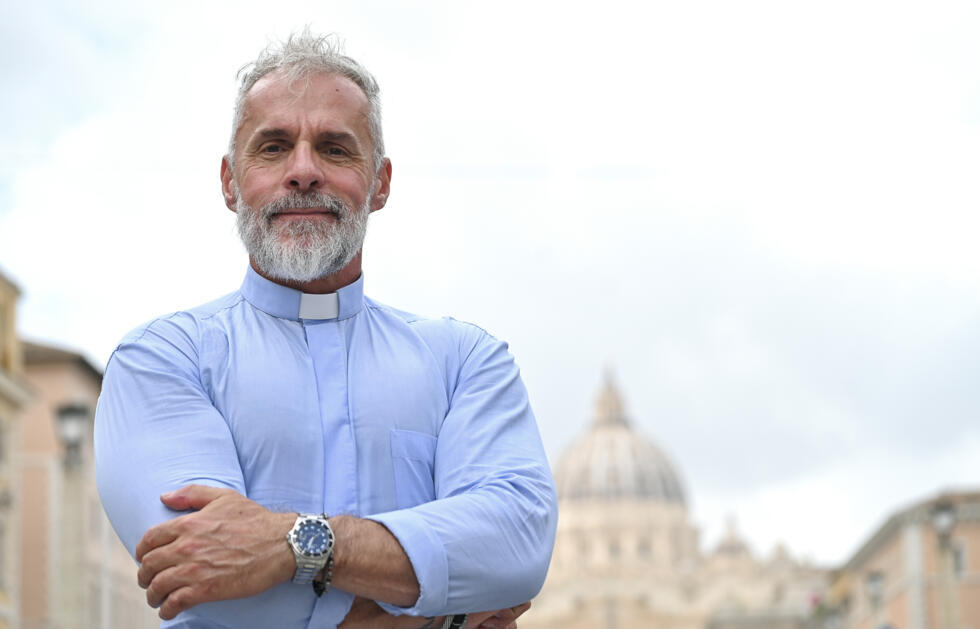
Father Giuseppe Fusari does not look like a regular priest: wearing tight shirts exposing his arm tattoos.

To his 63,000 followers on Instagram, he mixes content about Italian church architecture and preaching.

'Important we're online too'

Fusari told AFP there is no reason Catholic clerics should not embrace the world of online videos.

"Everyone uses social media, so it's important that we're there too," said Fusari, who came to Rome for the influencer event from the northern city of Brescia.

Fusari said his goal was to reach as many people as possible online, sharing the "word of God" with them.

This also takes the form of sharing videos of his chihuahua eating spaghetti.

But priests and nuns are not the only ones trying to attract people to the Church online, with regular believers spreading the faith too.

Francesca Parisi, a 31-year-old Italian teacher, joined the Catholic Church later in life.

She now has some 20,000 followers on TikTok, where she tries to make the Catholic faith look trendy.

Her target audience? People who have "drifted away" from the church.

It's possible, she said, to lure them back through their smartphones.

"If God did it with me, rest assured, he can also do it with you."

© 2025 AFP


Australia widens teen social media ban to YouTube, scraps exemption


Issued on: 30/07/2025 - 

Australia said on Wednesday it will add YouTube to sites covered by its world-first ban on social media for teenagers, reversing an earlier decision to exempt the Alphabet-owned video-sharing site and potentially setting up a legal challenge.

Video by: Oliver FARRY


TikTok launches crowd-sourced debunking tool in US

Washington (AFP) – TikTok on Wednesday rolled out a crowd-sourced debunking system in the United States, becoming the latest tech platform to adopt a community-driven approach to combating online misinformation.


Issued on: 30/07/2025 -

Tech platforms increasingly view the community-driven moderation model as an alternative to professional fact-checking, which many conservative advocates have long accused of a liberal bias. © Kirill KUDRYAVTSEV / AFP

Footnotes, a feature that the popular video-sharing app began testing in April, allows vetted users to suggest written context for content that might be wrong or misleading -- similar to Community Notes on Meta and X.

"Footnotes draws on the collective knowledge of the TikTok community by allowing people to add relevant information to content," Adam Presser, the platform's head of operations and trust and safety, said in a blog post.

"Starting today, US users in the Footnotes pilot program can start to write and rate footnotes on short videos, and our US community will begin to see the ones rated as helpful -- and rate them, too," he added.

TikTok said nearly 80,000 US-based users, who have maintained an account for at least six months, have qualified as Footnotes contributors. The video-sharing app has some 170 million US users.

TikTok said the feature will augment the platform's existing integrity measures such as labeling content that cannot be verified and partnering with fact-checking organizations, such as AFP, to assess the accuracy of posts on the platform.

The crowd-sourced verification system was popularized by Elon Musk's platform X, but researchers have repeatedly questioned its effectiveness in combating falsehoods.

Earlier this month, a study found more than 90 percent of X's Community Notes are never published, highlighting major limits in efficacy.

The Digital Democracy Institute of the Americas (DDIA) study analyzed the entire public dataset of 1.76 million notes published by X between January 2021 and March 2025.

TikTok cautioned it may take some time for a footnote to become public, as contributors get started and become more familiar with the feature.

"The more footnotes get written and rated on different topics, the smarter and more effective the system becomes," Presser said.

Tech platforms increasingly view the community-driven model as an alternative to professional fact-checking.

Earlier this year, Meta ended its third-party fact-checking program in the United States, with chief executive Mark Zuckerberg saying it had led to "too much censorship."

The decision was widely seen as an attempt to appease President Donald Trump, whose conservative base has long complained that fact-checking on tech platforms serves to curtail free speech and censor right-wing content.

Professional fact-checkers vehemently reject the claim.

As an alternative, Zuckerberg said Meta's platforms, Facebook and Instagram, would use "Community Notes."

Studies have shown Community Notes can work to dispel some falsehoods, like vaccine misinformation, but researchers have long cautioned that it works best for topics where there is broad consensus.

Some researchers have also cautioned that Community Notes users can be motivated to target political opponents by partisan beliefs.

© 2025 AFP


MOSCOW BLOG: Are we drifting into a nuclear war with Russia?

MOSCOW BLOG: Are we drifting into a nuclear war with Russia?
Russia has responded by threatening to move its Oreshnik ICBMs into Belarus and the Russian Ministry of Foreign Affairs says that it will give up adhering to the Intermediate-Range Nuclear Forces Treaty (INS Treaty) that limits the placement of short- to medium-range missiles near borders / bne IntelliNews
By Ben Aris in Berlin August 5, 2025

US President Donald Trump moved two nuclear submarines to an “appropriate place” as part of his tough man showdown with Russian President Vladimir Putin that comes to a head this week when the 10-day deadline expires.

Russia has responded by threatening to move its Oreshnik ICBMs into Belarus and the Russian Ministry of Foreign Affairs says that it will give up adhering to the Intermediate-Range Nuclear Forces Treaty (INS Treaty) that limits the placement of short- to medium-range missiles near the border with adversarial countries.

Trump already took the US out of the treaty in 2019, but Russia has been adhering to its terms unilaterally. Like Russia’s decision to suspend, not withdraw from, the START missile treaty it signed with Joe Biden in January 2021, this was one of those gestures the Kremlin has made that keep the door open to resurrecting all the Cold War missile deals.

The Kremlin really wants to go back to the Cold War security deals and jumped on Biden’s offer to renew the START missile treaty in January 2021, which will now expire next year. The Kremlin immediately suggested renewing the INS Treaty as a follow up, as the next most important one. Biden seemed open to these talks. As a Senator he argued strongly against George Bush’s decision to unilaterally withdraw from the key ABM treaty (Anti-Ballistic Missile Treaty) in 2002, saying it would be destabilising.

It was. That decision kicked off what turned into an arms race, and you can draw a line directly from nixing the ABM treaty to the invasion of Ukraine. The ABM deal was the bedrock of the Cold War security arrangements, the first arms deal, signed between Richard Nixon and Soviet leader Leonid Brezhnev in 1972.

Leaving it was a very big deal indeed and a very bad idea. I had friends involved in those talks and the Russians were both outraged and freaked out by the decision. It totally undid what were warming relations. If you remember, Putin’s very first foreign trip was to London where he stood on the floor of the House of Commons with Tony Blair and gave away half of oil major TNK to BP. This was not a 49/51 joint venture, but a straight 50-50 split, a genuine partnership, which is rare in the business. Putin was dead serious about making friends with the West. Nixing the ABM two years later was a stinging slap in the face for those hopes, but it took Putin another five years until he started to push back and take drastic action.

Are we now slowly slipping into a war between Russia and the US? There is a general decay in the security set up going on that has actually been going on for well over a decade. Russia suspended its participation in the Treaty on Conventional Armed Forces in Europe (CFE Treaty) in 2007, the same year Putin gave his famous Munich Security Conference (MSC) speech, and formally withdrew on November 7, 2023. Belarus announced the same day that it was also withdrawing from the treaty.

Russia's decision to now ignore the INS treaty is another notch up in the tensions, and Ukraine’s policy of increasingly hitting targets inside Russia – something its allies have strongly discouraged as part of its “escalation management” strategy – is pouring fuel on the fire. Biden’s team worked hard to prevent these strikes, but after Trump went AWOL on Ukraine, Bankova is increasingly taking the initiative and hitting back the only way it can. Targeting Russian oil refineries or infrastructure, with some symbolic drone attacks on Moscow and other cities thrown in for the spice that brings the war home to the Russian population, is an obvious strategy.

The good start Putin and Biden made in their Geneva meetings at the start of 2021 was a golden opportunity to reset relations and at the least rebuild the security infrastructure that got us through the Cold War without destroying the earth. The slow decay of what is left of that infrastructure is deeply unsettling and dangerous – especially with what Jon Stewart astutely dubbed, “a man-child” in charge of the White House.

However, Putin is also to blame as he carried his insistence that Ukraine stay neutral too far. He first massed troops on Ukraine’s border in March 2021 and then again in the autumn. This was also the year of Russian Foreign Minister Sergei Lavrov’s “new rules of the game” speech delivered in February 2021 that threw down the gauntlet and the year was capped with the Russian Ministry of Foreign Affairs’ eight-point list of demands in December that set the stage for the start of the war in February the next year.

I read Bob Woodward’s excellent book "Plan of Attack" (2004) on the start of the Iraq war, which amply demonstrated that a series of innocuous “just in case” preparations lead inexorably to the start of a war no one intended to fight or thought was necessary, but eventually reached the point of no return. It looks like we are wandering down the same path now.

Russia counters Trumps nuclear submarines, abandons self-imposed limits on short- and medium-range missiles

Russia counters Trumps nuclear submarines, abandons self-imposed limits on short- and medium-range missiles
Russia has abandoned its adherence to the INS missile treaty that limits the placement of short- and medium-range missiles on the border of Nato countries. / bne IntelliNews
By bne IntelliNews August 5, 2025

Russia has declared it will no longer observe self-imposed restrictions on deploying medium- and short-range missiles, ending a moratorium introduced after the collapse of the Intermediate-Range Nuclear Forces Treaty with the United States.

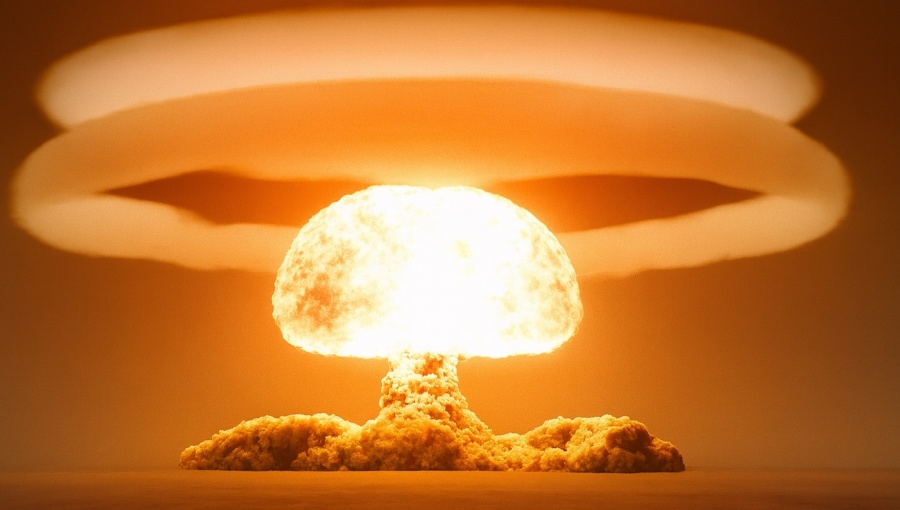
The decision comes as both the US and Russia have started to rattle their nuclear sabres. US President Donald Trump said last week that he had moved two nuclear-enabled submarines to an “appropriate place” in a significant escalation of tensions. That provoked a harsh response from the deputy head of Russia’s security council Dmitry Medvedev, who said Russia was prepared to strike the US with nuclear weapons if provoked.

The Russian Ministry of Foreign Affairs said on August 4 it had adopted “unilateral self-restraints” on such ground-based weapons following its withdrawal from the Cold War-era accord. “However, it must be stated that Russian initiatives have not met reciprocity,” the ministry said, citing examples of alleged violations by other countries.

The new announcement comes after Russian President Vladimir Putin upgraded Russia’s nuclear weapons policy last November, giving the Kremlin to make a first strike decision should Russia face an ill-defined “existential threat.”

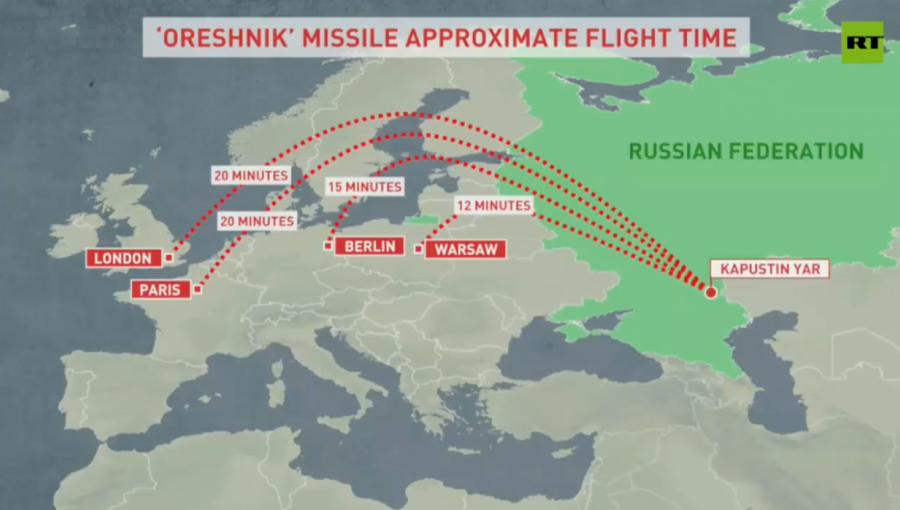
Now the Russian Ministry of Foreign Affairs has taken another step to undermine that security agreements were in place by allowing it to move missiles into forward positions, including placing Russia’s newest ICBM, the Oreshnik missiles in Belarus, which can hit any European capital within 20 minutes.

“The conditions for keeping the one-sided moratorium on deploying similar weapons are gone and the Russian Federation no longer feels tied to the self-imposed restrictions it agreed to before,” the ministry said.

The INF Treaty, signed in 1987, prohibited the US and the Soviet Union from possessing or testing ground-launched ballistic and cruise missiles with ranges between 500km and 5,500km. Washington and Moscow withdrew from the treaty in August 2019 after accusing each other of non-compliance, but the Kremlin has been adhering to the terms unilaterally in the meantime.

Former Russian President Dmitry Medvedev escalated the rhetoric on Monday, blaming Nato members for the decision to abandon the moratorium. “The Russian Foreign Ministry’s statement on the withdrawal of the moratorium on the deployment of medium- and short-range missiles is the result of Nato countries’ anti-Russian policy,” he wrote in English on X.

“This is a new reality all our opponents will have to reckon with. Expect further steps,” said Medvedev, who is also a former president and prime minister. He did not specify what measures Moscow might take.

The Russian announcement marks a further deterioration in arms control arrangements between the world’s largest nuclear powers, coming amid heightened tensions over the war in Ukraine and Nato’s military posture in Eastern Europe.