Monday, August 18, 2025


Hydrogen’s Hype Is Dead — And That’s Good News

  • The wave of canceled hydrogen megaprojects signals maturity, not failure.

  • Successful projects like Engie’s Yuri electrolyzer in Australia, the mosaHYc pipeline in Europe, and Germany’s Lubmin ammonia-to-hydrogen terminal highlight a shift toward practical, scalable solutions in hard-to-abate sectors.

  • Policy is becoming more pragmatic, with the EU and national governments funding infrastructure and cost-effective pathways.

Let’s start with the punchline: a wave of canceled hydrogen megaprojects is not a disaster, it’s a sign of success. The sector is maturing fast, shedding the glam tours and stick-to-the-basics players who couldn’t deliver, and leaving room for quietly effective pioneers.

The hype bubble burst (and rightly so)

Between 2021 and today, low-carbon hydrogen demand is still tiny—just under 1 million tonnes in 2023 out of a total global hydrogen demand of 97 million tonnes, and mostly still fossil-based. Meanwhile, the Hydrogen Insights 2024 report notes a seven-fold increase in global capacity passing Final Investment Decision (FID) over four years, but it’s still modest: about 20 GW of electrolyzers globally.

In Europe, 3 GW of electrolysis capacity has passed FID, projected to produce around 415,000 tonnes of renewable hydrogen annually. Blue hydrogen, produced using SMR plus carbon capture, has only seen about 400,000 tonnes per year reach FID, while over 1.4 million tonnes per year of planned blue hydrogen projects have been cancelled. That’s the smell of bad economics: big ideas that didn’t survive the spreadsheet.

But this is good news. Because the projects that are going ahead are better thought out, more grounded in reality, and genuinely contribute to decarbonization where it matters.

Real hydrogen: projects that work

Take Engie’s Yuri project in Pilbara, Western Australia, which passed FID in September 2022. The first phase involves a 10 MW electrolyzer powered by 18 MW of solar and supported by an 8 MW battery. It will produce around 640 tonnes of renewable hydrogen per year, supplying Yara’s ammonia production. It’s not flashy, but it works. The offtake is clear, the industrial demand is real, and construction is already underway

In Europe, Engie has also greenlit its share of the mosaHYc pipeline project, a €110 million cross-border hydrogen network between France and Germany. Engie’s section passed FID in April 2024, with construction planned for 2025. The project is a key part of a broader 700-kilometer hydrogen transport network planned by 2030.

Looking ahead, the H2Med/Barmar corridor, linking Barcelona and Marseille, is aiming to transport up to 2 million tonnes of hydrogen annually by 2030, about 10 percent of projected European hydrogen demand. The joint venture behind it, led by Enagas, Natran (an Engie affiliate), and Terega, is preparing for FID in 2028 and is already receiving EU funding.

Meanwhile, Hoegh Evi’s ammonia-to-hydrogen terminal in Lubmin, Germany, is targeting FID by the end of 2025. The plan is to crack imported ammonia into hydrogen for the German market, offering prices of $3 to $3.50 per kilogram by 2027, well below today’s European cost of $8 to $10 per kilogram.

Why these projects matter

The failed mega-projects often made no economic sense. They were banking on massive scale, unproven technology, or unclear offtake. Some couldn’t even identify who would use the hydrogen they planned to produce. In contrast, the projects now moving forward are tied to existing industrial processes, ammonia, methanol, refining, steelmaking, where hydrogen is already used and where lower-carbon alternatives are urgently needed.

This is where low-carbon hydrogen belongs: in the hard-to-abate sectors that account for a disproportionately large chunk of global emissions. These sectors have few other options and are often concentrated in industrial hubs where infrastructure already exists or can be easily upgraded and extended.

In these applications, green hydrogen from electrolysis makes sense when powered by cheap renewables. Blue hydrogen, whether from SMR with carbon capture or methane pyrolysis, makes sense where carbon intensity is lower and economics are favorable. For example, blue hydrogen production in Europe ranges between €3.76 and €4.41 per kilogram, significantly cheaper than green hydrogen in most parts of the continent, which can cost €6 to €8 per kilogram depending on electricity input.

These aren’t headline-grabbing numbers, but they are practical. And they’re what the industry needs.

Fewer projects, better projects

Not every hydrogen project deserves to be built. That’s true of any sector, but the hydrogen gold rush of the early 2020s encouraged a lot of magical thinking. What we’re seeing now is a course correction. Projects with no real chance of securing offtake or capital are quietly disappearing. In their place are better-designed, financially sound projects targeted at real industrial use.

That’s not a sign of failure. It’s a sign of progress.

There’s still plenty of ambition. Commodity Insights reports that Europe alone has over 1.35 million tonnes per year of renewable hydrogen projects and over 2.4 million tonnes per year of blue hydrogen in advanced stages of development. But those fiures are now based on sober analysis, not hype.

Policy support is maturing too

This wave of realism is being helped along by smarter policy. The European Hydrogen Bank, for example, is steering funds toward projects that can deliver both emissions reductions and energy system value. The EU is also funding key infrastructure like the Barmar pipeline, and national governments, like Germany’s, are backing import infrastructure with billions in public loans. Laying a foundation for other projects to connect on.

Take the German KfW-backed funding of Hoegh’s Lubmin terminal. Instead of insisting on domestic hydrogen production at any cost, Berlin is choosing a cost-effective path that gets hydrogen to market sooner via ammonia carriers. It’s a pragmatic move that shows policymakers are finally starting to understand where hydrogen can actually help, and where it can’t.

A smaller, better hydrogen economy

Yes, the hydrogen economy will likely be smaller than some of the wild projections made five years ago. But that’s not a problem. It’s a feature.

A smaller hydrogen sector that actually works, one that displaces fossil hydrogen, reduces emissions in heavy industry, and relies on sound engineering, is infinitely better than a sprawling mess of doomed megaprojects. This sector doesn’t need a thousand grand plans. It needs a few dozen excellent ones.

Let the bad ideas die. Let the hype cool off. What’s left is something real.

By Leon Stille for Oilprice.com


India’s IREL seeks Japan, South Korea partnerships for rare earth magnet production


Credit: Toyotsu Rare Earths India

India’s state-owned miner IREL is seeking to collaborate with Japanese and South Korean companies to start commercial production of rare earth magnets, a source familiar with the matter said, as part of efforts to reduce reliance on China.

The company is looking at both Japan and South Korea for rare earth processing technology, potentially through government-to-government channels, the source said, declining to be named as the discussions are not public.

The miner aims to formalize talks with other countries on rare earth mining and technology partnerships and plans to seek IREL board approval for commercial magnet production this year, the source said.

IREL and the Department of Atomic Energy, which oversees the company, did not respond to requests for comment.

India currently lacks commercial-scale facilities to refine and separate the full range of rare earth elements to high-purity levels.

China, which controls the bulk of global rare earth mining, suspended exports of a wide range of rare earths and related magnets in April, upending the supply chains central to automakers, aerospace manufacturers, and semiconductor companies among others that use them.

IREL has also approached Toyotsu Rare Earths India, a unit of Japanese trading house Toyota Tsusho, to seek help in reaching out to companies in Japan for processing of rare earth materials, the source said.

The source said IREL had an initial meeting with Toyotsu to explore whether it could engage Japanese magnet manufacturers, with one proposal involving the possibility of a Japanese company setting up a plant in India.

Toyota Tsusho and Toyotsu Rare Earths India did not immediately comment.

Japan’s Ministry of Economy, Trade and Industry, in charge of rare earths, did not immediately respond to a Reuters email seeking comment.

In June, Reuters reported that India asked IREL to suspend a 13-year-old rare earth export agreement with Japan to conserve domestic supplies.

IREL is prepared to supply rare earth element neodymium oxide to a technology partner, who would then produce the magnets and send them back to India, the source said.

The state miner currently has the capacity to produce 400–500 metric tons of neodymium annually, the source said, noting that output could increase depending on the terms of the collaboration.

IREL also plans to expand domestic rare earth mining and processing.

In India, rare earth mining is restricted to IREL, which supplies the Department of Atomic Energy with materials for nuclear power and defence-related applications.

The company is also exploring potential rare earth mining opportunities in Argentina, Australia, Malawi and Myanmar, the source said.

(By Neha Arora and Jekaterina Golubkova; Editing by Mayank Bhardwaj and Jane Merriman)


Column: Lithium’s rally is super-charged with speculative spice


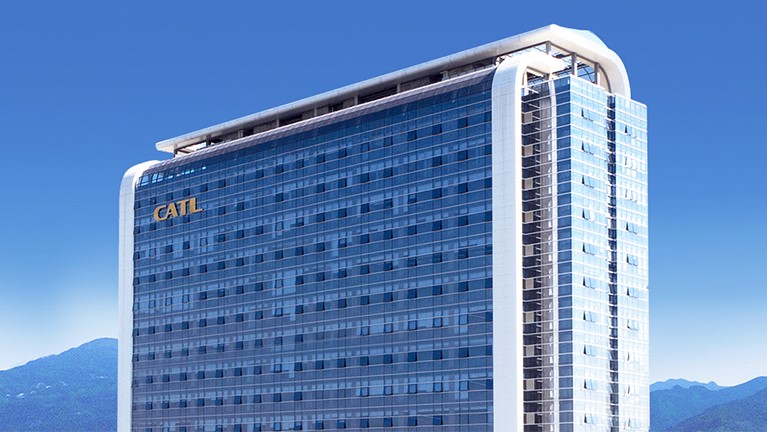
CATL headquarters (Image from CATL)

News that Chinese battery giant Contemporary Amperex Technology (CATL) has suspended operations at its giant Jianxiawo mine has lit a fire under the lithium market.

The CME lithium carbonate contract has surged by 27% since the start of August, breaking a long-running downtrend, with the bull momentum sweeping through the shares of listed producers.

The market reaction is not irrational.

Jianxiawo is China’s largest lithium mine and even CATL’s anticipated three-month suspension will make a significant dent in a massively over-supplied market. Nor is it the only Chinese producer in the lithium hub of Yichun facing heightened bureaucratic scrutiny.

But the price surge looks over-exuberant. Any underlying market signal has been swamped by speculative excess on China’s Guangzhou Futures Exchange.

CME lithium hydroxide and carbonate prices

Guangzhou lithium rush

Guangzhou only started trading lithium carbonate futures in July 2023 but has muscled out the Wuxi Stainless Steel Exchange as China’s primary price reference point for the battery metal.

Wuxi was a problematic indicator of China’s physical lithium market and Guangzhou is now also battling to contain a speculative frenzy.

Guangzhou’s lithium contract notched up turnover of nearly 24 million lots in July, far exceeding the previous monthly record, while open interest climbed to an all-time high of 699,164 lots.

Trading activity in the options contract mushroomed from 2.9 million lots in June to 8.6 million last month.

The exchange’s volume figures denote both buy and sell transactions but, even allowing for this double-count, July’s turnover was many multiples the size of a global market that is growing fast but still only amounts to around 1.6 million tons each year.

Guangzhou Futures Exchange Li Carbonate Futures
Guangzhou Futures Exchange Li carbonate futures

The Guangzhou exchange implemented position limits, specifically targeting non-exchange members, at the end of July after the September contract had traded limit-up on two consecutive days.

The measures seemed to be damping down the speculative heat until CATL made its announcement on August 11, at which stage the bull flames erupted again with the lithium price again going limit-up over the next two days.

While some market participants, particularly industrial players, may have been aware of CATL’s licence problems, the price volatility in itself has acted as a magnet for local speculators chasing the next big thing.

Such crowd surges are commonplace in the Chinese commodities futures landscape and have the same effect as a giant momentum fund feeding on a fast-moving market.

War on involution

Last month’s price action on the Guangzhou lithium contract was “a masterclass in sentiment-driven volatility,” according to Paul Lusty, head of battery raw materials at price assessment agency Fastmarkets.

Fastmarkets’ view is that “beneath the surface demand remains tepid, inventories high and buyers cautious, underscoring a disconnect between price action and market reality.”

How much has actually changed in the wake of CATL’s confirmation it needs to reapply for its expired mining licence?

Chinese speculators are betting that it is symptomatic of a change in government policy.

Beijing has taken aim at what it calls “disorderly price competition” with state media amplifying the attack on involution, a now-popular reference to competition so fierce it becomes self-destructive.

Lithium is not the only market to have interpreted this as presaging a broader clamp-down on chronic excess capacity in China’s industrial base.

There have been equally exuberant rallies in steel, coal and polysilicon, a building-block for the over-heating solar panel sector.

New dawn?

Whether this is really a new dawn for the bombed-out lithium price remains to be seen.

The focus of the market, particularly in China, will be on whether CATL gets its new mining licence and what happens to the other producers clustered in Yichun.

All of them are under scrutiny for possible discrepancies between their licensed mining rights and actual extraction rates, according to consultancy Project Blue.

In a market that has been weighed down by excess production capacity, any sign of producer restraint, whether voluntary or involuntary, is a price positive.

However, just how positive is going to depend on the Chinese speculators massing in the Guangzhou lithium market.

The exchange’s lithium futures contract has already recorded over 12 million trades so far in August.

The speculative froth is still there.

(The opinions expressed here are those of the author, Andy Home, a columnist for Reuters.)

(Editing by Susan Fenton)


Harmony Gold’s MAC Copper takeover gets regulatory nod


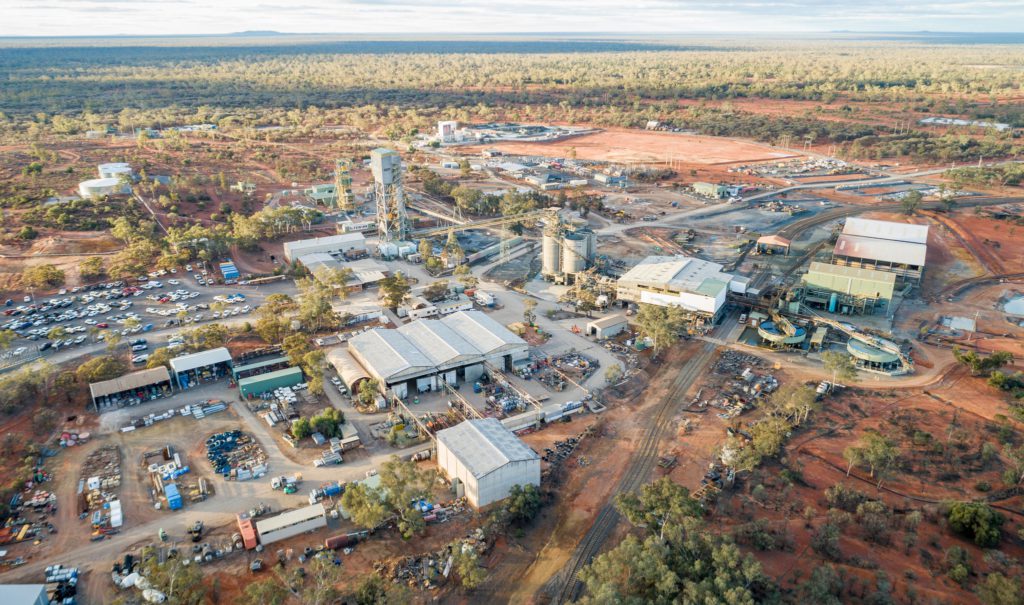
At 1.9 kilometres deep, CSA is one of Australia’s deepest underground mines. Credit: Glencore

Harmony Gold’s (JSE: HAR, NYSE: HMY) acquisition of MAC Copper (NYSE: MTAL, ASX: MAC) has cleared the final regulatory hurdle after Australia’s Foreign Investment Review Board (FIRB) gave its approval of the $1 billion deal.

The FIRB approval, said MAC Copper CEO Mick McMullen, is “another significant step towards implementation of the transaction as all requisite regulatory approvals have now been obtained.” It follows last week’s approval of the deal by the South African Reserve Bank.

The transaction still requires approval from investors, satisfaction of certain restructuring conditions, and sanction by the court. Shareholders of MAC are expected to cast their votes at meetings scheduled for August 29 in Jersey and online.

As disclosed in its announcement in late May, Harmony would pay $12.25 for MAC’s common shares, a 20% premium at the time, for a total transaction value of $1.03 billion.

On Monday, MAC Copper shares traded at $12.14 apiece on the NYSE, with a market capitalization of $1 billion.

Copper shift

The acquisition of MAC represents a strategic shift by South Africa’s leading gold producer to diversify its portfolio with critical minerals such as copper.

MAC’s main asset is the CSA mine in New South Wales, which currently ranks amongst the highest-grade copper mines in Australia and is one of its oldest copper operations, with a history stretching back nearly 150 years. At 1.9 km, it is also one of Australia’s deepest underground operations.

The mine and facility were previously held by Glencore. In March 2022, MAC won a bid to acquire the asset for $1.1 billion.

The transaction expands the company’s existing copper footprint in Australia, where it entered in 2022 with the Eva copper project in Queensland. The Johannesburg-based miner expects to begin production at Eva by 2028.

With CSA and Eva combined, Harmony aims to produce 100,000 tonnes of copper annually within five years.


Glencore seeks $13 billion in incentives for Argentina copper projects


ALL CAPTALI$M IS $TATE CAPITALI$M

Credit: Glencore Pachon

Glencore Plc filed applications to have two copper projects with combined capital expenditure estimated at more than $13 billion included into Argentina’s investment incentive program.

The Switzerland-based commodities firm is seeking the tax, customs and currency exchange benefits offered under the government program for El Pachon in San Juan province and Agua Rica in Catamarca, the company said in a statement Monday. The program is known by its Spanish acronym as Rigi.

Glencore joins a growing list of miners seeking access to the program in a country that was once a pariah for foreign investment because of capital controls and state intervention. Argentina is regaining the confidence of companies as President Javier Milei offers a way to bulletproof their capital commitments.

“This framework has changed the investment landscape in Argentina, providing a key catalyst to attract major foreign investment to the country,” Glencore chief executive officer Gary Nagle said in the statement. “Today’s submission marks a significant step towards the development of El Pachon and Agua Rica.”

The El Pachon and Agua Rica projects are expected to require investments of $9.5 billion and $4 billion, respectively, if Glencore decides to proceed with their development. They bring the number of Rigi applications to 20, totaling $33.6 billion, Economy Minister Luis Caputo wrote in a X post.

El Pachon is of particular interest to the copper market given its scale and location in San Juan. The province is set to become a new mining hub when the industry is struggling to keep up with growing demand for copper, a key component in the electrification push. BHP Group Ltd., and McEwen Copper Inc. are also piling into San Juan.

Argentina has already had success with lithium, a mineral that’s critical to making batteries for electric cars. Copper projects, though, tend to be bigger, more expensive and more destructive. And Argentina has been a particularly precarious destination for prospectors since it is largely focused on farming and oil, not metals like regional peers Chile and Peru.

(By James Attwood)


Uganda targets higher exports with first large-scale gold mine

Image source: Wagagai Mining Ltd.

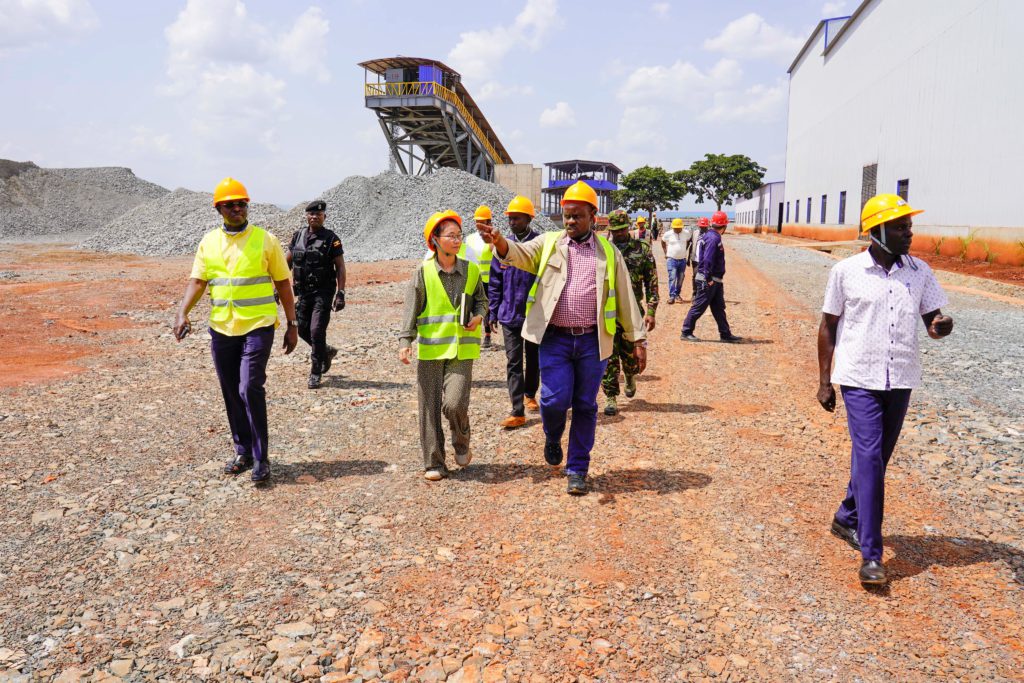
Uganda has inaugurated its first large-scale gold mine, a $250 million Chinese-owned project in the country’s east that will also refine the bullion to 99.9% purity, according to a statement from the president’s office.

The landlocked east African country, which has a variety of minerals including copper, cobalt and iron ore, wants to expand its mining industry and position itself as a major gold producer and exporter.

Last year Uganda raised $3.4 billion from gold exports, according to central bank data, about 37% of the country’s total export revenue. The figure includes the re-export of gold brought into the country, with nearly all its domestic production from small-scale artisanal miners.

While its gold export earnings have increased in recent years, it is still far behind Africa’s largest bullion producer Ghana, which raised $11.6 billion from shipments of the metal last year.

“In order to wake up in the minerals sector, we must have full value addition for all minerals like gold, lithium, tin among others,” President Yoweri Museveni said in a statement issued late on Saturday.

The Wagagai Gold Mining Project, owned by Wagagai Mining (U) Limited and covering just over nine square kilometres in Busia district, was inaugurated by Museveni on Saturday.

The plant, which has started operations, is expected to process 5,000 tons of gold ore per day and produce about 1.2 metric tons of refined gold a year, according to the statement. That compares to Uganda’s total domestic production of just 0.0042 tons in 2023.

Uganda will use the revenue generated by exporting gold to develop assets such as power stations and the country’s railway, Museveni said.

Landlocked Uganda is currently constructing a 2.7 billion euro ($3.16 billion) standard gauge railway to reduce the cost of transporting its exports and imports via neighbouring Kenya.

($1 = 0.8549 euros)

(By Elias Biryabarema; Editing by Wendell Roelf and Kirsten Donovan)


Wooden church sets off on slow Swedish road trip to escape mining subsidence


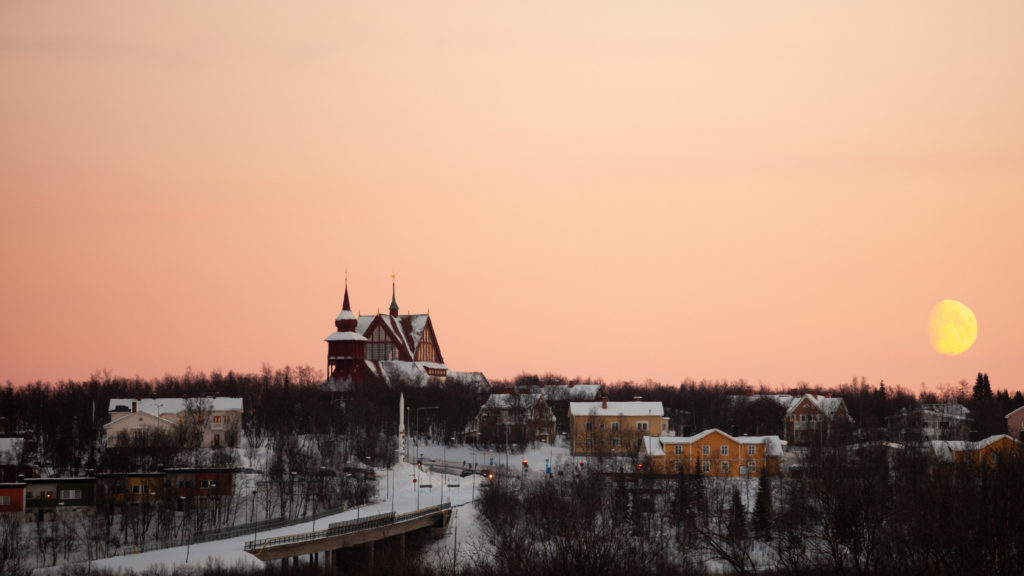
Kiruna Church. Stock image.

Sweden’s landmark Kiruna Church will begin a two-day trip to a new home on Tuesday, inching down an Arctic road to save its wooden walls from ground subsidence and the expansion of the world’s largest underground iron ore mine.

Workers have already jacked up the 600-ton, 113-year-old church from its foundations and hefted it onto a specially built trailer – part of a 30-year project to relocate thousands of people and buildings from the Lapland city.

Mine-operator LKAB has spent the last year widening the road for the journey which will take the red-painted church – one of Sweden’s largest wooden structures, often voted its most beautiful – 5 km (3 miles) down a winding route to a brand new Kiruna city centre.

The journey will save the church, but take it from the site where it has stood for more than a century.

“The church is Kiruna’s soul in some way, and in some way it’s a safe place,” Lena Tjarnberg, the vicar of Kiruna, said.

“For me, it’s like a day of joy. But I think people also feel sad because we have to leave this place.”

For many of the region’s indigenous Sami community, which has herded reindeer there for thousands of years, the feelings are less mixed. The move is a reminder of much wider changes brought on by the expansion of mining.

“This area is traditional Sami land,” Lars-Marcus Kuhmunen, chair of the local Gabna Sami community, said. “This area was grazing land and also a land where the calves of the reindeer were born.”

If plans for another nearby mine go ahead after the move, that would cut the path from the reindeer’s summer and winter pastures, making herding “impossible” in the future, he said. “Fifty years ago, my great-grandfather said that the mine is going to eat up our way of life, our reindeer herding. And he was right.”

Symbol of transformation

The church is just one small part of the relocation project.

LKAB says around 3,000 homes and around 6,000 people need to move. A number of public and commercial buildings are being torn down while some, like the church, are being moved in one piece.

Other buildings are being dismantled and rebuilt around the new city centre. Hundreds of new homes, shops and a new city hall have also been constructed.

The shift should allow LKAB, which produces 80% of the iron ore mined in Europe, to continue to extend the operation of Kiruna for decades to come.

The state-owned firm has brought up around 2 billion tonnes of ore since the 1890s, mainly from the Kiruna mine. Mineral resources are estimated at another 6 billion tonnes in Kiruna and nearby Svappavaara and Malmberget.

LKAB is now planning the new mine next to the existing Kiruna site.

As well as iron ore, the proposed Per Geijer mine contains significant deposits of rare earth elements, a group of 17 metals critical to products from lasers to iPhones and green technology key to meeting Europe’s climate goals.

Europe – and much of the rest of the world – is currently almost completely dependent on China for the supply and processing of rare earths. In March this year, the EU designated Per Geijer as a Strategic Project which could help speed up the process of getting the new mine into production.

Around 5km down the road, Kiruna’s new city centre will also be taking shape.

“The church is … a statement or a symbol for this city transformation,” mayor Mats Taaveniku told Reuters.

“We are right now half on the way. We have 10 years left to move the rest of the city.”

(By Tom Little and Simon Johnson; Editing by Andrew Heavens)

NOVA SCOTIA/CAPE BRETON

Nova Copper, Mi’kmaw Chiefs ink MOU for copper exploration in CBRM

'We are engaging the best local, national and international expertise to responsibly explore and bring to market copper and other critical minerals,' Nova Copper CEO says


Author of the article:
By Ian Nathanson
Published Aug 15, 2025
CAPE BRETON POST 

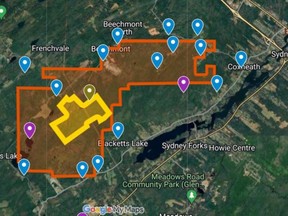
This interactive map from Keep Coxheath Clean is based on the outline and landmarks as shown in Nova Copper Inc.'s exploration and mining proposal. The orange area is the proposed mining exploration and the yellow area marked a proposed CBRM land sale. Photo by CONTRIBUTED


According to a news release issued Wednesday, the mining exploration firm announced it, along with other affiliates, have signed a memorandum of understanding (MOU) with the Assembly of Nova Scotia Mi’kmaw Chiefs “regarding the exploration and development of copper and other critical minerals” in the CBRM.

“Following extensive dialogue between both parties, the MOU sets out a framework to protect and ensure the sustainable development of the lands and waters of Nova Scotia Mi’kmaw territory,” the release said.

“It also marks an important step towards negotiating a Mutual Benefits Agreement (MBA) to facilitate meaningful Mi’kmaw participation in the projects being advanced by Nova Copper and its affiliates.”

The release added that the MOU marks the foundation for “open, good faith dialogue between Nova Copper and Indigenous people and opens the doors for the Mi’kmaq to be involved with the project.”

Kwilmu’kw Maw-Klusuaqn (KMK) confirmed the MOU signing in its July meeting highlights update. KMK works on behalf of the Mi’kmaq of Nova Scotia in discussions with the province and the federal government on how the province’s Mi’kmaq will implement their treaty rights.

URGING A MEETING

The announcement comes just days after the president of Keep Coxheath Clean, a group opposed to the mine project eyed for the Coxheath Hills area, sent an email to CBRM Mayor Cecil Clarke, councillors and various others urging a meeting with the group to provide an update on anything happening with Nova Copper’s Sydney-area project.

“As you are aware, there is strong community opposition to this project. Our online petition currently has 1,360 signatures from across the CBRM and beyond,” association president Laura MacNeil said in her email. “Mi’kmaq elders have expressed, in writing, their disapproval of the mine and desire to protect the land. The message is clear: Cape Bretoners do not want an open-pit copper mine atop the Coxheath Hills.”

MacNeil said in a more recent email she is looking to include Eskasoni’s Albert Marshall, a leading environmental voice and spokesperson for Mi’kmaq natural resources and environmental issues, as well as Terry Gibbs, a Cape Breton University professor of international politics in the Department of L’nu, Political and Social Studies.

Members of the Keep Coxheath Clean advocacy group — from left, Erin Thompson, Laura MacNeil, Rubin Binder and Cheryl MacInnis — speak during a presentation before Cape Breton Regional Municipality council on Nov. 14, 2023. According to MacNeil, president of the association, the group wants an update from the CBRM on what is happening with Nova Copper’s Sydney project. Photo by IAN NATHANSON/CAPE BRETON POST FILE


‘WE JUST WANT ANSWERS’

MacNeil goes on to explain the reasons the copper mine project would be of great harm to the area:

• Risk of contamination of our drinking water (a necessity of life);
Article content

• Air, soil, and noise pollution;

• Clear cutting of woodlands/wetlands on the Coxheath Hills will result in an increased flood risk to areas below. This area already has significant precipitation. Given current climate predictions, hurricanes and other serious weather events will be common in the near future. Residents expect elected officials to plan for and mitigate this risk (not increase it);

• Proximity to the Bras d’Or Lakes Biosphere and First Nations communities;
Article content

• Decreased property value (and therefore property taxes) of nearby homes and land;
Article content

• Harm to local tourism attractions (e.g., Coxheath Hills Wilderness Trails, Coxheath Hills Cultural Centre, the Bras d’Or Lake);

• Loss of wildlife habitat will push animals closer to residential areas. This could result in increased, dangerous interactions between humans and coyotes, for example, which are present on the Coxheath Hills;

• Damage to roads from heavy machinery traffic. Local taxpayers will be responsible for repair costs;

• Lax provincial environmental regulations for mining and known loopholes in the “environmental assessment” process (procured and paid for by mining companies, not the province);

• Taxpayer liability for cleanup costs (see the list of 69 former mining sites in Nova Scotia that require remediation, to be paid for by taxpayers).

“We just want answers,” MacNeil told the Cape Breton Post in a recent interview. “What is this agreement? What are the terms? Why are you not taking public opinion into account?”

Nova Copper CEO Harry Cabrita: “This MOU builds on the positive dialogue we have been pursuing for several years.” CONTRIBUTED


FOLLOWING LAWS

But in a statement provided in Wednesday’s news release, Nova Copper chief executive Harry Cabrita, maintains that the firm “is following all provincial laws and standards on environment, health and safety.”

“We are engaging the best local, national and international expertise to responsibly explore and bring to market copper and other critical minerals that Canada and the world needs to secure a transition to a green economy,” Cabrita added.

“Mining is one of the major employers of Indigenous people across Canada and we want to see that success extend to our Mi’kmaw partners on Unama’ki (Cape Breton) and across Mi’kma’ki. This MOU builds on the positive dialogue we have been pursuing for several years.”

Nova Copper spokesperson Joe Hines acknowledged in an emailed statement to the Post that “unfortunately, there is a special interest group that has repeatedly refused any offers we have extended to them to meet and share information on our development activities.

“Thankfully, there is a far greater number of individuals and organizations in the Cape Breton Regional Municipality who have been happy to meet with our organization over the last several years. The support we have received from the people of (the CBRM) to proceed with safe, responsible mineral exploration to create long term jobs and economic benefit has been encouraging.

“We look forward to continuing these conversations with supporters, information seekers and even with anti-mining activists. As a locally based company, we believe it’s important to meet with all groups interested in our project activities.”

Neither Hines nor Cabrita were available to speak with the Post on further progress.

CONTROVERSIAL PROJECT

In late July 2023, the Coxheath Hills Wilderness Recreation Association was approached by Nova Copper to search part of its land for pyrophyllite. But the association said so.
Article content

Not long after, word got out that the CBRM was looking to potential sell 1,002 acres of Beechmount area land to Nova Copper — unbeknownst to both the wilderness recreation association and Keep Coxheath Clean groups — and bringing the matter to a late August 2023 council meeting for approval.

That prompted outrage from members of Keep Coxheath Clean, the Coxheath Hills Wilderness Recreation Association and other groups, as well as a loud protest outside CBRM city hall just before that evening’s council meeting.

However, by the time protestors entered CBRM council chambers to hear what was going to be said on the matter, the item wound up nixed from its agenda list, and the municipality didn’t pursue the item any further.
Article content

COMMISSIONED REPORT

The last time Keep Coxheath Clean referenced the Nova Copper project with the Post was in January 2024, when the organization commissioned a report to evaluate the impacts of a mine opening anywhere within the 33 square kilometres Nova Copper had been exploring for copper and other minerals.

The geophysics expert who completed the report stated at that time it would be “highly likely” that a future mine would result in environmental contamination in the surrounding areas, including lakes, rivers and the wells of homes.
Article content

However, Cabrita countered that the commissioned report wasn’t objective.

“It is not peer-reviewed. It is not clear from the report that the author even visited Cape Breton Island,” he said in a statement to the Post in January 2024.

MacNeil said this week she doesn’t buy that argument.

“Harry Cabrita offers no examples of any factual inaccuracies in the report — because there are none,” she said via email.

When asked again about whether her organization had made any attempts to connect with Nova Copper, MacNeil said she felt there wasn’t any need. “They have never initiated any contact … no calls, emails, letters, nothing,” she responded.

Prior to Nova Copper’s MOU announcement on Wednesday, Eskasoni elder Albert Marshall expressed opposition to the mine project, while CBRM councillor Esmond (Blue) Marshall said he had not heard any other updates or behind-the-scenes discussions.

The Post reached out to the CBRM for their thoughts on the MOU. As of publication time, the municipality had yet to respond.

— With files from Cape Breton Post Staff