Friday, September 19, 2025


Iraq's Gas Deal Through Iran Blocked by U.S.

As a result, Iraq is now actively seeking alternative solutions for its gas supply, including negotiations for floating regasification terminals to import liquefied natural gas.Iraq’s hopes to boost its natural gas supply and end crippling power shortages have been dashed as an Iraqi plan to import gas from Turkmenistan via pipeline through Iran has failed to secure approval from the United States.  

Iraq has sought U.S. approval to import Turkmenistan’s gas via Iran, but an approval never came, Iraqi officials told Reuters. The newswire has also reviewed draft contracts for the swap deal under which Iran gets no money but can retain up to 23% of the gas volumes from Turkmenistan that are en route to Iraq. 

After months of engaging with the Trump Administration, Iraq has failed to secure a waiver from the U.S. which has launched a “maximum pressure” campaign against Iran. 

“Proceeding (with the Turkmen deal) could trigger sanctions on Iraqi banks and financial institutions, so the contract is currently suspended,” Adel Karim, adviser to Iraq's prime minister for electricity affairs, told Reuters.

The failure of this plan means that Iraq now has to seek alternatives. 

Despite being rich in oil and gas, Iraq has had to import gas from neighboring countries, including Iran, for fuel at its power plants.

Iraq lacks the gas processing plants necessary to process the associated gas extracted from its massive oilfields and continues to flare some of those gas volumes. 

Earlier this year, Iraq’s electricity supply predicament worsened after the Trump Administration ended a waiver for Iraq to import electricity from Iran.  

Reports have emerged in recent months that Iraq is negotiating the procurement of two floating regasification terminals as it seeks to replace gas supply from Iran. 

Texas-based company Excelerate Energy is one of the bidders in a tender to provide a floating storage and regasification unit (FSRU) that would welcome Iraq’s first-ever LNG imports, a senior Iraqi official told Bloomberg in June. 

By Tsvetana Paraskova for Oilprice.com


EU Set to Ban Russian LNG Imports Earlier than Planned

The European Commission is set to propose a ban on imports of Russian LNG by January 1, 2027, which would be a year earlier than previously planned, EU sources told Reuters on Friday, as the bloc looks to respond to U.S. pressure to phase out Russian energy. 

Following a call between U.S. President Donald Trump and European Commission President Ursula von der Leyen earlier this week, banning Russian LNG earlier than planned has become a “priority” for the EU, one of the sources told Reuters. 

The EU currently plans to phase out all imports of Russian gas by the end of 2027, under a roadmap to end dependency on Russian energy unveiled in May this year.  

“We are particularly looking at phasing out Russian fossil fuels faster,” European Commission President Ursula von der Leyen said in the 2025 State of the Union Address last week, without giving details how the EU could do it. 

However, the United States has intensified pressure on the EU to cut off imports of Russian energy to accelerate revenue declines for the Kremlin in coordinated efforts to force Putin to negotiate peace in Ukraine. 

“Since we presented the RePowerEU plan in 2022, we’ve been saying that a phaseout of Russian energy is better sooner rather than later,” Anna-Kaisa Itkonen, a spokeswoman for the European Commission told Bloomberg.

Last week, U.S. Energy Secretary Chris Wright said the EU could accelerate the phase out of natural gas imports from Russia and end purchases within six to 12 months by replacing it with American LNG.  

“The faster we phase out, the sooner you put pressure on Russia,” Secretary Wright told Reuters last week, as the United States is intensifying pressure on its EU and G7 partners to act with tariffs on India and China over their continued imports of Russian crude oil.  

Many EU member states aren’t keen to slap tariff on India and China, that’s why the EU is now targeting faster phase-out of Russian LNG, sources familiar with the plan told Bloomberg. 

By Tsvetana Paraskova for Oilprice.com

Regulator to Take Over Oil Contracts in Nigeria

Nigeria is considering stripping its state oil company of its decisive role in managing existing oil contracts and transferring that authority to the upstream regulator, in what could be the most significant shake-up since the 2021 Petroleum Industry Act (PIA).

Under the proposal, contracts currently controlled by the Nigerian National Petroleum Company (NNPC) would move to the Nigeria Upstream Petroleum Regulatory Commission (NUPRC). Lawmakers say the shift is aimed at plugging “statutory leakages and opaque deductions” that have drained government coffers for decades.

It’s a bold step in a sector where mistrust runs deep. The PIA was supposed to settle the blurred lines between regulator and operator, but critics argue that NNPC’s hybrid role as both commercial player and contract gatekeeper left too much room for manipulation. By putting NUPRC in charge, Abuja hopes to clean up revenue flows and boost badly needed income for the cash-strapped state.

But the risks are obvious. If NUPRC takes on contract control while retaining its watchdog role, it could end up judge and jury over the very agreements it regulates—a conflict of interest that may spook investors. Legal fights over existing contracts are also a possibility, with international partners wary of changes to hard-won terms.

Nigeria’s oil sector can ill afford more uncertainty. Output has been hobbled by theft, pipeline sabotage, and underinvestment, leaving Africa’s top producer pumping well below its OPEC quota. Meanwhile, domestic refining is only just beginning to recover with the Warri restart and the Dangote refinery ramp-up, after years of costly fuel imports.

For now, the proposal signals Abuja’s desperation to squeeze more from oil, its chief revenue lifeline. Whether it delivers reform or simply shifts the opacity from one institution to another will depend on how much independence—and transparency—the government is willing to grant its regulator.

By Julianne Geiger for Oilprice.com 


NEOCOLONIALISM

Is Iraq Finally Close to Restarting Kurdistan’s Oil Exports?

  • Iraq has given preliminary approval for the resumption of oil exports from Kurdistan, which have been halted for two and a half years.

  • The preliminary plan involves the Kurdistan Regional Government (KRG) delivering at least 230,000 barrels per day to Iraqi state marketing company SOMO.

  • The long-standing dispute over oil exports and revenue distribution between the federal government in Baghdad and the regional Kurdish government in Erbil appears to be nearing a resolution.


Iraq has given the preliminary green light to oil exports from the semi-autonomous region of Kurdistan to resume, Reuters reported on Friday, citing sources with knowledge of ongoing talks. 

For months, Iraq has been reportedly close to restoring Kurdistan’s oil exports via the Iraq-Turkey pipeline to the Turkish Mediterranean port of Ceyhan. 

However, outstanding issues needed to be resolved between Iraq and the Kurdistan Regional Government (KRG), Iraq and Turkey, and Iraq and the foreign oil companies operating in Kurdistan, before restarting exports to the Turkish coast. 

Now the Iraqi federal government has issued preliminary approval to a plan for oil exports from Kurdistan to resume. 

The preliminary plan entails the KRG delivering at least 230,000 barrels per day (bpd) of crude to Iraqi state marketing company SOMO. Kurdistan is also entitled to keep another 50,000 bpd to use for local consumption, according to Reuters’ sources.  

The foreign oil firms have also given tentative approval to the export resumption plan, the sources added.  

“Discussions have intensified and we're closer to a tripartite agreement... than we've ever been, as all are showing flexibility,” an executive from one of the international oil firms operating in Kurdistan told Reuters. 

The federal government in Baghdad and the regional Kurdish government in Erbil have been squabbling for more than two years over who should be responsible for the oil exports and the subsequent revenue distribution. 

The federal authorities say Baghdad should have sole discretion in handling oil exports and oil revenues.

Oil exports from Kurdistan have now been halted for two and a half years, after they were shut in in March 2023 due to a dispute over who should authorize the Kurdish exports. Despite some breakthroughs in negotiations in recent months, the disagreements have continued.  

Before the halt to exports, oil supply from Kurdistan averaged more than 400,000 bpd. 

By Michael Kern for Oilprice.com

ON FIRST NATIONS LAND

enCore wins EPA backing to advance Dewey Burdock permitting


The Dewey Burdock project site in South Dakota. (Credit: Azarga Uranium)

EnCore Energy’s (NASDAQ, TSXV: EU) Dewey Burdock uranium project in South Dakota cleared a roadblock after the US Environmental Protection Agency waived a petition by local communities challenging its permitting decisions.

The EPA appeals board dismissed a petition for review filed by the Oglala Sioux Tribe, Black Hills Clean Water Alliance and NDN Collective, the company said on Wednesday. The groups are fighting the project’s Class III and Class V underground injection control (UIC) permits, which are essential to the in-situ recovery (ISR) operation.

This decision, says enCore, allows the Dewey Burdock project to advance through federal permitting, with plans to start state permitting activities this year, accelerating its development ahead of schedule. The project, which seeks to tap into nearly 18 million lb. of uranium oxide (U₃O₈) in resources, has been tied up in regulatory review and litigation for more than a decade, including challenges before the Nuclear Regulatory Commission (NRC) and the EPA.

The appeals board “affirms the validity of the permits and the integrity of the regulatory process following years of administrative and judicial review,” enCore acting CEO Robert Willette said in a release. “Today’s decision provides the certainty needed to continue advancing toward development.”

Federal OKs

With its permitting status strengthened, enCore Energy’s share price shot up 3.4% to $2.60 on the NASDAQ by midday, giving the Texas-based uranium producer a market capitalization of $483.6 million.

The latest petition concerns alleged violations of the Safe Drinking Water Act, the Administrative Procedure Act and the National Historic Preservation Act, which the EPA denies.

With the EPA ruling, Dewey Burdock has all major federal authorizations to proceed with permitting, including the NRC source materials license (2014) and EPA UIC permits (2020), which the company says are final and effective.

Fast-tracked

The EPA decision comes weeks after Dewey Burdock was added to the FAST-41 program, which the Trump administration is using to speed up federal permitting for key critical minerals projects in the US.

A preliminary economic assessment dated October last year assumes that the permitting and licensing would be complete by the third quarter of 2026. However, engineering work is anticipated to commence in early 2026, and construction of the central processing plant would start a year after that.

Once in operation, the plant is expected to process 1 million lb. of uranium per year, recovering more than 14 million lb. over its life.

The project hosts 6.4 million measured and indicated tonnes grading 0.057% U₃O₈ for 17.1 million lb. contained metal, and 590,000 inferred tonnes at 0.054% for 0.7 million lb., according to the October 2024 resource update.


Record gold prices in India fail to unlock scrap supply


Stock image.

Supplies of used gold jewellery and coins, typically released when investors book profits, have been scarce in India, as many expect bullion prices to continue climbing even after reaching new highs almost every week.

This contrasts with March, when spot gold first crossed $3,000 an ounce and retail customers rushed to sell their holdings, triggering a surge in scrap supply.

“Indians now believe gold prices will rise even higher, which is why they’re choosing to hold their assets instead of selling them for a profit,” James Jose, managing director of refiner CGR Metalloys said on the sidelines of the India Gold Conference in New Delhi.

Local gold prices, which scaled a record peak of 110,666 rupees ($1,260.94) per 10 grams earlier this week, have risen 42% year-to-date, after gaining 21% last year.

Scrap supplies typically rise when prices climb too high too quickly, as was the case with prices in recent months, said Harshad Ajmera of wholesaler JJ Gold House in Kolkata.

“Consumers now think prices could even touch 125,000 rupees, so they’re holding on to their gold instead of selling,” he said.

Although rising prices have made new jewellery unaffordable for many consumers, they are increasingly exchanging old pieces for new ones, said Amit Modak, chief executive of PN Gadgil and Sons, a Pune-based jeweller.

Refiners are sourcing scrap from replaced jewellery to sustain operations, as imports of dore – a semi-pure alloy produced by miners – have declined sharply, said Ajmera.

The limited supply of scrap ahead of the festive season is a boon for banks, as jewellers increasingly turn to them to meet demand from imported gold.

Indians will celebrate Dussehra and Diwali in October, festivals during which buying gold is considered auspicious.

Rising prices usually trigger deep discounts as scrap floods the market, but limited supplies are allowing banks to charge a $1 premium even at record price levels, said a Mumbai-based jeweller with a bullion importing bank.

India’s gold imports in August jumped 37% from a month ago to $5.4 billion, trade ministry data showed.

($1 = 87.7650 Indian rupees)

(By Rajendra Jadhav and Brijesh Patel; Editing by Leroy Leo)

AUSTRALIA

Anglo American to cut hundreds of jobs at coal mines

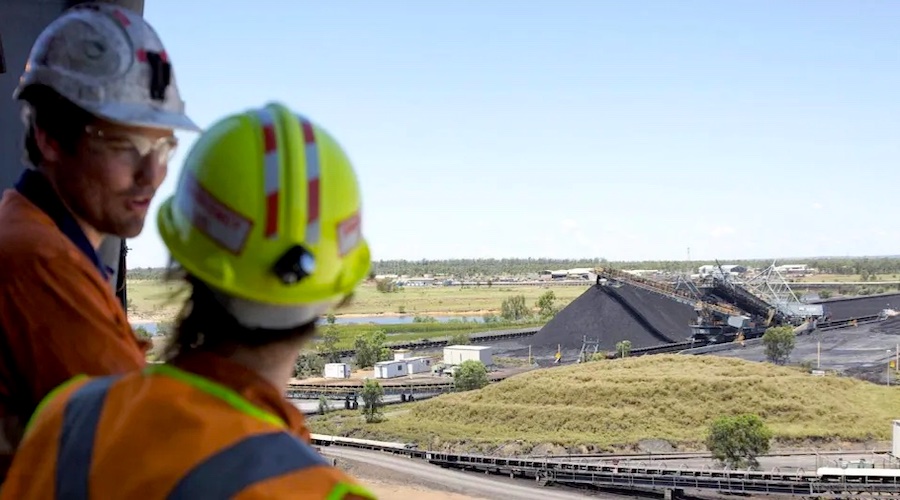
Moranbah North coal mine. (Image courtesy of Anglo American.)

Anglo American (LON: AAL) will shed more than 200 jobs from its Queensland coal division as weak prices and high state royalties hit profits.

The company confirmed the cuts would fall across its Brisbane office and mine sites, with many roles to go through voluntary redundancies. Production will not be affected, it said.

Workers at the Grosvenor underground mine near Moranbah, which has remained shut since a fire in June 2024, are among those offered redundancies. The Australian Financial Review reported that close to 300 roles would be eliminated, with Grosvenor the main focus.

Anglo, the world’s third-largest seaborne exporter of steelmaking coal, said the decision reflects ongoing market pressures. “These changes are essential to secure the future of our steelmaking coal operations in Central Queensland,” it said in a statement published by the Australian Broadcasting Corporation (ABC).

The miner said it had briefed unions and local officials but declined to confirm the total number of jobs.

Thousands affected

Anglo, which is in the midst of merging with Canada’s Teck Resources (TSX: TECK.A TECK.B, NYSE: TECK), is trying to sell the Queensland mines after a deal with Peabody Energy (NYSE: BTU) collapsed last month.

The news follows BHP’s decision to cut 750 jobs and mothball its Saraji South mine in November. Isaac Regional Council Mayor Kelly Vea Vea said the combined impact of Anglo and BHP’s announcements affects about 1,020 jobs across the region.

“I don’t think that we should be complacent about what this means for the future of the mining sector and in particular resource communities,” Vea Vea told the ABC.

The layoffs add to growing pressure in Queensland’s coal industry after Bowen Coking Coal entered administration earlier this year.


Valterra CEO sees global platinum supply shrinking 15%-20% by decade’s end


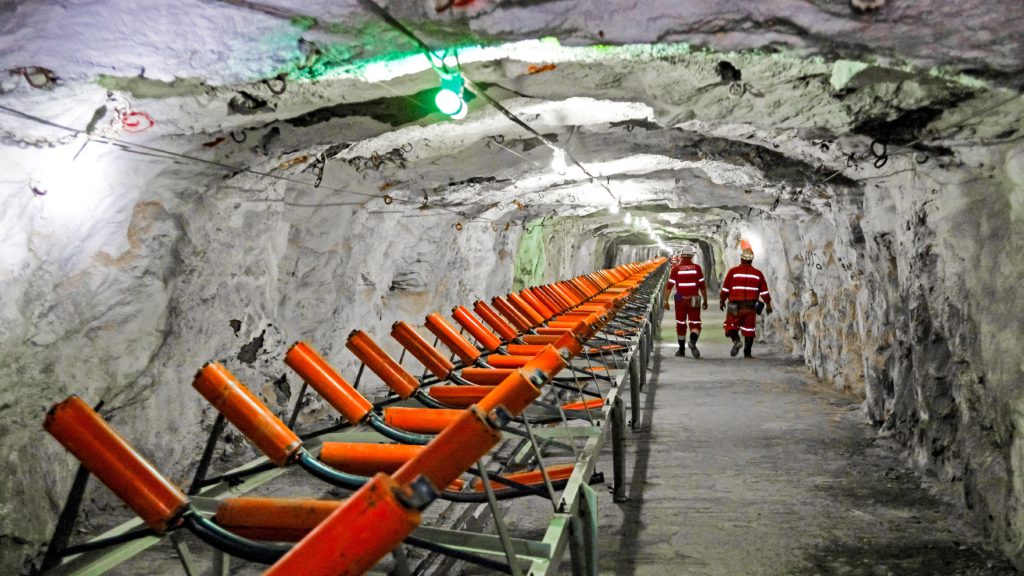
Underground platinum and palladium mine, South Africa. Stock image.

Global primary platinum group metal production could fall by as much as 20% by the end of this decade, widening a supply deficit, Valterra Platinum CEO Craig Miller said on Thursday.

Miller said demand from carmakers, who use platinum, palladium and rhodium in catalytic converters, had remained robust, driven by higher sales of both conventional and hybrid vehicles, with the energy transition unfolding more slowly than forecast.

He added that demand from jewellery manufacturers had also been strong.

South African mining companies, which account for more than 70% of the world’s platinum supply, have cut unprofitable production over the past two years after metal prices collapsed, amid warnings that the industry was in terminal decline.

While the recent platinum rally has brought relief to miners, it is still below levels needed to support new production.

“Primary supply is constrained and secondary supply is just not coming to the market because the cost of recycling is still too expensive,” Miller told reporters after a tour of Valterra’s converter and processing plants.

He said the company estimates primary supply will decline by “between 15% and 20%” by the end of this decade due to a lack of investment in new mines and in extending the lives of existing assets.

“You’d need to see the PGM basket price increase by another 50% from where we are now and for it to be maintained at that level to incentivize new greenfield production coming online and earning a sort of a 10% return,” Miller said.

He said the energy transition is not going to be as anticipated, “so we could see ICE (petrol) vehicles or hybrid vehicles around for a lot longer”, he added. “Hybrid vehicles have more PGM loadings than an ICE vehicle does.”

(By Nqobile Dludla; Editing by Jan Harvey)


Diamond selling processes are outdated and hurting producers, trader says


(Stock image.)

The sale of diamonds through tenders and auctions is opaque and inefficient and should be revamped for producers to earn more and to survive the current price slump, a leading gem trader said on Thursday.

Oded Mansori, co-founder and managing partner of Belgian gem trader HB Antwerp, said the impact on producers could be reduced by doing away with inefficiencies in the industry.

The diamond market is currently going through a prolonged downturn with demand hurt by global economic uncertainty and the rising popularity of lab-grown stones.

Producer countries such as Botswana have been hard hit by lower revenues, while miners such Burgundy and Lesotho’s biggest diamond mine Letseng have had to lay off workers.

“For years, miners relied on tenders and auctions, systems that look efficient on paper but in practice resemble a casino,” Mansori said in a statement, as the industry battles a crisis considered to be its deepest in history.

“Rough stones are pushed into opaque markets where value is anyone’s guess. When global demand softens, as it has in cycles over the last decade, producers are left exposed. Workers pay the price, while shareholders watch assets decline,” he added.

Rough diamonds are typically sold through a competitive bidding system where buyers place confidential bids on individual stones or parcels.

Mansori, whose company operates a profit-sharing model with miner Lucara Diamond Corp, says producers’ revenues should be tied to the eventual polished value of its stones “rather than gambling on rough sales in opaque auctions”.

Under its partnership with Lucara, HB Antwerp buys stones of 10.8 carat quality and above from the Toronto-listed company’s Karowe Mine in central Botswana at prices based on the estimated polished value of each diamond.

HB Antwerp accounted for 72% of Lucara’s $74 million diamond revenue in the six months to June 30, up from 65% the year before.

The trader says producers can earn up to 40% more revenue if they sell through this model.

(By Brian Benza; Editing by Nelson Banya and Frances Kerry)