It’s possible that I shall make an ass of myself. But in that case one can always get out of it with a little dialectic. I have, of course, so worded my proposition as to be right either way (K.Marx, Letter to F.Engels on the Indian Mutiny)
Friday, September 19, 2025
The Mayor of London; Sadiq Khan slams Trump for fanning the ‘flames of divisiveness around the world’
“When he came to the UK on his first state visit, I highlighted how the president had deliberately used xenophobia, racism and “otherness” as an electoral tactic"
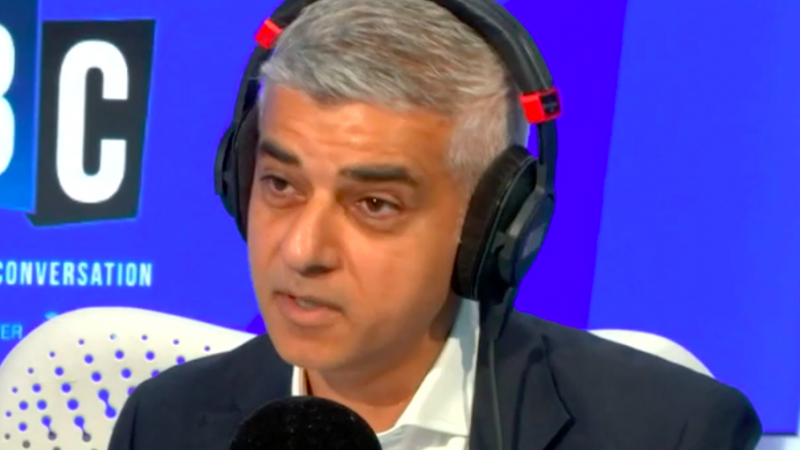
The Mayor of London has hit out at U.S. President Donald Trump, slamming him for ‘fanning the flames of divisive, far-right politics,’ as the president’s state visit continues.
The Mayor wrote a piece in the Guardian condemning the rising tide of hatred in the country, and those who choose to ‘dabble in dog-whistle politics and dangerous rhetoric themselves’.
His comments came after last weekend saw more than 100,000 people take part in a march in central London, which was organised by right-wing thug Tommy Robinson. The Metropolitan Police said 26 of their officers were injured, including four seriously, after allegedly being attacked by some of those taking part.
Videos shared on social media showed some shouting Islamophobic slogans.
Ahead of Trump’s state visit, the mayor used his op-ed in the Guardian to take particular aim at the president for ‘fanning the flames of divisive, far-right politics around the world in recent years’.
He added: “When he came to the UK on his first state visit, I highlighted how the president had deliberately used xenophobia, racism and “otherness” as an electoral tactic, introducing a travel ban on a number of Muslim-majority countries and praising white nationalists in Charlottesville, Virginia.
“Six years later, the tactics we see from today’s White House seem no different. Scapegoating minorities, illegally deporting US citizens, deploying the military to the streets of diverse cities. These actions aren’t just inconsistent with western values – they’re straight out of the autocrat’s playbook.”
Khan said that while he understood the need to maintain a good relationship with the leader of the most powerful country in the world, he still thought it was important for the UK to be a critical friend and speak truth to power, and ‘being clear that we reject the politics of fear and division.’ Basit Mahmood is editor of Left Foot Forward Sadiq Khan hits back at Donald Trump’s latest attack
The London mayor called out Trump’s 'politics of fear and division' and criticised him for talking down London
Sadiq Khan has accused Donald Trump of talking down London after he said that the London Mayor had done “a terrible job” on crime and called him “a disaster” on immigration, which he has no control over as mayor.
Speaking to a GB News reporter on Air Force One before he flew back after his state visit last night, Trump launched into a bizarre tirade against Khan.
The US President claimed Khan was “among the worst mayors in the world” and said he had asked him not to be invited to the state banquet.
Trump claimed: “He wanted to be there, as I understand, I didn’t want him there.”
Awkwardly for Trump, on Times Radio this morning Business Secretary Peter Kyle explained that the London Mayor never asked to attend the event.
A source close to Sadiq Khan said: “Trump’s politics of fear and division includes talking down our capital city.
“London’s a global success story – open, dynamic and safer than major US cities. That’s one of the reasons record numbers of Americans are choosing to make it their home.”
Since the start of 2025, the Home Office has received citizenship applications from 4,125 US citizens, a rise of 40% compared with 2024.
The Labour government has come in for heavy criticism for hosting Trump for an unprecedented second state visit, which Trump ended with a fresh attack on the London Mayor.
Olivia Barber is a reporter at Left Foot Forward
UK
Opinion
Government doubles down on £100 billion water nationalisation price tag – but are they coming clean on the true cost of publicly owned water?
Left Foot Forward The current cost is based on a discredited report funded by the private water companies.
The government has tied itself in knots over the cost of nationalising water. Yesterday they released a statement that sees them doubling down on their dodgy £100 billion figure. There’s been some twists and turns along the way, and the government’s logic has not always stacked up.
In February 2018 the Social Market Foundation (SMF) released a report which put the cost of nationalising the water industry at £90 billion. The report was funded by Anglian Water, Severn Trent, South West Water and United Utilities.
In April 2019 Prof. Dieter Helm, an Oxford University economist specialising in utilities, said the SMF report had “virtually no intellectual substance and the [£90bn] figure was wrong.” Moody’s, the credit ratings agency, valued the water companies at £14.5 billion at this point.
In July 2024 Lord Sikka, a Professor of Accounting, asked Baroness Hayman, Environment Under-Secretary, for the details of the calculation used by her department. She later replied the cost was “calculated in a report published by the Social Market Foundation” – the very same discredited report funded by the private water companies.
Both the SMF report and the DEFRA calculations rely on Regulatory Capital Value (RCV). This calculation takes the value of the water industry at the time of privatisation in 1989, adds on the value of investment over 35 years, then adds on inflation. RCV enables greater payouts to shareholders and – in the words of Ewan McGaughey, Professor of Law at Kings College London – it is ‘cynically calculated to scare gullible governments off public ownership’.
The value of an asset is always determined by what the market is willing to pay for it – surely that’s economics 101.
Thames Water is a case in point of RCV’s complete detachment from financial reality. Under the RCV calculation, Thames Water is valued at £21 billion. So why have the owners failed to flog it to KKR for the knockdown price of £4 billion?
It feels as though the government is deliberately missing the point, to justify the ongoing rip off of households instead of standing up for the public interest.
This latest explanation from DEFRA fails to acknowledge that one third of our water bills leak out directly to pay for debt and dividends, and that over the next five years households will pay out £22 billion to shareholders and banks.
It ignores the powers and levers held by the government. Parliament can decide on appropriate compensation for nationalisation, weighing up public interest versus shareholder interest. And the government itself creates the regulatory framework for water which decides its market value. If it gets super tough on sewage and bills, the value of these water companies will plummet.
There is no mention of the fact that when you buy a profitable asset, you – we, the British public – also get a profitable asset. Nor of the fact that our English water companies are almost entirely foreign owned so the government is not defending us but shareholders abroad.
DEFRA totally sidesteps the very live issue of Thames Water and what should happen when these natural monopolies load up debt at the expense of households. The government could take Thames Water into public ownership tomorrow, slash the debt by half, refinance it more cheaply, invest in stopping sewage, reduce bills, defend the public interest and give households and environmental groups a role on the board.
But most importantly, Greenwich University research shows that even if shareholders did receive £90 billion in compensation, this would still be a good deal for the public purse, enabling savings of £3 billion a year.
If the government wants to win back trust it must prove it is acting in the public interest. Come clean on the true cost of public ownership and show that they are willing to protect us from the greed of the polluting profiteers.
Britain’s privatisation disaster: the figures speak for themselves
A new project by progressive thinktank Common Wealth details the shocking results of the UK’s unprecedented privatisation experiment.
Britain is a country remade by a radical experiment: the unprecedented privatisation of our essential services and infrastructure.
The results of the experiment are in. Ordinary people pay more for less. Their energy bills are sky-high. Their public transport is unreliable. Waterways are polluted. A corrosive housing crisis degrades living standards.
Everywhere, there is a pervasive sense that nothing works and that we have lost control. No wonder the public is furious.
Chris Hayes, Chief Economist at Common Wealth, told Labour Hub: “Utilities have failed to invest, preferring to sweat their inherited assets, overwhelmingly built by public entities. And people blame regulators for failing to solve the problems created by this privatisation process in the first place.
“Restoring public ownership of key infrastructures together with sound governance is no silver bullet, but it is a necessary step to recovering some semblance of coherence to how key services are run.”
Reversing decline requires rebuilding Britain: creating abundant housing, homegrown clean power, high-quality transport and modern water systems — twenty-first-century infrastructure as the foundation of a free, secure society.
The privatisation of essential services has incentivised asset sweating over asset building, financial engineering over real engineering, extracting over investing, private profits over public needs. National renewal requires making life secure and affordable for working people.
This means replacing a business model that encouraged privatised utilities to load themselves with debt to pay bigger and bigger dividends while skimping on investment. And, by securing subsidies or derisking guarantees from the state, they lumped a captive public with the cost for essentials twice over: through their taxes and in higher bills. Unless we change this model, life’s essentials will remain a stressful and costly burden for the public and a cash machine for the privateers.
Who Owns Britain? examines this failed model by identifying who profits from ownership of our energy and water systems, from transport and housing to care and mail services, and analyses how privatisation shapes the country and our lives.
Key findings from this fresh analysis include:
1. The scale of Britain’s privatisation experiment was unprecedented.
From the early 1980s to the late 1990s, the only advanced economies that experienced a faster and deeper decline in gross public wealth than Britain were those affected by the ‘shock therapy’ of the oligarchic and corrupt post-Soviet transition. The historic collapse in Britain’s public wealth dismantled a coherent national economy, worsened inequality and weakened state capacity.
The UK shed public wealth at a rate of 7.4% of national income per year for 15 years between 1981-1996.
Gross public wealth went from the highest in the G7 to the lowest, where it has stayed ever since.
An estimated 780,000 council houses, now worth £176bn, are estimated to have entered England’s private rental sector via Right to Buy.
2. The public pays a ‘privatisation premium’ that makes essentials more expensive.
The public pays twice over for privatised essential services: through higher bills and fares to pad corporate profits and fund shareholder payouts, and through their taxes that backstop public subsidies of private companies. This privatisation premium worsens the cost of living crisis and transfers money from ordinary households to international investors.
Nearly a quarter of the average energy bill in 2024 was profit — £416.
Almost a third of the typical water bill now goes to investors in the form of dividends and interest payments.
Half of the train industry’s income is from direct and indirect public subsidy.
3. Billions leak out of essential services every year that could be reinvested.
Billions of pounds each year are diverted toward shareholder payouts and expensive interest repayments. This money could be reinvested to improve services and cut bills. The higher cost of capital faced by privatised utilities compared to government borrowing means their financing of essential infrastructure investment typically costs more than public investment would.
Almost £200bn has been paid to the shareholders of water, energy, mail and transport companies since the 1990s.
In 2023 alone, the nine largest electricity generators and the energy networks spent £8bn on dividends, share buybacks and interest payments.
Throughout the last decade, the rail companies have consistently paid out more than 100% of their post-tax profits in dividends.
4. Privatised monopolies have created dysfunctionality as well as unfairness.
Fragmentation, market power, duplication and complex bureaucracy inherent to the regulation of privatised monopolies have created operational inefficiencies and extra costs borne by the public.
Unbundling the constituent parts of the energy and transport system has undermined effective coordination between them, requiring extensive and expensive state intervention. Electricity generators enjoyed pre-tax margins of 32% in 2024, which could have been reduced with a more rational wholesale market and balancing mechanism.
Despite public expense, public transport has been cut back. Almost half of the bus industry’s income comes from public subsidy, but commercial routes have fallen by 20% since 2019, due to cherrypicking and inefficient coordination. Before deregulation, more profitable routes could cross-subsidise others, benefiting women, the young and the poor.
We estimate that the additional operating costs of the passenger rail system attributable to privatisation from 1997 to 2020 totalled a cumulative £79bn. We estimate that the additional operating costs of the passenger rail system attributable to privatisation from 1997 to 2020 — for example, interface costs from outsourcing and unbundling, cash leakages to investors, and cleaning up the mess from successive crashes after Railtrack cleared out all their in-house engineers — totalled a cumulative £79bn.
5. Privatisation has failed to deliver adequate investment in essential infrastructure.
Privatisation reduced investment for several reasons. Companies delayed capital expenditure to boost profits, faced higher capital costs and sweated inherited public assets. Regulatory game-playing created bureaucratic delays. Over-leveraging became common as companies prioritised investor rewards over investment capacity. These are features, not bugs.
The energy sector invested twice as much as a share of GDP under public ownership compared to the privatised era.
The energy networks have underspent on eleven of the last twelve Ofgem-approved capital expenditure rounds, meaning that customers are paying for investment that did not materialise.
The water companies have taken out more debt than Ofwat recommends every year since 2002, leaving them overleveraged and fragile. Yet, the private sector has failed to build a single major reservoir since the water industry was privatised.
Privatisation of essential services collapsed public wealth and undermined the nation’s capacity to build. Essentials are more expensive and basic services are in a sorry state. Privatisation transferred hundreds of billions of pounds from a captive public to passive shareholders. It has run down Britain’s infrastructure and is badly designed to rebuild it.
We are weaker, poorer and less equal as a result.
Explore Who Owns Britain? Dig into the interactive Data Dashboard and trace how essential services that once belonged to us are in the hands of a new caste of owners: international asset managers, foreign governments and private equity giants.
Read the Visual Essay and follow the Williams family in Manchester from cradle to grave, revealing the invisible web of ownership and profit — the hidden pattern of our lives.
A report on Saturday’s Stand Up To Racism rally against far right by the International Federation of Iraqi Refugees.
On 13th September, comrades from the International Federation of Iraqi Refugees (IFIR) joined the Stand Up To Racism (SUTR) counter-demonstration in London. The mobilisation was in response to the far right ‘Unite the Kingdom’ march, led by Tommy Robinson. The counter-protest assembled at Russell Square from midday, with MP Diane Abbott leading a women’s section at the front of the march.
Some IFIR comrades joined the Trade Union Bloc, which had a strong presence from the NEU (National Education Union) and PCS (Public and Commercial Services Union), along with banners and flags from Unite and Unison. The mood at this stage of the march was positive, with a broad turnout from anti-racist organisations and community groups. According to SUTR, approximately 20,000 people took part in the counter- demonstration.
As the march approached Charing Cross Station, a small group of Tommy Robinson supporters began jeering at demonstrators. Tensions escalated further as the counter- protest moved past Trafalgar Square, and far right supporters advanced along a parallel street towards Whitehall.
IFIR supporters, along with others, joined the Anarchist Black Bloc, which formed a defensive presence within the protest. The Black Bloc played a crucial and brave role in defending the demonstration. With police initially unprepared for the scale or aggression of the far right presence, it was the Black Bloc, rather than the police, who first stood between the fascists and the main body of the protest. Their disciplined and organised action helped prevent direct confrontation and ensured the safety of other demonstrators until police reinforcements arrived and took position ahead of them.
While SUTR reported around 20,000 counter-demonstrators, police sources estimated that the far right ‘Unite the Kingdom’ march drew up to 100,000 participants. Although heavily outnumbered, the counter-demonstration sent a clear and defiant message of anti-racist solidarity and resistance.
We call on all human rights activists, refugee rights organisations and trade unions to stand united against the growing threat of fascism. We must not allow the far right to divide us or intimidate our communities. There is no place for fascism on the streets of London.
All images c/o IFIR
Justice for the survivor of the Oldbury attack! Fascists off our streets!
A statement signed by more than 40 Black, South Asian, migrant and refugee organisations.
As organisations representing South Asian, Black, migrant, and refugee communities and those fighting racism, we are horrified and enraged by the attack on Tuesday 9th September on a Sikh woman in Oldbury, Sandwell, in what police are describing as a racially motivated attack. The 20 year-old woman was raped and viciously beaten in broad daylight by two white men who reportedly told her: “You don’t belong in this country, get out.”
We express our deepest solidarity with the survivor and pledge to stand by her unconditionally. We acknowledge her tremendous courage in coming forward to report this horrific crime of sexual and racial violence.
We pledge to work together to get justice for the survivor, and to counter the rise of the far-right, facilitated by successive governments, which has given rise to this heinous crime. Our long history of fighting racism in Britain has taught us that we can only resist and prevent such attacks if all communities facing racism act unitedly. The British state has made every effort to divide us in recent decades but we must not allow this strategy to succeed, or succumb to racist ‘good/bad immigrant’ narratives.
Misogyny and gendered violence have always been deeply embedded in racism and white supremacy. There are numerous instances of sexual violence against Black and racialised women by the police and other agents of the state, which go unreported or the survivors are not believed. In the last few years we have also seen the far-right weaponizing women’s and children’s safety to spread racist and Islamophobic myths such as the tropes that ‘grooming gangs’ primarily consist of Muslim men and that migrants, refugees and trans people are the source of sexual abuse. They have used these myths to organise the racist violence which is now happening on a huge scale.
Meanwhile, while the far-right claims to be ‘protecting’ (white) women, it is no surprise that at least two in five of those arrested for participating in last year’s racist riots had previous convictions for domestic violence. The far-right racists, like fascists everywhere, target racialized women for particularly vicious violence, viewing them as dehumanized symbols of their communities. This is what has led to the horrific Oldbury attack.
We also hold Keir Starmer’s government responsible for facilitating this ongoing violence by pandering to the far-right. He has embraced the far-right narrative that migrants are responsible for what are in fact the effects of successive Tory and Labour governments’ policies of austerity. Starmer’s notorious ‘island of strangers’ comment inspired by Enoch Powell, his repeated dog-whistle invocation of ‘small boats’ and his government’s increasingly oppressive immigration policies have fuelled the racist and misogynistic violence that we are now experiencing on our streets.
It is shameful that, at the time of writing, no government minister has made any statement of condemnation or concern about what happened in Oldbury. On the contrary, the Home Office appears to have instructed the police not to use live facial recognition (which is routinely used for surveillance and harassment of Black communities) on the participants in the massive fascist demonstration in London just four days later, despite the fact that police are still searching for suspects in the case.
We demand justice for the survivor of the Oldbury attack!
Two weeks ago, the Prime Minister posed for photographs with Israeli President Isaac Herzog, a man who asserted there are “no innocent civilians in Gaza” and signed artillery shells destined to drop and kill children.Let’s call this out for what it is. Herzog is guilty of inciting genocide.
But as I write, Britain is poised at long last to recognise the State of Palestine, overdue by more than a century. Statehood is the inalienable right of the Palestinian people and it should not be withheld any longer.
Britain’s delay is consistent with its historic and catastrophic interference in the Middle East. Yet belated recognition now underscores the injustice faced by Palestinians and the extent to which Israel has become a pariah. Israel is prosecuting a genocide in Gaza and atrocities in the West Bank deliberately to render a contiguous Palestinian state impossible. They must not be allowed to succeed.
Recognition alone is not enough. Britain must also take concrete steps to defend those who cling to life there and pursue justice for the dead. That begins with acknowledging what Israel is doing, recognising Britain’s complicity, and setting out far reaching, comprehensive and effective sanctions and to force Israel to stop and to apply more pressure for the release of all hostages.
The UN’s Independent Commission of Inquiry delivered a devastating report last Tuesday: Israel is committing genocide in Gaza. Yet in just a matter of days before the report was published, the then Foreign Secretary David Lammy, and then repeated by the Parliamentary Under Secretary Hamish Falconer, said that the Government “has not concluded that Israel is acting with intent,” and promised another assessment. Given all of the evidence in the public domain it beggars belief that the UK government requires yet more evidence of intent. They see what we all see.
The contrast could not be sharper. Britain clings to procedural caution while UN investigators present detailed evidence of genocidal atrocities. To say “we have not concluded” may sound prudent in Whitehall, but in the face of such evidence the position is untenable. The Genocide Convention obliges states to act when the risk is clear, not to wait for absolute legal certainty.
International law is clear: when genocide is manifest, states must prevent it “within their capacity to influence.”
The Attorney General addressed an audience at the Old Bailey on Tuesday saying “the previous government was willing to sacrifice our good standing in the world by trumpeting a willingness to break international law commitments”, which begs the question: what do we think the UK’s failure to abide by the Genocide convention does to our “good standing in the world?” I would encourage the AG to set out what our international law obligations are in terms of this genocide.
All levers must now be pulled. All arms sales should stop, trade must be paused, sanctions elevated. Yet the Government continues to justify supplying military materiel through the F-35 programme, despite mounting evidence of war crimes. Ministers claim Britain cannot suspend supplies without imperilling the global system and that consensus among partner nations is required. That line of argument fails.
I have asked Ministers at the Foreign Office and the Ministry of Defence, multiple times over many months, questions about the F-35 programme and much more. I have not had satisfactory answers and so I’m glad Liam Byrne MP and his Business and Trade Committee members are holding the government’s feet to the fire.
Britain has broken with allies before—over cluster munitions and landmines—strengthening its global standing. A clear British stance on F-35s could galvanise other nations, including Norway, Canada, and the Netherlands, and force Washington to confront the costs of shielding Israel.
As for settlement goods, Britain must take all steps to challenge Israel’s breaches of international law and move beyond words by banning the import of goods from Israeli settlements in the occupied West Bank. Settlements are illegal under international law, and continuing trade with them legitimises a war crime and sustains Israel’s unlawful occupation. The International Court of Justice has directed third states not to aid or assist this situation, including by economic dealings, and the UN General Assembly has urged governments to halt settlement imports.
Britain already bans goods from occupied Crimea and has the legal powers to act under the Sanctions and Anti-Money Laundering Act. With EU states beginning to adopt similar bans, a British move would demonstrate consistency, uphold international law, and help end decades of impunity for settlement expansion.
The Government’s promised reassessment of Israel’s conduct under humanitarian law must not be a paper exercise. Like recognising Palestine, it is a legal and moral obligation. British policy—in arms, trade, and sanctions—must now reflect the reality: Israel’s conduct in Gaza cleary meets the threshold of genocide, and Britain can no longer hide behind process and procedure.
Andy McDonald is the Labour MP for Middlesbrough and Thornaby East
Despite drone attacks, the Flotilla sails on to Gaza
As Israeli tanks enter Gaza city and at least 56,000 people flee their homes, the Global Sumud Flotilla sails on, despite aerial attacks.
The Global Sumud Flotilla has now set sail from Tunisia and is heading to Gaza. In the coming days, it will meet up with other vessels coming from Italy and Greece. The historic civilian mission aiming to break Israel’s illegal siege on Gaza and open a humanitarian aid corridor is organised by four major coalitions, including groups that have participated in previous land and sea efforts to Gaza.
The Flotilla sails on as Israel launches a major ground offensive in Gaza and a UN Commission of Inquiry determines that the Zionist state has committed genocide on four out of five counts under international law.
Boats in the Flotilla have been deliberately targeted by two separate drone attacks in Tunisian waters. Fortunately, damage was limited and nobody was hurt. A statement from the Flotilla said: “These repeat attacks come during intensified Israeli aggression on Palestinians in Gaza, and are an orchestrated attempt to distract and derail our mission. The Global Sumud Flotilla continues undeterred.”
In the wake of the attacks, sixteen countries have issued a joint statement demanding protection for the Flotilla. The statement was signed by the foreign ministers of Türkiye, Qatar, Bangladesh, Brazil, Colombia, Indonesia, Ireland, Libya, Malaysia, the Maldives, Mexico, Pakistan, Oman, Slovenia, South Africa, and Spain.
To fully appreciate the danger faced by the Flotilla and the courage of those taking part in the mission, one need only listen to the outpourings of Israel’s National Security Minister Itamar Ben-Gvir, who has declared that all the volunteers on board are “terrorists,” and will be treated as such.
“We know who has interest in stopping these flotillas,” Mariana Mortágua told Democracy Now! Maria is the National Coordinator of the Portuguese Left Bloc and an MP who joined the Global Sumud Flotilla in Barcelona because “It’s my duty to be here and to help in any way I can to bring attention to the situation in Gaza and the genocide and to break the siege.”
Other high-profile members of the mission include Swedish climate activist Greta Thunberg and Nelson Mandela’s grandson, the South African MP Mandla Mandela. Forty-four separate countries are represented on the Flotilla. But as one of the participants pointed out: “No matters how big this mission becomes. We can never forget Palestine is always at the centre. That’s why we are here.”
Earlier this month, a dockworker at the port of Genoa said that working class Italians would “shut down all of Europe” if communication is lost with the Flotilla crew members. Last week, Genoa dock workers warned they would shut down the port on September 22nd if Israel blocks the Flotilla from reaching Gaza.
Meanwhile, a petition started by Italian football coaches to call on FIFA to exclude Israel from the World Cup is gathering momentum, as are calls to ban Israel from the next Eurovision Song Contest.
After two weeks on sometimes stormy seas, the Flotilla’s stop in Tunisia was an opportunity to make repairs, regroup and prepare for the final leg. “Local people in Bizerte have been wonderful and welcoming and not letting us pay for stuff like pillows and ice cream and bread and tomatoes,” one participant reported. “Everyone is asking when we are sailing and wishing us well.”
There are some 40 vessels in the Global Sumud Flotilla. They include an observer boat named after Al Jazeera journalist Shireen Abu Akleh, who was shot dead by Israeli forces in the occupied West Bank in May 2022, which is carrying legal specialists who will document any violations of international law the Flotilla may experience. There is also a women-only boat with activists from a range of different countries.
We Move Europe have mounted a petition calling on the European Union and its Member States to protect the Flotilla from Israeli attack here.
New report highlights complicity with Israel’s expansion of illegal West Bank settlements
SEPTEMBER 18, 2025
A new report launched this week by 80 human rights, humanitarian and faith-based organisations highlights the depth of corporate complicity in Israel’s illegal settlements, which now cover 42% of the West Bank, all on stolen Palestinian land.
Trading With Illegal Settlements: How Foreign States and Corporations Enable Israel’s Illegal Settlement Enterprise highlights how Israel’s illegal settlement project has fragmented the West Bank and destroyed the Palestinian economy, resulting in widespread poverty and suffering. Families routinely face extremist settler violence, forcible transfer and dispossession, harsh restrictions on their freedom of movement, and a total denial of their right to self-determination and sovereignty.
Despite the devastating humanitarian impact and illegality of Israeli settlements under international law, foreign states continue to support them. The European Union and its member states represent Israel’s largest trading bloc and the policies of these states continue to financially support and normalize the settlement economy.
Foreign states, in clear violation of international law, sustain Israeli settlements by importing settlement-produced goods and allowing corporations under their jurisdiction to operate in, and trade with, illegal settlements. In doing so, they are directly contributing to the denial of Palestinians’ right to self-determination, systematic discrimination and human rights violations, forcible transfer and dispossession, and economic subjugation.
The report highlights how foreign states and corporations, through ongoing trade with illegal settlements, directly enable the humanitarian crisis driven by Israel’s prolonged occupation. Focusing on the EU and the UK, it addresses the urgent need for a ban on settlement trade as a mechanism to uphold international law, protect Palestinian livelihoods, and halt and reverse Israel’s settlement expansion and end its unlawful occupation.
By examining the economic, humanitarian, and legal dimensions of settlements, the report argues that foreign trade of products and services with settlements sustains the occupation, contributes to the humanitarian crisis in the Occupied Palestinian Territory, and violates international law.
Signatories to the report include Oxfam, Christian Aid and War on Want. It begins with an overview of the devastating economic and humanitarian consequences for Palestinian communities caused by Israeli settlements and their associated infrastructure. This ranges from the loss of agricultural land to the the control of the water supply and pollution, which together are estimated to have cost the Palestinian economy $50 billion between 2000 and 2020.
Through a range of incentives, subsidies, and tax benefits, Israel actively encourages companies to operate and invest in the Occupied Territories. “These financial incentives make it far more profitable for companies to do business in settlements than inside Israel’s recognised borders. This subsidisation is accelerating settlement expansion, further entrenching Palestinian land confiscation, and deepening economic dependency on settlement industries.”
The report concludes wit h a set of recommendations that address the complicity of the EU and UK in Israel’s illegal settlements policy. They include adopting and implementing legislation that explicitly bans trade with settlements; taking steps to identify and prevent forms of support hat assist the maintaining of Israel’s unlawful occupation of Palestinian territory; shifting the burden of proof for determining the origins of Israeli goods from their own customs agencies to Israeli exporters; and barring financial institutions and other corporations headquartered within their jurisdictions from investing in settlement-based companies.
Richmond Hill, Canada, 19 September 2025 - For nearly half a century, the conflict between Türkiye and the Kurdistan Workers’ Party (PKK) has not only killed tens of thousands of people but also caused deforestation, pollution, and land degradation in the region. The recent call by the incarcerated PKK leader Abdullah Öcalan for the group to disarm and dissolve offers a rare prospect for peace and order.
A new publication by the United Nations University Institute for Water, Environment and Health (UNU-INWEH) calls for including environmental restoration in the negotiations agenda to build a just and lasting peace. It proposes a set of policy recommendations guiding negotiators on how to address the environmental legacy of the conflict in peace talks. The recommendations seek to address the limits of conventional peacebuilding processes, which often focus merely on legal and political issues while neglecting the environmental damages that need to be restored.
“Decades of conflict have devastated lives and damaged the land in Kurdish regions of the Middle East, and peace talks that overlook environmental consequences can cause the same tensions and grievances to return,” said Dr. Pınar Dinç, the Environment-Conflict Nexus Research Fellow at UNU-INWEH. “However, the recommendations set out in this publication can help repair the ecological damage of war and make sustainability, justice, and inclusion part of recovery after conflict.”
UNU-INWEH's policy brief calls on negotiators to recognize that war harms not only people but also forests, rivers, wildlife, and entire ecosystems that must be restored. It also urges them to hear the narratives of local communities and involve them in the recovery process after conflict, since top-down peace efforts often miss the daily realities these communities face. Finally, it underscores the need to reject rebuilding models based on resource extraction and inequality, and instead support fair, sustainable approaches.
“Building back the environment that has been damaged by conflicts and wars must be an essential component of peacebuilding and transitional justice,” said Professor Kaveh Madani, Director of UNU-INWEH. “The ability of local communities to restore the environment and rebuild livelihoods based on their Indigenous knowledge strengthens stability and ensures a lasting peace.”
In brief:
Decades of conflict in the Middle East's Kurdish regions have devastated communities and the environment.
The PKK’s disarmament creates a historic opportunity to unite peace and environmental recovery.
Conventional peacebuilding process often overlooks ecological harm and non-human victims.
A durable peace requires ecological inclusion alongside political and legal reforms.
Community-led restoration and Indigenous knowledge are essential for rebuilding after war.
Cross-border cooperation on land, water, and climate is critical for regional stability.
Justice must be continuous, participatory, and address both people and ecosystems over time.
Post-conflict recovery must avoid extractive models and instead prioritize sustainability and equity.
Read the publication: Dinç, P., Eklund, L., Matin, M., Madani, K. (2025). From Conflict to Peace: The PKK’s Disarmament and the Green Potential of Peace in the Middle East. United Nations University Institute for Water, Environment and Health (UNU-INWEH), Richmond Hill, Ontario, Canada, doi: 10.53328/INR25PDR001
Dr. Mir Matin – Manager, Geospatial, Climate and Infrastructure Analytics Program, UNU-INWEH – mir.matin@unu.edu
About UNU-INWEH
The United Nations University Institute for Water, Environment and Health (UNU-INWEH) is one of 13 institutions comprising the United Nations University (UNU), the academic arm of the United Nations. Established in 1996 through an agreement with the Government of Canada, UNU-INWEH, also known as the UN's Think Tank on Water is headquartered in the City of Richmond Hill, Ontario. UNU-INWEH specializes in addressing critical global security and development challenges at the intersection of water, environment, and health. Through research, capacity development, policy engagement, and knowledge dissemination, the institute bridges the gap between scientific evidence and the practical needs of policymakers and UN member states, with particular attention to low and middle-income countries. By collaborating with a diverse array of partners—including UN agencies, governments, academia, the private sector, and civil society—UNU-INWEH develops solutions that advance human security, resilience, and sustainability worldwide.