Wednesday, December 17, 2025


When Muslims save lives, the Islamophobia machine looks the other way

(RNS) — The far-right response to a Muslim’s heroism in the Bondi Beach attack shows how Islamophobia depends on distortion and dehumanization.
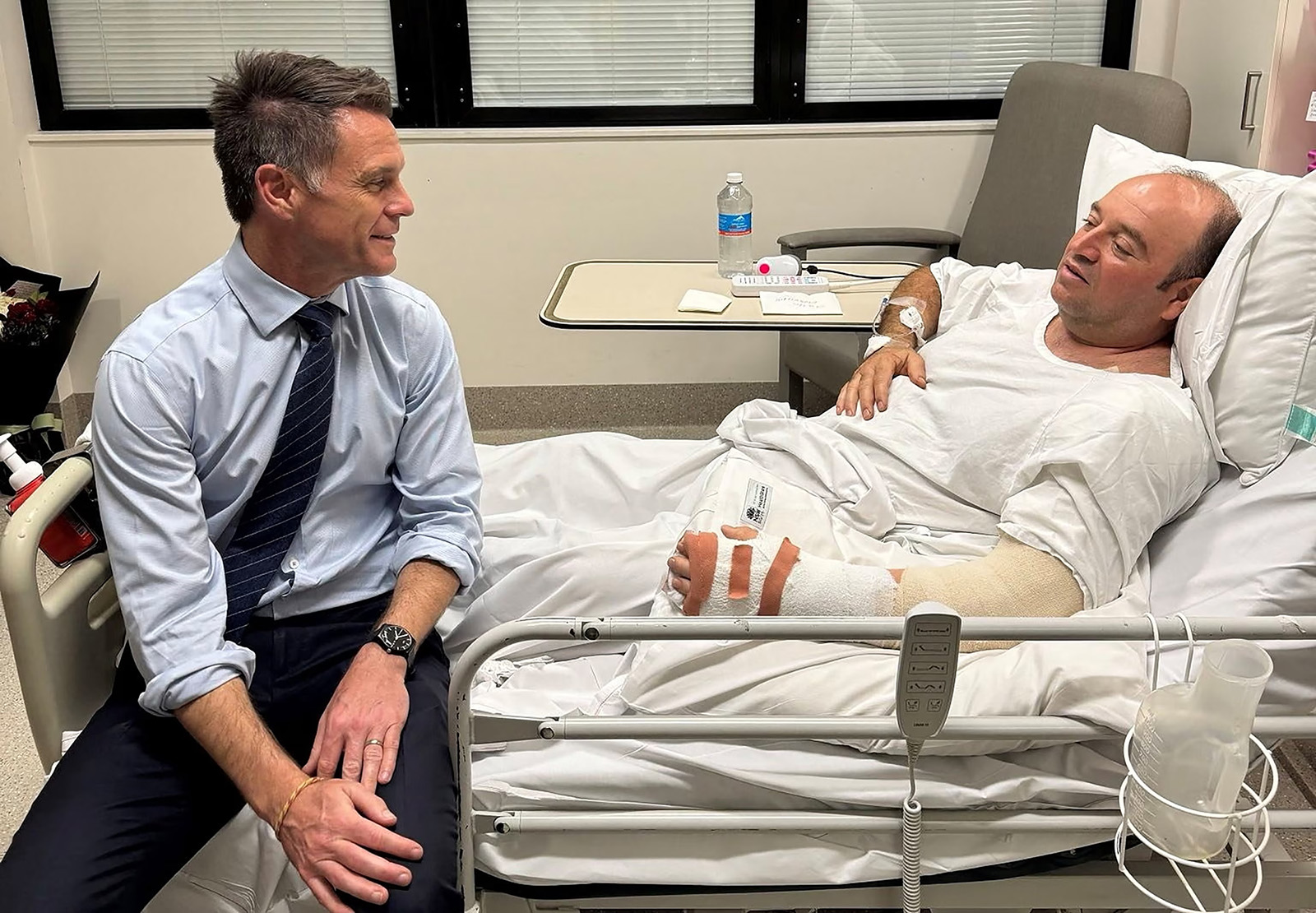

New South Wales Premier Chris Minns visits Ahmed al Ahmed, who was identified as the bystander who seized a rifle from one of the gunmen during the deadly shooting at Bondi Beach on Sunday, at a hospital in Sydney, Dec. 15, 2025. (Photo via X/@ChrisMinnsMP)


Omar Suleiman
December 16, 2025
RNS


(RNS) — The truth about a society often reveals itself in moments of crisis, in the unscripted actions of ordinary people. On Sunday (Dec. 14) in Sydney, when gunmen opened fire on a Hanukkah celebration at Bondi Beach, it was Ahmed al Ahmed, a 43-year-old Syrian-born Muslim and Australian immigrant, who ran toward danger. He tackled and disarmed one of the attackers, likely saving countless lives, and was lauded by Australian leaders and global onlookers as a hero.

Almost immediately, parts of the far-right internet went to work erasing that reality. Influencers and commentators fond of Islamophobic narratives began insisting, without evidence, that Ahmed must be a Christian. Laura Loomer, one of MAGA’s boundary guardians, wrote on X: “Credible reports suggest the man is actually a Lebanese or Coptic Christian. Don’t fall for the propaganda.”

These influencers could not tolerate the simple fact that a Muslim man risked his life to protect Jewish lives. It was too inconvenient for their worldview.

On the same day, two students were shot at Brown University. As speculation swirled online, some voices expressed open hope that the shooter would turn out to be Muslim. They needed the tragedy to fit their narrative; proving that he was shouting “Allahu Akbar” would allow them to spin it their way. Yet Mukhammad Aziz Umurzokov, one of the two students who were killed, was a Muslim himself. The fact received little attention from those who had been so eager to assign blame.

This is the dangerous core of Islamophobia today: The prejudice is so entrenched that reality must bend around it. Heroes must be stripped of their Muslim identity. Victims must be reframed as perpetrators. Truth becomes secondary to usefulness.

I have experienced this dynamic firsthand. A short, heavily edited clip of me continues to circulate on right-wing accounts designed to misrepresent my stance and inflame anti-Muslim sentiment. This is how manufactured outrage works. The few seconds shown in the clip are divorced from their context, allowing the confected narrative to take hold.
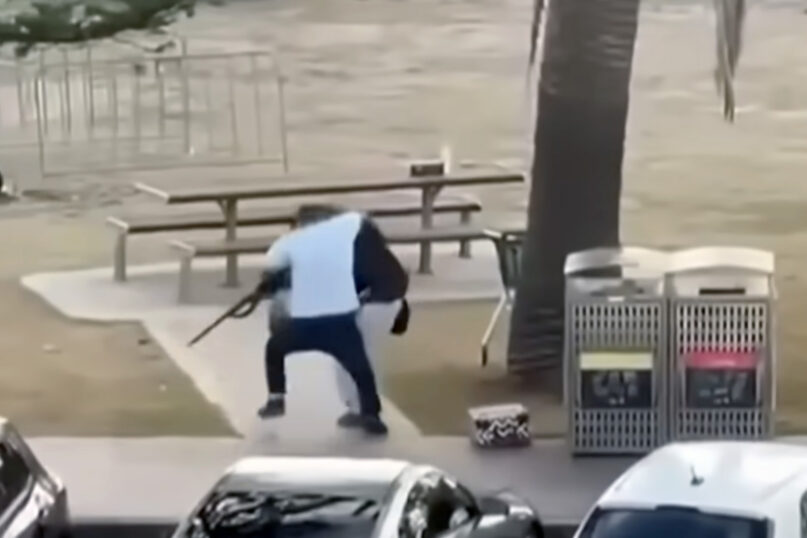


Video screen grab of Ahmed al Ahmed, white shirt, wrestling a rifle from one of the gunmen during the deadly shooting at Bondi Beach. (Video screen grab)

This is not accidental. Islamophobia is a political industry that depends on constant fear, distortion and dehumanization. Nor is it only a domestic political weapon, but a global information strategy. In the United Kingdom, Tommy Robinson, founder of the English Defense League, continues to build a movement around portraying Muslims as incompatible with Western society, using exaggeration, fabrication and selective storytelling.

Multiple investigations and analyses show how anti-Muslim sentiment is deliberately amplified to distract from mass violence and suppress criticism. One exposé found that the Israeli Ministry of Diaspora Affairs funded online influence campaigns that pushed pro-Israel messaging alongside anti-Muslim content. The goal was to shape public opinion by portraying Muslims as inherently threatening, making it easier to deflect attention from atrocities in Gaza.

Scholars analyzing the rhetoric around Gaza argue that Islamophobia is central to rhetoric attempting to justify or minimize Palestinian suffering by reframing the structural realities of occupation and mass death as natural responses to an inherently barbaric people. Civil rights advocates have warned that some pro-Israel political actors are using Islamophobia to discredit critics, distract from documented war crimes and frame solidarity with Palestinians as extremism.

Western media outlets, in addition, often rely on Islamophobic framing when covering Gaza, sidelining Palestinian voices while centering narratives that serve power rather than truth, according to reporting by the Bridge Initiative at Georgetown University.

These studies show that Islamophobia is not a byproduct of confusion or lack of education about Islam. It is driven and amplified by a recognizable cast of figures and platforms. Far-right provocateurs such as Loomer make conspiratorial claims about Muslims, painting an entire faith community as a national security threat and pushing false narratives to millions of followers.

These figures cultivate an audience conditioned to believe Muslims are uniquely violent or suspect. So when someone like Ahmed al Ahmed acts like a hero in Sydney, the system malfunctions. The narrative must be rewritten.

Once a community is dehumanized digitally, it becomes easier to continue to marginalize, exclude or harm that community physically. But the truth must break through.

Ahmed al Ahmed did not stop to ask the religion of the people he shielded. He acted on faith, courage and conscience. He has been rightfully recognized widely for the hero he is despite constant attempts to vilify his community.

This is the crisis of our moment: When a Muslim is a victim, their humanity is erased; when a Muslim is a hero, their identity is erased.

Islamophobia thrives on erasure. It thrives on fear. It thrives on distortion and distraction. But narratives built on fear are brittle when confronted with truth. Muslims today are part of the social fabric of every place they call home. They are students, caregivers, neighbors and, yes, heroes. Their courage and compassion defy bigotry’s attempts to confine them tocaricature.

If we want a society worth living in, then truth must matter more than fear. Heroism must matter more than narrative convenience. And human dignity must matter more than political utility.

The Islamophobia machine is in full swing, but the truth keeps clogging its system.

Using the Slain: Israel Exploits the Bondi 


Beach Shootings


Israeli Prime Minister Benjamin Netanyahu rarely passes an opportunity to comment upon the way Jews in other countries are treated. While the manic hatred directed against Jews remains one of history’s grotesque legacies, opportunism in the Netanyahu government is a ready instinct. With a customary sense of perversion, Netanyahu has managed to mangle Israeli policy, his own political destiny and the interests of Jews in a terrible, terrifying mix. The broad stroke charge of antisemitism is the front name of this venture, and it conveniently presents itself whenever Israeli policy requires an alibi when pursuing particularly unsavoury policies: massacre, starvation and dispossession of Gazans; the continued destruction and intended eradication of a functional Palestinian entity; efforts to prevent criticism of its settler policies in other countries.

The slaughter of 15 people enjoying the festivities of Hanukkah on Sydney’s famed Bondi Beach by the father-son duo of Sajid and Naveed Akram, presented a political opportunity. Having already accused Australian Prime Minister Anthony Albanese of being a “weak politician who betrayed Israel and abandoned Australia’s Jews” earlier in the year, Netanyahu readied another verbal lashing. In prickly remarks made at a government meeting in Dimona, the Israeli PM accused his Australian counterpart of being a leader who had “replaced weakness and appeasement with more appeasement.” His “call for a Palestinian state pours fuel on the antisemitic fire.” It had rewarded “Hamas terrorists” and emboldened “those who menace Australian Jews and encourages the Jew hatred now stalking your streets.”

Other Israeli politicians also decided that an unmeasured though monstrous antisemitism stalked the island continent, spawning the Bondi killings. “We felt and experienced the intense antisemitism directed against the Jewish community in Australia,” claimed Aliyah and Integration Minister Ofir Sofer. Diaspora Affairs Minister Amichai Chikli thought it appropriate to send “a delegation of experts in emergency response” to Australia, promising to “stand with the Jewish community in this difficult time and to ensure that we, as the State of Israel, are giving them everything within our ability.”

Israeli Foreign Minister Gideon Sa’ar had a list of lecturing points for his Australian counterpart, Penny Wong. There had to be, he stated with a teacherly certitude, “a real change in the public atmosphere.” This required culling phrases and expressions that had been expressed on behalf of the Palestinian cause in public debate and protest. “Call such as ‘Globalize the Intifada,’ ‘From the River to the Sea Palestine Will be Free,’ and ‘Death to the IDF’ are not legitimate, are not part of the freedom of speech, inevitably lead to what we witnessed today.”

In Australia, the acceptance of such positions, and the watering down of the Palestinian cause, was rapidly normalised. A procession line of commentators proceeded to state begrudgingly that Israeli government policy could be criticised only to demonstrate how slim such latitude was. This firm, excruciating delineation was offered by Jeremy Leibler of the Zionist Federation of Australia: “Australians can criticise Israeli government policy, Israelis do it loudly and fiercely themselves. But delegitimising Israel’s right to exist, or slipping into a moral equivalence between a liberal democracy defending its citizens and a terrorist organisation that targets civilians, is something else entirely.”

Leibler’s semantic technique is important here, forcibly linking those who claim Israel has no right to exist to critics of Israel’s policy of self-defence after October 7, 2023 that has left 68,000 Palestinians dead, Gaza pulverised and an enclave on life support. At the instigation of South Africa, it is a policy that is being scrutinised by the International Court of Justice as being potentially genocidal. It is a policy that has been deemed genocidal by the UN Independent International Commission of Inquiry on the Occupied Palestinian Territory along with a clutch of notable human rights organisations, including the Israeli outfit B’Tselem. Arrest warrants have also been issued by the International Criminal Court for Netanyahu and his former Defence Minister Yoav Gallant, citing alleged war crimes and crimes against humanity.

Establishment voices from a long moribund press class are also of the view that not enough has been done by the Albanese government to combat a supposedly mad blight of antisemitism, seemingly unique from the other jostling hatreds. (Islamophobia, anyone?) The massacre, according to the unevidenced observation of veteran journalist Michelle Grattan, was “the horrific culmination of the antisemitism epidemic that has spread like wildfire in Australia.”

She noted, with grave disapproval, the failure to “formally” respond to the combative strategy proposed by the antisemitism envoy Jillian Segal, one that openly accepts the International Holocaust Remembrance Alliance’s stifling definition of antisemitism. Any official embrace of that definition – a point made by that definition’s originator, Kenneth Stern – would be a fashioned spear against free speech, censoring genuine criticism of Israeli policies. The Jerusalem Declaration, by way of contrast, notes that hostility to the Israeli state “could be an expression of an antisemitic animus, or it could be a reaction to a human rights violation, or it could be the emotion that a Palestinian feels on account of their experience at the hands of the state.”

Like most journalists wedded to the holy writ press brief and arid political interview, Grattan shows no sign of having been to a single protest condemning the murderous death toll in Gaza, or any gathering advancing the validity of Palestinian self-determination. Woolly-headed, she freely speculates. “Most of us did not recognise this fact, but this anti-Jewish sentiment must have been embedded in sections of the Australian community – the Hamas attack on Israel in October 2023 was the spark that lit the conflagration.” Her travesty of an effort to understand the attacks in Bondi becomes evident in cod assessments of various protest marches and demonstrations across Australian university campuses. Without even a suggestion of evidence, she claims that “university encampments” proved “intimidating for Jewish students and staff.” Those Jewish students and staff more than willing to engage in those encampments mysteriously warrant no mention. Efforts on the part of cloddish university managers to harass, suspend and censor students expressing pro-Palestinian causes don’t seem to interest Grattan either.

With laziness, she snacks on the propagandistic samples provided by Israel’s publicity relations buffet, referring to unspecified “others” who believed that the Albanese government’s recognition of a Palestinian state stoked local antisemitism. Foreign Minister Wong’s failure to “visit the sites of the 2023 atrocities when she went to Israel early last year was much criticised in the Jewish community.”

Thus far, Israeli propagandists have shamelessly badgered their opponents down under into accepting a streaky narrative that would fail to survive judicial, let alone historical scrutiny. The agenda is clear enough: the inoculation of Israel against international opprobrium. Much will now depend on Albanese’s fortitude, if he, and his ministers, can find it.

Binoy Kampmark was a Commonwealth Scholar at Selwyn College, Cambridge. He lectures at RMIT University, Melbourne. Email: bkampmark@gmail.comRead other articles by Binoy.
Survivors Slam Kristi Noem Over FEMA’s Response to Deadly Disasters


FEMA workers say the agency is being gutted under Trump, putting disaster victims at risk
.
December 16, 2025

Department of Homeland Security Secretary Kristi Noem answers questions from members of congress during the House Committee on Homeland Security on December 11, 2025, in Washington, D.C.Marvin Joseph / The Washington Post via Getty Images

Independent journalism at Truthout faces unprecedented authoritarian censorship. If you value progressive media, please make a year-end donation today.

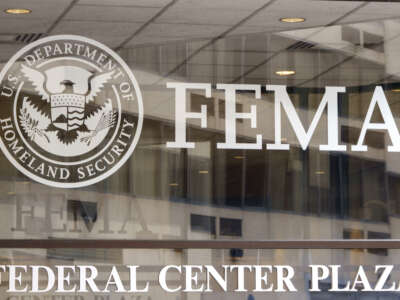
Department of Homeland Security (DHS) Secretary Kristi Noem is under fire from disaster survivors for mismanaging the federal government’s response to recent storms, floods, and deadly wildfires as staffing cuts and controversial policy changes continue to cause chaos at the Federal Emergency Management Agency (FEMA).

Disaster survivors from 10 states and Puerto Rico gathered Monday on Capitol Hill for an emotional press conference to demand accountability from Noem for “systemic failures” at Noem’s department, which oversees FEMA. The survivors said communication shortfalls and mismanagement of emergency relief funds that in some cases caused months-long delays left officials and residents on the ground frustrated and confused after disaster struck.

Among the attendees were survivors of the devastating floods in central Texas, which claimed more than 130 lives in July. The survivors demanded a meeting with Noem and a personal visit from her to the flood-ravaged communities. They also are calling for a congressional hearing on the government’s response to the disaster.

“When FEMA cannot fully function, real people pay the price, and what happened in Sandy Creek cannot be allowed to happen again.”

“When FEMA cannot fully function, real people pay the price, and what happened in Sandy Creek cannot be allowed to happen again,” said Brandy Gerstner, who survived flash floods with her family in Leander, Texas.

The activism from the disaster survivors comes as President Donald Trump’s administration continues to bring controversy to FEMA. Earlier this month, the Trump administration installed an election denier and conspiracy theorist with no official government disaster response experience as a top administrator at FEMA. Gregg Phillips, a human resource official for the Texas state government, reportedly only has experience responding to disasters with religious groups and nonprofits. In one social media post, Phillips described himself as a “very vocal opponent of FEMA.”

Related Story

FEMA Employees Speak Out After Attacks on Workers Warning of Looming Disaster
“The danger posed to our collective communities … is very real,” said one employee who signed a public letter. By Sasha Abramsky , Truthout  August 30, 2025


Rafael Lemaitre, a former FEMA public affairs director and member of the advisory council to Sabotaging Our Safety, a FEMA watchdog group, said the hiring of Phillips to manage FEMA’s Office of Response and Recovery is part of a larger pattern of dismantling FEMA piece by piece.

“The only thing Gregg Phillips seems qualified for is running the Flat Earth Society — yet Trump put him in charge of saving American lives,” Lemaitre told Truthout in an email. “This clearly isn’t about keeping Americans safe when disaster strikes.”

Then, on December 12, officials abruptly canceled a much-anticipated meeting of a FEMA review council after significant changes made by Noem’s office to a report recommending sweeping cuts to FEMA leaked to the media. The three officials, who spoke to the Associated Press on condition of anonymity to discuss the issue with the media, said the report shrunk from over 160 pages to roughly 20.

Created by a policy “review council” created by Trump, the draft report recommends a dramatic overhaul and downsizing of FEMA, including a 50 percent reduction in staff. Noem’s office reportedly made significant cuts to the review council’s draft and rejected some of the recommendations. The report is now undergoing additional internal vetting and has not been released publicly, according to The Washington Post.

CNN first reported on the leaked policy recommendations, which include changing the name of the agency to “FEMA 2.0” at least temporarily.

“It is time to close the chapter on FEMA,” the draft report states. “A new agency should be established that retains the core missions of FEMA, while highlighting the renewed emphasis on locally executed, state or tribally managed, and federally supported emergency management.”

Such an overhaul at FEMA would leave cities and states shouldering the costs of disaster preparation, response, and recovery — costs most states cannot afford — and put disaster victims at risk of serious harm, especially those with fewer financial resources, according to Shana Udvardy, a senior climate resilience policy analyst at the Union of Concerned Scientists.

“That means the next time a hurricane or horrific wildfires materialize we may again experience a disturbing FEMA fiasco on par with Hurricane Katrina, as FEMA staff warned about in their recent petition to Congress,” Udvardy said in a statement on December 12.

Udvardy was referring to The FEMA Katrina Declaration, a petition against the Trump administration’s FEMA overhaul organized by current and former FEMA workers. The petition states that key Trump appointees running FEMA have little experience in emergency management, and points to Hurricane Katrina as a warning. FEMA’s infamous failure to assist stranded Black residents of New Orleans after Hurricane Katrina devastated the city in 2005 left a racist stain on the administration of President George W. Bush, which helped pave the way for the election of President Barack Obama in 2008.

Fast forward 20 years, and communities in central Texas are still recovering from deadly flash floods unleashed by storms over the summer. Abby McIlraith, an emergency management specialist at FEMA, said she joined colleagues and signed the Katrina Declaration to call out the Trump administration for harming disaster survivors after the floods claimed dozens of lives in Kerrville, Texas. A day after the petition was published, McIlraith and other whistleblowers were placed on leave.

“Secretary Noem took only 36 hours to illegally retaliate against us as whistleblowers, but 72 hours — twice as long — to send search and rescue to Kerrville,” McIlraith told reporters on December 15. “Her insistence on personally approving major FEMA expenses, combined with these retaliatory actions, left disaster survivors waiting for help when hours and days mattered most.”

Gerstner said her family in Leander felt abandoned by FEMA and local authorities after flash floods destroyed the life they built over the past 36 years, including three homes, a business, and their sense of safety. The flood is fading from the local headlines, but Gerstner said the community is still struggling with recovery months later.


“We lost neighbors, were stranded for days without help, and watched as FEMA response was delayed while families were left to survive on their own.”

“We lost neighbors, were stranded for days without help, and watched as FEMA response was delayed while families were left to survive on their own,” Gerstner said. “More than five months later, many are still homeless, and only 36 percent of FEMA claims in our area have been approved.”

Victims of a federally recognized disaster can file claims with FEMA for financial assistance to cover the cost of emergency repairs, transportation, and hotel rooms when homes are destroyed, for example. It’s a notoriously slow and byzantine process disaster victims have complained about for years. Federal emergency funds only become available to states and local communities after the president issues an official disaster declaration, often in response to a request from a state governor and a recommendation from FEMA.

Since taking office, Trump has made it clear that he wants to shift the financial burden of disaster relief from the federal government to the states and has suggested phasing out FEMA altogether, a position Noem echoed in interviews. Dismantling FEMA entirely would require an act of Congress, but the Trump administration did not wait on lawmakers to slash staff and budgets at the agency while shifting DHS resources toward Trump’s mass deportation campaign.

Advocates and disaster survivors say emergency relief for communities impacted by fires, hurricanes, tornadoes, and other disasters has been delayed for months at a time as a result of the Trump administration’s assault on FEMA.

For example, FEMA announced on December 12 it would send $350 million to local governments and electric utilities in Georgia for relief efforts after Hurricane Helene and Hurricane Debby, which both hit in 2024. The payment comes two months after Sen. Raphael Warnock (D-Georgia) released a report showing that nearly $500 million in Hurricane Helene disaster relief was unpaid, according to the Associated Press.

“Hurricanes and natural disasters are not political; they do not care if you voted red or blue, and Georgia counties and cities went right to work recovering from Helene’s destruction with the understanding the federal government would fulfill its promises and pay their share,” Warnock said in a statement. “It should not have gotten to this point.”

Dr. Michael McLemore, a local organizer with community and racial justice groups in St. Louis, Missouri, survived a violent tornado that devastated residential areas and claimed at least five lives on May 16. McLemore said he lost the roof of his house and witnessed “our community’s systems fail at every level.” Trump did not declare the tornado a federal disaster until June 10, which delayed FEMA’s response.

“Sirens didn’t sound, local officials delayed response, and FEMA, under Secretary Kristi Noem, was nearly a month late in declaring a major disaster — leaving seniors and residents without transportation to fend for themselves,” McLemore said.

Like other disaster survivors, McLemore supports the 2025 FEMA Act, a bipartisan bill that would make FEMA an independent, cabinet-level agency and make major reforms to streamline the process for providing disaster relief. Introduced in the House by leaders of the Transportation and Infrastructure Committee from both parties, the bill has 40 bipartisan co-sponsors but remains in committee as the House Republican majority struggles to pass even basic legislation.

“Disasters don’t discriminate, but disaster recovery does,” McLemore said.
Trump AI Order Another Betrayal of Fundamental Human Rights

The president is promoting a future in which accountability for the impact of artificial intelligence systems is further out of reach.


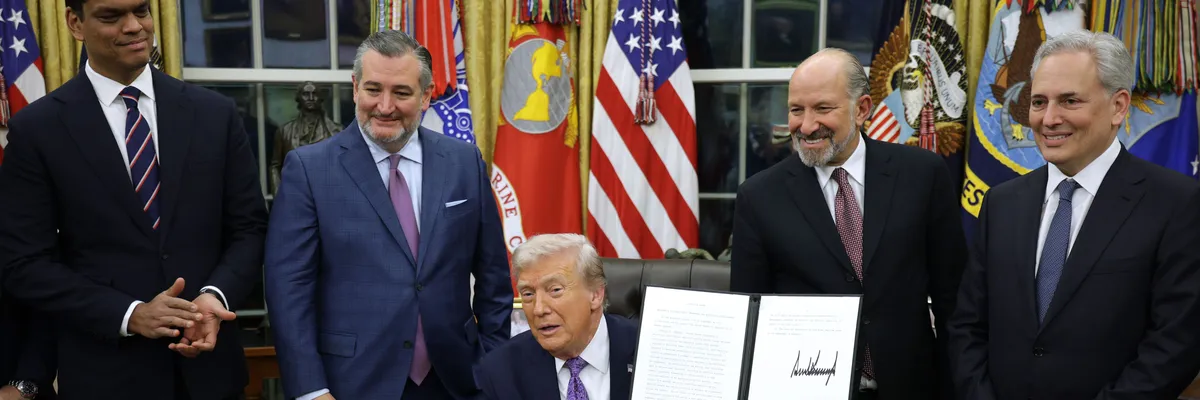
President Donald Trump displays a signed executive order as (2nd L-R) U.S. Sen. Ted Cruz (R-TX), Commerce Secretary Howard Lutnick and White House artificial intelligence (AI) and crypto czar David Sacks look on in the Oval Office of the White House on December 11, 2025 in Washington, DC.
(Photo by Alex Wong/Getty Images)


Anna Bacciarelli
Dec 17, 2025
Common Dreams

Last week, President Trump signed an executive order that proposes to challenge and dismantle a range of “cumbersome” artificial intelligence (AI) laws at state and city level in the US and replace them with a not yet defined national AI regulatory framework.

The move is supposedly an effort to “sustain and enhance the United States’ global AI dominance through a minimally burdensome national policy framework for AI.” But at what cost?


Watchdog Denounces Trump AI Order Seen as Giveaway to Big Tech Billionaire Buddies Like David Sacks


Executive Order Attacking State AI Laws ‘Looks a Lot Like’ Industry Dictating Trump’s Policies

By attempting to void existing regulatory frameworks, the Trump administration is promoting a future in which many components of society are reliant on AI, but where accountability for the impact of these systems is further out of reach.

In an ideal world, a national regulatory framework governing AI would expand safeguards, transparency, and access to justice for people across the US who are harmed by algorithmic and automated systems, in a consistent and equitable way. But in the context of this administration, the reality is likely to be a regulatory vacuum.

Since taking office in January, the Trump administration has ripped up previous federal policies governing discriminatory AI, removed safeguards across government-held data, and given tech companies expansive access to sensitive personal federal data. It has also increased its financial and political stakes in the tech industry and appointed an industry leader with a personal interest in deregulation to oversee the government’s approach to AI.

We know that integrating algorithms and automation to any process creates particular risks to human rights. AI systems have led to the wrong person being imprisoned, workers mistakenly fired, and lives ended too soon, and without adequate accountability for the companies behind the tech. It is imperative that this technology is created and deployed with the utmost care.

Trump’s executive order won’t just impact AI either. It threatens to rescind federal support for internet connectivity infrastructure via the BEAD (Broadband Equity Access and Deployment) Program, and would withhold funding to states that do not revoke AI accountability laws. This could significantly restrict equitable access to affordable, reliable broadband internet services for many.

There are worthwhile, evidence-driven efforts to secure accountability for AI injustices. The administration could, for example, adopt the AI Bill of Rights. But rather than increase steps toward accountability, this executive order marks yet another step in the Trump administration’s erosion of rights.


Our work is licensed under Creative Commons (CC BY-NC-ND 3.0). Feel free to republish and share widely.


Anna Bacciarelli
Anna Bacciarelli is a senior researcher for the Technology, Rights & Investigations program at Human Rights Watch.
Full Bio >
It’s a nightmare.

As Hegseth Refuses to Release Video of Boat Murder, AOC Calls Briefing a ‘Joke’


“Obviously, they have issues with what is in that video, and that’s why they don’t want everybody to see it,” Sen. Mark Kelly said of administration officials after the meeting.


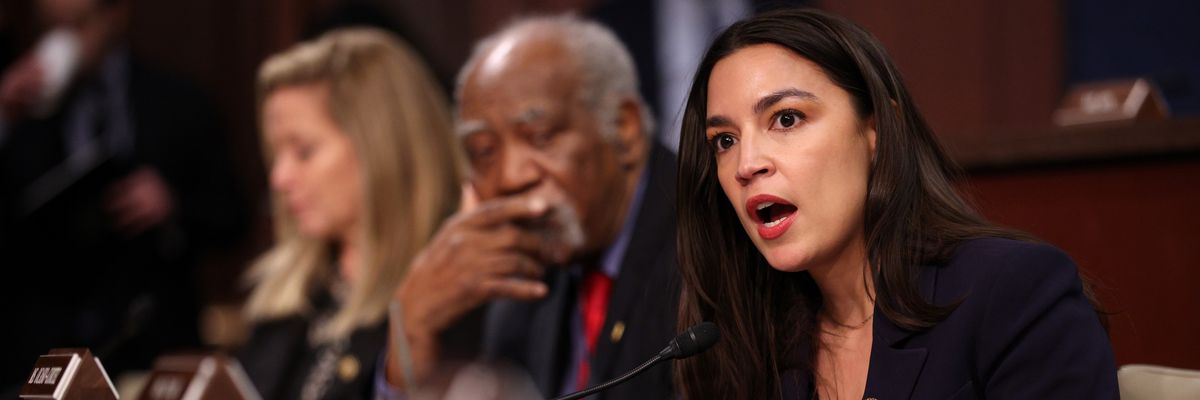
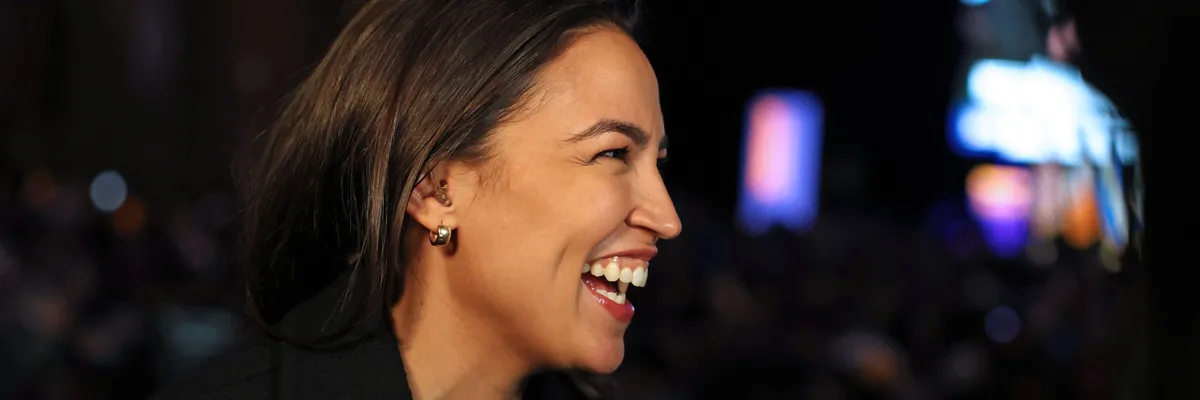
US Rep. Alexandria Ocasio-Cortez (D-NY) speaks during a House Oversight and Government Reform Committee hearing on March 5, 2025 in Washington, DC.
(Photo by Kayla Bartkowski/Getty Images)

Brett Wilkins
Dec 16, 2025
COMMON DREAMS

US Defense Secretary Pete Hegseth said Tuesday that the Pentagon will not release unedited video footage of a September airstrike that killed two men who survived an initial strike on a boat allegedly carrying drugs in the Caribbean Sea, a move that followed a briefing with congressional lawmakers described by one Democrat as an “exercise in futility” and by another as “a joke.”

Hegseth said that members of the House and Senate Armed Services committees would be given a chance to view video of the September 2 “double-tap” strike, which experts said was illegal like all the other boat bombings. The secretary did not say whether all congressional lawmakers would be provided access to the footage.


Demands to Release Full Video of Deadly US Boat Strike Grow After Congressional Briefing


Calls Grow for Impeachment of Hegseth for ‘Murder,’ Even as Jeffries Dumps Cold Water on the Idea

“Of course we’re not going to release a top secret, full, unedited video of that to the general public,” Hegseth told reporters following a closed-door briefing during which he and Secretary of State Marco Rubio fielded questions from lawmakers.

As with a similar briefing earlier this month, Tuesday’s meeting left some Democrat attendees with more questions than answers.

“The administration came to this briefing empty-handed,” Senate Minority Leader Chuck Schumer (D-NY) told reporters. “If they can’t be transparent on this, how can you trust their transparency on all the other issues swirling about in the Caribbean?”

That includes preparations for a possible attack on oil-rich Venezuela, which include the deployment of US warships and thousands of troops to the region and the authorization of covert action aimed at toppling the government of longtime Venezuelan President Nicolás Maduro.

Tuesday’s briefing came as House lawmakers prepare to vote this week on a pair of war powers resolutions aimed at preventing President Donald Trump from waging war on Venezuela. A similar bipartisan resolution recently failed in the Senate.

Rep. Gregory Meeks (D-NY), the ranking member of the House Foreign Affairs Committee and co-author of one of the new war powers resolution, said in a statement: “Today’s briefing from Secretaries Rubio and Hegseth was an exercise in futility. It did nothing to address the serious legal, strategic, and moral concerns surrounding the administration’s unprecedented use of US military force in the Caribbean and Pacific.”

“As of today, the administration has already carried out 25 such strikes over three months, extrajudicially killing 95 people,” Meeks noted. “That this briefing to members of Congress only occurred more than three months since the strikes began—despite numerous requests for classified and public briefings—further proves these operations are unable to withstand scrutiny and lack a defensible legal rationale.”


Briefing attendee Sen. Mark Kelly (D-Ariz.)—who is in the administration’s crosshairs for reminding US troops that military rules and international law require them to disobey illegal orders—said of Trump officials, “Obviously, they have issues with what is in that video, and that’s why they don’t want everybody to see it.”

Defending Hegseth’s decision to not make the boat strike video public, Sen. Markwayne Mullin (R-Okla.) argued that “there’s a lot of members that’s gonna walk out there and that’s gonna leak classified information and there’s gonna be certain ones that you hold accountable.”

Mullin singled out Rep. Ilhan Omar (D-Minn.), who, along with the Somalian American community at large, has been the target of mounting Islamophobic and racist abuse by Trump and his supporters.

“Not everybody can go through the same background checks that need to be cleared on this,” he said. “Do you think Omar needs all this information? I will say no.”

Rejecting GOP arguments against releasing the video, Sen. Adam Schiff (D-Calif.) said after attending Tuesday’s briefing: “I found the legal explanations and the strategic explanations incoherent, but I think the American people should see this video. And all members of Congress should have that opportunity. I certainly want it for myself.”
AOC Leads JD Vance For First Time in 2028 Election Matchup: Poll

The poll shows the progressive congresswoman winning back voters who swung toward Trump in a hypothetical 2028 matchup with MAGA’s potential heir apparent.


US Rep. Alexandria Ocasio-Cortez (D-NY) celebrates New York City Mayor-elect Zohran Mamdani’s victory during an election night event at the Brooklyn Paramount Theater in Brooklyn, New York, on November 4, 2025.
(Photo by Angela Weiss/AFP via Getty Images)


Stephen Prager
Dec 17, 2025
COMMON DREAMS

As MAGA’s popularity wanes, a new poll shows that progressive Rep. Alexandria Ocasio-Cortez (D-NY) is now slightly favored to win a hypothetical presidential election against Vice President JD Vance, a leading contender to be the heir apparent to President Donald Trump.

The survey of over 1,500 registered voters, published Tuesday by The Argument/Verasight, shows the Bronx congresswoman slightly edging out the vice president, 51% to 49%, within the margin of error.

While the 2028 presidential election is still nearly three years away, the poll suggests that Ocasio-Cortez, a self-described democratic socialist who some have dubbed too polarizing to represent the Democratic Party, may have more nationwide appeal than establishment politicians have claimed.

Neither Vance nor Ocasio-Cortez has formally declared their intent to run for the presidency. But as Trump’s loyal vice president, Vance is considered by many to be his natural successor. However, the president has continued to vacillate on whether he’ll run for an unconstitutional third-term bid himself, and polls have consistently shown Vance to be even less popular than Trump.


Ocasio-Cortez, meanwhile, is one of the relatively few Democrats available to fill a wide-open progressive lane. While her credibility among some on the left was dinged substantially by her defenses of the unpopular former President Joe Biden last year, the core planks of her affordability-focused platform—especially Medicare for All—are more popular than ever in the age of Trumpian austerity. This is especially true among Democratic voters, who polls have shown increasingly view the party establishment as out of step with their priorities.

Following Trump’s victory in 2024, which was propelled predominantly by fears about inflation under Biden, one of the most striking numbers was the 11% shift toward Trump in the Bronx from 2020.

But while Trump gained substantially, Ocasio-Cortez also cruised to her fourth term in Congress with about as much support as ever, leading many to marvel at the rise of the idiosyncratic “AOC-Trump” voter, who was evidently disillusioned with the economy under the Democratic incumbent but felt compelled by Ocasio-Cortez’s working-class background and “anti-establishment” status.

Tuesday’s poll shows that these sorts of voters are very capable of being won back by the right Democratic candidate: 8% of those who voted for Trump in 2024 said they’d vote for Ocasio-Cortez in a hypothetical showdown with Vance. And while Trump dominated in 2024 among those who did not vote in the previous election, the poll shows Ocasio-Cortez reversing the trend, with support from 52% of those who stayed home in 2024.

Adding to this, the congresswoman polled well with the voter demographics that Vice President Kamala Harris—another likely 2028 hopeful—struggled to mobilize.

Where Trump dominated with non-college-educated voters, 56% to 42%, Ocasio-Cortez is virtually tied with Vance. Among Hispanic voters, who went against the Democratic VP in historic numbers to give Trump nearly half of their support, Ocasio-Cortez is shown to lead by an overwhelming 64% to 36% margin.

And among voters aged 18-29, who favored Harris by just four points in 2024, Ocasio-Cortez comfortably leads Vance by 16.

Her support among young voters, one of the groups most disillusioned with the Democratic establishment, is especially striking. While Ocasio-Cortez lags somewhat behind Harris and California Gov. Gavin Newsom in early polls for the 2028 Democratic nomination across all age groups, a Yale youth poll released last week showed that she is by far the preferred candidate among voters ages 18-35.

Meanwhile, the issue that propelled Trump back to the White House—the economy—has become an albatross for the GOP, with a record-low 31% of all voters giving him positive marks, according to an Associated Press/NORC poll last week.


Axios reported in September that Ocasio-Cortez was still weighing her options for what path to pursue in 2028, seeking to heighten her national profile in advance of either a presidential run or a primary challenge to Senate Minority Leader Chuck Schumer (D-NY), who Democratic voters have increasingly scorned for what they perceive as routine capitulations to Trump.

Since Trump’s return to office, she has only continued to lean into her status as a progressive leader, joining Sen. Bernie Sanders (I-Vt.) on a nationwide campaign to “Fight Oligarchy,” which has drawn massive crowds in both red and blue states. Meanwhile, the unexpected rise of fellow democratic socialist Zohran Mamdani to become New York’s next mayor has provided proof of concept that a working-class-focused, anti-corporate agenda can win elections.

“She has a very real shot in 2028,” said CNN pollster Harry Enten back in September. “There’s been a tectonic shift among Democratic voters since Bernie Sanders first ran. AOC’s in a far better polling position than Sanders was before his first run, and the Democratic Party is also sick of its leadership.”
Trump ‘Taking a Sledgehammer’ to One of World’s Most Vital Climate Research Center, Scientists Warn

“This is self-sabotage by a wildly ignorant and malicious administration cutting off their nose to spite their face,” said one hurricane researcher.


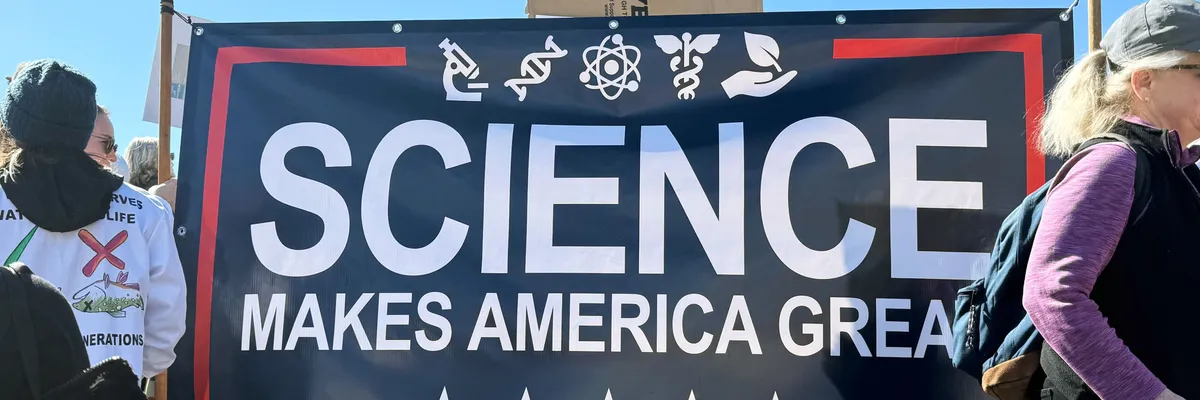
A banner reading “Science makes America great” is seen at a rally of scientists and researchers against budget cuts and job cuts in Washington, DC on March 7, 2025.
(Photo by Thomas Müller/picture alliance via Getty Images)


Julia Conley
Dec 17, 2025
COMMON DREAMS


One US House Democrat pledged Tuesday night that Colorado officials will fight the Trump administration’s latest attack on science “with every legal tool that we have” after top White House budget adviser Russell Vought announced a decision to break up a crucial climate research center in Boulder.

Rep. Joe Neguse (D-Colo.) called the decision to dismantle the National Center for Atmospheric Research (NCAR) “a deeply dangerous” action.


‘Attack on Independent Science’: Trump EPA Removes All Mention of Human-Caused Climate Crisis From Public Webpages


“NCAR is one of the most renowned scientific facilities in the WORLD—where scientists perform cutting-edge research every day,” said Neguse. “We will fight this reckless directive.”

Vought, the director of the Office of Management and Budget (OMB) said the National Science Foundation (NSF), which contracts the University Corporation for Atmospheric Research (UCAR) to run NCAR, “will be breaking up” the center and has begun a “comprehensive review,” with “vital activities such as weather research” being moved to another entity.

He added that NCAR is “one of the largest sources of climate alarmism in the country.”

But scientists pointed to the center’s 65-year history of making major advances in climate research and developing systems that scientists use regularly.

NCAR developed GPS dropsondes, which are dropped from the center’s aircraft into the eye of hurricanes to gather crucial data and improve forecasts, as well as severe weather warnings and analyses of the economic impacts that weather can bring, Daniel Swain, a climate scientist at the University of California, told USA Today, which first reported on the plan to dismantle the facility.

Neguse also called the decision to shutter NCAR “blatantly retaliatory.” The breakup of the center was announced days after President Donald Trump announced his plan to pardon Tina Peters, despite uncertainty over his authority to do so. The former county clerk was convicted in Colorado court on felony charges of allowing someone to access secure voting system data—part of an effort to prove the baseless conspiracy theory pushed by Trump that the 2020 election had been stolen from him.

Trump attacked Colorado’s Democratic governor, Jared Polis, over the Peters case last week, calling him “incompetent” and “pathetic.”

Also on Tuesday, the administration announced it was canceling $109 million in environmental transportation grants for Colorado that were aimed at boosting investment in electric vehicles, rail improvements, and other research.

Writer Benjamin Kunkel said the dismantling of NCAR is evidently “what happens to a state whose leading officials do accept climate science... and don’t accept that Trump won the 2020 election.”


Polis said Tuesday that his government had not received any communication from the White House about the NCAR review and dismantling, but “if true, public safety is at risk and science is being attacked.”

Climate change is real, but the work of NCAR goes far beyond climate science,” he said. “NCAR delivers data around severe weather events like fires and floods that help our country save lives and property, and prevent devastation for families.”

The White House Tuesday said it objected to UCAR’s “woke direction,” including its efforts to “make the sciences more welcoming, inclusive, and justice-centered” via the Rising Voices Center for Indigenous and Earth Sciences and wind turbine research that aims to “better understand and predict the impact of weather conditions and changing climate on offshore wind production.”

The administration also said the review of NCAR will eliminate “green new scam research activities”—green energy research completed by many of the center’s 830 employees.

Climate scientist Katherine Hayhoe warned that the dismantling of NCAR was an attack on “quite literally our global mothership.”

“NCAR supports the scientists who fly into hurricanes, the meteorologists who develop new radar technology, the physicists who envision and code new weather models, and yes—the largest community climate model in the world,” said Hayhoe. “Dismantling NCAR is like taking a sledgehammer to the keystone holding up our scientific understanding of the planet.”


Hurricane specialist Michael Lowry said the center is “crucial to cutting-edge meteorology and improvements in weather forecasting.”

“It’s far, far bigger than a ‘climate’ research lab,” he said. “This is self-sabotage by a wildly ignorant and malicious administration cutting off their nose to spite their face.”

The president this year has also pushed massive cuts to the National Oceanic and Atmospheric Administration, where major climate and weather research takes place. The cuts have come as 2024 has been named the hottest year on record and scientists have warned that planetary heating has contributed to recent weather disasters.

“Any plans to dismantle NSF NCAR,” UCAR president Antonio Busalacchi told the Washington Post, “would set back our nation’s ability to predict, prepare for, and res

‘Public safety is at risk’: Trump official gutting agency behind fires and floods research

Nicole Charky-Chami
December 17, 2025
RAW ST0RY


FILE PHOTO: Russell Vought, U.S. President Trump's nominee to be director of the Office of Management and Budget (OMB), testifies before a Senate Budget Committee confirmation hearing on Capitol Hill in Washington, U.S., January 22, 2025. REUTERS/Kaylee Greenlee Beal/File Photo

A Trump official has planned to gut the National Center for Atmospheric Research — the group behind fires and floods research — in the next move to dismantle federally-funded climate research.


Russ Vought, director of the United States Office of Management and Budget, announced Tuesday night that the National Science Foundation would break up the agency, Politico reported.

“This facility is one of the largest sources of climate alarmism in the country,” Vought wrote on X, claiming that research activities would be moved to other agencies.

Colorado Gov. Jared Polis responded to the move, warning that the decision reveals “science is being attacked.”

“NCAR delivers data around severe weather events like fires and floods that help our country save lives and property, and prevent devastation for families,” Polis said. “If these cuts move forward we will lose our competitive advantage against foreign powers and adversaries in the pursuit of scientific discovery.”

NCAR has given resources to universities and academics to use earth system research and has been located in Boulder, Colorado since 1960.

The Trump administration has made significant budget cuts to the National Weather Service as part of broader efforts to reduce federal spending and streamline government operations, with reductions affecting meteorological research, forecasting capabilities, and satellite programs.

These cuts have raised concerns among weather forecasters, climate scientists, and emergency management officials who warn that reduced funding could compromise the accuracy of weather predictions, hurricane tracking, and severe weather warnings that are critical for public safety and disaster preparedness.

Critics have blamed these cuts for the slow federal emergency response to flooding in Texas in July and have concerns this could impact responses to the hurricane season. The White House has rejected these claims.


Experts Say Even Average Venezuelans Critical of Maduro Won’t Back Regime Change


A US military attack “would bring more chaos, more poverty,” one Caracas resident said.

By Rodrigo Acuña
Truthout
PublishedDecember 16, 2025

A woman walks past graffiti against U.S. President Donald Trump on March 26, 2020, in Caracas, Venezuela.Leonardo Fernandez Viloria / Getty Images


Truthout’s December fundraiser is our most important of the year and will determine the scale of work we will be able to do in 2026. Please support us with a tax-deductible donation today.

President Donald Trump has escalated threats against Venezuelan President Nicolás Maduro in recent weeks, and reports now say the Trump administration is preparing for the days after a potential Maduro overthrow.

What might happen in such a scenario? In November, Michael Crowley at The New York Times pursued this question by reminding readers that, during Trump’s first term, U.S. officials were asked to run a war game to examine what Venezuela in a post-Maduro era would look like. According to Douglas Farah, a national security consultant who specializes in Latin America, the war game showed that the overthrow of Maduro would yield “chaos for a sustained period of time with no possibility of ending it.” Crowley, at his end, adds that the results of the exercise note that “chaos and violence were likely to erupt within Venezuela, as military units, rival political factions and even jungle-based guerrilla groups jockeyed for control of the oil-rich country.”

Currently, no such chaos has erupted in Venezuela despite at least 95 people having been killed by the United States military in the Caribbean Sea and Eastern Pacific as of December 16. Although the White House has repeatedly alleged that those targeted have been involved in smuggling narcotics into the U.S. mainland, the Trump administration has yet to produce any evidence to support its claims.

At least 95 people have been killed by the United States military in the Caribbean Sea and Eastern Pacific.

At the end of November, Trump took to social media, stating: “To all Airlines, Pilots, Drug Dealers, and Human Traffickers, please consider THE AIRSPACE ABOVE AND SURROUNDING VENEZUELA TO BE CLOSED IN ITS ENTIRETY.” And on December 10, Trump told journalists that the U.S. had recently “seized a tanker on the coast of Venezuela, a large tanker, very large, the largest one ever seized actually.” The Venezuelan government condemned the seizure as “blatant theft and an act of international piracy.”

With the arrival of the USS Gerald R. Ford aircraft carrier group in the Caribbean Sea in November, and media reports indicating that there are now 15,000 U.S. troops in the region and approximately 5,000 personnel at bases in Puerto Rico, there are two likely outcomes: Trump is either bluffing to see if the Venezuelan military will carry out a coup against Maduro, or worse, is actually planning for the U.S. to attack Venezuela militarily. Meanwhile, a recent poll conducted by CBS News concluded that 70 percent of people in the United States are opposed to the Trump administration taking military action against Venezuela.

Related Story


Inside Venezuela, the people Truthout spoke to for this article said that, while they are certainly following the crisis, most people are continuing with their daily lives. According to Fanny Chacón Sánchez, a 39-year-old mother of two who works for a government bank, “the way [the] international media portray things on social networks looks like a completely different reality.” Chacón notes that although the U.S. Navy’s actions are on people’s minds, this is “just another chapter of the illegal blockade we already know” that “suffocate[s] us” — a reference to the U.S. economic sanctions on Venezuela which commenced in 2005.

Living in a state-built apartment, which she is paying off at affordable rates though the government’s massive housing program known as Gran Misión Vivienda Venezuela (Great Mission Housing Venezuela), Chacón used to live in New Horizon, which is part of Catia, one of Venezuela’s largest, poorest and most densely populated areas. A supporter of the Maduro government, Chacón says on the streets of Caracas:

People are focused on their own stuff: working, making ends meet, and now, even more so, getting Christmas ready for the kids. Making sure there are Christmas bonuses and the Nativity scene. Life continues on its “normal” course, as much as this harsh reality allows. It’s not that we ignore everything else; it’s that we’ve been resisting for years and we’re not going to stop now.

Anais Márques, a communal leader at the 5 de Marzo Commune in Caracas, a grassroots community organization in El Valle neighborhood that comprises around 2,270 working-class families, shared a similar perspective with Truthout. With life continuing largely as normal, Márques notes the recent November election in which more than 5,300 community circuits (communes) voted to pick which community proposed projects will obtain state funding. According to Márques, the election saw “civic participation” as “several communal councils renewed their spokespersons through secret ballots.”
Anais Márques, a leader at the 5 de Marzo Commune in Caracas, poses with members of her commune on November 27, 2025.Yrina Mejías

In Márques’s opinion, “both Chávez and now Maduro have always had the support and backing of an organized, mobilized people,” which “is why they still haven’t defeated us.” Believing that Maduro will resolve the crisis, Márques highlights the civic-military union that exists between the government and the armed forces, stating: “We have a people and we have soldiers, and the soldiers have the people.”

Although mainstream reporting in favor of overthrowing Maduro often (and rather conveniently) ignores this fact, former Venezuelan President Hugo Chávez’s political movement was originally born in the barracks when he was a soldier in the 1980s. Chávez’s came to power through an election in 1999, then suffered a short-lived U.S.-backed coup d’etat in 2002 headed by the upper echelons of the armed forces. Subsequently Chávez proceeded to purge the army and cement his doctrine of Latin American-style socialism. From 2007, Venezuela’s armed forces adopted the slogan: “Patria, socialismo o muerte! Venceremos!” (“Fatherland, socialism or death! We will prevail!”)

With a different perspective from those of Chacón and Márques, Antonio Gonzalez Plessmann, a human rights activist in Caracas and militant leftist since the 1980s, no longer supports Maduro. Plessmann thinks Venezuelans’ main anxiety remains “economic precariousness” and says household incomes for an average family of four cannot cover the cost of food and basic necessities. As a result, Plessmann told Truthout, many people have “several jobs to make ends meet,” a situation that is not uncommon throughout many Latin American countries.

“Madurismo is a mutation of Chavismo, which separates from the strategic postulates of the Bolivarian Revolution: popular participation, democratic radicalism, and anti-capitalist orientation,” Plessmann says. Former President Chávez, in his view, “was hated by Fedecámaras [the main business association] and loved by the poor” while Maduro is “loved by Fedecámaras” and “despised by the majority of the popular sectors, many of whom were once Chavistas.” While Washington has attempted “regime change” on several occasions against Venezuela’s head of state, Plessmann says, Maduro now finds himself “at one of his weakest moments: He lacks popular support and real backing from much of Latin America.”

According to one survey in September, 65 percent of Venezuelans rated Maduro’s management of the country positively, 28 percent said they had a negative opinion, while 7 percent answered with either don’t know or no answer.

“Democracy Now! co-host Juan González asserted in a recent interview with Jyotishman Mudiar, host of the “India & Global Left” podcast, that if the United States attacks Venezuela militarily, the conflict will broaden throughout Latin America. Observing that Maduro has already “put out a call for international volunteers to come to Venezuela to support the Bolivarian Revolution,” González argued that Cubans, Nicaraguans, and Colombians “will be a part of that resistance.” Elaborating on his comments on Colombia, González stated that, up until recently, the country had the “single largest and most extensive revolutionary movement in the history of Latin America,” as was the case with the Revolutionary Armed Forces of Colombia that demobilized in 2016 after reaching a peace agreement with the government.

Colombia’s second-largest guerrilla movement, the Army of National Liberation (ELN) has yet to reach an agreement with the administration of Gustavo Petro, who presides over a broad-left coalition. According to a report from the International Crisis Group, whose analysis is often in line with U.S. political establishment, the ELN “has repeatedly stated its commitment to defend the Maduro government, and has promised to turn its fire on any foreign forces that intervene in the region; its expertise includes use of improvised explosives and, more recently, armed drones.”

While there is no hard evidence of complicity between the Maduro administration at the highest levels and the ELN, the current government in Caracas and the guerrillas are, broadly speaking, both influenced by liberation theology, the Cuban Revolution, and the 18th-century independence fighter Simón Bolívar’s calls for regional unification among Latin American countries. According to the Washington Office on Latin America, the ELN in April this year numbered over 6,000 active guerrillas, while a local report in Colombia claims about 20 percent of the rebels operate in the region of Catatumbo, on the northern border with Venezuela.

González also noted that China has become an important factor in Washington’s calculations and aggression toward Venezuela, given that it has become the main purchaser of the country’s oil. “At one point, something like 70 percent of Venezuela’s oil was going to China,” says González, with that figure now down to “about 45 percent” However, it still remains the largest buyer of the South American country’s oil. As with the case of Panama, where the government ended the Central American country’s participation in China’s Belt and Road Initiative after Trump issued a series of threats ranging from increasing trade tariffs to an outright military invasion to take back the Panama Canal, Trump’s advisers cannot be looking at Beijing’s growing economic presence in Latin America kindly.

Miguel Tinker Salas, a professor of Latin American history at Pomona College in Claremont, California, told Truthout that the massive military deployment off the coast of Venezuela, the exuberant negative press campaign against the Maduro administration, and the crushing economic sanctions all look to “expose fissures within the Venezuelan military and the political apparatus of the governing party.” He adds that despite this pressure, “the concerted campaign fissures have not materialized” as the majority of “Venezuelans are firmly opposed to a U.S. intervention.” From Tinker’s perspective, the majority of Venezuelans reject violence as a tactic to obtain political change.

At Washington’s end, Tinker says Trump’s new approach “involves efforts to isolate China, which has gained an important foothold in the past 20 years” while “investing close to a billion dollars to produce oil in Lake Maracaibo,” — a region located in the northwest of Venezuela in the state of Zulia, which accounts for most of the country’s oil production. Tinker told Truthout he thinks U.S. military forces are aiming for an extended stay in the Caribbean as part of a “Western Hemisphere Strategy.”


Any administration imposed through force will face a “crisis of legitimacy, especially if they begin to implement neoliberal economic policies as they have proposed.”

The problem, he says, is that “U.S.-led efforts at regime change have been disastrous” and any administration imposed through force will face a “crisis of legitimacy, especially if they begin to implement neoliberal economic policies as they have proposed.” He adds that while “important segments of the population may be critical of Maduro,” these Venezuelans “will not stand idly by and allow their rights to be subverted.”

Steve Ellner is a retired professor of economic history and political science from the Universidad de Oriente in Venezuela, where he lived for over 40 years. As things currently stand in the crisis, “the most likely scenario is an extended siege,” because “the other options at this point are too risky for Washington,” Ellner told Truthout. Elaborating on this point, he added:


Venezuela has advanced weapons systems from Russia and training which Washington claims comes from the Wagner mercenaries. It doesn’t matter who does the training; from Caracas’s viewpoint the training is absolutely justifiable, given the intensity and prolonged nature of the threat. From a political viewpoint it’s unlikely that Trump would just pull out, since he would face intense criticism and a loss of MAGA support given everything that has been done up until now.

Back in Caracas, according to Ellner, “many non-Chavistas and anti-Chavistas are enrolling in the militia.” Asked about an article published in The New York Times in October that claimed that secret negotiations around Venezuela’s resources were taking place in order to avoid a military conflict, Ellner said the chance they succeed should not be dismissed entirely. “Maduro,” claimed Ellner, “is willing to make concessions … which would allow Trump to spin a narrative that the U.S. got what it wants.” Such concessions might include handing over individuals accused of being involved in the drug trade as well as “concessions regarding Venezuela’s oil reserves.”

Márques, like all the Venezuelans Truthout spoke to, is hopeful the crisis will be resolved. “It has taken so much effort to achieve our independence, and we cannot believe that a U.S. military intervention in Venezuela would bring stability,” she said. “Without a doubt,” she added, a U.S. military attack “would bring more chaos, more poverty — especially for the working class.”

Our most important fundraising appeal of the year

December is the most critical time of year for Truthout, because our nonprofit news is funded almost entirely by individual donations from readers like you. So before you navigate away, we ask that you take just a second to support Truthout with a tax-deductible donation.

This year is a little different. We are up against a far-reaching, wide-scale attack on press freedom coming from the Trump administration. 2025 was a year of frightening censorship, news industry corporate consolidation, and worsening financial conditions for progressive nonprofits across the board.

We can only resist Trump’s agenda by cultivating a strong base of support. The right-wing mediasphere is funded comfortably by billionaire owners and venture capitalist philanthropists. At Truthout, we have you.

We’ve set an ambitious target for our year-end campaign — a goal of $230,000 to keep up our fight against authoritarianism in 2026. Please take a meaningful action in this fight: make a one-time or monthly donation to Truthout before December 31. If you have the means, please dig deep.


This article is licensed under Creative Commons (CC BY-NC-ND 4.0), and you are free to share and republish under the terms of the license.


Rodrigo Acuña holds a PhD on Venezuelan foreign policy from Macquarie University. Together with journalist Nicolas Ford, last year he released his first documentary Venezuela: The Cost of Challenging an Empire. Rodrigo has been writing on Latin American politics for close to 20 years and publishes a newsletter on Latin America. He works the NSW Department of Education and can be followed on X (Twitter) @rodrigoac7.


Assange Sues Nobel Foundation to Stop War-Promoting Machado From Receiving Peace Prize Cash

“Alfred Nobel’s endowment for peace cannot be spent on the promotion of war.”


Wikileaks founder Julian Assange joins thousands as they march across the Harbour Bridge during a pro-Palestinian rally on August 3, 2025 in Sydney, Australia.
(Photo by Lisa Maree Williams/Getty Images)

Brad Reed
Dec 17, 2025
COMMON DREAMS

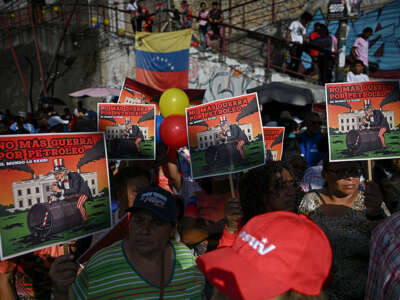
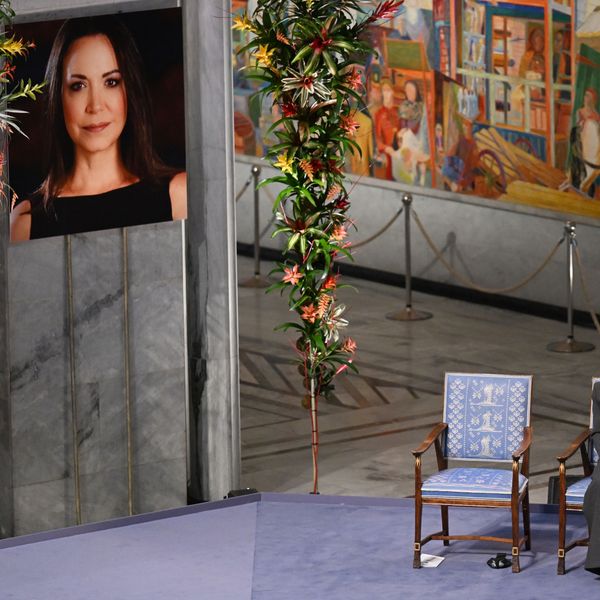
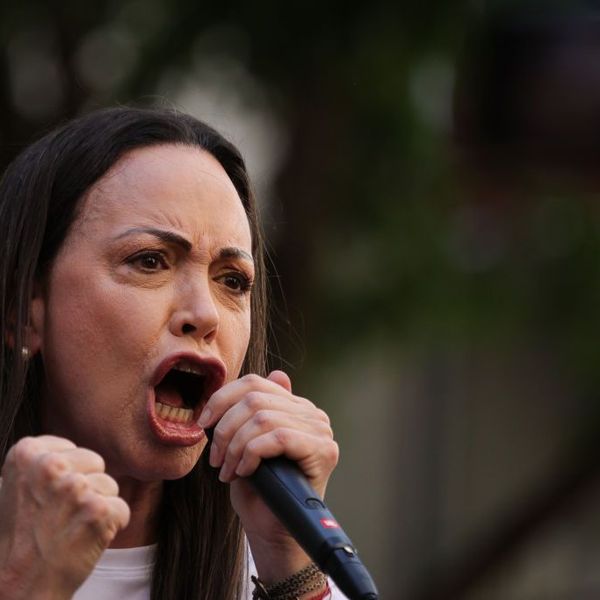
WikiLeaks founder Julian Assange on Wednesday filed a complaint against the Nobel Foundation to stop its planned payouts to Venezuelan opposition leader and 2025 Nobel Peace Prize winner María Corina Machado, who has backed US President Donald Trump’s campaign of military aggression against her own country.

According to a press release that WikiLeaks posted to X, Assange’s lawsuit seeks to block Machado from obtaining over USD $1 million she’s due to receive from the Nobel Foundation as winner of this year’s Peace Prize.


Protest in Oslo Denounces Nobel Peace Prize for Right-Wing Machado


Nobel Peace Prize Winner Rebuked for Backing Trump’s March Toward War With Venezuela

The complaint notes that Alfred Nobel’s will states that the Peace Prize named after him should only be awarded to those who have “conferred the greatest benefit to humankind” by doing “the most or the best work for fraternity between nations, for the abolition or reduction of standing armies, and for the holding and promotion of peace congresses.”

In an interview that aired on Sunday on CBS News’ “Face the Nation,” Machado praised Trump’s policies of tightening economic sanctions and seizing Venezuelan oil tankers, acts of aggression that appear to go against Nobel’s stated declaration that the Peace Prize winner must promote “fraternity between nations.”

“Look, I absolutely support President Trump’s strategy, and we, the Venezuelan people, are very grateful to him and to his administration, because I believe he is a champion of freedom in this hemisphere,” Machado told CBS News.

Trump’s campaign against Venezuela has not only included sanctions and the seizing of an oil tanker, but a series of bombings of purported drug trafficking vessels that many legal experts consider to be acts of murder.

In his complaint, Assange claims that Machado’s gushing praise of Trump in the wake of his illegal boat-bombing campaign is enough to justify the Nobel Foundation freezing its disbursements to the Venezuelan politician.

“Alfred Nobel’s endowment for peace cannot be spent on the promotion of war,” Assange states, adding that “Machado has continued to incite the Trump Administration to pursue its escalatory path” against her own country.

The complaint also argues that there’s a risk that funds awarded to Machado will be “diverted from their charitable purpose to facilitate aggression, crimes against humanity, and war crimes.”

Were this to happen, the complaint alleges, it would violate Sweden’s obligations under Article 25(3)(c) of the Rome Statute, which states that anyone who “aids, abets, or otherwise assists” in the commission of a war crime shall be subject to prosecution under the International Criminal Court.

Trump in recent days has ramped up his aggressive actions against Venezuela, and on Tuesday night he announced a “total and complete blockade” of all “sanctioned oil tankers” seeking to enter and leave the country.

“Venezuela is completely surrounded by the largest Armada ever assembled in the History of South America,” Trump wrote in a Truth Social post. “It will only get bigger, and the shock to them will be like nothing they have ever seen before.”