Tuesday, December 30, 2025

The Teacher’s Burden

A classroom filled with lots of desks and chairs

Teachers have always been society’s most underestimated heroes. They carry the emotional, intellectual, and social development of entire generations—yet they work inside systems that often value credentials more than contribution, compliance more than creativity, and paperwork more than human potential.

This essay explores the invisible load teachers carry — a burden that cannot be quantified, standardized, or fully understood by anyone who has never stepped into a classroom with 30 different stories, needs, fears, and possibilities staring back at them.

A great teacher adapts in real time.

They sense confusion before a hand goes up.
They notice the student who suddenly gets quiet.
They see potential before a student recognizes it in themselves.
They adjust lessons on the fly because the textbook hasn’t kept pace with the world.
They bridge emotional, social, and academic gaps no curriculum designer could ever predict.

And while they teach reading, writing, and critical thinking, they also manage the things no job description lists:

  • trauma
  • instability
  • hunger
  • exhaustion
  • undiagnosed learning challenges
  • anxiety
  • broken homes
  • pressure no child knows how to express

They are part mentor, part counselor, part protector, part improvisational genius — and always, always human.

And through it all, they teach.

Not because the system makes it easy.
But because their calling makes it necessary.

**Here’s the truth systems don’t want to admit:
Teaching is not a process. It is a craft.**

A deeply human, intuitive, emotional craft that cannot be standardized without diminishing its power. Teaching requires patience, improvisation, empathy, humor, discipline, presence, attention, creativity — none of which appear on the institutional spreadsheets used to evaluate performance.

When systems reduce teaching to metrics, teachers become data clerks.
When they reduce creativity to checklists, teachers become script readers.
When they reduce learning to test prep, teachers become compliance officers.

Great teachers did not sign up for that.

They signed up to spark curiosity, expand minds, change trajectories, and help human beings grow.

It is no surprise, then, that teachers are leaving institutions — not because they stopped caring, but because institutions stopped caring about what makes teaching magical.

More and more teachers now teach online, tutor independently, create educational content, host micro-schools, or reach tens of thousands of learners directly through digital platforms. Some reach more students in a single month this way than they did in a year inside a traditional system.

This is not rebellion.
This is rebirth.

A return to the essence of teaching: one human being helping another become more capable than they were the day before.

Great teachers are discovering what systems forgot:

  • Human connection matters more than curriculum.
  • Adaptation matters more than policy.
  • Presence matters more than paperwork.
  • Capability matters more than credentials. 

The burden teachers carry is immense.

The expectations are unreasonable.
The support is insufficient.
The emotional load is heavy.

And yet, the impact of their capability is immeasurable — felt across years, generations, and communities.

Ask anyone who became who they are because one teacher saw them, believed in them, or challenged them.

Ask anyone who was saved by a teacher’s kindness.
Ask anyone whose future changed because one adult refused to give up on them.
Ask anyone whose confidence came from a single sentence spoken at exactly the right moment.

A teacher’s influence is invisible in the moment — and undeniable in hindsight.

Their burden is heavy.
Their capability is extraordinary.
And their impact is eternal.

Arkhub Insights explores trends in skill/knowledge development and innovation impacting education and businesses. Read other articles by Arkhub Insights, or visit Arkhub Insights's website.

Artificial Intelligence, Global Inequality, and the Colonial Machinery of Capital

Copilot in the Shadow of Empire


Artificial intelligence is often presented as a universal breakthrough — a tool that will democratize knowledge, expand opportunity, and usher in a new era of human progress. But AI does not emerge in a vacuum. It is built inside a global order shaped by conquest, extraction, and the long shadow of empire. The world into which Copilot is deployed is not neutral terrain; it is a landscape carved by centuries of unequal development.

Copilot becomes not only a technological assistant, but a mirror — revealing the deep inequalities that structure our world. AI does not transcend inequality. AI exposes it.

The child, the circuit, and the colonial wound

Imagine two children born in the same century, under the same sky.

One grows up in an African village where electricity flickers or fails, where nightfall is not a choice but a condition, and where the promises of the “digital age” arrive as distant echoes. The other grows up in a Western city, surrounded by devices, broadband, and an entire ecosystem of artificial intelligence — including Copilot — ready to support learning, creativity, and opportunity.

Between these two children stands a powerful technology. But Copilot does not bridge the divide. It reveals it.

The African child is not “behind.” The African child has been pushed behind — by centuries of colonial plunder, resource theft, structural adjustment, and debt regimes that weakened the very infrastructures AI requires. These are not historical footnotes; they are living conditions. They shape who has access to electricity, who has access to bandwidth, and who is structurally excluded from the digital world.  AI does not possess intention, but it operates inside human systems of intention. It does not decide where electricity flows, which languages dominate, or whose data becomes valuable. It simply amplifies the conditions into which it is placed.

The Western child is not “ahead.” The Western child has been placed ahead — by a global system designed to concentrate wealth, bandwidth, and possibility. The devices on the Western child’s desk are built from minerals mined in the Global South. The broadband that powers their learning is funded by economies that benefited from centuries of extraction. The AI tools they use are trained on data produced overwhelmingly in the Global North.

This is not a digital divide. This is a colonial divide — modernized, electrified, and automated.

Capitalism’s invisible hand on the keyboard

AI is often described as neutral or universal. But neutrality is impossible in a world organized by profit. Every layer of AI — from the minerals in its hardware to the languages in its training data — is shaped by global capitalism.

1. AI depends on unequal infrastructure

AI requires:

  • electricity
  • broadband
  • data centers
  • rare minerals
  • global supply chains
  • linguistic dominance

These are not evenly distributed. They follow the same patterns of extraction and accumulation that have defined global capitalism for centuries. The cobalt that powers batteries is mined in Congo. The servers that run AI models sit in wealthy nations. The languages prioritized by AI systems reflect colonial hierarchies, not global diversity.

2. AI reproduces global hierarchies

AI systems are trained on data produced by a world where:

  • the Global South extracts
  • the Global North accumulates
  • the poor labor
  • the rich automate
  • the marginalized are surveilled
  • the powerful are optimized

AI does not challenge this order. AI accelerates it.

The same forces that once controlled land, labor, and resources now control data, algorithms, and digital infrastructure. The logic has not changed — only the tools have.

3. AI extends the reach of empire

Where colonialism once used force, today it uses:

  • patents
  • platforms
  • algorithms
  • data monopolies

AI becomes a new frontier of control — shaping who learns, who works, who is visible, and who remains unseen. Nations without technological sovereignty become dependent on foreign platforms. Communities without connectivity become digitally invisible. Languages without representation become computationally extinct.

AI is not simply a tool. It is a political actor — one that reflects the priorities of those who own it.

Closing

And when Copilot reflects the world, it does not show a neutral landscape. It reveals a global order built on inequality, extraction, and the ruthless logic of profit — a world where technology advances while justice is deferred, and where innovation grows atop the suffering of those rendered invisible.

AI does not liberate the oppressed. AI exposes the oppression — the structural violence, the stolen futures, the engineered scarcity that capitalism normalizes and empire requires.

If AI is ever to serve humanity, then humanity must confront and dismantle the global capitalist order that shapes its reach, its purpose, and its beneficiaries. No algorithm can correct a world designed to concentrate power. No machine can democratize a system built on exclusion.

Until that transformation occurs, AI will remain what it is today: a brilliant light shining on a deeply unjust world — illuminating not our progress, but the wounds we refuse to heal

Sammy Attoh is a Human Rights Coordinator, poet, and public writer. A member of The Riverside Church in New York City and The New York State Chaplains Group, he advocates for spiritual renewal and systemic justice. Originally from Ghana, his work draws from ancestral wisdom to explore the sacred ties between people, planet, and posterity. Read other articles by Sammy.
CHINA BROKERED CEASEFIRE

Thailand-Cambodia ceasefire holds, but Bangkok says breaches delayed release of prisoners

December 30, 2025 
Thailand's director-general of the department of information and spokesperson of the ministry of foreign affairs, Nikorndej Balankura. 
File photo. (Chalinee Thirasupa)

A renewed ceasefire between Thailand and Cambodia over border clashes passed the 72-hour mark on Tuesday, an initial goal the countries set to secure a more lasting peace, but Bangkok said it delayed the release of 18 Cambodian soldiers due to alleged breaches of the deal.

The Southeast Asian neighbours agreed on a ceasefire that took effect at noon on Saturday, halting 20 days of fighting that killed at least 101 people and displaced more than half a million on the two sides, and included fighter jet sorties, exchanges of rocket fire and artillery barrages.

The border clashes reignited early this month after the breakdown in a ceasefire deal US President Donald Trump and Malaysian Prime Minister Anwar Ibrahim helped broker to halt a previous round of conflict in July.

Under the agreement signed by the defence ministers of the two countries on Saturday, Thailand said it would release the 18 Cambodian soldiers after the ceasefire held for 72 hours.


On Tuesday Thai foreign ministry spokesperson Nikorndej Balankura said the military had detected many drones from Cambodia on Sunday night, which it saw as a breach of the deal, and it had reconsidered the timing of the handover of the soldiers.

“The consideration of date and time of the release depends on the security side,” he said at a press conference, adding the handover could “happen soon”.


Cambodian authorities have strongly rejected the accusation of using drones and issued an order prohibiting the use of drones across the country late on Monday.

“There has been no reaction yet. It is being monitored,” said Pen Bona, a spokesperson for the Cambodian government, when asked about the delay in the soldiers’ release.

The Thai foreign ministry also sent a formal protest to Cambodia after a Thai soldier lost a limb on Monday in a landmine blast at a border area.

Landmine incidents were a catalyst for the renewed clashes.

China’s foreign minister hosted two days of talks with his Thai and Cambodian counterparts, reaching an agreement on Monday that the two countries would work to rebuild mutual trust and gradually consolidate the ceasefire.

Earlier on Tuesday, Thai foreign minister Sihasak Phuangketkeow said the ceasefire was fragile and needed the two sides to ensure it was sustained and bilateral relations were gradually repaired.

“The ceasefire has only just been agreed so there is fragility,” Sihasak told reporters. “We should avoid instigation or things that could diminish the ceasefire.”

Reuters


US Muslim group slams $8.6 billion F-15 jet deal for Israel

YeniÅŸafak English AA
 30/12/2025, Tuesday


The Council on American-Islamic Relations has strongly condemned a Pentagon contract awarding Boeing $8.6 billion to build new F-15 fighter jets for Israel. The group's deputy director called the deal a "reward for genocide" funded by US taxpayers.

The Council on American-Islamic Relations (CAIR), the largest US Muslim civil rights organization, has issued a forceful condemnation of the Pentagon's $8.6 billion contract with Boeing to supply Israel with new F-15 fighter jets. In a statement on Tuesday, CAIR National Deputy Director Edward Ahmed Mitchell described the massive defense deal as "morally indefensible" given the ongoing conflict in Gaza.

A 'Reward for Genocide' Amid Ongoing Conflict

Mitchell argued that the timing of the contract approval is particularly egregious. "At a time when human rights organizations around the world are condemning the Israeli government’s ongoing genocide against the Palestinian people, the Pentagon’s decision to funnel billions of American taxpayer dollars and advanced weaponry to the Israeli military is morally indefensible," he stated. He characterized the agreement as a "reward for genocide, paid for by American taxpayers" that signals financial benefits can flow despite alleged human rights abuses.

Details of the Major Arms Agreement

The Pentagon announced the contract on Monday, following a meeting between US President Donald Trump and Israeli Prime Minister Benjamin Netanyahu in Florida. The contract formalizes the "F-15 Israel Program," providing for the design, integration, production, and delivery of 25 new F-15IA advanced aircraft for the Israeli Air Force. It includes an option for Israel to purchase an additional 25 jets, potentially doubling the scope and value of the agreement. Netanyahu also held separate talks with US Defense Secretary Pete Hegseth during his visit.

Calls for Policy Change and Accountability


CAIR used its condemnation to call for a significant shift in US foreign policy. Mitchell urged the US government to immediately halt all arms transfers to Israel, demand accountability for how previous military aid has been used, and actively pursue what he termed a "just and lasting peace." The deal highlights the deep domestic divisions in the United States over its military and diplomatic support for Israel, a point of policy that continues to be scrutinized by international partners and human rights advocates globally.
NEOLIBERAL AUSTERITY

Miners clash with police in Bolivia as protests over fuel subsidies enter second week

Bolivian miners have set off dynamite and launched fireworks at police during protests against economic reforms by President Rodrigo Paz

ByCARLOS VALDEZ 
Associated Press
December 30, 2025

LA PAZ, Bolivia -- Bolivian miners set off dynamite sticks and launched fireworks at police on Tuesday, the eighth consecutive day of protests against economic reforms decreed by incoming President Rodrigo Paz.

Police in La Paz, a city located 12,000 feet (3,660 meters) above sea level, used tear gas and rubber bullets to push back hundreds of protesters, who tried to break through barricades set up around a square where the nation’s Congress is located. Police did not report any arrests.

Last week, hundreds of miners from state owned companies arrived in Bolivia’s capital city to demonstrate against the economic reforms of Paz, the centrist president who was elected in October. The reforms include the removal of fuel subsidies that had been around for two decades.

The protesters have not been joined by many trade groups, including transport workers. But they have been joined by teachers unions and some Indigenous groups. That suggests staunch opposition to the new president’s measures among constituencies aligned with the Movement for Socialism, the party that ruled Bolivia for two decades and was voted out of power this year.

“Our protest is not only against the elimination of the (fuel) subsidy, but against this damned decree that will put the country and new generations in debt,” said Mario Argollo, a leader for Bolivia’s Central Workers Union.

Paz, a former city mayor and legislator, improved relations with the United States after taking office in November, by announcing he would accept an ambassador from Washington. The two countries had not exchanged ambassadors in the past 17 years.


In December, the new president signed a decree that slashes fuel subsidies that economist say worsened a severe shortage of U.S. dollar s that had recently hobbled Bolivia’s economy.

Without the subsidies however, the price of gasoline in Bolivia has almost doubled, rising from 53 cents per liter to $1.

Paz also increased the nation’s minimum wage and issued an economic reform that will enable the nation’s central bank to borrow money without the approval of Bolivia’s legislature.

The president campaigned on a platform known as “capitalism for all” and has promised to reduce interest rates and attract foreign investment to the landlocked South American nation.
Former Obama adviser David Axelrod says the GOP should be on edge over Trump’s ‘Marie Antoinette thing’

Trump has been remodeling the White House in gold and marble while polls show Americans struggle to put food on the table


Rachel Dobkin in New York
Tuesday 30 December 2025 
THE INDEPENDENT

CNN Chief Political Analyst David Axelrod has said Republicans should be on edge over Donald Trump’s focus on remodeling Washington D.C., which he calls the president’s “Marie Antoinette thing.”

Trump has slapped marble down in the Palm Room, painted the Oval Office gold, paved over the Rose Garden for a new patio and most notably torn down the East Wing for his multi-million dollar ballroom.

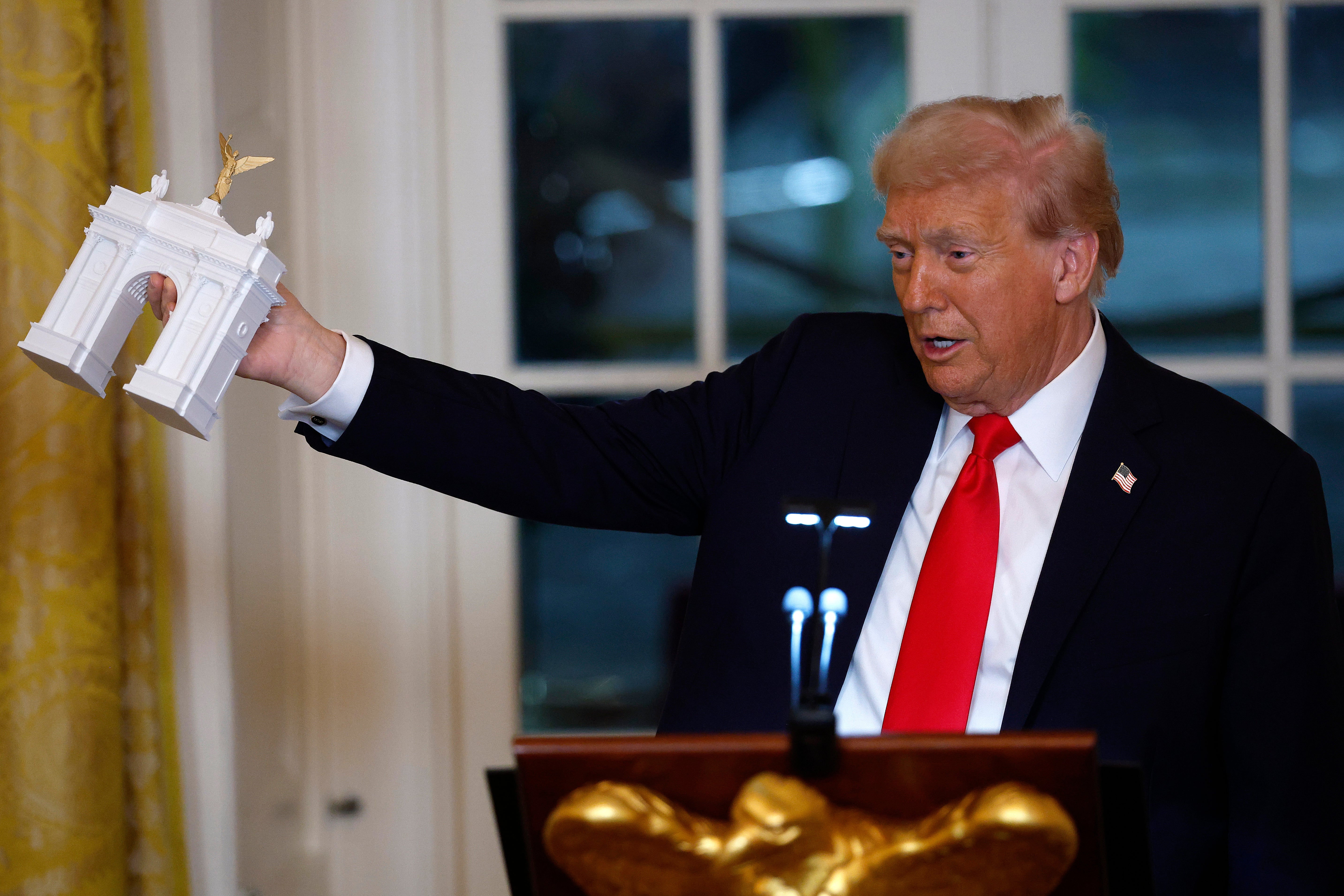
His renovation plans have gone beyond the White House, including an Arc de Triomphe-style arch at the edge of D.C. and marble armrests for the John F. Kennedy Center for the Performing Arts, which was recently renamed to include the president’s moniker.

But Axelrod, who previously served as a senior adviser to former President Barack Obama, warned that these shows of extravagance won’t sit well with voters who are struggling with the cost of living.


CNN Chief Political Analyst David Axelrod has said Republicans should be on edge over President Donald Trump’s focus on remodeling Washington D.C., which he called his 'Marie Antoinette thing' (Tasos Katopodis/Getty Images for The Atlantic)

“People are sitting around and thinking about how they’re gonna pay their bills and [Trump’s] posting stuff about how he’s gonna have marble handrails at the Kennedy Center and he’s posting pictures of his new marble Palm Room at the White House and so on,” Axelrod recently said on CNN.

He continued: "People are saying to themselves, 'What the hell does that have to do with me? I thought he was going to be fighting for me to bring my costs down.’ And he seems obsessed with gold and putting his name on things and remodeling buildings and rebuilding monuments to himself."

On the campaign trail, Trump promised voters he’d start bringing prices down “starting on Day One.”

Inflation has been cooling, with prices rising at a 2.7 percent annual rate in November, down from 3 percent in September, according to the government’s Consumer Price Index.


Trump has been remodeling the White House in gold and marble while polls show Americans struggle to put food on the table (Kevin Dietsch/Getty Images)

While food costs are going down, energy costs are ticking up. The cost of food rose 2.6 percent in November compared to the year before, lower than 3.1 percent in September, according to government data. The cost of energy rose 4.2 percent in November compared to the previous year, up from 2.8 percent in September.


Axelrod says Trump’s efforts to remodel his current home amid an affordability crisis, “is a huge political problem for him.”

“It's a symbol of his distraction. It's the Marie Antoinette thing that he's got going. That is a big political problem,” the political analyst said, adding that while Trump is not on the ballot in the 2026 midterm elections, “Republicans should be really concerned about what they’re seeing.”


Trump tore down the East Wing of the White House for his multi-million dollar ballroom (Alex Wong/Getty Images)

This isn’t the first time Trump has been compared to the last queen of France, who became a symbol of selfish luxury as the public went hungry, ahead of the French Revolution.

Democratic California Governor Gavin Newsom, known for trolling Trump online, shared an AI-generated photo of Trump as Marie Antoinette in November during the longest government shutdown in U.S. history.

Newsom’s press team shared the image on X, along with the caption “GOOD NIGHT, PEASANTS!” in reaction to a report that Trump was traveling to his Mar-a-Lago estate in Florida as Americans faced flight delays and cancellations from the shutdown.


Drones dive into aviation's deepest enigma as MH370 hunt restarts

Published: 30 Dec 2025 -


AFP

Washington: Nearly 12 years after Malaysia Airlines flight MH370 vanished with 239 people on board, the search for answers to one of aviation's most haunting riddles resumed Tuesday in the remote southern Indian Ocean.

Armed with cutting-edge deep-sea robots and smarter data, US investigators are scouring the seabed for clues that have eluded governments, experts and grieving families for more than a decade.

MH370 took off from Kuala Lumpur just after midnight on March 8, 2014, bound for Beijing on what should have been an uneventful six-hour flight.
Less than an hour later, its transponder went dark, wiping the Boeing 777 from civilian radar. Military screens later showed the aircraft veering sharply west, crossing back over Malaysia before heading south over the vast Indian Ocean.

What followed was the most ambitious and costly search in aviation history, as multinational teams combed more than more than 46,000 square miles (120,000 square kilometers) of seabed off Western Australia with ships, aircraft and sonar.
They found nothing.

The hunt was called off in 2017, leaving families with heartbreak and a mystery that spawned theories ranging from hijacking to deliberate pilot action.
Now, the Malaysian government has given the green light for a fresh attempt led by Texas-based marine robotics firm Ocean Infinity under a "no find, no fee" contract, according to a statement from Malaysia's transport ministry.

"The latest development underscores the government of Malaysia's commitment in providing closure to the families affected by this tragedy," it said.
The company will pocket $70 million only if it locates the wreck, reports said.

This new phase, expected to last up to 55 days, targets a tighter search zone of about 5,800 square miles -- far smaller than earlier efforts and pinpointed using updated satellite data, drift modeling and expert analysis.


Keeping the hunt alive

Ocean Infinity is unleashing autonomous underwater vehicles that can dive nearly 19,700 feet (6,000 meters) and stay submerged for days at a time.
The drones use high-resolution side-scan sonar, ultrasound imaging and magnetometers to map the seabed in 3D, detect buried debris and pick up traces of metal. If something promising appears, remotely operated vehicles can descend for close inspection.

Ocean Infinity, which also has a control center in Britain, led an unsuccessful hunt in 2018, before agreeing to launch a new search this year. AFP reached out to the company for comment but there was no immediate response.

Only fragments of MH370 have ever been recovered. Since 2015, fewer than 30 pieces believed to be from the aircraft -- bits of wing, landing gear and fuselage -- have washed ashore thousands of kilometers apart, from Reunion to Mozambique.

No bodies have ever been found

Malaysia's official probe concluded in 2018 that the plane was likely deliberately diverted from its course, but stopped short of assigning responsibility.
Relatives from China, Australia, Europe and beyond have fought for years to keep the hunt alive, arguing that closure matters not only for the dead but for global aviation safety.

Governments in Beijing and Canberra have welcomed Malaysia's decision, pledging support for any practical effort to crack the case.
Chinese national Jiang Hui, who lost his 72-year-old mother Jiang Cuiyun in the disaster, told AFP in an interview at his home in Beijing earlier this month that he remains set on finding answers, despite frustration with the authorities.

"Finding the plane, finding my loved one, and finding the truth, I believe this is something I must do in my life," he said.


MH370 search restarts more than ten years after plane's disappearance


Issued on: 30/12/2025 - FRANCE24


The deep-sea search for the wreckage of the MH370, which disappeared in 2014 is set to restart on December 30. Ocean Infinity, a private US and UK based company are managing the effort. They are working on a 'no find, no fee' contract, and will receive almost 60 million euros if they succeed. The hope is that improved technology will help solve the biggest recent mystery in aviation.


MY THEORY


South Korea approves operation of Saeul-3 nuclear reactor

Saeul-3 is South Korea’s 1st nuclear reactor designed to withstand aircraft attacks

Saadet Gokce |30.12.2025 - TRT/AA


ISTANBUL

South Korea on Tuesday greenlighted the operation of the Saeul-3 nuclear reactor, with its commercial launch scheduled for 2026.

The domestically built APR1400 reactor, located at the Saeul Nuclear Power Site in the southeastern port city of Ulsan, began construction in 2016, according to the Seoul-based news agency Yonhap.

The unit will undergo a pilot run over the next six months.

"In accordance with legal procedures and on scientific and technological grounds, we have thoroughly inspected the safety of the Saeul-3," Choi Won-ho, chairperson of the Nuclear Safety and Security Commission, said in a statement.

"We plan to continue strictly checking safety through pre-use inspections during nuclear fuel loading and the test-run process," Choi added.

The approval came about two weeks after the commission postponed its final decision at an initial meeting.

Saeul-3 is South Korea’s first nuclear reactor designed to withstand aircraft attacks.

It can store spent nuclear fuel for up to 60 years, enough to hold all fuel produced during its operating lifetime.
Climate-driven extreme weather pushing states to adaptation limits: Report

Millions of people were pushed close to limits of human adaptation in 2025, according to new report by World Weather Attribution

Necva Tastan Sevinc |30.12.2025 - TRT/AA


ISTANBUL

The growing frequency and intensity of extreme weather events driven by climate change are pushing the adaptive capacity of states to their limits, according to a new report by the World Weather Attribution (WWA).

The 2025 WWA report found that climate change fueled severe weather events across the globe this year, disproportionately affecting vulnerable and marginalized communities. Global temperatures have continued to rise, with heat waves now significantly more intense than a decade ago, it said.

The report noted that since the adoption of the Paris Agreement, the global average temperature has increased by around 0.3 degrees Celsius. While the rise may appear modest, experts warned it has translated into an average of 11 additional days of extreme heat each year worldwide.

WWA researchers said millions of people were pushed close to the limits of human adaptation in 2025, stressing that “drastically reducing fossil fuel emissions remains the key policy” to avoid the most severe impacts of climate change.

Ruben del Campo, spokesperson for Spain’s national weather agency AEMET, described the report as “a new wake-up call from the scientific community for climate action.”

He noted that heat waves in Spain are lengthening by nearly three days per decade, in line with the global trends highlighted in the study, reported Science Media Centre Spain.

Froila M. Palmeiro, a researcher at the Euro-Mediterranean Center on Climate Change, said the report reviewed the most significant extreme weather events of 2025 and examined their links to climate change.

She stressed that every fraction of a degree of warming avoided is “a major achievement,” as it helps limit the number of extreme heat days, Spanish news broadcaster RTVE reported.

The report also underlined deep inequalities in climate impacts, pointing to higher vulnerability in parts of the Global South and gaps in climate data outside the Northern Hemisphere, which affect the accuracy of forecasts.

Anna Cabre, a climate scientist affiliated with the University of Pennsylvania, said climate impacts are felt more intensely in the Global South, where limited data and weaker infrastructure make adaptation especially challenging.

She called for urgent action to strengthen mitigation and adaptation efforts.

Spanish climatologist Ernesto Rodriguez Camino also warned that the world is already living in a “profoundly altered climate,” with clear limits to adaptation.

He emphasized the need to cut emissions while simultaneously investing in adaptation, scientific research and global equity to address the growing risks posed by extreme weather.
French right pushes for national tribute to film star Brigitte Bardot

Paul Kirby
Europe digital editor
BBC
30.12.2025 - 

Charly Hel/Prestige/Getty Images

Brigitte Bardot died on Sunday aged 91 and had long shunned the limelight, preferring the company of animals

French right-wing figure Éric Ciotti has called for a national tribute to honour film legend Brigitte Bardot, prompting objections from political opponents on the left.

"France has a duty to honour its Marianne," said Ciotti, referring to the emblem of French liberty whose face Bardot was chosen to represent in the 1960s.

Bardot died on Sunday aged 91. A petition launched by Ciotti since has attracted more than 23,000 signatures, and has the backing of some allies on the far right.

But Socialist leader Olivier Faure has pointed out that national homages are for "exceptional services to the nation". Bardot was an iconic actress but she also "turned her back on republican values", Faure argued.

Bardot has been hailed by President Emmanuel Macron as a "legend of the century" who embodied a life of freedom, and Ciotti, who leads the right-wing UDR party, has appealed to him to organise a national send-off.

Ciotti said France should recognise a woman who brought her country an extraordinary level of international recognition and actively helped in the fight for women's liberty and abortion rights.

Meanwhile, the mayor of Nice, Christian Estrosi, has announced that his city will name an "iconic site" in Bardot's honour.

But Bardot is destined to remain controversial in death as she was during her life. Faure pointed out that she had been convicted five times for inciting racial hatred.

Bardot starred in some 50 films, after bursting on to the scene in And God Created Woman in 1956.

She then left the world of cinema in 1973 for a life devoted to animal welfare, and lived for decades in Saint-Tropez on the French Riviera, at her home called La Madrague.

But she became as well known for her far-right sympathies as she was for her love of animals. Some of her remarks targeted Muslims, and others insulted the people of the French Indian Ocean island of Réunion.

"To be moved by the plight of dolphins and yet be indifferent to the deaths of migrants in the Mediterranean - what degree of cynicism is that?" asked Green MP Sandrine Rousseau on social media.

There are differing types of national tribute in France.

Robert Badinter, who abolished the death penalty in France, was honoured with a national homage in the form of a solemn ceremony in 2024, as was singer Charles Aznavour in 2018.

A more likely option for Bardot would be along the lines of the public farewell given to rock star Johnny Hallyday, when large crowds lined the streets of Paris in 2017.

Not everyone on the left is opposed to the idea of a national homage to Bardot.

"Why not? We've done it for other figures, particularly Johnny Hallyday," Socialist MP Philippe Brun told French radio. "If the president of the republic decides on it, I don't see why we should oppose it."

MIGUEL MEDINA/AFP
Bardot will be buried near her family's graves in the marine cemetery in Saint-Tropez


Bardot herself had shunned the limelight for decades and close friend Wendy Bouchard said she was not remotely interested in medals and ceremonies.

"It probably comes from a good place, but I'm not sure that she, who lived a life of simplicity and deprivation, would have wanted this national homage," she told French TV.

Journalist Steven Bellery, who interviewed Bardot earlier this year, agreed she wanted something far more simple and intimate.

Bardot had asked to be buried at her Riviera home at La Madrague, rather than in a public cemetery, where she feared "a crowd of idiots might damage the graves of my parents and grandparents".

However, the town hall in Saint-Tropez has said she will have a private burial in the public cemetery that overlooks the Mediterranean as well as her home.

The Brigitte Bardot Foundation, which is dedicated to animal welfare, says her funeral will take place on 7 January at the Notre-Dame de l'Assomption church and will be broadcast on screens across the town.