Thursday, January 08, 2026

Venezuela and the Return of Empire

The global rallying cry of the Global South should, by now, be unmistakable. Down with imperialism: not as a slogan of nostalgia, but as a political necessity.
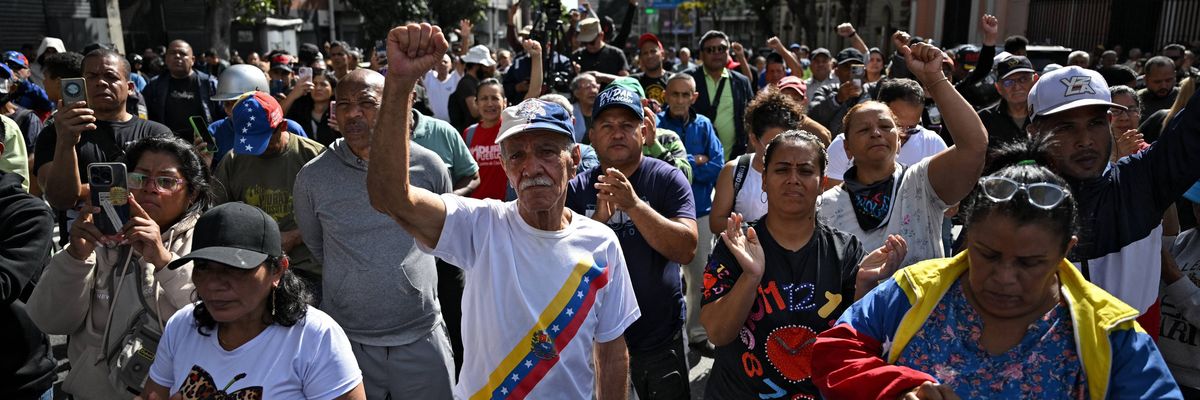

Supporters of Venezuela’s President Nicolas Maduro gather in the streets of Caracas on January 3, 2026, after US forces captured him.
(Photo by Federico Parra / AFP via Getty Images)
Jawad Khalid
Jan 08, 2026
Common Dreams


The seizure of Venezuelan President Nicolás Maduro by the United States marks a dangerous moment in international politics. A sitting head of state was forcibly removed from his country, flown to the United States, and placed on trial under American law. Washington has described this as justice. Under international law, it is an abduction.

President Donald Trump openly justified the attack by invoking the Monroe Doctrine, a 19th-century policy that treats Latin America as the United States’ exclusive sphere of influence. Trump went further, saying the doctrine had been “updated” and renamed, declaring that the United States would “run” Venezuela until it approved a political transition. He also made clear that American oil companies would move in to control Venezuela’s oil reserves, the largest in the world.

This was not hidden. It was stated plainly.

What is happening in Venezuela is not new. It follows a long and well-documented pattern. Latin America has repeatedly been subjected to US-backed coups, regime change operations, and military interventions, all justified under shifting narratives of freedom, security, or democracy.

Without unified voices of resistance, the unshackled advance of empire will continue, reshaping borders, governments, and lives at will.

From the overthrow of Guatemala’s Jacobo Árbenz in 1954 to the CIA-backed coup against Chile’s Salvador Allende in 1973, the region carries the weight of this history. The United States supported military dictatorships across Argentina, Chile, El Salvador, and Guatemala, governments responsible for mass killings, torture, and disappearances. It trained and funded armed groups like the Contras in Nicaragua, whose violence devastated civilian populations. The Monroe Doctrine has always meant one thing in practice: Latin America’s sovereignty is conditional.

Trump’s actions in Venezuela are simply a continuation of this logic.

As expected, Venezuela has now faced the full might of imperial power. Maduro sits in a US courtroom, while American oil companies prepare to rake in profits from the largest proven oil reserves on the planet. And the Global South remains divided and fragmented, offering no unequivocal, unified defense of Venezuelan sovereignty.

We have seen this paralysis before. We have been watching it unfold in Gaza for the past three years. There, too, a neocolonial imperialist order operates with impunity—bombing hospitals, leveling neighborhoods, killing thousands of children while invoking the rhetoric of security and self-defense. And there, too, the response has been fractured. Murmurs of resistance emerge, fragile and disconnected: a statement here, a protest there. Meanwhile, the so-called civilized West offers apathy at best. Even the peoples of the Global South, themselves shaped by histories of colonization and plunder, often look on in exhausted silence.

But is there anything truly new about Venezuela? Have we forgotten Iraq and Afghanistan—empire’s forever wars, launched on lies? Have we forgotten Libya, Syria, or the endless cycle of coups and regime-change operations that have defined Washington’s relationship with Latin America, its so-called backyard? The method remains the same: Violence exercised without consequence, legality bent to power, sovereignty treated as conditional.

What has changed is not the Empire but the resistance. There are no Che Guevaras, no Castros, no Chávezes today with the moral gravity to name imperialism for what it is, without apology or ambiguity. There are no leaders alive who dare to raise, unfiltered, the cry of resistance against empire. Instead, what we increasingly see are local elites who serve as intermediaries of domination, eager to trade sovereignty for approval, legitimacy, or personal gain. Nations are bartered away for access, status, and survival within an imperial order they dare not challenge.

Those who still speak out are swiftly disciplined. The Empire’s media brands them radicals, extremists, pariahs unfit for polite conversation, unworthy of seats at the tables of “civilization” and “progress.” They are sanctioned, silenced, or erased. And the rest? Hollowed out by petty self-interest and political cowardice.

In my own country, we carry a long and inglorious tradition of Napoleonic generals and compliant elites serving foreign empires—a tradition that has not ended, only adapted.

Today it is Gaza and Venezuela. Tomorrow it may be Iran. And one day, inevitably, it will be someone else—perhaps even us. This is how empire advances. Each violation normalizes the next. Each kidnapping, bombing, or occupation becomes the justification for another.

The global rallying cry of the Global South should, by now, be unmistakable. Down with imperialism: not as a slogan of nostalgia, but as a political necessity. Without unified voices of resistance, the unshackled advance of empire will continue, reshaping borders, governments, and lives at will.

The question is no longer whether the imperial order is collapsing. It is whether, in a fractured and conflict-ridden multipolar world, the victims of empire can overcome their divisions long enough to build something better.

And that question remains unanswered.


Our work is licensed under Creative Commons (CC BY-NC-ND 3.0). Feel free to republish and share widely.

Jawad Khalid
Jawad Khalid is a Pakistan-based climate finance and political economy analyst. He writes on climate justice, policy, and geopolitics with bylines in publications such as The Interpreter, Common Dreams, Asia Times, and CounterPunch.
Full Bio >


‘I’m Just Talking About Globally’: Forget Greenland, Says Rubio, US Reserves Right for Military Invasion Anywhere It Wants

“The Trump administration is blatantly colonialist, and proud of it.”
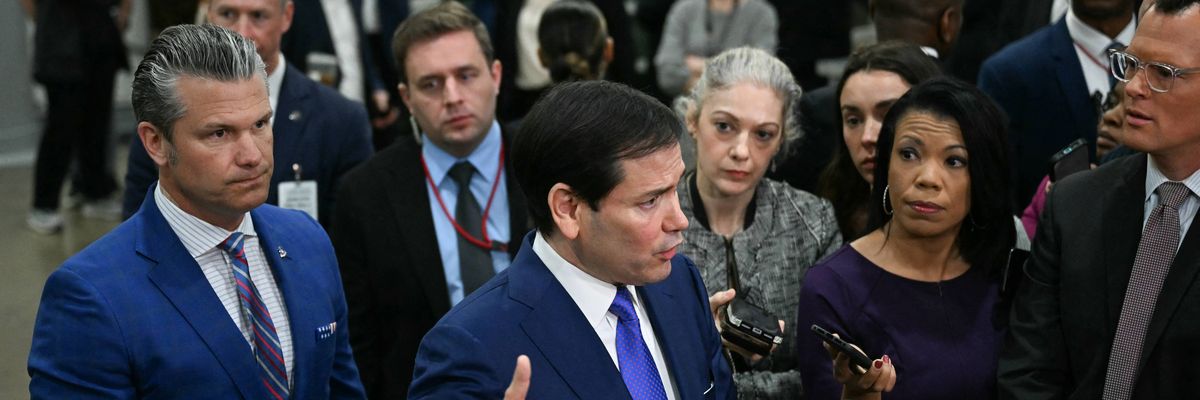


US Secretary of Defense Pete Hegseth and Secretary of State Marco Rubio speak to reporters after they briefed senators on the recent US military actions in Venezuela on Capitol Hill in Washington, DC on January 7, 2026.
(Photo by Brendan Smialowski/AFP via Getty Images)

Stephen Prager
Jan 07, 2026
COMMON DREAMS

On the heels of President Donald Trump’s threats to use military force to conquer Greenland, Secretary of State Marco Rubio suggested during a Wednesday press conference that US presidents reserve the right to do so not only in the Danish territory, but anywhere in the world.

The conference came shortly after Rubio and Defense Secretary Pete Hegseth briefed lawmakers about Trump’s illegal operation to overthrow Venezuelan President Nicolás Maduro last weekend.
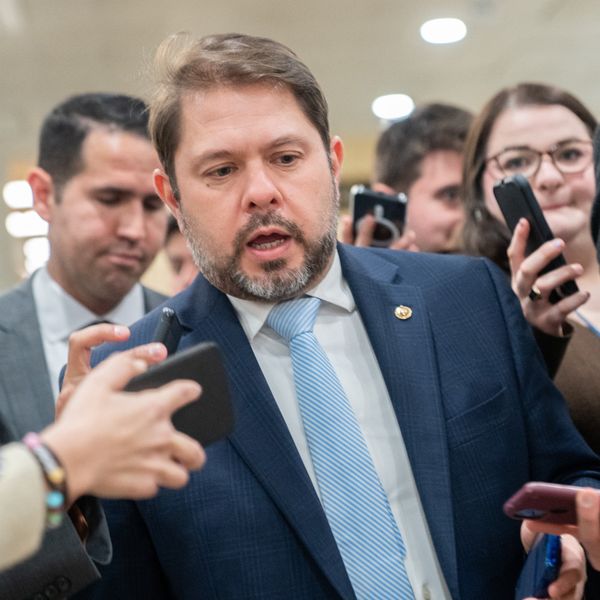


‘We Must Stop Him’: Gallego Bill Would Ban Funding for Trump Greenland Invasion
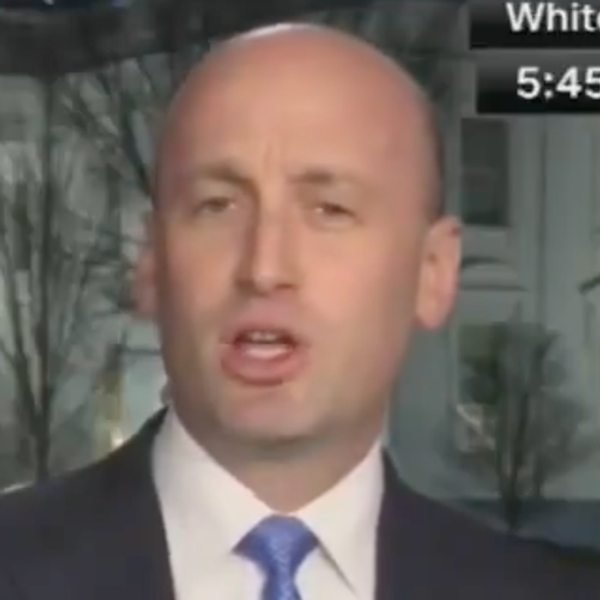


In ‘Unhinged’ Rant, Miller Says US Has Right to Take Over Any Country For Its Resources

After Rubio laid out plans for the US to take control of 30 million to 50 million barrels of Venezuelan oil following a deal with its newly installed government, reporters attempted to ask Rubio to explain the administration’s designs on Greenland.

On Tuesday, amid international outcry, the White House issued a statement that acquiring Greenland was a “national security priority” and that “utilizing the US military is always an option” to annex the Arctic island.

European leaders met on Wednesday to discuss a potential response if Trump were to launch a military operation to seize Greenland, which has been a territory of Denmark—now a NATO member—for over 300 years.

Rubio appeared sheepish about discussing Trump’s saber-rattling. Asked by a reporter whether he’d take military intervention “off the table,” he shrugged: “I’m not here to talk about Denmark or military intervention. I’ll be meeting with them next week.”

Rubio pivoted to discuss the president’s interest in buying Greenland, which he has suggested since his first term in office. But reporters continued to press on what was meant by Trump’s suggestion that the military may be used.


After continuing to stall—and, at one point, interrupting a reporter to tell him he’d “lost a lot of weight”—Rubio obliquely addressed the president’s threats.

He said: “Guys, what I think the White House said yesterday is what I will tell you now, and I’ve always said: The president always retained the option—every president, not this president, every president—always retains the option... I’m not talking about Greenland, I’m talking about globally. If the president identifies a threat to the national security of the United States, every president retains the option to address it through military means.”

“As a diplomat, which is what I am... we always prefer to settle it in different ways,” Rubio continued. “That included in Venezuela. We tried repeatedly to reach an outcome here that did not involve having to go in and grab an indicted drug trafficker. Those were unsuccessful, unfortunately.”

The United Nations Charter, which the US has signed, allows for the use of military force against other sovereign nations only in very narrow circumstances: in self-defense against an imminent attack, or when approved by the UN Security Council as necessary to prevent a threat to peace.

The Trump administration has attempted to stretch this definition to justify its overthrow of the Venezuelan government, claiming that supposed drug trafficking from Venezuela constitutes an imminent threat to the US. But Venezuela is not considered a large player in the global drug trade, and even if it were, drug trafficking has never been considered equivalent to an armed attack under international law.

Rubio did not clarify what “threat” Greenland supposedly poses to the United States. Earlier this week, Trump stated that the US “needs” the island because it is supposedly “covered with Russian and Chinese ships,” which isn’t true, but would not constitute an imminent threat to the US even if it were.

When a reporter then asked Trump what justification the US would have to take Greenland, he responded that “the [European Union] needs us to have it.” Several major EU members, in fact, issued a harsh condemnation of the idea on Tuesday.

International relations scholars agree with virtual unanimity that for the US to forcibly annex Greenland would not be a legitimate use of force. But Section 2(4) of the UN Charter also forbids the threat of military force as a tool of leverage in negotiations, which Trump may be using in a possible bid to buy Greenland.


International law does not recognize title obtained through unlawful force,” wrote Edmarverson A. Santos, a Dublin-based international law and policy researcher. “The prohibition extends beyond actual armed attack. Contemporary doctrine recognizes that serious threats of force, particularly when coupled with political or military pressure, can fall within the scope of Article 2(4).”

Since its attack on Venezuela, the Trump administration has threatened to use similar force to knock over the governments of several other countries as part of what he has described as a 21st-century revival of the colonial-era “Monroe Doctrine.”

Trump issued threats to Mexico’s President Claudia Sheinbaum and Colombian President Gustavo Petro. Rubio, meanwhile, said that if he were part of Cuba’s socialist government, he’d “be concerned, at least a little bit.”

On Tuesday, André Nollkaemper, a professor of public international law at the University of Amsterdam, warned that Trump’s increasing belligerence toward Europe was the direct outcome of European leaders’ meek response to his attack on Venezuela.

“The long-term impact of US intervention in Venezuela will not be decided in Caracas or Washington, but elsewhere,” he wrote for the German academic site Verfassungsblog. “With intervention now framed as a standard policy instrument of the USA, it is the response of other states—including in Europe—that will determine whether the erosion of international law becomes normalized across regions.”

“In deciding the course and content of its response, Europe might be tempted to assume that this new strategy is limited to Latin America, and that the United States should be given some room there,” he continued. “That would, of course, be irresponsible; in terms of its implications for international law, and with regard to Mexico, Colombia, and Cuba—not to mention Greenland.”


Trump overseeing 'rogue state' that 'demands compliance' from the world: columnist

Ewan Gleadow
January 8, 2026 
RAW STORY

Donald Trump is overseeing a "rogue state" administration which "demands compliance" from countries all over the world, a political analyst has suggested

The president's desire to take over Greenland and run the oil refineries in Venezuela has prompted columnist Aditya Chakrabortty to suggest Trump is making theatrics the aim of his second term in office. Writing in The Guardian, Chakrabortty called on political parties the world over to condemn the administration as "a rogue state".

He wrote, "Any other country that did this wouldn’t receive indulgent op-eds about its 'gunboat diplomacy' – it would rightly be condemned as a rogue state, and its oligarchs’ foreign assets impounded. The absence of such action is the true 'Trump derangement syndrome'."

Both Greenland and Venezuela were profiled by Chakrabortty, with both countries showing what Trump wants from the world and how he will go about getting "compliance" from nations in the way of his administration's goal.

Chakrabortty added, "Next, we are confidently assured, the US president will annex Greenland. Yet this is not an administration that wants to colonise; instead it demands compliance. The new bosses in Venezuela are the same old bosses, the same henchmen and yes-men, only now with the No 2 running the show."

"This isn’t 'imperialism', not a new US protectorate nor some southern principality for son-in-law Jared, but something much cheaper and less onerous to the Oval Office: rule by remote control."

The columnist went on to say Trump's focus should be on domestic affairs, not world order. He wrote, "Will Trump rule Venezuela, or Greenland? It would make a change if he ruled the US. The president is a fair way through his second term in office, yet we are still to see Trumpism in one country, let alone around the world."

"For all the rhetoric and locker-room bullying, Trump’s time in office has been about dismembering the government – even that vital task outsourced, to Elon Musk and his chainsaw – and setting troops on Democratic cities he doesn’t like, then blustering his way through a federal shutdown."

'Protection money': Nobel Prize winner says Trump's new moves are 'enriching his clique'


Ewan Gleadow
January 8, 2026
RAW STORY


U.S. President Donald Trump sits in the Oval Office of the White House in Washington, D.C., U.S., March 7, 2025. REUTERS/Leah Millis TPX IMAGES OF THE DAY

Donald Trump has been accused of "enriching his clique" by a Nobel Prize winner who says recent administration actions are attempts at "glorifying" the president.

Paul Krugman suggested Trump is using Venezuela and Greenland as a chance to bolster not the country, but himself and his inner circle. Writing in his Substack, the award-winning economist claimed, "Add in the cost of munitions expended during the Maduro abduction, and the whole adventure has surely cost more than a billion dollars."

"Moreover, the meter keeps ticking: since Chavistas are still in power, Trump has to keep forces nearby in order to intimidate them to honor agreements. But Trump doesn’t care: The military expenses are the little people’s problem."

"The bottom line is that to understand what Trump is doing around the world you must disabuse yourself of the notion that any of it is about serving America. It’s all about glorifying himself and enriching his clique."

Krugman also noted Trump had been "remarkably transparent" about his "looting" of Venezuela and their oil. He added, "Trump has been remarkably transparent about his goals in Venezuela: It’s all about looting. That is, he wants to seize the country’s oil wealth on behalf of himself and his clique."

"Some people, notably María Corina Machado, leader of Venezuela’s opposition, have been surprised that Trump shows no interest in restoring democracy. But why would he? He’s unable to enrich himself personally in democracies like Canada and Denmark. But a repressive regime like Venezuela is willing to pay him protection money."

The economist has since questioned the value of the "millions of barrels" of oil Trump is proposing to bring into the United States, suggesting the value would hardly make a dent for the economy.

He wrote, "But suppose that this one-time gift of oil is real. Trump would have you believe that it’s a big deal — MILLIONS of barrels."

"But that amount of oil has a market value in the range of $2 billion, which is not a big number for the United States. In fact, it’s less than 0.01 percent of GDP. And in terms of US oil consumption, that’s about 2 days worth of oil."

Iranians protest for 12th day as Kurdish opposition calls for general strike

An Iranian police officer was killed in a stabbing during unrest near the capital, local media reported on Thursday as protests over the cost of living in the country entered a 12th day. Several Kurdish opposition parties based in neighbouring Iraq have called for a general strike in support of the protest movement.


Issued on: 08/01/2026 
By: FRANCE 24

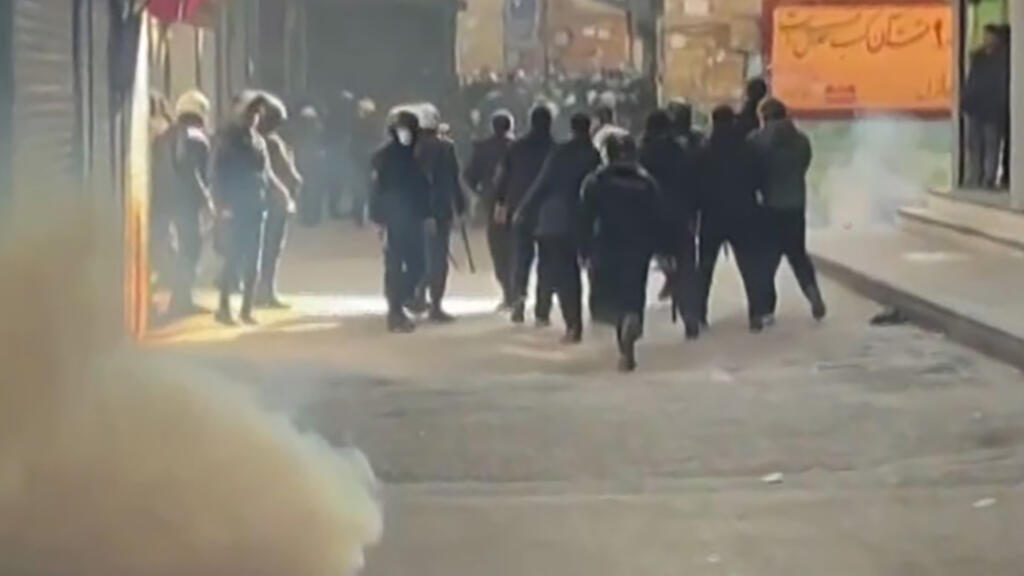
Screen grab of a UGC video posted on social media showing Iranian riot police dispersing protesters in Tehran on January 6, 2026. © UGC screengrab via AFP

Iranian media said a police officer was killed in a stabbing during unrest near the capital, Tehran, on the 12th day of protests over the cost of living in the country.

Shahin Dehghan, a member of the police force in Malard county west of Tehran, "was martyred a few hours ago after being stabbed during efforts to control unrest", Fars news agency reported, adding that efforts to identify the perpetrators are underway.

Unrest broke out in Iran on December 28 after merchants in Tehran staged a protest against rising prices and the collapse of the rial, triggering a wave of similar actions in other cities.

The demonstrations have spread to 25 of Iran's 31 provinces, according to an AFP tally based on official statements and local media, and left dozens killed including from security forces.

It is the most serious protest movement in the Islamic republic since the 2022-2023 nationwide rallies sparked by the death in custody of Mahsa Amini, who was arrested for allegedly violating the strict dress code for women.

The demonstrations have yet to reach the scale of the 2022-2023 movement, let alone that of mass 2009 street protests that followed disputed elections.

But they have presented a new challenge for Iran's leadership against the backdrop of a biting economic crisis and on the heels of the 12-day war with Israel last June.

General strike call

Several Iraq-based Iranian Kurdish opposition parties have called for a general strike on Thursday in Iran in support of the protests, one of the exiled parties told AFP.

The Komala party, an exiled Iraq-based Iranian Kurdish separatist group that Tehran considers a terrorist organisation, announced the strike on Wednesday.

"Seven Kurdish opposition parties have called for a general strike tomorrow Thursday," said Komala central committee member Hassan Rahmanpanah.

"The aim of this call is to demonstrate the unified support of the Kurdish people for the struggle and protests being waged by the Iranian people against the Islamic republic," he told AFP.

Rahmanpanah also accused the Iranian authorities of "brutal and criminal attacks" against demonstrators.

(FRANCE 24 with AFP)


New clashes in Iran as opposition urges more protests

Paris (France) (AFP) – Security forces used tear gas to disperse protesters in Iran as people angered by the economic situation in the Islamic republic kept up their challenge to the authorities and the exiled opposition Thursday urged them to step up their actions.

Issued on: 08/01/2026 - RFI

The 12 days of protests have shaken the clerical authorities under Ayatollah Ali Khamenei already battling economic crisis after years of sanctions and recovering after the June war against Israel.

The movement, which originated with a shutdown on the Tehran bazaar on December 28 after the rial plunged to record lows, has spread nationwide and is now being marked by larger scale demonstrations.

Authorities have blamed unrest on "rioters" and the judiciary chief has vowed there would be "no leniency" in bringing them to justice. On Wednesday, an Iranian police officer was stabbed to death near Tehran "during efforts to control unrest", the Iranian Fars news agency said.

Reza Pahlavi, the son of the shah ousted by the 1979 Islamic revolution and a key exiled opposition figure, said that the turnout during Wednesday's protests had been "unprecedented" and called for major new protests Thursday evening.

He said in a message on social media he had received reports the "regime is deeply frightened and is attempting, once again, to cut off the internet" to thwart the protests.

The HRANA monitor published a video of protesters in Kuhchenar in the southern Fars province cheering overnight as they pulled down a statue of the former foreign operations commander of the Revolutionary Guards Qassem Soleimani who was killed in a US strike in January 2020 and is hailed as a national hero by the Islamic republic.

HRANA said according to its count protests had taken place in 348 locations over the last 11 days in all of Iran's 31 provinces.

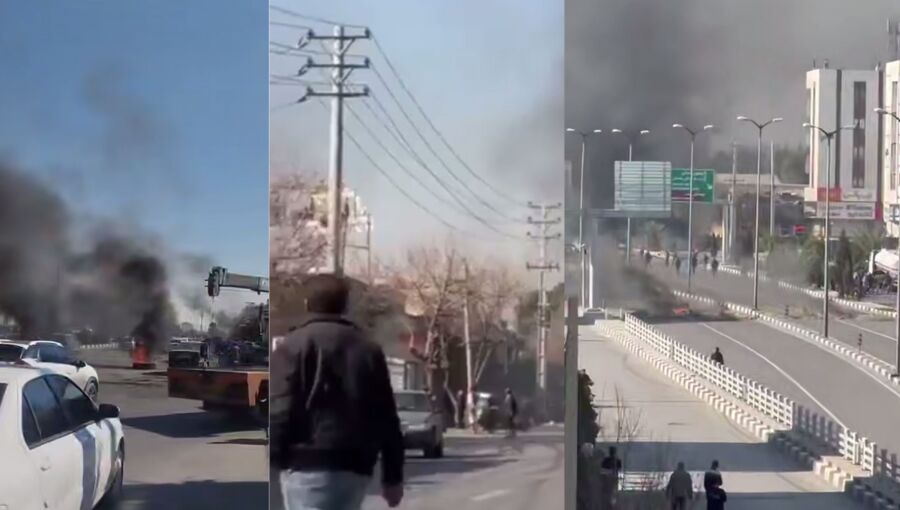
It also published a video of people massing late at night in the Tehran satellite city of Karaj and lighting fires in the streets and also images of security forces using tear gas to disperse a protest in the Caspian Sea town of Tonekabon.

The Norway-based Iran Human Rights group said security forces on Wednesday "opened fire on protesters, used tear gas and violently assaulted civilians" during a protest in the key southeastern hub of Kerman.

The protests are being characterised by larger-scale demonstrations, with hundreds marching through a main avenue in the northeastern city of Bojnord on Wednesday in a video verified by AFP.

Demonstrators are repeating slogans against the clerical leadership including "this is the final battle, Pahlavi will return" and "Seyyed Ali will be toppled", in reference to Khamenei.

IHR said on Tuesday at least 27 protesters including five teenagers under the age of 18, have been confirmed to have been killed in a crackdown on the protests, warning the death toll will climb as more killings are verified.

© 2026 AFP


Iran teetering on the edge of the abyss

Iran teetering on the edge of the abyss


\
The Islamic Republic is teetering on the edge of an abyss that will either lead to the overthrow of the theocracy or plunge the contry into a violent crackdown that could see hundreds die. / CC: social media.
By Ben Aris in Berlin January 7, 2026

Like the protests in Ukraine's Maidan Square and those in neighbouring West Asian states, this latest round of protests in Iran is being driven by economic and political discontent, with a growing number of analysts and pundits in the West drawing analogies to previous protest movements. 

When people cannot afford to buy bread, they lose their fear of bullets. The protests sweeping the country are teetering between the overthrow of theocracy or a violent crackdown that would leave hundreds dead, Britain's Fraser Nelson said in a Substack post this week.

The Iranian rial has been in freefall, losing nearly half its value over 2025. Inflation is running at least 40%, and food prices are up 80%. This makes businesses unviable, with shopkeepers and producers refusing to sell their products, fearing losses.

Every major protest in Iran tends to be crushed by overwhelming force and as part of his Middle East peace strategy US President Donald Trump has stepped into the fray declaring: “If Iran shoots and violently kills peaceful protesters, which is their custom, the United States of America will come to their rescue. We are locked and loaded and ready to go.”

The violence is already escalating. While the Iranian Revolutionary Guard Corps (IRGC) has the resources to crush protests in the large cities, it does not in the smaller ones where local governors are taking matters into their own hands in direct contravention of calls for calm from the presidency.  

The regime’s historic knee-jerk reaction is to turn to violence, as has been shown in previous rounds of challenge to the system. In November 2019, when demonstrations erupted over a fuel price hike, the Rouhani administration imposed a total internet blackout and struck back, leading to hundreds of deaths.

“The clerics claim that Islam itself is under threat, in the hope of rallying religious groups who do not support Khamenei. No Islamic Republic, it says, no Islam,” says Nelson.

But repression is their standard response and an era of popular consent is over. Khamenei is 86; the average Iranian is 33. This is a sophisticated, educated country rolling in natural resources suffering the worst food inflation in the world next to South Sudan. All because their leaders won’t give up their nuclear ambition, leading to sanctions, says Nelson.

A gaping disconnect has opened up between the mullahs and the people they rule. The theocracy controls the economy and society. Iran’s military, judiciary and parliament are all dominated by hardliners whose worldview is now very different to the well-educated people they govern who want to see the country open up.

Recent polls suggest that Iranians have had enough of the ‘death to Israel’ rhetoric and the uranium enrichment agenda that has brought down the crushing sanctions. A post-Israel-war survey found 58% of Iranians blamed Khamenei for the June war damages; 69% said Iran should give up calling for Israel’s destruction.

Partly thanks to the internet, which has put the rest of the world on display, the social mores have shifted. The cleric-led system is not keeping up. Increasingly the people resent the economic austerity and repression that underpin domestic security, as they can now see directly how the rest of the world lives.

This desire for change was underscored by the 2022 mass protests following the death of Mahsa Amini, a young woman who was arrested and beaten to death by the morality police for incorrectly wearing her hijab. So far, the 2026 protests have not been the same size in terms of numbers of people protesting, according to reports on the ground; however, they have been more widespread, with different deciles protesting over the cost of living and the poor state of affairs. Most importantly, the 2026 protests have seen growing numbers of bazaar merchants come out on the streets, which is different to the 2022 protests.   

The collapse of the rial was the spark that set the touchpaper on fire. Years of pent-up frustrations have now exploded onto the street, initially by mobile phone retailers in the condemned Aladdin Passage, the historic home of cell phones. 

This time, protests are nationwide and, like in Ukraine, they are beginning to grow to a size where the security forces are hesitant to tackle them, allowing the sporadic crowds to vent their frustrations at the orders of the country's President Pezeshkian. Yet despite his order not to beat up and shoot protesters, more than three dozen have died, and over a thousand people have been arrested, according to human rights groups. 

In the small town of Lordegan, protesters stormed the governor’s office and set fire to the judiciary building and the Foundation of Martyrs: a direct rejection of the regime’s ideological apparatus.

In Far’s town of Azna, protesters overran a police station. In Fasa, crowds broke down the doors of the governorate despite live fire from security forces and military helicopters circling overhead. Students at Beheshti University resisted midnight raids on their dormitories, Nelson reports.

And in a reversal of the 1979 revolution this time round the protestors are openly chanting: “Long live the shah.” And the protestors know they are taking their lives in their hands: more than 1,500 people were killed during the three days of protest in 2019.

Following protests in 2022 dozens of young men were hanged from cranes after show trials and “confessions” extracted under torture. The hangings were broadcast on state television. Executions in Iran have doubled in 2025 compared to 2024, the highest rate in nearly 40 years. Protesting in Iran means accepting the possibility of being arrested and executed. There are reports that the regime has stayed shooting people in Fooladshahr, Isfahan, which would mean calling Trump’s bluff.

The regime is scaling up its response as control slowly slips through its fingers. Earlier this week video out of Tehran showed commuters using the metro running to exits after the police fired tear gas grenades in the underground stations. Water cannons have been deployed in sub-zero temperatures, amid Iran’s worst drought in 40 years. And reports of live ammunition use are increasing daily.

The more liberal Iranian President Masoud Pezeshkian has been attempting to diffuse the growing tensions and has tried to engage the protestors in dialogue. He appeared on television this week, admitting the government’s paralysis: “If people are dissatisfied, it is our fault. Do not look for America or others to blame. The responsibility lies with us.” He accepted the resignation of the central bank governor, who has become a fall guy for the inflation spike, but so far, this soft-handed approach has failed to quell the unrest.

The regime’s response has been made more difficult following the 12-day war with Israel. Hossein Salami, commander of the Revolutionary Guards, and Mohammad Bagheri, chief of staff, were killed in Israeli strikes, weakening the leadership of the IRGC.

Khamenei recently appointed Brigadier General Ahmad Vahidi as IRGC deputy commander, his second major appointment in two months, reflecting chaos at the top, says Nelson. The lack of a knee-jerk violent crackdown suggests there are disputes amongst the elite over how to respond to the escalating demonstrations.

Many have highlighted the role of Crown Prince Reza Pahlavi, who lives in exile but has taken to social media to promote a change in regime and offer himself as a new leader. He visited Israel in April 2023 and met Benjamin Netanyahu, the first prominent Iranian to do so publicly.

For many, the return of the monarchy has become an immediate solution to the problem of how to change the leadership. As an exile, Pahlavi already has relations with the Western powers and should be able to rapidly negotiate a partial lifting of sanctions in a similar way that the new President, Ahmed al-Sharaa, has brought about a sea-change in Syria’s relations with the West and immediate sanctions relief.

But the popularity of the monarchy picture is contested. A Kurdish activist reported that regime agents infiltrate protests and chant in favour of Pahlavi, to discredit the movement and create discord, Nelson reports.

The Biden administration took a policy of containment and engagement that went nowhere. Trump has adopted an altogether more aggressive foreign policy – especially against Iran and Venezuela – of pressure and destabilisation: maximum sanctions, support for Israeli strikes, direct action against Iranian assets abroad.

It remains to be seen if Trump can deliver tangible long-term results from his transactional approach. Moscow and Beijing are allies with both Iran and Venezuela, but both are powerless to seriously affect the outcomes of these showdowns with Washington. They can at best offer solidarity and facility sanction-busting oil exports. However, Trump is specifically targeting Iran’s oil exports to China and has told the new Rodrigues government to cut ties with both Moscow and Beijing or face renewed military strikes and even harsher sanctions.

Day 9 of Protests in Iran

DV coeditor Faramarz Farbod joined AnewZ.tv (Baku, Azerbaijan) on the 9th day of protests in Iran to discuss the evolving situation.

Facebook

Faramarz Farbod, a native of Iran, teaches politics at Moravian College. He is a DV coeditor and is the founder of Beyond Capitalism a working group of the Alliance for Sustainable Communities-Lehigh Valley PA as well as being the editor of its publication Left Turn. He can be reached at farbodf@moravian.eduRead other articles by Faramarz.

Iran’s youth on the front lines of protests face worsening crackdown


ANALYSIS


Tehran has been tightening its grip on protests sparked by hyper-inflation and the rising cost of living, with hundreds of demonstrators – many of them under 18 – arrested or wounded. But the state's crackdown may only be radicalising a nationwide wave of opposition that shows little sign of slowing.


Issued on: 06/01/2026 - 
FRANCE24


This grab taken January 2, 2026, from UGC images posted on social media on December 31, 2025, shows protestors attacking a government building in Fasa, southern Iran. © UGC via AFP

On Nazila Maroofian’s Instagram page, photographs of young Iranian protesters who have been seized by security forces follow one after the other: Kimia Hadadian, 17, Kourosh Kheiri, 13, Amirhossein Karimpour, 17.


"This child was struck by a bullet and apparently arrested during demonstrations in Naziabad (Tehran) around 8pm on January 4, 2026,” Maroofian wrote under a picture of missing 14-year-old Sogand Mansouri.

“She was wearing a grey jacket and no information about her condition or place of detention is available at the moment … If someone has news of her, absolutely please let us know.”


Living as a refugee in France since 2023, Maroofian, 25, was herself arrested in 2022 during the widespread protests triggered by the death of Mahsa Amini in custody.

Maroofian was detained for having interviewed Amini’s father after the young Kurdish-Iranian woman was arrested by the country’s morality police for allegedly wearing her headscarf improperly.

Through her contacts with those now taking to Iran’s streets, Maroofian has taken it upon herself to act as a public conduit for the latest wave of protests, which have sparked a crackdown by the Islamic Republic’s security forces.

A series of strikes against hyper-inflation by shopkeepers in Tehran and other major cities erupted on December 28. This latest social movement has since increasingly taken on a political character, with some crowds shouting slogans explicitly calling for the government’s fall.

The demonstrations have spread to the universities, and a number of young Iranians are now joining the protests daily. Teachers’ unions have reported that several high-schoolers have been arrested across the country; their families have been kept largely unaware of their whereabouts.


Under lock and key


Iranian security forces have killed at least 27 protesters, including five minors, since late December, the Norway-based NGO Iran Human Rights said on Tuesday.

"At least 27 protesters have been killed by gunfire or other forms of violence carried out by security forces in eight provinces. Five of those killed have been verified to have been children," the NGO said after 10 days of protests, adding that over 1,000 people had been detained

The NGO on Sunday expressed concern about the fate of young Iranians detained during the demonstrations, particularly underage protesters believed to be imprisoned in Isfahan Central Prison.

Several wounded detainees have been transferred to the prison’s infirmary, the group said in a statement, including 16-year-old Soroush Azarmehr, 17-year-old Payam Aminzadeh and 16-year-old Saman Shahamat, who were arrested after being injured in the head and back.

In a prison in the conservative city of Qom, a bastion of theological universities in southern Iran, Soroush Javidi, 17, lost consciousness after suffering major blood loss, the organisation said.

“It is unclear whether he received appropriate medical care after being admitted to the prison infirmary,” the statement said. “On January 3, around 100 prisoners were transferred to Qom Central Prison, where they were all crammed into a single hall.”
Open fire

According to a January 5 report by Human Rights Activists News Agency, which tracks rights in Iranat least 1,203 people have been arrested since the demonstrations began in late December. Official figures say that at least 12 people, including members of Iran’s security forces, have been killed.

According to Iran Human Rights, AK-47 assault rifles and possibly even machine guns were used on January 3 to repress street protests in Malekshahi county, an area with a large Kurdish population.

The latest protests have affected at least 45 mostly small to mid-sized towns across Iran, mainly in the country’s west, according to an AFP analysis of media coverage and official announcements. Protests have broken out in at least 25 of Iran’s 31 provinces.

“Each time, there are a few dozen to a few hundred people protesting,” said FRANCE 24 correspondent Siavosh Ghazi. “But the movement is gaining momentum, spreading, and becoming increasingly radical.”
Fighting back

In one viral video taken on January 4 in Hamedan, a city in Iran’s west, protesters – including several women – set upon a pro-government militiaman who had just fired upon them. A number of protesters hurl themselves on a uniformed member of the Basij paramilitary force and disarm him, dragging him to the ground and beating him while others try to stop him from being killed in the street.

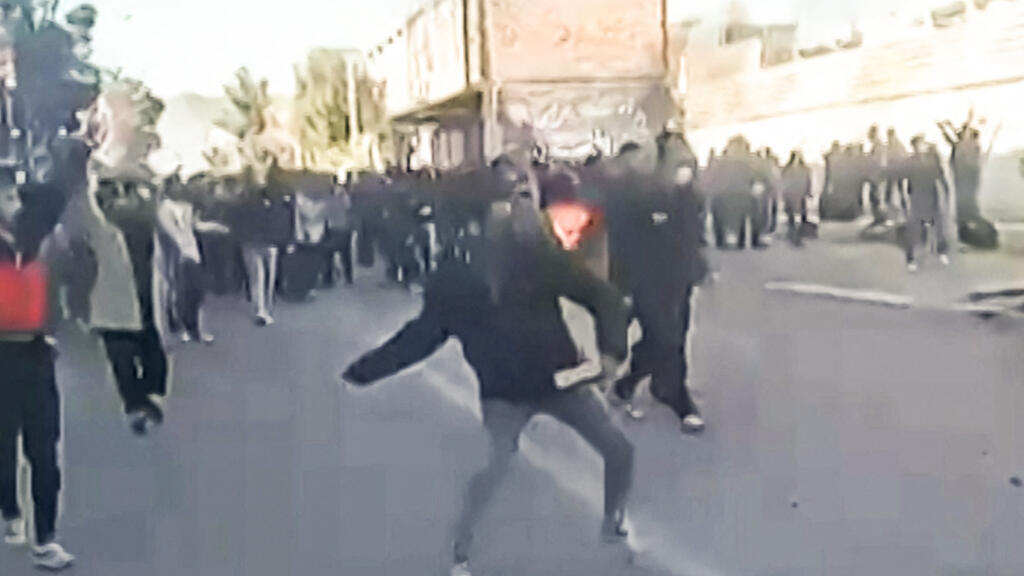
Other images shared on social media show similar scenes, with protesters hurling stones at riot police or throwing petrol on a militiaman before setting him ablaze.

In other scenes, demonstrators drop to their knees in front of motorbike-riding security forces in a non-violent display of resistance, seemingly without fear of being arrested.


Gholamhossein Mohseni Ejei, head of the country’s judiciary, said on Monday that he recognised protesters have the right to demonstrate peacefully over economic concerns. But there will be “no leniency or indulgence” towards “rioters”, he said.

Supreme Leader Ayatollah Ali Khamenei, who had mostly maintained his silence since the new protests erupted, echoed this sentiment during a Shiite festival in Tehran on Saturday. While protesters’ economic demands were “just” he said, “rioters” needed to be “put in their place”.

Iran Human Rights warned that the supreme leader's statement amounted to a blank cheque to security forces to escalate their repression.

“On 3 January, Ali Khamenei, the Supreme Leader of the Islamic Republic, implicitly issued an order to crack down by referring to protesters as ‘rioters’ and ‘agents of the enemy’,” the group said in its statement.

This article has been adapted from the original in French.


SYRIAN KURDISTAN; TURKIYE STAY OUT

Turkey offers to 'support' Syrian forces against Kurdish fighters in Aleppo


Turkey stands ready to help Syria in its "counter-terrorism" operation against Kurdish fighters in Aleppo, the Turkish defence ministry told a press briefing on Thursday, adding that the Aleppo operation was "carried out entirely by the Syrian army" – implying no Turkish involvement.


Issued on: 08/01/2026 
By: FRANCE 24

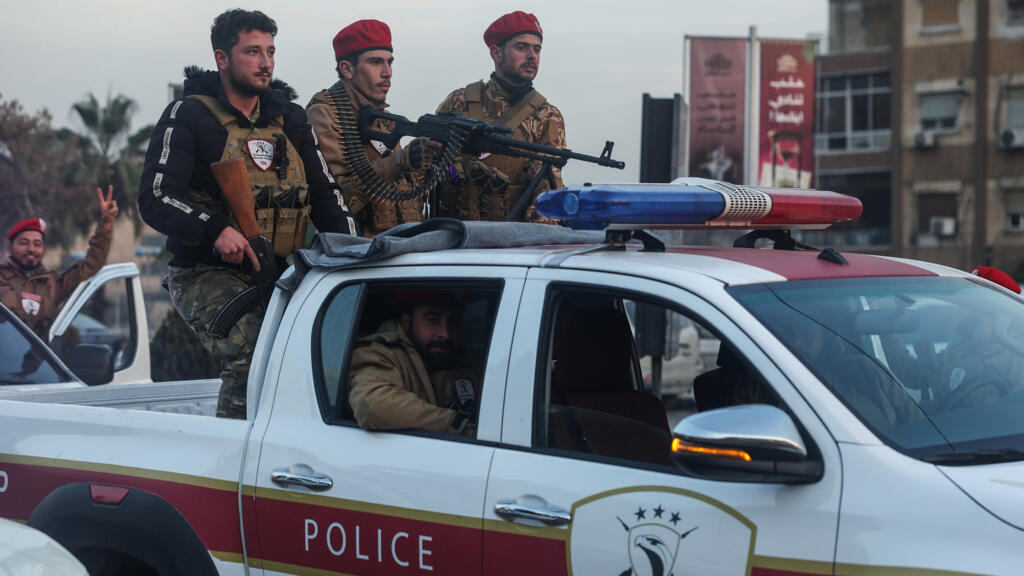
Syrian government soldiers ride a vehicle during clashes with Kurdish fighters in the northern city of Aleppo, on January 7, 2026. © Ghaith Alsayed, AP

Turkey's military is ready to "support" Syria in its battle with Kurdish fighters in the northwestern city of Aleppo if Damascus asks for help, a defence ministry official said Thursday.

Deadly clashes erupted this week between Syrian government forces and the Kurdish-dominated Syrian Democratic Forces (SDF) after the two sides failed to reach a year-end deadline to merge the Kurdish fighters into the main Damascus military.

"Turkey supports Syria's fight against terrorist organisations," the official told reporters, saying Ankara was "closely monitoring" developments in the north.

"Should Syria request assistance, Turkey will provide the necessary support," he said, echoing a long-standing offer by Ankara to extend military support to its allies in Damascus's new Islamist government.

Turkey has long been hostile to the Kurdish SDF that controls swathes of northeastern Syria, seeing it as an extension of the banned Kurdish militant group PKK, seeing it as a major threat along its southern border.

It has repeatedly pushed for implementation of a March 2025 deal under which the Kurds' semi-autonomous administration and military would be integrated into the Syrian military and security apparatus.

The Kurds are pushing for decentralised rule, an idea which Syria's new authorities have rejected, blocking the deal's implementation causing tensions that have occasionally erupted into clashes.


© France 24
05:14


On Wednesday, the Syrian military began shelling two neighbourhoods in Aleppo after ordering all Kurdish fighters to leave the area following clashes that forced thousands of civilians to flee.

Parliamentary speaker Numan Kurtulmus said Turkey wanted to help end the clashes.

"Our aim is to bring an immediate end to the kind of clashes currently seen in Aleppo ... and for a truly pluralistic, democratic regime that meets the needs of Syria's people to be established rapidly. Turkey is ready to provide all necessary support for this," he told reporters.

He also warned against any involvement by Israel in the ongoing dispute between Damascus and the SDF, echoing frequent concerns expressed by Turkish officials that Israel could exploit the unrest to further its own interests.

Israel on Thursday denounced Damascus's operation "against the Kurdish minority in Aleppo", describing it as "grave and dangerous" for Syria's minorities, hiking concern it could weigh.

"Let me be very clear: Israel does not love the Sunni Arabs in Syria, nor does Israel love the Kurds of Syria," Kurtulmus said.

"We know the fundamental aim of some countries in the region is to fragment and divide this region further, to turn people against each other on ethnic, religious, and sectarian grounds and even turn them into enemies."

(FRANCE 24 with AFP)


Syria govt demands Kurdish fighters leave Aleppo neighbourhoods


By AFP

January 7, 2026


Thousands fled the Kurdish-dominated neighbourhoods of Aleppo in Syria
 - Copyright AFP Bakr ALkasem

Bakr Alkasem

Syria’s government on Wednesday demanded that Kurdish fighters leave the neighbourhoods they control in Aleppo following clashes between the two sides which saw thousands of civilians flee.

The Syrian government and Kurdish-led forces traded blame over who started the deadly clashes on Tuesday, which killed 16 civilians and one defence ministry member.

The violence comes as the two sides have so far failed to implement a March deal to merge the Kurds’ semi-autonomous administration and military into Syria’s new Islamist government.

In a statement, the government expressed its “demand for the withdrawal of armed groups from the Sheikh Maqsud and Ashrafiyeh neighbourhoods”.

The Syrian military shelled the neighbourhoods after declaring them “closed military zones” from 1200 GMT.

An AFP correspondent reported that the intensity of the bombardment had decreased by Wednesday evening but tanks and soldiers remained deployed around the areas.

A military source at the scene told AFP the ongoing operation was “limited” and aimed at “pressuring Kurdish fighters in the two neighbourhoods to leave the area so the authorities can extend their control to the entire city”.

The army said it had established two “humanitarian crossings” and AFP correspondents saw thousands of civilians use them to flee with their belongings, some of them in tears.

Later, the Syrian civil defence agency said they had evacuated “more than 3,000 civilians”, mostly from the two neighbourhoods.

“We fled the clashes and we don’t know where to go… Fourteen years of war, I think that’s enough,” Ahmed, a 38-year-old man who only gave his first name, told AFP while carrying his son on his back.

Ammar Raji, 41, said he and his family were “forced to leave because of the difficult circumstances”.

“I have six children, including two young ones… I am worried we will not return,” Raji, who had previously escaped fighting in his northern hometown of Manbij six years ago, added.


– ‘Path of reason’ –


Earlier on Wednesday, the Syrian army said that “all Syrian Democratic Forces (SDF) military positions within the Sheikh Maqsud and Ashrafiyeh neighbourhoods of Aleppo are legitimate military targets”, referring to the Kurdish-led force.

Senior Kurdish official Ilham Ahmed accused Damascus of launching a “genocidal war” against the Kurds, calling on the Syrian government to “pursue a path of reason to resolve problems through dialogue”.

The March agreement on the Kurdish authority’s integration into the state was supposed to be implemented by the end of 2025.

The Kurds are pushing for decentralised rule, an idea which Syria’s new authorities have rejected.

Sheikh Maqsud and Ashrafiyeh have remained under the control of Kurdish units linked to the SDF, despite Kurdish fighters agreeing to withdraw from the areas in April.

In a statement, the SDF insisted that they had no presence in the neighbourhoods, and that the areas “do not pose a military threat in any way”.

The Kurdish-led force called on Damascus to “immediately halt the siege, bombardment and military offensive targeting innocent civilians”.

“The continuation of this aggression… could turn all of Syria into an open battlefield again.”

Syrian authorities on their end accused the SDF of bombarding government-controlled areas.

Stephane Dujarric, spokesman for UN Secretary-General Antonio Guterres, on Wednesday said: “We call on all actors to immediately deescalate, exercise maximum restraint and take all measures to prevent further harm to civilians.”

He called for “flexibility and goodwill” and the prompt resumption of negotiations to implement the March deal.


– ‘Nowhere else to go’ –


Schools, universities and government offices in the city were shut down on Wednesday, and authorities announced the suspension of flights to and from Aleppo airport until Thursday evening.

Joud Serjian, a 53-year-old housewife and resident of the government-controlled Syriac Quarter, said the violence “reminded us of the war”.

“We have nowhere else to go, so we’ll stay in our home,” she added.

The SDF controls swathes of Syria’s north and northeast, with the backing of a US-led international coalition, and was key to the territorial defeat of the Islamic State group in Syria in 2019.

During the Syrian civil war, Aleppo was the scene of fierce fighting between rebels and forces of ousted president Bashar al-Assad before he regained control of the city in 2016.

Assad was ousted in a lightning Islamist-led offensive in 2024.

Despite assurances from Damascus that all of Syria’s communities will be protected, minorities remain wary of their future under the new authorities.

Last year, flare-ups of sectarian violence in the Alawite heartland on the Mediterranean coast and in Druze-majority Sweida province killed hundreds of members of the minority communities.

2025 warmest year on record in North Sea according to German maritime agency

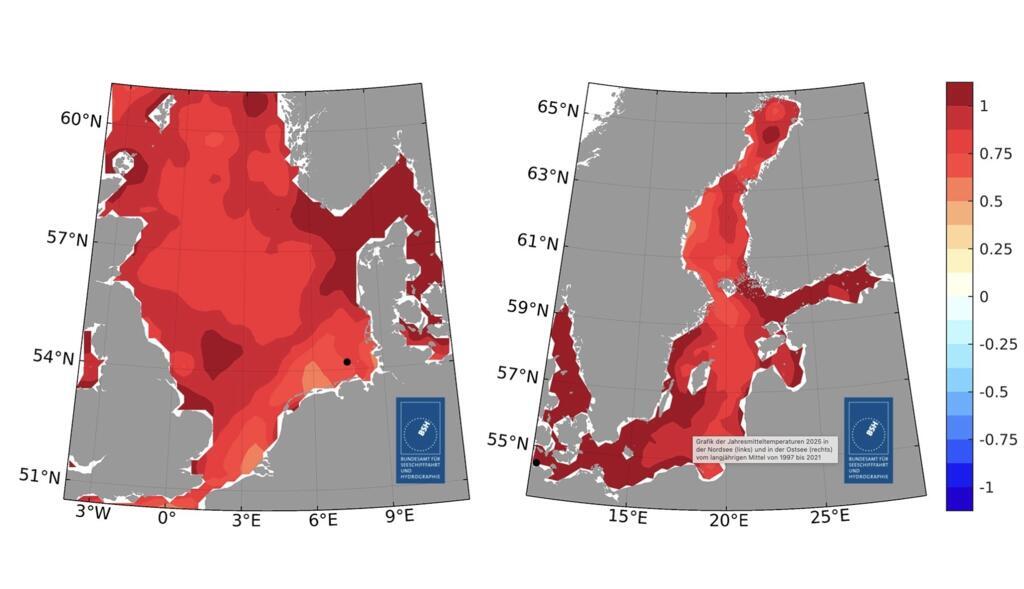
Germany's Federal Maritime and Hydrographic Agency (BSH) has reported that the North Sea endured its warmest year ever in 2025, with average surface temperatures hitting 11.6°C – the highest since records began in 1969.


Issued on: 07/01/2026 - RFI

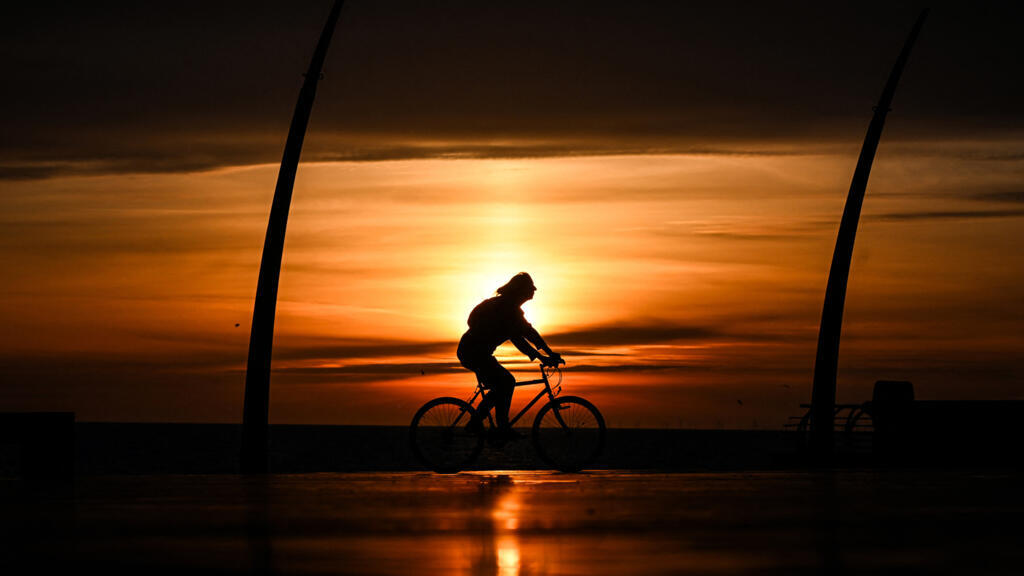
A cyclist rides a bike along the promenade, by the sea, at sunset, in Blackpool, north western England, on May 6, 2025. 2025 was Britain's hottest and sunniest on record, the national weather service confirmed on January 2. AFP - PAUL ELLIS

The announcement from Berlin underscores accelerating ocean warming driven by climate change, as confirmed by Tim Kruschke, head of the BSH's climate team.

The Baltic Sea, meanwhile, came close to its own record, averaging 9.7°C last year – 1.1°C above the 1997-2021 long-term mean and second only to 2020 since monitoring started in 1990.​

Throughout 2025, the North Sea shattered seasonal benchmarks. Spring saw averages of 8.7°C, 0.9°C above normal and the hottest since 1997, with peaks up to 2°C higher off Norway and Denmark.

Summer was even more extreme, reaching 15.7°C on average – edging out 2003 and 2014 for the top spot since 1969, with vast swathes exceeding long-term averages by over 2°C.


Temperature map of the North- and Baltic Sea for 2025. © Bundesamt für Seeschifffahrt und Hydrographie


The BSH noted prolonged marine heatwaves, including a 55-day event at Kiel Lighthouse from late March to May – the longest on record there since 1989. These events stemmed from reduced cloud cover, enhanced solar heating, and inflows of warm Atlantic water.​
Anomalies

Such anomalies align with global patterns outlined by the UN’s Intergovernmental Panel on Climate Change (IPCC.) Oceans have absorbed over 90 percent of excess atmospheric heat since 1970, with warming rates more than doubling since 1993 – from about 3-4 Zetajoules (ZJ) per year (0-2000m depth) pre-1993 to over 6 ZJ annually thereafter. One Zetajoule equals the energy from exploding 239 million Hiroshima bombs or powering the world for a year at current rates.

Marine heatwaves have doubled in frequency since 1982 and grown more intense worldwide. UNESCO's 2024 State of the Ocean report echoes this, noting ocean warming doubled over 20 years, fuelling deoxygenation (2 percent loss since 1960s), acidification (up 30 percent since pre-industrial times), and 40 percent of recent sea-level rise from thermal expansion.​

UN Summit advances ocean protection, vows to defend seabed

Warmer seas also threaten North Sea biodiversity, a key European fishery. Heatwaves disrupt plankton, fish distributions, and oxygen levels, creating "dead zones" and stressing cold-adapted species. Zooplankton collapses during 2018-2022 events signal worse ahead, while species shifts could boost some sharks or oysters but risk invasives and ecosystem imbalance.

The Baltic, warming faster long-term (nearly 2°C since 1990), faces amplified risks like seabed hypoxia. Coastal communities brace for fiercer storms and erosion as seas expand and weather intensifies.​

(WIth agencies)