Wednesday, January 28, 2026


‘Extraordinary’ trove of ancient species found in China quarry


By AFP
January 28, 2026


The Chinese team uncovered more than 150 different species between 2021 and 2024 - Copyright AFP Han Zeng


Daniel Lawler

Almost a hundred new animal species that survived a mass extinction event half a billion years ago have been discovered in a small quarry in China, scientists revealed Wednesday.

The treasure trove of fossils offers a rare glimpse into a cataclysmic event that brought a sudden end to the greatest explosion of life in our planet’s history.

The site where the fossils were found in the southern Chinese province of Hunan was “extraordinary,” Han Zeng of the Chinese Academy of Sciences told AFP.

“We have collected over 50,000 fossil specimens from a single quarry that is 12 metres high, 30 metres long and eight metres wide,” added the lead author of a new study in the journal Nature.

In this small space, the Chinese team uncovered more than 150 different species — 91 of them new to science — between 2021 and 2024.

Han described “wonderful experiences when we realised that those animals were right there on the rock.”

“Many fossils show soft parts including gills, guts, eyes and even nerves,” he added.

Among the species discovered were ancient relatives of worms, sponges and jellyfish.

They also found many arthropods — a family that includes modern-day crabs and insects — including spiny, stalk-eyed creatures called radiodonts which were the apex predator of the time.

The discovery is particularly exciting for scientists because of the period when these strange animals lived.


– Evolution’s big bang –


Life first emerged on Earth more than 3.5 billion years ago — but was little more than a layer of slime for most of our planet’s history.

Then came the Cambrian explosion, known as evolution’s “big bang”, roughly 540 million years ago.

Suddenly, most of the major groups of animals alive today — including vertebrates which would eventually include humans — evolved and started populating the world’s oceans.

This burst of life is thought to have been driven by a rise in oxygen in Earth’s atmosphere.

However it came to a sudden end when up to half of all animals died off 513  million years ago.

This mass extinction, known as the Sinsk event, is thought to have been caused by declining oxygen levels.

The animals in the Chinese quarry, which were dated to around 512 million years ago, represent the first major discovery of soft-bodied fossils that lived directly after the Sinsk event, Han explained.

This means the fossils — dubbed the Huayuan biota after the county where they were found — “open a new window into what happened,” he added.


– Safety in the cellar –


Michael Lee, an evolutionary biologist at the South Australian Museum not involved in the research, said “the new fossils from China demonstrate that the Sinsk event affected shallow water forms most severely”.

A deep-water fish called coelacanth similarly survived the mass extinction that wiped out all the dinosaurs that did not evolve into birds, he pointed out.

“The deep ocean is one of the most stable environments through geological time, in a similar way to how the cellar of a house is buffered from daily and seasonal changes and has less temperature fluctuations than the attic,” Lee told AFP.

Han said his team was also surprised that some of the animals in the quarry had also been found at Canada’s Burgess Shale site, which dates from an early period of the Cambrian explosion.

This suggests that these animals were already able to travel halfway across the world at this early stage, he added.

The Sinsk event is not considered among the best-known “big five” mass extinctions in our planet’s history.

However Han said there is evidence of 18 or more mass extinctions over the last 540 million years, calling for more attention to be paid to the immensely destructive events.

Scientists have warned that Earth is currently going through another mass extinction — this one caused by humans.
CRIMINAL CAPITALI$M
Deutsche Bank offices searched in money laundering probe


By AFP
January 28, 2026


Deutsche Bank headquarters in Frankfurt where German prosecutors and police conducted a search in an investigation over suspected money laundering offences - Copyright AFP Kirill KUDRYAVTSEV

German prosecutors and police on Wednesday searched Deutsche Bank’s headquarters in Frankfurt and its office in Berlin in an investigation over suspected money laundering offences, officials said.

According to the Sueddeutsche Zeitung daily, the probe is connected to suspected offences in the bank’s dealings with companies linked to Russian billionaire businessman Roman Abramovich.

Prosecutors confirmed the raids at the premises of Germany’s biggest bank but did not say who was being targeted.

The Frankfurt prosecutors’ office said it was carrying out an “investigation into unknown responsible parties and employees of Deutsche Bank on suspicion of money laundering… and related additional allegations under the Anti-Money Laundering Act”.

“In the past, Deutsche Bank maintained business relationships with foreign companies that… are themselves suspected of having been used for the purpose of money laundering,” a spokesman for the office said in a statement to AFP.

It said the investigation was being carried out by a specialist economic crime unit along with the federal police.

A spokesman for Deutsche Bank confirmed the searches, and the bank said it was “cooperating fully with prosecutors” but refused to comment further.

According to financial sources, the probe relates to alleged offences committed between 2013 and 2018.

The raids come on the eve of the publication of the bank’s results for the fourth quarter of 2025.


– Legal scrutiny –


Abramovich has been sanctioned by the EU following Russia’s invasion of Ukraine.

Sueddeutsche Zeitung said Deutsche Bank was being investigated on suspicion of failing to report possible money laundering in a timely manner.

The daily reported that the investigation involves both payments that Deutsche Bank received via a Russian correspondent account and the bank’s previous dealings with Abramovich’s own companies.

According to news site Der Spiegel the search in Frankfurt involved around 30 plainclothes investigators.

Deutsche Bank has faced scrutiny on several occasions in recent years over suspicious transactions.

In 2022 its offices were raided over “suspicious activity reports filed by the bank”, again in relation to money laundering.

Media reports at the time said that the investigation centred on a transaction involving Rifaat al-Assad, the uncle of Syria’s then leader Bashar al-Assad.

The Frankfurt-based group also came under scrutiny for its role as a correspondence bank that handled foreign transactions for Danske Bank’s Estonian branch, at the centre of a 200-billion-euro ($212-billion) money-laundering affair between 2007 and 2015.

Deutsche Bank subsequently agreed to pay a fine of 13.5 million euros for failing to report suspicious activity quickly enough, after an investigation by Frankfurt prosecutors.


South Korea’s ex-first lady jailed for 20 months for taking bribes

By AFP
January 28, 2026


A man walks past a banner showing a picture of South Korea's former impeached president Yoon Suk Yeol and his wife Kim Keon Hee - Copyright AFP Olivier MORIN


Claire LEE

A South Korean judge handed the country’s former first lady Kim Keon Hee 20 months in jail on Wednesday for accepting lavish gifts from a cult-like church, but acquitted her of alleged stock manipulation and other charges.

Controversy has long followed 53-year-old Kim, while accusations of graft, influence peddling and even academic fraud have dominated her husband Yoon Suk Yeol’s time in office.

Both are now in custody — Yoon for actions taken during his disastrous declaration of martial law in December 2024 and Kim for corruption.

On Wednesday, Judge Woo In-sung of the Seoul Central District Court found Kim guilty of corruption and sentenced her to 20 months in prison.

She was found to have accepted lavish bribes from the cult-like Unification Church — including a Chanel bag and a Graff necklace.

Prosecutors requested 15 years, but Kim was acquitted of stock manipulation and violations of campaign financing laws on Wednesday, and received a far lighter sentence.

Woo said that Kim’s close proximity to the president had given her “significant influence” that she had taken advantage of.

“One’s position must never become a means of pursuing private gain,” he added.

The former first lady sat in court as the sentence was read out, wearing a black suit, a white face mask and glasses.

Kim later released a statement apologising for “the concern” she may have caused, saying that she “accepted the court’s stern criticism”.

Her lawyers told AFP Kim had not decided whether she would appeal against the decision.

Prosecutors at Kim’s final hearing in December said she had “stood above the law” and colluded with the Unification Church to undermine “the constitutionally mandated separation of religion and state”.

Min Joong-ki, a Prosecutor on the case, said at the time that South Korea’s institutions were “severely undermined by abuses of power” committed by Kim.

On Wednesday, prosecutors called the ruling “hard to accept” and said they would appeal.

The former first lady previously denied all charges against her, claiming the allegations were “deeply unjust” in her final testimony last month.

She still faces two additional trials on bribery and Political Parties Act violations over allegations that she arranged the mass enrolment of more than 2,400 Unification Church followers into Yoon’s conservative People Power Party.


– Dogged by scandal –


A self-professed animal lover known internationally for her work campaigning for South Korea to ban dog meat, Kim’s scandals frequently overshadowed her husband’s domestic political agenda.

In 2023, hidden camera footage appeared to show Kim accepting a $2,200 luxury handbag in what was later dubbed the “Dior bag scandal”, further dragging down Yoon’s already dismal approval ratings.

The scandal contributed to a stinging defeat for Yoon’s party in the general elections in April 2024, as it failed to win back a parliamentary majority.

Yoon vetoed three opposition-backed bills to investigate allegations against Kim, including the Dior bag case, with the last veto in November 2024.

A week later, he declared martial law.

Kim’s sentencing came days after former prime minister Han Duck-soo was handed 23 years in prison for aiding and abetting Yoon’s suspension of civilian rule.

And this month Yoon was sentenced to five years for obstructing justice and other crimes in the first of a number of trials linked to that declaration.

The probe into Kim also led to the arrest of Han Hak-ja, leader of the Unification Church, which claims 10 million followers worldwide and runs a vast business empire.

Also on Wednesday, the Seoul Central District Court sentenced Yun Young-ho, a former Unification Church official, to 14 months in prison for offering luxury gifts to the former first lady and providing illegal political funds to a lawmaker.

Opposition lawmaker Kweon Seong-dong, an ally of ex-president Yoon, was also jailed for two years for receiving 100 million won ($70,000) from the controversial sect.
Amazon to cut 16,000 jobs worldwide

WHITE, BLUE, PINK THE COLOR OF YOUR COLLAR DOESN'T MATTER, WE ARE ALL PROLETARIANS NOW

By AFP
January 28, 2026


The Amazon layoffs are in line with a trend to trim white-collar management jobs across big tech - Copyright AFP/File Patrick T. Fallon

US online retail and cloud computing giant Amazon said Wednesday that it would be cutting 16,000 jobs worldwide as part of a restructuring, as it focuses spending on artificial intelligence.

The job cuts, which follow already flagged plans to cut its workforce by 14,000 posts, are aimed at “reducing layers, increasing ownership, and removing bureaucracy,” senior vice president Beth Galetti said in a statement.

Media reports from October had said the roughly 30,000 job cuts planned in total would impact nearly 10 percent of the 350,000 office jobs at Amazon, without affecting the distribution and warehouse workers that make up the bulk of its 1.5 million employees.

At the time the company refused to comment on the reports, which said they came amid increased investments in artificial intelligence.

Amazon did not give any breakdown of the latest job cuts on Wednesday, saying only that “every team will continue to evaluate the ownership, speed, and capacity to invent for customers, and make adjustments as appropriate.”

The company will release its full-year 2025 results on February 5. In its last quarterly earnings statement in October, the company said it spent $1.8 billion on severance costs tied to planned job cuts.

Amazon said that new positions will be offered to employees where possible, without giving further details on which divisions will be affected by the cuts.

The layoffs are in line with a trend to trim white-collar management jobs across big tech. Microsoft in July said it had slashed a little less than four percent of its global workforce, about 15,000 jobs.

Facebook owner Meta has also cut jobs over the past year, in a move intended to remove organizational bloat following aggressive hiring during the pandemic.

Dutch tech giant ASML on Wednesday said it would cut cut hundreds of management jobs to improve internal organisation, with HP and Oracle also announcing recent layoffs.

Like other tech giants, Amazon is making massive investments to grab a slice of the AI revolution pie.

It is particularly banking on the performance of its subsidiary Amazon Web Services (AWS), the world’s leading cloud provider, which is engaged in a race against its fast-growing rivals, Microsoft Azure and Google Cloud.

And spending on developing new AI-based chips and services is growing exponentially. In December, Amazon announced that it would invest more than $35 billion in India
The top target for U.S. anti-abortion groups in 2026

U.S. House of Representatives Speaker Mike Johnson shakes hands with U.S. President Donald Trump after Trump signed the sweeping spending and tax legislation, known as the "One Big Beautiful Bill Act," at the White House in Washington, D.C., U.S., July 4, 2025. REUTERS/Leah Millis
January 24, 2026 | 

This week would have marked the 53rd anniversary of Roe v. Wade, the 1973 Supreme Court decision that legalized abortion nationwide — that is, until 2022, when the court overturned it. Since then, abortion has been banned in 13 states and severely limited in 10 others.

Yet anti-abortion activists remain frustrated, in some cases even more so than before Roe was overturned.

Why? Because despite the new legal restrictions, abortions have not stopped taking place, not even in states with complete bans. In fact, the number of abortions has not dropped at all, according to the latest statistics.

“Indeed, abortions have tragically increased in Louisiana and other pro-life states,” Liz Murrill, Louisiana’s attorney general, said at a Senate Health, Education, Labor, and Pensions Committee hearing this month.

That’s due in large part to the easier availability of medication abortion, which uses a combination of the drugs mifepristone and misoprostol, and particularly to the pills’ availability via mail after a telehealth visit with a licensed health professional.


Allowing telehealth access was a major change originally made on a temporary basis during the covid pandemic, when visits to a doctor’s office were largely unavailable. Before that, unlike most medications, mifepristone could be dispensed only directly, and only by a medical professional individually certified by the Food and Drug Administration.

The Biden administration later permanently eliminated the requirement for an in-person visit — a change the second Trump administration has not undone.

While the percentage of abortions using medication had been growing every year since 2000, when the FDA first approved mifepristone for pregnancy termination, the Biden administration’s decision to drop the in-person dispensing requirement supercharged its use. More than 60% of all abortions were done using medication rather than a procedure in 2023, the most recent year for which statistics are available. More than a quarter of all abortions that year were managed via telehealth.

Separately, President Donald Trump’s FDA in October approved a second generic version of mifepristone, angering abortion opponents. FDA officials said at the time that they had no choice — that as long as the original drug remains approved, federal law requires them to OK copies that are “bioequivalent” to the approved drug.

It’s clear that reining in, if not canceling, the approval of pregnancy-terminating medication is a top priority for abortion opponents. This month, Susan B. Anthony Pro-Life America called abortion drugs “America’s New Public Health Crisis,” referencing their growing use in ending pregnancies as well as claims of safety concerns — such as the risk a woman could be given the drugs unknowingly or suffer serious complications. Decades of research and experience show medication abortion is safe and complications are rare.

Another group, Students for Life, has been trying to make the case that the biological waste from the use of mifepristone is contaminating the nation’s water supply, though environmental scientists refute that claim.

Yet the groups are most frustrated not with supporters of abortion rights but with the Trump administration. The object of most of their ire is the FDA, which they say is dragging its feet on a promised review of the abortion pill and the Biden administration’s loosened requirements around its availability.

President Joe Biden’s covid-era policy allowing abortion drugs to be sent via mail ”should’ve been rescinded on day one of the administration,” SBA Pro-Life America’s president, Marjorie Dannenfelser, said in a recent statement. Instead, almost a year later, she continued, “pro-life states are being completely undermined in their ability to enforce the laws that they passed.”

Lawmakers who oppose abortion access are also pressing the administration. “At an absolute minimum, the previous in-person safeguards must be restored immediately,” Senate HELP Committee Chairman Bill Cassidy said during the hearing with Murrill and other witnesses who want to see abortion pill availability curtailed.

Sen. Jim Banks (R-Ind.) said at the hearing that he hoped “the rumors are false” that “the agency is intentionally slow-walking its study on mifepristone’s health risks.”


The White House and spokespeople at the Department of Health and Human Services have denied the review is being purposely delayed.

“The FDA’s scientific review process is thorough and takes the time necessary to ensure decisions are grounded in gold-standard science,” HHS spokesperson Emily Hilliard said in an emailed response to KFF Health News. “Dr. Makary is upholding that standard as part of the Department’s commitment to rigorous, evidence-based review.” That’s a reference to Marty Makary, the FDA commissioner.

Revoking abortion pill access may not be as easy as advocates hoped when Trump moved back into the White House. While the president delivered on many of the goals of his anti-abortion backers during his first term, especially the confirmation of Supreme Court justices who made overturning Roe possible, he has been far less doctrinaire in his second go-round.

Earlier this month, Trump unnerved some of his supporters by advising House Republicans that lawmakers “have to be a little flexible” on the Hyde Amendment to appeal to voters, referring to a decades-old appropriations rule that bans most federal abortion funding and that some Republicans have been pushing to enforce more broadly.

And while the anniversary of Trump’s inauguration has many analysts noting how much of the Heritage Foundation’s Project 2025 blueprint has been realized, the most headline-grabbing portions on reproductive health have yet to be enacted. The Trump administration has not, for example, revoked the approval of mifepristone for pregnancy termination, nor has it invoked the 1873 Comstock Act, which could effectively ban abortion nationwide by stopping not just the mailing of abortion pills but also anything else used in providing abortions.

Still, abortion opponents have decades of practice at remaining hopeful — and playing a long game.

HealthBent, a regular feature of KFF Health News, offers insight into and analysis of policies and politics from KFF Health News chief Washington correspondent Julie Rovner, who has covered health care for more than 30 years.

KFF Health News is a national newsroom that produces in-depth journalism about health issues and is one of the core operating programs at KFF—an independent source of health policy research, polling, and journalism. Learn more about KFF.

This article first appeared on KFF Health News and is republished here under a Creative Commons Attribution-NoDerivatives 4.0 International License
.
Rules-based trade with US is ‘over’: Canada central bank head

Bank of Canada Governor Tiff Macklem

AFP
January 28, 2026
Ben Simon

The era of rules-based trade with the United States is “over,” Canada’s central bank governor said Wednesday, echoing a stark warning from the the country’s prime minister that President Donald Trump’s impact on global trade is permanent.

Bank of Canada Governor Tiff Macklem made the comments during an interest rate announcement which held the key rate at 2.25 percent, citing “unpredictable” US trade policies.

Macklem has repeatedly warned that the bank’s efforts to forecast the Canadian economy had grown increasingly difficult given the tariffs imposed and threatened by Trump.

On Wednesday he made clear that he agrees with Prime Minister Carney, who told the World Economic Forum last week that there would be no going back to a pre-Trump normal in the US-led international system.

“It’s pretty clear that the days of open rules-based trade with the United States are over,” Macklem told reporters.

In a speech that has captured global attention, Carney said “nostalgia is not a strategy,” urging middle-sized powers who have previously benefitted from the stability of US economic dominance to recognize that a new reality had set it.

More than 75 percent of all Canadian exports go to the United States and the country remains uniquely vulnerable to Trump’s protectionism.

Macklem said Canadian growth remains stunted by US policy.

Trump’s global sectoral tariffs have hit Canada’s auto, steel, aluminum and lumber industries hard.

But the most severe disruptions may be yet to come, Macklem stressed.

Trump has so far broadly adhered to the existing North American free trade agreement, which he signed and praised during his first term.

With the United States‑Mexico‑Canada Agreement (USMCA) still holding, more than 85 percent of all bilateral trade has remained tariff‑free.

But talks on updating that deal are set for this year and the Trump administration has indicated it could seek major changes, or may move to scrap the pact entirely, an outcome that would upend the Canadian economy.

“The upcoming review of the (USMCA) is an important risk,” Macklem said.

– US fed independence –

Macklem also took aim at Trump’s apparent efforts to exert political influence on the US Federal Reserve.

“The US Federal Reserve is the biggest, most important central bank in the world and we all need it to work well,” Macklem said.

“A loss of independence of the Fed would affect us all,” he warned, but stressed that for Canada the consequences of a politically influenced Federal Reserve would likely be far-reaching, given the integrated nature of the neighboring economies.

An independent Federal Reserve is “good for America,” Macklem said.

Trump has been seeking to oust Fed Governor Lisa Cook over mortgage fraud allegations. He has also spoken out on the administration’s investigation into chairman Jerome Powell over the bank’s headquarters renovation.

In a rare rebuke this month, Powell criticized the threat of criminal charges against him, saying this was about whether monetary policy would be “directed by political pressure or intimidation.”
Nobel economist has a theory about Trump's new feud with Canada


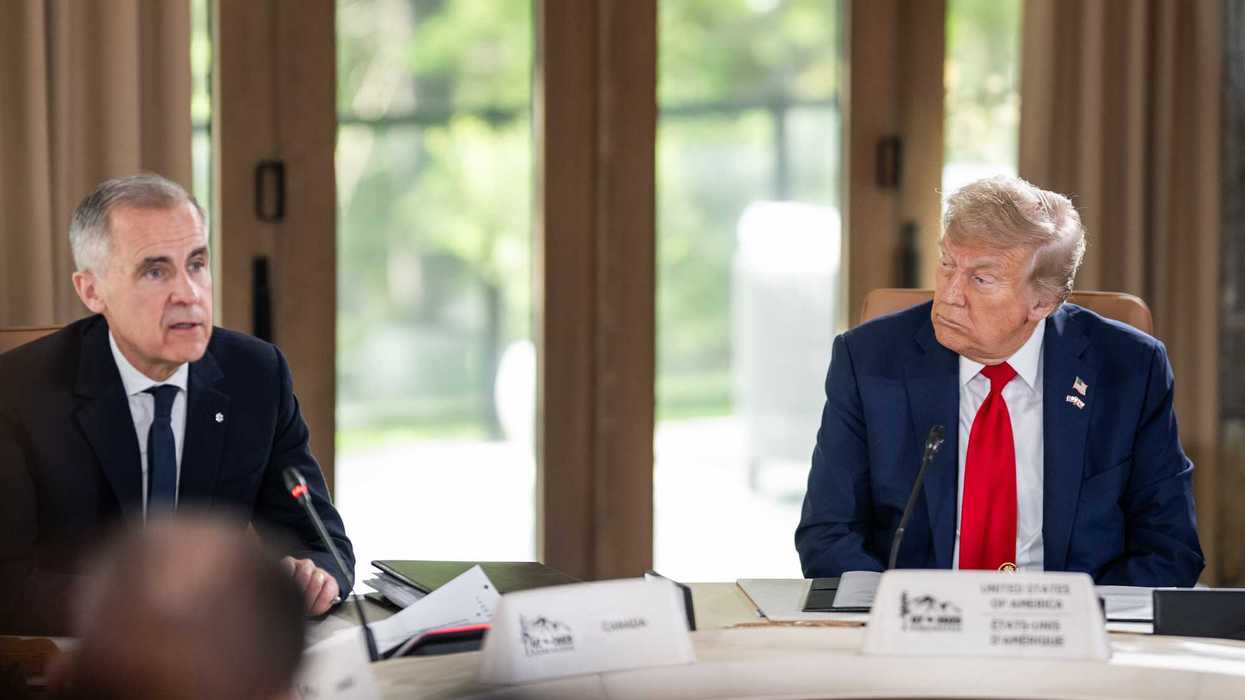
U.S. President Donald Trump with Canadian Prime Minister Mark Carney in Kananaskis, Alberta, Canada on June 16, 2025 (Official White House Photo by Daniel Torok/Flickr)

January 28, 2026
ALTERNET

During the 2026 World Economic Forum (WEF) in Davos, Switzerland, U.S. President Donald Trump and Canadian Prime Minister Mark Carney exchanged public criticism over trade and foreign policy.

Carney delivered a speech arguing that Trump's foreign and economic policies are undermining global alliances. He stated that this is causing a "rupture" in international relationships.

The Canadian prime minister told attendees, "For decades, countries like Canada prospered under what we called the rules-based international order. We joined its institutions, we praised its principles, we benefited from its predictability. And because of that, we could pursue values-based foreign policies under its protection. Even an imperfect system had profound benefits — as long as America remained both strong and virtuous."

Following Carney's speech, Trump withdrew Canada's invitation to join his Board of Peace.

Economist Paul Krugman published a column on January 27 criticizing Trump's Canada policies. Krugman argues that the U.S.-Canada relationship has deteriorated since Trump returned to power.

"We are talking about a rupture with a neighbor that was, until Trump returned to power, one of our closest allies and remains our second most important trading partner," Krugman writes. "Trump has been criticizing Canada since early last year, claiming that Canada had a $200 billion trade surplus and arguing that getting energy and auto parts from Canada constituted a U.S. subsidy to the country."

Krugman states, "For the record, trade between the U.S. and Canada is roughly balanced, and cutting off this trade would be severely damaging to both economies."

Krugman attributes Trump's approach to personal and geopolitical factors. He argues that by making a trade deal with China, Canada is reducing its dependence on the United States, which Trump opposes.

Paul Krugman's full Substack column is available at this link.


'I meant what I said': Canadian PM accuses Trump admin of lying about phone call
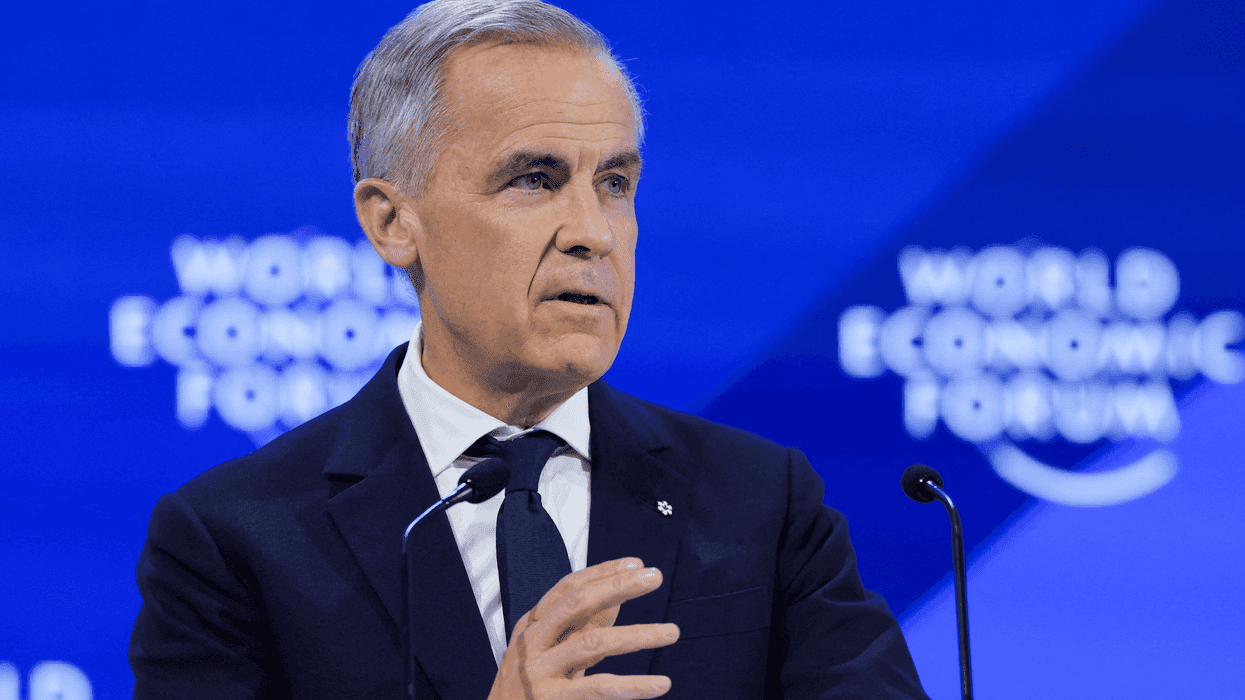

Canada's Prime Minister Mark Carney speaks during the 56th annual World Economic Forum (WEF) meeting in Davos, Switzerland, January 20, 2026. 
REUTERS/Denis Balibouse/File Photo

January 27, 2026
ALTERNET

Canadian Prime Minister Mark Carney is calling out a top official in President Donald Trump's administration and dismissing the claim that he had walked back some of his incendiary Davos speech in a phone call with the president, according to The New Republic.

During a Monday evening appearance on Fox News, Treasury Secretary Scott Bessent claimed that Carney and Trump had spoken over the phone earlier in the day, and that the prime minister had been "very aggressively walking back some of the unfortunate remarks he made at Davos." This came as the president had been ramping up tariff threats against Canada in the wake of Carney's head-turning speech.

In an address to the World Economic Forum in Davos, Switzerland, Carney argued that the era of American hegemony over the world order was at an end, owing to Trump's antagonistic treatment of allies since returning to the White House and his demand to take over Greenland from Denmark. He further argued that the middle power nations of the world must now band together to pursue their goals, rather than counting on the backing of the U.S.

The speech instantly became a hot-button topic, with a recent New York Times Opinion headline from Ezra Klein proclaiming it as the "most important foreign policy speech in years." It seemed to ruffle Trump's feathers as well, as he later went off on Canada in his own Davos speech, suggesting that Canada ought to be "grateful” for the “freebies" it gets from the U.S. and claiming that "Canada lives because of the United States."

Speaking to reporters on Tuesday, Carney rebuked Bessent for mischaracterizing his phone call with the phone call with the president. While the prime minister called the conversation a positive one, he also stressed that he did not back down from the points made in his speech.

"To be absolutely clear, and I said this to the president, I meant what I said in Davos," Carney said. "It was clear it was a broader set of issues that Canada was the first country to understand the change in U.S. trade policy that he had initiated. And we’re responding to that."

"We had a very good conversation on a wide range of subjects, ranging from the situation in Ukraine, in Venezuela, Arctic security," he added. "We discussed as well what Canada is doing, positively, and this is the context of our discussion, what Canada is doing positively to build new partnerships around the world."
Lancet Study Warns Plastics Could Cost Humanity 83 Million Years of Healthy Life

“Systemic change is needed ‘from the cradle to the grave’ of plastic production, use, and disposal,” said the lead author, calling for “ambitious action from governments and industry transparency.”


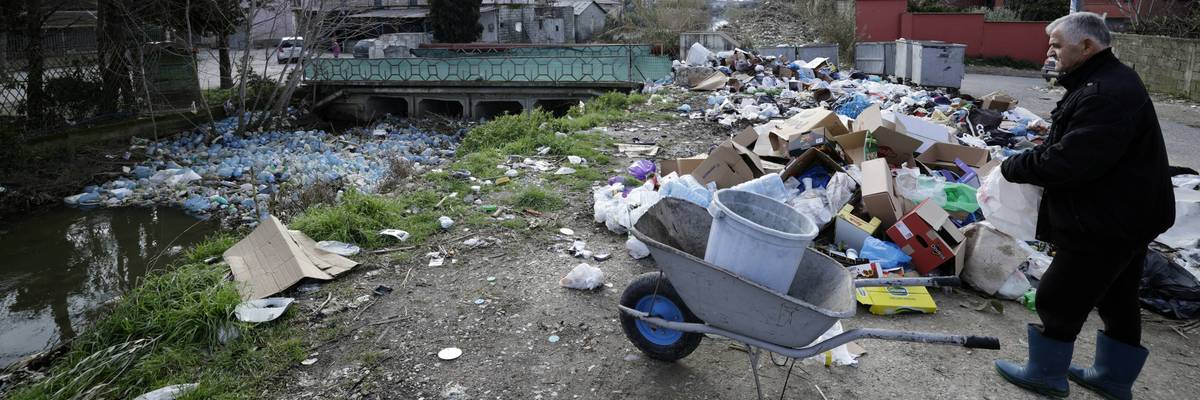
A man looks for goods to retrieve in a dumping area near plastic trash-filled floodwaters following heavy rains, in Durres, Albania on January 13, 2026.
(Photo by Adnan Beci/AFP via Getty Images)

Jessica Corbett
Jan 27, 2026
COMMON DREAMS

A study published Tuesday in the Lancet Planetary Health highlights how humanity’s continued reliance on plastics—which are primarily derived from planet-heating fossil fuels—is expected to harm global health over the next couple of decades.

Plastics life cycles emit a range of gases and pollutants that contribute to the global burden of disease, including greenhouse gases that drive climate change, air pollutants linked to respiratory illnesses, and hazardous chemicals associated with cancers and other noncommunicable diseases,” the study explains.


‘We Are Running Out of Time’: 2025 Keeps Hot Streak Alive for Global Temperatures

“These emissions occur across all stages of the plastics value chain: from oil and gas extraction, which provides the feedstocks for more than 90% of global plastics; to polymer production and product manufacturing, global transportation, recycling, and formal or informal waste management and mismanagement; to the gradual degradation of plastics in the environment,” the publication continues.

Researchers from the London School of Hygiene and Tropical Medicine (LSHTM) and University of Exeter in the United Kingdom, as well as France’s University of Toulouse, modeled various scenarios of plastics production, consumption, and disposal from 2016-40.

“The study is the first of its kind to assess the number of healthy years of life lost (‘disability-adjusted life years’ or ‘DALYS’—a measure of harm) due to greenhouse gases, air pollutants, and toxic chemicals emitted across the life cycle of plastics at a global scale,” according to LSHTM.

The team estimated that without any changes in global plastics policies and practices, annual health impacts would soar from 2.1 million DALYs in 2016 to 4.5 million DALYs by 2040—with a total of 83 million healthy years of life lost over the full study period. Under a business-as-usual scenario, 40% of the health harms would be tied to rising temperatures, nearly a third to air pollution, and over a quarter to toxic chemicals.

Because of limited data—particularly on the use stage of plastics and the chemicals they contain—lead author Megan Deeney of LSHTM told Agence France-Presse that “this is undoubtedly a vast underestimate of the total human health impacts.”


Still, the researchers were able to offer some insight into the adverse health impacts—thanks to their repurposing of modeling methods typically used to evaluate the environmental footprint of individual products and technologies.

These methods “are an increasingly important tool to tackle sustainability questions at a much larger scale,” study co-author and Exeter professor Xiaoyu Yan said in a statement. “Our study shows that this approach can help uncover the massive impacts of plastics on human health throughout the life cycle. We now need urgent action to reduce the impacts of plastics on the environment and ultimately human health.”

Deeney stressed that such action can’t be restricted to consumers. As she put it, “Our research shows that the adverse health impacts of plastics stretch far beyond the point at which we buy a plastic product or put plastic items in a recycling bin.”

In the US alone, government data suggests that just 5% of plastic waste is recycled annually, according to a Greenpeace report published last month. The advocacy group also noted that only a fifth of the 8.8 million tons of the most commonly produced types of plastics are even recyclable.

“Often the blame is put on us as individual consumers of plastics to solve the problem, but while we all have an important role to play in reducing the use of plastics, our analysis shows systemic change is needed ‘from the cradle to the grave’ of plastic production, use, and disposal,” Deeney said Tuesday. “Much more ambitious action from governments and industry transparency is needed to curb this growing global plastics public health crisis.”

The lead author said that the most effective measure is slashing the production of “unnecessary” plastic. She also pointed out that lack of data doesn’t just impact studies like this one: “Industry nondisclosure and inconsistent reporting of plastics’ chemical composition is severely limiting the ability of life cycle assessments (LCAs) to inform effective policy to protect humans, ecosystems, and the environment.”

The study comes after the latest round of global plastics treaty negotiations stalled in August—which environmentalists called an “abject failure” that should be blamed on the Trump administration, Saudi Arabia, and other major governments opposed to curbing production.

“The inability to reach an agreement in Geneva must be a wake-up call for the world: Ending plastic pollution means confronting fossil fuel interests head-on,” Greenpeace USA’s Graham Forbes said at the time. “The vast majority of governments want a strong agreement, yet a handful of bad actors were allowed to use process to drive such ambition into the ground.”


Immigrant Children Lead Uprising at Texas Detention Center


The immigrant jail, where many children are detained, has “horrible” conditions, including “putrid” drinking water.
January 26, 2026

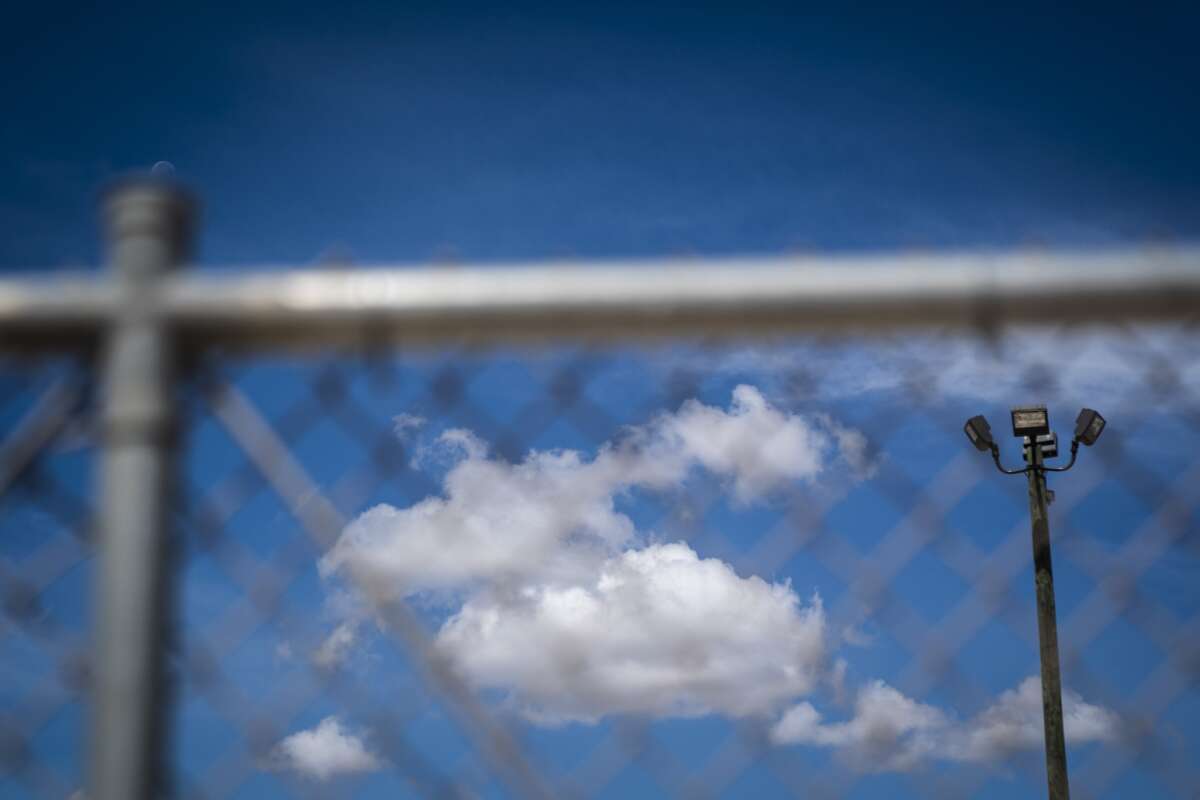
Clouds are seen through high fencing at the now federally controlled South Texas Family Residential Prison, which houses families who are pending disposition of their immigration cases.
Jabin Botsford/The Washington Post via Getty Images

An uprising broke out at an immigrant jail in southern Texas on Saturday, with around 1,000 immigrants detained in the facility — many of them children — chanting “Libertad” and “Let us go,” according to an attorney who witnessed the event.

The protest took place at South Texas Family Residential Center in Dilley, which closed in 2024 but was reopened by the Trump administration this year to detain immigrant families.

On Saturday, facility personnel abruptly ordered immigration attorneys who were present to leave, saying “an incident” had taken place. Michigan-based immigration attorney Eric Lee, who was among those forced to leave, said he could hear shouting that sounded “high-pitched” and “urgent,” indicating that he believed there were “hundreds of children” taking part in the uprising.

Lee later said his clients told him the protest began in response to the treatment of Liam Conejo Ramos, the 5-year-old from Minnesota who was abducted, along with his father, by Immigration and Customs Enforcement (ICE) agents last week. The two were transferred to the jail, more than 1,300 miles from home, shortly after being detained.

School officials familiar with the incident say that an adult living in Liam’s home had begged for ICE agents to let Liam stay after his father was taken into custody.

Related Story

Immigrant Rights Advocates Say Trump’s First Year Was “Much Worse” Than Expected
“Trump wants us to hang our heads and give up, but that’s not happening,” says organizer Rossy Alfaro. By Derek Seidman , Truthout January 17, 2026

“There was ample opportunity to be able to safely hand that child off to adults,” Mary Granlund, chair of the Columbia Heights School Board, said during a press conference last week.

School officials also said that Liam was used as “bait” by agents, in an attempt to get other people inside the house to exit willingly.

Aerial photos of the Texas facility during the protest, taken by The Associated Press, show parents and children holding signs that read, “Libertad para los niños,” or “Freedom for the kids.” Participants in the uprising also reportedly chanted “Libertad,” and “Let us go.”

“The message we want to send is for them to treat us with dignity and according to the law,” said Maria Alejandra Montoya Sanchez, a 31-year-old who is being detained in the jail, speaking to The AP after the protest. “We’re immigrants, with children, not criminals.”

Montoya Sanchez has been imprisoned at the facility with her 9-year-old daughter since October.

Lee posted several videos of the incident on social media. Within the videos, which were recorded outside the facility, shouting and chanting can be heard from inside the jail, seemingly from children.

Live: Major demonstration by detainees at Dilley Family Detention Ctr! I was just kicked put from atty visit. Hundreds chanting what sounds like "let us out! Let us out!" pic.twitter.com/LKuOnOwEbH— Eric Lee (@EricLeeAtty) January 24, 2026

In one video, Lee recorded what sounded like children screaming, after which a guard tells him he has to leave the area, despite being outside of the jail.

“This demonstration presently comprises of about 80 percent of the detained population, over 1,000 people. … Guards are trying to physically block people from protesting,” Lee said in another post, noting that gates within the facility had been closed to prevent the uprising from spreading.

According to Lee, demonstrators were moved to protest after hearing about Liam’s story. They were also motivated to act after hearing about the size of the general strike on Friday against federal immigration agents’ presence in Minnesota.

Lee described deplorable conditions at the facility, saying it is a “horrible, horrible place.” The drinking water is “putrid,” and the food served to families who are being detained contains “bugs,” dirt, and other contaminants, the lawyer said.

“The guards are just as tough as the guards at the adult facilities,” Lee said. “This is not a place that you would want to have your child be for even 15 minutes.”

“That children and their parents would risk retribution under these conditions to speak up is a testament both to how courageous they are and how abysmal the conditions of this place is,” Lee added.


This article is licensed under Creative Commons (CC BY-NC-ND 4.0), and you are free to share and republish under the terms of the license.


Chris Walker
Chris Walker is a news writer at Truthout, based in Madison, Wisconsin. Focusing on both national and local topics since the early 2000s, he has produced thousands of articles analyzing the issues of the day and their impact on people. He can be found on most social media platforms under the handle @thatchriswalker.
Minneapolis’s 2020 Uprising Laid an Abolitionist Groundwork for ICE Resistance

The George Floyd uprising laid foundations for the politicized networks of care that are organizing against ICE now.
January 23, 2026

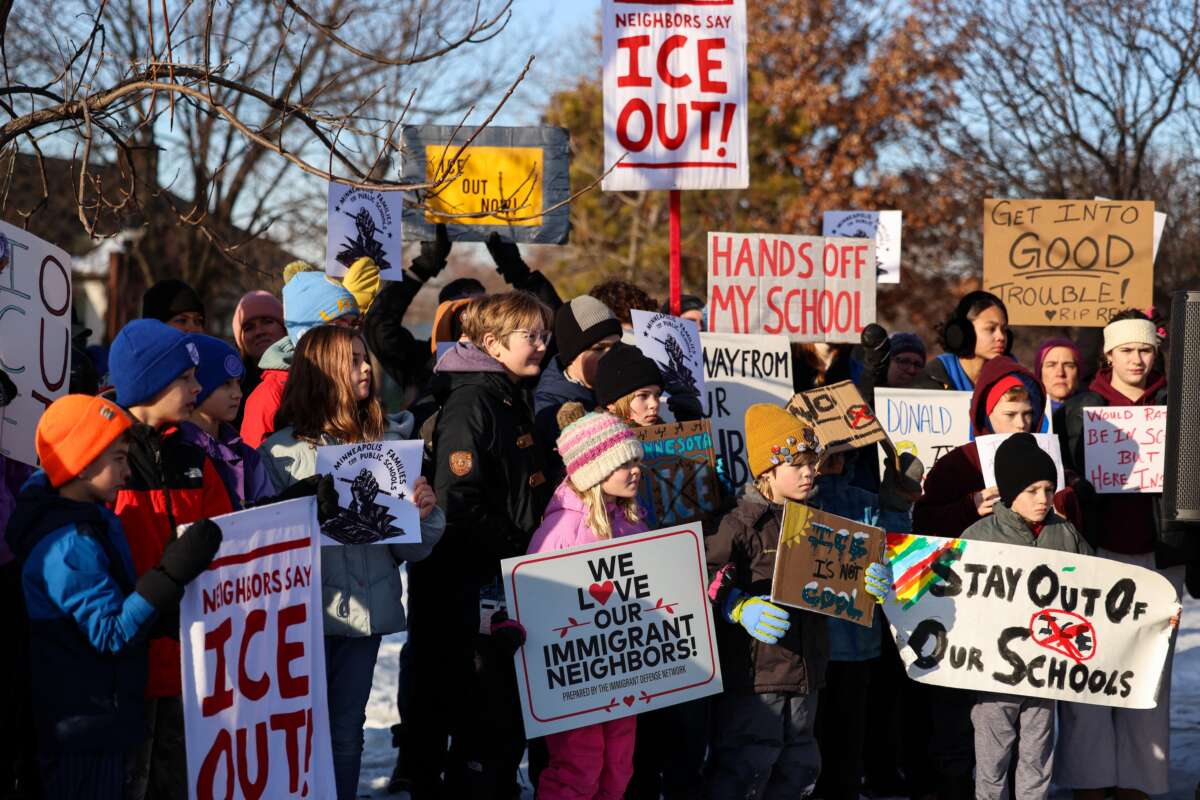
People pause for a minute of silence during a press conference organized by the group "Minneapolis Families for Public Schools," in Minneapolis, Minnesota, on January 9, 2026.CHARLY TRIBALLEAU / AFP via Getty Images

Organizers in Minneapolis are in a whirlwind right now. We are facing what appears to be — so far — the biggest deployment of Immigration and Customs Enforcement (ICE) cops in one city in the agency’s existence. The brutality and ubiquity of the agents have become central features of the city’s life, as have the massive networks of resistance and protection being built in opposition to them. The work here is incredibly urgent, and it is full of grief, connection, fear, and possibilities.

Many people stepping up to oppose ICE and protect their neighbors weren’t previously connected with each other; many are new to organizing or new to this kind of organizing. People have different politics. Some have undefined politics. Some interpret how to act with aligned politics in completely different ways. At its core, all of the anti-ICE work that both established and emerging formations in Minneapolis are doing is an attempt at community safety, at taking care of our neighbors and ourselves. What kind of world that attempt envisions — what the horizon we can see before us looks like — is worth taking a moment to think about.

We move in the direction that our steps take us. On its face, this is an obvious statement, but in our movements, it can be very easy to lose track of whether a step is moving us all toward greater justice or is, in fact, reinforcing systems that need to be destroyed. Many of our steps right now (forging stronger communities of care, opposing state violence, rejecting colonial borders) are intrinsically oriented toward liberation, but we still need to pause when possible to ground ourselves in the world we are trying to build. Doing so can help us ensure we follow our liberatory orientation more boldly.

Abolition provides a horizon that can orient people both in how to respond to each other with care, and in how to collectively respond to state violence with integrity.
Building a Collective Response

In response to the Trump administration’s federal policing escalation in Minneapolis — and across the Twin Cities — residents have organized at a monumental scale. Community members in Minneapolis have built a vast rapid response network; patrols near schools, churches, mosques, immigrant-owned businesses, and even vulnerable intersections; witness and response to ICE presence wherever else it occurs; large-scale food and supply deliveries; an infrastructure of safer transportation; and care webs for loved ones who are left behind after ICE abductions. Many of these systems sprung to life along the paths laid down by the 2020 uprising after the police-perpetrated killing of George Floyd.

We Can Honor Renee Nicole Good’s Life by Abolishing Death-Making Institutions
Those of us who see ourselves in Renee Good can take this moment to deepen our solidarities with all who are policed. By Holly Krig , Truthout January 13, 2026


During the onset of the COVID-19 pandemic, and the uprising that followed when several grocery stores were destroyed, Minneapolis learned to organize food delivery and other forms of care for people who couldn’t access them, and that work is relevant again. Neighborhoods dusted off dormant Signal groups, and community members are reaching out to collaborate with people they first connected with in 2020 over joint demonstrating and safety planning. One noteworthy mark of continuity is the Sanctuary Supply Depot, which emerged to care for encampment residents after they were evicted from a vacant hotel that volunteers called the Minneapolis Sanctuary. They have continued encampment supply distribution through years of Minneapolis Police Department harassment, and through the current escalation of immigration policing.

The collective enemy we are protecting our neighbors from is state violence.

Lessons of 2020 are now being expanded upon. While building rapid response practices, community members are also attempting to train and be trained, make connections with other organizations and cities, and provide support for each other’s material and emotional needs. Groups are absorbing (while trying to practice both safety and hospitality) a vast number of people — across all the city’s neighborhoods — who were previously not connected to each other, and maybe not involved with organizing at all.

Like a lot of organizing, and particularly similar organizing in other cities like Chicago, our efforts don’t always succeed. We can’t always keep our neighbors from being abducted, or from the other kinds of violence ICE cops bring with them. As Kelly Hayes wrote, sometimes we arrive too late, or can do little but witness excruciating moments of violence — against community observers like Renee Nicole Good, as well as against those the observers have gathered to protect.

Reflecting on those moments, Hayes wrote: “A lot of people are looking to Chicago right now, because the work we’re doing — the work you’re doing, if you’re wearing a whistle, protesting in the streets, practicing mutual aid, or responding to ICE alerts — is helping people around the U.S. imagine a meaningful response to the threats they face. People who feel frozen or stuck, or who have no idea how they would respond to such an onslaught, are getting a sense of what they’re made of.”

Our collective organizing matters, whether or not we are ultimately able to reverse ICE’s massive escalation. Minneapolis is providing a meaningful response to the current wave of authoritarian violence, and we are all being shaped by that response. The massive infrastructure of mutual aid that is operating in Minneapolis is by its nature politicized. The collective enemy we are protecting our neighbors from is state violence, and state surveillance of our networks is a constant threat that even the newest volunteer must reckon with. The waves that follow ours will be shaped by the work we’re doing, and what everyone can learn from it.

Every day, we help get kids to and from their schools when their parents can’t safely leave home.

And sometimes we do foil an abduction or a deportation. Every day, we help get kids to and from their schools when their parents can’t safely leave home. We ensure that people can worship in their mosques and churches with less fear. We network and fundraise to sustain workers and immigrant-run businesses when their workplaces are not safe or have lost their customer base. Each person protected from state violence or given tools to heal from it is a sacred victory and a piece of the world we want to build together. By protecting our neighbors from ICE, we are practicing abolition, even if some of our fellow practitioners might balk at that description.

In addition to the material impacts of the mutual aid and safety work community members are doing, this moment has brought policy opportunities. Organizations, local and national, are demanding that Congress defund ICE and that the officer who killed Renee Good be fired. Even feckless politicians have felt pressure to demand that ICE leave Minnesota. It is a moment of opportunity to multiply the scale of the abolition we’re practicing and protect many more people from this type of terror and violence.

This, too, resonates with the 2020 uprising. As Mariame Kaba said: “People in moments of whirlwind look for stuff. Your job, if you’re a consistent organizer who’s consistently organizing across time, is to make sure that one of the things people pick up can be your thing.”
Earlier Organizing That Led Us Here

Abolitionists in Minneapolis, often in the direct lineage of Kaba’s work, knew a moment like this was coming. We have learned how systems of criminalization intersect and reinforce each other. We prepared for this moment, learning from the response of other cities to ICE and from abolitionist organizing in our own city.

Before, during, and after the 2020 uprising, local organizations like Reclaim the Block and Black Visions put forth the demand to defund the Minneapolis Police Department — to fund communities, not cops — building on the local work of MPD 150 and the lineage of other cities like Chicago. In 2020, organizers explicitly linked that demand to the community care networks that were emerging as existing systems failed us.

By protecting our neighbors from ICE, we are practicing abolition.

Other organizations, too, like MIRAC and Unidos, prepared for this moment, training individuals and groups in ICE watch tactics. They learned from practices that had emerged in Chicago, Los Angeles, and North Carolina. That work, as Mariame Kaba recently wrote, connects to a lineage of watching cops: “Los Angeles activists in the mid-60s, for example, launched ‘Community Alert Patrols’ — volunteers in cars who followed the LAPD in Black neighborhoods to observe and take photographs. Just as ICE agents hate being filmed today, so the LAPD loathed the patrols and saw them as radical and dangerous precisely because they were effective in discouraging brutality and false charges.”

While explicitly abolitionist organizing doesn’t have the prominence that it did in the 2020 uprising, that organizing has directly influenced current responses, from the community support work to the shared language of protest to the policy response that people assume is possible. Organizers can bring defund and abolish demands to movement spaces and policy makers with a prominent reference point. And they are. Nationwide January polling showed that 46 percent of respondents support abolishing ICE, an explicitly abolitionist policy demand, up sharply from 27 percent last July and higher than the percentage who currently don’t favor abolishing ICE, 43 percent. Democratic proposals to fund increased training for ICE cops have been widely dismissed as counterproductive, informed by the increased conversations about abolition since 2020.
Grounding Ourselves in Abolitionist Visions

Abolition is a practice. When we do any of this collective work, we are trying to put our politics into practice. When we instead find ourselves tempted to practice surveillance of our neighbors or punitive responses to each other’s attempts, or to allow feelings to birth carceral policy, abolition gives us the clarity to reorient ourselves.

How can we ground our work in abolition in a way that radiates outward, that extends the care we are building for immigrant families to all our neighbors, with no exceptions?

We can reorient ourselves because, while it is a practice, abolition is also a horizon. Abolition shows us the kind of world we want to live in. It is one without imprisonment, policing, or surveillance — by city, state, or federal cops or by cops in our hearts — no matter what kind of cops we’re struggling against in the moment.

The horizon of abolition can also help us navigate complex conversations as we work with our communities on this inherently anti-carceral project. How can we ground our work in abolition in a way that radiates outward, that extends the care we are building for immigrant families to all our neighbors, with no exceptions? How can this work strengthen and mutually reinforce our efforts to support our criminalized and incarcerated neighbors, our poor neighbors, and our houseless neighbors?

With abolition’s vision, we can evaluate whether our practices will lead toward a world with more or less policing, surveillance, and imprisonment. When policies are proposed, by elected officials or by movements, we can evaluate those as well. If we enact those policies, if we take those steps, if we practice those things more, will we be emptying cages or filling them?


This article is licensed under Creative Commons (CC BY-NC-ND 4.0), and you are free to share and republish under the terms of the license.


Jonathan Stegall
Jonathan Stegall is a designer, and a faith-rooted organizer and abolitionist in Minneapolis.


Anne Kosseff-Jones
Anne Kosseff-Jones is an editor, writer, and organizer in Minneapolis.
With Donroe Doctrine, Trump Threatens to Export His Brand of Authoritarianism


International solidarity, not liberal imperialism, is the only way to stop Trump’s global class war.'

January 24, 2026

Donald Trump speaks during a signing ceremony for the “Board of Peace” at the World Economic Forum (WEF) on January 22, 2026, in Davos,
  Somodevilla / Getty Images

President Donald Trump’s National Security Strategy (NSS) is the crudest articulation yet of his authoritarian nationalist project. It promises to smash the so-called rules-based international order Washington has superintended since the end of the Cold War. The U.S., of course, repeatedly violated that order’s stated principles, like sovereignty and self-determination, most recently with the Biden administration’s support for Israel’s genocidal war in Gaza.

Despite its hypocrisy, the U.S. had attempted to integrate the world’s states into multilateral economic and political institutions, forge alliances to deter, contain, or overthrow its rivals, and police countries and regions torn apart by its program of free trade globalization. Trump claims that such liberal imperialism overextended the U.S., caused its relative decline, and enabled the rise of its competitors, especially China. His Secretary of State, Marco Rubio, declared, “The postwar global order is not just obsolete, it is now a weapon being used against us.”

To restore U.S. power, Trump’s NSS announces a new Trump Corollary to the Monroe Doctrine, a so-called Donroe Doctrine. Instead of global hegemony, it aims to carve out an exclusive U.S. sphere of influence in the Western Hemisphere, install pliant regimes, plunder their resources, and wield state power against migrants. The strategy as a whole has already born bitter fruit; Trump’s ICE agents killed immigrant solidarity activist Renee Good, his special forces carried out a coup in Venezuela, and his administration threatens to annex Greenland. His strategy will bring not “peace through strength,” but class war, brutal scapegoating of the oppressed, and imperial rivalry over the division of global capitalism.

The Return of Great Power Conflict

Trump’s strategy is a response to today’s asymmetric multipolar order. While the U.S. remains the dominant imperialist power, it faces a global imperial rival in China, an outsized regional power in Russia, and a host of lesser ones like Iran and Brazil. The U.S., China, and Russia have become more assertive of their interests, spurring military aggression as each stakes claims in their regions.

Russia invaded Ukraine to rebuild its former empire and challenge NATO’s hegemony in Europe. China has projected its power in the Asia-Pacific region, threatening Taiwan and clashing with, among others, Japan, the Philippines, and, behind them all, the U.S. Washington backed Israel to crush Hamas and destroy Iran’s so-called axis of resistance to reassert U.S. dominance over Middle East’s strategic energy reserves, which China relies on to fuel its economy.

In response to these developments, Washington abandoned its grand strategy of superintending global capitalism to confront its great power rivals. The Obama administration started this shift with its Pivot to Asia to contain China and plan to reset relations with Russia, but those both failed. In his first term, Trump introduced a new strategy of illiberal hegemony focused on great power competition with China and Russia, but his regime’s incompetence and divisions prevented its implementation, leaving the U.S. weaker, its allies alienated, and rivals emboldened.

The Biden administration tried to refurbish U.S. imperialism, rebuild Washington’s alliances, and defend the so-called rules-based international order. Biden exploited Russia’s invasion of Ukraine to rally its allies together against both Moscow and Beijing. But he undermined this project with his support for Israel’s genocidal war on Gaza, which enabled China and Russia to expose Washington’s hypocrisy.

Trump’s Authoritarian Nationalism

Trump’s new Donroe Doctrine decisively breaks with the grand strategy the U.S. has pursued since the end of the World War II. It retreats from the pursuit of global hegemony to restore U.S. power within its borders, claim exclusive hegemony over the Western Hemisphere, and establish “a balance of power” against its imperial rivals. At home, the Trump administration aims to rebuild U.S. domestic manufacturing, particularly in high tech and AI, through a program of protectionist tariffs, tax cuts, incentives for corporate investment, and deregulation. To divide and conquer working class resistance, it scapegoats oppressed groups, in particular migrants. Underscoring its determination to split the multiracial, multinational working class, the NSS declares the “era of mass migration is over.”

Abroad, its main goal is to establish neocolonial dominance in the Western Hemisphere. To enforce this naked imperialist goal, it plans to boost the Pentagon budget, if Trump is to be believed, to $1.5 trillion, which would be used to build a high tech military and shield North America with a new “Golden Dome” capable of intercepting nuclear missiles, giving the U.S. the ability to start a nuclear war without fear of retribution. That will enflame the ongoing nuclear arms race between the U.S., China, and Russia. At the same time, Trump demands that U.S. allies shoulder the burden of their own defense, compelling them to raise military spending, setting off regional arms races.

The NSS adopts transactional relations with both allies and rivals, and at least rhetorically deescalates conflict with China and Russia, apparently accepting their hegemony over their own spheres of influence.

Trump promises this strategy will end forever wars and secure peace. The NSS even claims he’s already ended eight conflicts and intends to conclude another in Ukraine. That is simply false; the ceasefires he’s brokered are either a sham like the one in Gaza, where Israel continues its bombing and siege, or he had little to nothing to do with them like the one between India and Pakistan.

Moreover, Trump’s actual policies prove that he’s an old-fashioned warmonger. He backed Israel’s genocide, bombed Iran’s nuclear facilities, ordered an airstrike on a village in Nigeria on Christmas, and staged a coup in Venezuela to seize control of the country’s oil. And his new strategy will enflame more imperial conflict with China and Russia over the division of the world into spheres of influence. Remember, the last epoch of great powers fighting to establish empires led directly to World War I and World War II.

Shouting and Wielding a Big Stick

The NSS prioritizes the Western Hemisphere, Asia, and Europe, while downplaying the Middle East and, in keeping with Trump’s anti-Black racism, almost entirely ignores Africa. In the Western Hemisphere, it invokes as its precedent Theodore Roosevelt’s Corollary to the Monroe Doctrine, which the “Rough Rider” used to justify gunboat diplomacy, coups, and occupations throughout Latin American and the Caribbean in the early 20th century. Trump’s Donroe Doctrine pledges to bolster Washington’s allies, replace antagonists with quisling regimes, and claim exclusive access to their markets and resources, especially fossil fuels and rare earths.

While the NSS never names its rivals in the region, except with euphemisms like “Non-Hemispheric competitors,” its main one is obviously China. Beijing has established itself as a key economic power in the region; it invests huge sums of money through its Belt and Road Initiative (BRI), imports raw materials from a variety of countries, and exports finished products back to them. In the process, China has established alliances with countries like Brazil, which is part of the BRICS alliance, as well as Venezuela, which it depended on before Trump’s coup for 4 percent of its oil.

In response to China’s encroachment in Washington’s backyard, Trump has pressured states to exclude China and its companies. In one example, he forced Panama to leave the Belt and Road Initiative and is demanding that it end its contract with the Hong Kong-based Hutchison Ports, which operates terminals near the Panama Canal. In another, he seized six tankers and cut off Venezuela’s oil exports to China after overthrowing Maduro.

Unsurprisingly, Beijing has objected to Trump’s attempt to squeeze it out of the Western Hemisphere. Foreign ministry spokesperson Mao Ning denounced Trump’s abduction of Maduro, saying, “The US’ brazen use of force against Venezuela and its demand that the country dispose of its oil resources under an ‘America First’ principle constitute [a] typical act of bullying, seriously violate international law, gravely infringe upon Venezuela’s sovereignty, and severely harm the rights of the Venezuelan people. China strongly condemns such actions. I would like to stress that the legitimate rights and interests of China and other countries in Venezuela must be protected.”

Trump’s threat to seize Greenland has further enflamed rivalries not only with China and Russia, but also NATO countries. These states are engaged in a scramble for the Arctic’s territory, military basing rights, shipping lanes, and natural resources. Already, Denmark, which rules over Greenland, has declared that U.S. seizure of the island would spell the end of NATO. In an unprecedented development, several NATO members have deployed troops in Greenland in support of Denmark against the U.S. Russia has also objected to Trump threat to seize the island and police the Arctic.

Imperial Conflict in the Asia-Pacific

In the Asia-Pacific, Trump’s NSS sustains Washington’s commitment to containing China, but it downplays their conflict, holding out hope for commercial deals to rebalance their trade relations, a dramatic climbdown for an administration that had previously launched an all-out trade war with Beijing. China forced Trump to back down. It cut off its exports of rare earth minerals, which are essential for the U.S. automobile and defense industry, and stopped its imports of soybeans from U.S. agribusinesses, a crucial electoral constituency for the GOP.

Facing economic and electoral disaster, Trump chickened out, lowered tariffs on China from 100 percent to 30 percent, still a record high but with countless carveouts and loopholes. For its part, China opposes tariffs and wants free trade to secure markets for its massive export industry. At this point, Trump is trying to avoid a fall out with China in the run up to April’s trade talks in Beijing. Treasury Secretary Scott Bessent reportedly intervened in the drafting of the NSS to mute criticisms of China, overriding hawks like Elbridge Colby and Marco Rubio.

Nevertheless, the Trump administration realizes that China is Washington’s main imperial rival. For now, it wants to cut a trade deal, while it overcomes its vulnerabilities, especially its inability to independently extract and process rare earths. To address this, the administration has bought stakes in mining companies while U.S. lawmakers consider investing billions in new processing plants. Once the U.S. finds a way either to manufacture rare earths on its own or to access them through secure supply chains, it will be in a stronger position to confront China.

For now, the NSS upholds current U.S. policy, pledging to maintain its military in the region, support its allies, and cut trade deals with them, while pressuring them all to increase their defense spending. It maintains strategic ambiguity as to whether it would defend Taiwan in the event of a Chinese invasion but the administration has committed to selling Taiwan arms to defend itself. That puts it at odds with China’s assertion of imperial power in the Asia Pacific.

In response, Beijing is trying to overcome its dependence on the U.S. and Taiwan for its high end computer chips, plowing money into its own manufacturing system. It even opted to reject the use of Nvidia’s second most advanced chips, pushing its companies to use domestically produced ones instead. It is also diversifying its exports market in Asia, Europe, Latin America, and Africa to make up for those lost in the U.S. because of Trump’s tariffs.

To enforce its economic power, Beijing increased its defense spending by 7.2 percent in 2025 to over $318 billion and has escalated its military exercises around Taiwan and throughout the region. That has in turn further fueled the regional arms race, making war between it and various powers like the Philippines in the South China Sea and Japan in the East China Sea more likely and potentially deadly.

Backing Europe’s Far Right and Placating Russian Imperialism


While Trump’s strategy seemingly upholds the status quo in Asia, it smashes it in Europe. The NSS criticizes the EU for its allegedly lax immigration policies that supposedly compromise its white, Christian identity. This is all nonsense. EU member countries, whether ruled by the establishment or the right, have increasingly blocked, detained, jailed, and deported migrants.

Trump’s NSS also denounces the EU’s regulations, which restricts U.S. multinationals’ operations on the continent. He is pressuring it to gut its Digital Markets Act and Digital Services Act, which The American Prospect reports, “require tech companies to take down illegal content on their platforms, restrict the transfer of user data to multiple platforms run by the same companies, refrain from ‘steering’ users toward their own products, and allow for fair competition in app stores and interoperable social media sites.” One of Trump’s on-and-off allies, Elon Musk, called for the abolition of the EU after X was hit with a $140 million fine for violating its digital rules.

The NSS also references the EU’s establishment parties’ refusal to enter into coalition governments with the right and their censorship of hate speech, while calling on Europe to pursue “strategic stability” with Russia.

To secure this rapprochement with Moscow, Trump is trying to force Ukraine into a land for peace deal that rewards Russia’s colonial aggression. He’s willing to concede Moscow a sphere of influence in its former empire in exchange for lucrative deals for minerals, natural gas, and oil in both Ukraine and Russia, perhaps under the illusion that he can pry Moscow away from Beijing. That’s why Putin’s spokesperson praised the NSS as “consistent with our vision” and “gratifying.”

At the same time, Trump’s demand that Washington’s NATO allies shoulder their own security burden will force them into an arms race with Russia. Already, in response to pressure from Trump, NATO members have agreed to increase their military budgets to 5 percent of GDP, while they are imposing austerity, making their working classes pay for the new militarism.

Fantasies of Peace in the Middle East

In contrast to the Western Hemisphere, Asia Pacific, and Europe, the NSS gives little attention to the Middle East, which has been main focus of U.S. imperialism since 9/11. The administration hopes to capitalize on Israel’s genocide in Gaza, decimation of Iran’s so-called axis of resistance, and Washington and Tel Aviv’s destruction of Tehran’s nuclear program. It wants to push countries to join the Abraham Accords, normalize their relations with Israel, cut commercial deals, and thereby bring stability to the region.

In reality, Israel is a pariah state, and the Middle East remains an explosive tinder box of conflicts within and between its countries. The region’s rulers preside over the same deep class inequalities and national oppressions that provoked the Arab Uprisings in 2011 and will set off more waves of revolt for democracy, justice, and equality. Moreover, imperial rivalries, especially between the U.S. and China, will persist as they angle for access to the Middle East resources, markets, and growing finance capital.

The current uprising in Iran against economic inequality and skyrocketing inflation is a taste of the class and social struggles to come. The U.S. and Israel have tried to exploit this revolt for their own purposes, threatening military action against Tehran. Trump has also announced 25 percent tariffs on any country that trades with Iran, including China, India, and the United Arab Emirates. A spokesperson for Beijing responded, saying, “China firmly ‍opposes ⁠any illicit ⁠unilateral sanctions and long-arm jurisdiction and will take all necessary measures to safeguard its legitimate rights and interests.” This conflict threatens to disrupt Trump’s attempt to calm relations with Beijing before their trade talks. Thus, contrary to Trump’s wishful thinking, the U.S. will remain preoccupied with the Middle East and North Africa.

Liberal Imperialism Offers No Solution

Trump has shattered the old rules-based order and opened a new epoch of great power rivalry for the division of the world and its states into neocolonial spheres of influence. In this titanic conflict, deputy chief of staff, Stephen Miller argues, the U.S. will operate with the assumption that “we live in a world … that is governed by strength, that is governed by force, that is governed by power. These are the iron laws of the world since the beginning of time.” In this situation, as Thucydides put it, “the strong do what they can and the weak suffer what they must.”

Washington’s foreign policy establishment and the Democratic Party have denounced Trump’s Donroe Doctrine, arguing that it will compromise Washington’s ability to contain China and Russia. They hope to resurrect Joe Biden’s strategy — implement a new industrial policy, enact neoliberal deregulation to restore abundance, and rebuild alliances to assert their collective global hegemony. But, under Biden, that program did not restore manufacturing, failed to improve the lives of working class and oppressed people, and led not to peace but continued imperial rivalry between the U.S., China, and Russia as well as genocidal war in Gaza.

The left must oppose both Trump’s authoritarian nationalism and the Democrats’ liberal imperialism and fight for international solidarity from below against all imperialist states. We in the U.S. have to oppose our own government, which remains the most powerful and deadly force in the world. Our responsibility is to organize a movement against the two sides of Trump’s authoritarian nationalism, his war at home against migrants and his war abroad from his coup in Venezuela to his threats against Colombia, Cuba, and Greenland. In doing so we can build multiracial, multinational working-class struggle — like the general strike in Minneapolis — that has the power to stop Trump in his tracks.

At the same time, we should extend our solidarity to the struggles of workers and oppressed people in countries such as China, Russia, and Iran. Such solidarity must include support for all oppressed nations’ right to self-determination, regardless of which imperialist power rules over them. That means championing struggles for liberation from Palestine to Puerto Rico, Ukraine, and Taiwan.

In such struggles from below against imperialism, exploitation, and oppression a new international left can be forged that offers an alternative to the right and the capitalist establishment. Their system offers nothing but crisis, militarism, and war. Now more than ever, we need to start building a fight for a world that puts people and the planet first.


This article is licensed under Creative Commons (CC BY-NC-ND 4.0), and you are free to share and republish under the terms of the license.

Ashley Smith is a socialist writer and activist in Burlington, Vermont. He has written in numerous publications including Truthout, The International Socialist Review, Socialist Worker, ZNet, Jacobin, New Politics, and many other online and print publications. He is currently working on a book for Haymarket Books entitled Socialism and Anti-Imperialism
.