Wednesday, January 28, 2026


EU invests €650 million in cross-border hydrogen and electricity infrastructure projects
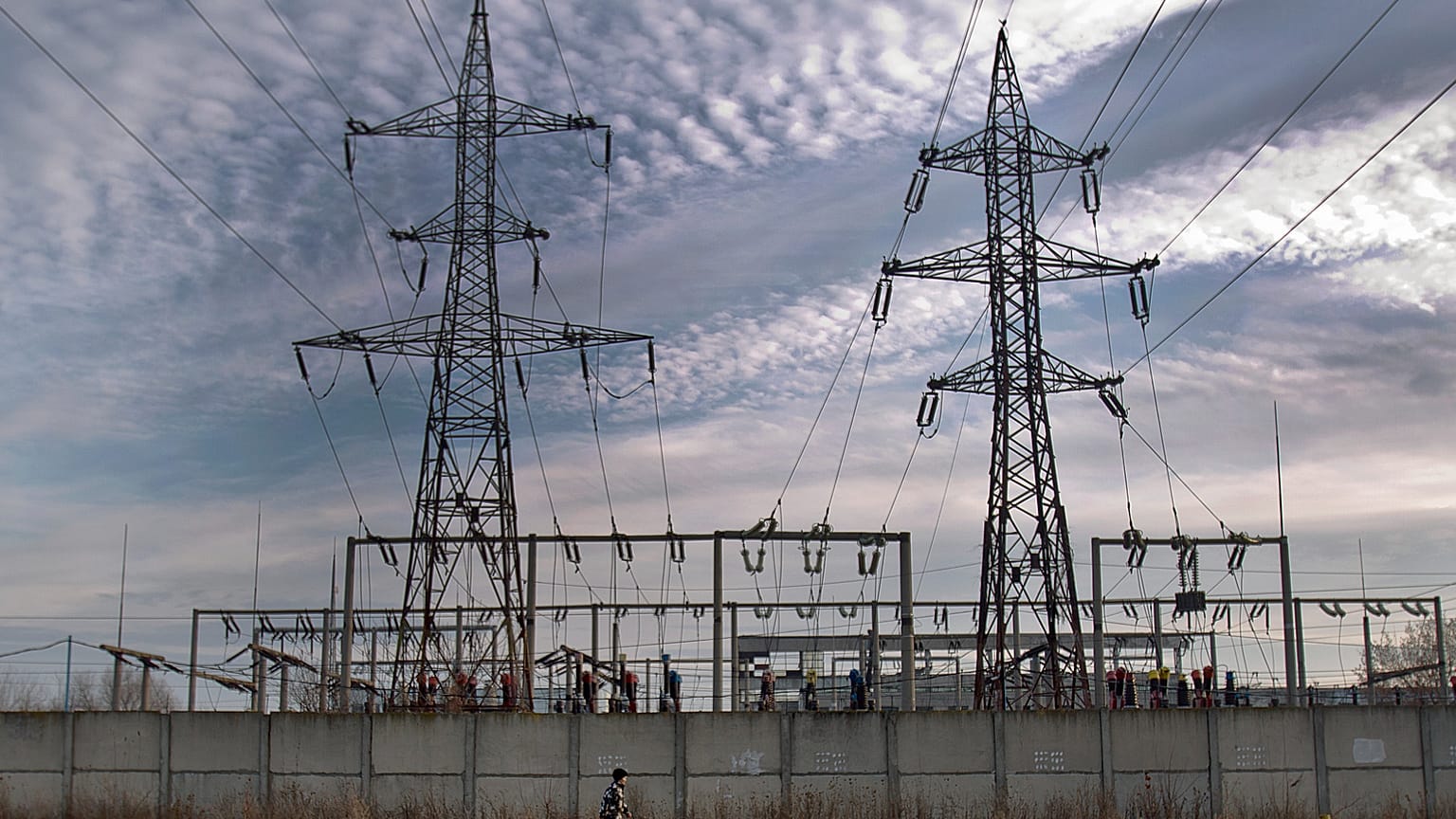
A woman walks by an electrical power distribution station in the Danube port city of Calarasi, southern Romania, Sunday, Dec. 11, 2011.
Copyright AP Photo / Vadim Ghirda

By Marta Pacheco
Published on 

Spain is the EU ember state receiving the most funding for cross-border electricity projects, while Germany is emerging as the frontrunner in hydrogen initiatives. Meanwhile, the European Commission is expected to launch its next call for proposals on energy infrastructure between April and June.

Fourteen cross-border electricity and hydrogen projects were awarded €650 million from the European Commission on Wednesday as part of the bloc's plan to modernise ageing grid infrastructure and maximise the use of clean power.

Spain will get €180 million, Poland, Estonia, Latvia and Lithuania will receive €112 million and another cross-border project in Romania and Bulgaria is set to get €103 million.

The three represent the top major projects benefiting from EU funding for electricity infrastructure, including smart grids, according to the European Commission.

Austria (€1 million), Greece-Egypt (€9 million), and Slovakia (€62 million) are also among those listed to get EU funding to revamp the electric infrastructure.

Under the Connecting Europe Facility (CEF), the funds will support grid infrastructure and renewable energy projects to boost solar and wind power, as outlined in the European Commission's recent initiative to modernise electricity networks and promote cross-border collaboration.

Ageing grid infrastructure often lacks the flexibility, capacity, and digital controls needed to handle wind and solar power, leading to congestion, curtailment, and ultimately wasting zero-carbon electricity — a challenge highlighted by the power industry.

The industry warned that without significant upgrades — such as expanded transmission, smarter controls, and energy storage — the grid can become a bottleneck, turning an abundance of clean energy into both an operational and economic burden rather than a climate solution.

With the EU's financial injection, Spain will develop the Aguayo hydroelectric power plant, aiming to deliver 9-10 GW of generation by 2027, enough electricity to power approximately 7.5 to 12 million homes.

The cross-border project involving Poland, Estonia, Latvia and Lithuania will increase Baltic cooperation by aligning their infrastructure, a business venture of critical importance given their proximity to Russia, the Commission said.

Major goals for Romania and Bulgaria's cross-border project are to modernise their electricity infrastructure to meet smart grid standards for both distribution and transmission networks and to increase regional interconnectivity.

European Commissioner for Energy and Housing Dan Jørgensen said these works will pave the way to "deliver clean and cheap energy to consumers," contributing to the bloc's energy sovereignty.

"The projects we are supporting financially will enhance Europe’s competitiveness and energy security, bringing us on a steady pathway towards independence," Jørgensen said.

Hydrogen storage and terminals

Germany tops the EU in funding for hydrogen projects, with a Gronau-Epe REW-led storage infrastructure project slated to receive €120.11 million, while a hydrogen terminal led by Uniper Green Wilhelmshaven is set to receive €10.63 million.

The Netherlands' ACE hydrogen terminal in the Port of Rotterdam will receive €25.62 million from the EU.

The project is being developed by the Dutch network gas operator Gasunie alongside multinational energy companies such as HES International and Vopak to receive, store and convert ammonia back into hydrogen for industrial use.

Austria, Bulgaria, France and Slovakia were also listed as recipients of funding for hydrogen projects.

At least 100 hydrogen infrastructure projects were eligible in November 2025 to receive EU funding under the bloc's law to develop cross-border energy infrastructure.

Critics argued that more than 90% of these projects were submitted by gas transmission operators, which runs counter to the 2022 revision of the law, intended to align the EU27's energy and climate goals.

Under the EU's renewable energy law, the 27-member bloc is set to produce 10 million tonnes of hydrogen by 2030 and is slated to import an additional 10 million tonnes.

The next call for proposals for energy infrastructure under the CEF is scheduled for April to June.

 

Swedish funfair fined €491,000 for 2023 rollercoaster derailment that killed one

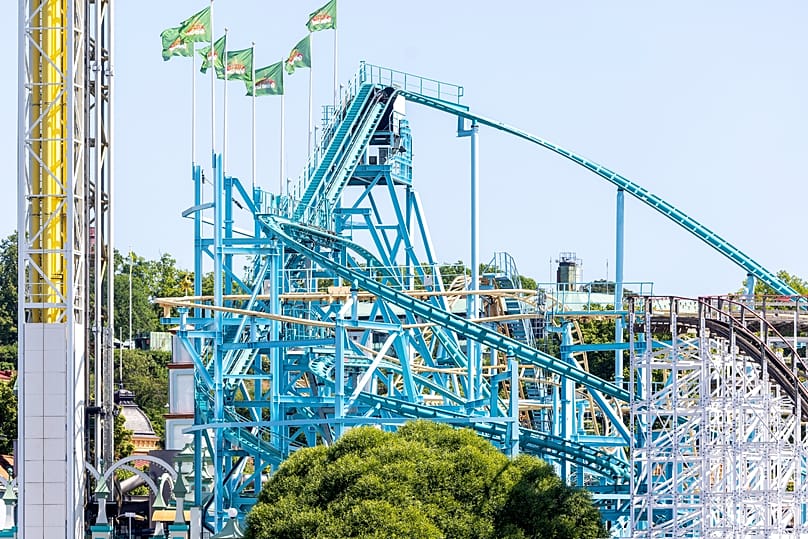
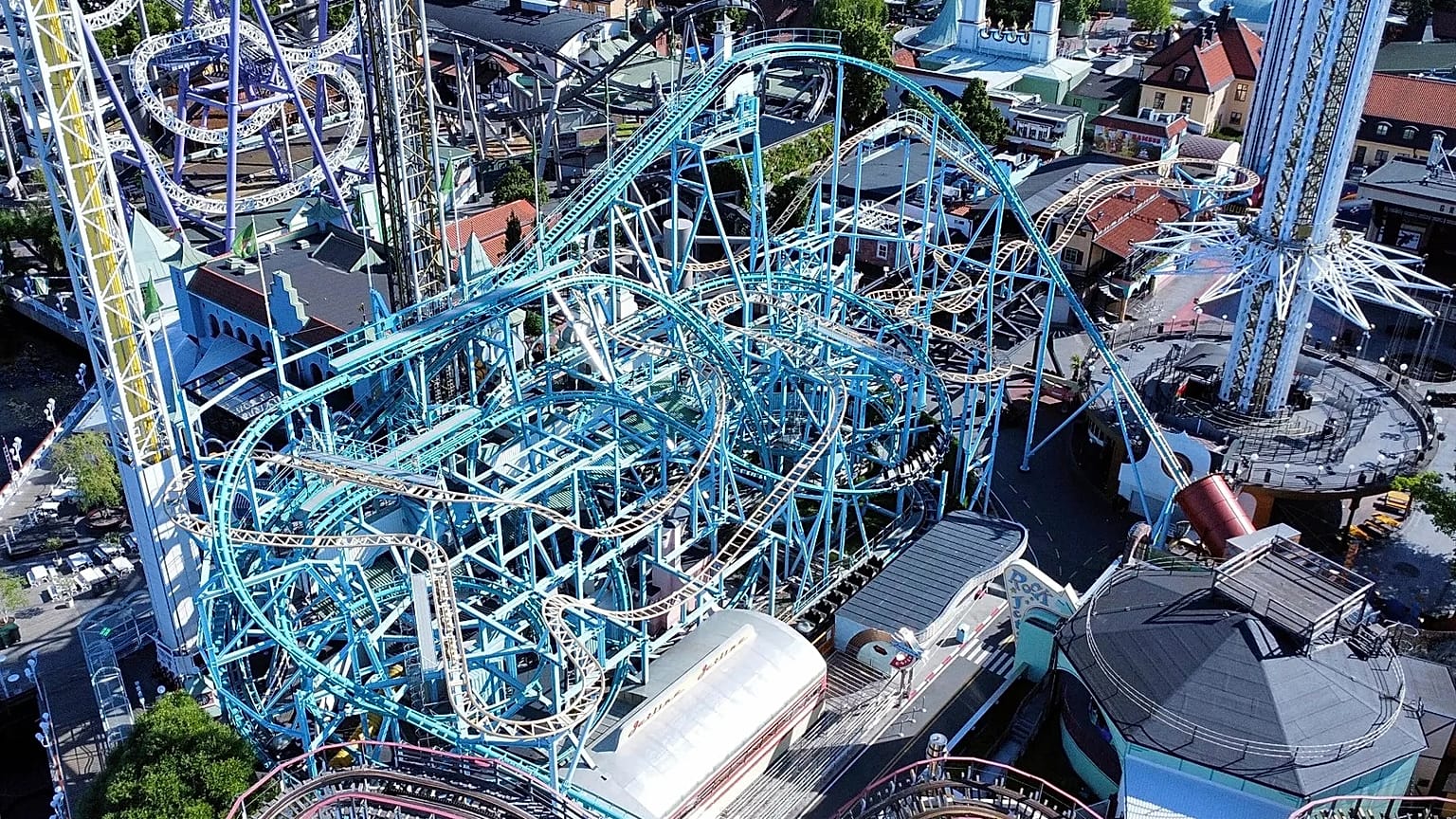
Aerial picture of the Jetline rollercoaster at Gröna Lund amusement park in Stockholm, 26 June, 2023
Copyright AP Photo

By Gavin Blackburn
Published on 

Witnesses described a chaotic scene as the front of the train appeared to jump off the tracks before coming to a stop, with one car tilted toward the ground.

A Swedish amusement park was fined nearly $588,000 (€491,000) on Wednesday in connection with a 2023 rollercoaster derailment that left one passenger dead and nine others injured.

The tragedy occurred on 25 June 2023 on the Jetline ride at the Gröna Lund park.

Witnesses described a chaotic scene as the front of the train appeared to jump off the tracks before coming to a stop, with one car tilted toward the ground. Three people were thrown off the rollercoaster.

The Stockholm District Court ruled on Wednesday that the Jetline's support arm, an important safety component, broke in the first car.

That caused the coaster's undercarriage to hit the track's joints, prompting sudden and violent breaking that ejected the passengers. Several safety restraints also gave way.

Aerial picture of the Jetline rollercoaster at Gröna Lund amusement park in Stockholm, 26 June, 2023 AP Photo

The court found that Gröna Lund acted negligently in the ordering of newly manufactured support arms by including insufficient documentation.

The court also said the theme park did not ensure that the work was done by a competent welder.

The court fined manufacturing company Göteborgs Mekaniska, which has since gone bankrupt, nearly $147,000 (€122,000) for improper welding and undertaking a job it was not qualified for. A second manufacturing company was acquitted.

Göteborgs Mekaniska and Gröna Lund, which was also ordered to pay unspecified damages to the victims, did not immediately respond to requests for comment.Relat

The 800-metre Jetline roller coaster opened in 1988 and was renovated in 2000, according to Gröna Lund.

It has a maximum height of 30 metres and a top speed of 90 kph.

Located on an island near Stockholm’s city centre, Gröna Lund opened in 1883 and is one of Sweden's most popular amusement parks.

SPACE / COSMOS

China orchestrating 'dogfight' in space against EU assets, German minister says

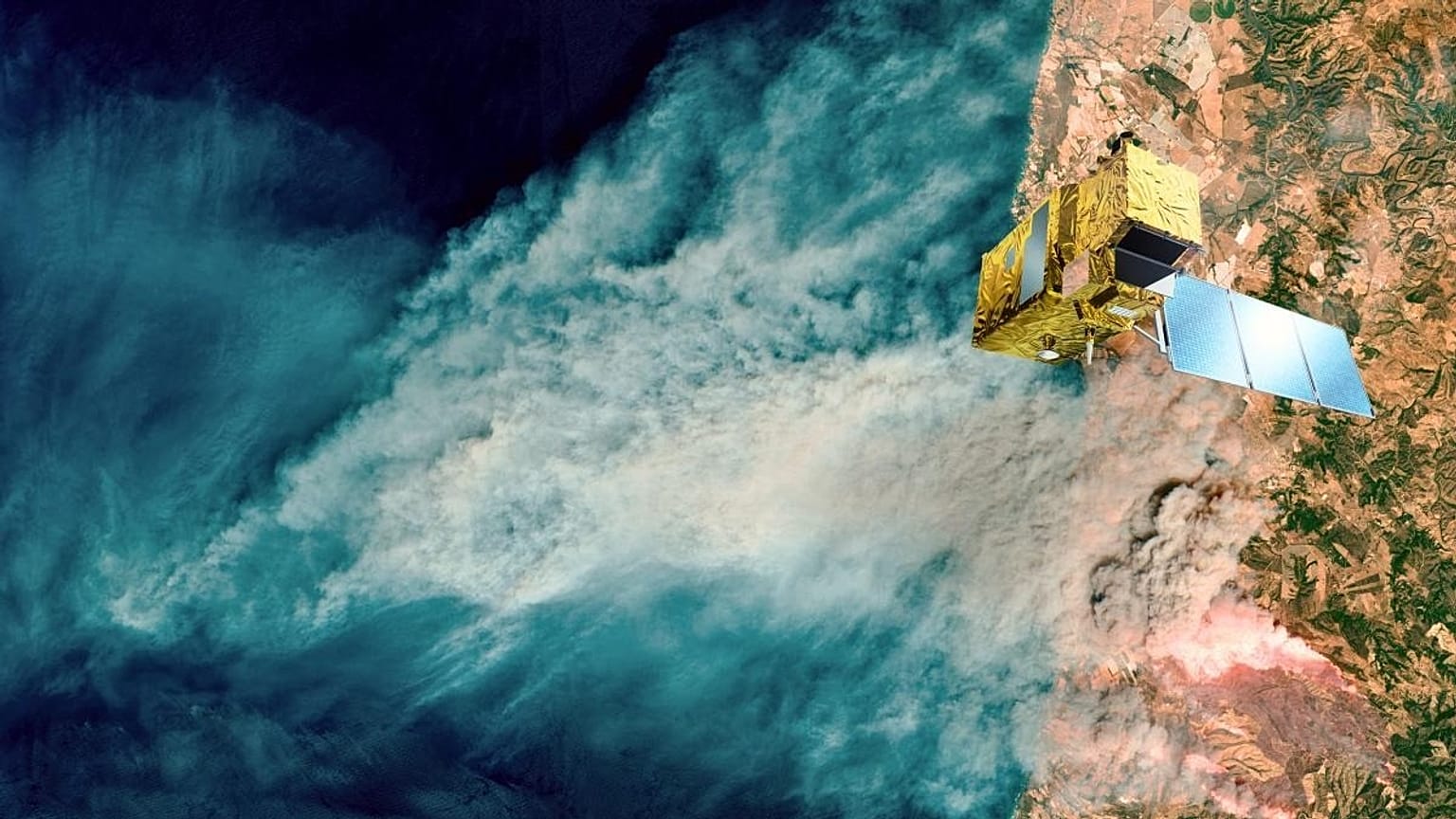
This image, captured by one of the Copernicus Sentinel-2 satellites on 7 August 2025, shows the hotspots of a wildfire reaching the Atlantic Ocean.
Copyright Copernicus Sentinel-2 imagery


By Alice Tidey
Published on 

It is possible Europe's adversaries are carrying already on activities to destablise the bloc's space assets in preparation for a future conflict, Jens Plötner also said.

Chinese activities in space to destabilise European assets amount to a "dogfight", Germany's State Secretary for Defence said on Wednesday, warning of a "new reality" that Europe needs to urgently prepare for.

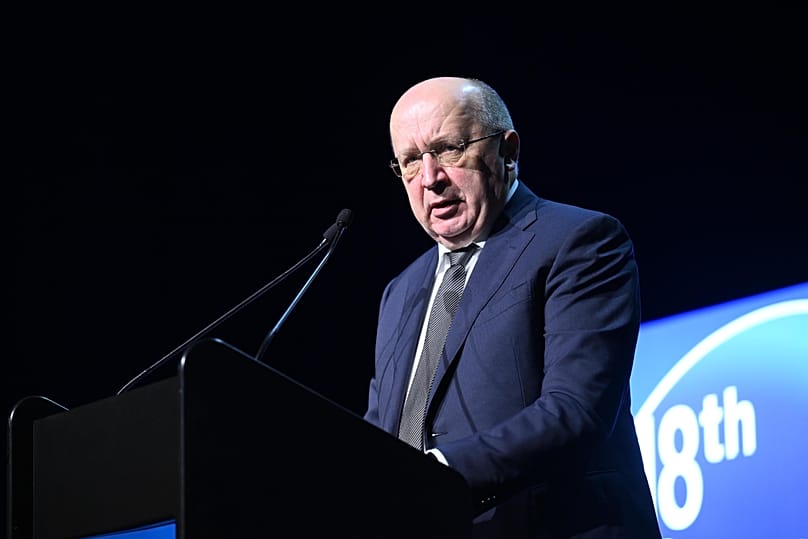
"Russia, also China, are developing, they are testing, and in some cases already employing counterspace capabilities," Jens Plötner warned during a keynote speech at the European Space Conference in Brussels. "These are designed to deny, degrade, disrupt, deceive or destroy space systems."

"European space assets, including German ones, are regularly subject to deliberate interference already today. We observe this on an almost daily basis. Chinese satellites, for instance, are conducting highly agile and complex manoeuvres in orbit, activities that can fairly be described as a dogfight in space."

The EU is scrambling to enhance its defence posture before the turn of the decade in order to deter a possible Russian attack with space now seen as key to these efforts, notably when it comes to intelligence, surveillance and reconnaissance as well as fast and secure communication.

Strategic enablers, which include space assets, have been designated a priority area for investments by the European Commission, which is urging member states to coordinate their rearmament efforts to avoid overlap and plug critical capability gaps faster.

Plötner, whose country has announced a €500 billion rearmament plan with €35 billion to be spent on military space capabilities alone before 2030, warned that Europe's adversaries know all too well that space-based defence is now decisive in conflict and therefore "a critical vulnerability".

"We must therefore assume that attacks on our space infrastructure would occur at a very early stage of any future conflict and that elements of such an attack could already be taking place today as we speak as part of a hybrid campaign," he said.

"Whether we like it or not, we need to face this new reality and we need be prepared."

Plötner called on EU member states to pool resources and to collaborate with trusted partners, in which he included the United States, as well as through the NATO military alliance.

"All EU members have a growing demand for satellite imagery, yet only a few operate the respective systems. By networking national and commercial assets into a virtual constellation, we can meet our collective security needs far more efficiently," he said, citing a joint programme with France, Finland, Sweden, and Spain to build a global sensor network for space situational awareness.

Other such efforts are also already underway. The European Commission for Defence and Space, Andrius Kubilius, announced on Tuesday that all 27 EU member states now have access to secure and encrypted satellite communication through the pooling of eight satellites owned by five different countries.

Plötner's comments came just a day after France's Minister for Space urged Europe to implement a "100% European preference" for space defence assets, arguing that Europe's "first strong ally is now very unpredictable".

The French government announced in November that Russia had deployed a nuclear-armed anti-satellite system into orbit as part of a programme named Sputnik S.


EU space sector told to speed up on security: Five takeaways from European Space Conference

European Space Conference, top 5 takeaways
Copyright Canva


By Jeremy Wilks
Published on 

Europe's space leaders were told to "speed up" security missions and launch the IRIS2 satellite constellation by 2029 at the biggest Brussels space conference of the year. Euronews Next highlights the key takeaways from the event and asks if the sector still has the power to inspire.

The era of ambitious talk is over—2026 must be the year Europe finally delivers on its space promises, leaders declared at the European Space Conference in Brussels this week.

Here are the top five messages from the conference, which is now in its 18th edition.

Security takes centre stage

Civilian space operations have been historically shy about their ties to military space operations, but not anymore.

With conflict in Europe and geopolitical tensions, European Commissioner for Defence and Space Andrius Kubilius warned in his keynote speech that "Member States fear that war is coming", and "only unity can deter Putin and defend the European Union".

Andrius Kubilius, currently serving as the European Commissioner for Defence and Space Euronews

He highlighted the new encrypted and secure navigation service from the EU's Galileo satellites, as well as the launch last week of Europe's GOVSATCOM, a sovereign satellite communication system utilising existing European space hardware.

For many space professionals, public discussion of what's known as 'dual-use' is a welcome reflection of the reality of the sector since the outset.

"A majority of the satellites we launch are dual, whether we talk about telecommunications, Earth observation, or positioning," Arianespace CEO David Cavaillolès told Euronews Next. "All of this can have both civil and military uses."

The European Space Agency’s director general, Josef Aschbacher, criticised European states that act alone on space security. "This weakens us," he said.

ESA is promoting an initiative called European Resilience from Space (ERS), which Aschbacher said allows "Member States (to) retain full control and ownership of their national assets, pool and share with others, and therefore allow Europe to benefit from an integrated system-of-systems."

But not everyone is confident about the sector's outlook, despite the record influx of cash into the space sector from European governments and institutions in the past year.

Industry figures at the European Space Conference said they need more public contracts and better long-term visibility, and newer players, such as Bulgaria's Endurosat, say they still depend on American venture capital to grow.

Timelines are tightening for IRIS2

Europe's new IRIS2 secure connectivity constellation is moving forward on an accelerated timeline.

Kubilius said he had "asked all partners to step up and speed up," with 2029 now slated for initial services, although many suspect it will slip to 2030 at least.

Members of the SpaceRise consortium tasked with building and operating this fleet of 290 satellites still have plenty of questions about the project, admitting to Euronews Next that at times, there are “too many cooks in the kitchen”.Manufacturing ground terminals and securing critical satellite components remain top concerns.

European Space Confererence , Brussels, January 2026 Euronews

Construction could begin as early as this year, with officials accepting that the first IRIS2 satellites may launch with limited capabilities and undergo iterative improvements throughout the 2030s.

While the customers at the European Commission are fully committed to IRIS2, the commercial business case was questioned, with telecoms operators at the conference saying they will buy bandwidth from competitors such as Starlink.

The project faces fresh competition from Blue Origin's newly announced TeraWave constellation, which targets the same institutional and business clients. However, Hispasat CEO Luis Mayo and SES CEO Adel Al-Saleh told Euronews Next that they viewed the American competitor's similar multi-orbit design as validation of their approach.

Big space players are bonding in Project Bromo

Project Bromo, the codename for the merger of space industry heavyweights Airbus Defence and Space, Thales Alenia Space, and Leonardo, was given a generally positive reception at the conference.

The thinking goes that this 'bromance' makes business sense if Europe wants to compete with the United States and China.

"I think it's a normal thing to consolidate, to try and horizontally optimise, to be more effective, maybe to organise the workforce in a better way," said European Space Policy Institute director Hermann Ludwig Moeller. However, he told Euronews Next that Project Bromo may stifle the space industry's desire to create new start-ups and encourage small and medium-sized enterprises (SMEs).

Finnish IceEye vice president Joost Elstak called it "overall a good thing if you look at it from the European perspective, we're trying to become more competitive and making sure that industry is more able to compete globally."

Cavaillolès had a similar view: "What is clear is that the world is changing fast, so we need to be agile. At our level, for the launcher world, we did the consolidation, simplification, some years ago. Now we see that our colleagues from the satellites are doing the same."

Spotting storms before they hit home

Forecasting for intense and violent storms may start to become more precise later this year as weather services integrate images from Eumetsat's new MTG-S1 satellite.

The very first images from this pioneering Infrared Sounder were unveiled in Brussels, showing how temperature, humidity, and composition of our atmosphere evolve at different altitudes.

The instrument makes its observations in almost 2,000 different wavelengths across the infrared spectrum simultaneously.

"What the image will do is actually provide four-dimensional information about the atmosphere,” said Eumetsat director general Phil Evans.

So it provides information through the profile of the atmosphere as it evolves over time. And that's a European first."

The first image was taken in November 2025, from a geostationary orbit 36,000 kilometres above the equator, and shows bands of water vapour crossing the Atlantic, dramatic temperature variations across the Sahara, the tops of thunderstorms and plumes from pollution sources like fertiliser plants.

Space can still inspire

Despite the focus on security and European competitiveness, space missions still have the ability to inspire those who work in the business.

Elstak from IceEye recounts sitting with engineers on ESA's JUICE mission to Jupiter's icy moons "talking about how the transfer from Venus to Jupiter was the least of their concerns, and I thought 'that's pretty cool'".

ESA director of Earth observation Simonetta Cheli said she was blown away earlier this year when the agency's Biomass satellite was commissioned.

"Biomass is a fabulous mission," she told Euronews Next."Looking at CO2 absorption by tropical forests, a climate change mission, with amazing technology, a P-band radar, never flown before, that was really 'wow'," she said.

ESA astronaut Jean-François Clervoy admitted that he continues to be fascinated by the search for life beyond our planet. "If, before I die, I have the beginning, just the beginning of the beginning of an answer to that question, I will be happy. So let's continue to explore," he said.

Clervoy was at the European Space Conference as an ambassador for Monaco's Venturi Space, which is shortlisted by NASA to produce components for a future Artemis programme lunar rover. If chosen, the first wheels on the Moon this century could be made in Switzerland, powered by batteries produced in Monaco with a control system from France.

There's more inspirational space news on the way, too. Within a few days, the next Artemis II mission should take astronauts around the Moon for the first time since 1972, their Orion craft relying on the German-made European Service Module for air, water and propulsion.

Then, coming up in February, French ESA astronaut Sophie Adenot will blast off for the International Space Station. In the words of Aschbacher, "There is a lot to look forward to."


Pornhub to restrict access to new users in the UK from next week, company says

File - This photo taken in London on Monday July 8, 2019, shows a laptop screen displaying the website for AgeID, an age verification system.
Copyright AP Photo/Kelvin Chan


By Euronews
Published on 

Aylo, the company behind Pornhub, said it is withdrawing from the UK market because it claims the UK’s new rules on age verification do not work.

Pornhub will be restricted for users in the United Kingdom as of February, citing a “failed system” created by new age-verification legislation.Aylo, Pornhub’s parent company, said in a statement that only users with accounts will be able to access the site as of February 2nd.

Those who have already verified their age on the site will be able to keep their accounts, the statement said.

The company said updates to the UK’s Online Safety Act (OSA) that require age verification for adult sites had “not achieved its goal of protecting minors” and instead had “diverted traffic to darker, unregulated corners of the internet”.

Aylo said it would “no longer participate in the failed system that has been created in the United Kingdom as a result of the OSA’s introduction”.​

Last July, Pornhub and other sites were forced to implement an age verification check that would include facial identification or uploading a piece of government ID under new rules from the OSA.

Pornhub saw its site traffic drop by just under a third in the first month of the new regulations because of an “unwillingness or inability” to complete age checks, according to a December report from UK digital regulator Ofco

Pornhub is the most-visited adult website in the UK with a market share of roughly 6 percent, the Ofcom report found.

Alex Kekesi, Aylo’s vice-president of brand and community, said in a statement that it was a “difficult decision” for the company to make, but that it could not continue to operate under the framework of the OSA.​

“Effective enforcement [of the OSA] is not possible, circumvention is rampant, privacy is compromised, and new, unregulated sites quickly fill any gaps left by responsible operators,” Kekesi said, noting that Aylo will continue to work with the UK government for a solution. ​

Kekesi encouraged developers to instead build safeguards into their iOS stores to limit adult website exposure for children’s devices and accounts.

Slovak PM Fico reportedly shocked by Trump’s state of mind during visit to Mar-a-Lago

Slovak PM Fico reportedly shocked by Trump’s state of mind during visit to Mar-a-Lago
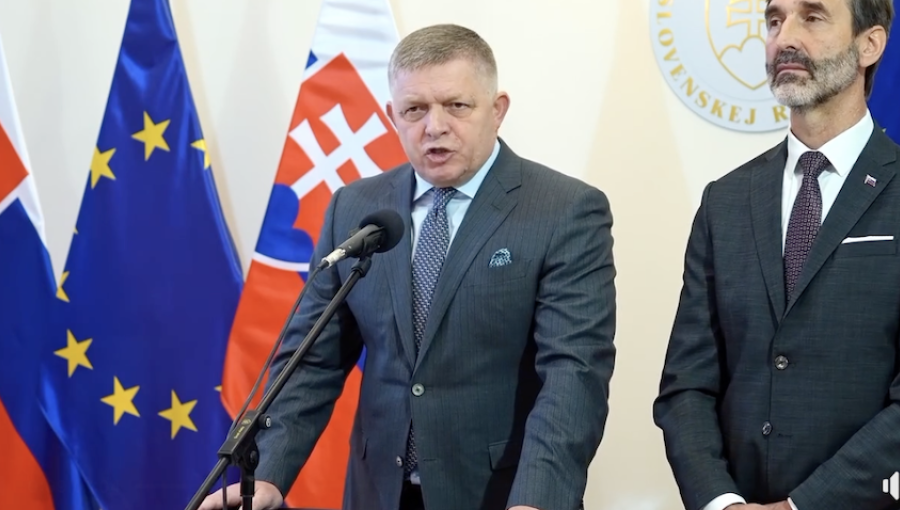
Slovakia's populist Prime Minister Robert Fico was shocked by the disturbing state of mind of US President Donald Trump, according to a Politico report. / Robert Fico via Facebook
By bne IntelliNews January 28, 2026

Slovakia's populist Prime Minister Robert Fico was shocked by the disturbing state of mind of US President Donald Trump when Fico visited his national conservative ally at his private residence at Mar-a-Lago in Florida, Politico reported, referring to anonymous sources in EU diplomacy.

According to the report, Fico shared his experience from the recent US visit with EU diplomats during the EU Brussels summit on January 22. Fico “was concerned about the US president’s “psychological state”, two of the diplomats said,” Politico wrote, adding that “Fico used the word “dangerous” to describe how the US president came across during their face-to-face meeting at Trump’s Mar-a-Lago estate”.

The Slovak strongman visited Trump at Mar-a-Lago in mid-January while on a trip to the US to sign a civil nuclear cooperation deal between Slovakia and the US, as bne IntelliNews reported earlier.

The two national conservative leaders have curried favour with each other ever since Trump’s return to the White House. Both of them have attacked the EU for its green policies, and have been criticised for being pro-Russian. 

Despite employing aggressive rhetoric against Brussels to please his domestic electorate following the radicalisation of his Smer party, Fico is known for using much calmer and more diplomatic language in Brussels, and is reportedly making efforts not to sever ties with the EU and to avoid falling into full isolation inside the bloc.

Politico wrote that the Slovak PM “made his remarks in a separate informal huddle between some leaders and chief EU officials rather than during the formal roundtable talks”.

Politico, which is known for having sources inside Brussels policy circles, added that “Fico seemed to be “traumatised” by his encounter with Trump”, and that “Fico characterised Trump as being “out of his mind”.

Fico as well as the White House were quick to deny the statements reported by Politico, and the Slovak PM even accused Politico of lying, stating on his Facebook social media profile that “no one heard anything, no one saw anything, there are no witnesses, but nothing prevented Politico portal from coming up with lies”.

Fico also accused Politico of “destroying constructive relations, which Slovakia has in all four world directions,” including “the Slovak Republic’s interest to diversify its peace nuclear programme and cooperating with the USA as well”. 

White House spokesperson Anna Kelly attacked the Politico story as “absolutely total fake news from anonymous European diplomats who are trying to be relevant”.

WWIII

UPDATE: US President Trump warns Iran with armada deployment, Iran says "open to dialogue"

UPDATE: US President Trump warns Iran with armada deployment, Iran says
US President Trump warns Iran with armada deployment, threatens military action / bne IntelliNews
By bnm Gulf bureau January 28, 2026

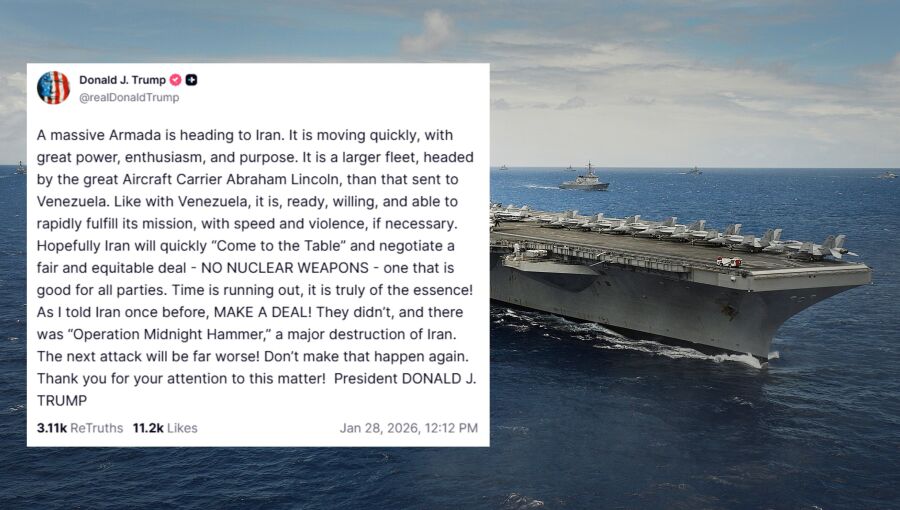
US President Donald Trump warned Iran on January 28 that a "massive armada" is heading to the country and urged Tehran to negotiate a nuclear deal, threatening military action if diplomacy fails.

"A massive Armada is heading to Iran. It is moving quickly, with great power, enthusiasm, and purpose," Trump said in a post on Truth Social on January 28.

The fleet, headed by the aircraft carrier USS Abraham Lincoln, is larger than the one Trump sent to Venezuela, according to the president. "Like with Venezuela, it is, ready, willing, and able to rapidly fulfill its mission, with speed and violence, if necessary," Trump said.

Trump called on Iran to "Come to the Table" and negotiate a fair and equitable deal on nuclear weapons that is "good for all parties", warning that "time is running out, it is truly of the essence".

The president referenced a previous military operation against Iran. "As I told Iran once before, MAKE A DEAL! They didn't, and there was 'Operation Midnight Hammer,' a major destruction of Iran. The next attack will be far worse! Don't make that happen again," Trump said.

The warning follows several weeks of deadly mass protests in Iran. The US-based Human Rights Activists News Agency said on January 27 that more than 6,000 people were killed in demonstrations across the country, including the capital Tehran.

The group verifies each death with a network of activists on the ground in Iran and its data goes through "multiple internal checks". Iran's government put the official death toll at 3,117 last week. IntelliNews could not independently verify either figure.

Following Trump's message, Iran said it is ready for dialogue with the US based on mutual respect and interests, but will defend itself and respond "like never before" if pushed, Iran's permanent mission to the United Nations said on January 28.

"Last time the U.S. blundered into wars in Afghanistan and Iraq, it squandered over $7trn and lost more than 7,000 American lives. Iran stands ready for dialogue based on mutual respect and interests—BUT IF PUSHED, IT WILL DEFEND ITSELF AND RESPOND LIKE NEVER BEFORE!" the mission said in a post on X on January 28.

Iranian Foreign Minister Abbas Araghchi held a phone conversation with Turkish Foreign Minister Hakan Fidan on January 28 to discuss efforts to reduce tensions following recent developments in the region, Turkish state broadcaster state broadcaster TRT reported, citing a source at Turkey's Foreign Ministry.

Fidan previously said during the current tensions created by the United States and Israel in the region that attacking Iran would not be the right action.

"Tehran is ready for renewed negotiations and I advise Washington to resolve its issues with Iran step by step," Fidan said in an interview with Al Jazeera.

The US has been building up its military in the region following the deadly clashes between government forces and the people.

Trump pulled the US out of the nuclear deal with Iran during his first term in office in 2018, three years after Iran agreed to halt its pursuit of nuclear weapons and allow international checks on its facilities in exchange for sanctions relief.

Last updated 14:52 GMT