Interview with Daria Saburova
Saturday 31 January 2026, by Daria Saburova
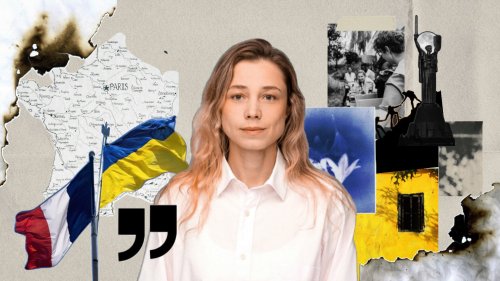
How does volunteer labor today become a site of gender and class tensions? What are the specific features of class relations in contemporary Ukraine? And how do French leftists view the war in Ukraine? The editorial team at Posle spoke with Daria Saburova, PhD, a researcher at Central European University and a member of the editorial board of the Ukrainian leftist journal Spilne (Commons), as well as the author of Travailleuses de la résistance (Women Workers of Resistance).
— Hello, Daria, thank you for agreeing to this interview. Your book feels particularly timely today as it shows how volunteer and activist labor is shaped by labor relations, class divisions, and gender inequality. Could you tell us what you were working on before the publication of Travailleuses de la résistance, how France fits into your biography, and how your interest in Marxism developed?
— At the time I was writing the book, I was a doctoral student at Paris Nanterre University, working on a dissertation about the anthropological and political dimensions of Marxist theories of labor. In that sense, I was primarily engaged with philosophy. Of course, I read a great deal of sociology, history, and labor psychology, but I had never conducted empirical research myself. This book became my first ethnography. You could say it was an amateur approach to ethnography, I was learning both the methods and the theory as I went along.
I was born and raised in Kyiv, but I have lived in France since 2009. Until 2022, I traveled to Ukraine relatively infrequently. The full-scale invasion brought me back, and I began traveling there much more often and for longer periods. Around the same time, I joined the editorial board of Spilne. Before that, I was part of the editorial collective of the French leftist journal Contretemps, which also has a Marxist orientation. I left that journal because I disagreed with how the Ukrainian question was being covered.
When the war began, I realized that I would not be able to focus on purely theoretical work for some time. It felt far more important to engage directly in political debate.
I continued teaching, but I also joined the European Network for Solidarity with Ukraine, where I was frequently invited to participate in discussions within French left-wing activist circles. There, I repeatedly encountered French leftists who either adhered to campist positions, abstract pacifism, or revolutionary defeatism. By late 2022, it became clear to me that these debates were losing their substance, people had largely settled into fixed positions, and trading abstract theses no longer seemed productive.
It was around that moment, at the end of 2022, that a small French publisher, Croquant, contacted me with a proposal to write a book about Ukraine. I saw this as an opportunity to move beyond speculative reasoning, media commentary, and conversations with Ukrainian leftist and union activists and instead to conduct fieldwork.
French leftists often invoke the Ukrainian working class without any real interest in local dynamics or real people.
I wanted to understand how people from the actual, not textbook, working class perceive the situation and what forms of resistance they develop in response to the Russian invasion.
Initially, the book was aimed primarily at a French audience. The foreword was written by Étienne Balibar, situating the book within a specific debate taking place in France about the war in Ukraine.
In the end, however, the book turned out to be less of a political polemic and more of a sociological study. I tried to show that wartime volunteering is not merely a civic stance, but also unpaid labor, one characterized by hierarchies, unequal access to resources, and complex relationships with international humanitarian organizations, the state, and local authorities.
I was especially interested in understanding the specific nature of working-class volunteerism, a topic that is rarely discussed.
Most sociologists and political scientists studying volunteering in Ukraine focus on middle-class initiatives, which since 2014 have been the main driving force behind the Maidan protests and the core of volunteer battalions in eastern Ukraine.
— Could you elaborate on what distinguishes volunteerism in Ukraine in the context of the Russian invasion?
— I wanted to challenge the idea that today’s wave of volunteerism in Ukraine is simply a direct continuation of the volunteer traditions that emerged during the Maidan protests and resistance to separatism in Donbas. There is a widespread assumption that activist structures and practices created by the urban middle class in Kyiv and other large cities were simply passed on to a broader population after the full-scale invasion in 2022.
I wanted to show instead that the new people who joined the volunteer movement, working-class residents of small towns and villages, brought with them their own traditions, moral frameworks, and political views. For example, in the volunteer organizations in Kryvyi Rih that I studied, people primarily spoke Russian or Surzhyk and saw nothing problematic about not switching to Ukrainian. On the contrary, many viewed calls to abandon Russian with scepticism, at least in early 2023.
Most of my interlocutors had a negative view of the Maidan protest movement [author’s comment: the events of late November 2013 through February 2014, which became known in Ukrainian history as the Euromaidan, entailed mass protests on Independence Square in central Kyiv and in other cities across Ukraine]. Some had even participated in the local “Anti-Maidan” at the time. Miners still recalled the [Viktor] Yanukovych years as the most socially and economically stable period of their lives.
For them, the Soviet period remains a benchmark for assessing the growth of social inequality in post-independence Ukraine.
In other words, they retain a distinct local identity that combines these seemingly contradictory elements. This sharply distinguishes them from the volunteer identity commonly described by political scientists and sociologists. The traditions Kryvyi Rih volunteers draw upon also reflect a specific local class experience. On the one hand, many work at the same mine, live in the same neighborhoods, and are accustomed to mutual aid at the mining site level. On the other hand, before the full-scale invasion, mines in Kryvyi Rih regularly went on strike, and women played a central role in sustaining those strikes.
How do miners strike? They stay underground, sometimes for days or even months. The last such strike at the Kryvyi Rih Iron Ore Plant in 2020 lasted 43 days. During these periods, wives and mothers organize to send food, mattresses, and other supplies down to the miners. They also take on the political dimension of the protest, demonstrating at company offices or city hall and presenting workers’ demands: higher wages, better working conditions. This local tradition of self-organization now helps them structure their volunteer efforts in support of the front.
— You mentioned that most of your respondents did not support the protest movement that began on the Maidan in 2014. What arguments did they give?
— First, as Denys Gorbach notes in his book on the working class in Kryvyi Rih, there is a deep distrust of any authority and, more broadly, a rejection of politics as such. One common argument was that the Maidan protest movement served as a tool that allowed the political opposition to come to power, while, in essence, nothing really changed and people died for nothing.
Some respondents criticized not only the outcome of the Maidan but the movement itself. In today’s official discourse, the Maidan is presented as the birth of genuine Ukrainian direct democracy. My interlocutors, however, argued that the violent change of power was undemocratic in nature and that Yanukovych should have been removed through elections.
This argument can certainly be seen as reactionary. It suggests that today the Ukrainian working class does not support the idea of revolution as such, rejecting the possibility of radical change through revolutionary means. But behind these arguments lies something more fundamental: for many people in eastern Ukraine, the Maidan protests of winter 2013–2014 felt distant and alien, events that did not necessarily reflect their interests.
The protests articulated abstract liberal-democratic demands: rule of law, opposition to police violence, democracy, freedom. They were later joined by a nationalist agenda that was also foreign to my respondents.
In interviews, we spoke extensively about wages, pensions, and the state of healthcare. For miners, issues such as special pension regimes and benefits are especially important, and these concerns were entirely absent from the Maidan protests.
At that time, there was also little sense of Ukrainian national identity among these people. One respondent put it bluntly: “Before February 2022, hardly any of us even knew what Ukraine was. We never called ourselves Ukrainians or anything else. We earned good money working in the mines, and that was enough for us.”
— In the book, you argue that after the Maidan events there was nevertheless a redistribution of class relations, one that further elevated elites and the middle class as the drivers of political progress. Could you elaborate on this?
— The most accurate class and political-economic analysis of Ukraine from independence to the present can be found in the work of Denys Gorbach. After independence, Ukraine developed a specific alliance, or social contract, between paternalistic capitalists, especially in industrial cities such as Kryvyi Rih, Donetsk, and others, and the local working class. In other words, these enterprises and cities were not subjected to abrupt neoliberal restructuring of management and governance. Companies continued to prioritize workforce retention over technological innovation that would lead to layoffs. They also continued to provide workers with certain social benefits.
This compromise between capitalists and the working class, as well as public sector employees, crystallized politically in the form of specific political forces. Above all, it was promoted by the Party of Regions, led by Yanukovych.
On the one hand, pressure from Western institutions and the International Monetary Fund intensified; on the other, internal political obstacles to a broad package of reforms were removed. These included reforms in education, healthcare, social welfare, gas price liberalization, and more. The war and the choice of a European path served as a justification for these reforms. This process was compounded by the economic crisis, inflation, and the social consequences of the armed conflict, all of which altered class relations as they had existed prior to 2014 and reshaped the political landscape.
It can be said that, through these processes, the paternalistic industrial bloc was defeated. Industrial workers lost out, as did the Ukrainian working class as a whole, which experienced widespread impoverishment. Industrial oligarchs also lost ground: due to the war, they not only lost parts of their physical assets in eastern and southern Ukraine but also much of their political influence. At the same time, other groups strengthened their economic, political, and symbolic capital. Representatives of the educated, urban middle class began to take up positions in government and in the rapidly expanding NGO sector, which is largely funded by European and American donor organizations.
— Do you think this gender and class imbalance in volunteer labor is specific to Ukraine, or is it a global phenomenon?
— Viewing volunteerism as unpaid labor is not a new approach. The concept of volunteer labor has been used at least since the 1980s, and these issues are now actively analyzed in global sociology. From a class perspective, scholars emphasize that among upper social strata, volunteer work often takes the form of leisure, whereas for the working class it frequently becomes what is known as “hope labor” – work performed in the hope of improving one’s résumé or securing a foothold in the labor market. In such cases, it is no longer truly volunteer activity, but rather a form of unpaid labor exploitation.
In some countries, volunteer labor is a condition for receiving unemployment benefits. For migrants, it often becomes a way to integrate into society and to demonstrate that they are deserving of citizenship. All of this must be understood in the context of increasingly restrictive migration policies and austerity politics.
At the same time, approaches that analyze volunteer labor through the lens of social reproduction, that is, care for people and human relationships, are also developing rapidly.
Volunteerism certainly includes many functions traditionally associated with male labor. In Ukraine, this includes activities tied to the military sector: drone production, crowdfunding, equipment procurement. Still, the majority of volunteer work is care labor. And this work is performed primarily by women: cooking for soldiers, caring for internally displaced people, setting up and running reception centers. It also includes psychological support and work with children, the elderly, and veterans.
This category also encompasses productive labor historically associated with the domestic sphere, such as weaving camouflage nets or knitting socks. Much of what is done for the front is very often based on unpaid female labor.
In this book, I did not set out to solve complex theoretical problems. On the contrary, I rely on a classic Marxist-feminist framework: Silvia Federici [1], Mariarosa Dalla Costa, Selma James [2], who viewed domestic labor as a form of exploitation. I believe this analytical framework is particularly well suited to Ukraine. Sociologists Oksana Dutchak, Natalia Lomonosova, and Alona Tkalich have worked on this topic for many years and show that in Ukraine, as elsewhere in the world, the impoverishment of the working class has, first and foremost, a female face.
The entire working class suffers from the war and from reforms. Of course, women in Ukraine are not forcibly mobilized to the front. But they bear the full burden of reproductive labor and responsibility for children, the elderly, and the sick. Women who leave for Europe often have to support their families on their own. Life expectancy among women in Ukraine remains higher, and the majority of pensioners are women. It is among female pensioners that poverty rates are highest. These are women who spent part of their careers caring for children and occupying lower-paid positions, and as a result receive significantly lower pensions.
Moreover, women are disproportionately employed in the lowest-paid sectors, above all in the public sector: teachers, childcare workers, nurses, social workers, and others. As a result, women in Ukraine constitute the most precarious and least protected segment of the working class.
This is precisely why it is considered more socially acceptable for women to engage in volunteer work. Men are expected either to fight or to work in the mines and earn money. Even when men are retired, they are more likely to seek paid work than to engage in volunteer activities.
Because women already provide unpaid care labor in the private sphere, it is assumed that they will continue to provide unpaid care for the military in the volunteerism public sphere as well.
— At times, European leftists say they do not want to take sides in the Russian-Ukrainian military conflict. Could you explain in more detail what different segments of the French left think about the war in Ukraine? And how do you personally view the anti-militarist rhetoric of the European left?
— I was very actively involved in these debates during the first two or three years of the invasion. Over the past year, I have stepped back somewhat and no longer follow developments in detail. But in France, there has been a wide range of positions, really a full spectrum, with room for debate among different segments of the left. The position you describe does exist, but I would say it is relatively marginal.
Even if we look at the largest party engaged in public politics in France, La France Insoumise (France Unbowed), it would be incorrect to say that there is a single, unified position within the party. Of course, from its leader
Jean-Luc Mélenchonand for Nouveau Parti anticapitaliste (New Anticapitalist Party-l’Anticapitaliste), which, in my view, consistently adopt politically sound positions within an internationalist framework. For them, solidarity with Ukraine and Palestine is genuinely a priority. And this solidarity is not merely declarative, it is active. They bring this agenda into French society through educational materials, marches, and solidarity events. They have also repeatedly traveled to Ukraine and continue to maintain close contact with local activists and organizations. This is what can be described as concrete solidarity within the limits of available resources.
At the same time, the positions of French parties on the war in Ukraine need to be understood in relation to their broader domestic political agendas.
These stances are tied to their strategic positioning within France’s political landscape. For example, La France Insoumisehas historically taken a sovereignist stance, particularly with regard to US policy. For them, it is important to emphasize that social spending should not be sacrificed and that austerity policies should not be imposed in the name of militarization, securitization, and the expansion of the repressive state apparatus. Compared to this agenda, which can directly mobilize French voters, the issue of military assistance to Ukraine tends to play a secondary role.
— What are your connections to the left in Ukraine, and what prospects do you see for it? Will your book be translated into Ukrainian?
— I am a member of the editorial board of Spilne. This form of engagement is closer to me than direct political activism, and I am very glad to be part of this journal. In my view, it is the most interesting and highest-quality analytical publication in Ukraine, one that seeks to reach a broad audience while maintaining high intellectual standards.
On the one hand, our task is to explain to Ukrainian readers what is happening in Ukraine and globally from the perspective of the social and economic problems faced by ordinary people and from a progressive political standpoint. On the other hand, we aim to introduce the international community to developments in Ukraine.
We publish materials in Ukrainian, Russian, and English.
The journal provides a platform for various political and trade union organizations in Ukraine. above all Sotsialnyi Rukh (Social Movement), solidarity collectives, the student union Pryama Diya, and the nurses’ union Be Like Us. I very much hope that my book will soon be published in Ukrainian. Above all, I am interested in how the people I wrote about will respond to my description and analysis of their own activities.
One chapter, devoted to the language question, has already been published in an abridged form on the Spilne website. To be honest, I expected much more criticism. In that chapter, I argue that today the shift to Ukrainian has become a condition for social mobility, especially in the cultural sphere, and that a principled rejection of Russian is most common among the middle class. Instead, I received mostly positive feedback. When arguments are presented in a well-reasoned way, they tend to be received more calmly.
1 January 2026
Source: Posle media.
Footnotes
[1] Federici, Silvia. Wages Against Housework. Bristol: Falling Wall Press, 1975.
[2] Costa, Mariarosa D., and Selma James. The Power of Women and the Subversion of the Community. Bristol: Falling Wall Press, 1972.
Daria Saburova
Daria Saburova is a Ukrainian studying in France.
Musk’s SpaceX and Ukraine’s defence ministry to block Russia’s use of Starlink
Ukraine is launching a verification of all Starlink terminals in Ukraine in response to the unauthorised use of Starlink by Russian forces. Elon Musk promptly responded to Kyiv’s calls to check and prevent Russian forces from using Starlink on attack drones against Ukraine.
Elon Musk’s SpaceX has taken the first steps to stop Russia from using Starlink to operate and control attack drones over Ukraine in what Kyiv has lauded as already delivering "real results".
Over the past few days, Ukraine’s defence ministry reached out to SpaceX, calling the company to prevent Russian drones from using Starlink.
Defence Minister Mykhailo Fedorov explained that the satellite internet system could help them to operate further over Ukraine and even avoid interception.
“Russian drones equipped with terminals are difficult to shoot down. They fly at low altitudes, are resistant to electronic warfare, and are controlled by operators in real time, even at long distances,” Fedorov explained.
“Thanks to the first steps taken in recent days, no Ukrainians have been killed by Russian drones using Starlink — and that is priceless.”
SpaceX responded promptly with Musk posting on X that SpaceX's efforts to halt "unauthorized" Russian use of Starlink seemed to have worked.
"Let us know if more needs to be done," the tech billionaire added in a public exchange with Fedorov on X.
Russian use of Starlink
In a social media post in February 2024, SpaceX said it does not sell or ship Starlink to Russia, and "does not do business of any kind with the Russian government or its military."
But according to Ukrainian military and Kyiv officials, Moscow troops have been mounting Starlink systems on Russian attack drones to strike deeper into Ukraine.
Ukrainian officials said they collected evidence of “hundred” of attacks by Starlink- equiped drones. This allowed Russian operators to bypass Ukraine’s electronic defences that disable drones by jamming GPS and radio signals.
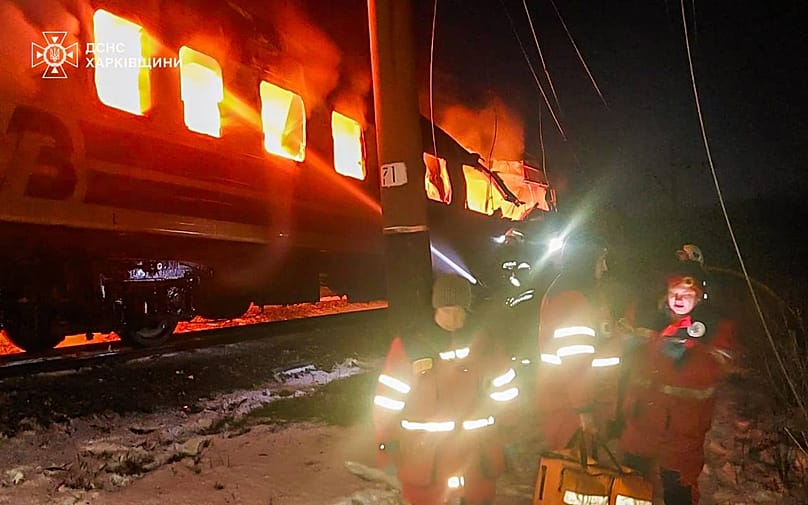
According to Ukraine’s Defence Ministry adviser Serhii Beskrestnov, these were Starlink-controlled Russian drones that attacked a passenger train in the Kharkiv region recently.
The US-based think tank Institute for the Study of War (ISW) also stated that Russian forces appear to be increasingly relying on Starlinks to increase the range of operation of strike drones while increasing drone resilience against Ukrainian electronic warfare.
“The reported 500-kilometre range of Starlink-equipped BM-35 drones places most of Ukraine, all of Moldova, and parts of Poland, Romania and Lithuania in range of these drones if launched from Russia or occupied Ukraine,” the ISW estimated.
The think tank also said it has observed reports of Starlink-equipped Shahed long-range strike drones beginning in September 2024 and of Rubikon equipping Molniya strike drones with Starlink systems beginning in December 2025.
Crucial role of Starlink for Ukrainian military
Musk initially enabled Starlink service over Ukraine in 2022 after Kyiv pleaded for help in the first days following Russia's full-scale invasion. Since then, Ukraine has received over 50,000 Starlink terminals.
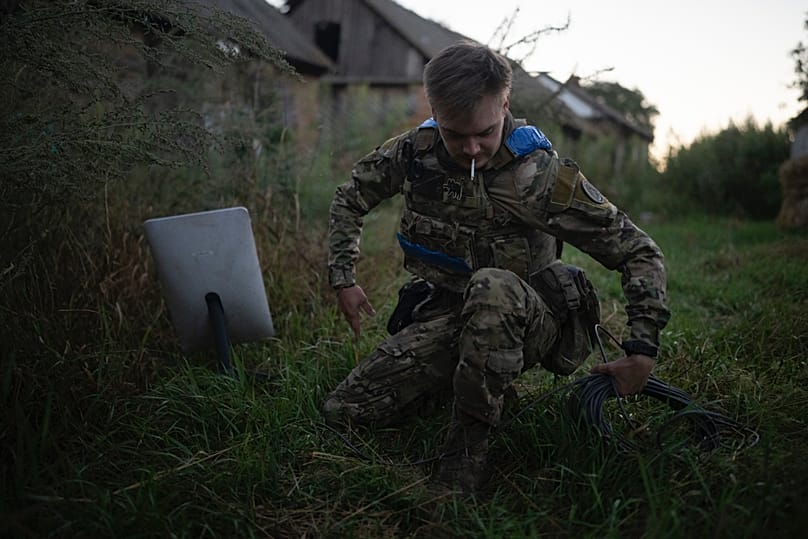
Ukrainian forces depend significantly on Starlink for communication in frontline positions. Many military commanders prefer satellite internet over traditional radio communications because it offers a more secure way to connect with troops at a distance.
Amid the new reports of unauthorised use of Starlink by Russian forces, Ukraine’s defence minister announced a verification of all Starlink terminals in Ukraine.
“The government has adopted a resolution on the introduction of a ‘white list’ for Starlink satellite terminals. Soon, only verified and registered terminals will operate in Ukraine. All others will be disabled”, Fedorov said on Monday, adding that the process is being implemented “in cooperation with SpaceX”.
“Thanks to the ‘whitelist,’ we maintain stable communication for Ukrainians, enhance security, and deprive the enemy of technological advantages. This is a necessary step by the government to preserve the lives of Ukrainians and our energy facilities.”
Diplomacy on X
Until January, Fedorov served as Ukraine's deputy prime minister and digital transformation minister.
He has been praised for implementing Ukraine’s strategy of a "state within a smartphone" as part of efforts to minimise bureaucracy. Since the launch of the Diia app in 2020, a range of government services has been available on people’s smartphones.
Since the beginning of Russia’s full-scale invasion, his ministry has been significantly involved in drone development and production, and education reforms.
He also played a key role in launching a project linking the Digital Transformation Ministry with the Defence Ministry to advance military technology.
Fedorov already reached out to Musk both publicly and privately since Russia started its all-out war against Ukraine.
In 2022, Musk quickly responded on X to Fedorov's request for Starlink internet terminals, after two days into Russia’s full-scale invasion, when Fedorov tagged Musk, asking for help.
“While you try to colonise Mars — Russia try to occupy Ukraine. While your rockets successfully land from space, Russian rockets attack Ukrainian civilians. We ask you to provide Ukraine with Starlink stations and to address sane Russians to stand," Fedovor said.
Musk replied just hours later, saying, “Starlink service is now active in Ukraine. More terminals en route.”
The two stayed in touch ever since and maintained the cooperation, prompting anger and regular threats from Moscow.
After Musk announced the first steps towards preventing Russian forces from using Straklink for their attack drones against Ukraine, the Kremlin-affiliated media issued more threats, calling for Moscow to target Musk's satellites in space with nuclear weapons.
Russia is believed to be developing anti-satellite weapons to target Starlink by littering the satellite orbits with shrapnel, according to an AP report from December 2025.
Western intelligence believes that the purpose of this possible space attack by Moscow is to limit the advantage of Western countries in space, in particular Starlink satellites that help Ukraine on the battlefield.
Germany opposes direct talks with Russia due to Putin's 'maximalist demands'
As Paris and Rome push for reopening diplomatic channels with Moscow, Berlin is taking the opposite position.
The German government has restated its opposition to reopening diplomatic channels with Russian President Vladimir Putin as part of negotiations to end the war in Ukraine, an idea that has gained traction after being endorsed by the leaders of France and Italy.
"We support direct talks between Russia and Ukraine on the highest level since there can be no just and durable peace without Ukraine's participation," a spokesperson for the Federal Foreign Office of Germany told Euronews.
"Unfortunately, we have seen no change in Russia's position so far: Russia continues to repeat maximalist demands and shows no genuine willingness to negotiate as it continues its brutal attacks on Ukrainian energy infrastructure and other civilian targets."
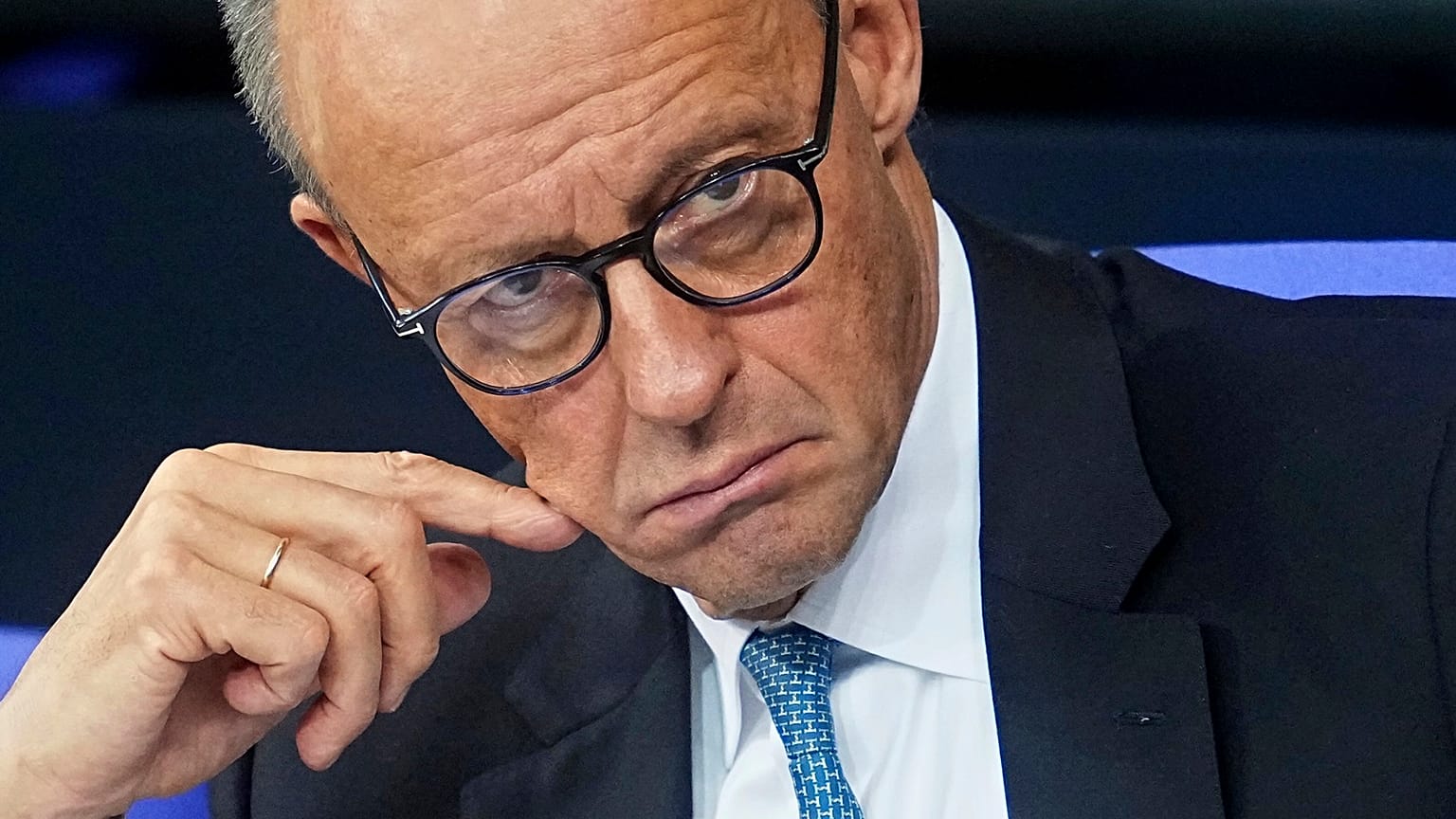
Last week, German Chancellor Friedrich Merz said he was "sceptical" about the prospect of re-engagement with the Kremlin, pointing to its continued refusal to establish an unconditional ceasefire in Ukraine, a long-running demand from Europeans.
"We will have to maintain our pressure and sanctions, and intensify them wherever possible," Merz said, noting that the European Union was already in touch with Kyiv and Washington to convey its unified position.
"Moscow must be willing to end the war. If Moscow isn't, the price it has to pay for this war, including the economic price, will increase week by week and month by month. That, unfortunately, is the situation we find ourselves in today," he added.
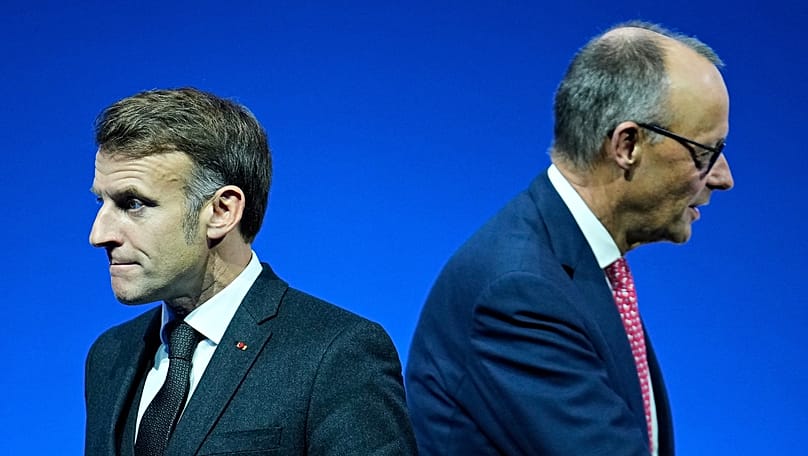
The comments put Germany, the European Union's largest member state, directly at odds with France. Last month, after hosting a meeting of the "Coalition of the Willing", French President Emmanuel Macron said dialogue with Putin, largely interrupted since February 2022, should be launched "as soon as possible".
Italian Prime Minister Giorgia Meloni then endorsed Macron's position.
"I believe the time has come for Europe to also speak with Russia," Meloni said. "If Europe decides to take part in this phase of negotiations by talking only to one of the two sides, I fear that in the end the positive contribution it can make will be limited."
The European Commission admitted direct talks might take place "at some point", but High Representative Kaja Kallas, who is part of the Commission, later voiced opposition, calling on Russia to be "serious" and make concessions as a first ste
"What we are working on is putting more pressure on Russia so that they would go from pretending to negotiate to actually negotiate," Kallas said.
As peace talks advance and security guarantees are fleshed out, European capitals are taking a critical look at their role in the process, whose outcome, if there ever is one, is poised to redefine the continent's security architecture for generations to come.
For some, Russia's relentless bombing campaign, which is plunging Ukraine into blackouts at sub-zero temperatures, is reason enough to keep Putin at arm's length.
"As long as Russia has not changed its actions and objectives in its aggression against Ukraine, it is not possible to engage in talks with Russia, nor should we offer it a way out of isolation," the Estonian foreign ministry told Euronews.
"We must not repeat mistakes made time and again by restoring relations when Russia has not changed course."
For others, though, Europeans need to pick up the phone themselves to avoid depending on the White House, which is today the main intermediary with Moscow.
"The EU should consider appointing a special envoy for future peace talks on Russia's war in Ukraine," the Czech Republic's foreign ministry told Euronews. "While negotiations are currently driven by the US, Russia and Ukraine, it makes sense to think about a European role in the longer term in order to remain a relevant participant."
As the political debate unfolds, Brussels is preparing a new package of ecosanctions against Russia, which is set to be unveiled in the coming days, so that it can be approved by the time the full-scale invasion reaches its fourth anniversary on 24 February.