Tuesday, February 03, 2026


Tanker Orders: Too Much, or Not Enough?

A growing tanker orderbook starts an age-old discussion
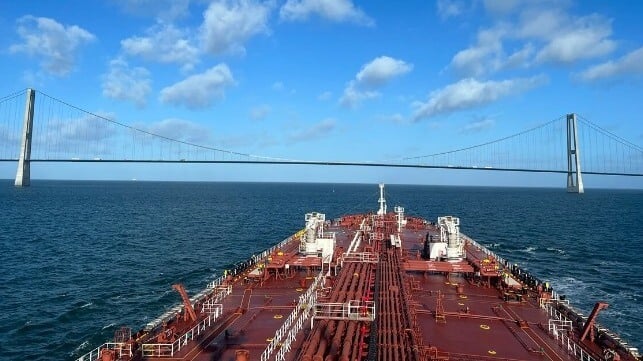
iStock tanker
iStock

Published Feb 1, 2026 5:15 PM by Erik Broekhuizen / Poten & Partners


Last week, in our annual forecasting opinion ("A Fool's Game?"), we prognosticated that the tanker orderbook will decline in 2026. We are still early in the year, but the headlines from many of the trade publications seem to indicate that this may not happen. It appears that many shipowners and other investors in our industry a lining up even more newbuilding orders. In this week's tanker opinion, we will give a little more background on why we think (hope?) the orderbook will decline and why we could be wrong.

For an individual shipowner, there are a number of possible reasons to order a new tanker. Fleet renewal, expansion or diversification are some of those reasons. A relatively small group of owners only look at newbuildings when they want to expand their fleet or replace older tonnage. These owners, let's call them "traditional owners", are usually very particular about vessel specifications and vessel maintenance, and will rarely consider buying secondhand tonnage. These traditional owners are not trying to "time the market", they sell vessels and order replacement tonnage throughout the cycle, often against fixed employment contracts. Most of the traditional owners are private companies, who have been in the business for generations and are typically well capitalized.

There is a large group of other owners who take a different, more opportunistic, approach. For fleet replacement and/or expansion, they compare newbuildings with secondhand tonnage and keep a close eye on relative prices and current as well as future earnings. The actions of these "opportunistic" owners are much harder to predict than those of the traditional owners. A lot of the tanker community falls into this category, and their activities have a big impact on global fleet developments. In addition to regular shipowners (both privately owned and publicly traded), this category also includes non-traditional shipowners, such as private equity firms and other financial investors, as well trading houses. The activity of opportunistic owners frequently pushes up secondhand values and newbuilding activity.

The tanker industry is characterized by significant volatility in both earnings and asset values. Geopolitical conflicts and sanctions further amplify these cycles. This often leads to relatively short periods of high earnings, followed by extended periods of underperformance. Tankers are long-term assets with a 20+ year lifespan, which means that brief periods of overbuilding can create long periods of oversupply. Under normal circumstances, our industry should replace about 5% of the fleet every year. Since the lead time for new vessel construction is currently about 3 years (a vessel ordered today will be delivered in late 2028/early 2029), this means that an orderbook of around 15% of the fleet is about right.

However, this also assumes that about 5% of the fleet ages-out every year, i.e. is recycled. That has not been the case in recent years. Despite limited newbuilding deliveries in recent years, the tanker fleet has grown steadily because recycling has been low. Older vessels are sold for further trading into the dark fleet rather than sent to the breakers.

We currently have a situation where the tanker orderbook is rising rapidly, stimulated by a number of drivers: 1) Prices for modern secondhand vessels are high, making newbuildings comparatively attractive; 2) Rates have been strong for an extended period of time and (in particular for VLCCs) have increased even further in recent months; 3) The average age of the fleet is high with a significant percentage of vessels at or approaching retirement age.

Pundits argue that the stage is set for a sustainable bull run in the tanker market. However, there is an alternative scenario. Counter to previous periods with high orderbooks (like the 2004-2008 Supercycle), oil demand is not expected to grow very quickly. The strong rate environment in recent years has more to do with (temporary) market inefficiencies and dislocations due to geopolitics and sanctions, than with fundamental demand. Even if sanctions are lifted, a part of the dark fleet may stick around and the large influx of newbuildings in the coming years could create significant overcapacity and a depressed rate environment. A slowdown in ordering this year may just prevent another boom-bust cycle from happening.

This coverage appears courtesy of Poten & Partners.

The opinions expressed herein are the author's and not necessarily those of The Maritime Executive.


Number of Dual-Fuel Ships Nearly Doubled in 2025, and Strong Orderbook
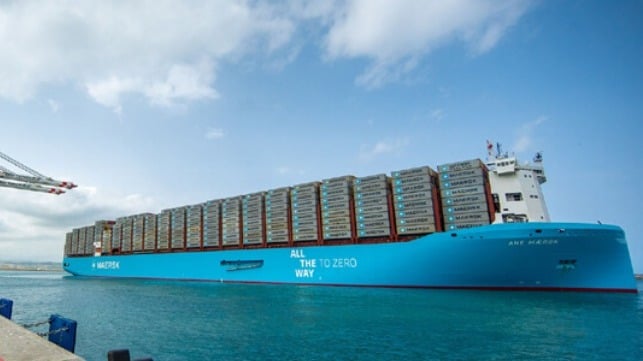
dual-fuel containership
Some carriers such as Maersk are taking advantage of dual-fuel in their branding (Maserk)

Published Feb 2, 2026 8:23 PM by The Maritime Executive


The amount of liner shipping using dual-fuel vessels able to take advantage of the emerging alternative lower emissions fuels nearly doubled in 2025, according to new data from the World Shipping Council. In its year-end update on the Dual-Fuel Fleet Dashboard, WSC highlights continuing strong investments as shipowners push forward with their efforts, not waiting for the IMO and other regulators.

WSC launched the Dual-Fuel Fleet Dashboard as a tool to track the global liner shipping industry’s investments in new ships capable of running on renewable and lower-emission fuels. It presents the data as a snapshot “of how the fleet is preparing for the transition to net-zero 2050.”

While the IMO still searches for member agreement on its framework to govern emissions and the transition, the WSC emphasizes the level of investment coming from shipowners. According to its data, the number of dual-fuel containerships and vehicle carriers reached 400 at the end of 2025, nearly double the 218 at the end of 2024. Further, they calculate a further 726 vessels still on order, maintaining the proportion of dual-fuel ships in the pipeline despite the shift from orderbook onto the water seen in 2025. 

WSC calculates that between the in-service and on-order vessels, the container and vehicle carrier sectors will reach 1,126 dual-fuel vessels, giving it an increase overall of 28 percent last year. They report it represents over $150 billion in investments.

It highlights that containerships and vehicle carriers are leading the adoption of dual-fuel vessels. They report containerships and vehicle carriers are now 74 percent of dual-fuel ships, and 74 percent of containerships and 87 percent of vehicle carrier orders are for dual fuel (by DWT). In other segments it says 21 percent of the orders are (by DWT) dual-fuel ships.

WSC does not report on other segments such as cruise ships, where dual-fuel and even tri-fuel are emerging as strong options, especially in the largest ships. More than 40 percent of the cruise ships on order (31 out of 75) are designed for multi-fuel, mostly LNG, and anticipation of future fuels. By gross tonnage, 59 percent of the cruise ships on order will use alternative fuels, while by berths it is 64 percent of the current order book.

In its analysis of the overall orderbook, DNV sets the number of ships due for delivery between 2026 and 2033 at 1,138. That represents 40 percent of the orders as using alternative fuels and will nearly double the number of alternative fuel vessels over the next eight years.

Last year saw some overall slowing of the momentum for methanol, in part due to concern over supply near-term, but the overall alternative fuel trend continues. Alternative fuel vessels were nearly 40 percent of all the orders placed in 2025.

Jason Stefanatos, Global Decarbonization Director at DNV, highlighted today, February 2, that the momentum continued into 2026. He reported a total of 20 new orders for alternative-fueled vessels in January, with LNG-fueled container vessels continuing to account for the majority of orders (16), with one methanol-fueled offshore vessel and three LPG carriers making up the remainder.

 

India’s First Chemical Tanker Order Advances Shipbuilding Ambitions

Indian shipyard
SDHI booked its first commercial shipbuilding order which is also India's first chemical tanker newbuild order (SDHI)

Published Feb 1, 2026 3:20 PM by The Maritime Executive


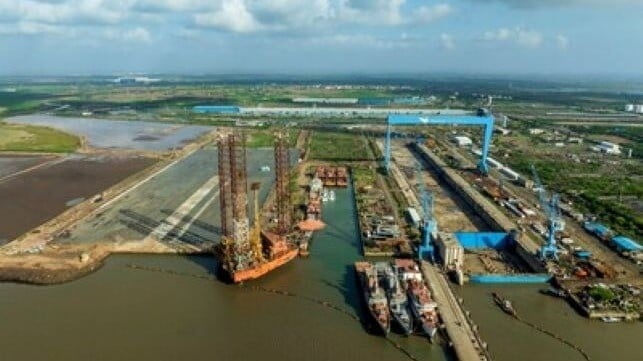
Swan Defence and Heavy Industries Limited (SDHI), located in India, confirmed that it has received its first shipbuilding order as part of the revitalization of its operations. The order, which comes from a European shipowner, is both the country’s first for a chemical tanker and aligns with India’s ambitions to develop into a leading global shipbuilder.

The order was placed by Bergen, Norway-based Rederiet Stenersen, a 50-plus year old operator of chemical/product tankers. The company currently has a fleet of 19 vessels, all equipped to operate in the harsh conditions of the North Europe trade. The order, which is valued at $227 million, is the company’s first foray into Indian shipbuilding, and they note that it was placed after a comprehensive technical and commercial evaluation. A Letter of Intent was signed in November 2025.

The order is for six tankers, each 18,000 dwt and approximately 150 meters (492 feet) in length. The first vessel is due for delivery in 33 months, and the company has an option for six additional vessels after the first group.

The vessels will be designed by Marinform AS and StoGda Ship Design & Engineering and classed by DNV. Built to Ice Class 1A standards, the tankers will feature advanced dual-fuel LNG-ready hybrid propulsion, enabling multiple operational modes supported by high levels of automation.

Swan Defence and Heavy Industries Limited (SDHI), formerly Reliance Naval and Engineering Limited, was acquired and restarted in 2024 after the bankruptcy of the prior owners. The company aspires to be a large, world-class builder of commercial vessels and other projects, including heavy fabrication. They note the revitalized SDHI shipyard, which is located in Pipavav, Gujarat, on India’s west coast, operates the country’s largest dry dock (662 meters by 65 meters) and has a fabrication capacity of 164,000 tonnes per year.

The company’s director, Vivek Merchant, highlighted that the order is a demonstration of India’s growing commercial shipbuilding ecosystem. The government of Prime Minister Narendra Modi is taking steps to realize the Prime Minister’s call for India to become a top 10 global shipbuilding nation by 2030 and a top five shipbuilder by 2047.

The government outlined its Shipbuilding Financial Assistance Scheme as part of the effort to support the industry and attract international interest. The program was amended just days ago to include product/chemical tankers.

The tanker order follows the announcement that CMA CGM intends to build containerships in India. The government and industry have also been courting other major companies, including Maersk and MSC.


Northern Lights has Deals With Shipping Lines to Double CO2 Transport Fleet

LCO2 transport
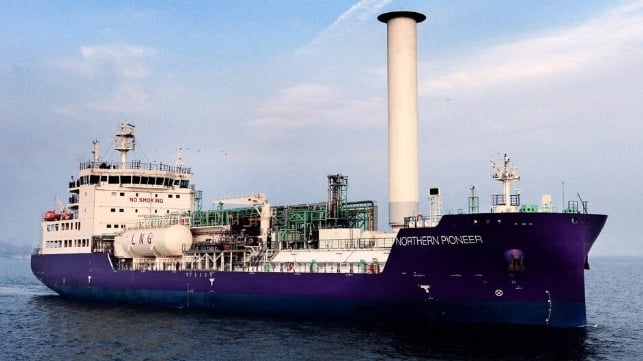
Northern Lights will double its fleet with larger capacity LCO2 transport vessels (Northern Lights)

Published Jan 29, 2026 8:33 PM by The Maritime Executive


The Norwegian CO2 storage initiative, which became the first commercial operation for carbon capture and storage, announced a new deal that will double the company’s fleet by 2029. This comes just months after the company completed its first injection of liquid CO2 for permanent storage.

Northern Lights, which is a joint venture between Equinor, TotalEnergies, and Shell, reports it has struck a new charter deal with major shipping companies, including existing partner Kawasaki Kisen Kaisha (“K” Line), while adding MISC Berhad and Mitsui O.S.K. Lines (MOL). Under the new agreements, “K” Line and MSC concluded one charter, and a second will be awarded in April 2026. Two additional charter agreements have been awarded to MOL.

Under the terms of the agreements, the three shipping companies will own the new vessels, which will operate under charter to Northern Lights. Northern Light also said it is increasing the size of each vessel, with the first three vessels awarded to each have a capacity of 12,000 cbm of liquified CO2. 

The new ships will be built by Dalian Shipbuilding Offshore in China and by HD Hyundai Heavy Industries. Deliveries will range between the second half of 2028 and the first half of 2029.

HD Hyundai confirmed it has received the order for two vessels from MOL. It reported the 12,000 cbm ships will measure 150 meters (492 feet) in length. The first class of ships currently operated by Northern Lights are 150 meters (426 feet) in length. HD Hyundai said the new class will be among the largest medium-pressure LCO2 carriers designed to transport captured carbon dioxide in liquid form.

Northern Lights has taken delivery of three 7,500 cbm vessels, Northern PioneerNorthern Pathfinder, and Northern Phoenix. K Line operates these vessels under an agreement with Northern Lights. A further sister is currently under construction in China for delivery this year. It will be owned and operated by Berhard Schulte, a part of the Schulte Group.

Commenting on the new ship orders, Tim Heijn, Managing Director of Northern Lights, said they are building the first dedicated fleet for CO2 shipping. Doubling the number of ships and expanding capacity, he said, will enable Northern Lights to optimize its operations and increase flexibility.

The project received approval to launch the operation in May 2025 and reported it completed its first injection into the permanent storage reservoir 2,600 meters under the seabed in August. Already, the company had also announced plans for Phase 2, which will increase transport and storage capacity from 1.5 million tonnes to a minimum of 5 million tonnes of CO? per year.

As a commercial supplier, Northern Lights contracts with large emitters for the capture of their CO2. It is stored, liquefied, and transported aboard the company’s ships to the receiving facility in Norway. From there it is injected into the offshore permanent storage reservoir.

The company is contracting with major industrial companies, including, Heidelberg Materials’ cement factory in Brevik, and Hafslund Celsio’s waste-to-energy plant in Oslo, Norway. In addition, the Northern Lights JV has signed commercial agreements with Yara in the Netherlands, Ørsted in Denmark, and Stockholm Exergi in Sweden


Port of Baltimore Celebrates Recovery of its Container Business

Baltimore

Published Feb 1, 2026 11:39 PM by The Maritime Executive


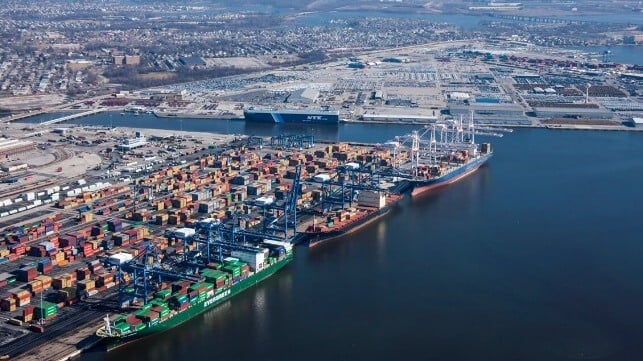
The Port of Baltimore is witnessing a remarkable recovery after the devastating effects of the Francis Scott Key Bridge collapse in March 2024, with container throughput returning to 2023 levels.

Having witnessed its containerized business take a 41 percent nosedive in 2024 to roughly 740,000 TEU due to the Francis Scott Key Bridge disaster, Baltimore is seeing a recovery. Its piers handled 1.1 million TEU in 2025. The throughput exceeded the 2023 record by more than 5,000 TEU and came in a year that was characterized by uncertainty and volatility due to tariffs.

During the year, the port recorded 2,223 cargo vessel visits, surpassing the previous record of 2,137 ships set in 2023, representing a 21 percent increase over 2024. Another notable achievement in 2025 was the arrival of the second-largest ship to ever call at Baltimore. This came in November when the 366-meter Ever Model with a capacity of more than 15,000 containers called at the facility.

Baltimore attributed the arrival of the ship to ongoing business growth efforts centered on the port’s modernization of its infrastructures, among them the reopening of the 50-foot-deep, 400-foot-wide channel, and supersized cranes at the Seagirt Marine Terminal.

Though Baltimore has released the performance of the container business, final cargo volumes and data on roro units handled are still being finalized, though the port is optimistic the numbers will exceed those recorded in 2024.

“We are grateful to the workers whose unwavering commitment and resilience made this progress possible. Our administration will continue to promote our port’s infrastructure to strengthen our supply chains, drive economic growth in our state, and create better-paying jobs for our people,” said Maryland Gov. Wes Moore.

Baltimore is highlighting that with container volumes hitting the 2023 levels, the port is upbeat about significant growth this year driven by the completion of the CSX Howard Street Tunnel project, a $518 million initiative to modernize a 130-year-old freight tunnel in Baltimore. The new freight tunnel will allow the port to accommodate double-stacked container trains, increasing its capacity by 160,000 containers annually and generating nearly 14,000 jobs.

“The commitments we’re making now and in future years will continue to advance our multimodal freight network and further accelerate the port’s growth and generate additional jobs,” said Katie Thomson, Maryland Acting Secretary of Transportation.

The Port of Baltimore remains a cornerstone of Maryland’s economy and one of the most important ports in the U.S., particularly in ro/ro, construction machinery, imported forest products, and imported gypsum. The port generates about 20,300 direct jobs, with more than 273,000 jobs overall in the state linked to the port, and it has an annual economic impact of more than $70 billion.


China Wants to Host the High Seas Secretariat

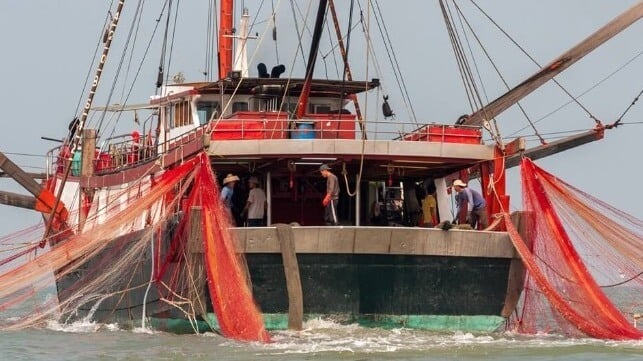
Chinese trawler

Published Feb 1, 2026 2:46 PM by Dialogue Earth


[By Jiang Mengnan]

China has joined Chile and Belgium in competing to host the secretariat of the High Seas Treaty. The landmark UN agreement, which entered into force earlier this month, will govern the parts of the ocean located beyond national jurisdictions.

China wants the city of Xiamen, on its southeast coast in the province of Fujian, to become the seat of the secretariat.

Li Shuo, who directs the Asia Society Policy Institute’s China Climate Hub, tells Dialogue Earth the bid "marks a significant escalation in China’s engagement with the treaty and with global governance more broadly." It shows Beijing hopes "to play a more active role in shaping international rules and enhancing its global discourse power," he adds.

A number of experts say the move is particularly significant at a time when the US is withdrawing from multiple international agreements.

Li says it is reminiscent of China’s decision to host the 15th conference of the parties to the UN Convention on Biological Diversity (CBD COP15) during Donald Trump’s first US presidential term: "Beijing stepped forward as Washington pulled back."

High seas, high stakes

The High Seas Treaty, also known as the Biodiversity Beyond National Jurisdiction (BBNJ) agreement, aims to protect and share the benefits of the global ocean outside of national territories. The agreement was adopted in June 2023 and opened for signatures that September.

When its ratification tally hit 60 countries last year, a 120-day countdown began and the treaty officially entered into force on 17 January this year. That tally has since reached 84 signatories, including China and the European Union.

The work of the secretariat is seen as crucial to a well-functioning treaty that delivers its ambitious aims, especially the establishment of large marine protected areas (MPAs) on the high seas. MPAs are vital to delivering the global goal to safeguard 30% of the ocean by 2030, which was agreed to at CBD COP15.

A decision between Belgium, Chile or China will be made later this year, at the High Seas Treaty’s first conference of the parties.

A ‘responsible major country’

The Chinese foreign ministry spokesperson Guo Jiakun spoke of China’s ocean conservation ambitions at a press briefing earlier this month: "China attaches great importance to the protection and sustainable use of the oceans. As a responsible major country, China has been deeply involved in global ocean governance and is both willing and capable of making greater positive contributions to the implementation of the agreement."

Guo added that Xiamen, known for its role as a hub for marine cooperation and its sustainable ocean development practices, would offer favorable, supportive conditions for the secretariat.

In Li’s view, China has long adopted a cautious approach to marine conservation, because of its fisheries interests and geopolitical considerations. However, "the bid also suggests a shift from a traditionally cautious posture to a potentially more proactive, facilitative role," he says.

Competing bids and controversy

China as host of the secretariat could be controversial, however, as political tensions in many marine areas rise. The US, Russia and China are increasingly vying for influence in the Arctic and other waters. Choosing Chile or Belgium as host could circumnavigate this power struggle.

Chile, which has put forward the city of Valparaíso, has framed its bid as a chance to bring a more Global-South-focused multilateral approach to maritime issues. Belgium, which has proposed Brussels, is emphasizing the advantages of its existing "diplomatic ecosystem."

Zhou Wei, an oceans project manager at Greenpeace, says China needs to continue strengthening its capacity to meet its ocean obligations, and accelerate preparations for MPA proposals.

"These efforts would not only be a positive contribution to global ocean governance, but also help enhance the long-term sustainability of China’s own marine activities," she adds.

Dialogue Earth also spoke to ??Lyn Goldsworthy, a veteran Southern Ocean researcher from the University of Tasmania in Australia. She finds China’s bid intriguing, and says there are reasons to be worried, given China has shown reluctance over the creation of MPAs in the Antarctic high seas: "If they are in that influential [position], they can slow things down."

Jiang Mengnan is the strategic communications officer at Dialogue Earth, based in London. She joined in 2022 and is also a journalist specialising in sustainable finance and ESG development. She used to work in ESG consulting and communications in both private and non-profit sectors, and holds the title of Certified ESG Analyst (CESGA) from the European Federation of Financial Analysts Societies (EFFAS).

This article appears courtesy of Dialogue Earth and may be found in its original form here

The opinions expressed herein are the author's and not necessarily those of The Maritime Executive.

Monday, February 02, 2026


Tanker Rescues 27 From Lost Tuna Seiner off Galapagos

Kenosha
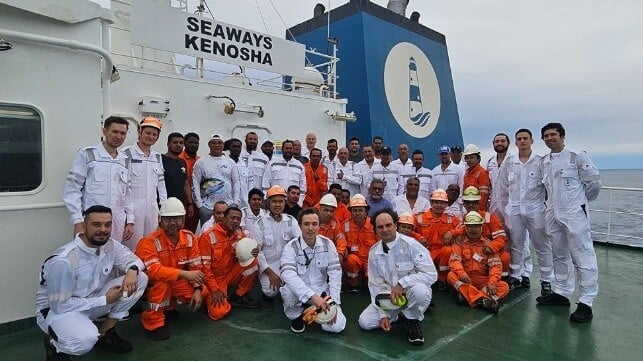
Courtesy Seaways Kenosha crew / USCG

Published Feb 1, 2026 10:15 PM by The Maritime Executive


Last weekend, a merchant tanker rescued 27 fishermen who were forced to abandon a burning vessel off the coast of the Galapagos Islands. 

On Saturday, the fishing vessel La Pena - a 240-foot tuna seiner flagged in Venezuela - was operating about 500 miles north of the Galapagos Islands in the Eastern Pacific. At about 1550 hours, the U.S. Coast Guard's rescue coordination center in Alameda, California received a notification from satcom and navigation company Garmin. The firm sells handheld satellite messaging devices that can be used to send text messages and distress signals, and its command center had received an SOS alert from a Garmin user aboard La Pena. 

The device allows two-way communications, and the watchstanders in Alameda were able to text back and forth with the survivors in real time - a feature not available with an EPIRB. The survivors said that La Pena had caught fire while under way and had gone down. All 27 crewmembers were alive and afloat in the vessel's lifeboat, but had no lifejackets or provisions on board with them. They had the Garmin device, which had 37 percent battery (and decreasing). 

To conserve power for comms, watchstanders in Alameda told them to turn it off for 90 minutes, then turn it on to send an update. In the meantime, the Coast Guard went about looking for a vessel that might be near enough to divert and come to their aid. The location off the coast of Central America is thinly served by conventional SAR assets, but near to the sea lanes for the Panama Canal, and reasonably well-trafficked. An AMVER query turned up two ships within 100 nautical miles, and one of them, the Seaways Kenosha, volunteered to divert and pick up the survivors. 

Seaways Kenosha doubled back on her previous course and arrived on scene at about 0330 hours on Sunday. Her crew quickly and safely recovered all of the survivors from La Pena, and the ship resumed her commercial voyage to La Pampilla, Peru. Plans are under way for returning the survivors to shore, the Coast Guard said. 

“The outcome of this case is a direct result of the vigilance and professionalism of our watchstanders, who quickly pieced together limited information, coordinated with multiple domestic and international partners and directed nearby vessels to the scene,” said Capt. Patrick Dill, chief of incident management, Coast Guard Southwest District. “Their actions, together with the rapid response of motor vessel Seaways Kenosha, helped ensure 27 mariners were brought to safety from a life-threatening situation in a remote area of the Pacific Ocean.”


Death Toll in Philippine Ferry Sinking Rises to 40

Trisha Kerstin 3
Image courtesy Philippine Coast Guard

Published Feb 1, 2026 6:36 PM by The Maritime Executive


Three additional bodies of victims from the lost ferry Trisha Kerstin 3 have been recovered near Basilan, bringing the number of confirmed fatalities to 40 people, the Philippine Coast Guard confirmed on Sunday. 

The bodies were found in the water near Baluk-Baluk Island and Lantawan Island, not far from the site of the sinking. One of the deceased was a servicemember, Coast Guard Seaman Alkhaizar Hadjail. 

“Our fallen coast guard [servicemember] will always be remembered for his selfless dedication and commitment to public service, exemplifying courage and professionalism in the line of duty,” the PCG said in a statement. 

Taken together, the total count of survivors and fatalities indicate that at least 356 people were aboard the ferry when it went down, and possibly more. This is more than the number of people on the initially reported passenger and crew manifest, raising questions about whether there were off-books passengers on board on the casualty voyage. Carrying informal passengers in excess of the documented number is common in Southeast Asia, and can create hazards. 

The ferry Trisha Kerstin 3 departed Zamboanga City on January 25, headed for Jolo, Sulu. At about 0150 hours on Monday morning, the vessel capsized and went down off Baluk-Baluk Island. 316 passengers and crewmembers were rescued, and the count of confirmed deceased has continued to rise over the course of the week. 

An investigation into the cause of the casualty is under way. According to maritime agency MARINA, there are early signs of "serious violations" involving the operating company, which has had more than 30 incidents in recent years - including the loss of two other ships in the same region. 

Among the more unusual allegations, MARINA spokesperson Dir. Luisito delos Santos said that there are indications that the vessel herself may have been switched out for the voyage. In addition, some survivors have reported a shortage of life vests, and that some of the vest storage compartments were locked. 

All of the operator's vessels have been issued no-sail orders until inspections are completed, and other firms have been licensed to operate its routes. 


19th-Century Schooner Runs Up on the Rocks Near Cuxhaven

Ethel von Brixham aground (DZgRS)

Published Feb 2, 2026 3:29 PM by The Maritime Executive


A historic schooner grounded off the port of Cuxhaven, Germany over the weekend, forcing an urgent evacuation of the vessel. 

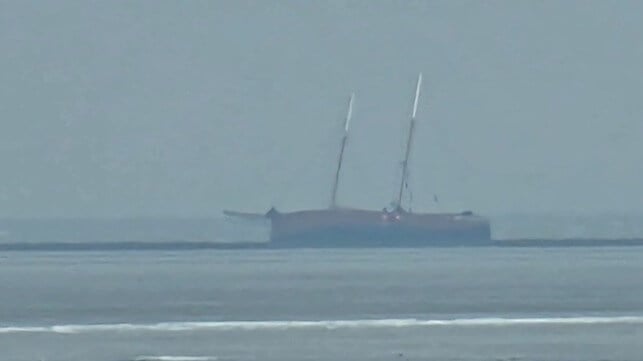
At about 1215 hours on Saturday afternoon, the German Maritime Search and Rescue Service (DGzRS) rescue center received notice of a large sailing vessel grounded on the outer stretches of the Elbe River, just north of Cuxhaven's harbor and about 1.5 nautical miles offshore. The center's staff dispatched a rescue boat out of Cuxhaven to attend the scene. They found that the schooner Ethel von Brixham had grounded on a rock revetment on the west side of the Elbe shipping channel, and was wedged up on the rocks. An initial attempt at nudging the schooner off was unsuccessful, and the responders opted to wait for a refloat attempt at the next high tide. 

At about 2100, three hours before high tide, the crew of the Ethel von Brixham reported flooding. They turned on their bilge pumps in an attempt to counteract it, and continued to wait for higher water. The DGzRS response boat loitered on scene, ready to assist as needed. 

Shortly after, the response vessel Neuwerk got under way to assist at the scene. Neuwerk's RIB boat was launched, and the crew rescued one person and one dog from the Brixham. 

The situation aboard the wooden schooner continued to deteriorate, even though conditions were mild for the North Sea in winter. Under the forces of the grounding, the hull showed signs of deformation and potential failure, the skipper reported. Soon after, a bilge pump failed, making further efforts on board untenable. The remaining crewmembers evacuated onto Neuwerk's RIB, and they were safely delivered to shore. 

The vessel's salvage or wreck removal is still in planning, according to DGzRS. 

Ethel von Brixham is a 95-foot wooden schooner built in 1890 at the J&W Upham yard in Brixham, UK. Originally designed as a fishing vessel and named Lily & Ethel, she served in the fisheries in the UK, Sweden and Norway through both world wars, according to National Historic Ships UK. Since the 1980s she has reportedly been in the tourist trade. On screen, she has appeared in The Ministry of Ungentlemanly Warfare (2024), among other productions. Her ownership changed hands in December, according to the agency. 


Search Called Off for Four Missing Crewmembers From Lost Bulker

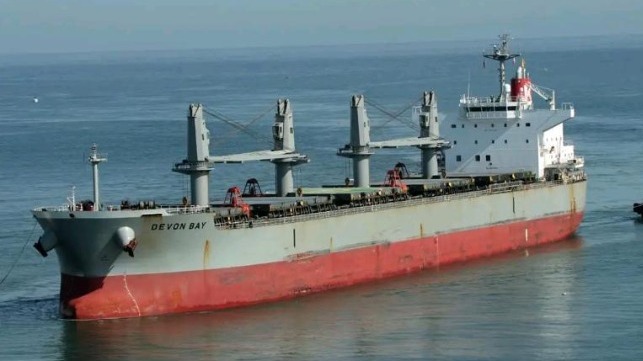
Devon Bay (Dave Ramos / VesselFinder)
Devon Bay (file image courtesy Dave Ramos / VesselFinder)

Published Feb 2, 2026 4:55 PM by The Maritime Executive


Japanese shipowner K Line has confirmed that the search for the missing crew of the bulker Devon Bay has been called off, ending an 10-day hunt for survivors. 

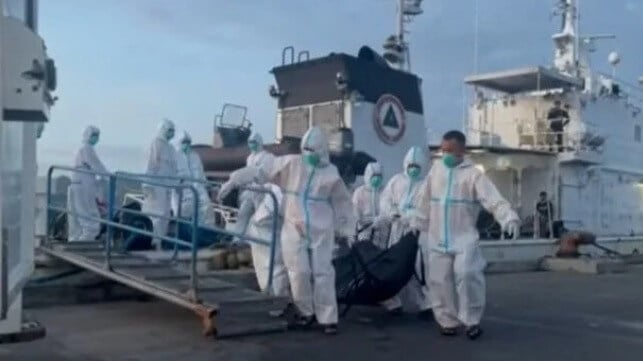
Devon Bay was under way on a voyage from the Philippine port of Zamboanga to China on January 23. At a position about 140 nm to the west of Pangasinan, the vessel rapidly capsized and sank. A China Coast Guard patrol vessel was only 36 nautical miles away from Devon Bay, and it rescued 15 survivors and recovered two deceased crewmembers. The seafarers and the remains were transferred to Philippine custody and returned to shore at Manila.

The search continued for more than a week, aided by the Philippine Coast Guard and the China Coast Guard, which maintains a persistent two- or three-cutter patrol presence in this sector of the Philippine exclusive economic zone. No further survivors are found, and four crewmembers remain lost at sea. 

In a statement, K Line extended its gratitude to the coast guards of the Philippines and China. "We extend our deepest condolences to the families of our deceased crew members, and our thoughts remain with the families of the crew members who remain unaccounted for," K Line said. 

The cause of the casualty is under investigation, but the PCG and the crew have pointed to signs of cargo liquefaction. Devon Bay was carrying a load of nickel ore, a potentially dangerous cargo known for liquefying and causing rapid capsizing. With each roll of the ship, an excessively wet nickel ore cargo can shift further to one side and then stick in place. This cargo shift causes a progressively worsening list, often ending in a tragic capsizing with little to no warning. 

Wet nickel cargoes have long been a hazard at lightly-regulated, open-air mine sites in Southeast Asia, where stockpiles are sometimes left out in heavy rain before loading. These loads have claimed dozens of lives over the years, likely more than any other dry or wet bulk cargo. Insurers and industry associations have warned about this risk for decades, and have tried various regulatory and educational measures to mitigate it. 

Top image: Devon Bay (Dave Ramos / VesselFinder)

ONE YEAR LATER

Winter Storms Cause Hull Buckling and Cracking on MSC Baltic III

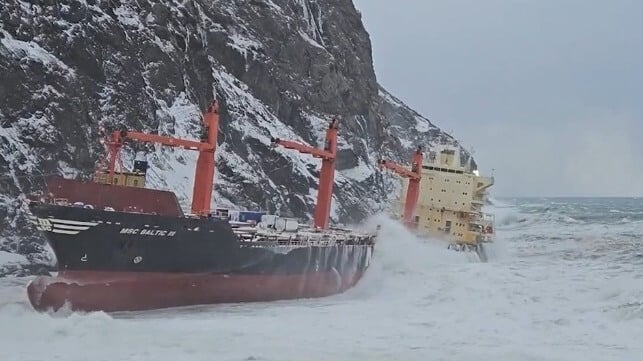
Winter waves batter MSC Baltic III, Jan. 2026 (Canadian Coast Guard)

Published Feb 2, 2026 6:45 PM by The Maritime Executive


Severe North Atlantic weather has caused additional damage to the wreck of the container ship MSC Baltic III, which grounded on the rocks near Lark Harbor, Newfoundland in February 2025. 

After a series of storms in late January, salvage crews carried out a site assessment of the wreck, particularly the cracking and buckling of the hull on both the port and starboard sides. The port side crack has spread towards the stern, the Canadian Coast Guard reported, and the starboard side buckling has extended further forward. In addition, the salvors saw heavy ice aboard the vessel, consistent with freezing temperatures and surf washing over the deck. Icing can add substantial weight onto a vessel's topsides. 

Despite the growing evidence of hull damage, CCG senior response officer Bruce English told The Telegram that it is unlikely that MSC Baltic III will break up. Higher-grade steel in the deck is keeping the ship together, and the wave action is pushing the vessel together rather than tearing it apart, he said. 

In addition, the team found lots of debris on the shoreline - much of it belonging to the salvors, English said - though no signs of oil pollution. The next task - once conditions are calm - will be to reboard the vessel and skim off any remaining oil residue that can be found in her tanks. 

So far, nearly 1,700 tonnes of fuel oil and lubes have been removed from the ship, along with 409 out of 472 shipping containers on board. The process of removing the vessel herself will likely take years, English said, given the difficult location and the extreme weather of Newfoundland. 

It is expected that the remaining pollution abatement and cargo removal work will be incorporated into the scope of the wreck removal contract. Bidding is under way, and the selection of a contractor is expected soon.  

The idea of an intact refloat appears exceptionally unlikely, as there is a rock pinnacle sticking 12 feet up into the engine room, English told the Telegram. Evidence suggests that there is another rock sticking up somewhere in the No. 5 hold. This is the explanation for why the wreck isn't shifting much from its initial position: it is literally pinned in place, he said. 

When it is safe for crews to access the vessel, the focus will be on preparing for skimming operations to remove any floating oil that remains within the tanks.


Tankers Sail Off After Malaysia Finds Them "Cojoined" and Stops Illegal STS

oil tankers STS
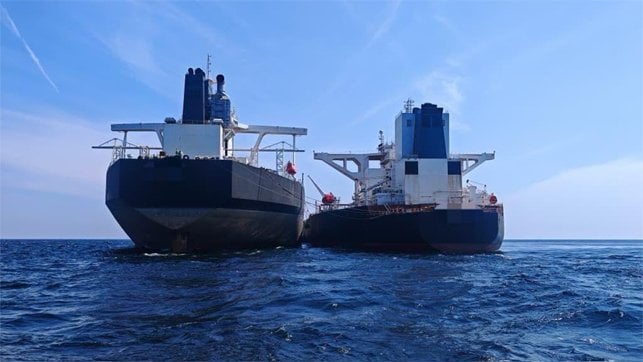
Photo released by Maritime Malaysia of the reported transfer underway

Published Feb 2, 2026 7:15 PM by The Maritime Executive


The Maritime Enforcement Agency of Malaysia proudly celebrated its crackdown last week on an illegal ship-to-ship oil transfer but then quietly over the weekend released the two vessels without explanation. One of the vessels appears to have been operating in the shadows for nearly a decade while the other is Chinese-owned, and they were caught red-handed, or as the Malaysians described it, “cojoined.”

The waters off Malaysia are notorious for tankers illegally anchoring and conducting illicit STS transfers. Malaysia has conducted enforcement and support, for example, in neighboring Indonesia, when tankers attempted to evade capture. Many of the STS actions proceed, however, unimpeded.

Maritime Malaysia reported that it received a complaint at around 0100 last Thursday, January 29, and sent a patrol boat to investigate. That’s where it found the two tankers with the transfer pipes strung and apparently in the midst of the transfer. 


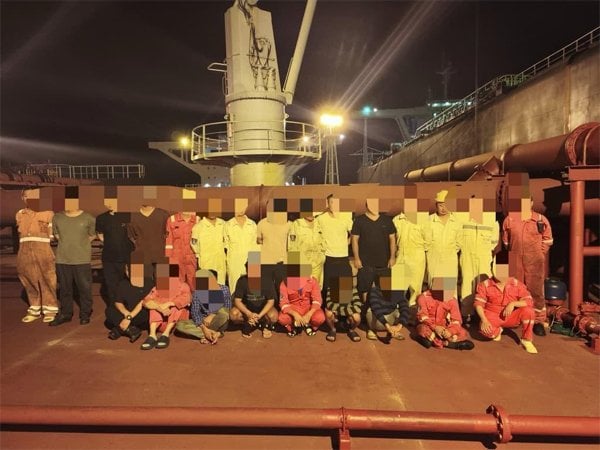
They said the two captains had been detained and handed over for further investigation and action. In total, 53 crewmembers were aboard the ships with nationalities from China, Myanmar, Iran, Pakistan, and India. Further, they said the oil was being confiscated with a value of approximately $130 million, as well as the vessels valued at over $230 million. The pictures posted showed the oil being inspected.

They did not comment on the origins of the oil nor identify the ships. However, they said they could be fined as much as $25,000. 


Crew aboard one of the tankers (Maritime Malaysia)


Observers (Charlie B @supbrow and Russian Forces Spotter) quickly identified the two vessels and filled in the details. One ship, named Rcelebra (the name was visible in one of the photos), is Chinese-owned and registered in Cameroon. It is 308,829 dwt. The other, however, was only identified in the reports and emerged as a notorious, shadowy vessel that has its last inspection listed as 2018. The owners are listed as unknown, and the flag is falsely listed as Guyana. It is currently trading as Nora. The reports speculate that it was only able to transfer about 78 percent of the crude before the STS was discovered. 

After highlighting the seizure and investigations, the ships appear to have quietly slipped away. The Nora is empty and cleared the Malacca Straits heading into the Indian Ocean. Its AIS says “for orders.”

The Rcelebra is east of the Singapore Straits. The assumption is that she is transporting the oil cargo to China.

Malaysia Maritime has not commented publicly about the release of the tankers.