Tuesday, February 03, 2026

FEATURE

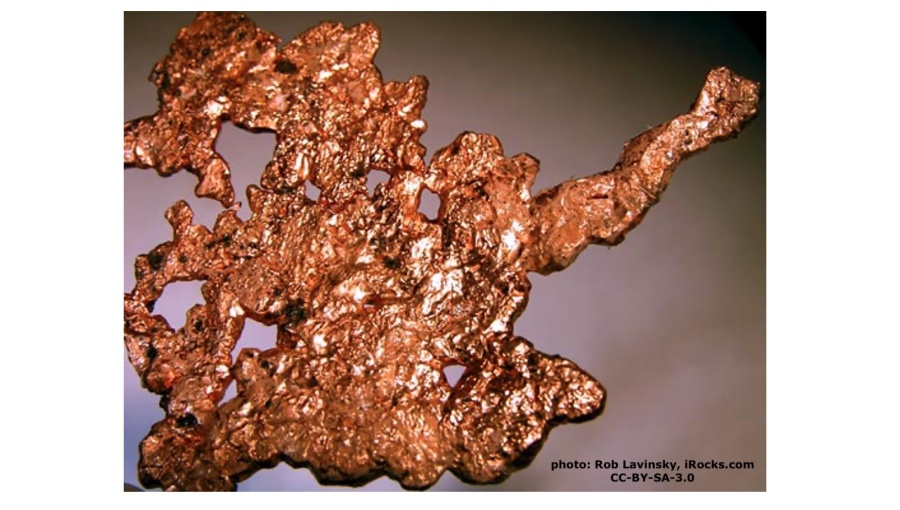
The world is facing a global copper shortage


LONG READ

The world is facing a global copper shortage
Thanks to the growing combined demand from AI, EVs and the green energy revolution, global demand is going to outstrip supply and copper prices are already soaring in anticipation.  / bne IntelliNews
By Ben Aris in Berlin February 2, 2026

The world is on track to run short of copper that could pose a “systemic risk” to global economic growth, driven by the energy transition and the booming artificial intelligence sector’s demand for the red metal, S&P Global said in a report on January 8

The looming deficit is forecast to reach 10mn tonnes — equivalent to almost one-third of current global demand — by 2040, in the absence of a “meaningful expansion of supply”, according to S&P Global .

“The shortage would be 23.8% shy of the projected demand of 42mn tonnes by 2040, even as recycled copper scrap more than doubles to 10mn tonnes,” according to the "Copper in the Age of AI: The Challenges of Electrification" study.

“The supply gap threatens to constrain technological advancement and economic growth as copper becomes increasingly essential for AI data centres, electric vehicles, renewable energy infrastructure and defence systems,’ the report said.

Production shortfall

Without significant changes to supply, global copper production is projected to peak at 33mn tonnes in 2030 before declining, while demand is expected to surge 50% from current levels.

“The widening disconnect highlights copper's dual role as both enabler and potential bottleneck for the energy transition and digital transformation,” S&P Global said.

Four key demand vectors are driving copper consumption higher. Core economic demand from construction, appliances and traditional industries is expected to reach 23mn tonnes by 2040, representing 53% of global demand. Energy transition demand from electric vehicles, battery storage and renewable power is projected to increase by more than 7.1mn tonnes to 15.6mn tonnes over the same period.

In addition, AI and data centre demand is expected to triple by 2040 as total installed capacity reaches 550 GW, more than five times 2022 levels, according to the study. The world’s biggest mining group BHP estimated in January that the amount of copper used in data centres worldwide will grow “sixfold by 2050”.

Another largely hidden demand factor is defence spending that could double to $6 trillion by 2040 amid rising international tensions.

Together just data centres and defence represent a combined 4mn tonnes of additional copper demand.

Demand for copper is being boosted by the construction of grid infrastructure for the green transition as well as data centres for artificial intelligence. These need between 27 and 33 tonnes of copper per megawatt of power, according to miner Grupo México, over twice the requirement of conventional data centres.

The study also identifies humanoid robots as a potential fifth demand vector; 1bn units in operation by 2040 would require about 1.6mn tonnes of copper annually, equivalent to 6% of current demand.

The study estimates that an additional 10mn tonnes of primary supply will be required by 2040 beyond increased recycling. However, without significant investment, global primary production could reach just 22mn tonnes by 2040, 1mn tonnes below current levels.

Supply side constraints

On the supply side, declining ore grades, rising energy and labour costs, complex extraction conditions and lengthy permitting processes combine to limit new mine development, the report said.

Supply chain concentration adds another layer of risk. Only six countries are responsible for roughly two-thirds of mining production, according to the study. The International Energy Agency said this year that by 2035, production from existing and planned mines was on track to meet only 70% of global demand.

Existing mines, some dating back more than a century, are getting older and less productive, while large untapped deposits are becoming harder to find. 20 mines produce about a third of the copper mined globally. Of the 239 copper deposits discovered between 1990 and 2023, only 14 were discovered in the past decade, according to the IEA.

China accounts for approximately 40% of global smelting capacity and 66% of copper concentrate imports, making the global supply vulnerable to policy shocks and trade barriers, the report said.

Analysts are expecting shortfalls as soon as this year, with consultancy Wood Mackenzie forecasting a 304,000-tonne shortfall of refined copper in 2025, a gap it says will widen in 2026. Prices have already risen to record levels in anticipation. 

Prices rising

Copper is the “new gold” and has already made record gains as fears of a global shortfall mount, rising by the highest amount in over a decade

Copper soared to a record high of more than $13,000 per tonne on January 2 compared with around $8,500 two years ago, as concerns over supply disruption and tariffs extended a rally that has pushed up the price of the metal by almost a third since October, after disruptions at several large mines.

Analysts at BMI, part of Fitch Group, said they expected the price of copper to average $11,000 per tonne this year, while prices would reach $17,000 per tonne in 2034.

US President Donald Trump added to the uncertainty in December, adding copper to a list of critical minerals vital for the US economy. Fears that the Trump’s administration may impose additional import tariffs on the metal have also driven up demand The amount of copper in US Comex warehouses has jumped to a record high of more than 450,000 tonnes, compared with less than 100,000 tonnes a year ago and about 400,000 at the start of December, the Financial Times reports.

Country breakdown of the main copper producers.

Chile

·       Annual copper production (2022): 5.2mn tonnes

·       Proven copper reserves: 190mn tonnes (USGS estimate, 2023)

·       Major companies: Codelco (state-owned), BHP, Anglo American, Antofagasta PLC, Freeport-McMoRan

Chile is the world’s largest copper producer and holds the largest proven reserves globally. State-owned miner Codelco dominates domestic output, followed by major multinational operations, including BHP’s Escondida mine — the largest copper mine in the world. Despite resource abundance, the sector has faced recent challenges, including declining ore grades, water scarcity in arid regions, labour unrest, and regulatory uncertainty linked to environmental reforms and proposed tax changes. Nonetheless, Chile remains the cornerstone of global copper supply.

Peru

·       Annual copper production (2022): 2.4mn tonnes

·       Proven copper reserves: 92mn tonnes

·       Major companies: Southern Copper Corporation, MMG, Glencore, Freeport-McMoRan, Anglo American

Peru is the second-largest global producer of copper and has rapidly expanded its mining capacity over the past decade. The Las BambasAntamina, and Cerro Verde mines are among the country’s most significant operations. Copper accounts for a substantial share of Peru’s export revenue. While the government has maintained a generally investment-friendly stance, mining projects often face delays due to community opposition and social conflicts, particularly in rural Andean regions. Infrastructure and political instability continue to impact investment flows.

Democratic Republic of Congo (DRC)

·       Annual copper production (2022): 2.2mn tonnes

·       Proven copper reserves: 25mn tonnes

·       Major companies: China Molybdenum (CMOC), Glencore, Ivanhoe Mines, Gécamines (state-owned)

The DRC has emerged as a top-three copper producer, driven by heavy Chinese investment and joint ventures with state-owned Gécamines. The Tenke Fungurume and Kamoa-Kakula complexes are among the most productive and rapidly expanding copper sites globally. While rich in high-grade deposits, the sector is hindered by governance risks, poor infrastructure, and fluctuating mining policies. Nevertheless, output continues to rise, positioning the DRC as a key supplier for future green energy demand.

China

·       Annual copper production (2022): 1.8mn tonnes

·       Proven copper reserves: 26mn tonnes

·       Major companies: Jiangxi Copper, Tongling Nonferrous Metals, Zijin Mining, China Nonferrous Mining Corp

China is the world’s largest consumer of copper accounting for around 58% of 2025 demand and among the top five producers, although it relies heavily on imports to meet domestic demand. Copper production is concentrated in several provinces, including Jiangxi and Yunnan. State-owned firms dominate the sector, and the government continues to invest heavily in both domestic mining and overseas copper assets. Environmental regulations have tightened in recent years, leading to modernisation and consolidation in the domestic industry.

China itself only produces around 9% of the world’s mined copper, but that figure rises to around 20% after taking into account overseas projects it has ownership stakes in, according to Benchmark Mineral Intelligence. China now controls around half of copper smelting capacity worldwide. The US, by contrast, has just two operational copper smelters.

In China, the domestic build-out of smelters has been so dramatic in recent years that there is not enough copper ore to feed all the facilities globally. Miners used to pay smelters to process their ore; now it is the other way around. The prospect of new copper smelters opening outside China in the short term — something western policymakers want, in order to reduce their reliance on Beijing — is unlikely. They are expensive to build, energy-intensive to operate and run on thin profit margins.

United States

·       Annual copper production (2022): 1.2mn tonnes

·       Proven copper reserves: 48mn tonnes

·       Major companies: Freeport-McMoRan, Rio Tinto, Grupo México (via Asarco), Capstone Copper

The US copper sector is led by Freeport-McMoRan, which operates the Morenci and Bagdad mines in Arizona. Domestic production has been relatively stable but is challenged by permitting delays, environmental opposition, and aging infrastructure. Projects such as Rio Tinto’s Resolution Copper remain stalled due to legal and community opposition. Nevertheless, the US retains significant untapped reserves and has seen renewed policy interest in critical minerals, including copper, amid supply chain and energy transition concerns.

Australia

·       Annual copper production (2022): 900,000 tonnes

·       Proven copper reserves: 87mn tonnes

·       Major companies: BHP, Glencore, OZ Minerals (acquired by BHP), Sandfire Resources

Australia is a leading copper reserve holder, with large-scale operations such as BHP’s Olympic Dam and Glencore’s Mount Isa complex. The country benefits from a stable regulatory environment, advanced infrastructure, and strong ESG standards. In 2023, BHP completed its acquisition of OZ Minerals, consolidating control over several copper and nickel assets critical to the energy transition. While not among the top three in annual output, Australia is well-positioned for long-term supply growth.

Russia

·       Annual copper production (2022): 900,000 tonnes

·       Proven copper reserves: 62mn tonnes

·       Major companies: Norilsk Nickel, Ural Mining and Metallurgical Company (UMMC), Russian Copper Company

Russia holds large copper reserves and maintains significant domestic production, largely consumed by its own industrial base or exported to Asia. The sector is dominated by vertically integrated giants like Norilsk Nickel, which also produces palladium and nickel. Since the onset of Western sanctions in 2022, Russia has faced reduced access to equipment and capital markets, which may hinder future development and investment in the copper sector.

After more than a decade in the making, strip-mining operations began in the depths of Siberia at Udokan, one of the largest copper deposits in the world, in August 2020. As bne IntelliNews reported, the mine belongs to Alisher Usmanov, one of the richest men in Russia and contains an estimate 26.7mn tonnes of copper ore that was discovered in Soviet times, but proved technically difficult to develop thanks to its remote location in the region near Lake Baikal. Usmanov have invested some $3bn into developing the mine,

Mongolia

·       Annual copper production (2022): 350,000 tonnes

·       Proven copper reserves: 30mn tonnes (estimated)

·       Major companies: Rio Tinto (via Turquoise Hill Resources), Erdenes Oyu Tolgoi (state-owned), Mongolyn Alt (MAK)

Mongolia is a rising copper producer with significant long-term potential, driven primarily by the massive Oyu Tolgoi mine — one of the largest known copper and gold deposits in the world. Located in the South Gobi Desert, Oyu Tolgoi is operated by Rio Tinto and co-owned with the Mongolian government through Erdenes Oyu Tolgoi. Underground development of the mine began commercial production in 2023, substantially boosting national output. Mongolia’s copper sector is strategically important due to its proximity to China, which receives the bulk of its exports. However, the country faces logistical challenges, regulatory uncertainties, and the need to balance foreign investment with national resource sovereignty. Additional deposits such as Tsagaan Suvarga and projects under MAK may further expand production in the coming decade.

Kazakhstan

·       Annual copper production (2022): ~600,000 tonnes

·       Proven copper reserves: ~20mn tonnes

·       Major companies: Kaz Minerals, KAZ Minerals Group (formerly part of ENRC), Glencore (via Kazzinc), East Copper Company (ERG)

Kazakhstan is a significant copper producer in Central Asia, with a well-established mining sector and extensive undeveloped mineral potential. The industry is led by Kaz Minerals, which operates several large-scale open-pit mines, including BozshakolAktogay, and Artemyevsky. These assets have undergone major expansion since 2015, boosting national output and positioning the company as a key supplier to China. Glencore, through its subsidiary Kazzinc, is also active in the sector, operating polymetallic mines with copper by-products.

The country’s copper sector is supported by substantial reserves and improving infrastructure, including rail and energy links to China and Europe. State-backed industrial policy has prioritised mining investment, though challenges persist around environmental regulation, water availability, and fluctuating export demand. The sector is also home to East Copper Company, part of the Eurasian Resources Group (ERG), which operates copper concentrate facilities as part of its diversified mining portfolio. Kazakhstan is considered strategically important for the global copper supply chain due to its location, resource base, and growing trade ties with China and the Eurasian Economic Union.

Ørsted’s Sunrise Wind Receives Injunction Against Trump Administration

offshore wind farm
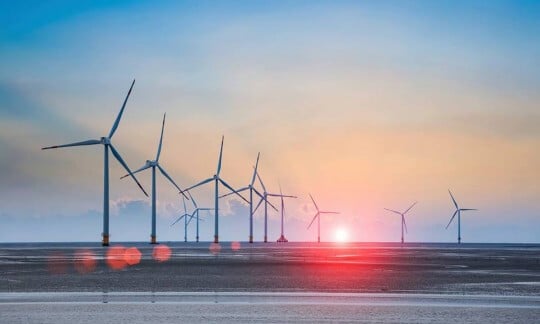
Judge gave Sunrise Wind off New York a preliminary injunction so if can resume offshore construction (BOEM file photo)

Published Feb 2, 2026 3:17 PM by The Maritime Executive


A U.S. District Court Judge issued a preliminary injunction on Monday, February 2, for Sunrise Wind against the Trump administration’s December stop-work order. With today’s ruling, all five of the under-construction offshore wind farms have received permission to resume work despite the administration’s claims of new information about potential radar interference from the wind turbine blades and towers.

Ørsted’s Sunrise Wind had reported in early January that it would follow the lead of the other wind farms and also file seeking a court order. The company said that its project was 45 percent complete, with 44 of its 84 foundations installed as part of a total investment of $7 billion.

The New York Times reports that Judge Royce Lamberth said during a two-hour hearing today that he was unconvinced after reviewing under seal the classified report, which is the basis for the government’s claims about national security issues.

“Purportedly new classified information does not constitute a sufficient explanation,” the judge ruled, according to The New York Times. Lambert reportedly called the administration’s actions “likely arbitrary and capricious” and ruled the company would be irreparably harmed unless work resumed.

Ørsted told the court the stop-work order, which was imposed on December 22, was costing it $2.5 million a day. 

Sunrise Wind is the least advanced of the five projects that were stopped. It is located approximately 30 miles east of Long Island, New York. Due to be completed in 2027, it will have a capacity of 924 MW.

Other judges also questioned the government’s argument. One said the issue, if there is one, relates to operations and not construction. The companies each argued they had spent years in review and received approvals from the Department of Defense and others. 

The orders permit the companies to resume offshore construction work while the courts continue to hear the case challenging the stop-work order. Last week, Dominion Energy confirmed that it had installed the first turbine for its Coastal Virginia Offshore Wind project after receiving its injunction, while Vineyard Wind 1 shipped out its last tower as it nears completion by the end of next month.

In the past, the Department of the Interior has vowed to continue to fight these five cases in the courts. It has also sought to stop other projects, including Maryland’s offshore wind farm, before they begin construction. 

The opposition to offshore wind by the Trump administration has effectively stopped most future development and ended the schedule of future lease sales. The Biden administration was targeting at least 30 GW of offshore wind energy capacity. Bloomberg estimates that the U.S., in the near term, will only reach approximately 6 GW of offshore wind energy capacity due to the Trump administration’s efforts to curtail the industry.


Ørsted to Sell European Onshore Business for $1.7 Billion

Ørsted, the world’s largest offshore wind developer, is selling its entire European onshore business as the embattled firm looks to strengthen its balance sheet after a major rights issue last year.

Ørsted on Tuesday said it had signed a deal with Copenhagen Infrastructure Partners (CIP), through its fifth flagship fund, Copenhagen Infrastructure V (CI V), to divest its entire European onshore business.

Ørsted’s European onshore business comprises onshore wind, solar, and battery storage projects in Ireland, the UK, Germany, and Spain.

The total value of the transaction is $1.7 billion (1.44 billion euros) with closing expected in the second quarter of 2026, subject to regulatory approvals.

The sale marks the completion of the divestment program for Ørsted, which last year turned to its shareholders – including the Danish state – for a $9.35 billion rights issue to raise funds amid major industry headwinds, especially in the U.S.

Last year, Ørsted signed a deal to divest 50% in its 2.9 GW Hornsea 3 Offshore Wind Farm to funds managed by Apollo Global Management in a transaction valued at $5.6 billion.

At the end of 2025, the Denmark-based firm also signed an agreement with Taiwan’s Cathay Life Insurance and its affiliate Cathay Power to sell 55% of its 632?MW Greater Changhua 2 Offshore Wind Farm in the Taiwan Strait for about $790 million.

The sale of the European onshore business to CIP for the equivalent of about $1.7 billion represents the third cornerstone transaction that Ørsted had previously announced in efforts to bolster its balance sheet and stop cash bleeding.

“Ørsted has thereby finalised its divestment programme as planned and significantly strengthened its financial foundation,” the company said today.

With the divestment of its European onshore business, Ørsted has signed transactions during 2025-2026 with proceeds totalling about $7.3 billion (46 billion Danish crowns), delivering on its target of more than $5.5 billion (35 billion crowns) in divestment proceeds during this period.

“We’ve now substantially strengthened Ørsted’s financial position,” chief financial officer Trond Westlie said on Tuesday.

By Tsvetana Paraskova for Oilprice.com


A BEHEMOTH OF THE SEAS

Disney Adventure Becomes Largest Cruise Ship to Transit Panama Canal

cruise ship Panama Canal
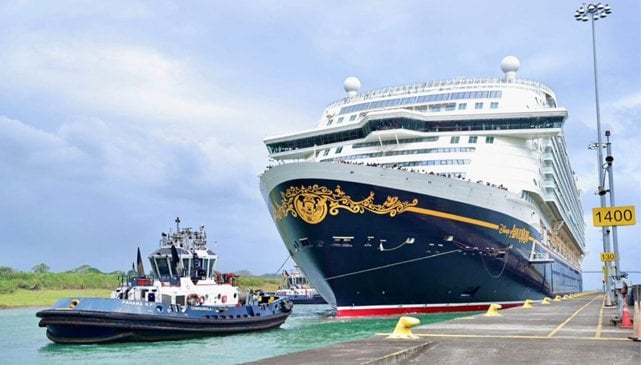
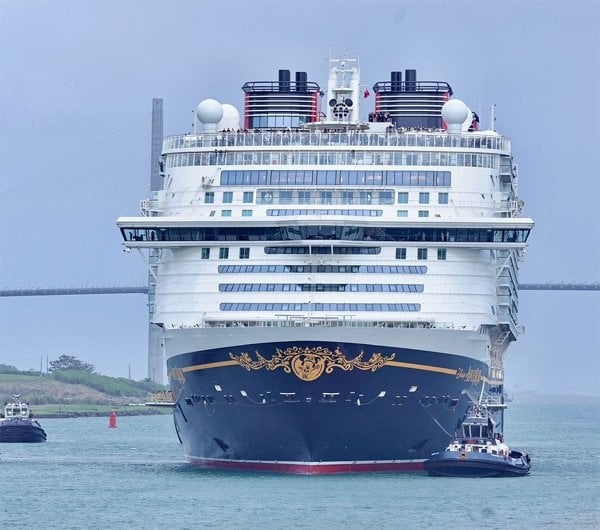
Disney Adventure was the largest and first cruise ship over 200,000 gross tons to transit the Panama Canal (Panama Canal Authority)

Published Feb 2, 2026 5:45 PM by The Maritime Executive


Disney Cruise Line’s ultra-large cruise ship Disney Adventure today, February 2, set a record as the largest cruise ship to transit the Panama Canal as she resumed her repositioning cruise to Asia. She became the largest cruise ship by gross tonnage and capacity, as well as the first 200,000-plus gross ton cruise ship to make the transit.

At 208,100 gross tons, the Panama Canal Authority highlights that the Disney Adventure is 24 percent larger (40,000 gross tons) than the Norwegian Bliss (168,000 gross tons), which had previously held the distinction as the largest cruise ship to make the transit. 

At 342 meters (1,122 feet) in length and 46.4 meters (152 feet) in beam, the Panama Canal Authority highlights her transit required extensive multidisciplinary coordination. The Neopanamax Locks have a maximum capability of handling vessels that are 370 meters (1,215 feet) in length and a beam of 51.25 meters (168 feet), meaning the Disney Adventure had just eight feet of clearance on each side while in the locks. While Disney is the third cruise line to have ships over the 200,000 gross ton threshold, she is the first to make the transit.

The cruise ship had made a stopover in Port Canaveral, Florida, reportedly for crew familiarization and training coordinated with Disney World while she is on her repositioning trip from her builders in Germany to her homeport in Singapore. Over the weekend, she made a brief stop at Curaçao, reportedly for fueling and provisions. 


The ship is on her way to Los Angeles, where she is due next Monday, February 9, for another port call. From there, she is scheduled to proceed to Tokyo and finally to Singapore ahead of her March 10 maiden voyage.

Disney redesigned the ship and completed its outfitting after acquiring it from the bankruptcy of Genting Hong Kong and MV Wesser in Germany. The ship was transformed into the Disney style, with areas highlighting the characters and Marvel themes. She accommodates over 6,700 passengers in 2,111 staterooms. She has a crew of 2,500. The current trip is only being made with staff and crew ahead of the ship’s introduction.

Panama highlights that the transit comes during a busy season for cruise ships, during which it expects 40 Neopanamax cruise ships to make the transit. Last week, the Queen Mary 2 (149,214 gross tons) made her first transit, starting on January 24 and spending the night near Cocolí before continuing her passage under the Bridge of the Americas. This season, other cruise ships making their maiden transits include AIDAdivaBrilliant LadyCelebrity Ascent, and Star Seeker.

In addition to the winter cruises, the Panama Canal sees an influx of cruise ships each spring and fall as ships reposition from the Caribbean to the summer season in Alaska. 


Worldwide Underwater Repair Capability Proven Off the Coast of Congo

Hydrex
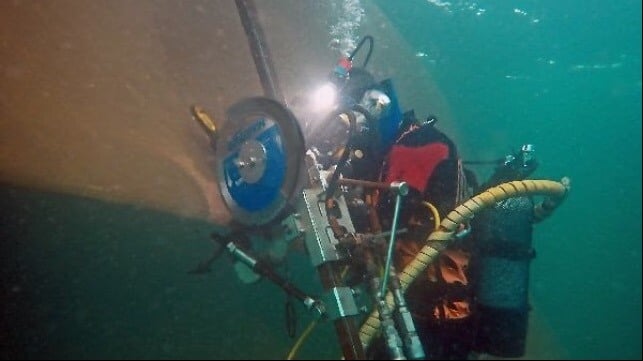
Hydrex Diver Positioning the Blade Cutting Tool Over the Propeller Blade.

Published Feb 2, 2026 9:11 PM by The Maritime Executive


[By: Hydrex]

Shipping operates on a global scale, and when damage occurs, shipowners need repair partners who can respond just as globally. In December, Hydrex once again demonstrated their ability to mobilize anywhere in the world, carrying out a complex underwater propeller repair on a container vessel at anchorage off Pointe Noire, Republic of Congo.

Following reports of a possible grounding incident, an underwater inspection revealed deformation to all six blades of the vessel’s fixed-pitch propeller. With no immediate access to drydock facilities in the region and schedule commitments to maintain, the company was contacted to assess and resolve the situation on-site.

Rapid mobilization in a remote location


Operating far from major ship repair hubs requires careful planning and reliable logistics. Hydrex deployed one of their specialized diving team and equipment to Pointe Noire on short notice. As the vessel remained at anchorage, a dedicated workboat was mobilized to provide safe offshore access and enable the repair without delay.

Upon arrival, the divers conducted a detailed underwater inspection, confirming that all six propeller blades were bent towards the aft side. The bends were too severe to permit bending back to shape with the company’s cold straightening equipment and therefore the blades needed to be cropped. Precise measurements were taken on each blade to assess the extent of deformation and determine the most effective corrective action.

Engineering solutions with class involvement
In close consultation with the attending class surveyor, Hydrex proposed a repair plan tailored to the ship’s condition and schedule. To restore balance and ensure reliable propulsion, it was agreed that all six blades would be cropped to identical dimensions.

The underwater cropping was carried out according to the approved plan. The length of the cuts was approximately 127 cm, and the blades were very thick at this point. The cropping was followed by careful rounding and polishing of all edges. This ensured smooth hydrodynamic performance and reduced the risk of vibration or cavitation, all without requiring drydock facilities.

Added value through on-site operation
While on-site, the team also carried out an additional underwater inspection of the rudder at the request of the vessel’s crew. The inspection confirmed that no grounding-related damage was present, providing immediate reassurance that the ship could sail and steer safely. After sailing, the captain contacted the team leader to confirm that all was well and there was no sign of vibration from the propeller.

By completing this repair at anchorage and far from any traditional repair infrastructure, Hydrex enabled the vessel to continue operations safely and efficiently.

The products and services herein described in this press release are not endorsed by The Maritime Executive.


China and Russia Plan to Hold a Naval Exercise With Iran in February

Nejada file image
File image courtesy Nejada

Published Feb 1, 2026 5:15 PM by The Maritime Executive


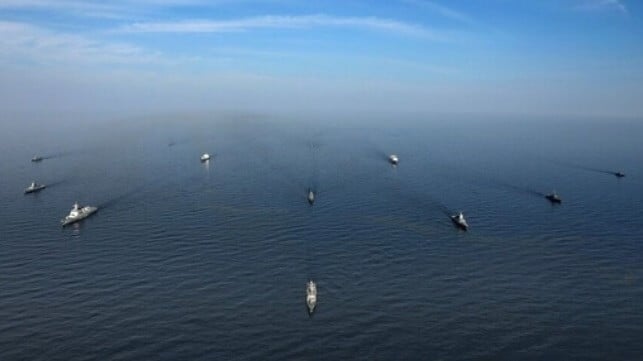
The commander of the regular Iranian navy (Nedaja) Rear Admiral Shahram Irani has announced that Iran will once again host Chinese and Russian naval vessels in Exercise Maritime Security Belt 2026, to be held in the northern Indian Ocean in late February.  There have been no confirmatory announcements as yet from the Chinese and Russians, but the Iranians will be anxious to secure their participation again in this annual exercise, needing the reassurance of having allies alongside at a time of high tension.

The Chinese participants can be expected to be drawn from the People’s Liberation Army Navy (PLAN)’s Djibouti-based 48th Flotilla, made up of the Type 052DL guided-missile destroyer Tangshan (D122), the Type 054A guided-missile frigate Daqing (F576) and the Type 903A replenishment ship Taihu (K889). 

The Russian contingent is likely to consist of the Russian Udaloy Class frigate RFS Marshal Shaposhnikov (F543), still in the region having participated in the DIMDEX 2026 defense exhibition held January 19-20 in Port Hamad, Qatar. The Marshal Shaposhnikov is being supported by the Boris Chilikin Class oiler Boris Butoma (IMO 8842557). Potentially, the Steregushchiy Class corvette Stoykiy (F545) could either supplement or replace these vessels, as it too is still in the region, having participated in Exercise Will for Peace 2026 off Cape Town.

Rear Admiral Irani also has announced that the 103rd Flotilla, also fresh from Will for Peace 2026, is to exercise with an undisclosed partner before returning to Bandar Abbas. The 103rd Flotilla consists of the Bayandor Class corvette IRINS Naghdi (F82) and the Nedaja’s forward base ship IRINS Makran (K441), supported by the IRGC Navy’s converted oil tanker, IRIS Shahid Mahdavi (L110-3).

While elements of the Nedaja are away from home, the business of confronting President Trump’s armada appears to rest with the IRGC Navy. On January 30, the US Central Command warned the IRGC Navy not to use a naval exercise due to start on January 31 as an excuse to overfly, point weapons or maintain collision courses with US Navy vessels.

US naval forces in the region are made up principally of the USS Abraham Lincoln (CVN-72), with its Arleigh Burke Class guided-missile destroyers USS Spruance (DDG-111), USS Michael Murphy (DDG-112) and USS Frank E. Petersen Jr. (DDG-121), with logistics support from USNS Carl Brashear (T-AKE-7).  This carrier strike group (CSG) is supplementing the Bahrain-based Arleigh Burke Class guided-missile destroyers USS Mitscher (DDG-57) and USS McFaul (DDG-74), and three Independence Class littoral combat ships optimized for mine countermeasure missions, namely USS Tulsa (LCS-16), USS Canberra (LCS-30) and USS Santa Barbara (LCS-32), with logistic support from USNS Henry J Kaiser (T-AO-187). 

This force has recently been supplemented by a further Arleigh Burke Class guided-missile destroyer, USS Delbert D. Black (DDG-119), which is believed to be in the northern Red Sea. Thick cloud has covered the US Naval Support Facility at Diego Garcia in recent days, so it is not possible to ascertain if air reinforcements have arrived in theater.

The IRGC Navy issued a statement on January 31 via Tasnim that its commander, Commodore Alireza Tangsiri, had not been killed in an unexplained blast at a residential flat in Bandar Abbas. The statement implied that the blast had been caused by a gas explosion, although local residents have said that the area is not served with natural gas connections.

IRGC Navy commander Commodore Alireza Tangsiri (Iranian Defence / Tasnim)


Yang Ming Captain Arrested on Suspicion of Drug Smuggling

Taiwan port
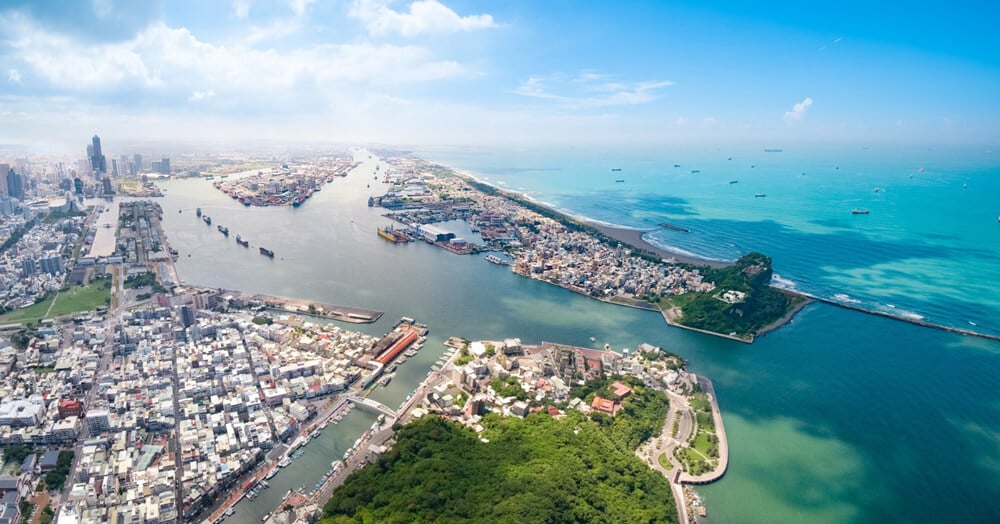
Containership arrived in Taiwan carry a large amount of heroin (Kaohsiung file photo)

Published Feb 2, 2026 4:31 PM by The Maritime Executive


An arrest warrant was issued late on January 30 in Taiwan for the captain of a Yang Ming containership on suspicion of drug smuggling. The captain, who was only identified by the surname of Yu, had been detained earlier in the week after an inspection of his vessel at the Port of Kaohsiung.

The Taiwan-based Yang Ming Marine Transport Corporation said it was cooperating with the authorities after alerting them to the suspected smuggling taking place on one of its vessels.

The YM Horizon (19,100 dwt) had loaded in Vietnam and had been scheduled to make a call in Hong Kong before proceeding to Taiwan. It is unclear why, but the vessel skipped the Hong Kong port call and went directly to Kaohsiung, where it arrived on January 29. The vessel, which was built in 2005 and registered in Taiwan, is a smaller, 1,500 TEU vessel used on the regional service in Asia.

The vessel’s security officer became suspicious after receiving a tip-off from crewmembers on the ship regarding “suspicious” items delivered and loaded onto the vessel. Yang Ming passed the information to the authorities for investigation.

Customs officers boarded the ship when it docked in Taiwan, and during the inspection, they discovered bricks of heroin inside the cargo hold. They referenced it as “a large amount” and are saying it is exceptionally high purity. They also found loose heroin wrapped in oil-paper bags as well as a suspicious white powder, reports CNA.

The master of the containership was detained for interrogation by the prosecutor’s office. They later submitted information to the district court seeking the arrest warrant. No other crewmembers have been detained.

Yang Mng reports it provided the CCTC footage from the vessel and logs to the prosecutor.  The ship departed Taiwan on Monday, February 2, bound for Hong Kong.

Officials said the case is unusual because maritime drug smuggling has mostly involved older cargo ships.


US Seizes $70k in Unreported Currency from COSCO Bulker

seized cash
Over $70,000 in unreported cash was seized from a COSCO bulker in Baltimore (CBP)

Published Feb 2, 2026 1:53 PM by The Maritime Executive


Officials of the U.S. Customs and Border Protection (CBP) seized a large amount of unreported cash from a Chinese-owned bulker while it was in the port of Baltimore. While it is not a crime to have the cash aboard the ship, U.S. officials highlighted the reporting requirements while contending the captain of the ship had made the appropriate reports at other U.S. ports.

The incident began simply enough with a routine inspection of the bulker Sheng Ning Hai (56,716 dwt) when it arrived in the Port of Baltimore on January 21. CBP conducted a routine enforcement boarding of the bulker after it reached the port.

CBP highlights that one element of these inspections is for the vessel’s captain to report to CBP officers how much currency the vessel is carrying. The master of the bulker did not report any currency to CBP officers, although he had filed a report days earlier in Maine.

Under the law, those entering and departing the United States may carry any amount of currency and other monetary instruments that they choose. However, any amounts over $10,000 must be reported on a U.S. Treasury Department Report of International Transportation of Currency or Monetary Instruments form.

The CBP officers noticed that the master of the Sheng Ning Hai had filed a Financial Crimes Enforcement Network 105 submission for $34,480 during an earlier port call in Searsport, Maine. Further, the officers learned that the vessel’s agent gave the master an additional $40,000 while in Maine.

CBP officers returned to the vessel the following day and conducted a more thorough examination of all spaces. The officers discovered a total of $70,737 in the purser’s safe.

“It is rare to see a commercial ship captain deliberately violate our nation’s laws,” said CBP’s Acting Director of the Baltimore Field Office, Matthew Suarez. He said that commercial vessel captains are required to understand and comply with the laws of the nation where they make port calls and that the office would continue to scrutinize foreign-flag vessels arriving at the port.

CBP’s announcement of the incident said the captain was “in hot water” after he failed to file the report for the additional $40,000 or amend the prior report from Maine. The cash was seized from the ship due to the lack of a report. The bulker was released and is continuing its journey. AIS signals show it is bound for Mombasa.