Wednesday, February 11, 2026


ArcelorMittal invests €1.3 billion to produce 'green steel' at its Dunkirk plant

The €1.3 billion investment will be used to build a giant electric arc furnace.
Copyright Copyright 2008 AP. All rights reserved.

By Célia Gueuti
Published on 

In the presence of French President Emmanuel Macron, the steelmaker confirmed the construction of its largest electric furnace in Europe at its Dunkirk plant in northern France.

ArcelorMittal announced in May 2024 that it planned to invest in an electric arc furnace at its Dunkirk plant, and formally confirmed the investment on 10 February 2026. French President Emmanuel Macron, European Commissioner Stéphane Séjourné and several ministers were present for the announcement, which involves a total planned investment of €1.3 billion.

The company says the project will allow the construction of an electric arc furnace with a capacity of two million tonnes a year, due to come on stream in 2029. The aim is to produce steel without coal, whose combustion generates significant CO₂ emissions and contributes to global warming.

Major announcement for decarbonisation and the future of our industry! ArcelorMittal has decided to invest €1.3 billion in an electric arc furnace in Dunkirk. Talent, infrastructure and decarbonised electricity: France has the assets. We are getting there.

The investment in the electric arc furnace forms part of a strategy outlined by the company to shift several of the Group’s European steelworks from coal to hydrogen. The Dunkirk site is a significant source of pollution, accounting for around 15% of CO₂ emissions from French industry.

Up to 50% of the investment will be funded through the energy savings certificate scheme (CEE), a government-regulated mechanism that requires energy suppliers to support projects designed to cut energy consumption.

Investment delayed


However, ArcelorMittal had long been reluctant to formalise its investment pledge. When it was first announced in May 2024, the steelmaker said confirmation would come “after the summer”.

That confirmation ultimately arrived more than a year and a half later. In November 2024, the company justified the delay by saying it was waiting for “additional measures to protect European steel before committing to any investment”.

Some of those measures have since materialised, notably with the Carbon Border Adjustment Mechanism (CBAM) entering its definitive phase on 1 January 2026.

"The decision to build an electric arc furnace at ArcelorMittal Dunkerque, in order to produce low-carbon steel on a large scale for our customers, has been made possible by the conditions now in place to bring this project to fruition," said Geert van Poelvoorde, chief executive of ArcelorMittal Europe, in a statement. "The new tariff quota will help stem the flow of unfair imports into the EU, while the MACF is now operational to create a more level playing field for European producers."

Long demanded by Europe’s steelmakers, CBAM is designed to subject goods imported into the EU’s customs territory to carbon pricing equivalent to that faced by European manufacturers.

Support from the French government

The project has also received support from the French government. In 2023, ArcelorMittal was granted confirmation of €850 million in subsidies to help decarbonise its Dunkirk and Fos-sur-Mer sites.

A second plant that Emmanuel Macron has not forgotten. During his visit to Dunkirk, the French president called on the group to "see the adventure through to the end" and "build the second furnace, continue with hydrogen", as well as giving "a future to Fos-sur-Mer", ArcelorMittal’s other major French site.

The formal signing of the €1.3 billion investment appears to have reassured the French president that France’s leading steelmaker, and Europe’s largest, intends to remain in the country.

That reassurance is not shared by everyone. Gaétan Lecocq, a CGT union representative in Dunkirk, said he was “waiting for something concrete” and for “a firm date” for the construction of the electric furnace. When ArcelorMittal announced the investment in 2024, it also confirmed it would press ahead with plans to cut 638 jobs in France.


Police fire tear gas as Albania opposition protest turns violent

Protesters shoot fireworks and hurl Molotov cocktails at a government building in Tirana, 10 February 2026
Copyright AP Photo

By George Dimitropoulos & Euronews
Published on 


At least 16 police were injured and 13 people arrested as opposition leader Sali Berisha’s supporters clashed with security forces in Tirana over corruption claims.

At least 16 police officers were injured and 13 people arrested when opposition protesters clashed with security forces in Albania's capital on Tuesday, authorities said.

Protesters hurled Molotov cocktails and stones at government buildings in Tirana, with police responding with tear gas and water cannons.

Both parliament and the prime minister's office were targeted in the demonstration called by opposition leader Sali Berisha.

Berisha, a former premier and bitter rival of current Prime Minister Edi Rama, said a deputy from his centre-right party had been taken to hospital with injuries.

The protest is the latest in a series of anti-government rallies organised by Berisha's Democratic Party, which has accused Rama's government of corruption.

In November 2025, the Special Court Against Corruption and Organised Crime ordered the suspension of Deputy Prime Minister Belinda Balluku from her governmental duties following corruption charges related to public procurement.

Balluku was charged in connection with the Llogara Tunnel affair, including alleged violations of equality in public procurement related to the tunnel project and the fourth lot of Tirana's Outer Ring Road.

Rama took the court decision to the Constitutional Court, asking it to restore Balluku to duty. The Constitutional Court agreed to do so temporarily until there is a final decision.

However, the Constitutional Court's decision to maintain the suspension of Balluku has reopened a deep institutional conflict in Albania, with prosecutors awaiting a parliamentary vote to lift her immunity.

'Citizens are distrustful'

Berisha himself faces corruption allegations. He is suspected of having handed lucrative public contracts to his inner circle, which he firmly denies.

Berisha urged the crowd to "unite to overthrow this government and to put in place a technical government to prepare early, free and fair elections" at a previous rally in January.

He has called for another demonstration on 20 February.

The protests took place against a backdrop of parties exchanging accusations of corruption and links to organised crime.

Political analyst Mentor Kikia said Albania's leadership and opposition offered similar disadvantages. "Citizens are distrustful, having consistently voted for the lesser evil to remove the greater evil from power", he told AP.

Albania's political scene has been marked by volatile protests for years, with politicians across the spectrum trading accusations of ties to organised crime.


US expected to reassure allies over limiting NATO troop withdrawal

NATO Secretary General Mark Rutte and US President Donald Trump
Copyright Copyright 2026 The Associated Press. All rights reserved


By Shona Murray
Published on 

The US is expected to commit to limiting the number of troops it will withdraw from NATO territory at a meeting of defence ministers Thursday. NATO is also due to announce plans for Arctic Sentry military mission to the High North in response to threats from Russia and China.

United States Undersecretary of War Elbridge Colby is expected to tell European NATO allies that only a limited number of US troops will be withdrawn from NATO territory as part of any posture review, Euronews can reveal.

Sources close to the situation have said Colby will use Thursday's meeting of NATO defence ministers to commit to keeping the vast bulk of currently stationed troops in Germany and Italy and along Europe's eastern flank in place

Colby is deputising for US Secretary of Defence Pete Hegseth, who will not be attending the meeting.

There are currently approximately 80-90,000 US troops stationed in Europe at any given time depending on rotations, the highest number since the Cold War. The number surged in response to Russia's full-scale invasion of Ukraine four years ago.

The move will come as both a welcome relief and a surprise, as European allies have been bracing themselves for a substantial drawdown of US troops as the Trump administration prioritises security theatres elsewhere in the world.

"The US is committed to NATO, they have made that abundantly clear", Colonel Martin O’Donnell, spokesperson for NATO's Supreme Allied Commander Europe, told Euronews.

"They have also made even more clear that Europe has to step up, and they are, but there is still more to do, like delivering on the capability targets all nations agreed."

Pivot to Europe

The appointment of Colby as undersecretary of war last year was seen as a harbinger of plans to potentially pull thousands of US troops. He is widely regarded as a hardliner who has long advocated for the withdrawal of many US troops from NATO territory and a policy pivot towards the South China Sea.

European allies have been fearful of sudden, dramatic announcement which would leave the continent vulnerable at at time when Russian hybrid attacks in NATO territory were surging.

It's not clear whether the decision to keep much of the force is part of an anticipated official US global posture review, which is due to take place sometime this year. But the move does coincide with plans to overhaul NATO's command structure and shift greater responsibility onto Europe over the coming years – a process that has already begun, with European allies soon taking command of US-led bases on their territory.

"The United Kingdom will take over command of Joint Force Command Norfolk and Italy will do the same for Joint Force Command Naples, both of which are currently led by the United States", NATO announced in a statement last week. "Germany and Poland will share command of Joint Force Command Brunssum on a rotational basis."

"As a result, all three Joint Force Commands, which lead at the operational level in crisis and conflict, will be led by Europeans."

Guarding the north

Meanwhile, NATO is due to launch a new mission to strengthen security in the High North and Arctic, with military planning already at an advanced phase.

The mission, Arctic Sentry, comes weeks after serious divisions erupted within the alliance over United States President Donald Trump’s claim he would “take” Greenland, a semi-autonomous Danish protectorate in the Arctic.

NATO allies are meeting for the first time since Trump’s demands nearly imploded the alliance, and are expected to confirm the contours of the new NATO mission.

A deal negotiated by the NATO Secretary General Mark Rutte with Danish, Nordic and US partners after this year's World Economic Forum conference at Davos agreed to significantly step up Arctic security.

Arctic Sentry will be a multi-domain activity involving space, cyber, land, sea and air defences and is designed to enhance NATO presence in the Arctic against rising Russian threats and persistent Chinese efforts to influence the region, according to several allies.

“The Arctic is a critical region in face of growing competition in China,” US ambassador to NATO Mathew Whitaker told journalists in a briefing on Tuesday, saying the alliance needs to be “clear as to what's happening in the Arctic” and understand present and future capability needs required to secure the region, as the “Arctic becomes more and more relevant”.

Adding that "all NATO assets” would be needed to secure the region, Whitaker said that if Greenland becomes independent from Denmark in the future, it could be outside NATO.

“We would need to resolve that”, he said.

Air, land and sea

“Demands on defence are rising, and Russia poses the greatest threat to Arctic and High North security that we have seen since the Cold War,” UK Defence Secretary John Healey said in a statement ahead of Thursday's meeting.

“We see Putin rapidly re-establishing military presence in the region, including reopening old Cold War bases", he said.

Another senior NATO diplomat said that “although there is no immediate crisis, our threat assessment indicates that both Russia and China have demonstrated ambitions in the region".

"Deterrence requires early and visible action: signalling our presence, vigilance and readiness to defend the territory whenever necessary," they added.

The rationale of the mission is similar to that behind Baltic Sentry, launched a little over a year ago to improve allies' ability to respond to destabilising acts in one of the world's most heavily trafficked seas.

Alice Tidey also contributed reporting.


No gun culture, big gun industry: the EU’s quiet arms economy
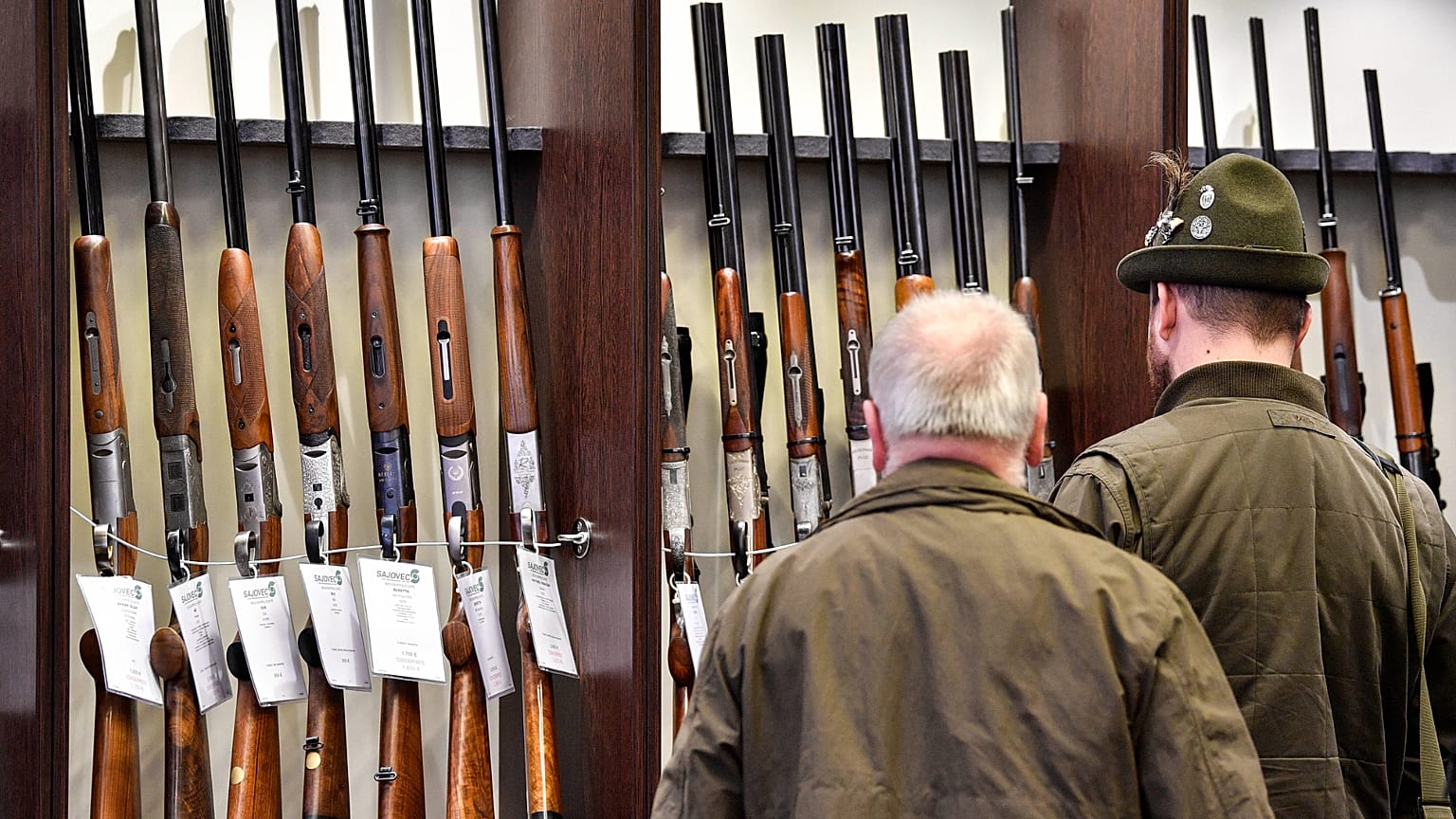
Hunters looking at the latest rifles at the hunting fair in Dortmund, Germany
Copyright AP Photo


By Leticia Batista Cabanas
Published on 

Europe doesn’t have a strong “gun culture,” but maintains strict regulations. Still, as a major global producer and exporter of weapons, the regulation of ownership, licensing and enforcement remains the responsibility of individual EU countries.

With the 2026 Munich Security Conference taking place on Friday, 13, and Europe's ongoing efforts to produce ammunition and achieve defence industrial autonomy, its gun industry takes centre stage.

EU leaders are set to debate the need for permanent, Europe-based production of essential weapons and munitions. But a production increase brings new risks. Exporting firearms in the bloc involves a complex interplay between EU-wide rules and sovereign national regulations, creating loopholes that raise security doubts.

Without public oversight, weapons can be sent to "neutral" third countries with weak regulations, which then re-export them to conflict zones.

Within the EU’s borders, countries deal with the emergence of “ghost guns”: non-traditional firearms, specifically 3D-printed guns (3DPFs) and "80% lowers”, made from isolated parts. In 2019, the Halle Synagogue attack saw a man kill two people with a 3D-printed gun.

In parallel with the Munich Security Conference, the Global Initiative Against Transnational Organised Crime (GI-TOC) will host discussions on the growing appearance of smuggling networks, many of which traffic firearms, and measures to counter hybrid attacks that often utilise illicit weapons or small-scale weaponry to destabilise European security.

A patchwork of EU and national regulations

The EU’s regulatory framework restricts civilian gun ownership and sets minimum standards for gun circulation within the single market. The rules define permitted types, technical standards, traceability requirements, movement within the EU, and procedures for import, export, and transit with non-EU countries. However, these standards are not supranational, so most firearms policy is still decided by individual member states.

The European Commission first proposed the Firearms Directive in 1991 to integrate firearms into the single market while safeguarding public safety. In 2015, the EU updated and tightened EU-wide weapon controls following the Paris terrorist attacks, introducing common standards to ensure deactivated firearms stayed inoperable.

A further update in 2021 brought in new rules for traceability, improved cross-border information systems and bans on certain semi-automatic firearms for civilians. Enforcement, however, still varies by country, largely depending on available resources and cyber-investigation capabilities.

Three-dimensional printed firearms are a growing political concern. While the 2021 revision of the Directive makes these weapons illegal, it does not clearly ban owning or sharing digital blueprints. This gap lets traffickers exploit differences in national laws.

With no follow-up legislation included in the 2020-2025 EU Action Plan, the European Parliament warned of a decline in firearms traceability and urged the Commission to regulate these increasingly dangerous so-called "silent weapons”. A revision of the Firearms Directive is expected by 2026.

Brussels’ planned recast of the Firearm Directive, the ongoing implementation of the 2020-2025 EU Action Plan on firearms trafficking, and the Parliament and Council’s 2025 regulation to close loopholes in firearms trade show the EU’s ongoing efforts to tighten the EU-wide rulebook.

The Commission also plans to introduce a central, secure electronic licensing system between 2027 and 2029 to improve weapon traceability and help member states share information on denied authorisations. Separately, discussions are underway on broader restrictions on the use of lead in hunting, sports shooting and other outdoor activities.

Figures are approximate and illustrative.

Lobby groups, major gun makers, and gun owners in countries with stronger gun cultures, like Sweden or the Czech Republic, have opposed more EU regulation.

They argue that stricter rules limit legitimate civilian use and hurt national traditions. The Czech Republic had already filed complaints about excessive EU gun restrictions in 2017.

Owning a gun in the EU: where is it legal?

Under the EU Firearms Directive, weapons are divided into three categories.

Category A firearms, such as automatic weapons and certain military-style arms, are banned for civilian use, though all EU member states can grant special authorisations under strict conditions. The Czech Republic is known for the most permissive laws, including permits for concealed carry. Austria, Poland, and Finland are also among the least restrictive

Category B firearms, including most handguns and semi-automatic rifles, are restricted and need individual authorisation.

Category C firearms, mainly hunting rifles and shotguns, are allowed but must be registered, especially in countries with strong hunting traditions like Finland and Sweden.

Semi-automatic weapons are only legal within certain limits, and deactivated firearms must meet EU standards. Replicas and imitation firearms are usually not covered by EU law, so national authorities regulate them. This is why they are strictly controlled in countries like the United Kingdom but widely sold under consumer laws elsewhere.

Gun ownership is limited to licensed individuals such as hunters, sport shooters, and recognised collectors. All must demonstrate a legitimate purpose, pass background and medical checks, and comply with strict storage and traceability rules. France and Italy have especially structured licensing frameworks.

In practice, national implementation varies. A semi-automatic rifle that is legal for sport shooting in the Czech Republic or Austria may be banned in neighbouring member states.

Regulated nationally, traded across borders.

Gun control in the EU is mostly handled at the national level. Each member state decides how to apply EU rules, license private gun ownership, handle illegal possession, enforce laws and how cultural or institutional rights are protected.

At the same time, the firearms industry operates across borders. Under EU treaties, weapons are treated as goods, allowing licensed manufacturers to sell across the single market.

This creates tension between public security, which falls under national police and constitutional authority, and EU harmonisation.

The result is a hybrid system: Brussels defines baseline rules for production and circulation, but political control over civilian access and enforcement stays national. This structure produces legal and operational gaps, allowing weapons to move legally across borders while oversight remains uneven.

Differences in licensing rules, magazine limits, deactivation standards and export checks have been exploited. For example, civilian firearms bought legally in one country can be trafficked into another, while military weapons exported under national permits may later be misused.

"Ghost guns" made of lone parts

Online sales and cross-border transport further complicate tracking weapons once they leave their country of origin. According to the Europol 2025 Serious and Organised Threat Assessment report, criminal networks are increasingly using e-commerce platforms to sell parts and avoid traditional customs checks

The result? “Ghost guns”, one of the main issues the EU sought to tackle through their Firearms Directive. These are privately made firearms that lack serial numbers and manufacturer markings, which makes them impossible to trace through traditional registration and tracking systems.

While EU law generally criminalises the possession of such weapons, it does not comprehensively regulate the digital blueprints, online files, or semi-finished components used for their production. Because of this, individuals can legally get 3D-printing design and import unfinished parts that only become illegal once assembled. This loophole, alongside inconsistent enforcement, limited data collection, and cross-border online trade, allows these illegal weapons to enter circulation and remain invisible to the authorities.

Additionally, the tech keeps advancing and making the problem worse: 3D printers and CDC machines have made it even easier and cheaper to produce functional firearms outside of regulated supply chains.

Everybody wants EU guns

Europe's gun industry covers small arms and light weapons (SALW) made for individuals or squads. It does not include heavy equipment like tanks, fighter jets, or ships, which Europe still mostly sources from allies. Currently, 64% of major arms imports to NATO members in Europe come from the US.

In 2025, the EU’s total SALW production was estimated at 4 to 5 million units, including 2.5 to 3 million civilian or sporting firearms and 1.5 to 2 million military or police weapons. Ammunition production rose sharply, with manufacture of artillery rounds reaching around 2 million, up from 300,000 in 2022. Arms manufacturers expanded their factories by 7 million square metres across 150 facilities, roughly triple the industry’s peacetime rate.

Five main European production hubs account for most of the bloc’s small arms output, underpinning Europe’s position as a major global exporter.

In Italy, Beretta Holding reported €1.668 billion in revenue in 2024. Germany’s Heckler & Koch reported €343.4 million, while Belgium’s FN Browning generated €934 million the same year. Austrian firm Glock reported revenue of €670.32 million in 2024, and the Czech Republic’s Colt CZ Group sold 633.739 firearms in 2024.

Figures are approximate and illustrative

These firms are oriented toward global markets. Based on 2024-2025 financial disclosures, the group estimates that 55% to 65% of total revenue comes from exports outside the EU. Their main buyers are the US, Saudi Arabia, the UK, Egypt, and Qatar.

This raises issues with transparency. The European Court of Auditors has warned that “increasingly pacey and complex money flows" in EU defence funding are surpassing existing oversight systems, adding that "audit independence and timeliness" have become a challenge in 2026.

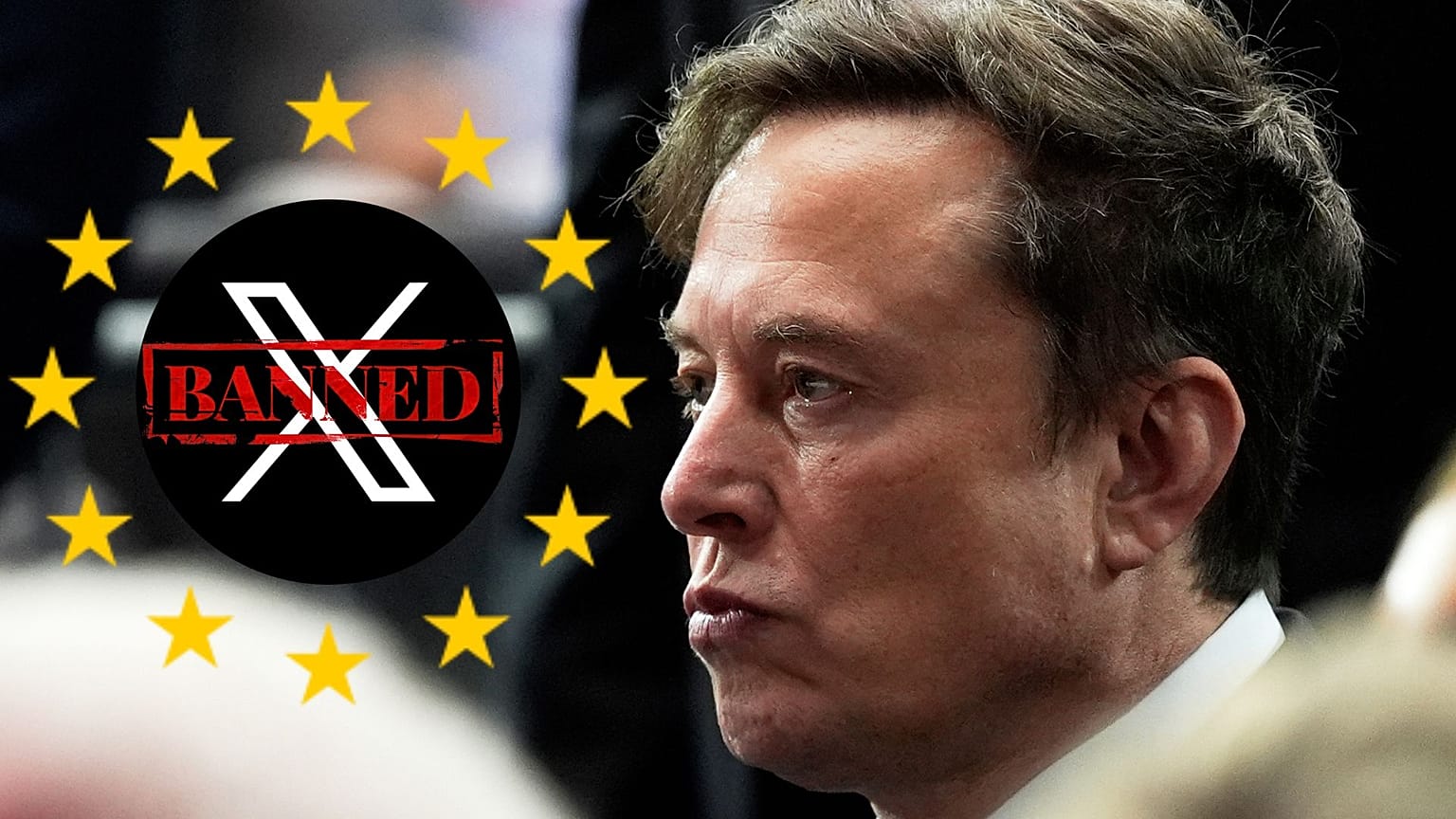
 

Nearly half of Europeans would back banning Musk's X if it keeps breaking EU law, new poll finds

The opening page of X is displayed on a computer and phone, 16 October 2023.
Copyright Credit: Canva/AP Photo

By Theo Farrant
Published on 

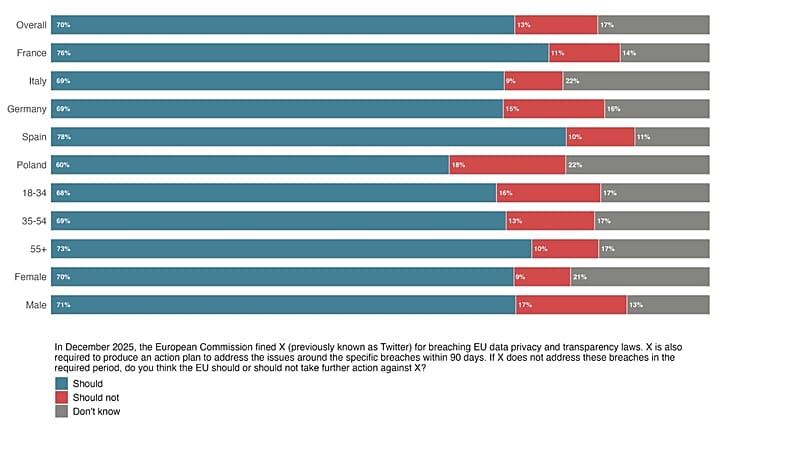
A new YouGov survey across Germany, France, Spain, Italy, and Poland shows nearly half of Europeans (47 percent) would back banning social media platform X from the EU if it continues to breach EU rules.

Almost one in two Europeans would support banning the social media platform X from the European Union if it continues to breach EU rules, according to a new YouGov survey conducted across five major member states.

The polling, carried out in Germany, France, Spain, Italy and Poland, suggests growing frustration among voters around what they see as a lack of compliance by the Elon Musk-owned platform with European digital regulations.

Between 60 and 78 percent of respondents in each country said the EU should take further action against X if it fails to address breaches identified by the European Commission last year.

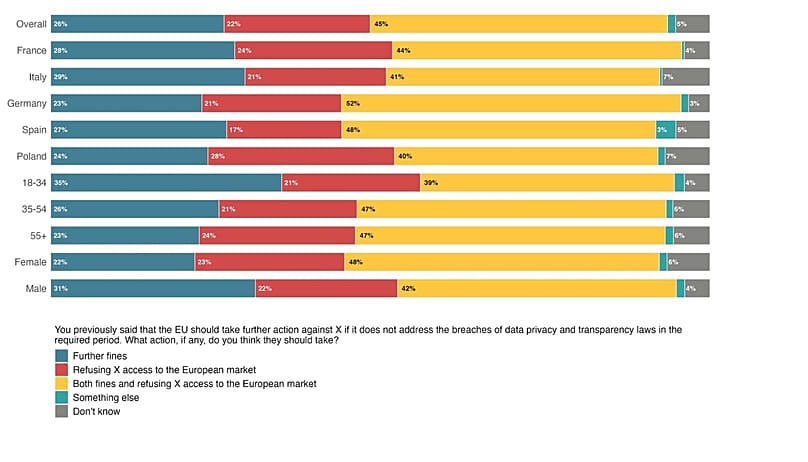
Among those in favour of more measures, a majority - ranging from 62 to 73 percent – said the platform should be banned if it refuses to comply. Overall, 47 percent of all respondents supported a potential ban.

New YouGov polling shows strong cross-European backing for tougher action against X
New YouGov polling shows strong cross-European backing for tougher action against X Credit: YouGov


The findings come after the European Commission fined X €120 million on 5 December last year under the Digital Services Act (DSA) for failing to meet transparency obligations.

At the centre of the probe is the blue checkmark, previously used to signal official accounts at no cost but now sold for €7 a month, which risks confusing users about the veracity of identities.

The Commission also found that X did not comply with the transparency obligation for advertising on social media platforms, blurring the line between advertising and content that could lead to financial scams for users. X now has 90 working days to respond to the findings.

Since then, the company and its built-in AI assistant, Grok, have also faced further scrutiny. Critics accuse the platform of amplifying harmful content, including deepfake pornography and child sexual abuse material.

French prosecutors last week raided X's Paris office as part of an ongoing investigation into child abuse content.

Public appetite for tougher measures against X

The YouGov data suggests a strong appetite for stronger enforcement against Big Tech platforms. If X fails to respond adequately to the Commission’s fine, 70 percent of respondents said they would support repercussions.

Among those, between 17 and 28 percent favoured imposing further fines. Between 23 and 29 percent supported banning the platform outright.

The largest group – 40 to 52 percent of those backing action – said the Commission should both fine and ban the service from operating in the EU.

Poll results from the recent YouGov survey surrounding X's EU law breaches
Poll results from the recent YouGov survey surrounding X's EU law breaches Credit: YouGov

"Europeans are done with empty warnings. X has been fined, investigated, and given every opportunity to comply – and it has chosen to laugh in the face of the EU instead," said Ava Lee, the executive director of People vs Big Tech, a movement of 149 civil society organisations.

"X may be the first major platform to face this level of scrutiny by the Commission, but it will not be the last," she added.

"The latest polling data shows that European lawmakers have a golden opportunity to use X to set a vital precedent and send a clear message to Big Tech: European laws come first."

Despite the strong support reflected in the survey, banning a major platform would be considered an extreme step under EU law, and the Commission has not indicated that it is currently considering such a move.

Should social media be banned?

The poll was conducted against a backdrop of increasing political debate over social media regulation.

Spain, France, Denmark, Italy, Greece, Finland, Germany, and the United Kingdom are considering measures to restrict or ban social media use for minors entirely in response to concerns over "illegal and hateful content."

On 10 December 2025, Australia set a precedent by introducing the world’s toughest social media restrictions for under-16s, where millions of underage accounts were removed.

But interviews with teenagers, parents and researchers indicate that many children are still accessing banned apps through simple workarounds, raising questions about whether the rules can be effectively enforced.

Researchers stress that it's still too early to judge whether Australia's ban has been effective.

"Most of them, their first touch point is six months. So, I would encourage other countries, policy makers and constituents really enthusiastic about this idea to wait on the data," said Professor Kathryn Modecki from the University of Western Australia.


Why France wants to penalise 'online sexual exploitation' on OnlyFans and Mym

This photo shows a mobile application for OnlyFans, a site where fans pay creators for their photos and videos, Thursday 19 August 2021.
Copyright AP Photo


By Sophia Khatsenkova
Published on 

France’s Senate has voted in a new criminal offence targeting intermediaries or agents representing adult content creators on online platforms. The bill, which has sparked deep divisions, aims to crack down on what supporters call “pimping 2.0”.

France’s Senate on Tuesday evening overwhelmingly approved a bill creating a new criminal offence of “online sexual exploitation.”

The proposal, introduced by conservative Les Républicains Senator Marie Mercier, seeks to tackle agents or intermediaries of adult content creators operating on platforms offering personalised sexual services such as OnlyFans and the French platform Mym.

The text was significantly rewritten during parliamentary debates, resulting in the creation of “a new offence inspired by human trafficking law.”

The legislation primarily targets agents who operate around subscription-based adult content platforms, accused of profiting from abusive practices, in some cases likened to modern forms of exploitation or coercion.

The bill will now move to the National Assembly for further examination.

A legal grey area

Platforms such as OnlyFans and Mym operate on a subscription model in which users pay for access to photos, videos or personalised sexual content on demand. Their popularity surged since the COVID-19 pandemic.

However, under French law, prostitution requires physical contact. Because online sexual services take place remotely, they do not fall within the legal definition of prostitution, a position confirmed by France’s highest court, the Cour de cassation, notably in rulings concerning live-streamed sexual performances or “camming”.

As a result, neither the platforms nor the intermediaries who profit from them can currently be prosecuted for pimping under existing legislation.

“The problem is that we are witnessing a fundamental debate about whether this type of content should be considered prostitution,” digital law attorney Raphaël Molina told Euronews.

Faced with this legal deadlock, senators opted for a different approach: creating a standalone offence specifically targeting intermediaries.

Targeting 'pimps 2.0'

The law focuses on so-called “managers” or “agents” who recruit, supervise and monetise the activity of adult content creators.

On paper, the young women involved — typically in their early to mid-20s, often students — are said to be looking to “make ends meet” through online services.

According to Senator Mercier, managers “promise their models financial independence” and “a risk-free activity in their bedroom, behind a screen.”

But, she argues, “the reality behind the scenes is far more sordid,” involving “minors,” “consent sometimes obtained through harassment,” and “increasingly unhealthy or violent images and videos.”

“These are not the creators we are targeting,” Mercier told Euronews. “I am targeting the business chain of these men — usually aged between 20 and 30 — who make a lot of money at the expense of these young women whose lives are being destroyed.”

According to a Senate report, around 30% of content creators in France are represented by an agent.

Under the newly adopted offence of “online sexual exploitation,” offenders could face up to seven years in prison and a €150,000 fine, with harsher penalties when minors are involved.

Contacted by Euronews, OnlyFans and Mym had not responded at the time of publication.

A parliamentary report published in January by MP Arthur Delaporte and former MP Stéphane Vojetta outlined numerous alleged abuses linked to agencies operating on such platforms: misappropriation of earnings, pressure to produce increasingly frequent or extreme content, unauthorised reuse of images, psychological harassment and isolation.

Mercier describes a gradual mechanism of control: “What seems very soft at first ultimately becomes like an infernal trap closing in. The young women end up almost under control. The manager asks them to produce more and more content, and increasingly violent content.”

A deeply divisive law

While many agree on the need to address abuses, the bill has sparked concern among sex workers, particularly those operating online.

The Senate’s law committee removed an earlier provision that would have criminalised buyers of personalised sexual content, arguing it would disproportionately restrict freedom between consenting adults.

Vera Flynn, a virtual sex worker since 2011, says she fears unintended consequences.

“When it comes to agents, we more or less agree,” she told Euronews. “But regarding personalised content, that’s where we had a problem.”

She acknowledges that some managers engage in abusive practices but warns against overly broad restrictions.

“We have the right — even between ourselves, even unpaid — to create personalised content. So there is an issue there.”

“I don’t have a gun to my head. I chose to do my job. It’s a job, that’s all,” she added.

Molina also advocates regulation rather than criminalisation.

“I have always argued that instead of criminalising agents on these platforms, they should be regulated through some form of administrative licensing,” he said.

Abolitionists say it does not go far enough

On the other side of the debate, abolitionist organisations — which oppose all forms of prostitution — argue the law remains insufficient.

For Delphine Jarraud, head of the NGO Amicale du Nid, the digital dimension does not change the nature of the act.

“You are not buying videos, you are buying a human being who is subjected to sexual acts remotely at someone else’s request,” she told Euronews.

Her organisation is calling for an extension of France’s existing criminal framework — which penalises the purchase of sexual services in person — to include online services, similar to legislation adopted in Sweden in 2025.

Sweden criminalised the purchase of personalised sexual services online, while keeping platform subscriptions legal.

Responding to criticism, Mercier describes the French bill as a first step. “You can’t do everything in one day. You can’t redefine prostitution overnight. But we had to start by creating a breach.”