Saturday, March 07, 2026


Is Trump Already Searching for a Way Out of the Iran War? – Analysis

As the US-led war on Iran expands, questions are mounting about Washington’s strategy and ultimate objectives. (Design: Palestine Chronicle)

By Palestine Chronicle Editors

If regime change is no longer Washington’s goal, what exactly is the US-Israeli war on Iran trying to achieve?

Key Takeaways

  • Washington’s messaging has shifted repeatedly—from missile threats to leadership change and then back again.
  • Trump officials have struggled to articulate a consistent political objective for the war.
  • Several Western allies are distancing themselves from the conflict.
  • Gulf partners appear increasingly uneasy about the consequences of escalation.
  • Rising war costs and energy disruptions are complicating Washington’s ability to sustain the campaign.

A War Without a Plan

It is increasingly difficult to determine what the US-Israeli aggression on Iran was meant to achieve in the first place. When the first strikes were launched, Washington presented the campaign as a limited operation aimed at degrading Iran’s military infrastructure and missile capabilities.

But that explanation quickly began to shift.

Within days, the public discourse coming from Washington became inconsistent. Some officials described the operation as a narrow military effort focused on Iran’s weapons systems, while others suggested much broader political ambitions.

Secretary of State Marco Rubio indicated that the United States was not preparing for a ground invasion, emphasizing that Washington was “not currently postured” to deploy ground forces into Iran.

President Donald Trump, however, soon expanded the discussion far beyond those limits.

In comments to NBC News, Trump suggested that Washington ultimately wanted Iran’s leadership structure removed. “We want them to have a good leader,” he said. “We have some people who I think would do a good job.”

Those remarks placed regime change squarely within the conversation, even as other officials continued to present the war as a limited campaign.

Contradictions Multiply

The administration’s shifting rhetoric suggests that the political plan may never have been clearly defined.

At times, officials emphasize limited military objectives such as weakening Iran’s missile capabilities. At other moments, the president himself has spoken openly about removing Iran’s leadership structure.

These mixed signals create strategic confusion.

Early in the conflict, some analysts believed Washington and Tel Aviv were hoping that a devastating first wave of strikes would trigger internal collapse within the Iranian political system. The assassination of senior leadership figures appeared designed to produce shock and instability.

But that scenario has not unfolded.

Instead, Iran has maintained its political structure and continued coordinating military responses. President Masoud Pezeshkian stated that Iran would continue defending its sovereignty, writing that the country “will not hesitate to defend the dignity and authority of our nation.”

Rather than collapsing, the Iranian state appears to have reorganized quickly.

Allies Step Back

The lack of a clear strategic objective is also reflected in the reactions of Washington’s allies.

Several European governments have signaled reluctance to become directly involved in the conflict. Spain, for example, refused to authorize the use of military bases on its territory for operations related to the strikes on Iran.

Spanish officials argued that the campaign lacked the legal justification required under international law.

European lawmakers have warned that concern about Iran’s policies cannot justify unilateral military action outside established legal frameworks. Spanish Member of the European Parliament Hana Jalloul stated, “Worry does not legalize unilateral war or normalize strikes outside the UN framework.”

France has taken a similar stance. In a statement issued by its embassy in Tehran, Paris confirmed that France would not participate in any US-led military operation against Iran.

These responses suggest that the transatlantic coalition has not fully rallied behind the war.

Rising Costs

The economic dimension of the conflict is becoming increasingly visible.

Military expenditures alone are rising rapidly. Estimates suggest that the first 100 hours of the US campaign consumed more than $5.8 billion in operational costs and equipment losses.

Iranian retaliatory strikes have also damaged several American military assets across the region, including radar systems and satellite communications infrastructure.

But the most serious consequences may lie in the global energy market. The Strait of Hormuz remains one of the most critical arteries of global oil transport. Any disruption to shipping through the Gulf could have immediate consequences for global energy prices.

Energy analysts have warned that prolonged disruption could push oil prices sharply higher, potentially triggering wider financial instability.

In such a scenario, the economic shock of the war would extend far beyond the battlefield.

Domestic Doubts

The war is also unfolding against a complicated political backdrop in the United States.

Polling suggests that public support for the strikes remains limited. Many Americans appear uncertain about the objectives of the campaign and wary of another prolonged Middle Eastern conflict.

This skepticism matters. Wars without clearly defined objectives often struggle to maintain long-term domestic support. Without a clear explanation of what victory would look like, public patience tends to erode.

The administration has yet to present a coherent political end state for the conflict.

Searching for Plan B

If early confidence surrounding the war has faded, it is partly because Iran has managed to withstand the initial assault.

Rather than collapsing politically or militarily, Tehran has continued retaliatory operations against US bases and Israeli targets across the region.

Iran also retains additional strategic options that have not yet been fully activated.

One of the most significant is the potential role of Ansarallah in Yemen. The Yemeni movement has previously demonstrated its ability to disrupt maritime traffic in the Red Sea.

Should the Bab al-Mandab Strait become fully involved in the conflict, global shipping routes could face severe disruption.

That possibility represents a powerful strategic card in Iran’s broader regional calculus.

Our Strategic Assessment

The central problem facing Washington today is not military capability. It is strategic clarity.

From the outset, the US-Israeli aggression on Iran appeared to rely on a familiar assumption: that overwhelming force and a decapitation strike against leadership would produce rapid political collapse. The killing of Iran’s senior leadership, including the country’s supreme leader, seemed designed to trigger precisely that outcome.

But that assumption has already proven false.

Rather than collapsing internally, the Iranian state has reorganized and continued coordinating military retaliation. Tehran has demonstrated that it retains both operational capability and political cohesion even after the shock of the initial assault.

This reality has undermined the central premise on which the war appears to have been launched.

Washington now faces a strategic dilemma. If regime change was the implicit objective of the first strikes, that goal now looks increasingly unrealistic. Yet scaling back the war without achieving a decisive outcome risks exposing the limits of American deterrence across the region.

The contradictions in Washington’s messaging reflect this uncertainty.

At times, the Trump administration speaks of removing Iran’s leadership. At others, officials insist the war is limited to degrading Iran’s military capabilities. These are fundamentally different objectives that require entirely different strategies.

Meanwhile, Iran’s response has already reshaped the strategic landscape. By striking US bases across the region and continuing missile attacks on Israel, Tehran has demonstrated both the willingness and the capacity to escalate.

Just as important, Iran retains additional tools that have not yet been fully activated.

The potential involvement of Ansarallah in Yemen and the vulnerability of key maritime chokepoints such as the Strait of Hormuz and Bab al-Mandab could rapidly expand the conflict’s economic and geopolitical consequences.

At the same time, the coalition behind Washington’s campaign appears far weaker than initially assumed. Several European governments have distanced themselves from the war, while Gulf states hosting American bases are increasingly uneasy about becoming targets of Iranian retaliation.

The initial shock campaign has already passed. The assumption that Iran could be quickly destabilized has proven incorrect.

What remains is a war that Washington is finding increasingly difficult to define—and perhaps even more difficult to control.


(The Palestine Chronicle) 

Disinformation the new enemy in disaster zones, says Red Cross


The report cited numerous recent examples of harmful information hampering crisis response
. (AFP/File)

AFP
March 05, 2026


“Harmful information and dehumanizing narratives” undermines humanitarian aid and putting lives of aid workers at risk

Between 2020 and 2024, disasters affected nearly 700 million people, displaced over 105 million, and killed more than 270,000 — doubling the number in need of humanitarian aid


GENEVA: The rise of disinformation is undermining humanitarian aid and putting lives at risk, while disasters are affecting ever more people, the Red Cross warned Thursday.

“Between 2020 and 2024, disasters affected nearly 700 million people, caused more than 105 million displacements, and claimed over 270,000 lives,” the International Federation of Red Cross and Red Crescent Societies said.

The number of people needing humanitarian assistance more than doubled in the same timeframe, the IFRC said in its World Disasters Report 2026.

But the world’s largest humanitarian network said that “harmful information and dehumanizing narratives” were increasingly undermining trust, putting the lives of aid workers at risk.

“In polarized and politically-charged contexts, humanitarian principles such as neutrality and impartiality are increasingly misunderstood, misrepresented or deliberately attacked online,” it said.

The IFRC has more than 17 million volunteers across more than 191 countries.

“In every crisis I have witnessed, information is as essential as food, water and shelter,” said the Geneva-based federation’s secretary general Jagan Chapagain.

“But when information is false, misleading or deliberately manipulated, it can deepen fear, obstruct humanitarian access and cost lives.”

He said harmful information was not a new phenomenon, but it was now moving “with unprecedented speed and reach.”

Chapagain said digital platforms were proving “fertile ground for lies.”

The IFRC report said the challenge nowadays was no longer about the availability of information but its reliability, noting that the production and spread of disinformation was easily amplified by artificial intelligence.

- ‘Life and death’ -

The report cited numerous recent examples of harmful information hampering crisis response.

During the 2024 floods in Valencia, false narratives online accused the Spanish Red Cross of diverting aid to migrants, which in turn fueled “xenophobic attacks on volunteers,” the IFRC said.

In South Sudan, rumors that humanitarian agencies were distributing poisoned food “caused people to avoid life-saving aid” and led to threats against Red Cross staff.

In Lebanon, false claims that volunteers were spreading Covid-19, favoring certain groups with aid and providing unsafe cholera vaccines eroded trust and endangered vulnerable communities, the IFRC said.

And in Bangladesh, during political unrest, volunteers faced “widespread accusations of inaction and political alignment,” leading to harassment and reputational damage, it added.

Similar events were registered by the IFRC in Sudan, Myanmar, Peru, the United States, New Zealand, Canada, Kenya and Bulgaria.

The report underlined that around 94 percent of disasters were handled by national authorities and local communities, without international interventions.

“However, while volunteers, local leaders and community media are often the most trusted messengers, they operate in increasingly hostile and polarized information environments,” the IFRC said.

The federation called on governments, tech firms, humanitarian agencies and local actors to recognize that reliable information “is a matter of life and death.”

“Without trust, people are less likely to prepare, seek help or follow life-saving guidance; with it, communities act together, absorb shocks and recover more effectively,” said Chapagain.

The organization urged technology platforms to prioritize authoritative information from trusted sources in crisis contexts, and transparently moderate harmful content.

And it said humanitarian agencies needed to make preparing to deal with disinformation “a core function” of their operations, with trained teams and analytics.
German media group Axel Springer to buy UK’s Daily Telegraph


Axel Springer vows to “preserve the integrity of a heritage media brand” while giving it a platform for growth and expansion. (AFP/File)

AFP
March 06, 2026

Group said it would pay 575 million pounds ($766 million) for the title

LONDON: German media group Axel Springer said Friday it had agreed to buy right-wing British newspaper The Telegraph in a surprise move, as the UK government investigates a rival bid.

The German group, which already owns tabloid Bild, the Welt broadsheet and Politico news outlet, said in a statement it would pay £575 million ($766 million) in cash for the title, which comprises daily print and online versions.

It follows a drawn-out pursuit of the 170-year-old title.

Britain’s government last month launched an investigation into an agreed sale to the owner of the Daily Mail, a rival right-wing publication, citing competition concerns.

The Daily Mail and General Trust (DMGT) had struck a £500-million deal with US-Emirati consortium RedBird IMI in November for the purchase.

However the paper now looks likely to come under German ownership, with Axel Springer vowing to “preserve the integrity of a heritage media brand,” while giving it a platform for growth and expansion.

“To be the owner of this institution of quality British journalism is a privilege and a duty,” said Axel Springer chief executive Mathias Doepfner.

The group wanted to help the newspaper “become the most read and intellectually inspiring centre-right media outlet in the English-speaking world,” he added.

Contacted by AFP, the Telegraph and DMGT did not immediately respond to a request for comment.

“This is unprecedented in the British press scene,” Damian Tambini, a senior media lecturer at the London School of Economics, told AFP.

“Many people will be breathing a sigh of relief and particularly the (Labour) government” amid the prospect of an enlarged British right-wing media group, he added.

RedBird IMI, a joint venture between US investment firm RedBird Capital and Abu Dhabi’s International Media Investments, had struck a deal for the Telegraph Media Group in late 2023.

However, the previous UK government triggered a swift resale given concern about the potential impact on freedom of speech.

That government also amended merger laws to bar foreign governments from controlling UK newspapers.

RedBird then pursued the takeover under a revised structure, but abruptly dropped its bid in late 2025.

To further complicate matters, the current government in February issued a Public Interest Intervention Notice in relation to the planned takeover by DMGT.

“We are aware that the amazing journalists and employees at... (The Telegraph) have been operating in an extended period of uncertainty,” Doepfner said on Friday.

“We want to bring that uncertainty to an end as soon as we can.”

Axel Springer has announced job cuts in recent years, pointing in part to the role of artificial intelligence in rendering certain roles such as proofreading obsolete.
SAUDI ARABIA

Northern Borders rock art reveals ancient life


Rock art near Arar sheds light on early humans. (SPA)


Rock art near Arar sheds light on early humans. (SPA)Next

Arab News
March 07, 2026

Among the most notable remains are stone structures scattered northwest of Arar

Evidence ranges from the Neolithic era to Islamic times, forming a chronological record


JEDDAH: Saudi Arabia’s Northern Borders region contains numerous archaeological sites, reflecting a long history of human settlement dating back to early periods, the Saudi Press Agency reported.

Among the most notable remains are stone structures scattered northwest of Arar.

Varying in shape, size and design, specialists believe these structures date to the end of the Neolithic period and the beginning of subsequent eras. They are thought to have been used as stone tombs to preserve the remains of the dead.

Evidence ranges from the Neolithic era to Islamic times, forming a chronological record that highlights the diversity of communities that once lived in the region and how they interacted with their natural environment over centuries.

Ajab Al-Otaibi, director general of antiquities at the Heritage Commission, said the stone structures and rock art sites in the Northern Borders region represent an integral part of Saudi Arabia’s national cultural heritage and serve as an important resource for archaeological studies and scientific research.

He highlighted the importance of surveys, documentation and protection efforts to preserve these cultural landmarks as a historical legacy for future generations.

The region is also home to several important rock art sites, such as Shu’ayb Hamer, which features a wide and diverse collection of drawings carved on natural rock surfaces, marking it as a key site that documented early human activity in the area.

The artworks depict scenes of hunting, horsemanship, dancing, daily life and social rituals. They were created using a variety of artistic styles, most notably framed and abstract forms, and produced through different techniques including incizing and pecking, both direct and indirect.

The carvings portray human figures and a range of animals, including camels, horses and gazelles, as well as some wild and predatory species that have long since disappeared.

These images provide insight into the richness of the natural environment in earlier periods and help researchers understand the evolving relationship between humans and their surroundings.
Did Israel drag Trump and the US to war with Iran?

Michael F. Brown 
ELECTRONIC INTAFADA
6 March 2026


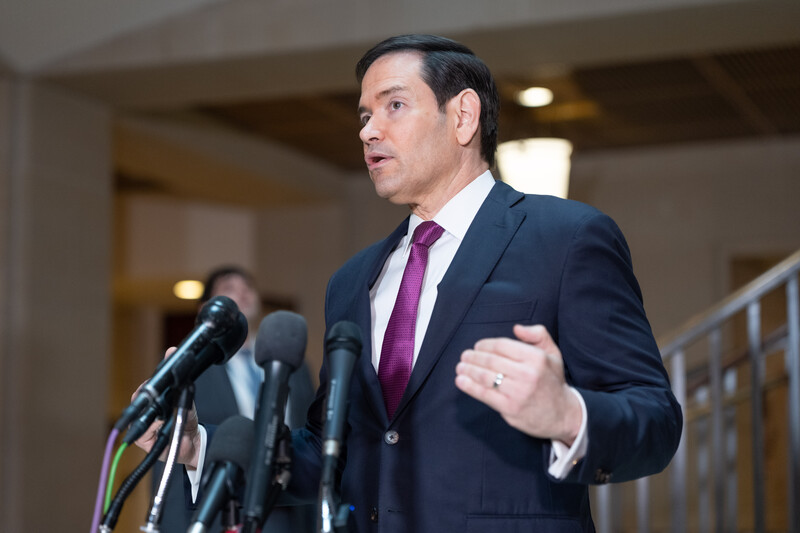
Secretary of State Marco Rubio addressed journalists about the US-Israeli war against Iran, 2 March. Aaron SchwartzSIPA USA

Did Israeli Prime Minister Benjamin Netanyahu drag President Donald Trump and the United States into an unpopular war with Iran on behalf of the historically unpopular actions of his country, following more than two years of genocide in Gaza and decades of apartheid between the Jordan River and the Mediterranean Sea?

On Sunday, Netanyahu, who faces a warrant for his arrest from the International Criminal Court for crimes against humanity, said of the war with Iran: “We are also bringing to this campaign the assistance of the United States, my friend, US President Donald Trump, and the US military. This coalition of forces allows us to do what I have yearned to do for 40 years: Smite the terror regime hip and thigh. This is what I promised – and this is what we shall do.”

He seems to be boasting to his constituents, I delivered the Americans. This sounds very much like a man who hopes to win yet another election having burnished his credentials on occupation, war crimes and genocide.

The very next day, Monday, Secretary of State Marco Rubio cited Israel’s actions as pushing the US to war with Iran.

According to Rubio, “We knew that there was going to be an Israeli action, we knew that that would precipitate an attack against American forces, and we knew that if we didn’t preemptively go after them before they launched those attacks, we would suffer higher casualties.”

CNN’s Anderson Cooper played a different relevant clip from Rubio for New York Times columnist Thomas Friedman and CNN’s Fareed Zakaria later on Monday.

“There absolutely was an imminent threat,” said Rubio. “And the imminent threat was that we knew that if Iran was attacked, and we believe[d] they would be attacked, that they would immediately come after us. And we were not going to sit there and absorb a blow before we responded. Because the Department of War assessed that if we did that, if we waited for them to hit us first after they were attacked, and by someone else, Israel attacked them, they hit us first, and we waited for them to hit us, we would suffer more casualties and more deaths.”

Friedman described the comment as “chilling,” but seemed reluctant to grapple with the suggestion Israel pushed the US into war.

“I can’t even repeat the logic of what he was saying. I mean, if Iran was attacked, I assume by Israel, and then it launched missiles, what, against the continental United States? I mean, that’s a guy looking for an ex post facto rationale. And that’s chilling.”

Zakaria was even more hesitant to grapple with the substance of Rubio’s assertion, declaring it to be anti-Semitic.

“Honestly, it gives credence to the worst kind of anti-Semitic tropes, which say that Israel has gotten us into this war, that we ended up being dragged into this.”

But this is a form of anti-Semitism from Zakaria. Nobody credible is saying that the Jewish people dragged the US into war.

The question is whether the prime minister of Israel – a country which does not represent all Jews – dragged the US toward war. Rubio should not be accused of anti-Semitism for indicating Israel pushed the US into war with Iran if that’s how Netanyahu’s role appeared to him, before he walked it back following an outcry that put the White House on the defensive.

What Rubio can be accused of is delivering a very unclear message.

Later in his remarks, Rubio indicated that the US would have gone to war eventually anyway, though that suggests a total lack of confidence in his own diplomatic skills. And the very next afternoon he was emphatic in denying he said what he said, claiming it was “false” and a misrepresentative clip. “Did we go in because of Israel? … I said, no, I told you this had to happen anyway,” he told journalists was what he intended to convey the previous day.

Yet Republican Mike Johnson of Louisiana, speaker of the House of Representatives, had used very similar language to Rubio’s initial wording in describing why the US had gone to war with Iran. “If Israel fired upon Iran and took action against Iran to take out the missiles, then they [the Iranians] would have immediately retaliated against US personnel and assets.”


During his clean-up press conference on Tuesday, Rubio was clearly trying to catch up with Trump who earlier in the day had tried to alter Rubio’s narrative by insisting, “If anything, I might’ve forced Israel’s hand.”


The president’s walkback of Rubio’s comment is unsurprising. Trump is concerned he might look weak before those MAGA supporters dismayed and furious at his reversal of a repeated campaign pledge not to start new wars.


Incoherence and cautious Democratic criticism

The Trump administration since Saturday has ricocheted wildly in laying out different war-time goals. As Washington Post journalist Josh Rogin said on CNN Monday night, Trump “said we want regime change, we don’t want regime change. He said we know the people that were going to replace the ayatollah, then he said, we killed the people who are going to replace the ayatollah, so we don’t know them. He said, we want the people of Iran to rise up and free themselves and fight the regime, and then he said, we’re happy to work with the regime remnants, if somebody emerges.”

Democratic Senator Mark Warner, the top Democrat on the Intelligence Committee, speaking Tuesday on the PBS News Hour, appeared exhausted and conveyed frustration that the Trump administration had provided four shifting reasons for launching the “war of choice”: Iran’s nuclear capability, the threat of ballistic missiles, the determination to destroy the Iranian navy and regime change.

Karoline Leavitt, the White House press secretary, on Wednesday didn’t present regime change as a reason for the war, but otherwise did note the same goals attributed to the administration by Warner. However, she also cited the additional goal of stopping what she called “the [Iranian] regime’s terrorist proxies in the region.” Her comment ignored the reality that armed resistance groups supported by Iran actually have their own independent goals of fighting Israeli occupation and war crimes.

She denied knowledge of any US involvement in the massacre of scores of Iranian schoolgirls at the outset of the US-Israeli war of aggression, stating instead that an investigation is underway and seeming to indirectly hint at the possibility of Iranian responsibility. She said nothing about possible Israeli involvement.

Asked explicitly in a follow-up question about the possibility of Israeli responsibility for the schoolgirls’ deaths, Leavitt again said nothing about Israel, only reiterating an investigation by the Department of War is taking place.

CNN’s Erin Burnett on Wednesday evening stated it was the US military that had been attacking – “working” was her euphemism – the south of Iran and therefore more likely culpable for that deadly school incident than Israel. Her guest, Ophir Falk, foreign policy adviser to Netanyahu, claimed, “I can tell you 100 percent, 100 percent sure that the American military did not intentionally kill civilians. I can tell you that for 100 percent.”

Seeking to exonerate Israel’s US ally and cast doubt on previous Israeli war crimes in Gaza, Falk added, “from what I understand, those were Iranian missiles that misfired and there’s like about 30 percent of those missiles [that] are misfiring. So that’s not something strange. We saw that a number of times in Gaza,” attributing misfires there to Hamas.

He, too, referred to Hamas as a “proxy” rather than an autonomous group fighting occupation, apartheid and genocide from the tiny strip of land to which over 2 million Palestinians are confined due to the ethnic cleansing carried out by Zionist militias and the Israeli army in 1948.


The US military is certainly slow-walking its investigation of the massacre which occurred on Saturday – even as compelling evidence has emerged indicating US military culpability.
Burnett did not respond to The Electronic Intifada as to whether she would cover the new reports indicating that Falk’s claim about culpability was incorrect. Other journalists at CNN did report on the matter.


Rubio’s remarks parsed


Secretary of State Rubio’s remarks suggesting Israel dragged the US to war in Iran continued to receive intense focus as the week progressed.

Professor John Mearsheimer, co-author of The Israel Lobby and US Foreign Policy, asserted in an email this week describing one of his speaking engagements that “the Trump administration was dragged into this war by Israel and its enormously powerful lobby in the US … It is clear from listening to and reading the discourse on the internet that many Americans understand that this is another war for Israel. Iran was no threat to the US and there was no reason for Trump to attack it.”

Israel lobby group AIPAC was keen to see action taken against Iran before the war even began on 28 February with the assassination of Ayatollah Ali Khamenei. On Saturday, the group praised the joint attack, calling it “decisive action against the terror-supporting regime in Iran.”

Senator Warner also denied that there had been any showing that Iran posed an imminent threat to the United States in the briefings he had attended. Trump has been widely criticized for saying he acted on the “feeling” that Iran was preparing to attack the US first.

Warner stressed that “this is a war of choice brought by Donald Trump.”

Crucially, he added, “In many ways, and I say this as a strong supporter of Israel, the timing of this war was dictated by Bibi Netanyahu. And while I support Israel, I think at the end of the day, when American interests were at stake, when we’ve lost six soldiers at this point, we have to show the direct immediate risks to America. That was not the case.”


Other Democrats also spoke out against Trump’s failure to stand up to Israel.


Democrats were not the only ones speaking out against Trump. Conservative MAGA supporters – past and present – expressed enormous frustration throughout the week, indicating that this was not what they signed up for when voting for Trump.


Republican Congressman Thomas Massie of Kentucky, a target of Trump’s ire due to his efforts to get the Epstein files released, also expressed his opposition. He cosponsored with Congressman Ro Khanna of California a War Powers Act resolution – defeated Thursday with four Democrats crossing party lines – which would have required Trump to go to Congress for authorization of his war with Iran.


What happened to Trump?


I am inclined to believe Rubio and Johnson when in an honest moment they pointed to Israel as having pushed the US into this. But it’s also the case that Trump has previously shown himself willing to stand up to Netanyahu on Gaza, any further Israeli assassination attempts in Qatar and a plan to assassinate Ayatollah Ali Khamenei last year.

What’s changed? Trump, after all, has agency.

Presumably he’s not any more susceptible to pressure from Netanyahu than he was during his first term.

Unsurprisingly, Netanyahu and his ambassador to the US, Yechiel Leiter, both rejected the notion that Israel pushed Trump into war.

Leiter called the claim that Israel “dragged” the US into the war “poppycock” and “nonsense.” Netanyahu termed it “ridiculous.”

Such responses were obviously going to happen.

What seems plausible is that Trump became enthralled by the might of the US military following the quick high of the Venezuela invasion. Trump, seeing this success, became more inclined to accept the arguments of Netanyahu – surely not new to him – that the US military, in conjunction with Israel’s military, could bring a great victory to him in Iran.

Trump’s hubris, newfound infatuation with military “solutions,” belligerent immaturity, lack of historical understanding and his colonial mindset – he wants to help pick a new Iranian leader – all led him to break with his previous self. For all his faults, and they’re legion, Trump had seemed to comprehend that a new war in the Middle East was extremely ill advised as previous ones had been fraught, deadly and enormously expensive.

Today, that all lies in tatters.

More than 1,000 Iranians have since been killed along with six members of the US military. Trump, at this point, seems well on the path to tearing Iran apart and leaving behind a destroyed state. The wider region is also in peril as are numerous economies.

The good sense of Trump’s “no new wars” pledge has been replaced by the bellicose leader many feared was very much inside of Trump all along. That killer instinct won out over a degree of military caution and his fixation on extractive economic growth, particularly for the most wealthy.

Joe Biden’s Democrats buoyed the genocide in Gaza. Now Trump’s Republicans are boosting a war of aggression and war crimes in Iran.

American voters sick of war and the misery it brings to them – and to people around the world – have limited voting options with major parties such as these.


Played?

Democratic voters are pushing presidential candidates on Palestinian rights, but would be wise to consider if they’re being played – as Trump did with his less bellicose supporters – by the likes of California Governor Gavin Newsom who, following the US-Israeli attack on Iran, has rightly questioned US military support for Israel and raised the reality of Israeli apartheid.

After all, just weeks ago Newsom agreed with anti-Palestinian commentator Ben Shapiro that there has been no genocide in Gaza.

The effort to hold Democrats accountable ahead of the 2026 midterms and in the 2028 presidential election remains an uncertain, but crucial undertaking.

Israel punishes Gaza as it attacks Iran


Nora Barrows-Friedman
 6 March 2026
ELECTRONIC INTAFADA

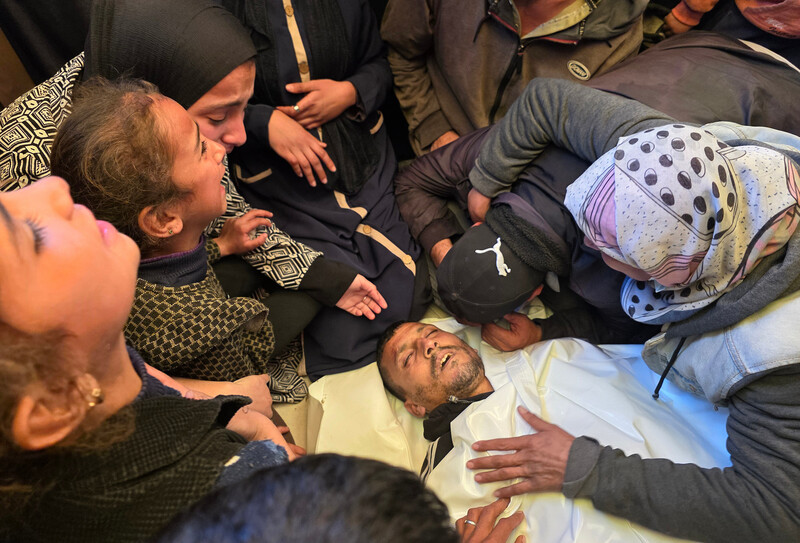
Palestinians mourn over Montaser Samour, who was killed in an Israeli attack on the town of Bani Suheila, east of Khan Younis, on 4 March. Tariq MohammadAPA images

The following is from the news roundup during the 5 March livestream. Watch the entire episode here.

Israeli forces continued to violate the fraudulent ceasefire in Gaza this week, killing Palestinians and reimposing a total closure of the crossings to humanitarian aid, food, fuel and medicine.

In the town of Bani Suheila near Khan Younis on Wednesday, Israeli soldiers shot and killed two Palestinians, Montaser Samour and Maher Samour. According to local news sources, an Israeli military unit abducted the two men and took them across the so-called yellow line, detained them, and shot them.

Reporter Tamer Qeshta captured video footage and eyewitness testimony from residents who said that the Israeli army returned Montaser Samour’s body riddled with bullets, while Maher Samour was shot and killed in what witnesses described as a field execution.

The news agency Anadolu reported that earlier in the day, heavy gunfire from Israeli military vehicles stationed east of the so-called yellow line was reported in those areas near Khan Younis, and that Israeli artillery also targeted neighborhoods east of Gaza City while Israeli gunboats fired toward the coastline.

Last week – early on 27 February – Israeli warplanes targeted a Palestinian police checkpoint at the entrance to the Bureij refugee camp in central Gaza, killing at least one police officer and injuring another, according to the Palestinian interior and national security ministry.

The health ministry in Gaza reported on 4 March that since the so-called ceasefire went into effect nearly five months ago, at least 633 Palestinians have been killed and more than 1,700 have been injured.

In the same time period, the health ministry stated that more than 750 bodies of Palestinians have been recovered from underneath the rubble after more than two years of genocide.

The civil defense corps in northern Gaza stated this week that they had finished a nine-day operation that they called the Dignity of Martyrs campaign, in which they recovered 93 bodies of Palestinians killed in Israeli airstrikes and buried beneath collapsed homes.
In the absence of heavy equipment and fuel to operate machinery, which continue to be blocked by the Israelis, the civil defense workers used their hands and simple tools to retrieve the human remains. The civil defense said that more than 500 bodies remain under the rubble, denying surviving family members the dignity of properly burying their loved ones.


Civil defense worker Mohammad Abu Loay filmed himself and his colleagues working tirelessly in the mountains of rubble, and said that they are working to renew the campaign in order to retrieve all of the bodies in the area.
Crossings closed

In the immediate aftermath of the US-Israeli attacks on Iran that began over the weekend, the Israeli government and military closed all of the crossings into and out of Gaza, further exacerbating the humanitarian and infrastructure crisis.

On Tuesday, the Kerem Shalom crossing in the south of Gaza was partially opened, but all other crossings have remained closed, including the Rafah crossing at the Egyptian border which had been partially reopened since early February and was used for people returning to Gaza and medical evacuations from Gaza.

In addition, according to the Tel Aviv newspaper Haaretz, the Allenby crossing between Jordan and the West Bank has likewise been closed to goods and humanitarian aid following a decision by the Israel Airports Authority, which oversees the crossing.

Writing in the Los Angeles Times this week, Amed Khan of the eponymous humanitarian aid organization the Amed Khan Foundation stated, “For more than five months, 15,000 boxes of children’s cold medicine and other vital medicines meant for kids in the Gaza Strip have been sitting in a warehouse, awaiting approval from Israeli authorities that never seems to come.”

“To Israeli officials, the cold medicine I am trying to deliver is a potential weapon,” he adds.

“Israeli officials fear that Hamas will steal the bottles and transform the small amounts of glycerin in the medicine to make explosives, despite there being no evidence that armed groups in Gaza have done or could do this. Israel has refused to clarify what percentage of glycerin would be allowed, so we can’t even source an alternative that would be assured of clearance. The medicine remains in a warehouse while children in Gaza continue to die because they can’t get basic treatments.”

Meanwhile, the United Nations humanitarian office stated that between the October 2025 so-called ceasefire and mid-February, “an additional 853 people have reportedly acquired new disabilities. This includes 496 new amputations, 186 spinal cord injuries and 171 traumatic brain injuries.”

The UN added that despite rising needs, assistive products – including prosthetics – continue to be classified by the Israeli authorities as “dual use” items, which severely restricts their entry into the Gaza Strip.

During this period, the UN stated, “only 300 artificial limbs were allowed to enter Gaza under the Health Cluster framework, while the cumulative number of amputations since October 2023 now exceeds 5,000, in addition to the 496 new amputations recorded since the ceasefire.”

Shelter materials are also being heavily restricted by Israel. According to the UN spokesperson Stephane Dujarric on Wednesday, if the rainy season continues, hundreds of thousands of people whose homes have been destroyed remain at risk of flooding in their dilapidated tents.

Dujarric said that eight temporary relocation sites have been established in Gaza, but critical materials remain out of reach.

“We and our partners still do not have the tools and the materials to make shelters that are longer lasting,” he said, noting that “the entry of these supplies continues to be heavily restricted, and they’re difficult to find on the local markets.”

Such supplies, Dujarric added, “include toolkits, timber and cement to repair homes, and heavy machinery to clear rubble and to make more space for dignified housing.”


Two men killed in West Bank


Turning to the occupied West Bank, dozens of Israeli settlers attacked the village of Qaryut, near Nablus in the north, on Tuesday.

One of the attacking settlers is a reservist soldier who shot and killed two Palestinian men. Muhammad Taha Muammar was shot in the head and his brother Fahim Taha Muammar was shot in his lower body.

Eyewitnesses reported that armed settlers carrying rifles and iron bars stormed homes in the southern part of the village and opened fire on residents. At least three other people were injured in the attack, according to Middle East Monitor, including a 30-year-old man with a shoulder wound, a 32-year-old man with a knee injury, and a 15-year-old boy who sustained a gunshot wound to the shoulder.

Also on Tuesday, Israeli forces opened fire on a Palestinian man and a child in the Askar refugee camp east of Nablus, on the second consecutive day of invasions and raids by the army.

The Palestine Red Crescent Society reported that its teams treated a 20-year-old young man who was shot in the foot with live bullets, and an 11-year-old child who was shot in the hand.

The army conducted home raids and subjected residents to interrogations, the local Wafa news agency reported.

On Wednesday, Wafa reported that Israeli soldiers shot and injured five Palestinians in Jenin during an invasion in the central part of the city. A medical source at Al-Razi Hospital in Jenin told the news agency that among the injured was a young man who was shot in the back, with the bullet exiting through his chest, leaving him in critical condition.

And in Jerusalem, Israeli occupation authorities closed the Al-Aqsa Mosque compound since the US and Israel launched attacks on Iran, preventing worshippers from entering the mosque and the surrounding courtyards during Ramadan.

Israeli forces have imposed an almost-complete closure of the occupied West Bank since Saturday’s attacks on Iran, locking barriers and gates and closing all checkpoints “until further notice,” as COGAT, the Israeli military’s bureaucratic wing, said on 28 February.


Highlighting reclamation

Finally, as we always do, we wanted to highlight people expressing joy, determination and reclamation across Palestine and around the world.

In Gaza, the paracycling team and mutual aid organization Gaza Sunbirds rehabilitated an area in the Bureij refugee camp in central Gaza to build a volleyball court for the children.
“Fifty two percent of our land is now occupied, We’re here at the yellow line in Bureij camp claiming our streets through sports and tradition! This volleyball court is one of many activities we have planned to bring sports to every corner of the Strip. Ramadan Kareem to you all from Gaza,” the Sunbirds say.

Palestinian man killed in West Bank amid escalating Israeli settler attacks

A young Palestinian man was killed and his brother seriously injured after extremist 
settlers opened fire in the Masafer Yatta area

The New Arab Staff
07 March, 2026

A young Palestinian man was killed and his brother seriously wounded by settler gunfire on Saturday evening as Israeli settler extremists continue to target residents in the occupied West Bank.

The incident occurred after settlers released their livestock on land owned by the residents of the Al-Rakhim area of Masafer Yatta, south of Hebron, activist Osama Makhmara told The New Arab's sister site Al Araby Al Jadeed.

They then opened fire at the two brothers, Amir and Khaled Mohammad Hussein Shanaran, leaving both seriously injured, he said. The Palestinian health ministry later said that Amir died of his injuries.

Meanwhile, Palestinian families began leaving their homes in the village of Al-Aqaba east of Tubas in the northern West Bank on Saturday amid escalating settler attacks in the Jordan Valley.

Hassan Mleihat, the general supervisor of the Al-Baidar human rights organisation, told Al-Araby Al Jadeed that six Palestinian families had packed their belongings and begun leaving the area as a result of the attacks.

Mleihat said that settlers had attacked shepherds in the village on Friday and stole sheep from them.

The departure of families comes a day after 13 other Palestinian families from the Bedouin community of Al-Shakara, east of the town of Duma south of Nablus, were forced to leave their homes under escalating attacks by settlers.

Settler violence against Palestinians in the West Bank has surged since Israel launched its war on Gaza in October 2023.

More than 800 Palestinians have been displaced due to settler attacks this year alone, according to UN data.

Night-time raids by masked settlers have become a common intimidation tactic as the Israeli far-right looks to deepen its control over the territory.

At least 86 instances of settler violence were documented by the UN between 3-16 February, leading to the displacement of 146 Palestinians and the injury of 64.
What role will Iran's Kurds play as the war expands?

Amid conflicting media reports, Iran's Kurds are in the spotlight. What they do next – as allies, bystanders, or proxies – could be key to the war's next phase


Analysis
Winthrop Rodgers
05 March, 2026
THE NEW ARAB

Weeks after suffering a major setback in Syria, the Kurds are again at the centre of another major crisis in the Middle East.

Just days after the Trump administration began its war on Iran, reports emerged that Washington was planning to support ground operations by Iranian Kurdish groups as a way to destabilise Iranian security forces.

This could present a major opportunity to increase Kurdish political influence, but it comes with major risks as well, with the consequences potentially rippling out across the region.
The role of Iranian Kurds

In the days after Israel and the US began their bombing campaign in Iran on 28 February, it became apparent that the Kurdish provinces in western Iran were experiencing a notably high volume of attacks against security forces' infrastructure.

The bombing campaign has extensively targeted facilities belonging to the Islamic Revolutionary Guard Corps (IRGC), the Basij volunteer militia, the intelligence ministry, the police, and border guards.


According to one analysis, more than 125 locations have been hit so far, including major population centres like Sanandaj, Kermanshah, Baneh, and Marivan. It was unclear how many members of the security forces had been killed in the airstrikes or how many civilians had been harmed.

According to an unnamed official who spoke with CNN, the airstrikes would create space for “Kurdish armed forces to take on the Iranian security forces and pin them down to make it easier for unarmed Iranians in the major cities to turn out without getting massacred”. The Central Intelligence Agency (CIA) would provide arms for that purpose.

On the night of 4 March, Western and Israeli outlets reported that ground operations by the Iranian Kurds were underway, which was quickly and categorically denied by multiple political parties and Iraqi Kurds.

“There’s a lot of fake news. The Iranian regime has used this. The Iranian opposition has used this, saying Iran's territorial integrity is in danger. It's used a lot against Kurds,” Dr Allan Hassaniyan, a senior lecturer at the University of Exeter, told The New Arab.

Politically, Iranian Kurds are spread across a wide range of armed parties. They include the Democratic Party of Iranian Kurdistan (PDKI), Kolama, the Kurdistan Free Life Party (PJAK), and the Kurdistan Freedom Party (PAK), along with several other smaller factions.

While all have fought Tehran at one time or another, they have largely avoided active conflict with the Iranian state in recent times.

Historically, they were unable to work together because of their different histories, ideologies, popular bases, and organisational structures, but have recently begun to cooperate more closely.


Politically, Iranian Kurds are spread across a wide range of armed parties. While all have fought Tehran at one time or another, they have largely avoided active conflict with the state. [Getty]

Amid the ‘Woman, Life, Freedom’ (Jin, Jiyan, Azadi) protests in 2023, the parties formed a grouping known as The Dialogue Centre in order to release joint statements and discuss pressing issues.

On 22 February, they took a further step towards unity by announcing the Coalition of Political Forces of Iranian Kurdistan. Initially a five-member group, a holdout Komala faction joined on 4 March. It now represents the broadest range of organised Kurdish parties assembled in recent memory.

“The initiative by itself is really important. It's quite promising for any future development in Rojhelat,” Hassaniyan said, using the Kurdish term for Iranian Kurdistan. However, the new alliance is “very untested”, he warned.

“How it will ultimately work is too early to know. But it should be judged by the fact that it brought so many political parties with different ambitions together,” he added.
Age-old fears of abandonment

Despite the new support from the US and better internal unity, the Kurds’ age-old fear that foreign forces will abandon them remains an important factor. While there are many recent examples, including in January when the US refused to intervene to protect the Syrian Democratic Forces (SDF) from Damascus, the Iranian Kurds have a local example on which to draw.

During World War II, the Soviet Union occupied part of northwest Iran and kept troops there for a period after the war. This protection allowed for the establishment of the independent Kurdish Republic of Mahabad in 1946.

However, it collapsed in the months after the Soviets withdrew and the Shah moved to reassert central authority over the area. Fears about overreliance on outside powers and an understanding of their history will help to guide the parties’ decision-making moving forward.

“The Kurds have their own objectives, which the world doesn't understand. Kurds are not a proxy,” Hassaniyan said.

“We deal with great powers, but the Kurdish movement is not a product of a few days, just because the American and Israelis began to bomb Iran. It is older than the American engagement in the region. It is older than the state of Israel itself,” he added.

Developments in Iranian Kurdistan are having an effect next door in Iraq’s Kurdistan Region as well. The capital of Erbil has been hit by more than 100 rockets and drones fired by Iran and Iraqi militias, mostly aimed at the air base on the north side of the city, which hosts US troops.

As the US-Israeli war on Iran expands, Kurds are facing pressure from all sides. [Getty]

So far, there have only been a few injuries, but debris falling from intercepted munitions is causing damage to civilian homes. On the night of 4 March, the Pope Francis Residential Complex in a Christian part of the city was damaged in an attack. On the same night, a delivery driver was wounded by falling debris.

Iran has also attacked bases inside the Kurdistan Region belonging to PDKI, Komala, and PAK on several occasions since the war started.

Politically, the Kurdistan Regional Government (KRG) must walk a fine line to avoid antagonising any one side.

“The Kurdistan Region is not a part of this war, and it will not be a part of it in the future,” said KRG Deputy Prime Minister Qubad Talabani on 4 March. This was echoed by KRG spokesperson Peshawa Hawramani the following day.

“The Kurdistan Regional Government and the political parties within it are not part of any campaign to expand the war and tensions in the region,” he said.

Nevertheless, the KRG is under tremendous pressure from Washington, Tehran, and other regional governments.

Under pressure from all sides

The apparent plan to back the Iranian Kurdish parties came to light after Axios reported that US President Donald Trump had spoken with Kurdistan Democratic Party (KDP) leader Masoud Barzani and Patriotic Union of Kurdistan (PUK) leader Bafel Talabani.

During those calls, Trump told them that they “must choose a side in this battle - either with America and Israel or with Iran,” according to a PUK official, who spoke with the Washington Post.

This prompted a flurry of calls with Iraqi Kurdish officials from the Iranian and Turkish foreign ministers, who likely pressured the KDP and PUK to prevent the Iranian Kurds from using the Kurdistan Region to launch attacks.

“The KRG will massively pay” for any US operation using the Kurdistan Region, Hassaniyan said. “I feel really sorry for them to be under pressure from all sides.”

At this point, the situation is extremely chaotic, with the US and Israel continuing to pound targets in Iranian Kurdistan, the parties reportedly ready to begin attacks on the ground, and government officials around the world on edge.

Winthrop Rodgers is a journalist and analyst based in Sulaymaniyah in Iraq's Kurdistan Region. He focuses on politics, human rights, and political economy.
Follow him on Twitter and Instagram: @wrodgers2

Edited by Charlie Hoyle
'Bloodiest single day for civilians' in Iran as US-Israel war sees no end

The US-Israeli strikes moved across Tehran, Shiraz, Sanandaj, Maragheh, Lamerd, Minab, Ahvaz, and Tabriz simultaneously, creating a geography of destruction.


Mahmoud Aslan
Tehran
07 March, 2026
THE NEW ARAB

By the morning of 6 March, the US-Israel war had reached a threshold that Iranian authorities described as the bloodiest single day for civilians since the first strikes began. Tehran woke to a sequence of powerful explosions rolling across its districts, the sky darkened by thick smoke rising from residential buildings, hospitals and markets.

Iran's foreign ministry spokesman Ismail Baghaei said that over the preceding five days, strikes had hit schools, hospitals, residential areas, relief centres, and historical and cultural sites, acts he described as flagrant violations of international humanitarian law.

Over 1,300 people have been killed in Iran so far.

What distinguished this day was not only the scale but the spread: the strikes moved across Tehran, Shiraz, Sanandaj, Maragheh, Lamerd, Minab, Ahvaz, and Tabriz simultaneously, producing a geography of destruction that no emergency system was built to absorb at once.

In southern Tehran, strikes hit the densely populated Niloofar Square, killing more than twenty civilians including women and children. In Narmark district, families descended into basements and underground car parks as buildings shook and sirens cut through the morning without pause.


Yasir al-Qazvini, 38, an academic at the University of Tehran, was near Niloofar Square when the strike landed.

"The rubble covered the streets and people were running with no clear direction, carrying the wounded on their shoulders, while drones circled above the city," al-Qazvini described to The New Arab.

Around him, he said, "the screaming of children and women mixed with the sound of the explosions, as if the entire city was living in a continuous state of panic."

He walked out onto a main street. "The damaged houses were scattered around me, the shattered windows exposing the contents of homes destroyed completely. People were sitting on pavements trying to calm their children, while ambulances arrived late because the roads were broken and blocked with rubble," he said.

The hospitals could not keep pace.

"The medical staff at Gandhi and Khatam al-Anbia were working without stopping, trying to deal with hundreds of casualties in a very short time," al-Qazvini said.

Gandhi Hospital, Khatam al-Anbia, Motahhari, Vali Asr, the Trauma and Burns Hospital, and Shahid Rajaei Heart Hospital all sustained direct damage or were overwhelmed beyond capacity. Schools including Shahid Mahallati Primary School and Hedayat School in Narmark became makeshift shelters for the displaced. The Amena Neonatal Care Centre was also struck.

Nasrin Hosseini, an activist from Narmark, was in her neighbourhood when the explosions began.

"What followed was a violent blast near the building that shook the walls and sent the children into screaming panic," Hosseini said.

In the streets, she said, "the scene was devastating: families running carrying their children, some carrying the wounded on their shoulders, while others tried to protect their homes from flying debris. Ambulances could not get through quickly, and the wounded waited on pavements or in the shade."


The children, she said, did not understand what was happening, adding,"But the fear in their eyes drove us adults to move fast, to find any protection we could."

The health centre where she works filled with casualties, saying, "The medical teams worked without stopping, with shortages of medicine and equipment that worsened as the hours passed."

Alireza Majidi, a researcher at the Bonyan Centre for Political Studies, tracked the strikes from inside the capital through the morning.

"The residents were trying to survive, carrying the wounded, dragging children away from the destruction, while the bombardment continued at short intervals, without mercy. Workplaces closed. Schools stopped. Hospitals filled immediately," Majidi said.

In Narmark, he said, "families were running between damaged buildings searching for any safe place. The children were screaming, the women were wailing, the men were trying to protect their families. Even public transport stopped. The streets were full of rubble and wreckage."

What he saw, he said, made the intent unmistakable, saying, "It was clear that these were not isolated military strikes but part of a broader strategy to paralyse the major cities and spread terror among civilians."


Subscribe now to The Weekly Roundup

Qom: smoke above the families

In Qom, Iran's foremost religious centre, strikes hit the city's outskirts and sent smoke rising above neighbourhoods crowded with young families. Shops closed. Residents stayed indoors or moved in small, quiet groups.

Ruhollah Razavi, an activist based in Qom, watched from his balcony as the columns of smoke rose from a nearby district.

"The streets were almost empty of movement, except for some neighbours who rushed to help the wounded and take them to medical centres. Children were crying, women were screaming searching for their loved ones, while fear seemed to have frozen on everyone's faces," Razavi told TNA.

Phone lines went down across large parts of the city. A few metres from his home, rockets struck a densely populated residential area, shattering windows and filling the neighbourhood with smoke and the smell of fire.


"I and some neighbours tried to gather families in the basements, but the explosions were continuous, there was no time to think or plan," Razavi added.

The scene, he said, was unlike anything he had expected to witness at home, saying, "It resembled what I used to see in news reports from conflict zones abroad. Seeing it with my own eyes, in my own city, gave me a deep feeling of helplessness."

A neighbour arrived carrying an injured child, blood covering the small body, the mother's screaming rising above the sound of the explosions.

"I felt completely powerless. There was no nearby hospital that could receive all the wounded, and the ambulances were not enough," Razavi concluded.
Related

Shiraz, Lamerd and Fars province

Hundreds of kilometres south of the capital, Shiraz experienced a sudden quiet before explosions near military bases and warehouses killed dozens of civilians and wounded hundreds more. The city's main market was struck by shrapnel. Schools and public facilities closed immediately.

In Lamerd, in Fars province, an airstrike hit a sports hall, killing 18 children and teenagers. Thirty-five more civilians were killed in separate strikes across the province.

In Minab, a primary school was struck directly. Staff managed to evacuate some children before the drone arrived, but most of the building was destroyed. Hazrat Abu al-Fadl Hospital in the same province sustained damage, forcing medical teams to manage the emergency ward under conditions of acute shortage.
Sanandaj and Maragheh, Ahvaz and Tabriz

In Sanandaj, strikes hit a densely populated residential complex, killing civilians and causing severe structural damage. In Maragheh, more than 27 people were killed. Residents rushed to carry the wounded to field hospitals, trying to shield children and women from the next wave.

In Ahvaz, Abu Dhar Hospital and Baqaei Hospital were both struck. Civilians trying to reach the city's hospitals found streets crowded with the displaced. In Tabriz, a series of explosions near military sites sent residents fleeing toward the city's outskirts in search of relative safety.

The Arg fortress and Golestan Palace in southern Tehran sustained damage. The Grand Bazaar in Tehran and Baharestan Square market were partially destroyed. Medical relief centres and children's parks were struck. The diplomatic police headquarters was hit twice.

Expanding beyond borders

Iran launched missiles and drones against American and Israeli targets across the region under the operation it named "Truthful Promise 4". Tehran stated that its response would continue for as long as strikes on Iranian civilians and cities continued.

The United States and Israel maintained that their operations targeted military infrastructure. President Trump called for Iran's "unconditional surrender", while Israel announced what it called "a new phase" of operations.

Seven days in, the strikes have produced a civilian landscape of basements used as shelters, schools converted into displacement centres, and hospitals working beyond capacity with shrinking supplies. Electricity and water networks have failed across parts of multiple provinces. Communications have been cut in entire districts.

Alireza Majidi did not end the day with analysis. He ended it with a sentence that needed none: "The war is no longer a distant abstraction for civilians. It has become a daily reality lived by every Iranian citizen, and its deep impact on mental health and society as a whole will be felt for decades."

This story was published in collaboration with Egab.