Monday, March 16, 2026


IEA releases details of historic oil reserves release member shares

IEA releases details of historic oil reserves release member shares
IEA member countries will release 400mn barrels from emergency reserves — the largest coordinated stock draw in the agency’s history — as governments seek to stabilise oil markets disrupted by the Middle East conflict and threats to shipping through the Strait of Hormuz. / bne IntelliNews
By Ben Aris in Berlin March 16, 2026

The International Energy Agency released details of the contribution by members to the “largest release of oil reserves in history”  that it announced on March 11 to calm the oil market and bring down prices.

The IEA said that members would release up to 400mn barrels, but according to a press release on March 15 the US, Asia, and Europe have so far committed to a total release of 271.7mn barrels of crude – two thirds of the originally announced 400mn barrels, not counting parallel releases of oil products from state-controlled reserves.

The US has the largest reserves in the world, with a total of 370mn in its Strategic Petroleum Reserves (SPR) in its tanks and has committed to release 172.2mn barrels.

Tokyo announced on March 16 that it would start releasing oil too from its reserves of 500mn barrels, if privately controlled reserves are included.

The ​government has asked Japan's refiners to use the released crude, which will reduce the national ⁠reserves by 17%, to secure domestic supplies. It is not known how much of the oil will go ​to a global release of 400mn barrels Reuters reports.

Any potential release from 12 million barrels ​jointly held in Japan by Saudi Arabia, United Arab Emirates and Kuwait would be in addition to the announced 80 million barrels, ‌the ⁠Ministry of Economy, Trade and Industry says, Reuters reports.

Tokyo will start releasing 15 days' worth of private-sector oil on March 16 and then a month's worth ​of oil from the state reserves later this month, according ⁠to METI.

The US is self-sufficient, able to cover its entire domestic demand with its shale oil production. Japan is almost entirely dependent on oil imports, sourcing 90% from Gulf producers and another 4% from Russia.

The Straits of Hormuz are gradually reopening after Tehran introduced an informal permits-for-passage system that has seen exports rise to about 10mn b/d, almost all of which is going to Asia. However, Iran is only granting permits to tankers belonging to “friendly countries” including China, India and Bangladesh. The Western-aligned Japan does not belong to this group and has in effect been entirely cut off from Gulf supplies for the foreseeable future.

Fatih Birol, executive director of the IEA, said member states had now finalised their commitments under the collective action announced earlier this month.

“IEA countries have now confirmed their contributions to our largest ever oil stock release,” Birol said. The move “brings unprecedented additional volumes of oil to the market from March 16 onward,” he added, though he cautioned that “opening the Strait of Hormuz is vital for a return to stable flows.”

While the IEA’s announcement after “Wild Monday" that saw oil prices soar to over $120 a barrel last week initially calmed markets, after Iran hit three tankers with rockets prices rapidly rose again and are currently trading over $100 a barrel again. Russian Urals blend crude has been a big winner from the chaos and the discount on Russian Urals oil has fallen to zero from more than $20 only two weeks ago that is expected to bring the Kremlin a large windfall this year.

According to implementation plans submitted by IEA member countries, those in the Asia-Oceania region will begin releasing oil immediately, while stocks held by member countries in Europe and the Americas will start entering the market from the end of March.

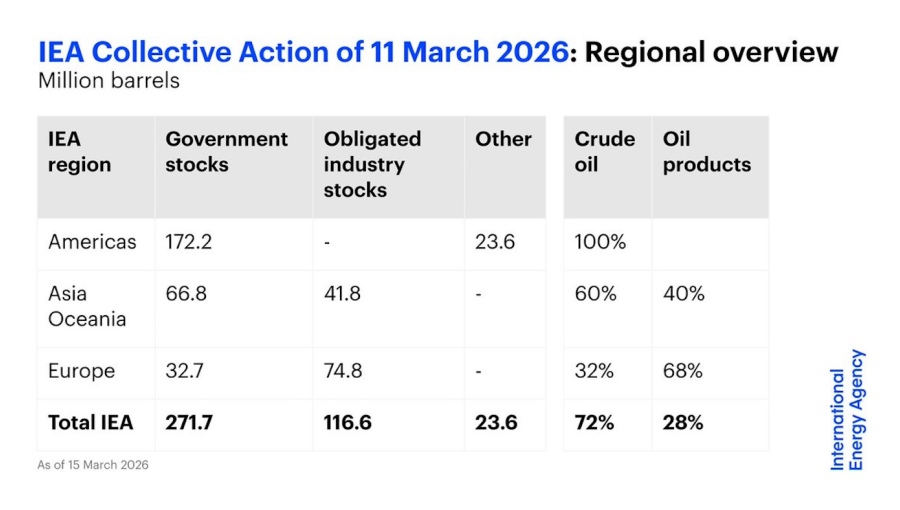
Data published by the IEA shows that the largest contribution will come from the Americas, which plan to release 172.2mn barrels of government-held crude and a further 23.6mn barrels from other reserves. Asia-Oceania countries will contribute 66.8mn barrels of crude alongside 41.8mn barrels of oil products, while European members will release 32.7mn barrels of crude and 74.8mn barrels of refined fuels.

In total, the release will consist of approximately 271.7mn barrels of crude oil and 116.6mn barrels of oil products, with around 72% coming from government-controlled reserves and the remainder from mandated industry stocks, according to the IEA.

The intervention marks the sixth time the IEA has coordinated a collective release of strategic reserves since its creation in 1974. Previous emergency actions were taken in 1991 during the Gulf War, in 2005 following Hurricane Katrina, in 2011 during the Libya crisis and twice in 2022 after Russia’s invasion of Ukraine.

The agency warned that the scale of disruption currently facing global oil markets is unprecedented. “The war in the Middle East is creating the largest supply disruption in the history of the global oil market,” the IEA said.

While the emergency release is intended to cushion markets from immediate shortages, the agency stressed that restoring shipping through one of the world’s most critical energy chokepoints remains essential. The purpose of strategic reserves is to cushion shocks, not to replace offline production, experts say.

“Adequate insurance mechanisms and physical protection for shipping are key to the resumption of flows,” the IEA said, adding that “the most important factor in ensuring a return to stable flows is the resumption of regular transit of shipping through the Strait of Hormuz.”

The Trump administration promised to reopen the Straits of Hormuz quickly, but has been caught out by the ferocity and effectiveness of Tehran’s resistance. The US Navy has been getting “daily requests” from commercial shipping companies for escorts through the Straits, but has turned them all down as the passage is “too dangerous to traverse.”

The Pentagon has ordered almost its entire fleet to converge on the Gulf, including 5,000 Marines, in what appears to be preparation for a land invasion in an effort to reopen the straits. Those ships are due to arrive sometime at the end of this month.

German politicians accuse oil firms of fuel price gouging

16.03.2026, dpa


Photo: Christoph Soeder/dpa


Politicians from Germany’s ruling coalition have criticized oil companies over high fuel prices after a meeting of a government task force on Monday.

The meeting was attended by the German heads of BP and Shell, as well as Andreas Mundt, the head of the Federal Cartel Office, along with representatives of industry associations and consumer groups.

Armand Zorn, deputy parliamentary leader of the Social Democrats (SPD), said the oil industry had failed to give satisfactory answers about how prices are set.

"The oil companies were unable to credibly explain how their pricing works and, above all, how the differences compared with other European countries can be explained," he said.

Sepp Müller, deputy parliamentary leader of the conservative CDU/CSU bloc, voiced similar criticism, accusing oil companies of “price gouging." The bloc consists of Chancellor Friedrich Merz's Christian Democratic Union (CDU)and its Bavarian sister party, the Christian Social Union (CSU).

SPD transport policy spokeswoman Isabel Cademartori said industry representatives were unable to explain why increases in crude oil prices are passed on to consumers immediately, while price drops are not.

"The question of whether the companies expect record profits for 2026 also remained unanswered. Such behaviour after the burdens that German consumers have to bear is outrageous," she said.

Politicians had accused oil companies of “ripping off” consumers after fuel prices rose sharply in the wake of the US-Israeli military campaign on Iran.

Christian Küchen, head of the Association for Fuels and Energy in Berlin, rejected the accusation, saying profit margins had not changed since the start of the war.

Fuel prices in Germany, he said, are set transparently based on wholesale petrol and diesel prices.


Coffee prices driven up by heavy rainfall in world's largest grower


16.03.2026, dpa


Photo: Jens Büttner/dpa


Heavy rainfall is increasingly threatening coffee production in Brazil, the world's largest coffee producer, a study by the World Weather Attribution research initiative said in March.

The downpours could encourage the spread of diseases on Arabica plantations in the state of Minas Gerais and affect the harvest, the analysis said.

Brazilian coffee beans are preferred by many roasters around the world and known for their nutty and light chocolate flavour profile with a soft taste thanks to their low acidity.

However in recent years, extreme weather has led to a 15% to 20% decline in coffee production and pushed up world market prices, the World Weather Attribution analysis said.

Minas Gerais in south-eastern Brazil is the centre of Brazilian coffee production and the most important producer of Arabica coffee.

Brazil is the world's largest coffee producer overall and, according to the Brazilian coffee exporters' association Cecafé, the largest buyer imported 5.4 million 60-kilogram sacks of Brazilian coffee in 2025.

Extreme rainfall at the end of February triggered severe landslides in the region. Authorities said 72 people were killed and thousands had to leave their homes. In the city of Juiz de Fora, February was the wettest since records began, according to government data.

The devastating landslides were a taste of the years ahead: More intense heavy rainfall events are expected to become more frequent with global warming, the World Weather Attribution scientists warned.

The research initiative regularly examines the influence of climate change after extreme weather events. The researchers were unable to establish a clear influence on the latest rainfall in Brazil.

However they warned that the intensity of such rainfall would increase by an estimated 7% or more if the Earth warms by 2.6 degrees compared with pre-industrial times by the end of the century.

"The scale of this tragedy is immense and shows how vulnerable our hillside communities are as the planet continues to warm," said climate researcher Regina Rodrigues of Brazil's Federal University of Santa Catarina.

Rainfall in Brazil is not the only factor increasing coffee prices, and Vietnam, another major exporter, has also recorded declining output in recent years. At the same time demand for coffee has steadily risen in China.

According to the United Nations, the Earth is heading for 2.8 degrees Celsius of warming by the end of the century under current global climate policy. If countries implemented everything they have set out in their national climate plans, the calculations suggest warming of 2.3 to 2.5 degrees Celsius by the end of the century.


Taylor Swift hits can be ‘dangerous’ for driving, a new study says

16.03.2026,  dpa


Photo: Daniel Deslover/Zuma Press/dpa

Your car stereo could be turning your commute into a crash countdown — one wrong tempo and you’re either drifting into micro-sleep or flying into reckless mode. Is your favorite singalong secretly “dangerous,” and which chart-toppers are getting called out?

By Howard Cohen, Miami Herald

Can the music you listen to in the car increase your risk for crashing?

It’s all about tempo, according to a study released by California attorneys’ group Sweet James, based on research from Australia’s Bond University. And Taylor Swift may not be good for your driving, according to the research.

Here’s what the study found:

How music’s pace affects listeners

Researchers, using data from the National Sleep Foundation, AAA, National Highway Traffic Safety Administration and SongBPM, made the following determinations:

  • Slow tempo. Below 80 beats-per-minute (BPM). At this speed, music can help drivers spot danger and reduce anxiety. These are good things. But sluggish songs may cause drowsiness or “over-calmness” on long drives and worsen attention levels.
  • Medium tempo. Between 85 and 110 BPM. Aim for this “sweet spot” for long-distance driving, researchers said. Music at this pace can improve a driver’s level of alertness and reduce fatigue without causing overstimulation.
  • Fast tempo. Above 120 BPM. Fast-tempo music keeps drivers alert and can relieve fatigue, but it can also backfire over time. Zippy songs can increase mental strain, cause distraction, overstimulate and lead to risky driving behavior.
  • Too slow and you risk drowsy driving. A 2024 study by the AAA Foundation for Traffic Safety estimated that about 18% of all fatal crashes in the United States between 2017 and 2021 involved a drowsy driver.

Calm sets in, but so does the kind of over-relaxation that leads to micro-sleep — periods of four to five seconds — which, at highway speeds around 60 mph, can careen a car the length of a football field while the driver is basically asleep at the wheel.

Celine Dion’s “Titanic” smash, “My Heart Will Go On” is in the danger zone at 60 BPM.

Speaking of danger zone: Is your remedy to pick a faster tempo song to reduce fatigue and keep you awake? That can work. Especially in the short term if it gives you time to find a safe spot to pull over and have a nap. Just over 18% of surveyed drivers said they opted to put on upbeat music to thwart road sleep, according to the Sweet James report. About 30% said they’d opt to pull over for a restorative shuteye.

But putting the pedal to the metal (music) can cause drivers to become distracted, overstimulated and lead to risky moves like speeding and running red lights and stop signs.

Kenny Loggins’ “Top Gun” tune “Danger Zone” is 157 BPM. Tom Cruise may not be able to deal with the aftermath.

Songs deemed safer

Songs like AC/DC’s “Back in Black” fall on the safe side. We were surprised by that one, too, but music measuring sites such as BPM Supreme clocks the Australian hard rockers’ enduring 1980 classic at 92 BPM. That’s well under easy listening superstar Neil Diamond’s “Song Sung Blue” that slips in just under the wire at 110 BPM.

The Bee Gees, whose three Gibb brothers all made Miami Beach their home during and after their run of dance classics from “Saturday Night Fever,” find all of their smashes from that 1977 movie in this safest list: “Night Fever” at 109 BPM. “More Than a Woman” at 106 BPM. “How Deep Is Your Love” at 105 BPM. “Stayin’ Alive” at 104 BPM.

Queen’s “We Will Rock You” stomps at 81 BPM. That’s fine. Toto blesses the rains down in “Africa” at 92 BPM, according to Song BPM. OK, too. These websites list beats-per-minute for thousands of popular songs.

Other medium tempo tunes in the safer 85-110 range include:

“ABC,” Jackson Five. 95 BPM.
“Ain’t No Mountain High Enough,” Diana Ross. 97 BPM.
“Rock Your Body,” Justin Timberlake. 100 BPM.
“You’re So Vain,” Carly Simon. 106 BPM.
“Tití me preguntó,” Bad Bunny. 107 BPM.
“Think,” Aretha Franklin. 110 BPM.

Songs deemed too slow

These songs are under 80 BPM, in the range researchers say can yield drowsiness over time.

“At Last,” Etta James. 60 BPM.
“Desperado,” Eagles. 60 BPM. Conversely, Linda Ronstadt’s “Desperado” cover from the same early-‘70s era is too fast for prolonged driving at 119 BPM, according to SongBPM.
“Turn the Page,” Metallica’s cover of the Bob Seger oldie. 60 BPM.
“Lose Control,” Teddy Swims. 72 BPM.
“What Was I Made For,” Billie Eilish’s “Barbie” theme. 75 BPM.
“Every Breath You Take,” The Police. 79 BPM.

Songs deemed too fast

These songs are too darned fast, over 120 BPM.

Two South Florida superstars, Gloria Estefan and Jimmy Buffett, whose signature tunes each earned them recognition by the National Recordings Registry of the Library of Congress, find themselves in this category. Her “Rhythm Is Gonna Get You” and his “Margaritaville” both are 125 BPM. Two of their other staples also are frisky. Estefan and the Miami Sound Machine’s “Conga,” is at 120 BPM and Buffett’s “Cheeseburger in Paradise” hits 140 BPM.

Songs with these perky tempos can reduce fatigue but lead to dangerous driving, according to the study.

“I’m Every Woman,” Whitney Houston. 120 BPM. Chaka Khan’s original version is a slightly better bet at 114 BPM.
“You Give Love a Bad Name,” Bon Jovi. 123 BPM.
“Damn I Love Miami,” Pitbull & Lil Jon. 124 BPM.
“Aperture,” from a new album Harry Styles previewed at a Miami pop-up store. 128 BPM.
“Don’t Go Breaking My Heart,” Elton John & Kiki Dee. 130 BPM.
“Thunderstruck,” AC/DC. 136 BPM.
“(Don’t Fear) The Reaper,” Blue Öyster Cult. 142 BPM.
“Wake Me Up Before You Go-Go,” Wham! 163 BPM.
“Sweet Home Alabama,” Lynyrd Skynyrd. 196 BPM.

How recent Billboard Top 10 fared

Researchers concluded that seven of the Top 10 hits on a recent March 2026 Billboard Hot 100 chart sit above 120 BPM or dangerously close to the threshold.

No. 1: “I Just Might,” Bruno Mars. 103 BPM. Safe.
No. 2: “Choosin’ Texas,” Ella Langley. 112 BPM. Safe.
No. 3: “Man I Need,” Olivia Dean. 119 BPM. Borderline.
No. 4:”Risk It All,” Bruno Mars. 171 BPM. The most dangerous current smash. How can that be? “Risk It All,” a bolero ballad, is about 86 BPM (per BPM Supreme). Some sites list 171 BPM because automated tools sometimes “double” the tempo by counting fast rhythmic subdivisions instead of the slower beat most listeners feel. That’s why a song like Fleetwood Mac’s “Landslide” can show up as both 74 BPM (too slow) and 159 BPM (too fast) on different sites.
No. 5: “Ordinary,” Alex Warren. 112 BPM. Safe.
No. 6: “Opalite,” Taylor Swift. 125 BPM. Dangerous.
No. 7: ”Stateside,” PinkPantheress ft. Zara Larsson. 123 BPM. Dangerous.
No. 8: “Golden,” HUNTR/X. 103 BPM. Safe.
No. 9: “The Fate of Ophelia,” Taylor Swift. 124 BPM. Dangerous.
No. 10: “Back to Friends,” sombr. 93 BPM. Safe.

Global art market sees uptick despite crises and uncertainty


12.03.2026, dpa


Despite crises and geopolitical uncertainties, the global art market returned to growth in 2025, according to the annual Art Market Report issued on Thursday by Swiss bank UBS and Art Basel.

"The global art market returned to growth in 2025, led by renewed confidence at the high end, with dealer sales up 2% year-on-year and public auction sales rising 9% by value," UBS and Art Basel said in a statement.

The annual report, which is considered the authoritative analysis of the global art market, said 2025 marked a turning point after several years of decline and moderate growth.

Compared to many other industries, the global art market has shown remarkable resilience, it added.

A review of published gallery activity based on media announcements showed that despite high-profile gallery closures in 2025, there was no evidence that closures outpaced openings overall.

Gallery launches represented 42% of reported activity, compared with 25% closures, underscoring continued adaptation and resilience within the dealer sector.

In terms of gender representation, women artists comprised 50% of total artists among primary market galleries and 45% across all dealers.

Works by women accounted for 37% of sales by value, up from 28% in 2018, although disparities persist at the highest revenue levels, according to the report.

The United States remained the world’s largest art market, accounting for 44% of global sales, followed by the United Kingdom with 18% and China with 14%.

France increased its share to 8%, remaining the largest art market within the European Union.

Sales in Germany fell by 10%, while Italy recorded a 2% decline, according to the report.

Over 600,000 left Germany's two main Christian churches in 2025

16.03.2026 dpa


Photo: Daniel Löb/dpa


More than 600,000 German Catholics and Protestants left the church in 2025, official figures revealed on Monday, as Germany's two main Christian churches continued to haemorrhage members.

The Protestant Church in Germany (EKD) reported some 350,000 members quit last year, while some 307,000 people turned their backs on the Catholic Church.

While the numbers represented a decline in dropouts for both churches compared to the previous year, they do not include the thousands of deaths that are responsible for a drop in membership each year, with the number of new members far too low to offset the trend.

The latest decline means that the total number of Catholics in Germany has dropped to 19,2 million, accounting for 23% of the population, according to the German Bishops' Conference.

In 2024, the Catholic Church in Germany still had 19.7 million members.

Meanwhile, some 17.4 million Germans were members of a Protestant church last year, down from 17.9 million in 2024.

Heiner Wilmer, the newly elected chair of the German Bishop's Conference expressed regret at the high number of people leaving the church.

"Despite all the upheavals," he urged the faithful "not to bury the head in the sand" and search for ways "to ensure that being a Christian can lead to greater acceptance in society today."

FEMICIDE

Civil war in Sudan is a never-ending humanitarian crisis

Jennifer Holleis
March 15, 2026
DW

Almost three years into Sudan's war, drone attacks and sexual violence show no signs of relenting. Could intensified international efforts influence the situation?

Women and girls bear the brunt of increased drone attacks three years into the war in Sudan
Image: Marwan Ali/AP Photo/picture alliance

Nearly three years into the war in Sudan, civilians are increasingly exposed to aerial attacks. In recent days, waves of drone strikes killed dozens of people across the White Nile state and the Kordofan region. Earlier this week, a drone struck a pickup truck carrying mourners to a funeral in West Kordofan, reportedly killing about 40 people, many of them women, the news agency AFP reported. Neither of Sudan's warring sides — the Sudanese Armed Forces (SAF) nor the paramilitary Rapid Support Forces (RSF) — nor any of their allies, claimed responsibility.

According to an analysis by Armed Conflict Location & Event Data, an independent global monitor, at least 198 drone strikes were launched by both sides in January and February.

"The uptick in drone attacks demonstrates that, despite wars and tensions elsewhere in the Middle East, supply for the warring parties continues," Hamid Khalafallah, an independent Sudanese policy analyst, told DW.

Khalafallah said the violence, including drone warfare, would likely increase in the coming months. "Both warring parties will be trying to make as many advancements on the battlefield as possible during the current dry season as moving troops and equipment is more expensive and complicated once the rainy season starts in June or July," he said.

Fighting is largely concentrated within Kordofan, a strategic region separating army-held northern and central Sudan, including Sudan's capital, Khartoum, from RSF-controlled areas in Darfur and parts of the south.

The war in Sudan broke out around April 15, 2023, when a power struggle over the integration of the RSF into the Sudanese Armed Forces escalated. Global aid organizations estimate that up to 250,000 people have been killed so far. A thorough death tally is unobtainable given the ongoing fighting and limited access to conflict areas.

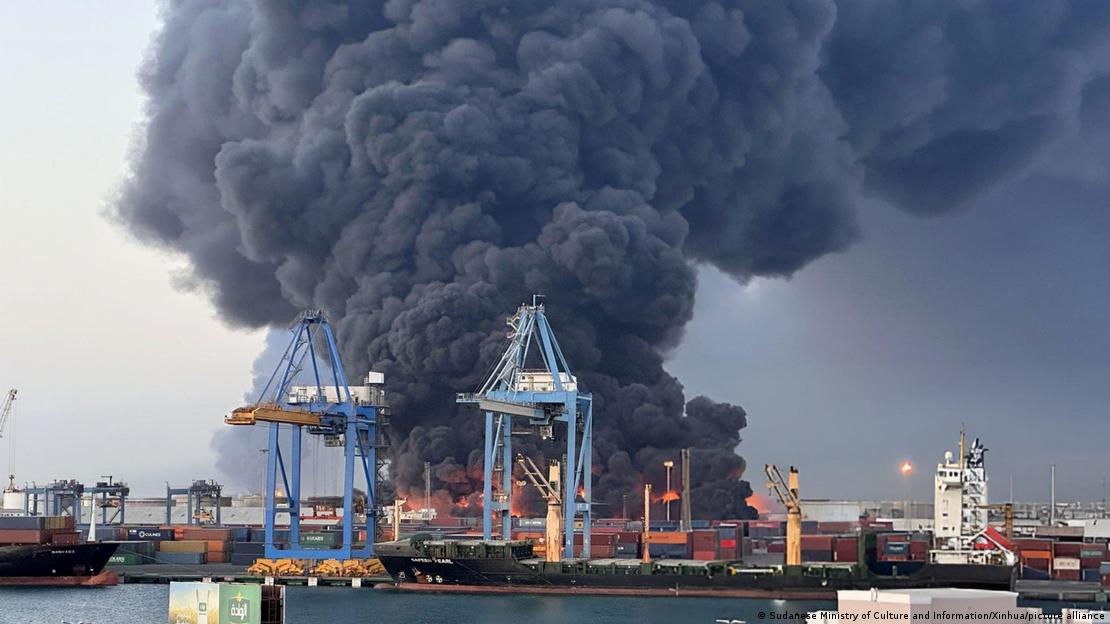
Drone attacks have shifted from strategic targets to civilians across Sudan, monitors say
Image: Sudanese Ministry of Culture and Information/Xinhua/picture alliance

'Prolonged humanitarian crisis'

According to the UN refugee agency, as well as international aid organizations on the ground, the war in Sudan has also led to the world's largest mass displacement, with up to 14 million people internally and externally displaced. Fighting also triggered the largest humanitarian crisis, including mass killings and widespread sexual violence. According to UNESCO, more than 12 million women and girls — out of a population of just over 50 million people total — are at risk of gender-based violence in Sudan.

The World Health Organization warned in January that more than 20 million people in Sudan are in need of health assistance, with cholera, malaria and dengue outbreaks spreading across all 18 states as the health, water and sanitation systems collapse.

According to rights groups, both sides have committed atrocities that may amount to war crimes and acts of genocide. Despite the ongoing violence, including the RSF's mass killing of civilians in the Darfur city of el-Fasher in late October, Sudan remains the most-neglected global crisis, several surveys found.

"Sudan is facing a deep and prolonged humanitarian crisis that is increasingly disappearing from international attention," said Samy Guessabi, Sudan country director at the aid organization Action Against Hunger.

In the past three years, Guessabi said he had witnessed the cumulative impact of armed conflict, mass displacement and economic collapse. "What we see every day is not only hunger, but a progressive erosion of resilience as families are skipping meals and selling their remaining assets," he added.

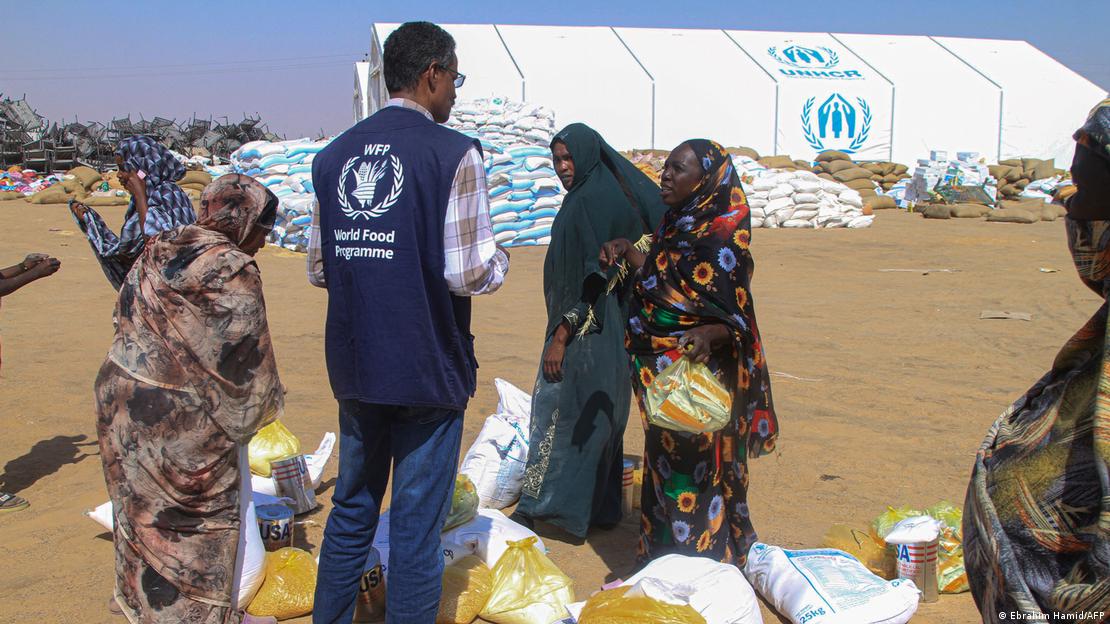
Sudanese women are both survivors of this conflict and leaders of community-driven emergency aid and peace efforts, observers say
Image: Ebrahim Hamid/AFP


Women and girls bear the brunt


Guessabi said women and girls were bearing a disproportionate share of the suffering. "When families cannot feed their children, they make unthinkable choices," Guessabi said, "and we hear about early marriage, driven less by tradition than by desperation."

About 19 million children are out of school in Sudan, according to UNESCO.

"Thousands of girls need opportunities to continue their education as long periods of interrupted education increase social risks, including high rates of child marriage," Salma Suliman, founder of the Sudanese Taja organization, an NGO that focuses on the protection of women, told DW. "This casts a dark shadow on the future of the coming generations," Suliman said.

Michelle D'Arcy, Sudan country director of the Norwegian People's Aid organization, told DW that women have stepped forward in extraordinary ways. "Across Sudan, women-led emergency response rooms and grassroots networks have organized community kitchens, distributed food and provided psychosocial support," she said. She added that women volunteers are often the people who keep communities alive.

D'Arcy said it was key that the international community support civilian peace efforts in Sudan. "This includes diplomatic pressure for a ceasefire, and engagement of a broad range of Sudanese civilian actors using nonviolent tools working for peace," D'Arcy said.


International efforts, agendas

Over the course of the war, several rounds of peace negotiations initiated by the so-called Quad — the United States, Egypt, Saudi Arabia and the United Arab Emirates — have largely failed.

The US and EU had long ago imposed sanctions on both the RSF and the SAF, as well as on members of both warring parties. Earlier this week, the US designated the Sudanese Muslim Brotherhood a Specially Designated Global Terrorist organization and said it plans to list it as a Foreign Terrorist Organization.

"The Sudanese Muslim Brotherhood (SMB), composed of the Sudanese Islamic Movement and its armed wing — the al-Baraa Bin Malik Brigade (BBMB) — uses unrestrained violence against civilians to undermine efforts to resolve the conflict in Sudan and advance its violent Islamist ideology," the US State Department said.

Khalafallah said the act was both significant and insignificant.

"It is significant because it officially confirms that these groups committed war crimes and terrorized citizens," he said. It also creates a huge problem for the SAF, he added, as they will have to reassess their ties with allied Islamist factions.

Khalafallah said the designation would not necessarily keep the Islamists from governing Khartoum in the future.

He put the designation in the context of the Israeli-US war on Iran and the repercussions for the Gulf states. "The US aims to foster ties with the United Arab Emirates," he said.

Though Egypt and Turkey are firm supporters of the SAF-backed government led by General Abdel Fattah Burhan, the United Arab Emirates is widely seen to be the main backer of the Rapid Support Forces under General Mohammed Hamdan Dagalo, even though Abu Dhabi has firmly denied any involvement.

"It all has very little to do with protecting the Sudanese people on the ground," Khalafallah said.

Edited by: M Gagnon


Jennifer Holleis Editor and political analyst specializing in the Middle East and North Africa.
Instagram accounts glorify Nazi Germany, distort Holocaust

March 14, 2026
DW

In Instagram posts, Nazi perpetrators are glorified, while their war crimes and role in the Holocaust are omitted. Victims' organizations call it an "attack on the dignity of the survivors."

Screenshot of an Instagram post with a photo of an SS officer sporting SS insignia
Image: Instagram

Numerous accounts on the social media platform Instagram have been publishing glorifying photos of the Wehrmacht and SS officers from the period of National Socialism (NS) under Adolf Hitler. The accompanying texts highlight the individuals' bravery, courage, and strategic skill. Their participation in war crimes and in the Holocaust, the mass murder of Europe's Jews, goes unmentioned. All of this has been documented in a DW investigation.

These posts reach millions of people around the world. Many users respond to the photos of the war criminals with approval, adding heart and applause emojis. Any form of critical engagement is absent from these publications.

The dissemination of hate symbols, generally, does not seem to have motivated Meta or its platform, Instagram, to flag or remove the corresponding content and accounts.

DW's research shows that photos were repeatedly posted in which, for example, the insignia of the Schutzstaffel (SS) are visible. The SS was the central instrument of repression and terror in the Nazi state. It was chiefly responsible for the crimes committed in German concentration camps, such as Auschwitz, Majdanek and Treblinka. In the Auschwitz extermination camp alone, the Germans murdered around 1.1 to 1.5 million people — most of them Jews from across Europe, as well as Sinti and Roma, Poles, prisoners of war, political opponents and other minorities.

"I am shaken by this mass of Nazi content," Eva Berendsen told DW. Berendsen works for the Anne Frank Educational Center, which aims to raise awareness of antisemitism and racism. The institution commemorates Anne Frank, the Jewish girl murdered by the Nazis, whose world‑famous diary is one of the most significant documents on the horrors of the Nazi era.

"The photographic material is Nazi propaganda that ends up online decontextualized — meaning without any explanation of what one is actually seeing. Young users are initially left completely on their own with this content," Berendsen said.

It is particularly troubling, she said, that many Instagram users are so young that historical subjects such as National Socialism and the crimes of the Holocaust have not yet been taught in their school classes. "We have to assume that young people today are likely to have their first contact with the topics of Nazism and the Holocaust through social media," Berendsen said.

When young men are repeatedly shown images of supposedly heroic soldiers, "these posts have the potential to reinforce such images of masculinity and masculine fantasies," according to Berendsen.


Is Instagram becoming young people's first encounter with Nazism?

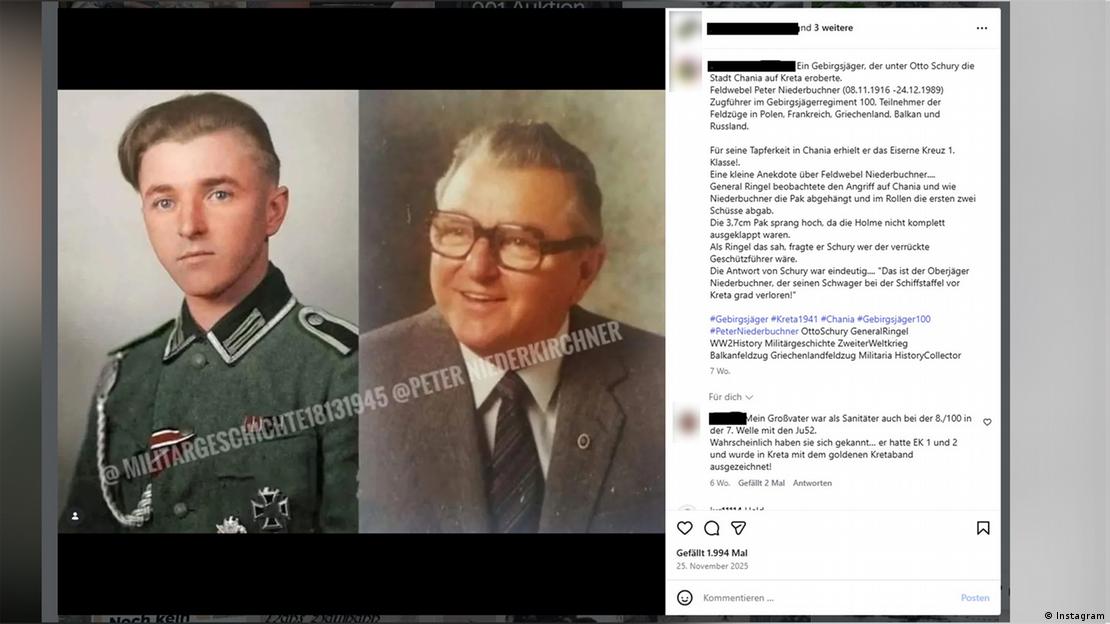
One example is a post featuring two photos of a mountain infantryman of the German Wehrmacht. It shows him as a young soldier in uniform and as an older man in a suit. The accompanying text reads: "A mountain infantryman who, under Otto Schury, captured the city of Chania on Crete ... For his bravery in Chania he received the Iron Cross 1st Class!"

Instagram post about a Wehrmacht soldier: The accompanying text mentions his bravery – his war crimes in Crete are not mentioned
Image: Instagram


Nowhere is there a mention that the conquest of the Greek island of Crete was followed by terror against the civilian population: 300 Jewish residents of the city of Chania were deported to German concentration camps as a result of the occupation. Only four are believed to have survived.

Another post (this article's main photo) shows Waffen-SS officer Kurt Meyer in uniform with SS runes on his collar. The accompanying English text praises Meyer's supposed courage: "His classmates joked that he was as tough as a tank." The text does not mention that Kurt Meyer was a convicted war criminal. After the German invasion of Poland in 1939, he shot 50 Jews.

Who, then, are the people responsible for these accounts? DW's research could not identify a clear structure: the accounts were registered in various countries, including Germany, Pakistan, the United States, and Turkey. Some appear primarily focused on maximizing their reach on Instagram, while others seem more strongly driven by ideology.

The fake Auschwitz images distorting Holocaust history 12:25

Historian: Unbearable distortion of history


Historian Johannes Hürter from the Institute of Contemporary History in Munich is also deeply critical of the posts.

"When convicted war criminals such as SS General Kurt Meyer ('Panzer‑Meyer') and other heavily implicated individuals are placed on a pedestal, this is, from an academic perspective, an almost unbearable distortion of history," Hürter wrote to DW. He sees it as "a relapse into a completely uncritical view of history that one had believed to be long overcome."

Hürter links the flood of Nazi glorification and trivialization on social media to the current rise of right‑wing extremist attitudes and networks: "Right‑wing extremists in all countries have always expressed their admiration for the armed forces of Hitler's Germany, and they now increasingly use this uncritical glorification of the Wehrmacht, the Waffen‑SS, their history, and their symbols as a code of self‑affirmation and communication among themselves."

The deputy chairman of the International Auschwitz Committee, Christoph Heubner, levels serious allegations against Mark Zuckerberg's Meta corporation and other tech billionaires in response to DW's findings: "I believe that many of these founder figures feel very close to the attitude reflected in such posts: elitist leaders," Heubner said in an interview with DW. He accused them of harboring an authoritarian mindset.

For the survivors of Auschwitz and for those affected by the Holocaust, the Instagram posts are a slap in the face: "They are an attack on their dignity. And they assign them a role — namely the role of the losers of history and of the victims. They are the victims who have not yet been finished off. And that is, in this sense, a murderous way of treating people, because it stigmatizes them emotionally and is simply inhumane."


Meta's evasive response to Holocaust trivialization


DW also contacted Meta about the findings of its investigation and included a list of the questionable posts.

The written response came from a PR agency in Hamburg — and it did not answer DW's questions. The staff member thanked DW for forwarding the Instagram posts: "These are currently still under review." The agency also referred to background information from Meta's Community Standards.

Four days after Meta's response, almost all of the posts DW had forwarded as examples were no longer accessible, including the photo of Kurt Meyer in an SS uniform. Why Instagram allowed them in the first place and how the company intends to deal with such content going forward remain unanswered questions.

This article was originally published in German.


Hans Pfeifer DW reporter specializing in right-wing extremism@Pfeiferha


The BKA, 'Germany's FBI', turns 75
March 14, 2026
DW

Founded in 1951, the Federal Criminal Police Office (BKA) was dominated for decades by men with Nazi pasts. Today, the BKA is a central pillar of Germany's security architecture — even on the international stage.


The BKA celebrated the 75th anniversary of its founding this week
Image: Björn Trotzki/IMAGO

Transparency and self-criticism were long taboo at Germany's Federal Criminal Police Office (BKA). It wasn't until 2007 that the agency, Germany's central federal policy force, began to subject its own history to scrutiny.

Anyone visiting the BKA's website these days, as it marks its 75th anniversary, can read statements such as: "Until the late 1960s, the agency was shaped primarily by leaders who had been socialized under National Socialism. It was not until the generational shift beginning in 1969 that a fundamental transformation took place."

Nazis shaped German security forces

Founded on March 15, 1951 at its headquarters in Wiesbaden in the state of Hesse, the BKA was not an isolated case. Whether it was the judiciary, the military, or spy agencies the Office for the Protection of the Constitution (BfV) and the Federal Intelligence Service (BND) — all of the arms of the government in the early years of the new Federal Republic were riddled with former Nazis.

Former members of the National Socialist German Workers' Party (NSDAP) and the so-called Schutzstaffel, or SS, were responsible for the establishment of the BKA. Three-quarters of a century after its founding, the BKA has grown more open about its past.

"The BKA has been able to make an essential contribution to combating crime, i.e., maintaining internal security and preserving peace in a free, democratic Europe," a statement on its website reads.

The BKA headquarters in Wiesbaden, pictured in 2000
Image: dpa/picture alliance

In federally structured Germany, the BKA coordinates the policing of threats to national security in cooperation with the 16 state police offices. Its focuses are on political and religious extremism, drug trafficking, international terrorism and cybercrime. The BKA is also responsible for protecting important individuals — from the chancellor and federal president to state guests.

One of the biggest tests for the agency was the era of left-wing terrorism that began in 1968, when the Red Army Faction (RAF) kidnapped and murdered several public figures well into the 1990s. Victims were often high-ranking business executives, perhaps most famously the president of the employers' association, Hanns Martin Schleyer.

More funding, more personnel

Politicians responded to the expansion of these various threats with a massive expansion of the BKA, which currently has a budget of €1.24 billion ($1.43 billion). Between 1970 and the turn of the millennium, the agency's staff nearly quadrupled — from around 1,200 to more than 4,500. Over the following 25 years, the number continued to rise sharply to just under 9,400 employees today. The decisive factor in this was the Islamist terrorist attacks of September 11, 2001, in the US.

Since then, Germany has continuously strengthened all its security agencies. The Joint Counter-Terrorism Center (GTAZ), established in Berlin in 2004, plays a central role in this effort. There, the BKA sits at the same table with experts from state criminal investigation offices, the federal police force responsible for border security, the Customs Criminal Investigation Office, the intelligence services, and the Federal Office for Migration and Refugees (BAMF).

Chancellor Merz (center) alongside Interior Minister Alexander Dobrindt (left) and BKA chief Holger Münch (right) at the event celebrating 75 years of the BKA
Image: Soeren Stache/dpa/picture alliance


Espionage, sabotage, right-wing extremism

The Office of the Federal Prosecutor General (GBA) also has a seat at the GTAZ, an agency that has the power to commission the BKA to conduct investigations, usually concerning suspected terrorism, espionage, and sabotage. BKA findings frequently lead to indictments and convictions. One famous case that attracted international attention was the murder of a Georgian man found shot dead in the heart of Berlin in 2019. The court found that the perpetrator, who was sentenced to life in prison, had acted on behalf of the Russian government.

Another focus of the BKA is the fight against right-wing extremism. When the terrorist group known as the National Socialist Underground (NSU) was uncovered in 2011, the BKA took over the investigation, which found that the NSU was behind a series of murders that had long remained unsolved. Nine men with immigrant backgrounds and a female police officer had been murdered by the NSU.

A parliamentary investigation at the time described the fact that the NSU was able to remain undetected for 13 years as a "total state failure," a criticism directed primarily at Germany's security agencies, including the BKA. One consequence was the establishment of the Joint Center for Countering Extremism and Terrorism (GTEZ) in 2012. The similarity in name to the GTAZ is no coincidence, as police and intelligence agencies work closely together in both centers.

The BKA is well-connected internationally as well, particularly with the European Union's police agency, Europol. Key areas of focus include the fight against terrorism, organized crime, child abuse, as well as human trafficking. The BKA also has liaison officers in more than 50 countries. As a rule, they are organizationally integrated into German embassies abroad.

AI at the BKA


On the occasion of its 75th anniversary, the BKA looks back on an eventful history and faces greater challenges than ever in today's digital age. At a ceremony in Wiesbaden this week, Chancellor Friedrich Merz promised to further strengthen the BKA and other security agencies.

"Internal security and external security can no longer be separated," the chancellor declared.

Criminals at home and abroad are also increasingly using artificial intelligence (AI), which is why BKA President Holger Münch has long been calling for more powers. Interior Minister Alexander Dobrindt intends to grant him this wish and enable the use of the US surveillance software Palantir, despite concerns about becoming dependent on a US company.

The Left Party warns against mass surveillance

There are also plans to deploy an AI-based program for biometric facial recognition, something that the opposition Left Party in the Bundestag has warned against: "This type of digital expansion is hardly compatible with European law and endangers everyone's freedom," said Clara Bünger, the party's domestic policy spokesperson.

There have already been several lawsuits against the BKA over the issue. The Federal Constitutional Court most recently ruled in 2024 that the surveillance of contact persons of suspects is partially unconstitutional. The BKA Act has since been reformed to better protect the rights of those potentially affected.

This article was originally published in German.


Marcel Fürstenau Berlin author and reporter on current politics and society.