Monday, March 16, 2026


Five Losers in the War on Iran


by  | Mar 16, 2026


There may be no winner in the war on Iran. But, although it is Iran that is under attack, they will not be the only losers. This war, fought without legal reason or political or security justification, will have myriad losers. Here are five.

The first loser of the war on Iran is the Iranians. Iran has an “inalienable right to a civilian program that uses nuclear energy for peaceful purposes” as a signatory to the Nuclear Non-Proliferation Treaty. They signed the JCPOA nuclear agreement that closed all roads to a military nuclear program. The International Atomic Energy Agency (IAEA) repeatedly verified that they were in full compliance. They were currently negotiating further voluntary limitations on their civilian nuclear program, which would have assured the world of the impossibility of diverting their civilian nuclear program to a military one. Nothing was illegal or unusual about Iran’s nuclear or missile programs.

But bombs fell on Iranians. The people of Iran live in daily terror. Their cities are being bombed, and their infrastructure and water desalination plants have been devastated. Nearly 20,000 civilian buildings have been damaged, including dozens of hospitals and schools. Their leader has been assassinated. Over 1,300 civilians, hundreds of them children, have been killed.

The second country that will pay a price for the war on Iran is Ukraine. Just as Russia is thought to be massing for a large late spring offensive, its war economy is being pumped full by the rising cost of oil; which was caused by the effective closing of the Strait of Hormuz and the resultant easing of sanctions on Russian oil, while Ukraine’s supply of weapons is being threatened. Russia will have the money to continue launching missiles and drones, and Ukraine will lack the missiles to defend against them.

The U.S. is firing an incredible number of interceptors to defend against Iranian missiles and drones. The war on Iran is using up the defensive weapons that would have been sent to Ukraine. “The biggest and most immediate impact will be on air defense,” Jennifer Kavanagh, Senior Fellow & Director of Military Analysis at Defense Priorities, told me, since “Ukraine depends almost entirely on the United States for air defense, especially Patriot air interceptors and AMRAAMs.” Ukrainian President Volodymyr Zelensky has said, “We understand that a long war… and the intensity of the fighting will affect the amount of air defence equipment we receive.”

In this war of choice, the U.S. has made a bad choice, and it too will be a loser in this war. The U.S. will lose the war in Iran in four ways.

The first is in the disappointment of all of their goals. Trump likes strikes that are quick and precise and in which no Americans are killed. He has a strong aversion to quagmires and endless wars. Iran was intended to be such a strike. The hope was that the assassination of Supreme Leader Ali Khamenei would cause a quick collapse of the Iranian regime and that massive force would lead to a quick victory, total surrender and capitulation to all American demands.

The plan failed. The people did not rise up and take to the streets to bring down their government. The regime did not collapse. The appointment of Mojtaba Khamenei, the son of the assassinated leader, as the new Supreme Leader presents instead a picture of survival and continuity.

The war is increasingly looking like it won’t be a quick one. The Trump administration is having difficulty defining an end goal or finding an off-ramp. They face the real possibility, unimagined when the war was being planned, of a long war from which the U.S. walks away; struggling to articulate a goal that presents the outcome as victory, leaving a destroyed Iran with the regime in place to rebuild its missile and civilian nuclear programs.

The second is the unforeseen damage the U.S. military has sustained. The Iranian military has shown an ability to survive and adapt that has surprised U.S. military planners. U.S. defense officials say the Iranian military is adjusting its tactics to adapt to American strategy. General Dan Caine, the chairman of the Joint Chiefs of Staff, has acknowledged that “they’re adapting” and that the U.S. has had to adapt its plan in response.

Unlike the strike in Venezuela, in which Trump boasted that no American servicemen were killed, American soldiers have been killed and many have been wounded. At least seventeen U.S. sites have been damaged, including eleven military bases, and some of them have been damaged more than once. Iran has hit structures housing American military personnel. Iran has successfully targeted air defense and communications systems, including radars used to track and intercept Iranian missiles and drones.

Iran is not winning the battle. But their resilience and successes suggest that the Trump administration underestimated Iranian preparedness and the damage the U.S. military would sustain.

The rate at which the U.S. is using up air defense assets is also exposing vulnerabilities outside the Iranian theatre. Kavanagh told me that the war on Iran would disrupt not only the ability to support Ukraine, but “U.S. security assistance to other allies and partners in Europe and Asia.”  She said that “other allies will also suffer, not only from delays in air defense shipments but also from issues like anti-ship and other precision-guided missiles.”

Iran has successfully targeted the United States’ Terminal High Altitude Area Defense system, or THAAD, air defense systems that are used to intercept Iranian missiles. They claim to have struck at least four THAAD radars. The U.S. is struggling to replace them. They have already been forced to pull parts of a THAAD system from South Korea, over the concern and “opposition” of the South Koreans, in order to transfer them to Jordan to replace a THAAD radar that was damaged by a drone strike. The U.S. has also already had to transfer Patriot interceptor missiles from the Indo-Pacific and other regions to the Iranian theatre.

The U.S. is also suffering a loss of credibility. Twice, the U.S. has bombed Iran during negotiations, appearing to the world that they were treacherously using negotiations as a cover for preparing for war. Suspicion of America as a broker could harm future negotiations, including negotiations between Ukraine and Russia, and weaken America’s ability to project its influence diplomatically.

The fourth loser in this war is the environment. The effect on the environment is an understudied aspect of war. Wars clear forests and devastate and contaminate ecosystems. They account for 5.5% of greenhouse gas emissions.

But the war on Iran may prove unprecedented in its effect on the environment. The March 7 bombing of Iranian oil facilities has caused black rain, or raindrops full of oil and pollutants, leading the World Health Organization to issue a warning that toxic pollutants in the air could lead to respiratory problems. The WHO says there was a “massive release” of toxic compounds into the air. The “very, very toxic” pollution can lead to “long-term consequences” and can even be fatal. There is also the risk of contamination to plants, soil, air and water.

The other serious loser in the war on Iran is the world, international law and nuclear non-proliferation. The bombs dropping on Iran finally nullified the pretense of international law. It exposed the hypocrisy of American hegemony and damaged America’s leadership. The U.S. launched an illegal war on Iran while condemning Russia for its war on Ukraine. While Iran has implored the United Nations to enforce international law, with few exceptions, the Western world has been silent. Quick to arm Ukraine, the Western world has barely quivered as the U.S. defies international law and bombs Iran. The leader of the international order has written the eulogy for international law, and has openly moved on to a rules-based order that is nothing more than an instrument of U.S. foreign policy.

The actions of the U.S. and its European partners have also irreparably damaged nuclear non-proliferation. It is not Iran that violated the Nuclear Non-Proliferation Treaty (NPT): it is the United States. Iran did not fail the NPT because Iran is within its rights to enrich uranium for civilian purposes. The NPT failed Iran by not condemning the bombing of Iran and its nuclear sites, and by collapsing the non-nuclear umbrella that promised to protect Iran.

Iran was bombed while being in complete compliance with the NPT. Those bombs blew up Iran. But they also blew up international law and the Nuclear Non-Proliferation Treaty.

There will be no winner in this war. But there will be many losers.

Ted Snider is a regular columnist on U.S. foreign policy and history at Antiwar.com and  The Libertarian Institute. He is also a frequent contributor to Responsible Statecraft and The American Conservative as well as other outlets. To support his work or for media or virtual presentation requests, contact him at tedsnider@bell.net.


The War Without an Exit: Why Quick Victories in Iran Are Illusions

by  | Mar 16, 2026 |

The notion of a short and decisive war has always been a temptation for politicians. This notion holds a promise of quick victories, low costs, and clear triumphs. However, the course of history over the last few decades has indicated that wars do not always follow this pattern. The current conflict between the United States and Iran seems to be a clear manifestation of this reality, as the early indications of a quick victory are not supported by the fundamental realities of the conflict.

The fundamental reason why a quick victory might not be possible in this conflict is not related to military capabilities. The military capabilities of the United States are overwhelming, as they are far ahead of Iran in terms of technology, logistics, and global reach. In the early phases of this conflict, the U.S. forces, along with the Israeli military, struck thousands of targets in Iran, targeting its missile capabilities, naval forces, and military installations. According to experts, the initial objective of this campaign was to destroy the Iranian naval capabilities, missile systems, and nuclear facilities, as well as weakening Iranian influence in the region.

However, military success does not automatically translate into a corresponding level of political achievement. As many a strategic analyst has noted, “destroying capabilities does not necessarily translate into regime collapse, political transformation, or stability.” While military instruments are effective at destroying capabilities, they are not as effective at creating alternatives.

This tension represents the heart of the strategic problem facing the United States.

As a matter of fact, even before the war began, American intelligence assessments reportedly indicated that military intervention was not likely to result in a change of regime in Iran because the Iranian system was so resilient, and there was no opposition to replace it.

Such intelligence assessments are part of a larger trend in modern warfare, wherein systems under military pressure tend to become more, not less, cohesive. Leadership changes occur rapidly without necessarily altering the fundamental structures of power. In this current conflict, the speed with which a new leader was installed into the Iranian leadership structure was a manifestation of this trend.

For the strategist who hopes to achieve a rapid level of regime collapse, this level of resilience represents a formidable obstacle.

Another factor affecting the prospects of a swift victory is the symmetry of the strategic goals and objectives. While the US might hope for a decisive victory in the form of destroying the military capability of the adversary or changing its politics, the same is not necessarily true for Iran. In fact, it is possible that the Iranian strategy is simply to survive.

In an asymmetric war, survival is victory.

The Iranian strategy seems to be one of survival and waiting it out, and analysts are observing how the escalation of the war is less dependent on the ability of the two adversaries to match each other in conventional warfare and more dependent on the ability of one of the adversaries to make the conflict unsustainable for the other. This means the war is now one of endurance rather than one of firepower.

A prime example of this is the energy sector and how it can be considered a part of the strategic environment. The current situation with the Strait of Hormuz, through which one-fifth of the world’s total oil supply is shipped, has already caused economic concerns for the world as a whole. Analysts predict that if the current situation is not rectified, the price of oil could rise significantly, causing economic consequences for the world as a whole.

Similar concerns are now coming from financial institutions as well, with some predictions indicating that the conflict could have significant effects on the world’s markets and economic growth, thus showing the economic consequences of the escalation of the conflict.

The economic consequences of the conflict create a whole new aspect of the strategic environment of the war. The conflict is no longer limited to military facilities and vessels; it is now affecting global trade routes and economic growth, as well as the politics of nations.

History has shown that conflicts of such nature are rarely brief.

The United States has faced similar strategic conundrums in the past. The wars in Iraq and Afghanistan both began with rapid military successes that destroyed pre-existing governments within a matter of weeks. However, the political and security aftermaths took years to resolve. The conclusion should not be drawn that military force is ineffectual in these situations but rather that military victories do not necessarily equate to political success.

The case in Iran is more complex.

Iran is a nation with a large population, a diversified military infrastructure, and a multitude of regional ties. Its strategy is based on decentralized networks and forms of coercion. As a result, this conflict is less susceptible to a knockout blow that a more conventional military campaign would seek to achieve.

Even if a significant portion of Iran’s military infrastructure is destroyed, the political and strategic aftermaths remain uncertain. A nation with a population of nearly ninety million people, a well-entrenched political infrastructure, and decades of experience dealing with sanctions has a tremendous ability for adaptation.

The lack of clarity on the endgame makes the situation even more complex. Analysts have posed a basic question several times in this context: How does the war end?

If the endgame is the destruction of certain military capabilities, then the endgame is measurable. However, if the endgame is political transformation, then the endgame is not so clear.

Without clarity on the political endgame, the military operations could expand in scope and complexity, and the strategic endgame becomes increasingly ambiguous.

This ambiguity has led to the so-called ‘mission creep,’ where the scope of the operations expands in response to the latest developments.

This is the reason why many strategic analysts are skeptical about the possibility of a quick end to the war.

Wars are not won based on the number of targets destroyed or the speed at which they are destroyed. Wars are won based on the political staying power, the economic fallout, the regional fallout, and the staying power of the two parties involved.

In this respect, the real strategic issue is not who has the greatest firepower in the early stages of the war.

The more relevant issue is who has the greatest staying power.

If the conflict does develop into a test of staying power – using military force, economic pressure, and regional containment – then the idea of a rapid and decisive victory could be an illusion.

History has consistently shown that wars that are perceived as simple at the outset tend to become complex once they are underway.

The current conflict has the potential to prove this maxim. It is easy to envisage a short war. It is much harder to envisage a peace.

Jenny Williams is an independent American journalist and writer with an interest in foreign policy, human rights, and peace. She aims to provide thoughtful commentary on U.S. engagement abroad and its consequences. Contact: jennywilliams9696@gmail.com.


Former U.S. Military Chief of Staff Blasts U.S. War Crimes in Middle East


Retired Colonel Lawrence Wilkerson said on the independent news channel Democracy Now! that the current U.S. administration, in a matter of days, has committed war crimes in Iran on a scale he has not seen in his lifetime.

He told viewers that, not for the first time, the U.S. had initiated an illegal war, violated the U.S. Constitution and international law, but that the attacks on Iran, and in the midst of talks, have eclipsed all previous violations.

As Chief of Staff to Colin Powell in the lead-up to the Iraq war, he admitted that he came from an administration of George W. Bush and Dick Cheney that committed war crimes. He said that back in 2003, he and Colin Powell realised that not only had they signed up to a war in Iraq that wasn’t necessary, they had signed up to a President of the United States who made torture public policy. But Wilkinson believes the attacks on Iran surpass in magnitude the U.S.’s previous atrocities:

We have bombed civilians relentlessly. We have bombed a school. We have bombed a hospital. We have struck installations in Iran’s oil capacity that has put black poison over more than ten million people. We are essentially not bombing missile sites and war materiel. We’re bombing people.

These are all war crimes. And one wishes, with fond hope, that some day we might be called before the Bar of Justice to account for these war crimes. We took a lesson from the IDF, who continue [to commit crimes] in Gaza and Lebanon.

Wilkerson said he told a senior editor of the Washington Post that he thought “abominable the lies that the American mainstream media, both video and press, were telling the American people, as it puts them in jeopardy in a real substantive sense, because the American people have no way of judging just how foolhardy, how stupid, how unwise, how in breach of international dictum and rules this war is. Iran was no threat to the U.S.” He added that U.S. servicemen were not only in harm’s way, but they risked being liable for war crimes at any time in the future.

Three decades ago, the illegal war against Iraq was thought up by a clique of Zionist fanatics in the Pentagon, and sold to the American public through a mass propaganda campaign. Just as in Britain, Tony Blair’s government concocted a ‘dodgy’ intelligence dossier to inveigle a gullible parliament into voting for an invasion of Iraq under false pretences.

Hundreds of thousands of Iraqi deaths; five-thousand plus coalition fatalities; traumatised veterans with life-changing injuries; a destroyed Iraq; and a British weapons inspector whose death to this day remains ‘a mystery’, have not dented the British parliament’s appetite for aiding and abetting war crimes, this time against Iran, under the same tapestry of lies of phantom imminent threats. Nor is the British mainstream media squeamish in its role of purveyors of distortions.

As explained by Alison Weir, founder of If Americans Knew, four-star general Wesley Clark and previous Supreme Allied Commander (1997-2000) visited the Pentagon in 2001 shortly after 9/11 and, on his way out, went to say hello to members of the Joint Staff who had previously worked for him, when he was discreetly taken aside by a general who showed him a memo on which was written ‘Israel’s hit list’ of seven countries in the Middle East to be taken down, damaged and destabilised in five years. These were: Iraq, Syria, Lebanon, Libya, Somalia, Sudan and Iran. Speaking in 2007, Wesley Clark described how dumbfounded he was, and explained that the U.S. had been taken over by a group of people through a ‘policy coup’ led by Paul Wolfowitz, Dick Cheney, Donald Rumsfeld and half a dozen others.

Today, with those countries in tatters under the heel of the U.S., Iran stands alone in the region in its resistance to U.S.-Israeli destruction. It decries Israel’s apartheid regime and genocide in Gaza and supports the armed resistance groups of Hezbollah and Hamas. Its stance on justice for the Palestinians springs not from any religious tribalism, because Iran is predominantly Shia and the Palestinians are mainly Sunni, but from a position of principle.

The Arab states, on the other hand, pay lip service to the Palestinians’ rights to freedom and self-determination, whilst cooperating in practice with Israel. The Gulf kingdoms that host American bases operate under a U.S. protection racket whereby they sell their oil to the U.S., buy weapons from the West and receive ‘protection’. This ‘protection’ has recently proved as imaginary as the pretext for war itself, as Iran’s retaliatory strikes quickly disabled the early-warning radar system in Qatar, at America’s largest airbase in the Middle East.

It is also worth noting that damage to the Gulf States’ oil refineries attributed to Iran was immediately denied by Iran, and Mossad bomb teams were reportedly arrested in Qatar and Saudi Arabia, poised to carry out false flag attacks on Arab capitals, to sow confusion and set countries against each other.

Any empire built on destruction, subjugation and inflicting harm on others, is ultimately doomed to failure. The U.S.-Zionist empire uses bribery, blackmail and bombs to achieve its aims. But what has it left when these fail?

Iran has spent over a century battling against foreign domination, carefully observing U.S. and Israeli tactics, and the collapse of Iraq. It has the resolve to endure beyond what the U.S. will be able to sustain physically, financially and politically, and may well be the U.S.-Zionist empire’s nemesis, and that of the West.

Serena Wylde a prolific writer on topics that relate to Palestine and beyond. Read other articles by Serena.
Warning of potential nuclear risk in Iran echoes Putin’s Ukraine war rhetoric
A senior adviser to US President Donald Trump has warned that escalating conflict between Israel and Iran could lead to “truly catastrophic” nuclear weapons use. / Image by jürgen ihle from Pixabay
By bne IntelliNews March 16, 2026

A senior adviser to US President Donald Trump has warned that escalating conflict between Israel and Iran could lead to the “truly catastrophic” scenario of nuclear weapons use, drawing renewed attention to how nuclear threats have increasingly surfaced in geopolitical crises since Russia’s invasion of Ukraine.

David Sacks, Trump’s adviser on artificial intelligence and cryptocurrency policy, raised the possibility during an appearance on the All-In podcast, where he cautioned that further escalation in the Middle East could spiral beyond conventional warfare.

“This is a good time to declare victory and get out, and that is clearly what the markets would like to see,” Sacks said, warning that continued escalation could bring unpredictable consequences.

“There is a faction of people,” he added, largely within the Republican Party, “who want the war to escalate. I just want to lay out, I think, some of the risks of what an escalatory approach could entail.”

Among those risks, Sacks said, was the possibility of Israel considering its most extreme military option if it faced severe damage during a prolonged conflict.

“Israel could get seriously destroyed,” he said. “And then you have to worry about Israel escalating the war by contemplating using a nuclear weapon.”

He warned that such a step would be “truly catastrophic”, adding that there are “a lot of really frightening scenarios about where escalation could lead”. 

Nuclear pressure campaign

The comments highlight how nuclear weapons have increasingly featured in the rhetoric surrounding major conflicts in recent years, most prominently during Russia’s war against Ukraine.

When Russian President Vladimir Putin launched the full-scale invasion of Ukraine in February 2022, his televised address contained thinly veiled nuclear threats aimed at Western governments that might intervene.

“Russia will respond immediately,” Putin said at the time, warning that “the consequences will be such as you have never seen in your entire history.” Days later he ordered Russia’s nuclear forces into a “special mode of combat duty”. 

A November 2025 commentary published by the Atlantic Council, titled ‘Vladimir Putin’s endless nuclear threats are a sign of Russian weakness’ argues the Kremlin uses nuclear signalling as a strategic tool. “Russian nuclear sabre-rattling has remained a prominent feature of the war,” said the report, authored by Stephen Blank, a senior fellow at the Foreign Policy Research Institute. Blank noted that the threats have “made plenty of headlines but have only partially succeeded in deterring Western countries” from helping Ukraine. 

report published by the UK parliament in December 2024 concluded that Moscow used nuclear threats as part of a broader pressure campaign against Western support for Kyiv.

“President Putin has increasingly used the threat of the Russian nuclear arsenal to pressurise the West over its military and diplomatic support for Ukraine,” the report said.

As part of that campaign, Russia has placed nuclear forces on heightened alert, tested new capabilities and suspended participation in arms-control agreements with the United States.

In March 2023, Moscow announced it would deploy tactical nuclear weapons to neighbouring Belarus — the first time since the collapse of the Soviet Union that Russian nuclear weapons had been stationed outside its territory. The decision did not directly violate the Nuclear Non-Proliferation Treaty but some experts argued that, like Nato’s nuclear-sharing arrangements, it contravened the spirit of the accord.

Putin also approved an update to Russia’s nuclear doctrine in November 2024 that lowered the threshold for nuclear weapons use. Under the revised doctrine, nuclear weapons could be deployed in response to conventional attacks that create a “critical threat” to the sovereignty or territorial integrity of Russia or its ally Belarus.

Signalling strength … or weakness

Western governments have condemned the Kremlin’s rhetoric. The US and Nato have repeatedly called Russia’s nuclear messaging “irresponsible”, while China has called for restraint and warned that the use or threat of nuclear weapons should be opposed.

However, Blank argued that Moscow’s “increasingly frequent use of nuclear blackmail may actually be a sign of weakness rather than strength.”

“Like a geopolitical gangster, Putin has come to rely on Mafia-style intimidation tactics as he seeks to reassert Russia’s great power status,” the report said.

The timing of Russia’s nuclear signalling often coincided with setbacks or pressure elsewhere, including sanctions targeting the country’s energy sector.

A September 2022 Chatham House commentary looks at comments made by Putin in the months after the full scale invasion of Ukraine, apparently aimed at deterring the West from interference. 

However, the commentary says, “Mixed messaging with the potential for misinterpretation could lead to decisions being made under false assumptions”. It notes a “well-documented history of close calls with nuclear weapons”. 

The debate reflects the enduring logic of nuclear deterrence developed during the Cold War, based on the principle of Mutually Assured Destruction (MAD). 

“The idea behind MAD is that the horror and destruction from nuclear weapons is enough to deter aggressive action and war,” the commentary says. “But the application of deterrence theory to post-cold war realities is far more complicated in the era of cyberattacks and AI, which could interfere with the command and control of nuclear weapons.”

Under the Nuclear Non-Proliferation Treaty, five countries are recognised as nuclear-armed states: China, France, Russia, the UK and the US. Outside the treaty framework, India, Pakistan and North Korea openly possess nuclear weapons. Israel has never formally declared a nuclear arsenal but is widely believed by experts to possess one.

The US and Russia have historically maintained arms-control mechanisms to limit their strategic weapons, including the New START Treaty, which allowed both countries to exchange information on long-range nuclear missiles. The treaty expired in February 2026. At the time, United Nations Secretary-General Antonio Guterres called the expiration a “grave moment” for international peace and security and urged Russia and the US to negotiate a new nuclear arms control framework.

The erosion of such agreements, combined with increasingly heated rhetoric around global conflicts, has heightened concerns that nuclear threats could again move from political messaging into operational planning.

Trump and Putin: Their Failures in Regime Change


 March 16, 2026


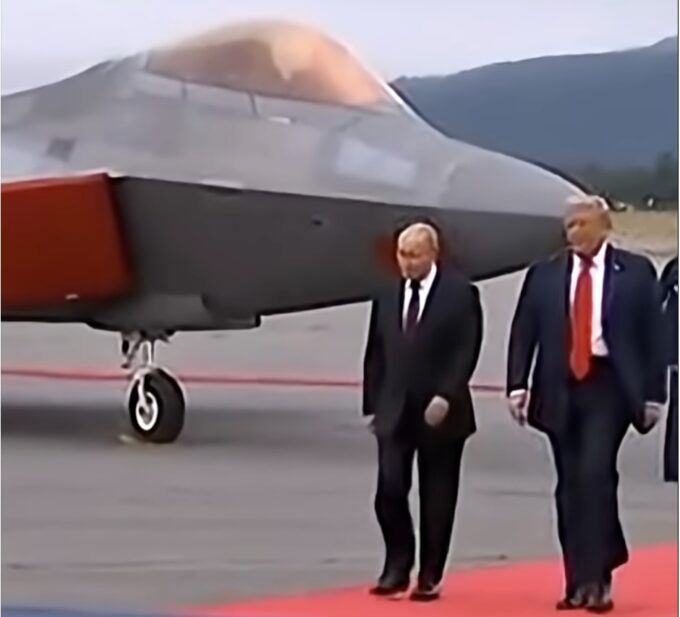
Trump rolled out the red carpet for Putin in Alaska, 2025. (Screengrab from video posted to YouTube.)

Donald Trump and Vladimir Putin will go down in history for their respective failures in regime change.  Both Trump and Putin overestimated their military strengths and underestimated the military strengths of their adversaries.  They miscalculated the strategic challenges and economic costs of widespread use of their military arsenals.

Both Trump and Putin failed to anticipate the long-term chaos that would accompany their wars.  Their regimes used scare tactics in the initial stages of the war: Putin claimed he was denazifying a Ukrainian society that was devoid of nazism; Trump is warning that Iranian suicide teams are a threat to domestic stability at home in an effort to keep skeptical publics on edge.

Intelligence failures were abundant in these cases to go to war, which is the realm of uncertainty, according to Carl von Clausewitz.  Putin underestimated the ability of the Ukrainians to defend themselves as well as the willingness of the Western community, particularly the North Atlantic Treaty Organization, to rally in Ukraine’s defense.  Putin is now facing two additional NATO members (Finland and Sweden) on his vulnerable western front as well as an Ukraine that is working closely with NATO states.  Trump failed to consult his Western allies for his unnecessary and illegal war, and in the process, weakened the Western alliance.

Neither Trump nor Putin expected long-term confrontations.  Putin was so confident of immediate success that he instructed Russian commanders to pack dress uniforms for the parade in Kyiv that would soon ensue.  Trump and his Pentagon made no plans for protecting or removing American civilians from the Middle East and the Persian Gulf, and appeared shocked by Iran’s sudden closure of the Strait of Hormuz and the economic chaos that accompanied the greatest oil supply shock in history.

The rising price of oil and the declining worth of U.S. stock markets could have more impact on the decision to end the war than any of the events on the battlefield.  There is no better indicator of Trump’s lack of strategic thinking than his blithe encouragement to oil tanker captains to “show some guts” and sail through the Strait of Hormuz.  Iranian targeting of Persian Gulf energy infrastructure apparently caught the United States military off guard.

At the same time, the adaptability and flexibility of the Ukrainian military has been shocking to a Russia military that had little battlefield experience and has encountered a huge number of casualties and fatalities.  Russian territorial gains have slowed remarkably during the past four months, and Ukraine has been regaining territory in the past month.

Both Trump and Putin have clearly stepped in the unknown of war, where no plan survives first contact with the enemy.   Both quickly found euphemisms for describing the war to avoid signaling the possible long-term consequences of the use of military force.  Putin settled on the term “special military operations” at the outset of the war, and threatened fines for those who used the term “war.”  Trump, avoiding the term “war,” settled on special operations or the more vague concept of “excursions” to avoid suggesting protracted conflict.

Meanwhile, Americans and Russians, who have nothing to gain from these wars, will bear the economic costs of the conflict.  Defense spending will increase in both countries; gas prices in the United States will rise steadily; and the price of key commodities will intensify.  The loss of blood and treasure is sure to intensify.

Melvin A. Goodman is a senior fellow at the Center for International Policy and a professor of government at Johns Hopkins University.  A former CIA analyst, Goodman is the author of Failure of Intelligence: The Decline and Fall of the CIA and National Insecurity: The Cost of American Militarism. and A Whistleblower at the CIA. His most recent books are “American Carnage: The Wars of Donald Trump” (Opus Publishing, 2019) and “Containing the National Security State” (Opus Publishing, 2021). Goodman is the national security columnist for counterpunch.org.