Thom Hartmann
March 13, 2026
COMMON DREAMS
LONG READ
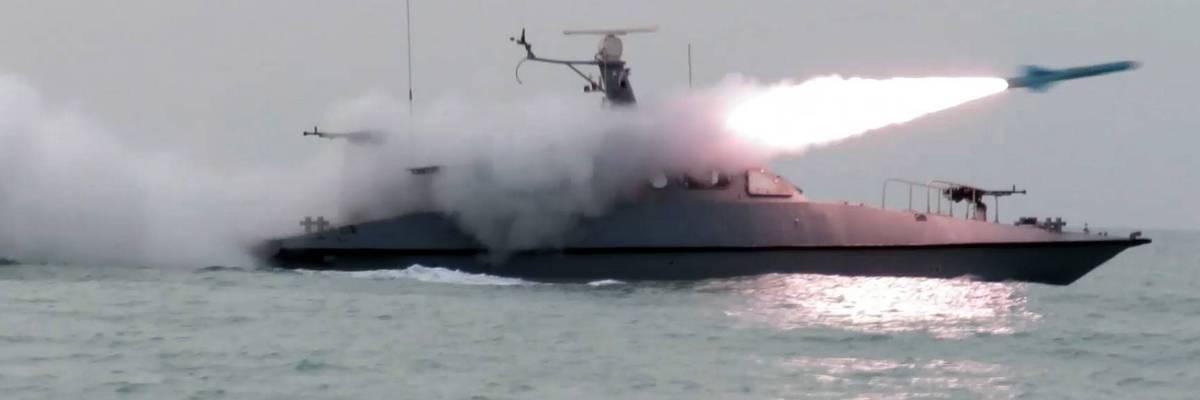
Eight of our American service members are dead and more than 140 wounded because Iran’s military has suddenly gotten really good at targeting our soldiers, airmen, and marines. News reports say they’ve been able to hit us with such precision because Russia is using their extraordinary spy satellite, spy plane, and advanced radar capabilities to help Iran’s military.
The Washington Post, which first reported on this, quoted a Russian military expert as saying that Iran is now “making very precise hits on early-warning radars or over-the-horizon radars,” seeming to validate the concern. The article added:
“Iran possesses only a handful of military-grade satellites, and no satellite constellation of its own, which would make imagery provided by Russia’s much more advanced space capabilities highly valuable — particularly as the Kremlin has honed its own targeting after years of war in Ukraine…”
When asked about the reports, Donald Trump — who’d just returned from the soldiers’ bodies’ dignified transfer — basically downplayed Russian efforts to hurt Americans, just like he did when he learned in 2020 that Putin was paying Afghan insurgents a bounty to kill our soldiers. He pointed out that the US had been sharing intelligence with Ukraine during the Biden administration, so apparently, according to him, Russia is justified in helping Iran kill American service members:
“They’d say we do it against them. Wouldn’t they say that we do it against them?”
His fellow real estate billionaire, Steve Witkoff (whose sons are making billions with Trump’s sons in the Middle East and who has been regularly traveling to Moscow for private meetings with Vladimir Putin) similarly shrugged off the report, telling CNBC:
“I can tell you that yesterday, on the call with [President Trump], the Russians said they have not been sharing. That’s what they said. So, we can take them at their word, but they did say that.” Witkoff later added, “Let’s hope that they’re not sharing.”
Putin himself, though, was nowhere near as circumspect, saying:
“On my part, I want to confirm our unwavering support of Tehran and our solidarity with our Iranian friends. Russia has been and will remain the Islamic Republic’s reliable partner.”
As if to confirm that Trump is Putin’s toady, just last week, in the wake of Iran shutting the Strait of Hormuz and cutting oil supplies to Asia and the Subcontinent, our president signed a waiver to our Russia sanctions so Putin can now sell unlimited amounts of Russian oil directly to India.
Every time Putin says “Jump,” Trump asks, “How high?”
Which raises the question: “Why? Why does Trump always give Putin whatever he wants and why is he so terrified of speaking out against him?”
Is it possible that Trump is actively working for Putin? What if Putin somehow owns him? Or is blackmailing him? And has been running him as an Russian asset since at least 2017?
That sort of treason would be more important than Russian agents Robert Hanssen (life without parole), Aldrich Ames (life without parole), or Ethel and Julius Rosenberg (death penalty).
And let’s not forget that right after Trump won re-election in November 2024, Russian state TV published explicit nudie pictures of Melania Trump and their anchors were laughing about it and at Trump. Was this Putin’s first assertion this cycle that he still owns Donald?
Jack Smith’s case in Florida was limited to Trump stealing sensitive documents and sharing them on two publicly known occasions (and didn’t even reference other known acts like Kid Rock’s allegation that Trump showed him Top Secret maps in the White House: this was apparently a regular thing for Trump).
That said, you can bet your bottom dollar that the FBI and other agencies worked as hard as they could to contain the damage done by Trump’s leaving documents that could cause “grave damage” to America in public places where spies could simply waltz in and take cell-phone pictures of them by attending a wedding or paying $200,000 for essentially unlimited access Club membership.
But what if it goes beyond that? What if Putin has owned him for years?
From Russian oligarchs laundering money through Trump’s operations — real estate is the most common device used worldwide for money laundering — to keeping him alive in his most difficult times, like those multiple bankruptcies in the 1990s when he almost lost everything?
Or perhaps blackmailing him?
What if Putin got him the presidency, and he knows that if America found out for sure, it would destroy him? Or has Jeffrey Epstein’s videos of Trump with underage girls? Or his own pictures, taken when Trump was in Moscow for one of his beauty pageants?
Which begs the question: exactly how much damage might Trump have already done to our nation, and what does he have planned for the next three years of this second term?
And is he getting ongoing day-to-day instructions from Putin, which explains why he’s so reluctant to discuss their conversations, as Rachel Maddow recently documented?
In 2019 the Washington Post revealed that throughout his last presidency, Trump was having regular secret phone conversations with Putin (more than 20 have been identified so far, including one just days before the 2020 election).
The Moscow Project from the American Progress Action Fund documents more than 270 known contacts between Russia-linked operatives and members of the Trump campaign and transition team, as well as at least 38 known meetings just leading up to the 2016 election.
The manager of his 2016 campaign, Paul Manafort — who was previously paid tens of millions by Vladimir Putin’s people to install a pro-Putin puppet as Ukraine’s president in 2010 — has admitted that he was regularly feeding secret inside-campaign strategy and polling information to Russian intelligence via the oligarch who typically paid him on their behalf.
Throughout the campaign, Manafort let Russian intelligence know where Trump needed help, and when, and it appears Russia jumped in to social media to provide the needed help.
Trump pardoned Manafort, which got him out of prison and ended any investigations. He’s still fabulously rich from his work for Russia.
As the New York Times noted in 2020:
“[I]nvestigators found enough there to declare that Mr. Manafort created ‘a grave counterintelligence threat’ by sharing inside information about the presidential race with Mr. [Konstantin] Kilimnik and the Russian and [pro-Russian] Ukrainian oligarchs whom he served.”
There is no known parallel to this behavior by any president in American history — one could argue it easily exceeds Benedict Arnold’s audacity — and bringing documents to Mar-a-Lago was just the tip of the iceberg.
The Washington Post reported in 2022 that Trump had a habit of carrying top-secret information that could severely damage our national security, leaving it in hotel rooms in hostile nations.
Was he bringing these documents with him to sell? Or just to show to leaders or oligarchs in those countries to impress them? Or because Putin, who has agents in those countries, told him to?
Trump doesn’t put all that effort into hauling things around unless it’s extraordinarily important to his ego or he thinks he can makes money off them. Or he’s scared.
“Boxes of documents even came with Trump on foreign travel,” the Post noted, “following him to hotel rooms around the world — including countries considered foreign adversaries of the United States.”
When Robert Mueller’s FBI team tried to investigate Trump’s ties to Russia and his possibly sharing sensitive military information with them, they were stonewalled.
The Mueller Report identified ten specific instances of Trump himself trying to obstruct the investigation, including offering the bribe of a pardon to Manafort, asking FBI Director James Comey to “go easy” on Gen. Michael Flynn after his dinner with Putin, and directing Attorney General Jeff Sessions to limit Mueller’s ability to investigate Trump’s connections to Russia.
As the Mueller Report noted:
“The President launched public attacks on the investigation and individuals involved in it who could possess evidence adverse to the President, while in private the President engaged in a series of targeted efforts to control the investigation.
“For instance, the President attempted to remove the Attorney General; he sought to have Attorney General Sessions un-recuse himself and limit the investigation; he sought to prevent public disclosure of information about the June 9, 2016 meeting between Russians and campaign officials; and he used public forums to attack potential witnesses who might offer adverse information and to praise witnesses who declined to cooperate with the government.”
It adds, detailing Trump’s specific Obstruction of Justice crimes:
“These actions ranged from efforts to remove the Special Counsel and to reverse the effect of the Attorney General’s recusal; to the attempted use of official power to limit the scope of the investigation; to direct and indirect contacts with witnesses with the potential to influence their testimony.”
There are, after all, credible assertions from American intelligence that when Trump was elected, members of Russian intelligence and Putin’s inner circle were literally partying in Moscow, celebrating a victory they believed they made happen.
And apparently Putin and his intelligence operatives had good reason to be popping the champagne in November 2016. They were quickly paid off in a big way.
In his first months in office, Trump outed an Israeli spy to the Russian ambassador in what he thought was going to be a “secret Oval Office meeting” (the Russians released the photo to the press), resulting in MOSAD having to “burn” (relocate, change identity of) that spy.
The undercover agent was apparently working in Syria that year against the Russians, who were embroiled in the midst of Assad’s Civil War and indiscriminately bombing Aleppo into rubble.
That, in turn, prompted the CIA to worry that a longtime American spy buried deep in the Kremlin was similarly vulnerable to Trump handing him over to Putin.
As CNN noted (when the story leaked two years later):
“The source was considered the highest level source for the US inside the Kremlin, high up in the national security infrastructure, according to the source familiar with the matter and a former senior intelligence official.
“According to CNN’s sources, the spy had access to Putin and could even provide images of documents on the Russian leader’s desk.”
The CIA concluded that the risk Trump had burned or was about to burn our spy inside the Kremlin was so great that — at massive loss to US intelligence abilities that may even have otherwise helped forestall the invasion of Ukraine — they pulled our spy out of Russia in the first year of Trump’s presidency, 2017.
Similarly, when they met in Helsinki on July 16, 2018, Trump and Putin talked in private for several hours and Trump ordered his translators’ notes destroyed; there is also concern that much of their conversation was done out of the hearing of the US’s translator (Putin is fluent in English) who may have been relegated to a distant part of the rather large empty ballroom in which they met.
The Washington Post reported, after a leak six months later, that when Trump met privately for those two hours with Putin the CIA went into “panic mode.” A US intelligence official told the Post:
“There was this gasp’ at the CIA’s Langley, Virginia headquarters. You literally had people in panic mode watching it at Langley. On all floors. Just shock.”
Three weeks after Trump’s July 16, 2018 meeting with Putin in Helsinki, Sen. Rand Paul (R-KY) made a solo trip to Moscow to personally hand-deliver a document or package of documents from Trump to Putin. Its contents are still unknown, although Paul told the press it was a “personal” letter of some sort.
Sen. Paul has also consistently taken Trump’s and Putin’s side with regard to the Ukraine war: he single-handedly blocked a $40 billion military aid package in the Senate. When the FBI searched Mar-a-Lago, he responded with a call for the repeal of the Espionage Act. He further suggested the FBI may have “planted” Secret documents at Mar-a-Lago.
Ten days after Paul’s trip to Moscow, The New York Times reported that the CIA was freaked out because their sources inside Moscow had suddenly “gone silent”:
“The full reasons the sources have gone silent are not known,” the Times reported, but Trump having intentionally given a man working for the FBI to Putin — a man whose job at that time was to find and reveal Russian agents involved in or close to the Trump campaign — may also have had something to do with it:
“[C]urrent and former officials said the exposure of sources inside the United States has also complicated matters,” noted the Times. “This year, the identity of an F.B.I. informant, Stefan Halper, became public after [Trump-loyal MAGA Republican] House lawmakers sought information on him and the White House allowed the information to be shared. Mr. Halper, an American academic based in Britain, had been sent to talk to Trump campaign advisers who were under F.B.I. scrutiny for their ties to Russia.”
Things were picking up the following year, in 2019, as Putin was planning his invasion of Ukraine while Trump was preparing for the 2020 election.
In July 2019, Trump had conversations with five foreign leaders during and just before a presidential visit that month to Mar-a-Lago; they included Putin and the Emir of Qatar.
In one of those conversations, according to a high-level US Intelligence source, Trump “made promises” to a “world leader” that were so alarming it provoked a national security scramble across multiple agencies.
As the Washington Post noted in an article titled, “Trump’s communications with foreign leader are part of whistleblower complaint that spurred standoff between spy chief and Congress”:
“Intelligence Community Inspector General Michael Atkinson determined that the complaint [against Trump] was credible and troubling enough to be considered a matter of ‘urgent concern,’ a legal threshold that requires notification of congressional oversight committees.”
On the last day of that month, July 31, Trump had another private conversation with Putin.
The White House spokespeople told Congress and the press that Trump said that he and Putin discussed “wildfires” and “trade between the nations.” No droids in this car…
But the following week, on Aug. 2, the Daily Beast’s Betsy Swan reported that Trump had that week asked the Office of the Director of National Intelligence for a list of all its employees (including all our “spies”) who had worked there more than 90 days, and the request had intelligence officials experiencing “disquiet.”
Perhaps just by coincidence, months after Trump left office with cases of classified documents, the New York Times ran a story with the headline Captured, Killed or Compromised: C.I.A. Admits to Losing Dozens of Informants:
“Top American counterintelligence officials warned every C.I.A. station and base around the world last week,” the Times’ story’s lede began, “about troubling numbers of informants recruited from other countries to spy for the United States being captured or killed, people familiar with the matter said.
“The message, in an unusual top secret cable, said that the C.I.A.’s counterintelligence mission center had looked at dozens of cases in the last several years involving foreign informants who had been killed, arrested or most likely compromised. Although brief, the cable laid out the specific number of agents executed by rival intelligence agencies — a closely held detail that counterintelligence officials typically do not share in such cables.”
And now, to complicate matters, it appears Elon Musk took with him access to the payroll records of all of our nation’s spies and other foreign intelligence agents. The Elon Musk who, the Wall Street Journal reports, has also reportedly been having his own secret conversations with Putin.
If it turns out the Trump has been acting as an agent for Russia, how long might this have been going on?
Czechoslovakia’s Státní bezpečnost (StB) first started paying attention to Trump back in 1977, as documented by the German newspaper Bild when the StB’s files were declassified, because Trump married Czech model Ivana Zelnickova, his first wife, recently buried on his golf course in New Jersey.
Czechoslovakia at that time was part of the Warsaw Pact with the Soviet Union, and Ivana and her family had been raised as good communists. Now that a Czech citizen was married into a wealthy and prominent American family, the StB saw an opportunity and started tracking Trump virtually from his engagement.
As 2016 and 2018 investigations by the Guardian found:
“Ivana’s father, Miloš Zelníček, gave regular information to the local StB office about his daughter’s visits from the US and on his celebrity son-in-law’s career in New York. Zelníček was classified as a ‘conspiratorial’ informer. His relationship with the StB lasted until the end of the communist regime.”
An investigative reporting breakthrough by Craig Unger for his book American Kompromat led Unger to Uri Shvets, a former KGB spy who’d been posted to Washington, D.C. for years as a correspondent for the Soviet news agency TASS.
Shvets told the story — from his own knowledge — of how Trump and Ivana visited Moscow in 1987 and were essentially recruited or seduced by the KGB, a trip corroborated by Luke Harding in his book Collusion: Secret Meetings, Dirty Money, and How Russia Helped Donald Trump Win.
Their trip was coordinated by Intourist, the Soviet travel agency that was a front for the KGB, and the Trumps’ handlers regaled Donald and Ivana with Soviet talking points, presumably about things like the horrors of NATO.
The KGB’s psychological profile of Trump had determined he was vulnerable to flattery and not much of a deep thinker, so they told him repeatedly how brilliant he was and that he should run for president in the US.
Much to the astonishment and jubilation of the KGB, Trump returned from Moscow to the US to give a Republican presidential campaign speech that fall in Portsmouth, New Hampshire.
He then purchased a large ad in the New York Times, the Washington Post, and the Boston Globe on Sept. 1, 1987 that questioned America’s ongoing support of Japan and NATO, both thorns in the side of the USSR and their Chinese allies.
Trump’s ad laid it on the line:
“Why are these nations not paying the United States for the human lives and billions of dollars we are losing to protect their interests? ... The world is laughing at America’s politicians as we protect ships we don’t own, carrying oil we don’t need, destined for allies who won’t help.”
As the Guardian reported in 2021:
“The bizarre intervention was cause for astonishment and jubilation in Russia. A few days later Shvets, who had returned home by now, was at the headquarters of the KGB’s first chief directorate in Yasenevo when he received a cable celebrating the ad as a successful ‘active measure’ executed by a new KGB asset.
“’It was unprecedented,’ [Shvets said.] … It was hard to believe that somebody would publish it under his name and that it will impress real serious people in the west but it did and, finally, this guy became the president.’”
Meanwhile, Putin was making friends with powerful influence over American foreign policy.
Turkish President Recep Tayyip Erdoğan, who flipped his nation into a strongman neofascist state following an unsuccessful attempted coup in 2016 (he imprisoned and tortured numerous journalists and political opponents), has been deepening his relationship with Putin ever since that US election year.
In 2017, Erdoğan apparently gained access to America’s deepest secrets by secretly paying off Gen. Michael Flynn even as Flynn became Trump’s National Security Advisor, who also had at least one secret phone conversation with Russian Ambassador Sergey Kislyak after Flynn started working in the White House.
Flynn pleaded guilty in December 2017 to “willfully and knowingly” making “false, fictitious and fraudulent statements” to the FBI about one of those conversations with Russian Ambassador Kislyak. Flynn was also an unregistered agent of a foreign government while working in the White House: he had taken about a half-million dollars from Erdoğan.
Around the time he was leaving office, Trump pardoned Flynn, essentially burying the entire story.
From campaigning to destroy NATO to selling out Ukraine to letting Russia help kill American soldiers in the Gulf region, Trump’s goal appears to be, to paraphrase Ron DeSantis, to “Make America Russia.”
The big question is, “Why?”
Eight of our American service members are dead and more than 140 wounded because Iran’s military has suddenly gotten really good at targeting our soldiers, airmen, and marines. News reports say they’ve been able to hit us with such precision because Russia is using their extraordinary spy satellite, spy plane, and advanced radar capabilities to help Iran’s military.
The Washington Post, which first reported on this, quoted a Russian military expert as saying that Iran is now “making very precise hits on early-warning radars or over-the-horizon radars,” seeming to validate the concern. The article added:
“Iran possesses only a handful of military-grade satellites, and no satellite constellation of its own, which would make imagery provided by Russia’s much more advanced space capabilities highly valuable — particularly as the Kremlin has honed its own targeting after years of war in Ukraine…”
When asked about the reports, Donald Trump — who’d just returned from the soldiers’ bodies’ dignified transfer — basically downplayed Russian efforts to hurt Americans, just like he did when he learned in 2020 that Putin was paying Afghan insurgents a bounty to kill our soldiers. He pointed out that the US had been sharing intelligence with Ukraine during the Biden administration, so apparently, according to him, Russia is justified in helping Iran kill American service members:
“They’d say we do it against them. Wouldn’t they say that we do it against them?”
His fellow real estate billionaire, Steve Witkoff (whose sons are making billions with Trump’s sons in the Middle East and who has been regularly traveling to Moscow for private meetings with Vladimir Putin) similarly shrugged off the report, telling CNBC:
“I can tell you that yesterday, on the call with [President Trump], the Russians said they have not been sharing. That’s what they said. So, we can take them at their word, but they did say that.” Witkoff later added, “Let’s hope that they’re not sharing.”
Putin himself, though, was nowhere near as circumspect, saying:
“On my part, I want to confirm our unwavering support of Tehran and our solidarity with our Iranian friends. Russia has been and will remain the Islamic Republic’s reliable partner.”
As if to confirm that Trump is Putin’s toady, just last week, in the wake of Iran shutting the Strait of Hormuz and cutting oil supplies to Asia and the Subcontinent, our president signed a waiver to our Russia sanctions so Putin can now sell unlimited amounts of Russian oil directly to India.
Every time Putin says “Jump,” Trump asks, “How high?”
Which raises the question: “Why? Why does Trump always give Putin whatever he wants and why is he so terrified of speaking out against him?”
Is it possible that Trump is actively working for Putin? What if Putin somehow owns him? Or is blackmailing him? And has been running him as an Russian asset since at least 2017?
That sort of treason would be more important than Russian agents Robert Hanssen (life without parole), Aldrich Ames (life without parole), or Ethel and Julius Rosenberg (death penalty).
And let’s not forget that right after Trump won re-election in November 2024, Russian state TV published explicit nudie pictures of Melania Trump and their anchors were laughing about it and at Trump. Was this Putin’s first assertion this cycle that he still owns Donald?
Jack Smith’s case in Florida was limited to Trump stealing sensitive documents and sharing them on two publicly known occasions (and didn’t even reference other known acts like Kid Rock’s allegation that Trump showed him Top Secret maps in the White House: this was apparently a regular thing for Trump).
That said, you can bet your bottom dollar that the FBI and other agencies worked as hard as they could to contain the damage done by Trump’s leaving documents that could cause “grave damage” to America in public places where spies could simply waltz in and take cell-phone pictures of them by attending a wedding or paying $200,000 for essentially unlimited access Club membership.
But what if it goes beyond that? What if Putin has owned him for years?
From Russian oligarchs laundering money through Trump’s operations — real estate is the most common device used worldwide for money laundering — to keeping him alive in his most difficult times, like those multiple bankruptcies in the 1990s when he almost lost everything?
Or perhaps blackmailing him?
What if Putin got him the presidency, and he knows that if America found out for sure, it would destroy him? Or has Jeffrey Epstein’s videos of Trump with underage girls? Or his own pictures, taken when Trump was in Moscow for one of his beauty pageants?
Which begs the question: exactly how much damage might Trump have already done to our nation, and what does he have planned for the next three years of this second term?
And is he getting ongoing day-to-day instructions from Putin, which explains why he’s so reluctant to discuss their conversations, as Rachel Maddow recently documented?
In 2019 the Washington Post revealed that throughout his last presidency, Trump was having regular secret phone conversations with Putin (more than 20 have been identified so far, including one just days before the 2020 election).
The Moscow Project from the American Progress Action Fund documents more than 270 known contacts between Russia-linked operatives and members of the Trump campaign and transition team, as well as at least 38 known meetings just leading up to the 2016 election.
The manager of his 2016 campaign, Paul Manafort — who was previously paid tens of millions by Vladimir Putin’s people to install a pro-Putin puppet as Ukraine’s president in 2010 — has admitted that he was regularly feeding secret inside-campaign strategy and polling information to Russian intelligence via the oligarch who typically paid him on their behalf.
Throughout the campaign, Manafort let Russian intelligence know where Trump needed help, and when, and it appears Russia jumped in to social media to provide the needed help.
Trump pardoned Manafort, which got him out of prison and ended any investigations. He’s still fabulously rich from his work for Russia.
As the New York Times noted in 2020:
“[I]nvestigators found enough there to declare that Mr. Manafort created ‘a grave counterintelligence threat’ by sharing inside information about the presidential race with Mr. [Konstantin] Kilimnik and the Russian and [pro-Russian] Ukrainian oligarchs whom he served.”
There is no known parallel to this behavior by any president in American history — one could argue it easily exceeds Benedict Arnold’s audacity — and bringing documents to Mar-a-Lago was just the tip of the iceberg.
The Washington Post reported in 2022 that Trump had a habit of carrying top-secret information that could severely damage our national security, leaving it in hotel rooms in hostile nations.
Was he bringing these documents with him to sell? Or just to show to leaders or oligarchs in those countries to impress them? Or because Putin, who has agents in those countries, told him to?
Trump doesn’t put all that effort into hauling things around unless it’s extraordinarily important to his ego or he thinks he can makes money off them. Or he’s scared.
“Boxes of documents even came with Trump on foreign travel,” the Post noted, “following him to hotel rooms around the world — including countries considered foreign adversaries of the United States.”
When Robert Mueller’s FBI team tried to investigate Trump’s ties to Russia and his possibly sharing sensitive military information with them, they were stonewalled.
The Mueller Report identified ten specific instances of Trump himself trying to obstruct the investigation, including offering the bribe of a pardon to Manafort, asking FBI Director James Comey to “go easy” on Gen. Michael Flynn after his dinner with Putin, and directing Attorney General Jeff Sessions to limit Mueller’s ability to investigate Trump’s connections to Russia.
As the Mueller Report noted:
“The President launched public attacks on the investigation and individuals involved in it who could possess evidence adverse to the President, while in private the President engaged in a series of targeted efforts to control the investigation.
“For instance, the President attempted to remove the Attorney General; he sought to have Attorney General Sessions un-recuse himself and limit the investigation; he sought to prevent public disclosure of information about the June 9, 2016 meeting between Russians and campaign officials; and he used public forums to attack potential witnesses who might offer adverse information and to praise witnesses who declined to cooperate with the government.”
It adds, detailing Trump’s specific Obstruction of Justice crimes:
“These actions ranged from efforts to remove the Special Counsel and to reverse the effect of the Attorney General’s recusal; to the attempted use of official power to limit the scope of the investigation; to direct and indirect contacts with witnesses with the potential to influence their testimony.”
There are, after all, credible assertions from American intelligence that when Trump was elected, members of Russian intelligence and Putin’s inner circle were literally partying in Moscow, celebrating a victory they believed they made happen.
And apparently Putin and his intelligence operatives had good reason to be popping the champagne in November 2016. They were quickly paid off in a big way.
In his first months in office, Trump outed an Israeli spy to the Russian ambassador in what he thought was going to be a “secret Oval Office meeting” (the Russians released the photo to the press), resulting in MOSAD having to “burn” (relocate, change identity of) that spy.
The undercover agent was apparently working in Syria that year against the Russians, who were embroiled in the midst of Assad’s Civil War and indiscriminately bombing Aleppo into rubble.
That, in turn, prompted the CIA to worry that a longtime American spy buried deep in the Kremlin was similarly vulnerable to Trump handing him over to Putin.
As CNN noted (when the story leaked two years later):
“The source was considered the highest level source for the US inside the Kremlin, high up in the national security infrastructure, according to the source familiar with the matter and a former senior intelligence official.
“According to CNN’s sources, the spy had access to Putin and could even provide images of documents on the Russian leader’s desk.”
The CIA concluded that the risk Trump had burned or was about to burn our spy inside the Kremlin was so great that — at massive loss to US intelligence abilities that may even have otherwise helped forestall the invasion of Ukraine — they pulled our spy out of Russia in the first year of Trump’s presidency, 2017.
Similarly, when they met in Helsinki on July 16, 2018, Trump and Putin talked in private for several hours and Trump ordered his translators’ notes destroyed; there is also concern that much of their conversation was done out of the hearing of the US’s translator (Putin is fluent in English) who may have been relegated to a distant part of the rather large empty ballroom in which they met.
The Washington Post reported, after a leak six months later, that when Trump met privately for those two hours with Putin the CIA went into “panic mode.” A US intelligence official told the Post:
“There was this gasp’ at the CIA’s Langley, Virginia headquarters. You literally had people in panic mode watching it at Langley. On all floors. Just shock.”
Three weeks after Trump’s July 16, 2018 meeting with Putin in Helsinki, Sen. Rand Paul (R-KY) made a solo trip to Moscow to personally hand-deliver a document or package of documents from Trump to Putin. Its contents are still unknown, although Paul told the press it was a “personal” letter of some sort.
Sen. Paul has also consistently taken Trump’s and Putin’s side with regard to the Ukraine war: he single-handedly blocked a $40 billion military aid package in the Senate. When the FBI searched Mar-a-Lago, he responded with a call for the repeal of the Espionage Act. He further suggested the FBI may have “planted” Secret documents at Mar-a-Lago.
Ten days after Paul’s trip to Moscow, The New York Times reported that the CIA was freaked out because their sources inside Moscow had suddenly “gone silent”:
“The full reasons the sources have gone silent are not known,” the Times reported, but Trump having intentionally given a man working for the FBI to Putin — a man whose job at that time was to find and reveal Russian agents involved in or close to the Trump campaign — may also have had something to do with it:
“[C]urrent and former officials said the exposure of sources inside the United States has also complicated matters,” noted the Times. “This year, the identity of an F.B.I. informant, Stefan Halper, became public after [Trump-loyal MAGA Republican] House lawmakers sought information on him and the White House allowed the information to be shared. Mr. Halper, an American academic based in Britain, had been sent to talk to Trump campaign advisers who were under F.B.I. scrutiny for their ties to Russia.”
Things were picking up the following year, in 2019, as Putin was planning his invasion of Ukraine while Trump was preparing for the 2020 election.
In July 2019, Trump had conversations with five foreign leaders during and just before a presidential visit that month to Mar-a-Lago; they included Putin and the Emir of Qatar.
In one of those conversations, according to a high-level US Intelligence source, Trump “made promises” to a “world leader” that were so alarming it provoked a national security scramble across multiple agencies.
As the Washington Post noted in an article titled, “Trump’s communications with foreign leader are part of whistleblower complaint that spurred standoff between spy chief and Congress”:
“Intelligence Community Inspector General Michael Atkinson determined that the complaint [against Trump] was credible and troubling enough to be considered a matter of ‘urgent concern,’ a legal threshold that requires notification of congressional oversight committees.”
On the last day of that month, July 31, Trump had another private conversation with Putin.
The White House spokespeople told Congress and the press that Trump said that he and Putin discussed “wildfires” and “trade between the nations.” No droids in this car…
But the following week, on Aug. 2, the Daily Beast’s Betsy Swan reported that Trump had that week asked the Office of the Director of National Intelligence for a list of all its employees (including all our “spies”) who had worked there more than 90 days, and the request had intelligence officials experiencing “disquiet.”
Perhaps just by coincidence, months after Trump left office with cases of classified documents, the New York Times ran a story with the headline Captured, Killed or Compromised: C.I.A. Admits to Losing Dozens of Informants:
“Top American counterintelligence officials warned every C.I.A. station and base around the world last week,” the Times’ story’s lede began, “about troubling numbers of informants recruited from other countries to spy for the United States being captured or killed, people familiar with the matter said.
“The message, in an unusual top secret cable, said that the C.I.A.’s counterintelligence mission center had looked at dozens of cases in the last several years involving foreign informants who had been killed, arrested or most likely compromised. Although brief, the cable laid out the specific number of agents executed by rival intelligence agencies — a closely held detail that counterintelligence officials typically do not share in such cables.”
And now, to complicate matters, it appears Elon Musk took with him access to the payroll records of all of our nation’s spies and other foreign intelligence agents. The Elon Musk who, the Wall Street Journal reports, has also reportedly been having his own secret conversations with Putin.
If it turns out the Trump has been acting as an agent for Russia, how long might this have been going on?
Czechoslovakia’s Státní bezpečnost (StB) first started paying attention to Trump back in 1977, as documented by the German newspaper Bild when the StB’s files were declassified, because Trump married Czech model Ivana Zelnickova, his first wife, recently buried on his golf course in New Jersey.
Czechoslovakia at that time was part of the Warsaw Pact with the Soviet Union, and Ivana and her family had been raised as good communists. Now that a Czech citizen was married into a wealthy and prominent American family, the StB saw an opportunity and started tracking Trump virtually from his engagement.
As 2016 and 2018 investigations by the Guardian found:
“Ivana’s father, Miloš Zelníček, gave regular information to the local StB office about his daughter’s visits from the US and on his celebrity son-in-law’s career in New York. Zelníček was classified as a ‘conspiratorial’ informer. His relationship with the StB lasted until the end of the communist regime.”
An investigative reporting breakthrough by Craig Unger for his book American Kompromat led Unger to Uri Shvets, a former KGB spy who’d been posted to Washington, D.C. for years as a correspondent for the Soviet news agency TASS.
Shvets told the story — from his own knowledge — of how Trump and Ivana visited Moscow in 1987 and were essentially recruited or seduced by the KGB, a trip corroborated by Luke Harding in his book Collusion: Secret Meetings, Dirty Money, and How Russia Helped Donald Trump Win.
Their trip was coordinated by Intourist, the Soviet travel agency that was a front for the KGB, and the Trumps’ handlers regaled Donald and Ivana with Soviet talking points, presumably about things like the horrors of NATO.
The KGB’s psychological profile of Trump had determined he was vulnerable to flattery and not much of a deep thinker, so they told him repeatedly how brilliant he was and that he should run for president in the US.
Much to the astonishment and jubilation of the KGB, Trump returned from Moscow to the US to give a Republican presidential campaign speech that fall in Portsmouth, New Hampshire.
He then purchased a large ad in the New York Times, the Washington Post, and the Boston Globe on Sept. 1, 1987 that questioned America’s ongoing support of Japan and NATO, both thorns in the side of the USSR and their Chinese allies.
Trump’s ad laid it on the line:
“Why are these nations not paying the United States for the human lives and billions of dollars we are losing to protect their interests? ... The world is laughing at America’s politicians as we protect ships we don’t own, carrying oil we don’t need, destined for allies who won’t help.”
As the Guardian reported in 2021:
“The bizarre intervention was cause for astonishment and jubilation in Russia. A few days later Shvets, who had returned home by now, was at the headquarters of the KGB’s first chief directorate in Yasenevo when he received a cable celebrating the ad as a successful ‘active measure’ executed by a new KGB asset.
“’It was unprecedented,’ [Shvets said.] … It was hard to believe that somebody would publish it under his name and that it will impress real serious people in the west but it did and, finally, this guy became the president.’”
Meanwhile, Putin was making friends with powerful influence over American foreign policy.
Turkish President Recep Tayyip Erdoğan, who flipped his nation into a strongman neofascist state following an unsuccessful attempted coup in 2016 (he imprisoned and tortured numerous journalists and political opponents), has been deepening his relationship with Putin ever since that US election year.
In 2017, Erdoğan apparently gained access to America’s deepest secrets by secretly paying off Gen. Michael Flynn even as Flynn became Trump’s National Security Advisor, who also had at least one secret phone conversation with Russian Ambassador Sergey Kislyak after Flynn started working in the White House.
Flynn pleaded guilty in December 2017 to “willfully and knowingly” making “false, fictitious and fraudulent statements” to the FBI about one of those conversations with Russian Ambassador Kislyak. Flynn was also an unregistered agent of a foreign government while working in the White House: he had taken about a half-million dollars from Erdoğan.
Around the time he was leaving office, Trump pardoned Flynn, essentially burying the entire story.
From campaigning to destroy NATO to selling out Ukraine to letting Russia help kill American soldiers in the Gulf region, Trump’s goal appears to be, to paraphrase Ron DeSantis, to “Make America Russia.”
The big question is, “Why?”
Thom Hartmann is a New York Times best-selling author and SiriusXM talk show host. His Substack can be found here.