Sunday, March 22, 2026

EU wants to tap citizens’ savings. Easier said than done


By AFP
March 16, 2026


The EU wants a more integrated financial market to finance its all-important green and digital transitions - Copyright AFP/File Kirill KUDRYAVTSEV

Raziye Akkoc

The idea sounds simple: tap trillions of euros of EU citizens’ savings to unlock capital for European companies through a more integrated financial market.

Getting over the finish line, however, has been complicated, with EU states unable to agree and the idea languishing for years.

More than a decade after the European Union first floated the idea of a deeper capital market, the issue has come roaring back into the spotlight — and with it the type of concern that dogged previous efforts.

The renewed impetus stems from fears the EU is lagging dangerously behind the world’s two biggest economies, the United States and China — one of the topics set to dominate a summit of the bloc’s leaders this week.

Some, including European Commission President Ursula von der Leyen, have raised the prospect of several EU states moving forward, leaving others behind, to establish a Savings and Investments Union.

A key element of such a union is centralising market supervision, an issue pitting the EU’s six biggest economies against smaller countries.

France, Germany, Italy and three others say the move is necessary, but Luxembourg and Ireland have expressed reservations.

The topic will be discussed in depth when EU leaders meet Thursday.

But what really does the EU want, and can it be achieved?


– What is the plan? –


The idea first appeared as the “Capital Markets Union” when then-president of the commission Jean-Claude Juncker raised it in 2014.

Now the EU prefers the phrase “Savings and Investments Union” — which combines the Capital Markets Union and the Banking Union.

Brussels wants to unify national financial markets to make investments flow more seamlessly across the EU.

The commission also wants markets to provide more attractive financial instruments to European citizens, who are more fearful of investing in stock markets than their American counterparts.

Currently, 10 trillion euros ($11.6 trillion) of EU citizens’ savings are held as bank deposits, according to the bloc’s executive, because people see it as safe.

The reform push is also about giving better access to money for businesses.

By harmonising financial markets and getting rid of the fragmentation that hinders pooling vast capital, there could be much bigger sums available for scale-ups and infrastructure, experts say.

“That is one of the key disadvantages the EU is facing compared to the US and China,” said analyst Philipp Lausberg of the European Policy Centre think tank.


– Why is this a hot topic again? –


Europe needs money — lots of it.

A landmark 2024 report estimated the EU’s additional investment needs at 750 billion to 800 billion euros annually.

The EU needs to plough more money into its digital and green transitions as well as defence, faced with rising global instability.

Leaders are keen to move fast.

They agreed in February they wanted “to be done with phase one of the Savings and Investment Union, that includes the market integration, the supervision and the securitisation, by June”, von der Leyen said.

Without “sufficient progress”, she warned willing EU states would press on alone.

Under EU rules, at least nine countries could go full steam ahead on the project without others.


– Is it popular? –


In theory, member states all support the idea.

In practice, there are strong divisions over how it should look.

A group of countries known as “E6” — France, Germany, Italy, Spain, the Netherlands and Poland — want the Paris-based European Securities and Markets Authority to become the EU’s supervisor of large stock exchanges.

Irish Finance Minister Simon Harris recommended “enhancing” its role instead.

The business community supports the Savings and Investments Union, including Europe’s biggest organisation representing firms, BusinessEurope.

Others, while welcoming deeper financial markets, are more cautious.

Julia Symon, head of research and advocacy at NGO Finance Watch, said key barriers need to be removed if Europe wants a “regime comparable to the US, currently the main destination of EU private capital outflows”.

This would mean “joint supervision, harmonised insolvency and greater tax coherence, which go far beyond what is currently proposed”, she told AFP.

“The goal should not be to expand finance for its own sake, but to ensure that finance serves long-term economic resilience and productive investment.”\





COP28 To COP30: Nuclear Energy In The Climate Equation – OpEd


COP30 in Brazil. Photo Credit: RICARDO STUCKERT, ABr

March 22, 2026 

By Hafsa Azam


Nuclear energy is becoming a central pillar in global plans to address climate change and also gaining importance as countries seek low-carbon climate solutions. The Conference of the Parties (COP30) to the United Nations Framework Convention on Climate Change (UNFCCC), was held in Belem, Brazil, in November 2025. The COP30 has been widely described as a “COP of Implementation” due to its emphasis on bringing existing initiatives into action than on new climate pledges. While the summit produced important agreement on adoption of mechanism for adaptation finance to track climate actions, one of its consequential developments was the reinforcement of role of nuclear energy in the global climate strategy.

In December 2023, during the COP28 held in Dubai, 25 countries including Armenia, Bulgaria, Canada, Croatia, the Czech Republic, Finland, France, Ghana, Hungary, Jamaica, Japan, Moldova, Mongolia, Morocco, the Netherlands, Poland, Romania, Slovakia, Slovenia, South Korea, Sweden, Ukraine, the United Arab Emirates, the United Kingdom, and the United States signed the Declaration to Triple Nuclear Energy by 2050. The initiative gained further momentum at subsequent climate summits, with six additional countries including Kazakhstan, Kenya, El Salvador, Kosovo, Nigeria and Turkiye joining at COP29 in Baku, Azerbaijan, and two more countries including Rwanda and Senegal at COP30, bringing the total to 33 countries.

The COP28 Declaration to Triple Nuclear Energy underscores the essential role of nuclear energy in achieving global net-zero Greenhouse Gas (GHG) emissions by 2050, a prerequisite for keeping the 1.5 °C temperature-limit target within reach. It also highlights nuclear power’s contribution to energy security through supply of clean, reliable, and affordable source of electricity.

Beyond government commitments, strong support has also emerged from industry and finance for tripling nuclear energy. According to the World Nuclear Outlook Report presented at COP28, 130 nuclear-sector companies signed a pledge backing the tripling objectives. This was followed by New York Climate Week 2024, where 14 financial institutions publicly expressed support and explored ways in which the financial sector could facilitate nuclear expansion. Further endorsement came at Cambridge Energy Research Associates (CERA) Week observed in Houston, Texas in March 2025, where 14 major energy-consuming companies voiced their backing for tripling global nuclear capacity by mid-century.

According to the World Nuclear Outlook Report 2025 presented at COP30, global energy demand is increasing in order to meet the needs of populations with insufficient access to energy and electricity. Approximately 750 million people currently lack access to electricity, and emerging economies require significantly more power to support development. This rising demand is driven by a growing global population, which stands at approximately 8 billion today and is projected to increase to 9.8 billion by 2050 and 11.2 billion by 2100. At the same time, global GHG emissions continue to rise due to increasing energy demand.


International Energy Agency (IEA) estimates that 2025 reached a record of 38.1 billion tonnes of CO2. This rise is largely driven by continued growth in coal, oil, and gas consumption, particularly in emerging economies and high-demand regions. The upward trend poses a serious challenge to efforts to limit global warming to below 1.5 °C under the Paris Agreement.

According to the World Nuclear Association, the capacity target outlined in the Declaration to Triple Nuclear Energy is anchored to 2020 levels, when global operable nuclear capacity stood at 393 GWe produced by 441 nuclear reactors. Tripling this figure would require nearly 1,200 GWe of operational capacity by 2050.

According to the World Nuclear Outlook Report 2025, 177 reactors have an operating lifetime of 60 years, while 203 reactors are expected to receive lifetime extensions to 80 years. In addition, 75 reactors are currently under construction, 103 reactors are planned, 295 reactors have been proposed, and 24 reactors are considered potential projects. To meet the national targets, 538 additional nuclear capacity units would be required. If these targets are achieved, global nuclear capacity could reach 1,428 GWe by 2050.

According to the World Nuclear Association Reactor Data 2025, the global nuclear power sector is largely shaped by large-scale reactors. As of October 2025, a total of 438 nuclear reactors were in operation worldwide, providing combined capacity of 397 GWe. Pressurized Water Reactors (PWRs) dominate the operating fleet, representing over 70% of all reactors. Boiling Water Reactors (BWRs) account for 14%, while Pressurized Heavy Water Reactors (PHWRs) make up 11%. Light-Water Graphite-Moderated Reactors (LWGRs) and Gas-Cooled Reactors (GCRs) represent about 2% of the total, respectively. Only two Fast Neutron Reactors (FNRs) and one High-Temperature Gas-Cooled Reactor (HTGR) are currently operational.


During COP30, the International Atomic Energy Agency (IAEA) hosted its Atoms4Climate and Atoms4Net Zero Pavilions and underscored the role of nuclear energy and technologies in addressing climate mitigation, adaptation, and decarbonization. IAEA’s key priorities include innovative financing mechanisms, the deployment of Small Modular Reactors (SMRs), and the use of nuclear applications in agriculture, food security, and environmental monitoring.

During its participation in COP30, Pakistan underscored the extreme climate vulnerability of the country, despite its contribution of less than one percent to global GHG emissions. The devastating floods of 2022 and 2025 highlighted the country’s acute exposure to climate extremes, displacing millions and worsening poverty. In this context, at COP30, Pakistan called for survival, climate justice, and fair global support for developing countries.

Nuclear energy could play a key role in mitigating climate change in Pakistan, who’s energy deficit has been a longstanding problem. With a population of over 250 million, Pakistan struggles to meet growing energy demand. Nuclear power offers a reliable and independent energy source. In contrast to fossil fuels, nuclear power does not rely on imports and offers Pakistan a level of energy independence that is vital for national security. While speaking at the 69th IAEA General Conference in Vienna on 15 September 2025, Chairman of the Pakistan Atomic Energy Commission (PAEC), Mr Ali Raza Anwar, reaffirmed Pakistan’s commitment to the peaceful use of nuclear technology for sustainable development and international cooperation. He highlighted that Pakistan’s six nuclear power plants contribute 18.3% to the national energy mix and also help avoid nearly 15 million tonnes of Carbon Dioxide (CO2)emissions each year.


Prime Minister Shehbaz Sharif, during his official visit to Vienna on 17 February 2026, reaffirmed Pakistan’s support for the IAEA in the promotion of safe and responsible use of nuclear technology in areas such as agriculture, industrial applications, nuclear power generation, and cancer diagnosis and treatment.

Investing in nuclear power could bring multiple economic benefits. Construction of NPPs in line with Pakistan Vision 2050 to produce 42,000 MWe nuclear power would create jobs, vitalize technological development, and produce a skilled workforce. Additionally, nuclear power would also offer long-term price stability, which is especially important in the light of the unpredictable fluctuations in international oil and gas prices for geopolitical reasons.


Hafsa Azam

Hafsa Azam is a Research Officer at the Center for International Strategic Studies Sindh. She holds a Bachelor’s degree in Environmental Sciences from Bahria University, Karachi. Her areas of interest include climate change, climate mitigation and adaptation, environmental impact assessment, environmental policies and laws, environmental hazards and management, occupational health and safety, Sustainable Development Goals, energy and artificial intelligence.
OUTLAW PALM OIL

Indonesia firms in palm oil fraud probe supplied fuel majors


By AFP
March 15, 2026


Palm oil has often been linked to deforestation
 - Copyright AFP/File CHAIDEER MAHYUDDIN


Sara HUSSEIN

Indonesian companies targeted in a palm oil fraud probe supplied European firms including Italian energy giant Eni and Finnish sustainable aviation fuel leader Neste, an investigation by AFP and SourceMaterial has found.

The links raise fresh questions about supply chains in the biofuel sector, experts said, and follow persistent allegations of fraud involving palm oil products used as fuel feedstocks.

There is no suggestion that Eni, Neste or other companies supplied by Indonesian firms implicated in the probe had knowledge of or involvement in fraud.

The Indonesian probe alleges local companies and government officials conspired to pass off palm oil as a waste byproduct called palm oil mill effluent (POME), including by offering bribes.

For the Indonesian government, this is a financial issue — the higher tax on palm oil means labelling the product as POME allegedly defrauded authorities of millions of dollars in revenue.

For customers, the allegations threaten sustainability pledges. Palm oil has long been associated with deforestation, and both Eni and Neste have officially removed it from their supply chains.

The European Union will ban its use in biofuel from 2030.

Both Eni and Neste received multiple shipments described as POME from Indonesian companies accused of mislabelling palm oil as the waste byproduct.

Experts and campaigners said the alleged fraud illustrated the sector’s oversight problems.

“The EU rightly decided to phase out palm oil biofuels in 2019 because of its links to deforestation,” said Cian Delaney, biofuels campaigner at environmental NGO Transport and Environment (T&E).

“But disguising palm oil as waste products like POME… has been far too easy for suppliers and traders. Verification and certification of these imports is clearly failing,” Delaney said.


– Persistent fraud claims –


Eni said it had no direct contracts with accused companies and received shipments through an accredited supplier who “immediately suspended all operations with the companies involved in the investigation”.

The supplier, Enviq, did not respond to requests for comment.

Neste also said it had instructed its supplier to exclude implicated companies from its supply chain after the Indonesian investigation was announced.

It said analysis of periodic samples from shipments between 2023 and 2025 were “consistent with palm-derived waste”, not palm oil.

Indonesia has long suspected POME fraud and last year temporarily limited exports after trade data recorded volumes far exceeding estimated available supply.

Then last month, Indonesian authorities arrested 11 people, including customs officials, accused of defrauding the government between 2022 and 2024 by labelling palm oil as POME.

The attorney general’s office (AGO) gave only the initials of those arrested and their firms.

AFP and SourceMaterial used trade data, including some supplied by T&E, shareholder agreements, and customs documents obtained through freedom of information requests to ascertain the identities of three of those arrested.

A source in the AGO confirmed the findings.

Among them is “TNY”, a shareholder in Green Product International, and director of a company identified only as TEO.

This refers to Tony, who like many Indonesians uses a single name. Tony is director of Tanimas Edible Oils and a shareholder in Green Product International.

Green Product International was the source of multiple shipments of a product labelled as POME to Eni and Neste between 2023 and 2024.

There is no conclusive evidence as to what those shipments contained.

Green Product International did not respond to a request for comment.

AFP and SourceMaterial identified two other companies implicated in the probe, Surya Inti Primakarya, whose director, Van Ricardo, was arrested, and Bumi Mulia Makmur, whose director, Erwin, was arrested.

Both signed off on shipments to Eni between 2022 and 2024.

Calls and messages to both companies seeking comment were not answered.

All three men remain in custody, the AGO said.


– ‘Independent scrutiny’ –


Eni said the company that handled its shipments was certified by International Sustainability and Carbon Certification (ISCC), an EU-certified verifier of the bloc’s palm oil product imports.

An ISCC spokesperson said Surya Inti Primakarya is “currently excluded from recertification” and Bumi Mulia Makmur was “previously excluded”.

But Green Product International still holds a valid certificate, the ISCC’s online registry shows. The spokesperson did not respond when asked whether that accreditation would be reexamined.

Other companies Green Product International supplied indirectly include Swiss trader Kolmar, which declined to provide an on-record statement, as well as Spanish oil major Repsol and American multinational Cargill, neither of which replied to requests for comment.

Allegations of fraud in the POME sector have circulated for years, given high demand for use as a sustainable fuel feedstock, and the higher taxes sometimes levied on palm oil.

Some analyses have suggested the amount of POME being used in the EU and Britain exceeds available global supply, suggesting widespread mislabelling, though some industry groups have disputed those calcuations.

Ireland has ended incentives for POME’s use in biofuels, and Germany will follow suit next year.

James Cogan, head of public policy at ClonBio, an Irish biofuel maker that only sources from the EU, said verification is so problematic that buyers and regulators should be suspicious of any shipment marked as POME.

“I would challenge any POME or POME-based biofuels processor to publish their volumes, sources and paperwork, to allow public and independent scrutiny,” he said.

Schrödinger’s Pipeline: Why The Ukraine-Hungary Standoff Is No Quantum Mystery – Analysis


March 22, 2026 
EurActiv
By Thomas Moller-Nielsen

(EurActiv) — Quantum mechanics, popular science books often assure us, implies that a cat trapped inside a closed box can be simultaneously dead and alive. At best, this is half-true: a process known as decoherence means that large physical objects – including Erwin Schrödinger’s unfortunate kitty – are astronomically unlikely to exhibit any quantum weirdness.

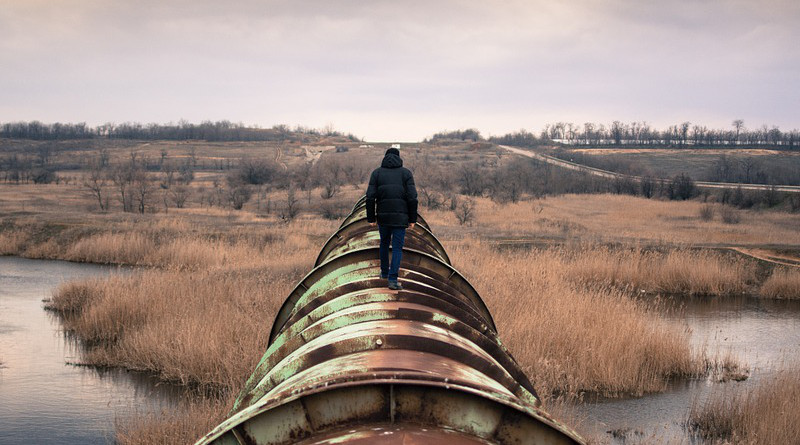
The current dispute between Kyiv and Budapest over the Druzhba oil pipeline, a Soviet-era conduit that transports Russian crude to Hungary via Ukraine, occasionally feels just as confused – and confusing – as pseudoscientific explanations of modern physics.

On the one hand, Hungarian Prime Minister Viktor Orbán claims that the pipeline is not damaged, but that Ukraine is intentionally blocking oil deliveries to bolster support for opposition leader Péter Magyar ahead of parliamentary elections on 12 April. The spat has also led the Moscow-friendly leader to veto a €90 billion EU loan to Kyiv that he had previously greenlit last year.

On the other hand, Kyiv argues that the pipeline was damaged by a Russian attack in late January. Ukrainian President Volodymyr Zelenskyy also claimed this week that his engineers are “undertaking all possible efforts” to repair it: a process he said will last until late April or early May.


So, who’s right?

We don’t know for certain. This is because Ukraine has refused for weeks to allow EU officials to assess the alleged damage. Even though EU inspectors finally arrived in Ukraine this week, it remains unclear whether they’ll actually be allowed to visit the pipeline.

Ukraine’s blocking of EU inspections – combined with Zelenskyy’s explicit reluctance to fix the pipeline and the fact that the alleged repairs will only conclude after the Hungarian elections – suggest that Orbán probably has a point. You don’t need to open the box to know the cat’s dead, especially if something smells putrid.

This view is privately conceded by many European officials. One EU diplomat noted that Kyiv’s refusal to permit inspections has been “anything but reassuring”, even if the Ukrainians “give good explanations” about why the pipeline is difficult to repair.

“If I am very, very honest, I went back and forth several times” about whether Orbán is right, the diplomat said.

In other words, the pipeline might not be in a superposition. But EU officials’ views of it are.
Hungary for trouble

None of this, of course, is to defend Orbán’s decision to veto the €90 billion loan he previously agreed to, which has – understandably – enraged European and Ukrainian officials.

Nor is it even to criticise Zelenskyy’s reluctance to repair the pipeline. On the contrary, there’s arguably something morally perverse about demanding that the leader of a war-torn country help sell the oil produced by the very nation that is attacking it.

Putting ethical assessments to one side, however, Ukraine’s behaviour also raises an economicpuzzle.

As we’ve previously reported, Ukraine is set to run out of money in late April. So if Kyiv is attempting to influence Hungary’s 12 April election – and Zelenskyy has also strongly hinted that this is indeed his goal – why is Ukraine not more worried about its financial predicament? Shouldn’t fears of an imminent financial collapse cause Kyiv to panic, or capitulate?

The obvious explanation – that Ukraine is pinning its hopes on Magyar unblocking the loan on 13 April – doesn’t hold water.

Even if Orbán loses (and recent polls suggest that he might), there is no guarantee that an opposition government will quickly be formed. Orbán himself took seven weeks to form the current government despite winning a landslide victory in 2022.

A potentially more plausible reason is that, regardless of who wins, Ukraine will be able to restart oil deliveries almost immediately after the election. Unfortunately, there’s no cast-iron guarantee that Orbán will unblock the loan post-election even if the crude begins to flow. Nor is there any certainty that Magyar would do the same, despite EU officials’ hopes that he will.
Dismal science fiction

The most important reason, though, is that – much like a simultaneously dead-and-alive cat – the notion of a suddenly cash-strapped Ukraine bears little resemblance to actual reality. Rather, it is one borne of popular-science-style journalism – including, I’m afraid to say, my own.


As analysts at the Kyiv School of Economics Institute point out, the emergence of a fiscal “pressure point” by sometime around late April is “broadly plausible”. However, the specific ways in which this pressure would manifest itself “would depend on the timing of inflows, domestic borrowing conditions, and the government’s ability to manage expenditures”.

Crucially, the analysts note that Ukraine is “unlikely” to default on its debt to foreign creditors even if the €90 billion loan fails to arrive in a timely manner. This, they explained, is because Ukraine is mostly externally indebted through economically favourable, long-maturity loans that are “fully manageable even amid significant financing shortfalls”.

In the event of a severe financing shortfall, Ukraine would likely issue more domestic debt to stay afloat, they added.

Their assessment was broadly shared by Maksym Samoiliuk, an economist at the Centre for Economic Strategy, a Kyiv-based think tank. Cuts to military expenditure are “out of the question” and the “political and practical costs” of slashing social spending are likely “too high”, he said. But Ukraine could issue bonds to state-owned banks to remain afloat, he added.

Samoiliuk also noted that, in a worst-case scenario, Ukraine’s central bank could simply print money as it did following Russia’s full-scale invasion in 2022 – which would likely cause inflation to soar but would, technically, cover any potential funding shortfalls.

“The key point is that Ukraine is not facing an immediate fiscal cliff today, but the margin for manoeuvre would narrow rapidly without fresh disbursements,” the Kyiv School analysts told me. “The longer the delay, the more difficult and costly the adjustment would become.”

In other words: Ukraine has significant funding needs, but it doesn’t face any immediate fiscal crunch. Its financial predicament is urgent – but not critical.

Much like with quantum theory, Ukraine’s political and financial predicament is arguably stranger than fiction. And, crucially, there’s nothing decoherent about it.

Belarus frees another 250 political prisoners as US eases sanctions

Belarus frees another 250 political prisoners as US eases sanctions
In the biggest swap to date, Belarus has released another 250 political prisoners as Lukashenko contnues to trade opposition protestors for sanctions relief. / bne IntelliNews
By Ben Aris in Berlin March 20, 2026

Belarus has released another 250 political prisoners, the largest single release to date, after cutting a new sanctions relief deal with the US, Associated Press reported on March 19.

President Alexander Lukashenko ordered the pardons after meeting US President Donald Trump’s special envoy for Belarus, John Coale, in Minsk, in what officials described as a step towards improving relations between the long-isolated state and the West.

Coale described the move as a “significant humanitarian milestone” and a testament to Trump’s “commitment to direct, hard-nosed diplomacy”.

He said Washington would lift sanctions on two Belarusian state banks and the country’s finance ministry, while also removing leading potash producers from a sanctions list.

Lukashenko has been trading prisoners for sanction relief that is also bolstering his position with the Kremlin as he tries to play the White House off against the Kremlin. Since supporting Russia’s invasion of Ukraine by allowing Russian forces to launch an attack on Kyiv from Belarusian soil, Minsk has been hit by a string of harsh sanctions. Belarus is currently the sixth most sanctioned country in the world, after Russia which is the fifth.

However, surprisingly Lukashenko has nurtured good relations with US President Donald Trump, who called him a “great leader” last year and offered to release all 1,300 political prisoners in exchange for sanctions relief.

Most of the most prominent opposition leaders have now been released after spending five years in jail, including Sergey Tikhanovsky (Siarhei Tsikhanouskiy), the husband of Belarusian opposition leader Svetlana Tikhanovskaya (Sviatlana Tsikhanouskaya) who contested the 2020 presidential elections in his stead after he was arrested before the poll.

Tikhanovsky's dramatic release follows a trip to Minsk by US Special Envoy to the Middle East Steve Witkoff to broker a pardon for the popular blogger who challenged Lukashenko in the flawed 2020 presidential elections that ended in the largest mass protests the country has ever seen.

In exchange, the US has eased sanctions on the national carrier, Belavia and Belarus’ cash cow, the potash mine, Belaruskali.

Tikhanovskaya welcomed the recent release, calling it “a moment of great relief and hope”.

“After years of isolation, people are now free and can finally embrace their loved ones,” she told Associated Press. “There is nothing more powerful than seeing someone who endured unjust imprisonment reunited with their family.” She added that US efforts “are saving lives”.

The release follows a similar exchange in December, when the easing of sanctions on Belarus’s potash sector coincided with the freeing of 123 political prisoners. Minsk has increasingly used such gestures to recalibrate ties with Western governments while maintaining its close alliance with Russia.

Belarus, a country of 9.5mn people, has faced years of sanctions over its domestic crackdown and its support for Moscow’s 2022 invasion of Ukraine. Lukashenko has ruled for more than three decades, and his hold on power was challenged by mass protests following the disputed 2020 presidential election.

Amongst the other prominent figures freed have been Maria Kolesnikova who campaigned with Tikhanovskaya in the 2020 presidential campaign, and Viktor Barbaryko, who was widely expected to win the elections until he was jailed by Lukashenko. Human rights activists Valiantsin Stefanovich and Marfa Rabkova, activist Nasta Loika, journalist Katsiaryna Bakhvalava and opposition blogger Eduard Palchys have all also been released. However, despite these releases, around 1,000 political prisoners remain in jail.

Despite the releases, rights groups say repression remains widespread. Tikhanovskaya said “many people are still behind bars” and that “our goal remains unchanged - to free them all and to put a final end to repression, so that every Belarusian can live freely in their own country.”

Some detainees were transferred to Lithuania without identity documents. Dzianis Kuchynski, an adviser to Tikhanovskaya, described this as a “mockery” intended to complicate their lives abroad.


Kazakhstan no longer paying even lip service to democracy, say analysts

Kazakhstan no longer paying even lip service to democracy, say analysts
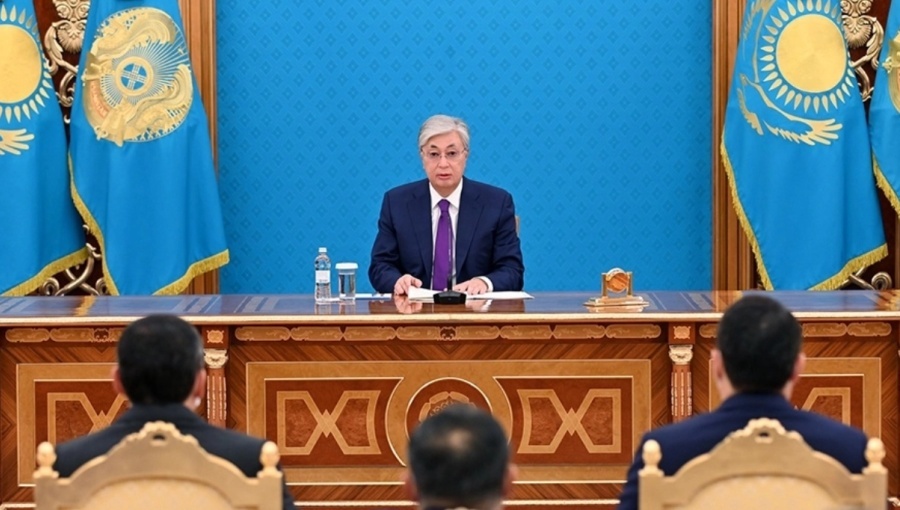
In Kazakhstani politics, authorities are said to have repeatedly used the element of surprise to paralyse political opponents. The referendum suddenly called by Tokayev (pictured) is one such example. / Akorda.kz
By bne Eurasia bureau March 21, 2026

Much of the commentary on Kazakhstan’s adoption of a new constitution in a referendum last week is nothing short of scathing.

Serik Beysembaev, writing for Carnegie, concludes that if the observer “peels away the rhetoric”, they should see the document as “an embodiment of the ruling elite’s fears and a self-serving attempt to preserve the status quo while they still can”, adding: “The need for [President Kassym-Jomart] Tokayev’s regime to pay lip service to democracy disappeared with Donald Trump’s return to the White House.”

Peter Leonard, in a piece posted on his Havli blog on Central Asia, posits: “The new constitution promises a strong president, an influential parliament, and an accountable government. The first of those three is the only one the small print supports.”

And political scientist Dosym Satpayev, interviewed by Azattyk, describes how “we are currently seeing the existence of unstable political institutions in our country being further extended, with such institutions, unfortunately, not fully formed in Kazakhstan.

“And the new constitution does not create a new model of political development, because in its model, the main decision-making centre remains the president, and he acts without a strong parliament, an independent judiciary or other balancing mechanisms. This, of course… further increases the risk of discord and conflict in a closed background environment.”

Many analysts remain taken aback at how Tokayev suddenly permitted himself to sprint for the line by announcing a mid-March vote on an entirely new foundational law, having not long before suggested the proposal would be to amend around 40 constitutional articles, possibly by some time in 2027 (see PANNIER: Tokayev’s sprint for constitutional referendum perplexes Kazakhstan, published by bne IntelliNews on March 12).

Beysembaev, a sociologist who is director of Paperlab Research Center in Astana, Kazakhstan, says the “authorities have not provided a clear explanation for why” the change of course was necessary and allowed.

He reflects: “There are competing theories: maybe Tokayev intends to run for UN Secretary-General and wants a transition mechanism quick, or maybe the presidential administration is pushing through constitutional changes while Kazakhstan’s socioeconomic climate remains relatively favorable.

“Meanwhile, the Constitutional Commission attributes the haste to geopolitical turbulence and growing external threats, clearly alluding to Russia’s unpredictability.

“It is difficult to say which of these explanations is correct. In any case, rapid reforms are nothing new for Kazakhstani politics, where the authorities have repeatedly used the element of surprise to paralyze political opponents.”

Looking at the run-up to the March 15 vote, Leonard says: “There was no debate, no conversation even. Sceptics have been harassed or jailed into submission.”

“Legislation of this kind, he adds, “is not typically written by governments that are confident of their popularity. It is instead the work of governments that understand, even if they will not say so, that independent voices, when they exist, tend to say inconvenient things.”

Under the new constitution, the parliament will be reduced from two chambers to one and renamed the Kurultai, a “folksy name meant to evoke the great councils of the Turkic steppe where chieftains gathered to choose their leaders,” according to Leonard.

Unimpressed with what seems to be in store, he adds: “There is nothing yet to suggest that the Kurultai will be any less supine than its catspaw two-chamber antecedent. Genuinely oppositional parties are shut out of the system. The next parliament will, if anything, serve as an even smoother conveyor belt for presidential diktats.”

Looking at the upcoming establishment of a vice-president role, Beysembaev says the post could be used to test potential successors to Tokayev, who turns 73 in May, but suggests: “However, a simpler scenario remains on the table: extending Tokayev’s term. The adoption of a new constitution could provide a legal basis. Tokayev’s inner circle publicly rejects this possibility, but such assurances carry little weight in Kazakhstani politics. [First president of post-Soviet Kazakhstan Nursultan] Nazarbayev, for example, mentioned a transition repeatedly, but ultimately carried it out on his own terms and at his own leisure.

“At the same time, the reform also affects the future of those currently in power. Tokayev’s inner circle views the constitutional changes as an opportunity to secure their positions for the post-Tokayev era. The emergent power structure, in which the president and his appointees control the courts, law enforcement agencies, and electoral process, provides Tokayev’s circle with far more reliable guarantees than any informal agreement.

“These maneuvers attest to Tokayev’s personal evolution as a politician. Before coming to power, he was primarily a diplomat and technocrat. However, over the years of his presidency, Tokayev has developed his own vision of the state: it should be the chief arbiter of public life and prioritize stability over freedom. The new constitution cements this vision as part of Kazakhstan’s official ideology and a super-presidential system as President Tokayev’s political legacy.”

Satpayev, speaking to Azattyk, talks of how referendum day produced more scenes showing how the government, with no genuine democracy in play, often perceives the people “as just a crowd, spectators in play”.

Officials, he says, “are constantly trying to create an image of the president as an artificial superman, a peerless person”.

Yet, in the eyes of Beysembaev, the public certainly do not buy it. “The public,” he says, “reacted to the constitutional changes far more negatively than the presidential administration had likely anticipated. Predictably, the authorities are cracking down—in particular, by arresting activists and social media users who opposed the amendments and called for a boycott of the vote. Following the traumatic experience of [the ‘Bloody January’ unrest of] 2022, the regime prefers to extinguish potential hotbeds of discontent before they find the right kindling.”

Saturday, March 21, 2026


Chile's border wall targets a problem already in decline


ANOTHER FASCIST WALL AGAINST THE MULTITUDE

Chile's border wall targets a problem already in decline
"This is not just a trench, it is much more, it is a system," Chilean President Kast said. "We want to use excavators to build a sovereign Chile, a Chile that has been violated by illegal immigration, by drug trafficking, by organised crime."
By Alek Buttermann March 18, 2026

José Antonio Kast's fortified frontier project combines trenches, electrified fencing and military deployment, but unauthorised crossings had already fallen by more than half before he took office.

Five days after taking office, Chilean president José Antonio Kast stood before heavy machinery in the Atacama desert and watched excavators break ground on what he called a new era of national sovereignty. The site was Chacalluta, the main land crossing between Arica and the Peruvian city of Tacna, and the work underway, three-metre-deep trenches cut into the earth by the Chilean Army's Corps of Military Labour, was the opening act of his administration's most visible policy: the Plan Escudo Fronterizo.

"This is not just a trench, it is much more, it is a system," Kast told reporters. "We want to use excavators to build a sovereign Chile, a Chile that has been violated by illegal immigration, by drug trafficking, by organised crime."

The figures complicate that framing. According to Chile's National Migration Service, unauthorised crossings through the northern border peaked at roughly 56,000 in 2021 and had already fallen to 26,275 by 2025, a decline of more than half, before Kast's policies came into effect. The country also remains, by regional standards, among the safest in Latin America, and no conclusive link has been established between migration and the rise in vehicle theft, kidnapping and homicide that Kast cited on the campaign trail.

What the numbers cannot fully capture is the political logic of the project. Migration had become, as Alejandro Mejía, professor of political science at Peru's Universidad Nacional Mayor de San Marcos, told La República, "the cornerstone of the campaign that brought Kast to the presidency." The wall is as much a communication strategy as a security one.

The plan envisions a layered architecture extending over more than 520 kilometres, from Chacalluta in the north to the crossing at Colchane near the Bolivian border. Initial works are concentrated near boundary markers 1 and 15 on the Peru frontier, skirting the formal Chacalluta crossing and a rail line. Official transit points will remain open.

Beyond the trenches, the design calls for walls and fencing of up to five metres, electrified perimeter barriers, thermal surveillance towers, radar systems and autonomous drones equipped with facial recognition. Military and police units are to maintain a permanent presence along the full length. Interior Minister Claudio Alvarado, who travelled north with Kast, set a 90-day benchmark: "Chile should be able to see the results of this border control work within the next three months."

Financing is being drawn from internal state resources, specifically the Army's budget and the Ministry of Public Works, without open public tender or private contractors. The total cost has not been disclosed. The speed of this approach facilitates deployment but limits scrutiny, particularly if the project expands to its proposed scale.

Legally, the government moved in parallel with the construction. In his first days at the Palacio de La Moneda, Kast signed decrees appointing a retired vice-admiral as presidential commissioner for the entire northern zone, expanding military authority in border areas and tightening migration law. Legislation submitted to Congress proposes reclassifying unauthorised entry as a criminal offence rather than an administrative violation, and restricting social benefits for irregular migrants.

The most legally sensitive aspect of the project may not be the wall itself but its location. Miguel Ángel Porras, an international law specialist at Lima-based firm Ugaz Zegarra, told Infobae that construction near the so-called Triángulo Terrestre, a 3.7-hectare coastal strip that remains a live point of contention despite the 1929 Treaty of Lima governing the broader land boundary, could be read as unilateral demarcation.

"There is no legal impediment for a country to erect physical barriers on its territory to protect its border," Porras said. "However, if the wall is built in disputed areas, especially near the Triángulo Terrestre, it can be interpreted as a unilateral demarcation act and strain international relations." In that scenario, he noted, Peru retains the right to bring a fresh case before the International Court of Justice in The Hague, the same tribunal that resolved the two countries' maritime boundary dispute in 2014 but left the terrestrial limit contested.

The Peruvian government has so far kept its response measured. Foreign Minister Hugo de Zela said Lima respects Chilean sovereignty and was monitoring the works for any impact on national security and human rights. He noted that Chile was acting within its own territory and that the barrier could, in one reading, reduce irregular entries into Peru as well. Peru has nevertheless reinforced police and military presence in Tacna and declared a state of emergency in the region. Former prime minister Denisse Miralles warned that Peru would not hesitate to take its own measures if territorial integrity were compromised.

On the central question of whether the wall will work, expert opinion is sceptical. Porras pointed to the US-Mexico barrier, the Spanish enclaves of Ceuta and Melilla, and Israel's fencing as evidence that physical barriers redirect rather than reduce migration flows, pushing routes into more remote and dangerous terrain while raising the cost and risk for migrants. "These measures are showy and do not stop the flow of migrants," he said. "It is a populist measure that seeks to show immediate results to the electorate, but it does not resolve the migratory phenomenon or the underlying security."

Porras also warned of an "embudo", or funnel, effect on the Peruvian side of the border, where migrants blocked from crossing into Chile could accumulate in vulnerable conditions and generate pressure on local authorities in Tacna. That concern has already prompted Lima to act: a binational migration cooperation committee, drawing in both foreign ministries and interior ministries, has been established to coordinate responses.

Economic ties between the Tacna-Arica corridor add a further complication. The area has long been bound by significant cross-border trade and tourism, and any disruption to mobility, even if aimed at irregular crossings, risks spillover effects on formal commercial activity. Mejía, the UNMSM political scientist, noted that the mutual economic dependence of the two northern cities is substantial, and called for the reactivation of the Chile-Peru Binational Cabinet, which has not met since 2022. "It is a vital space to place irregular migration as the principal bilateral agreement for short-term action," he said.

Kast, a seasoned right-wing politician who resoundingly won the December presidential runoff election, secured a 57% approval rating in the Cadem poll taken the weekend after the groundbreaking, suggesting the rapid deployment has resonated domestically. He has called on the entire political spectrum to support the border effort, including acknowledging the progress made by his left-wing predecessor Gabriel Boric, but not at the speed we estimated, he added. Defence Minister Fernando Barros Tocornal sought to reassure Lima that expulsions of irregular foreign nationals would not direct people toward Peruvian territory, framing the policy as consistent with good bilateral relations.

The deeper drivers of migration, economic instability and political crises in Venezuela and other countries of origin, remain beyond Chile's control. Whether the Plan Escudo Fronterizo narrows the flow further, pushes it elsewhere or simply photographs well at a groundbreaking ceremony may become clear within the 90-day window the government has set for itself.


Multitude: war and democracy in the Age of Empire /. Michael Hardt and Antonio Negri. p. cm. Sequel to: Empire. Includes index. ISBN 1-59420-024-6. 1 ...

4.3 The Multitude against Empire. 393. Notes. 415. Index. 473. Page 11. PREFACE. Empire is materializing before our very eyes. Over the past several decades, as ...