Tuesday, March 31, 2026


Australia warns social media platforms of 'major gaps' in under-16 ban enforcement


By Anna Desmarais & AP
Published on 

The eSafety Commissioner identified 'poor practices' from social media companies, such as platforms allowing unlimited attempts for a user to pass their age assurance methods.

Australia’s online safety watchdog said on Tuesday it was considering legal action against social media companies, including Facebook, Instagram, Snapchat, TikTok and YouTube, alleging they are not doing enough to keep Australian children younger than 16 off their platforms.

The Australian law introduced in December restricts children under 16 from creating or keeping accounts on platforms such as Facebook, X, Snapchat, Instagram, TikTok, and Google-owned YouTube.

Three months after the ban, five million accounts have been deactivated, according to the country's eSafety Commissioner. However, a substantial number of children continue to retain accounts, create new ones or pass age assurance systems on five platforms: Facebook, Instagram, Snapchat, TikTok and YouTube, a new compliance report reads.

The social media sites do not have "effective" ways to report any underage accounts on their platforms, nor have good enough methods to stop them from being created, the office said.

Australia's eSafety Commissioner Julie Inman Grant said she expects the platforms to comply with Australia's safety laws "or face escalating consequences, including profound reputational erosion with governments and consumers".

Her office has a range of enforcement powers, including issuing a civil penalty of up to $49.5 million Australian (€ 29.8 million).

The eSafety Commissioner's office said it will decide on whether to pursue legal action against Facebook, Instagram, YouTube, Snapchat and TikTok by mid-year. If that happens, the eSafety office said it will be prioritising cases that demonstrate "systemic failures" in keeping children off their platforms.

Age-restricted platforms that aren’t under investigation are Reddit, X, Kick, Threads, and Twitch.

Australia's Communications Minister Anika Wells told reporters that social media platforms are "choosing to do the absolute bare minimum because they want these laws to fail."

“This is the world-leading law. We’re the first in the world to do it. Of course, they don’t want these laws to work because they want that to be a chilling effect on the dozen countries that have come out since Dec. 10 to follow Australia’s step,” she added.

What did the platforms have to say?

Meta, which owns Facebook and Instagram, told The Associated Press it was committed to complying with Australia’s social media ban. “We’ve also been clear that accurately determining age online is a challenge for the whole industry,” the statement said.

Snap Inc. said it has locked 450,000 accounts in compliance with the law and continues to lock more every day.

“Snapchat remains fully committed to implementing reasonable steps under the legislation and supporting its underlying goal of improving online safety for young Australians,” a Snap statement said.

Snapchat's CEO Evan Spiegel called Australia's ban a "high-stakes experiment" in an opinion piece last month.

"To be clear, I don’t believe Snapchat should be subject to a ban in the first place," Spiegel wrote. "I don’t believe cutting teens off from these relationships makes them safer or advances their wellbeing."

Spiegel advocated for app-store-level age restrictions for youth instead, which experts have said would not go far enough to protect young people from mature content.

TikTok declined to comment on Tuesday, and Alphabet Inc., which owns YouTube and Google, did not immediately respond to a request for comment.

Reddit has filed one of two constitutional challenges to the social media ban in the Australian High Court. The lawsuit alleges the country's law is unconstitutional because it infringes on the implied freedom of political communication.

The first hearing is in May, when the court will set a date for oral arguments.


Social media slams Donald Trump as he shares AI-generated images of Presidential Library skyscraper

Social media slams Donald Trump as he shares AI-generated images Presidential Library skyscraper
Copyright AP Photo - EricTrump X

By David Mouriquand
Published on 

An AI-generated video of the Donald J Trump Presidential Library has been shared online. Social media users were quick to criticise the project, pointing out that while the skyscraper features a lot of gold, there's one notable absence: Books.

Donald Trump has unveiled plans for his Presidential Library in the form of an AI-generated Miami skyscraper.

He shared images of the Donald J Trump Presidential Library on Truth Social – a branded building which also features a ballroom, an Air Force One aircraft, gold escalators, and a huge gold statue of Trump in the pose of his 2024 assassination attempt.

“Over the past six months, I have poured my heart and soul into this project with my incredible team at [The Trump Organization],” the president’s son Eric Trump wrote on X. “This landmark on the water in Miami, Florida will stand as a lasting testament to an amazing man, an amazing developer, and the greatest President our Nation has ever known.”

It didn’t take long for people to rip into the project and notice one glaring omission: Books.

Indeed, no books can be seen in the library... An oversight which speaks volumes about Trump and the limitations of AI.

"It's just a monument to himself", one person wrote online, while another commented: “How ironic a library for a guy that can't read.”

“The gold statue in Trump’s new library (of himself) looks awfully familiar to a few others from around the world,” California Governor Gavin Newsom and regular Trump critic wrote on X, referencing China and North Korea.

Further criticism was swift, with many slamming the fact that the Trump family – who are supposed to be worth billions – are crowdfunding the project...

Check out some of the reactions below, which reference the absence of books, the poor timing of such an announcement, and the Epstein files:

In case you were wondering about the location of the library, Trump legally declared himself a Florida resident in 2019. The native New Yorker changed his permanent residence to his Mar-a-Lago Club in Palm Beach, Florida.


Wolf bites woman in Hamburg shopping area in Germany's first attack in decades

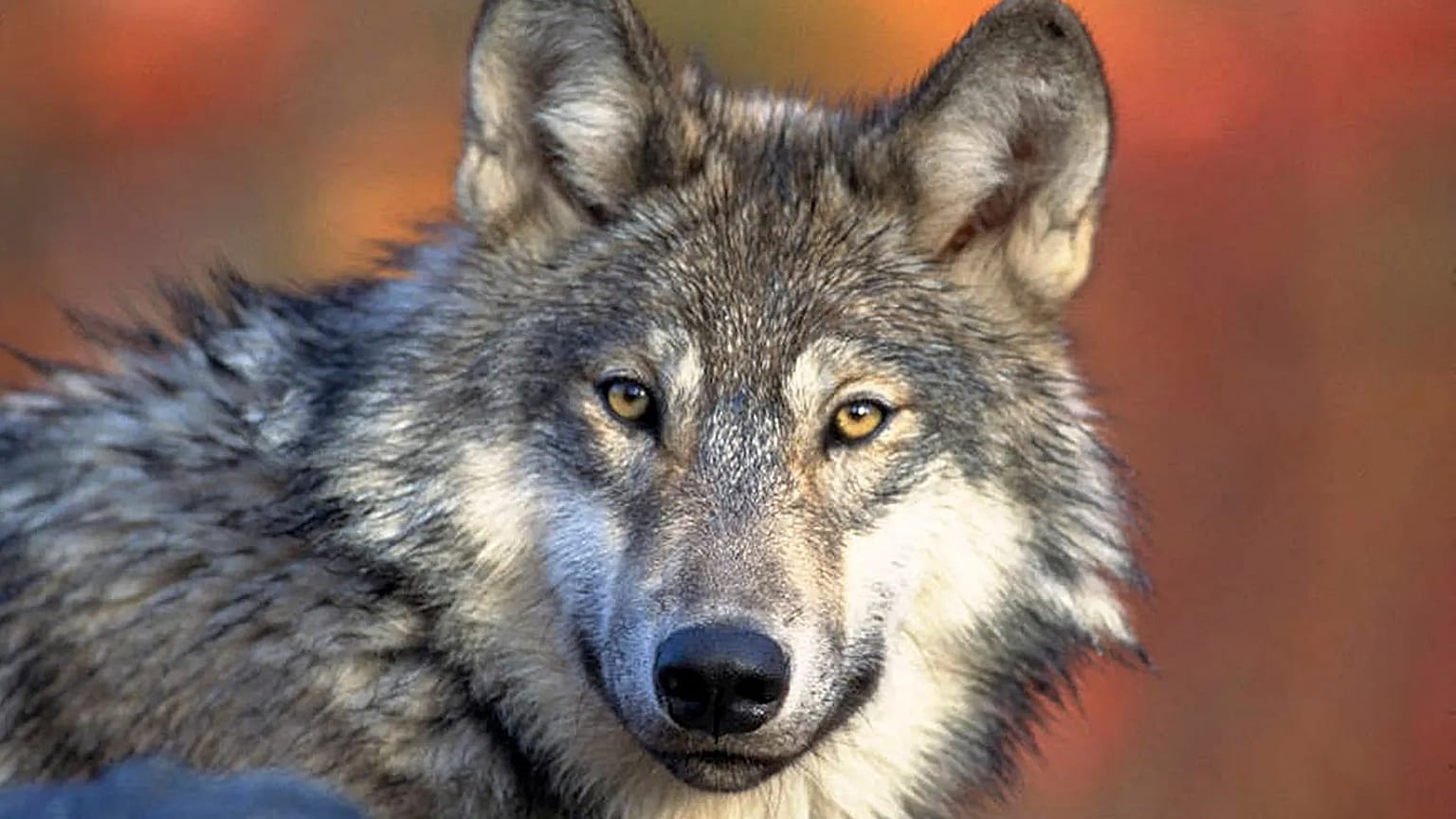
This photo provided by the US Fish and Wildlife Service shows a grey wolf, 18 April, 2008
Copyright AP Photo


By Franziska Müller & Gavin Blackburn
Published on 


Wolves are now present in almost all EU countries, and their numbers have increased from 11,000 in 2012 to more than 20,000 in 2023. Italy, Bulgaria, Romania and Spain have populations of more than 2,000.

A wolf bit a woman in a shopping district of Hamburg before it was rescued from a lake in Germany’s second city, authorities said, in what is believed to be the first such attack since wolves returned to the country in 1998.

The fire service said that the 65-year-old woman was taken to a Hamburg hospital after the unusual encounter near the Altona station, west of the city centre, on Monday evening.

The daily newspaper Bild said she had sustained facial injuries but police didn't detail where she was bitten or give any explanation about what led to the attack.

Later on Monday evening officers located the wolf at the Binnenalster lake in downtown Hamburg following calls alerting them to a sighting of the animal there and in other locations, police said.

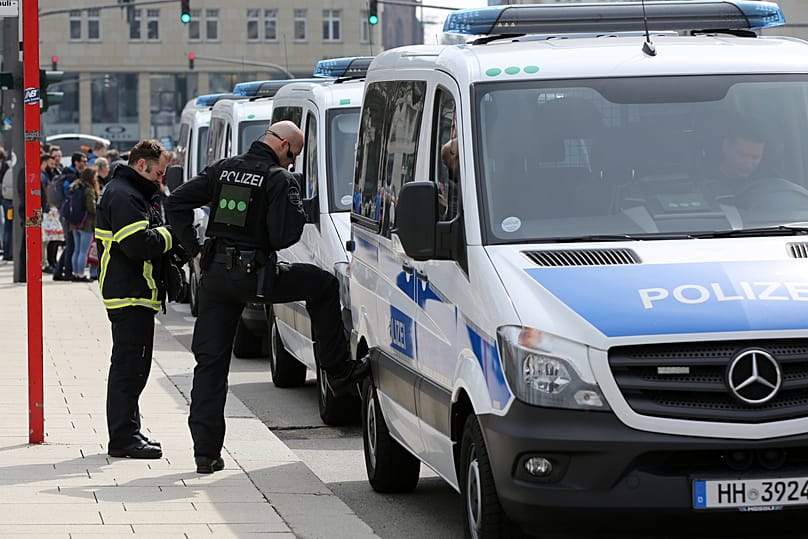
Police on the street in downtown Hamburg, 12 April, 2018
Police on the street in downtown Hamburg, 12 April, 2018 AP Photo


Local media reported that it was removed from the water with a snare and taken to an enclosure on the outskirts of the city.

Officials believe the wolf involved was the same one sighted in Blankenese, an outer suburb of the city, over the weekend.

Experts believe the animal is a young wolf searching for its own territory, accidentally wandering into the city.

Hamburg's regional government noted that wolves generally avoid contact with people and dogs, and the unusual urban environment would be very stressful.

Germany's Federal Agency for Nature Conservation said it was the first time a person was known to have been attacked by a wild wolf since the animals reappeared in the country after 150 years' absence nearly 30 years ago, the dpa news agency reported.

Wolf attacks on livestock in Europe have been a growing concern for farmers for years, however. Last year, the European Parliament voted to change the status of wolves from "strictly protected" to "protected".

Wolves are now present in almost all EU countries, and their numbers have increased from 11,000 in 2012 to more than 20,000 in 2023. Italy, Bulgaria, Romania and Spain have populations of more than 2,000.

Last week, the German parliament gave final approval to legislation making it easier to shoot wolves that kill or wound livestock.


Real wages in Europe near pre-pandemic levels, but Iran crisis clouds outlook

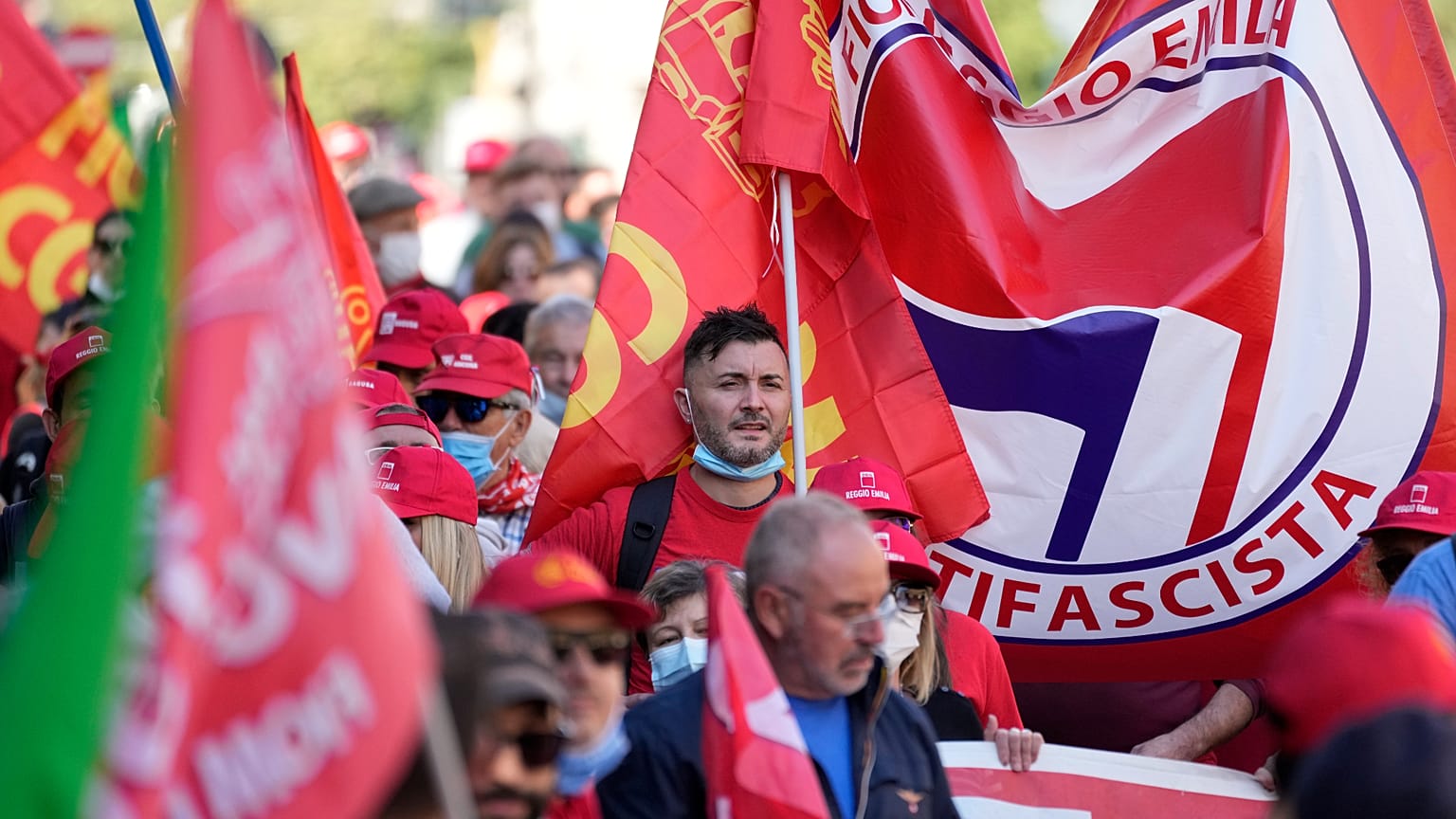
Demonstrators take part in a march organized by Italy's main labor unions, in Rome's St. John Lateran square, Saturday, Oct. 16, 2021.
Copyright Copyright 2021 The Associated Press. All rights reserved


By Servet Yanatma
Published on 

The post-pandemic surge in inflation across Europe reduced the purchasing power of advertised wages in major economies. In some countries, wages have now caught up, but in others they still lag behind.

European inflation surged in 2022 to levels not seen in 40 years. It peaked above 11% in the EU, mainly driven by a rise in energy prices after Russia’s invasion of Ukraine.

This surge eroded workers’ purchasing power across advanced European economies as consumer prices rose faster than wages.

Have wages recovered? Not yet. They remain below early 2021 levels although many major European economies are close to catching up, according to analysis done by the Indeed Wage Tracker based on advertised wages on their platform.

Indeed has constructed a cumulative real wage index, rebased to 100 in January 2021.

Values above 100 mean that cumulative advertised wage growth has outpaced inflation. Values below 100 indicate that workers’ purchasing power remains lower.

As of January 2026, real wages based on job postings are still below January 2021 levels in seven major European economies. However, most are close to recovering, except for Italy and Spain. In the euro area, the index stands at 96.2.

The Netherlands shows the strongest recovery at 99.7, followed by the UK at 99.5. Ireland and Germany (both at 99.1) are also close to the 100 level. In France, the index is 98.1.

Spain matches the euro area average at 96.2 while Italy has the lowest level at 89.9. This means that if a worker earned €1,000 in January 2021, their real wage in January 2026 would be €899 after accounting for nominal wage growth and inflation.

Why real wages in Europe have not recovered?

Pawel Adrjan, Director of Economic Research at Indeed, emphasised that Russia's invasion of Ukraine was the trigger that drove a surge in energy and food prices, which pushed eurozone inflation above 10% in 2022 and opened up the real wage gap across Europe.

“There are several reasons the gap persisted for a long time and still persists in some countries,” he told Euronews Business.

According to him, there are two main reasons. The first is that wage-setting in Europe adjusts slowly and incrementally, with collective bargaining cycles locking in pay rises for multi-year periods.

Inflation increased rapidly and turned more persistent than originally expected, and wages had to play catch-up over a long period.

Second, central banks like the ECB eventually reacted by increasing interest rates to bring down inflation.

This started to cool the labour market, which is seen in the Indeed Job Postings Index coming down from 2022-23 onwards in major economies like Germany, France and the Netherlands.

But it also weakened the bargaining power of unions and individual workers in subsequent wage negotiations, further delaying the catch-up in real terms.

Inflation vs weak wage growth

Adrjan noted that the inflation shock was a common driver everywhere, but the degree to which wages have responded differs across countries.

In the US and UK, nominal wage growth was strong enough to broadly close the gap, due to tight labour markets driven by high demand for workers, as well as large minimum wage increases and labour supply constraints in the UK.

In Germany and the Netherlands, delayed but robust collective bargaining increases have brought them close to full recovery.

For France and Spain, it's more balanced: wage growth has recently exceeded inflation.

Italy is an outlier

“Italy is the extreme case. The problem there is overwhelmingly on the wage growth side, with posted wages barely growing at all, meaning the gap is actually still wide,” Adrjan cotninued.

The paradox is that Italy's job postings are well above pre-pandemic levels but this strong hiring demand has not translated into pay growth, consistent with the fact that the labour market was still less tight than in other large European economies.

Lower-paid workers hardest hit by wage lags

Indeed data does not show the real wage evolution by occupation. Adrjan stated thatgenerally, lower-paid workers in standardised roles are the most exposed to longer adjustment delays because their wages adjust less frequently and are more tightly anchored to minimum wage floors.

When asked when workers can realistically expect real wages to recover, and about the impact of the Middle East crisis, Pawel Adrjan pointed to possible risks linked to the Iran conflict.

He noted that before the Iran war, most northern European economies were within a percentage point or two of full recovery and the European Commission projected aggregate EU real wages would close the gap this year or next.

Pawel Adrjan, Director of Economic Research at Indeed
Pawel Adrjan, Director of Economic Research at Indeed Indeed

“The conflict has raised the risk that this timeline will not be met and that countries where purchasing power has essentially recovered will see real wages decline again. Current high energy prices are essentially a second inflationary shock that is hitting before the first one has been fully absorbed,” he said.

If the conflict is short, recovery may be delayed by only a few months for countries close to the finish line.

“If disruption persists through the summer refill season, we may see a replay of the 2022 dynamic that will push recovery back to 2027-28 for many workers,” he added.


Travelling to Spain for Easter? Flight disruption as airport staff call 'indefinite' strikes

The stoppages will coincide with a peak travel period, when millions of passengers pass through Spanish airports.
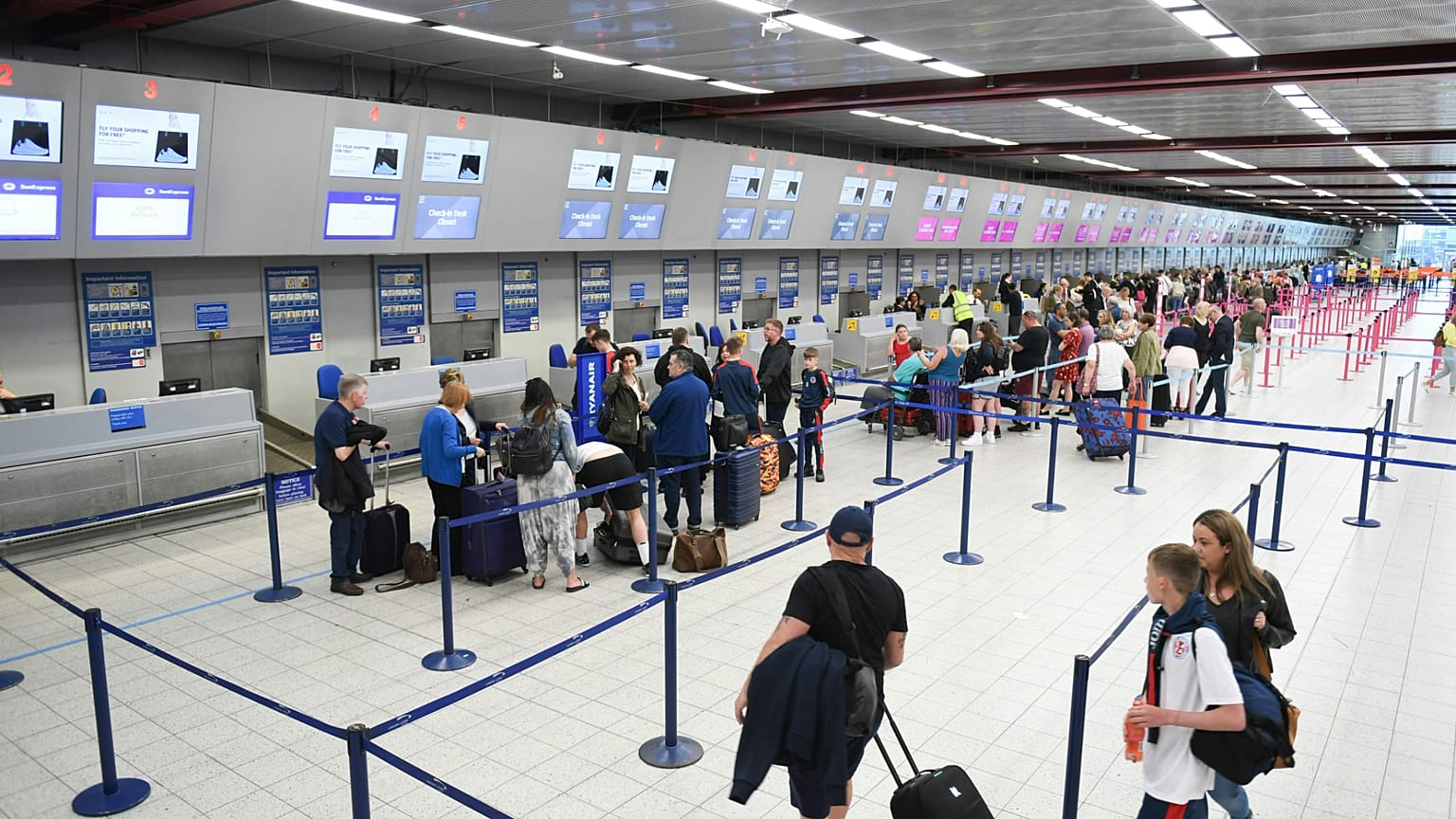
Copyright Phil Mosley

By Rebecca Ann Hughes
Updated 

The stoppages will coincide with a peak travel period, when millions of passengers pass through Spanish airports.

Travellers heading to Spain this Easter are being warned of severe flight disruption as airport staff begin strikes on Monday 30 March.

Spanish unions have called for industrial action at several major airports, with workers responsible for baggage handling, aircraft turnaround, boarding, and other essential ground services all set to walk out.

The stoppages coincide with a peak travel period, when millions of passengers pass through Spanish airports.

Here’s what travellers need to know.

Major Spanish airports brace for strike disruption

Airport ground staff are striking during the busy Semana Santa (Easter Holy Week) travel period.

The walkouts have been called by Spanish unions including UGT, CCOO and USO, following disputes over salaries, working conditions, and the push for sector-wide labour agreements.

Staff of the company Groundforce, which has contracts at 12 Spanish airports, will begin an indefinite strike from Monday 30 March. It will see stoppages on Mondays, Wednesdays and Fridays, during three time slots: from 5am to 7 am, from 11 am to 5 pm and from 10 pm to midnight.

Other handling staff have planned 24-hour strikes from 2-6 April. Should no deal be reached, these may continue on a recurring basis up to 31 December, including at weekends.

The industrial action will affect some of Spain’s most trafficked airports, including Madrid-Barajas, Málaga-Costa del Sol, Alicante-Elche, Palma de Mallorca, Barcelona-El Prat, Gran Canaria, Tenerife Sur and Norte, Lanzarote, Fuerteventura, Valencia, Ibiza and Bilbao.

Travellers should prepare for queues and delays

As per government legislation, a minimum service is guaranteed. This means flights are expected to operate, however travellers should be prepared for delays and schedule changes.

Limited ground staff means flight turnaround times can be longer, causing ripple effect delays for subsequent services.

At affected airports, passengers should also budget for longer check-in and bag drop queues, baggage handling delays and slower boarding and disembarkation processes.

Travellers are advised to stay updated on their flight status through airline or airport websites, arrive early for check-in and use hand luggage if possible instead of checking bags.

Passengers with flights cancelled by the strikes are entitled to rebooking on an alternative flight or a full refund.

Airlines are also obliged to provide stranded travellers with food and accommodation if necessary.