Monday, April 06, 2026

La France Insoumise After the Local Elections

Source: Jacobin

The recent local elections across France offer a revealing snapshot of the balance of forces on the Left — and above all, of the position of La France Insoumise (LFI) as it looks toward the presidential elections in 2027. Rather than confirming a crisis or the hegemony of a particular tendency, the results point to a more complex reality. This is a socially dynamic party territorially advancing in some parts of France, yet unable to impose itself as a dominant force across the entire left.

Just a year ahead of the presidential race, these elections were not merely local contests but functioned as a strategic rehearsal for national power. For the first time, LFI invested heavily in municipal campaigns, seeking to consolidate a durable base capable of supporting a future presidential victory. Control over city halls matters symbolically, and even more so institutionally, shaping political networks, public visibility, and even influence over the composition of the Senate.

From this perspective, LFI’s results were mixed. Notably, it failed to make a decisive breakthrough that would have consolidated its left leadership status. The party made some progress, particularly in suburban areas of large cities, confirming its capacity to mobilize and win in specific contexts. On the other hand, LFI continues to have a weak presence in many parts of rural France — in the kind of regions where the gilets jaunes movement emerged, with their predominantly white, precarious populations. Some are concluding that such demographics tend to gravitate toward the hard-right Rassemblement National — an assessment that seems premature, as their radicalism and rejection of the establishment might still swing either way.

Another of the central dynamics of the election was the strategy of the Parti Socialiste (PS). It is openly seeking to hegemonize the left-wing camp ahead of the presidential race, and it now faces a strategic dilemma over whether to organize primaries to designate a candidate. What the Parti Socialiste lacks is a natural runner. In day-to-day coverage, Raphaël Glucksmann appears as the strongest contender, but has not been confirmed. On the one hand, the impression is that outside the TV spotlight he carries little real weight; but the precedent of Emmanuel Macron’s unexpected rise to power in the 2010s shows that, in France, the media-driven construction of a candidacy can be highly effective. As for LFI, there is no doubt that Jean-Luc Mélenchon will run for the fourth time, the third as its candidate. (What is rarely discussed openly is his succession; at seventy-five years old, it is likely to be his last presidential bid.)

In terms of a broader leadership strategy, the PS approach during the municipal elections was hard-edged, affirming its intention to spearhead the Left. It refused alliances with LFI in key cities while building coalitions with the Greens and the Communists. In general, this tactic proved electorally effective. Indeed, the traditional left retained control of many of France’s most important cities, including the three largest ones: Lyon, Marseille, and, crucially, Paris, underlining a strong performance overall.

Rupture

LFI tended to identify itself with a program of rupture — and perhaps as a result, secured triumphs in poorer, more multiethnic municipalities such as La Courneuve, Roubaix, and Creil. These victories showcased an insurgent social and political profile: elected officials from immigrant backgrounds, typically of African and Arab origin, emerging directly from the popular classes. This narrative was particularly striking in Saint-Denis, the largest district in the Parisian suburbs, where the mayor elected was Bally Bagayoko — the son of Malian parents, and a Muslim — a figure who embodies both LFI’s anti-racist struggle and the promise of republican equality. (The biggest development in the days following the election is the overt racism from the Right against the new mayor of Saint-Denis — which has seen many ghosts from the past come to light.)

LFI is advancing a form of political representation rooted in the peripheries, one that challenges the traditional sociological composition of political elites in France. At a deeper level, this political shift raises fundamental questions about the French republican model. Officially, France recognizes no minorities, only equal citizens. In practice, however, working-class suburbs like Saint-Denis — home to ethnic minority populations, migrants, and the traditional working class — are treated as internal fractures of the Republic, and commonly subjected to aggressive policing, stigmatization, and political marginalization. The rise of what LFI calls a process of “creolization” directly challenges this illusion, seeking to create a new imaginary that aligns with the wider evolution of French society. This perspective does not reject universalism outright but aims to reconstruct it on more inclusive foundations, indeed as an affirmation of essential French republican ideals.

In this sense, LFI’s strategy attempts to articulate social equality within a broader conception of “the people.” Their local governments are also programmatically ambitious. They hope to renew a welfare-state agenda centered on democratic redistribution of resources: social housing, price controls, free public transport, and free school meals. In this sense, LFI is attempting to anchor its project in concrete improvements to everyday life, particularly for working-class populations. The difficulty lies in how to fulfill such promises against a backdrop of French economic stagnation and now-chronic crisis, today likely heightened by the escalating wars across the globe.

Coalitions, or Not?

Despite its advances, LFI faces clear limits, as the election results underline. Its inability to secure major metropolitan centers, most notably Toulouse (which the party could and perhaps should have won), underscores what an uphill task it is to translate its local breakthroughs into national dominance. Le Monde and others have argued that some of the towns where the PS formed an alliance with the LFI were lost and that, conversely, where PS kept its distance from the LFI a series of victories were secured.

The quandary of whether to coalition-build (or not) must also be understood in light of recent political developments. In the 2024 parliamentary elections, LFI achieved a major and unexpected victory within the framework of the Nouveau Front Populaire (NFP), finishing ahead of the far right that had been widely predicted to win. However, due to disagreements and intransigence on all sides, the alliance ultimately collapsed, leaving room for a counterattack. Such developments significantly altered LFI’s position in the wider system, as the political and media establishment cast it not merely as a rival contender, but as the principal threat to the Republic, even more than Marine Le Pen’s party.

The municipal elections were widely seen as an opportunity for such tendencies to halt LFI’s momentum and render it politically unviable. While this objective was not achieved — LFI was neither defeated nor marginalized — the level of growth the party might have hoped for failed to materialize. The outcome is, then, ambiguous: LFI has not been neutralized, but it now faces real difficulties in establishing itself as the leading force of the Left. It appears to have a solid strategy of local implantation, with figures other than leader Mélenchon, such as Clémence Guetté, Manuel Bompard, and Danièle Obono playing strong roles in public debate, demonstrating the party’s organizational ability. However, it is not so strong as to bring together other left-wing groups around a common project under its leadership. The kind of coordination attempted in the parliamentary elections of June–July 2024 under the NFP banner now seems much more difficult.

What seems to have been confirmed above all is something that has been growing evident in recent years (at least since Macron dissolved parliament in June 2024), and which was reinforced by the tone of the municipal campaign: namely, the widespread and effective demonization of LFI. The “cordon sanitaire” that until recently was placed around the far right so that a republican front could form against it now seems to have been shifted to the other end of the political spectrum. The dominant discourse in major media and rival parties (also from many figures within the PS, Greens, and Communists) is that the enemy to be fought — the one that truly threatens France’s cohesion — is now LFI. A tone reminiscent of the anti-communism of the Cold War and the interwar years has again gained traction. No cost seems too high to ward off the perceived threat posed by LFI.

The accusation of antisemitism attached to LFI seems to be the most difficult one to counter. Perhaps this insistence conceals something else: it is possible that what is most unacceptable about LFI for French society is its attempt to effectively integrate descendants of immigrants into the party and into positions of power. In a society that has long been marked by a complex social fracture, the abolition of long-standing racial hierarchies is often seen as unacceptable. The attempt to challenge them through new means may be what most scandalizes a segment of French society that seems unwilling to let these hierarchies fall away. A fundamental episode of the campaign illustrates this drift. The murky killing of Quentin Deranque (a confirmed neofascist activist), in Lyon on February 12 was immediately linked to LFI and resulted in a minute of silence in the National Assembly, something that has never before happened in the wake of a political killing (especially not those carried out by police, which occur regularly in France).

It is possible that a significant portion of the establishment would consider a Rassemblement National victory acceptable if its opponent were LFI. Among the so-called extremes, the elites may already have made their choice. This tendency was embodied in this campaign by examples like Rachida Dati, the conservative Républicains contender in the runoff for the Paris mayoralty. She attempted to label the — ultimately victorious — PS candidate as far left, trying at all costs to associate him with LFI’s radicalism.

The PS might yet be able to compete in the presidential race next year. But one of its major difficulties is that, unlike other parties — notably France Insoumise — it does not yet have a strong, obvious candidate to put forward. More broadly, it may be being sidelined in favor of a centrist alliance that will ultimately bear a strong resemblance to that which propelled Macron to the presidency. There is still a possibility for the Left to win in France. But in order for this to happen, some sort of pre-election agreement is needed, indeed one that doesn’t look close at hand. Otherwise, the resulting fratricide will have immense consequences for French society and beyond.Email

Frederico Lyra is a musicologist and philosopher. He is an associate of the Alameda Institute.

A History of US-Iran Relations

Source: Originally published by Z. Feel free to share widely.

When the US backed dictator of Iran, Shah Mohamed Reza Pahlavi was overthrown in 1979 and the Islamic Republic led by the Ayatollah Khomeini was established in its place–and in November 1979, the Khomeini regime oversaw the taking of American hostages–US National Security Advisor Zbigniew Brzezinski wrote to President Jimmy Carter: 

“We are never going to be able to work with the Khomeini regime…[Khomeini’s Islamic revolution] was a true expression of deep-seated national will, and the anti-Americanism we are seeing is a true expression of national outrage at US actions over the past 26 years…We are not in control of events and we must prepare for the worst. The oil fields are what count in the final analysis.” 

Brezinski’s memo to Carter neatly encapsulates, 47 years after it was written, why the US has joined Israel in military aggression against Iran. A popular revolution overthrew a US backed dictator in one of the most strategically important and oil rich countries in the Middle East and established Iran as hostile to US and Israeli hegemony in the region. The current war is US revenge on the Iranian people for the 1979 revolution. 

Indeed that is the real reason for the war–not the Iranian regime’s massacre of thousands of protestors in the months before the war–or most particularly, the supposed threat of–in reality non-existent–Iranian nuclear weapons program. After all, Iran scrupulously adhered to the Joint Comprehensive Plan of Action (JCPOA)–the nuclear agreement it signed with the Obama administration in 2015 until Trump abrogated it in 2018, claiming he could get a better deal out of Iran. Going back to 2007, and including the current Trump administration, US intelligence agencies have consistently determined that Iran has no active nuclear weapons program. According to Oman’s foreign minister–who mediated talks between Iran and the US–Iran had agreed to completely give up its stock of enriched uranium just before Israel and the US launched their aggression on February 28th. 

The current aggression is but the latest crime against the Iranian people by American imperialism going back many decades. Brezinski’s Iranian “national outrage at US actions over the past 26 years” referred to the US being the primary foreign sponsor of the Shah’s dictatorship. It was the US and Britain who engineered the August 1953 coup which overthrew the Shah’s Prime Minister Mohammed Mossadegh after the latter nationalized the holdings of the Anglo-Iranian Oil Company (AIOC–later British Petroleum). The coup allowed the Shah to eliminate the last vestiges of Iran’s parliamentary system and establish a near totalitarian dictatorship. 

While criticism of his human rights record started seeping into American mainstream media in the 1970s, the Shah was frequently portrayed by politicians and media hacks alike as a glamorous and enlightened monarch, bringing his backward people into the modern age. In contrast, Martin Ennals, Secretary General of Amnesty International, described the Shah’s dictatorship in 1976 thusly: “the Shah of Iran retains his benevolent image despite the highest rate of death penalties in the world, no valid system of civilian courts and a history of torture which is beyond belief. No country has a worse human rights record than Iran.”

The US entanglement with the Shah’s regime went well beyond selling it billions of dollars in weapons annually, allowing the dictator to build up a bloated military with his oil riches while most of his people lived in misery. The US and Israel trained SAVAK, the Shah’s notorious secret police. The US endorsed the Shah’s so-called White Revolution launched in 1963, supposedly a multifaceted effort to modernize Iran. However much of the White Revolution was hollow PR: for example, US Peace Corp volunteers on the ground in Iran discovered that health and education programs for Iran’s rural communities publicly touted by the Shah simply didn’t exist in any form; the villagers lived in as much misery as before.

After the Shah’s 1979 overthrow, the US inflicted additional punishment on the Iranian people: for example, the US deliverance of components to make chemical and biological weapons to Saddam Hussein for  use against Iranian troops during the Iran-Iraq War; the shootdown of Iran Air flight 655 in 1988 by the USS Vincennes, killing 290 civilians; and most significantly decades long economic sanctions which have immiserated much of the Iranian population while strengthening the government. 

The Iranian Working Class 

In January a compelling and timely book on Iran-US relations–which provides almost all the quotations and points I make above–was published by Afshin Matin-Asgari, professor of history at California State University, Los Angeles.  What makes the book particularly unique is the author’s attempt to weave a key player into his narrative that is often missing from accounts of US-Iran relations: the Iranian working class. 

The Iranian working class has been a key force over the last century in struggling against foreign domination of Iran–as well showing great courage in struggling for better working and living conditions against the wishes of economic oligarchs, domestic and foreign. One of the most legendary movements of the Iranian working class during the early and mid-20th century  was the oil workers movement centered in Abadan, the port city and capital of Khuzestan province, 

 Another notable Iranian working class  achievement was the establishment of social democratic governments in Iran’s northern Azerbaijani and Kurdish provinces under Soviet military occupation during and just after World War II. Although operating under Soviet military occupation, Matin-Asgari notes that western diplomats believed that these regimes had massive support amongst the poor and working class in the region. When, under American pressure,  the Soviets withdrew their military from northern Iran in 1946, and the Shah’s British and American backed military re-occupied the region, Matin-Asgari relates what happened next from a quotation by US Supreme Court Justice William O. Douglas, who was travelling in the Middle East at the time: 

“When the Persian Army returned to Azerbaijan it came with a roar. Soldiers ran riot, looting and plundering, taking what they wanted. The Russian army had been on its best behavior. The Persian Army–the army of emancipation–was a savage army of occupation. It left a brutal mark on the people. The beards of peasants were burned, their wives and daughters were raped. Houses were plundered; livestock were stolen. The Army was out of control. Its mission was liberation; but it preyed on civilians, leaving death and destruction behind.” 

According to Matin-Asgari, as many as 20,000 people may have been executed by the Iranian army and its allied right wing militias during the reoccupation campaign.

Mullahs vs. Leftists

Matin-Asgari writes that the rulers of the Islamic Republic in Iran have, over the years, specifically invoked the Azerbaijani and Kurdish republics in an attempt to bolster their own anti-imperialist and pro-worker cachet. Indeed, they have periodically indulged in socialist sounding, pro-worker rhetoric. 

During the Shah’s regime, Ayatollah Khomeini–then in exile in Qom, Iraq–endorsed opposition to a 1970 conference in Tehran attended by representatives of American corporations to discuss investment in Iran. Khomeini declared that “any agreement that is concluded with these American capitalists and other imperialists is contrary to the will of the people and the ordinances of Islam.” Matin-Asgari notes that one of Khomeini’s proteges, a young Shiite cleric, was tortured to death in SAVAK custody for publicly opposing this conference.. 

The Iranian working class and secular progressives led the 1978-79 revolution which overthrew the Shah–before it was co-opted by the Islamists led by Khomeini. It has been long forgotten, but Matin-Asgari notes that hundreds of thousands of workers across Iran seized control of their workplaces during the revolution, establishing shuras (workers councils)–these were eventually crushed by the Khomeini regime and the Iranian left as a whole was violently repressed.

Matin-Asgari writes that in 1979, the Khomeini regime and the United States seemingly had little ground for hostility. In spite of its mimicking of left wing rhetoric, the Khomeini regime was, in reality, ferociously anti-communist. The US made no initial attempt to overthrow Khomeini. Matin-Asgari suggests that the regime’s endorsement of the seizure of American diplomat hostages on November 4th 1979 by Islamic student radicals was motivated by the regime’s domestic political battles rather than any real antagonism to the United States. Khomeini feared his government was losing popular support to radical leftists within Iran and so decided to support the seizure of hostages so as to bolster his own anti-imperialist credibility among his people.

The Role of AIPAC

Matin-Asgari describes a picture where it seems rather curious that the US and Iran should be enemies rather than friends: in different ways both regimes are devoted to repressing workers in the interests of capital accumulation. Moreover after it was established in 1979, the Islamic Republic displayed a ferocious anti-communism: Matin-Asgari writes that the CIA and MI6 may have even fed the Khomeini regime intelligence which lead it in 1983 to launch show trials against leaders of Tudeh, Iran’s once proud Communist Party. 

Since the 1990s, Matin-Asgari notes, Iran’s leaders have adopted neoliberal policies within the country. They have sought to make Iranian workers more insecure: 6 percent of Iranian workers were classified as temporary employees in 1990 but that rose to 90 percent by 2014. The regime has also sought to create favorable conditions for foreign investment in the country–and of course, the Iranian working class has paid the price for this. In contrast to the views of pro-Iranian campists like Max Blumenthal–who imply that any mass protest against the Iranian government is entirely rooted in the machinations of the CIA and Mossad–Matin-Asgari writes that economic grievances among ordinary Iranians have driven the periodic wave of mass protests which the regime has violently suppressed. Key economic sectors in Iran are controlled by the Iranian Revolution Guard Corps in a highly secretive  fashion–corruption has flourished under such conditions. 

Thinking that the US and Iranian ruling classes share the same broad interest in facilitating capital accumulation at the expense of ordinary workers and thus have no real reason to be enemies, Matin–Asgari points to AIPAC’s influence on the US congress as being the primary source for driving hostility between the US and Iran. In the 1990s there arose a strong corporate lobby in the US–centered in the oil and agricultural industries–advocating for normalizing US relations with Iran so they could take advantage of business opportunities in the country.  The late Dick Cheney, as CEO of Halliburton in the 90s, even advocated for easing US-Iran tensions. Yet this lobby was unsuccessful, defeated by the anti-Iran pro-Israel lobby which induced President Clinton to issue an executive order voiding a contract to develop oil fields that the American company Conoco (now Conoco-Phillips) signed with Iran in 1995. 

In placing such stress on AIPAC influence, I think that Matin-Asgari misses the point that I argue above: that, regardless of what AIPAC or corporate lobbies do, US policy makers have long sought  to punish Iran for taking itself outside the US sphere of influence in 1979. The Iranian regime–however hollow its posturing may be–brands itself as the leader of “anti-establishment” forces in the Middle East: as the champion of Palestinians facing US-Israeli genocide, of Lebanese resistance to Israeli aggression, of the Shia living as second class citizens in US backed dictatorships in Saudi Arabia and Bahrain. This makes the regime a mortal enemy from the perspective of US policy makers, whether Democrat or Republican. 

In spite of such a disagreement, I can well recommend Matin-Asgari’s book. It is very readable and has admirably judicious analysis of primary sources. 

Connecting the War on US Workers with War on Iran

Source: Originally published by Z. Feel free to share widely.

Income inequality has been escalating in this country since around 1980 and continues to get worse. Manufacturing jobs have been disappearing since the late 1970s, and the jobs that have “replaced” them have been substandard.

The US labor union movement has done nothing to counter this, and as a result, the percentage of the unionized workforce is below 10%. Our national debt is over $39 TRILLION. Our “leaders” have no solutions for working people, whether they be Democrat or Republican, or leaders of the labor movement. In addition, Donald Trump has now initiated a war in Iran, even though the Iranians posed no credible threat to the US. He wants our sons and daughters to do the dirty work for Israel.

Led by fools and liars, our troops may be heading into a war that is likely to produce a high level of casualties. The situation requires some fresh thinking if we are to try to change it. This talk will try to clear up the fake underbrush about our situation so we can concentrate on the future.


Author’s note:

I was asked to speak to a group in the San Francisco Bay Area about the war on the US working class and the war on Iran, which I did on March 29 (2026).

To do this, I went back to an article I published in 2009, detailing the war on working people in the US.  This article had been published in an Indian academic journal (Indian Journal of Politics and International Relations, and my article—you must scroll down—is in the issue at https://sirp.mgu.ac.in/wp-content/uploads/2023/04/IJPAIR-Vol.2.-1-January-June-2009.pdf) and was partially republished by Z Net. It wasn’t published in several US publications to which I had submitted, and I have never seen it utilized by academics or activists in the United States, so it is all-but-unknown.  However, the material is increasingly important and arguably should be revisited.  It looks at changes in the US economy and the effects on workers between 1947 and 2005.

What my article shows is that this period is divided into two parts.  The first, from 1947-1973, shows the US economy growing, doubling real incomes after inflation was removed.  Not only that, but after dividing US income levels by fifths (quintiles), which is a standard tactic for sociologists, we can see that this growth level was distributed fairly equally across all five quintiles.  (Note:  all quintiles are 20% of the US income distribution except for the top level; the US Census Bureau does NOT show data for the 96-100th percentiles, so the top category only shows 15% of the income distribution.  Nonetheless, my data is comparable since this is true across all time periods included herein.)  Anyway, the main point is true:  US incomes basically doubled over the period, and this held true for all five quintiles.  This is the period where the “American dream” was based on real economic growth and was distributed fairly equally.

However, the second part of the data, 1973 to 2005, we see radical change.  First, economic growth was much, much less, and incomes were unequally distributed.  In the first sub-part, 1973-2001, we see some growth at all levels—although far less than that of the 1947-73 period—but it became very unequal as one goes up the income level:  the lowest quintile (1st) saw 14% growth, while the fifth , quintile saw 58% growth.

The second sub-part of the second part of the data—2001-2005, or W’s first term—we see things worsen drastically:  not only is their less growth—only 1.94% for the fifth (top) quintile!—but the bottom 80% (no misprint) LOST income during this period!  The top 5% captured whatever economic growth there was, not sharing it with the bottom 95%.

But what has happened since 2005?  To be honest, I don’t have the data to be able to present concretely.  The Census Bureau quit presenting it in ways that I could combine with that data that I had assembled earlier.  However, we had the Great Recession in 2008-09, and we know how well that went for people.  I don’t think there was much recovery between 2009 and 2019, especially in the early years, and then we had the COVID epidemic, and following….  So, my data is a snapshot of economic reality just before the Great Recession.

I think, by any reasonable standard of interpreting this economic data, that we can safely say that the ruling elites have been directly attacking Americans of all income levels, with the greatest negative impact being on the poorest quintile, since especially the turn of the 21st Century!

After this presentation—which has not been put together in this way by anyone else to my knowledge—I then discussed the economic impact of the war on Iran and how it was also hurting Americans and, as always, hurting those in worse shape more than those in better shape.  Obviously, gas prices have shot up, and about 35% of the world’s fertilizer is now unavailable to the Iranian closure of the Strait of Hormuz, which will ultimately hurt farmers around the world, reducing crop production and food consumption, while raising the prices of agricultural-based commodities.  Not good—and bound to get worse the longer Trump’s war continues.  (And we are subsequently learning of further impacts, such as denial of helium, an essential chemical needed by the microchip industry; I’m confident in asserting that the impact will expand even more as the war continues.)

So, I definitively established—based on empirical data—that the economic war against most Americans began in the earliest days of this century and this war is escalating with Trump’s war against Iran.  No wonder most people are hurting from these on-going and now combined assaults, and it’s getting notably worse for many!

We discussed other things like how the US National Debt has expanded from $ .9 trillion in 1981, when Reagan entered the presidency, to over $39 trillion and growing today under Trump.  We also talked about the measure of income inequality—as computed by the CIA—showed the US to be more unequal in 2007 than some of the poorest nations on Earth, including Mozambique, Cambodia, Laos, Vietnam, and elsewhere.  I’m not going to elaborate here, but these issues are explained and discussed in my article.

Interestingly, unlike many  Q & A sessions, the Q & A session after my presentation turned into a forum of very experienced organizers covering a wide range of issues, including globalism, white supremacy, the US Empire, building political organizations, as well as confronting issues such as how to consciously operate politically in a world that Trump seeks to totally dominate while seeking to build a strong and effective anti-war movement.   This discussion might be of interest to many people, so I’m including this in the presentation.

For those who don’t know me or are unaware of my work over the past 40 years, I’m a US military veteran (USMC, 1969-73, who stayed in the States the whole time), a long-time political activist and union member who has worked on a global scale, and have worked as an industrial printer, secretary, high school teacher, and finally as a Professor of Sociology at Purdue University Northwest; I’m now retired. I have published over 300 articles in the US and in 11 different countries.  My writings—most linked to original articles—can be found at https://www.pnw.edu/personal…/kim-scipes-ph-d/publications . 

If you are trying to think about organizing people, I think this video would be of great interest. If you think it’s worthy, please share widely with your contacts and ask them to share with your’s. When we get good material, we need to share it widely!  However, watching and discussing with groups of people might be an even better use of this video.

I hope it will be of interest to each of you and your friends!  Toward global solidarity!Email

avatar

Kim Scipes, PhD, is a Professor Emeritus of Sociology at Purdue University Northwest in Westville, IN. His latest book, Unions, Race, and Popular Democracy: Building a Progressive Labor Movement, will be published in August 2026 by Cornell University Press. For a list of his over 300 publications, most linked to the original article, see his website at https://www.pnw.edu/personal-faculty-pages/kim-scipes-ph-d/publications.

Five Points for Peace: Why China’s Iran Initiative Missed the Headlines?

Source: Originally published by Z. Feel free to share widely.

China’s conduct in the UN Security Council often disappoints those who expect it to openly confront what they see as an unrestrained American imperial machine. This expectation was especially evident in China’s abstentions on two key recent occasions: UNSC Resolution 2803 on Gaza, which effectively enabled Trump’s ‘Peace Board’ experiment and even hints at bypassing the UN, and the latest vote on Iran (Resolution 2817), which produced the distorted impression that Iran is the aggressor while the US and its Gulf allies appear as victims.

This text is not about dissecting Beijing’s long-term strategy. China does not rush; it plays a long game, guided by principles and a strategic horizon that resembles a global chessboard. One point, however, is worth stressing: China’s restraint in the UNSC is not weakness or moral ambiguity. It is a calculation in a system where rules are anything but neutral.

When resolutions are written to predetermine blame and erase origins of conflict, a ‘yes’ vote legitimizes power narratives, while a ‘no’ vote risks confrontation with the nuclear force: a US that is increasingly unpredictable and politically/militarily volatile. China, therefore, chooses a third path: neither endorsing imposed frames nor dismantling the UN order it still relies on. This is quiet resistance, an attempt to preserve space for mediation and multilateralism within an institution increasingly shaped by unipolar logic.

Yet China is not a passive bystander, as it is often portrayed. This perception reflects both Western frustration and expectations within parts of the Global South—and even segments of the left—that Beijing should act more decisively, even ‘revolutionarily.’ In the absence of alternatives, many search for a geopolitical savior. China appears as the only major power that is economically stable, globally embedded, and directly affected enough to act.

At least three initiatives illustrate this approach lately.

On the first anniversary of the Ukraine war, China issued a 12-point peace framework. It was normative, not operational: principles without enforcement. Beijing positioned itself as a neutral mediator, cautiously reopening space for dialogue between Russia and Ukraine. The West reacted sharply. The same West, it should be recalled, had already undermined the Istanbul peace process in March 2022. As Aaron Maté noted, in NATO-aligned media ‘there is nothing more controversial than a peace proposal.’ Since then, diplomacy has been recast as betrayal, while Ukraine is pushed toward attritional war to the last soldier—a proxy conflict serving external interests.

At the Valdai Conference in 2024, I experienced this climate directly. My attempt to introduce a human dimension—emphasizing that the ‘pieces on the board’ are living people on both sides—was met with irritation. Karaganov left the room immediately after posing a question he did not wish to hear answered. Only a Chinese colleague and I spoke explicitly in terms of peace. The war itself, meanwhile, has gradually faded from attention, even as its global consequences deepen.

That same year, China, together with Brazil, attempted another diplomatic opening. This marked a shift: from abstract principles to institutional architecture, and from unilateral framing to Global South participation. The proposal called for immediate de-escalation, an international peace conference with both parties present, prevention of escalation, and attention to global spillovers in food and energy security.

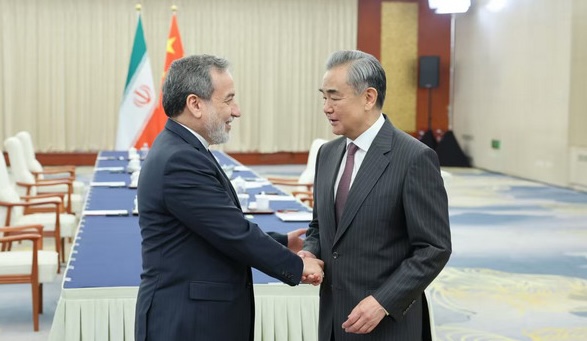
Then, at the end of March, before Trump’s latest escalation rhetoric about ‘returning enemies to the Stone Age’, a five-point peace plan emerged, backed by China and co-facilitated by Pakistan, with behind-the-scenes involvement of Turkey, Egypt, and Saudi Arabia.

It reads like common sense: immediate ceasefire and cessation of hostilities; launch of peace talks respecting sovereignty of Iran and Gulf states; protection of civilians and infrastructure, including energy systems; safeguarding maritime routes, especially the Strait of Hormuz, and a UN-led framework grounded in international law and multilateralism

Its authors were probably fully aware that this was symbolic diplomacy in a moment of near-total political deafness, where even extreme (‘stone age’) threats from Western capitals pass without consequence. It is less a roadmap than a gesture, a foot wedged in a door before it slams shut. Here it is important to emphasize an argument often made by my Chinese colleagues. In material terms, the asymmetry is obvious: the United States maintains more than 800 military bases across continents and possesses an unmatched capacity to project force into every corner of the globe. China, by contrast, does not—and indeed does not seek to—develop comparable instruments for extraterritorial military intervention.

But this is not a question of capability alone; it reflects fundamentally different logics of action. The United States tends to pursue influence through control—political, economic, and often military—over other states. China, by contrast, frames its international role around cooperation and shared development, privileging interdependence over coercion.

Within this framework, China’s restraint should not be misread as absence or passivity. Even in constrained circumstances, it preserves a narrow but persistent opening for peace. That opening—the refusal to abandon diplomacy even under escalation conditions—is arguably the core value running through its initiatives.

In the context of this article, the most striking element is not the plan itself, but its reception: silence. When it comes to the Iranian political sphere, as my Iranian friend elaborates, two contrasting reactions emerged. Some welcomed the statement, pointing to the embedded acknowledgment of Iran’s right to oversee the Strait of Hormuz as a source of cautious optimism. Others, however, argued that any effort to restore peace in the region that fails to name, condemn, and hold accountable those responsible for aggression is ultimately meaningless.

Western media, otherwise saturated with every provocation and insult from political elites, largely ignored it. At best, it appeared as a brief note in select outlets in West Asia, Turkey, India, Pakistan, etc. Even the Chinese media gave it limited prominence. This is not merely a matter of media oversight; it reflects a deeper hierarchy of narrative relevance.

Rational explanations point to structural issues. In mediation theory, there is a well-known ‘credibility dilemma’: effective mediation requires both neutrality and leverage. China has neutrality and economic leverage, but not security-enforcement power. Unlike Western actors, it does not impose outcomes through military means. This creates a gap: without coercive instruments, its initiatives appear symbolic rather than actionable.

The second constraint is political. Key actors are not aligned. Iran distrusts Pakistan, despite its role as co-sponsor and its dual orientation toward China and the US. Tehran also rejects direct negotiations with Washington, which at times even fabricates their existence. The timing is therefore unfavorable: both sides believe they can endure and avoid defeat. On the other hand, among the states that stand behind this proposal, there is a deep gap of distrust.

From a Western perspective, the silence is unsurprising. Narrative control matters more than factual reporting. The dominant frame continues to dehumanize Iran and rationalize escalation through familiar tropes. Peace initiatives disrupt this structure and are therefore marginalized.

Another layer is strategic: allowing a Chinese-led peace discourse to gain traction would undermine Western narrative monopoly at a moment when public fatigue with prolonged conflict is growing.

Is the Chinese initiative, therefore, irrelevant? That would be a mistake. China does not practice megaphone diplomacy. It waits, builds, and recalibrates. Its approach is often described as the ‘power not to use power’—prioritizing networks over coercion, and stability over spectacle.

In contrast, Western policy culture operates on speed: fast interventions, fast narratives, fast exits—and short memory.

One additional factor looms in the background: Trump’s expected visit to Beijing. This alone requires diplomatic restraint to avoid triggering wider systemic shocks.

Ultimately, the five-point plan should not be read as a failed initiative, but as a signal: that even in an environment saturated with escalation, alternative frameworks still exist. Sovereignty, multilateralism, civilian protection, and humanitarian restraint remain on the table – even if they are increasingly ignored.

China does not threaten war. It does not promise quick and worldwide salvation. But it continues to insist that even in an age of collapsing restraint, war is not the only script available.

And sometimes, that alone is the message. In due time, there is a hope that others will recognize its meaning. The very fact that, after a long time, China, Russia, and France stand on the same side at the UNSC may be just the beginning of the opposition to the US bullying and destruction.

Biljana Vankovska is a professor of political science and international relations at Ss. Cyril and Methodius University in Skopje, an associate of the Transnational Foundation of Peace and Future Research (TFF) in Lund, Sweden, and the most influential public intellectual in Macedonia. She is a member of the No Cold War collective.

This article was produced by Globetrotter.777