Friday, March 06, 2026

CRIMINAL CAPITALI$M

DOJ probes US fertilizer market for possible price fixing


The Justice Department has been investigating whether several leading producers of commercial fertilizers colluded to raise prices, according to people familiar with the matter.

The companies whose conduct is under scrutiny include phosphate and potash suppliers Nutrien Ltd. and Mosaic Co., as well as CF Industries Holdings Inc., Koch Inc. and Norway’s Yara International ASA, said the people, who asked not to be identified discussing a confidential investigation. CF Industries, Koch, Yara and Nutrien control most of the nitrogen-based fertilizer sold in the US.

The probe is examining companies’ pricing practices for possible civil and criminal antitrust violations, the people said. The investigation is in the early stages and is being run out of the DOJ antitrust division’s Chicago office, they said.

Only a handful of companies control the supply of most fertilizer in the US, which has raised concern among farmers and government officials. The Biden administration also expressed concerns about high fertilizer prices due to market concentration and the impact of the war in Ukraine.

The companies haven’t been accused of wrongdoing by antitrust officials, and investigations don’t necessarily lead to charges or lawsuits.

Nutrien didn’t have an immediate comment. The other companies and the Justice Department didn’t respond to requests for comment. A US Department of Agriculture spokesperson referred to DOJ for comment.

Mosaic shares fell as much as 4.3% to the lowest price since mid-January. CF Industries dropped as much as 5.5%, the most since November, while Nutrien shares were down as much as 2.9%.

Key priority

The investigation reflects a key priority of both political parties to police conduct that increases costs for farmers and consumers. Addressing high food costs has been a goal of the Trump administration’s response to Americans’ growing dissatisfaction on the rising cost of living, which propelled Democrats to victories over Republicans in several key elections in November.

Potash and phosphate fertilizer prices have eased since last fall after spiking as a result of President Donald Trump’s trade war. Still, prices remain historically elevated, and the escalating conflict in the Middle East is reigniting worries about reliance on foreign fertilizers. Disruptions in the Gulf are already pushing prices higher for urea, a form of nitrogen fertilizer widely used for corn and other crops. The higher fertilizer costs have put a strain on US farmers struggling with low crop prices and shrinking markets.

Nutrien and Mosaic control about 90% of the production capacity of both potash and phosphate fertilizers, according to agriculture industry watchdog Farm Action. Nutrien, CF Industries, Koch and Yara control about 82% of nitrogen-based fertilizers, Farm Action says.

Meanwhile, USDA Deputy Secretary Stephen Vaden has accused Nutrien and Mosaic of colluding to limit US fertilizer supply and control prices. In January public comments to the National Agricultural Law Center, Vaden called the two companies a “duopoly” and said the administration will “do everything it can” to ensure affordable fertilizer prices for farmers.

Joint venture

Vaden cited a Canadian joint venture between Mosaic and Nutrien, Canpotex Ltd., as an example of how the companies “collude to control prices up there.” While such a venture doesn’t exist in the US, Vaden said the companies have constrained supply, “driving up the price that farmers pay.”

Vaden didn’t mention the antitrust probe and it’s unclear if the dynamics he referenced are part of the Justice Department’s investigation.

While the first Trump and Biden administrations increased antitrust enforcement in the tech sector, the agriculture industry has seen less action, despite a rise in concentration.

That has left just four companies in control of more than half of all beef, poultry and pork processed in the US, while a different quartet of firms controls majorities of soybean and corn seeds, according to Farm Action.

The Trump administration has made a series of moves to boost competition in the sector. In September, the Justice Department and Agriculture Department signed an agreement to police competition in agriculture markets. About a month later, Trump ordered a federal investigation into the meatpacking industry, blaming “majority foreign-owned” companies for soaring beef prices.

In December, Trump issued a directive for the DOJ and the Federal Trade Commission to investigate the US food supply chain for potential price fixing and other anti-competitive behavior that drives up costs of goods such as meat, seeds and fertilizer.

The Justice Department is also investigating pricing practices among the largest US egg suppliers.

Executive order

Trump in February signed an executive order to protect domestic supplies of elemental phosphorus and glyphosate-based herbicides, noting that there is only one domestic producer of both materials.

Mosaic is the top US fertilizer producer and makes almost half of the phosphate-based crop nutrients used by US farmers. The company in 2023 asked the Commerce Department to investigate phosphate fertilizers from Morocco, which led to added duties on those imports that are still currently in place.

Early in February, corn farmer groups in Iowa and Texas both pressed Attorney General Pam Bondi for an update on the DOJ’s work in the fertilizer market.

“The current state of the farm economy is dire,” Hagen Hunt, president of the Texas Corn Producers Association, wrote in a letter to Bondi. “While the prices farmers receive for their crops has softened, the costs of the essential nutrients needed to grow them remain artificially inflated.”

(By Josh Sisco and Ilena Peng)


LME fines PAC Global Services Spain for warehouse violations


The London Metal Exchange fined warehouse operator PAC Global Services Spain (PGS) 250,000 pounds ($334,175) in a disciplinary action due to breaches of its rules, the LME said on Wednesday.

The exchange, the world’s oldest and largest market for industrial metals, listed eight violations of its warehouse agreement by PGS in a members’ notice.

The most serious violation was found during an investigation of a PGS warehouse in Taiwan, where it found copper stored in an open yard outside the facility.

“The storage of metal on warrant outside of an LME approved shed is an egregious breach of the warehouse agreement … and as such the financial penalty reflects this,” the notice said.

PGS runs 39 LME-registered warehouses in Europe and Asia, according to the LME website.

The LME is owned by Hong Kong Exchanges and Clearing Ltd.

($1 = 0.7481 pounds)

(By Eric Onstad; Editing by Sharon Singleton and Mark Potter)


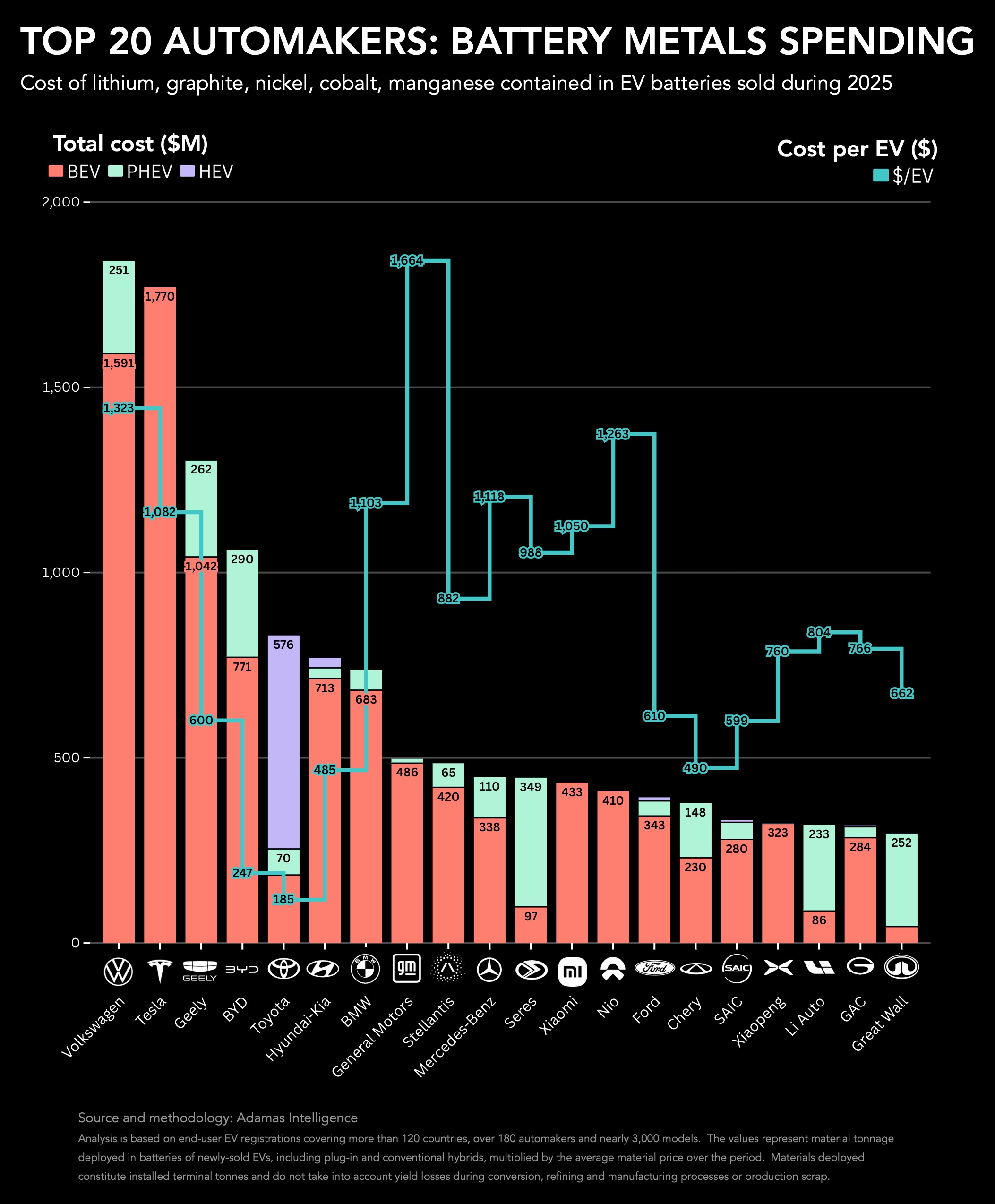
RANKED: Top 20 automakers by battery metals spending


Volkswagen plant in the 1960’s. (Image courtesy of Roger W. |Flickr Commons.)

The global passenger EV market, including plug-in and conventional hybrids, fell short of 30 million units last year, but still showed robust growth of 18% year over year.  In combined battery capacity deployed – a better indicator of battery materials demand than unit sales alone – the electric car market expanded by 22%. 

According to data from Toronto-based EV supply chain advisory Adamas Intelligence, 2025 was the first calendar year battery capacity deployment topped 1 TWh. To put that in perspective, for calendar 2021, the total was 286 GWh, meaning the global market measured in GWh has nearly quadrupled in just four years and is ten times larger than in 2019 –  powering through the pandemic. 

Turnaround 

The EV Metal Index pairs metals demand with prices in the EV battery supply chain. That paints a very different picture of the battery metals market and shows just how deep the slump of the last few years has been for raw material suppliers to the industry. 

But even by this measure, the outlook has become much brighter. The raw material bill for the contained lithium, graphite, nickel, cobalt and manganese in the batteries of EV sold over the course of  2025 climbed to $15.6 billion, an 11% gain over the year before.  

If $15.6 billion sounds modest, the installed tonnage does not take into account any losses during processing, chemical conversion or battery production scrap (where yield losses often go well into double digit percentages and at much higher rates during startup) so required tonnes and revenues are meaningfully higher at supply chain entry points.

Granted, that’s still almost half of the extraordinary level reached in 2022, but 2026 is already shaping up to be another year of strong growth as rising lithium and nickel prices continue to work through the supply chain and cobalt prices stay on the boil.

The right chemistry

While lithium and graphite represents a relative constant in the EV industry, the demand for nickel and cobalt have been impacted by ongoing thrifting of the latter by automakers in NCM (nickel-cobalt-manganese) and NCA (nickel-cobalt-aluminum) batteries and both by ever faster adoption of LFP (lithium-iron-phosphate) cathode chemistries. 

In 2025 LFP packs accounted for nearly half of the total in battery capacity deployed terms, despite a limited presence outside China (where it now commands 70% and growing share of the market). 

Some of the negative effects of LFP’s intrusion in markets in North America and Europe are being blunted by a parallel trend towards higher nickel content NCM batteries (60%-plus nickel content and more often 80% and above) which remains the go-to chemistry outside China.


RANKED: Top 20 automakers by battery metals spending

Volkswagen picks up speed

Drilling down from the overall figure shows vast differences between automakers in terms of battery metals usage and costs.  

Despite selling nearly 500,00 more full electric vehicles last year than Tesla (and 2.2 plug-in hybrids), BYD’s bill of materials was $710 million below that of its Texas-based rival. BYD’s in-house manufactured batteries cost the Chinese company  $1.1 billion in 2025, about the same as in 2024 despite selling 230,000 more BEVs and PHEVs than the year before. 

BYD’s all lithium-iron-phosphate (LFP) battery-powered model line-up concentrated at the lower end of the market and a sales mix that is now majority plug-in hybrids kept sales-weighted average material costs per EV to just $247 versus $1,082 for every Tesla model sold. 

Even when considering only fully electric vehicles, BYD’s spending on raw materials is way below the average at $366 per BEV. LFP-powered Models 3 and Y manufactured in China are a big part of Tesla’s sales but the slow buildout of LFP cell factories outside China means these nickel cobalt and manganese free powerpacks are largely absent from Western automakers’ lineups.

The comparable number for the Volkswagen stable which includes Audi, Porsche, Skoda and others –  is $1,624 per BEV. EV sales by  Volkswagen – for the first time the world’s biggest spender on battery metals – is split 70:30 for BEV:PHEV which accounts for some of its high-spending but the bulk of Wolfsburg’s budget went to battery nickel and cobalt.  Volkswagen’s Powerco has commissioned an LFP battery plant in Germany and is building one in Spain targeting production some time next year.

Generally expensive 

From Volkswagen, there’s another big step up to General Motors which has to contend with an average battery metals bill of a hefty $1,664 even after a rise of 17.6% year on year thanks to increasing use of nickel, cobalt and manganese prices and a 20 rise in EV shipments thanks the popular Equinox SUV and Silverado pickup. 

On a GWh basis, 85% of GM’s batteries came from its venture with LG Energy Solution called Ultium. GM is overhauling this strategy after poaching a Tesla battery executive in 2024 and is moving away from its heavy and beefy one-size-fits-all packs. GM has been going in a different direction with the adoption of NCMA batteries, but the cost savings associated with LFP is just too compelling and the company is now retrofitting its Tennessee NCMA plant to produce LFP  batteries.

On the other side of the spectrum is Toyota, which spent on average just $185 per EV sold in 2025 for a total of $830 million, up 7.2% year on year. That’s because of the Japanese giant’s focus on conventional hybrids or HEVs where battery capacity rarely exceeds 2kWh. 

Last year nine out of every ten Toyota (including Lexus) electrified vehicles sold were HEVs fitted with mostly nickel-metal-hydride batteries which also shows that the old-school Prius and its ilk are still a meaningful source of battery nickel demand (with a good dose of rare earths thrown in). 

For a fuller analysis of the battery metals market check out the latest issue of The Northern Miner print and digital editions.

* Frik Els is Editor at Large for MINING.COM and Head of Adamas Inside, providing news and analysis based on Adamas Intelligence data.


North Korea Tests New Destroyer Ahead of Commissioning

North Korean destroyer
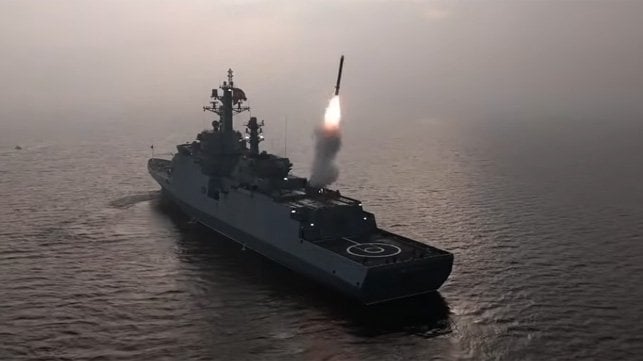
New destroyer tested it missile system (Korean State TV)

Published Mar 5, 2026 6:08 PM by The Maritime Executive


North Korean state media is hailing the successful tests of the first ship in a new generation of destroyers ahead of the vessel’s commissioning. Leader Kim Jong Un attended two days of testing, including maneuverability and the launch of cruise missiles, saying the country was proceeding towards having a “powerful offensive force” and that progress on the nuclear armament of the navy is being “carried out satisfactorily.”

The 5,000-ton missile destroyer named Choe Hyon was launched last year at the Nampo Shipyard and is reported to be undergoing sail testing to evaluate its capabilities. State media reported that Kim was at the shipyard on March 3 and 4 to personally inspect the combat and political training and the ongoing operational capability evaluation test process, all of which was pronounced successful.

During the two days, media reports said Kim announced, “I will build the most powerful navy.” In the past, he has said that North Korea would have a fleet of blue ocean vessels capable of long-distance operations.


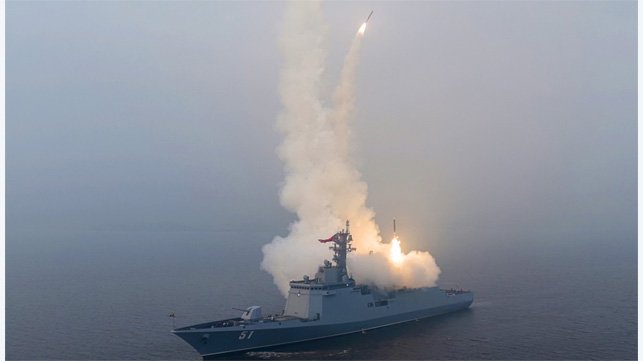
At least four missiles were test fired (KCNA)


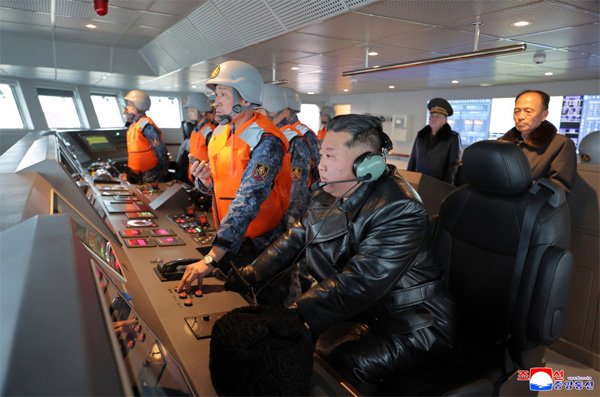
Pictures released by the Korean Central News Agency showed Kim boarding the vessel and touring the ship, including its bridge controls. During the first day, KCNA said the ship’s maneuverability was tested, with Kim pronouncing that it met its requirements.

The highlight of the tests came on the second day with the test firing of the missile system. The vessel was positioned in the harbor, with Kim reported to be watching from shore. Images on Korean television showed at least four missiles being launched in rapid succession.

At the conclusion of the two days, Kim is reported to have said, “The operational evaluation tests of the new destroyer, which will become a symbol of our nation’s maritime defense capabilities, are proceeding smoothly as planned.”

During the visit to the Nampo Shipyard, he also inspected the third ship of the class, which is currently under construction. He praised the workers and their efficiency.


Kim inspecting the controls for the new destroyer (KCNA)


“We must build two warships of this class or higher each year during the new five-year plan period and accurately implement the plan for building a massive warship force,” Kim is reported to have said.

It was noted that the second ship of the class, which is being built at a different shipyard in the east, has not been mentioned by state media. The ship famously fell over during its launch in the spring of 2025 while Kim watched on, which led to a massive effort to clear the embarrassment. The ship was hauled back onto the slipway and launched a month later, with the media asserting that it had only suffered minor damage. Speculation over the lack of mention of the vessel centered on the likelihood that the Koreans are currently repairing the damage from the failed launch.

Media reports said Kim has instructed the shipyard that it must launch the third vessel before October 10. That day is celebrated as Party Foundation Day, which laid the groundwork for the start of the modern Korean dictatorship.


Anemoi Calls for Alignment in Wind Propulsion Performance Verification

Anemoi Marine Technologies Ltd
Luke McEwen, Technical Director, Anemoi Marine Technologies Ltd.

Published Mar 5, 2026 7:18 AM by The Maritime Executive


[By: Anemoi Marine Technologies Ltd.]

Anemoi Marine Technologies Ltd (Anemoi) and Lloyd’s Register (LR) have published a new paper encouraging closer alignment between existing methodologies used to verify the performance of wind-assisted propulsion systems (WAPS). The research highlights how complementary frameworks can be brought together to strengthen consistency, transparency and industry confidence. 

The paper builds on LR’s earlier verification of Anemoi’s new in-service performance and forecasting model calibration methodology, designed specifically for WAPS. The new research assesses how that method fits alongside two existing frameworks: the International Towing Tank Conference’s (ITTC) guidelines for sea trials and supporting performance prediction and DNV’s recommended practice for in-service testing. 

Currently WAPS users and providers are applying a range of different approaches to performance analysis, making it difficult to compare results like-for-like and build a robust business case for decision makers to commit to WAPS installation on their vessels. 

The analysis shows that the three methodologies are complementary. While ITTC guidelines provide a short-term verification of predictions under controlled conditions and DNV’s recommended practice offers long-term in-service assessment, Anemoi’s verification method provides the bridge between in-service measurements and actionable fuel-saving predictions. 

The findings suggest that by selectively combining these strengths, an integrated and standardised approach would give ship operators’ an invaluable tool for maximising the cost-saving potential of WAPS installations. This work would simplify comparison between solutions and strengthen confidence in reported savings at a time when more and more vessel operators are considering wind propulsion technologies. 

Anemoi’s process, verified by LR in 2025, involves measuring vessel data when the wind-assisted propulsion system is turned on and off while encountering various conditions during regular operation. The data is then used to calibrate predictions on forces generated by the rotor sail system and their impact on the vessel, which can be used to predict voyage fuel savings with high levels of confidence. The process is technology agnostic and can be applied on all vessel types. 

The new paper was presented at the Royal Institute of Naval Architects’ RINA Wind Propulsion 2026 conference on February 17. 

“Accurate measurement and prediction of the real savings made by vessels using WAPS is essential for giving confidence to ship owners and operators who want to harness wind energy in order to reduce environmental impact and fuel costs. With our verification process and our new efforts pointing to the potential convergence of methodologies, Anemoi is helping to guide the standardisation efforts that are needed to ensure this market flourishes.”  - Luke McEwen, Technical Director, Anemoi Marine Technologies Ltd.

“Verification of performance assessment methodologies is a core part of LR’s mission to assure both safety and efficiency standards for maritime stakeholders—and particularly important in emerging sectors where processes have yet to be fully standardised. We are therefore delighted to partner with Anemoi once more to advance understanding of performance verification as the WAPS market matures.” - Dr. Santiago Suarez de la Fuente, Ship Performance Manager, Lloyd’s Register Advisory 

The products and services herein described in this press release are not endorsed by The Maritime Executive.


Fragmented Compliance Systems Increase Sanctions Risk Across Shipping

Marcura
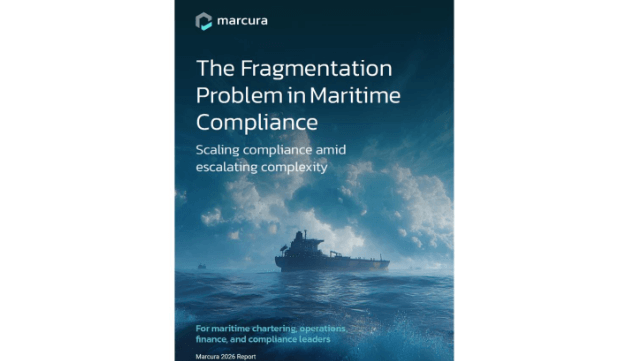
The report “The Fragmentation Problem in Maritime Compliance"

Published Mar 5, 2026 7:06 AM by The Maritime Executive


[By: Marcura]

Maritime companies face rising sanctions and compliance complexity as regulators increasingly expect risks to be detected before violations occur, according to a new report published by Marcura.

The report “The Fragmentation Problem in Maritime Compliance” points to divergence between US, EU and other sanctions regimes. Secondary sanctions have expanded, and a growing shadow fleet continues to obscure ownership, insurance and trading histories. Together, these factors increase exposure for global operators at a time when compliance processes remain fragmented across organisations.

Survey findings from Marcura show that 82% of maritime executives say compliance demands are growing. 86% express concern about undetected compliance risk. Onboarding and KYC now cost $1,500–$3,500 per counterparty, driven largely by duplicated manual checks across multiple systems; a burden that compounds quickly in markets where counterparties change frequently.

Despite increased investment in sanctions screening and automation, the problem is not lack of effort. It is structural. Organisations routinely run multiple screening platforms that return different results on the same counterparty. The compliance function becomes the manual integration layer, piecing together a risk picture from conflicting outputs. The same verification work is repeated across organisations, while intelligence gathered by one remains inaccessible to others facing identical decisions.

The problem extends beyond sanctions. Payment fraud targeting maritime runs three to five times higher than traditional banking when adjusted for transaction volume. ESG and supply chain obligations are expanding the scope of supplier vetting. Anti-bribery controls remain inconsistent across a sector where, according to the Maritime Anti-Corruption Network, over 65,000 corruption-related reports have been documented across more than 1,000 ports in 150 countries. Each risk vector demands its own processes, with little infrastructure connecting them.

Commenting on the challenges identified in the report, Andrei Grigoras, SVP, Compliance Solutions at Marcura, said: “The compliance function carries a question that never fully goes away: did we miss something? Fragmentation makes that question harder to answer. When the same counterparty produces different results across different systems, the noise drowns out the signals that actually matter.”

The report sets out a direction of travel toward compliance functioning as shared infrastructure, where verification is performed once, recognised across workflows, and reinforced by collective intelligence. Rather than every organisation bearing the full cost of counterparty verification in isolation, a networked model would allow screening outcomes to travel with the counterparty across participating organisations.

The full report is available here.

The products and services herein described in this press release are not endorsed by The Maritime Executive.


Edda Wind has Potential Agreements to Sell Fleet of Wind Service Vessels

offshore wind service vessels
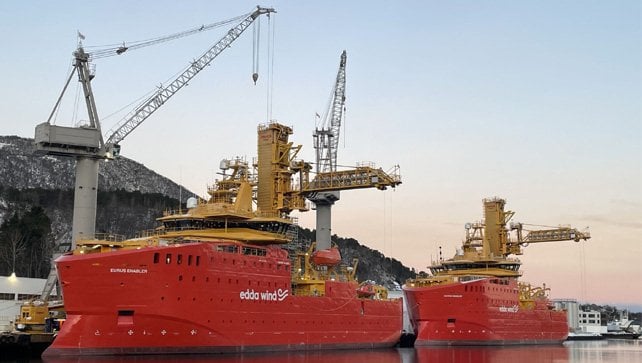
Edda Wind has potential agreements to sell all its ships as the market for offshore wind services consolidates (Edda Wind)

Published Mar 4, 2026 5:35 PM by The Maritime Executive


Edda Wind, which had been launched as an early service provider dedicated to the emerging offshore wind sector, has entered into agreements for the potential sale of its fleet.  News of the potential sale of the company’s ships came via an Oslo Stock Exchange filing by Wilh. Wilhelmsen, one of the investors, signals a further consolidation in the market.

The company was started in 2015 by Østensjø Group, an offshore provider, and announced plans for building a dedicated fleet of Service Operation Vessels (SOV) and Commissioning Service Operation vessels (CSOV). Wilhelmsen joined as an investor in 2020 and was later joined by Geveran Trading Co., which is controlled by John Fredriksen, and another company associated with Idan Ofer.

Edda Wind reported strong growth, but in 2025, the three lead investors said it was facing challenges in its current public company format. They decided to take the company private, reporting it would aid in future investment and growth. Currently, the company has a fleet of seven vessels, consisting of one SOV and six CSOVs. Additionally, Edda Wind has three CSOVs currently under construction. In December, it agreed to sell two SOVs to Esvagt, which were under long-term contracts to Vestas and Ocean Breeze.

According to the stock filing, the potential sale will see Edda Wind’s fleet split between the UK-based North Star, which was acquired several years ago by investors the Partners Group, and to an affiliate of Navigare Capital Partners. The filing says the sale is conditional upon inspections being completed and certain unspecified conditions. 

The sale would represent a further consolidation of the offshore services sector. North Star reports it has over 47 purpose-designed vessels, including Platform Supply Vessels, Emergency Response and Rescue Vessels, Multi-Role Vessels, and our growing Wind Farm Support fleet. It has contracts with leading companies, including RWE, and has two newbuild SOVs on order with Vard. Navigate Capital entered the sector in 2022 with a majority investment in Norway’s Norwind Offshore. Norwind took delivery from Vard in January of its sixth vessel, and it has two additional vessels, a CSOV and an EVC, due for delivery in 2027.

The investors in Edda Wind have not commented publicly on the sale and their reasons for exiting the sector.


British Marine Insurer Beazley Purchased by Zurich for $11 Billion

Beazley
File image courtesy Beazley

Published Mar 3, 2026 9:13 PM by The Maritime Executive


British insurer Beazley has been purchased by Swiss insurance conglomerate Zurich for $10.8 billion, a small boost over an earlier offer. The agreement will take Beazley private, and it will create a combined specialty insurance company with $15 billion in global premiums.

Beazley is an 80-year-old company with a broad portfolio in tech, aviation, manufacturing, real estate, finance, energy and other industries. It is a participant in the Lloyd's market in marine insurance, specifically cargo and marine hull, and it manages seven syndicates. It also has active operations in the United States, Europe and China through subsidiaries. 

The offer gives Beazley shareholders a generous 60 percent premium over the firm's share price in mid-January, and it is 35 percent higher than the stock's all-time high. The combined specialty-insurance business would be headquartered in London to leverage Beazley's presence in the Lloyd's market. Beazley's board has recommended the proposal to shareholders, 

Going forward, Zurich expects to save about $150 million a year in synergies and to produce a double-digit return on investment in the medium term. Pending shareholder approval and regulatory review, the deal should close in the second half of 2026. 

"This is not just short-term financial engineering. It is about creating a world-class platform that allows us to retain, develop and attract the best underwriting talent," CEO Mario Greco told investors in an online briefing. "Together, we will be very strong in cyber, energy, financial lines, and marine."


Norwegian Takes Delivery on New Cruise Ship in Long-Term Growth Plan

Norwegian Luna  cruise ship
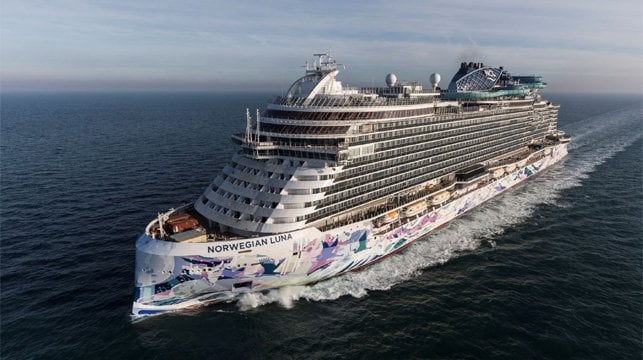
Norwegian Luna is the second ship of a mid-class group that will see two larger ships to follow (Fincantieri)

Published Mar 5, 2026 7:42 PM by The Maritime Executive


Fincantieri and Norwegian Cruise Line celebrated the delivery of the Norwegian Luna, the second ship in the company’s Prima Plus class and the midpoint of a six-ship order, which will later be followed by five even larger cruise ships. The new ship, a sister to the Norwegian Aqua introduced in 2025, seeks to expand on the brand’s renewed emphasis on choice and flexibility while expanding its appeal to families.

At 156,300 gross tons, the Norwegian Luna is, however, more in the middle range of size for the broad contemporary segment of cruising, which is now surpassing the 200,000 gross ton milestone. The Norwegian Luna is 10 percent larger than the first two ships of the class, Norwegian Prima (2022) and Norwegian Viva (2023), and increases passenger capacity to 3,571. It includes many of the signature elements of Norwegian Cruise Line, including 17 dining options as well as 18 bars and restaurants. The company highlights that these sisters' new additions include the Aqua Slidecoaster, which is a hybrid between a waterslide and a rollercoaster, as well as its Glow Court with an LED floor. New to the ship is an expanded outdoor amusement-park-style area called Luna Midway, which features carnival-inspired games. It also introduces a tribute stage show to music legend Sir Elton John.

As is typical in the industry, Norwegian decided to upsize the second two ships of the class to increase capacity and efficiency. The sister ships Norwegian Aqua and Norwegian Luna each have 1,800 passenger cabins and accommodations for 3,571 passengers, versus 3,195 on the first two ships.

Fincanteir points out that over 3,000 people have been working to complete the fitting out of the ship and prepare her for her maiden voyage. She goes into service next week with a trans-Atlantic crossing and then takes up position in Miami with cruises to the Caribbean and Bahamas.


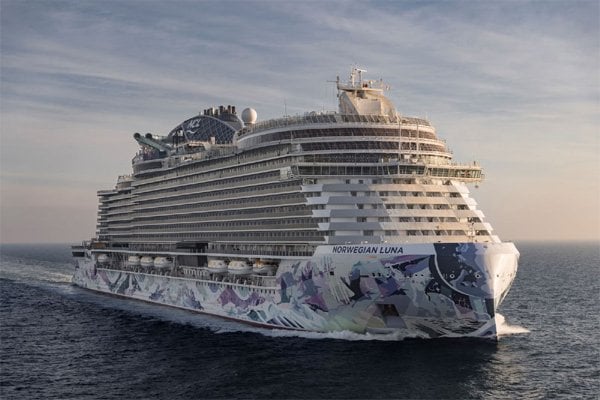
Norwegian Luna will be sailing year-round in the Caribbean (Fincantieri)


“As our newest ship, Norwegian Luna is a powerful reflection of NCL’s ‘It’s Different Out Here’ brand ethos,” said Marc Kazlauskas, president of Norwegian Cruise Line. “She delivers freedom, flexibility, and thoughtfully curated experiences, allowing guests to enjoy their vacation exactly how they want, with ease.”

Norwegian is widely recognized for breaking down the traditional styles of cruising to become more like resorts at sea with the launch of its concept called Freestyle Cruising in the early 2000s. It increased the dining options and entertainment, taking away assigned times for meals and the regimented daily programs. The company is looking to reemphasize these elements after a series of recent missteps, which have hurt its financial performance and made it the target of an activist investor.

The new ship comes early in a year that will see several very large new cruise ships as well as expansion in the luxury segments, including the launch of both Four Seasons and Orient Express. Royal Caribbean will put into service the third ship in its largest cruise ships in the world, called Icon, and MSC Cruises will receive its third ultra-large ship of the World Class. TUI will also get its second 161,000 gross ton cruise ship from Fincantieri, and in China, the country’s second domestically-built cruise ship, the 142,000 gross ton Adora Flora City, will be floated this month for a 2027 entry into service. More than a dozen new cruise ships are scheduled to enter service in 2026 as part of an order book that has more than 75 ships delivering through 2037.

The Norwegian Luna, however, is a stepping stone for the brand. Next year, the line will introduce the third design of the same class of ship, which will again be 10 percent larger. Called Norwegian Aura, it will be 172,000 gross tons with a capacity for 3,840 passengers, and will introduce more new passenger amusement options. Behind the scenes, it will also be methanol-ready.

Norwegian has a total of seven cruise ships on order, including five 227,000 gross ton cruise ships, all to be built at Fincantieri. The parent company, Norwegian Cruise Line Holdings, has orders for a total of 16 cruise ships, including ultra-luxury for Regent Seven Seas Cruises and premium ships for Oceania Cruises


Norwegian Cruise Admits Misstep as it Issues Disappointing Outlook

Norwegian Cruise Line
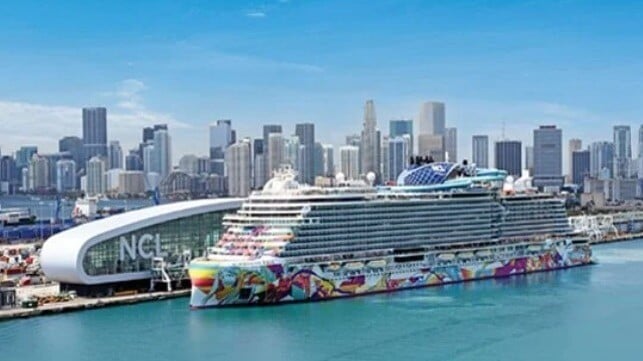
Nrwegian's newest ship, Norwegian Aqua, in Miami heading up the increased Caribbean presence (NCL)

Published Mar 2, 2026 7:58 PM by The Maritime Executive


Norwegian Cruise Line Holdings reported its fourth quarter and year-end financial results, and while it met or exceeded expectations, it disappointed with its outlook for 2026. Admitting “missteps” and “misalignment,” the cruise corporation provided an outlook for 2026 well below analyst projections, and as activist shareholder Elliott Investment Management is beginning to meet with fellow investors ahead of the company’s annual meeting.

The announcement of results faced further headwinds due to world events and the uncertain outlook for the oil market. Concerns are being raised as oil prices are expected to rise significantly, and the larger unknown of how the war against Iran will impact consumers and the desire to travel, especially internationally. While analysts were expecting declines in cruise ship share prices, Norwegian Cruise Line Holdings’ share price was down 10 percent compared to the industry’s 3.5 to 8 percent decline today.

The newly named CEO of Norwegian Cruise Line Holdings, John Chidsey, told investors, “My initial assessment is that our strategy is sound, but execution and cross-functional alignment have fallen short.” He pointed to a mistiming of the repositioning of ships into the Caribbean and other elements of the strategy, as well as underinvestment in technology, revenue management, and customer-facing systems.  He pointed to too much bureaucracy, a lack of cohesion in execution, and a lack of developed coordinated plans.

The company met its revised outlook for the fourth quarter, and with lower costs, came in toward the higher end of its range for the year. Revenues, however, were slightly light, but the real disappointment was a forecast as much as seven percent below analysts' projections for adjusted earnings (EBITDA) for 2026.

The company said it is entering 2026 against a “pressured backdrop as it is slightly below the optional booking range.” Demand, however, it said, is strong in its luxury brands, with the largest challenges at its contemporary brand, Norwegian Cruise Line.

It pointed to a “softness in Alaska” for bookings as overall industry capacity continues to grow in that market and a material increase in Norwegian’s Caribbean capacity that was too soon before the completion of the enhancements at its private island. They also pointed to a less-than-expected performance for Europe. While NCLH does not have operations in the Middle East and has a smaller overall presence in Europe, the softness comes even before the start of the war, which could deter Americans from vacationing in the Mediterranean in particular or, at the very least, slow bookings until there is more certainty around the war in Iran.

Chief Financial Officer Mark Kempa said the problems were fixable but that they would take some time. He said they still believed the Caribbean is the right place, and they would be cutting costs from their shoreside operations.

“Norwegian's disappointing outlook for 2026 falls meaningfully short of the company's potential,” said Elliott in a statement issued after the earnings announcement. “Commentary on today's earnings call reinforced a troubling pattern of execution lapses and strategic missteps across the business that have been years in the making.”

Elliott continues its call, saying there is an urgent need for a board refreshment at NCLH. It is calling for an “independent, experienced, and fully engaged board required to return the company to industry-leading performance.”

The activist investor group announced in February that it now owns more than 10 percent of NCLH’s shares. According to reports, it has begun meetings with other investors to outline its plans for the company. It is widely expected to launch a proxy battle at the upcoming annual meeting for a replacement board. Well-known industry executive Adam Goldstein, who spent many years at Royal Caribbean Group, recently released an op-ed saying he supported Elliott. He is believed to be a likely candidate for the board.

Well-known investment commentator and TV personality Jim Cramer suggested last week to his viewers that maybe NCLH should be sold. He said Disney which is enjoying a strong performance in its cruise operations, should buy NCLH to provide a quicker route to expansion. Disney is in the midst of launching its largest cruise ship, Disney Adventure, which is arriving this week at its home port in Singapore, and currently has multiple cruise ships on order, but they will take years to build.


Viking Stacks Orders to 2034 with More Expedition and Ocean Ships

Viking cruise ship at Fincantieri
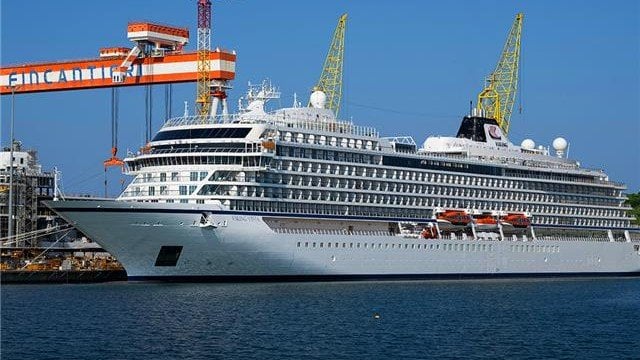
Viking Vestra which entered service in 2025 as the company's next ocean cruise ship (Fincantieri)

Published Mar 3, 2026 7:02 PM by The Maritime Executive


Reporting a strong financial performance in 2025 and a positive outlook as the brand continues to grow its fleet, Viking announced it has ordered two additional expedition cruise ships and optioned yet two more ocean cruise ships. The brand surpassed 100 ships in 2025 and now has a total of 57 orders extending to 2034 for its ocean, river, and expedition segments. 

Fincantieri termed today’s order a “very important” agreement for the shipbuilder and said it is valued at over €2 billion. The order consists of two additional expedition cruise ships, sister ships to the first two, built by Fincantieri's Vard subsidiary and delivered in 2021 and 2022. However, the next two ships will be built at Fincantieri’s Palermo, Italy, shipyard in 2030 and 2031. 

The expedition cruise ships will be Polar Class 6, designed to navigate in polar seas as well as remote areas such as the St. Lawrence River. They report the ships will have superior maneuverability and stability on rough seas, as well as using U-tank stabilizers to reduce roll when the ship is stationary. The design features a straight bow and extended hulls. The ships have 189 passenger staterooms with accommodations for 378 people.

In addition, Viking also optioned two more ocean cruise ships using the same base design for the 11 cruise ships currently in operation. The ships are approximately 54,300 gross tons with accommodations for 998 passengers. The new options have an exercise date of July 30, 2028, for delivery in 2034. They are in addition to 10 committed orders for cruise ships and an additional four options before today.

Pierroberto Folgiero, CEO and Managing Director of Fincantieri,  highlights that it extends a relationship that dates back to 2012 and the first of Viking’s ocean cruise ships. He notes that it will now encompass a total of 26 ships. 


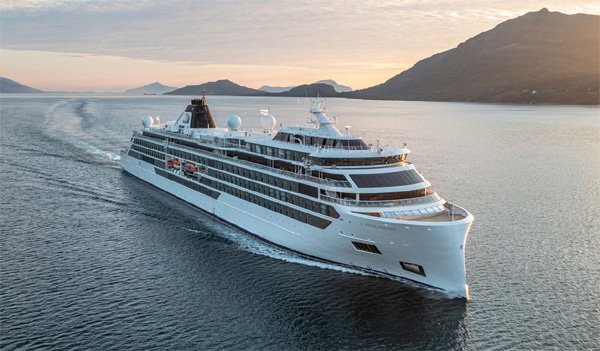
The two new expedition cruise ships will be sisters to Viking Polaris which entered service in 2022 (Fincantieri)


Fincantieri currently has three ocean cruise ships under construction for Viking at its Ancona shipyard. Two of the ships, Viking Mira and the Viking Libra, are scheduled for delivery in 2026. The Viking Libra is being billed as the first “hydrogen-powered” cruise ship. It uses a new system with hydrogen cylinders that will give it a greater power capacity than the first demonstration systems on other ships, including an earlier Viking cruise ship.

Viking has a unique business model, focusing its cruise operations on the upper premium deluxe market and using a consistent ship design. It points to efficiency with elements such as a single main galley for all food service. The ships are all outside cabins with balconies. The company highlights it operates with a guest-to-crew ratio of two versus its competitors' average ratio of 1.4, while it still maintains a high standard aboard its ships. 

The company first developed the model in its river cruise business, which was launched 29 years ago. As of the beginning of the year, it had 81 river cruise ships in service. It plans to take delivery of 10 more this year, followed by eight in 2027, and five in 2028. It also has options for eight additional river cruise ships. 

The orders came as Viking reported another strong quarter and year of financial results in 2025. The company’s revenues and earnings (EBITDA) were ahead of analysts’ consensus. It reported total revenues of approximately $6.5 billion for the year, up nearly 22 percent, strong gross margin growth, and earnings of nearly $1.9 billion (EBITDA).

“We finished 2025 with great momentum, and we are entering 2026 in a very solid position with 86 percent of our Capacity PCDs for our Core Products already sold,” said Leah Talactac, President and CFO of Viking. “We are seeing a strong booking environment characterized by robust demand across our products, from both repeat guests and new-to-brand customers.”

As of mid-February, Viking reports it had sold 86 percent of its 2026 capacity, with strong advance bookings of nearly $6 billion. The company said it had a positive outlook despite the current global issues, but it also reported that it had suspended cruises on the Nile in Egypt due to the current turmoil.


AI, Analytics, and Automation: The New Currents in Maritime Operations

iStock
iStock

Published Mar 5, 2026 3:47 PM by Yurii Biryukov


For decades, maritime operations have been defined by tradition, by paper logs, phone calls, and manual entries that somehow coordinated one of the most complex systems in the world. That era is ending. Today, software is doing what steel and fuel once did for the industry, powering global trade at scale.

Having worked closely on large-scale maritime HR and compliance systems, I’ve seen how digitalization is no longer about convenience. The shift from manual, disconnected workflows to integrated, data-driven operations is redefining how fleets manage people, payroll, and safety in real time.

The human core of maritime tech

The global maritime digitization market, valued at around $176 billion in 2023, is projected to reach $361 billion by 2030, growing at an annual rate of over 10 percent. That acceleration is not driven by hype; it’s being pulled forward by real-world pressures — regulatory demands, labor shortages, and the industry’s shift toward data-driven decision-making.

At the heart of this digital transformation are the multinational crews who make global trade possible. Managing them has always been one of the industry’s most complex tasks. Each vessel is, in effect, a moving jurisdiction, operating across borders, tax regimes, and labor laws.

New software systems are finally keeping pace with that complexity. Automated payroll and compliance engines now handle multi-currency, multi-jurisdiction operations with precision, cutting human error and compliance risks. For shipowners, these tools don’t just simplify accounting; they build trust and transparency across the fleet.

The key innovation today lies in translating complex maritime labor conventions into dynamic compliance logic, where rules are enforced automatically through data validation, not post-facto audits. This is turning maritime HR into a domain where software intelligence complements human decision-making.

From paper to predictive: A compliance revolution

Crew compliance and welfare have become critical focus areas for both regulators and operators. Maritime labor conventions require meticulous tracking of working hours, rest periods, certifications, and safety training. For years, this was handled manually, often with paper-based systems vulnerable to error.

Today, modern platforms, such as DNV ShipManager Crewing, COMPAS (OneOcean), Mintra OCS HR, and other crew-management systems support increasingly automated crew-compliance workflows.  If a certificate is about to expire or rest-hour thresholds are at risk, many systems can provide real-time alerts to both ship and shore teams. 

This proactive visibility can help to reduce violations and improve both safety and morale, turning compliance from a reactive burden into a more predictive system of accountability.

Modern crew-management systems now operate on event-driven architectures. Every change, from a certificate update to a rest-hour log, triggers validation workflows and alerting mechanisms both onboard and on shore. These systems can help identify potential compliance risks hours or days in advance, allowing fleet managers to take corrective action long before a violation reaches audit level.

The connectivity challenge

Digital transformation at sea is uniquely difficult because ships often operate without reliable internet. Platform architecture can’t assume constant cloud access. Connectivity at sea remains one of maritime IT’s hardest engineering problems. Ships often operate with limited satellite bandwidth, so critical HR, payroll, and safety systems must continue functioning even when offline.

To handle this, modern maritime platforms use a hybrid design: an onboard database that records transactions locally, a replication service that queues updates, and a synchronization layer that exchanges data once satellite connectivity resumes. This architecture guarantees operational continuity while maintaining data integrity across ship and shore.

With the rise of low-Earth-orbit networks such as Starlink for Maritime, replication cycles that once took days are now reduced to minutes, unlocking real-time dashboards, analytics, and even AI-driven decision support at sea.

Addressing the global labor shortage

The maritime industry is facing one of its toughest labor environments in decades. Reports from BIMCO and ICS project a shortfall of nearly 90,000 officers by 2026. Software can’t fill the pipeline alone, but it can help operators respond smarter.

Recruitment and training modules within crew management platforms now track skills, certifications, and career paths globally. This makes it easier to deploy qualified personnel and forecast shortages, creating a more agile, data-informed approach to workforce planning.

AI at sea: From automation to insight

Artificial intelligence is no longer a futuristic concept in maritime operations. It is becoming part of everyday workflows. AI-powered rostering analyzes fatigue and performance data to optimize scheduling. ML models flag anomalies in payroll or rest-hour records that may indicate compliance issues. 

AI is moving from pilots into real operational deployment, signaling that intelligent systems are no longer a ‘future promise’ in maritime operations, but a present?day capability.

At the Port of Corpus?Christi, Texas, the OPTICS digital?twin platform combines live vessel-tracking, geospatial models, and law?enforcement dispatch data into a single, interactive 3D interface. 

Using machine learning to fill gaps in ship movement data, OPTICS allows port authorities to monitor real-time vessel positions, simulate emergency scenarios, and coordinate resources more efficiently. The system has already improved situational awareness, reduced response times, and streamlined operations at one of the U.S.’s largest crude-export terminals.

Overcoming integration debt

For most shipping companies, the biggest obstacle isn’t the lack of new technology. It is the weight of old systems. “Integration debt,” or the accumulation of siloed tools that don’t communicate, slows progress. 

Many maritime organizations are shifting to API-first ecosystems, allowing HR, payroll, logistics, and compliance systems to communicate through secure REST interfaces. This approach enables gradual modernization: companies can retain stable legacy modules while introducing new digital layers without disrupting existing workflows.

The solution isn’t a complete overhaul but a gradual migration to API-first ecosystems, where data can move seamlessly between payroll, compliance, logistics, and HR systems.

Clean data is the true engine of maritime digitization. Without consistent, high-quality information, even the best analytics platforms can’t deliver value. Successful transformation requires not just technology but also investment in data governance, user training, and cultural change.

The decade ahead

Over the next five years, we’ll see a shift toward hybrid architectures that blend onboard intelligence with cloud-based analytics. Compliance, payroll, and crew management will become modular, configurable, and increasingly AI-assisted. 

Maritime companies will start to integrate specialized digital tools, from health monitoring to predictive maintenance, through marketplace-style ecosystems rather than monolithic platforms.

In the next decade, the most successful maritime organizations will treat data as their core infrastructure. We’ll see ships equipped with onboard analytics engines that interact seamlessly with cloud platforms, predicting crew fatigue, optimizing rotations, and automating compliance in near real time.

The competitive advantage will no longer depend solely on vessel tonnage or fuel metrics, but on how intelligently an operator can manage and interpret its human and operational data.

Yurii Biryukov is a senior software and delivery executive specializing in the maritime and enterprise technology sectors. With over 13 years of experience leading international development teams, he has overseen global implementations of enterprise systems and next-generation crew management applications. His work focuses on helping shipping and cruise companies streamline compliance, payroll, and workforce operations through innovative, resilient digital solutions.

The opinions expressed herein are the author's and not necessarily those of The Maritime Executive.