After a Landmark International Court Case Backed Workers’ Right to Strike, Here’s What Could Change
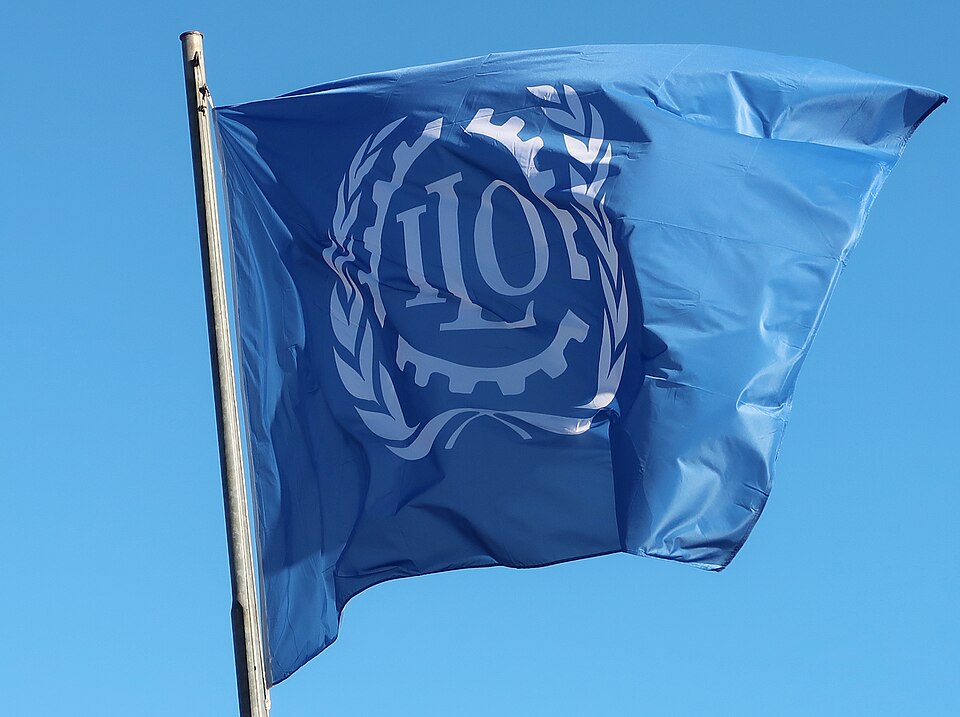
The International Court of Justice has just resolved a 14-year dispute over workers’ right to strike – giving trade unions worldwide a significant win.
In a historic decision late last week, the court issued an advisory opinion that the right to strike is protected by a United Nations treaty, the International Labour Organization’s Freedom of Association and Protection of the Right to Organise Convention (also known as convention 87).
The new court decision does not mean we’ll suddenly see outbreaks of strike action all over the world.
However, it does matter right around the world – particularly in 158 countries that have ratified convention 87, including Australia, Canada, Indonesia and the United Kingdom.
A fight triggered by an employers’ ‘strike’
The International Labour Organization (ILO) is unique among the United Nations’ agencies because of its “tripartite” (three part) membership: with representatives from member states, trade unions and employer groups.
In 1948, the ILO adopted convention 87. All the countries that have since formally adopted the convention (a process called “ratification”) committed themselves to protecting freedom of association and the right to organise in their own domestic laws.
The convention made no explicit reference to the right to strike. Yet for decades the ILO’s supervisory bodies – which supervise the implementation of convention obligations – said that the convention did protect the right to strike.
Why? That view was based on the wording of the convention, stating workers have the right to form their own associations and organise their own programmes and activities. Strike action was interpreted as one of those protected activities.
But in 2012, the ILO’s employer representatives decided that longstanding interpretation was wrong – so they staged a “strike” of their own.
For the past 14 years, the employer representatives have refused to cooperate with ILO supervisory processes considering if countries are complying with convention 87 when the right to strike was involved.
Since 2023, that stalemate has been before the International Court of Justice – which is the court which has the power to interpret ILO conventions.
Last week, the court’s judges voted ten to four in favour of the unions’ argument, concluding “the right to strike of workers and their organizations is protected” under the convention.
What was at stake
While countries aren’t legally bound to follow International Court of Justice’s advisory decisions, like this one, they do still carry significant legal and political weight worldwide.
The ILO is the only place in international law where trade unions can make formal complaints if a country is not respecting its obligations to protect the right to strike.
All of that was at risk if the International Court of Justice had made a different decision. A finding that went the other way – in favour of the employers’ case – would have weakened the right to strike worldwide.
Last week’s court finding was a huge win for the international trade union movement.
Australia shows why it matters
The advisory opinion is particularly significant for the 158 nations that have ratified convention 87. Here’s an example of why.
Australia used to be thought of as a country with high rates of strike action.
However, since Australia legislated for a right to strike in 1993, that has stopped being true. In fact, over recent decades, strike action in Australia has stayed as low as it has ever been.
Strike rates in Australia are so low partially because it is harder than people realise to take lawful strike action here.
Since 1993 when a legislated right to strike was introduced, the laws that say when you can strike legally have got tighter and tighter, and the hurdles unions have to jump have got higher and higher.
Even when unions can satisfy the rules around when they can strike, it is easy to get it wrong. When that happens, they can lose the right to strike altogether.
That may sound like a good thing, especially if you’ve ever been caught in a train worker strike, or had to keep children home during a teachers’ strike.
But not being able to strike significantly weakens all workers’ bargaining power. When the cost of living rises and wages don’t keep up, employees end up financially worse off than before.
What it could mean long term
Like a lot of other nations, Australia won’t see any instant impacts of this new international court advisory opinion.
However, the court’s finding does mean the ILO is no longer stuck in a deadlock. The ICJ decision means that the ILO supervisory bodies can start scrutinising Australia’s strike laws again.
It also means Australian unions have a better chance of bringing complaints about our laws to the ILO – and being successful.
That potential for increased international scrutiny may help shift the dial on Australia’s highly restrictive strike laws.
This is a good thing for workers. A healthy industrial relations system needs a well-protected, accessible right to strike.
The ICJ’s landmark advisory opinion comes as legal restrictions on the right to strike are increasing around the world.
By Marjorie Cohn ,

The right to strike is under attack throughout the world, including in the United States. Labor strikes are currently forbidden or restricted in the majority of countries.
Now, in a landmark 43-page advisory opinion issued May 21, the International Court of Justice (ICJ, or World Court) has determined that the right to strike is protected under the International Labour Organization’s (ILO) Convention No. 87 on Freedom of Association and Protection of the Right to Organise.
“At a moment when workers’ organizations face sustained attacks around the world, this opinion reaffirms that the freedom to withhold one’s labor is not a privilege granted by the powerful, but a fundamental human right grounded in international law,” AFL-CIO President Liz Shuler said in a statement.
The ILO is the United Nations agency that sets global labor standards. It has 187 member states and has adopted 191 conventions since its founding in 1919. The ILO considers Convention No. 87 to be one of its 11 fundamental conventions.
In 2023, the ILO asked the ICJ to settle an internal dispute about whether Convention No. 87 gives workers the right to strike, which is not specifically addressed in the convention. Although advisory opinions of the ICJ are not legally binding, many courts accept them as authoritative legal decisions.
Related Story
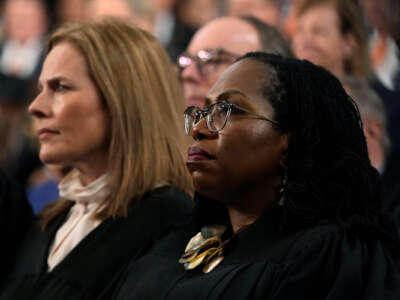
Supreme Court Weakened Legal Protections for Striking. Only Jackson Dissented.
Unions still have the right to strike, but eight Supreme Court members erected barriers to that fundamental right. By Marjorie Cohn , Truthout June 5, 2023
The ICJ ruled in its 10-4 opinion that a strike “is one of the main activities engaged in and tools used by workers and their organizations to promote their interests and improve conditions of labour, thereby ensuring the effective exercise of the freedom of association protected under Convention No. 87.”
The Court found “that protection of the right to strike is encompassed in the protection of the freedom of association provided for in Convention No. 87.”
In reaching that conclusion, the Court considered provisions in two 1996 Covenants that contain relevant rules of international law regarding the right to strike. Both refer to Convention No. 87.
Article 8, paragraph 1 (d) of the International Covenant on Economic, Social and Cultural Rights (ICESCR) expressly protects the right to strike, if it is exercised in conformity with domestic laws.
Article 22, paragraph 1 of the International Covenant on Civil and Political Rights (ICCPR) provides for the right to freedom of association. The ICJ noted that for more than 25 years, the Human Rights Committee — which monitors the implementation of the ICCPR — has considered the right to strike to be encompassed in the protection of freedom of association.
Due to the high degree of overlap between the states parties to the ICESCR and ICCPR, and Convention No. 87, the ICJ determined there was a common understanding among them on the right to strike. The Court thus concluded “that an interpretation taking into account the relevant rules of international law contained in the ICESCR and the ICCPR indicates that the protection of the right to strike is encompassed in the protection of the freedom of association provided by Convention No. 87.”
No Right to Organize Without the Right to Strike
“For generations, working people have understood a simple truth: The freedom to join a union means nothing if you cannot withhold your labor when bosses refuse to listen. Now, the world’s highest court has affirmed that truth,” said Jeffrey Vogt, director of the International Lawyers Assisting Workers (ILAW) Network, which issued the call for the ILO referral of this case to the ICJ.
The ICJ decision “affirms decades of judicial precedent and what workers around the world know: there is no right to organize and bargain collectively without the right to strike,” Shuler said in her statement. “When workers are barred from taking collective action on the job, they cannot defend their rights and demand the workplace conditions and contracts they are owed. The freedom to join a union becomes an empty formality.”
“This is an important day for the International Labor Organization [ILO], and for its continued relevance in the world of work. However, the significance of this opinion extends well beyond the institutional context in Geneva,” the ILAW Network wrote in a statement.
The ICJ advisory opinion came “at a moment of acute pressure on the international labour rights system,” ILAW stated. “Across the world, the right to strike is under sustained attack — through restrictive legislation, expansive judicial interpretation of essential services, the criminalisation of trade union activity, and the use of dismissals, injunctions, and damages claims to deter collective action.”
Legal restrictions on the right to strike are increasing. In 2022, strikes were outlawed or stringently restricted in 129 of the 148 countries tallied by the International Trade Union Confederation (ITUC), one of the six organizations with consultative status at the ILO Governing Body.
The ITUC, which represents 191 million workers in 169 countries and territories, is dedicated to trade union democracy and independence. It has regional organizations in Africa, Asia, and Latin America. The ICJ decision “is important not only for workers and trade unions, but also for governments and responsible businesses,” ITUC stressed.
This decision “will serve as a powerful interpretive tool before national constitutional and labour courts, before regional human rights bodies, and before the ILO’s own supervisory bodies,” ILAW noted. “It strengthens the hand of every worker and union challenging strike bans, broad essential-services designations, criminal sanctions against strikers, prohibitions on solidarity and political strikes, and the dismissal and blacklisting of workers who exercise this right.”
Ruling Will Affect Tens of Millions of Workers
In October, 18 countries and five international organizations, including the ILO, presented oral testimony before the ICJ, and other nations filed written contributions. The majority of participants supported the right to strike, which is guaranteed in most European countries.
Harold Koh, who represented the International Trade Union Confederation (ITUC) before the ICJ, told the judges that the case would “affect the real rights of tens of millions of working people around the world.” If the Court ruled that the Convention didn’t protect the right to strike, Koh warned, “National employer groups would contest the right to strike country by country, focusing first on nations with compliant courts, weak civil societies and ineffective media.”
Jeffrey Vogt worked with the legal team of the ITUC on the briefs and oral arguments presented to the ICJ. Vogt’s co-authored book, The Right to Strike in International Law, provided a legal roadmap for the case.
Vogt told Truthout that “the written view of the U.S. (under the Biden administration) was to support the right to strike, albeit on narrower grounds than what we had argued. When the Trump administration came in, they withdrew the Biden era brief but fortunately did not appear for oral arguments and take a contrary view.”
“The decision deals with the right to strike in the abstract — does the convention protect it — but does not go into the modalities,” Vogt added. The Court wrote that its “conclusion that the right to strike is protected by Convention No. 87 does not entail any determination on the precise content, scope, or conditions for the exercise of that right.”
“That was a conscious decision,” Vogt noted. “We did not want the court to attempt to define the scope, especially since we believe that is the proper role of the ILO supervisory system.” Vogt said that “the ICJ gave ‘great weight’ to the views of the supervisory system, which is helpful.” And although “the ILO has supported secondary strikes,” in which workers strike in solidarity with other workers at a different employer, the ICJ decision didn’t opine on that specific issue.
The Right to Strike in the U.S.
“The right to withhold one’s labor, inherent in the right to strike, belongs to all workers, but it has been restricted,” Jeanne Mirer, a labor lawyer in private practice working with the International Commission for Labor Rights, told Truthout. “Many unions have agreed never to strike while a collective bargaining agreement is in effect.”
Most private sector workers in the U.S. have the right to strike under the National Labor Relations Act (NLRA). Employees, including international and undocumented workers, cannot be fired or disciplined for participating in a lawful strike.
“Those exempted from the NLRA, such as agricultural and domestic workers, are not restricted in the right to strike but have no protections against discharge if they strike and do not have the power to prevent such retaliation,” Mirer added.
Some states have their own laws granting protection to domestic workers and 14 states guarantee farmworkers collective bargaining rights.
Railroad and airline workers are not covered by the NLRA, but they come under the Railway Labor Act, which has several limitations on the right to strike.
In recent years, Congress and the courts have narrowed the definition of “protected concerted activity” under the NLRA. Union membership is dropping. Nevertheless, strike actions in the U.S. increased by almost 50 percent in 2022, according to the Economic Policy Institute.
In 2023, the U.S. Supreme Court weakened the legal protections for striking in Glacier Northwest, Inc. v. International Brotherhood of Teamsters, making it easier for employers to sue unions in state courts. Only Justice Ketanji Brown Jackson dissented, writing, “The right to strike is fundamental to American labor law.” She noted:
Workers are not indentured servants, bound to continue laboring until any planned work stoppage would be as painless as possible for their masters. They are employees whose collective and peaceful decision to withhold their labor is protected by the [National Labor Relations Act] even if economic injury results.
The NLRA’s protections for private sector workers don’t extend to public sector employees. “Public employees in the United States have been restricted in many ways from striking,” Mirer said.
Federal workers are legally prohibited from striking. Thirty-six states prohibit public sector workers from striking. Three other states that haven’t addressed the issue would likely outlaw public sector strikes as well. In the 12 states where strikes are not per se unlawful, various preconditions must be met before workers can engage in strikes.
The World Federation of Trade Unions, which played a decisive role in the creation of Convention No. 87 in 1948, applauded the ICJ’s decision:
[I]t is clear that the existence of a class-oriented and militant trade union movement is the essential, decisive, and irreplaceable factor to ensure that the right to strike, as well as conventions, collective bargaining, labor laws, and workers’ achievements, are not merely empty words on paper but are implemented in practice. The WFTU reiterates its call for struggle in every country, sector, and workplace to safeguard the sacred right to strike in practice.
“It is up to workers and their organizations to build on the ICJ decision to ensure the right to strike can be an effective tool to build worker power,” Mirer said.
This article is licensed under Creative Commons (CC BY-NC-ND 4.0), and you are free to share and republish under the terms of the license.
Marjorie Cohn
Marjorie Cohn is professor emerita at Thomas Jefferson School of Law, dean of the People’s Academy of International Law and past president of the National Lawyers Guild. She sits on the national advisory boards of Veterans For Peace and Assange Defense, and is a member of the bureau of the International Association of Democratic Lawyers and the U.S. representative to the continental advisory council of the Association of American Jurists. Her books include Drones and Targeted Killing: Legal, Moral, and Geopolitical Issues.

No comments:
Post a Comment