MTG-I2 satellite launches on Ariane 6, completing Europe's new weather satellite constellation
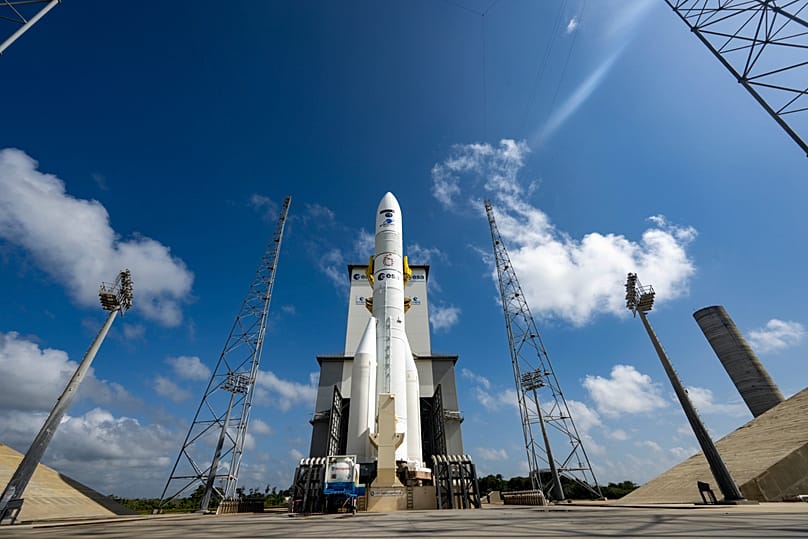
The launch of MTG-I2 from French Guiana completes the first trio of Meteosat Third Generation satellites, delivering high-resolution data and images every 2.5 minutes to transform weather forecasting and early warnings of extreme events.
The European Space Agency (ESA) has reached a historic milestone in Earth observation and meteorological science, amid the climate crisis and meteorological disasters. The MTG-I2 ("Meteosat Third Generation Imager-2") satellite has been successfully launched aboard the Ariane 6 rocket from the European Spaceport in Kourou, French Guiana.
With this mission, ESA completes the first trio in the Meteosat Third Generation constellation (MTG). MTG-I2, successfully launched on 27 July, is the second imaging satellite in this fleet and joins the first Imager (launched in 2022) and the Sounder (launched in 2025). Once its commissioning phase is complete, the constellation will begin operating at full capacity.
Revolution in forecasting extreme weather events
Located at an altitude of 36,000 kilometres in geostationary orbit, MTG-I2 will maintain a fixed position, acting as a watchful eye over the Earth's surface. Its main instrument, the Flexible Combined Imager, will provide a rapid-scan service over Europe, delivering high-resolution observations every 2.5 minutes.
This very high refresh rate represents a change of paradigm for nowcasting, improving short-term weather forecasts and proving vital for the monitoring of disasters such as floods or wildfires. The technology will make it possible to track atmospheric fronts in real time, anticipate the formation of severe storms or DANA events and improve the monitoring of fires and air pollution across Europe, with a particular focus on the Mediterranean and North Africa.
In addition, the satellite includes the Lightning Imager, a sensor capable of detecting and mapping individual lightning discharges both day and night. Integrating these satellites will make it possible to build the "weather cube", a three-dimensional representation of lightning, winds, cloud dynamics and greenhouse gases.
A milestone for the Ariane 6 rocket and the next operational steps
The launch marked the ninth mission of Ariane 6 (source in Spanish) and the first time the European heavy-lift rocket has carried a satellite to a Geostationary Transfer Orbit (GTO). To reach the furthest distance achieved by this launcher to date, it flew in a configuration with two P120C solid-fuel boosters.
After satellite separation, contact with the spacecraft was successfully established. Ground teams are now overseeing the deployment of the solar panels and the gradual ignition of its propulsion system to raise the perigee and fine-tune its trajectory towards its final geostationary orbit. Once it has been repointed towards Earth, the Launch and Early Orbit Phase (LEOP) will end and scientific calibration can begin.
European industrial cooperation and the future of the programme
Development of the MTG family has been led by ESA together with a European industrial consortium headed by Thales Alenia Space, with support from OHB System and Leonardo. Once the calibration phase is complete, responsibility for operating the satellites and distributing data to the international scientific community will pass to Eumetsat.
This fleet guarantees continuity of the observations begun by the Meteosat Second Generation series (operational between 2002 and 2015). From 2033, a second family of MTG satellites is expected to be launched in stages, ensuring the continuity of the service beyond 2040.
ESA signs first major European Launcher Challenge contract with Spain's PLD Space
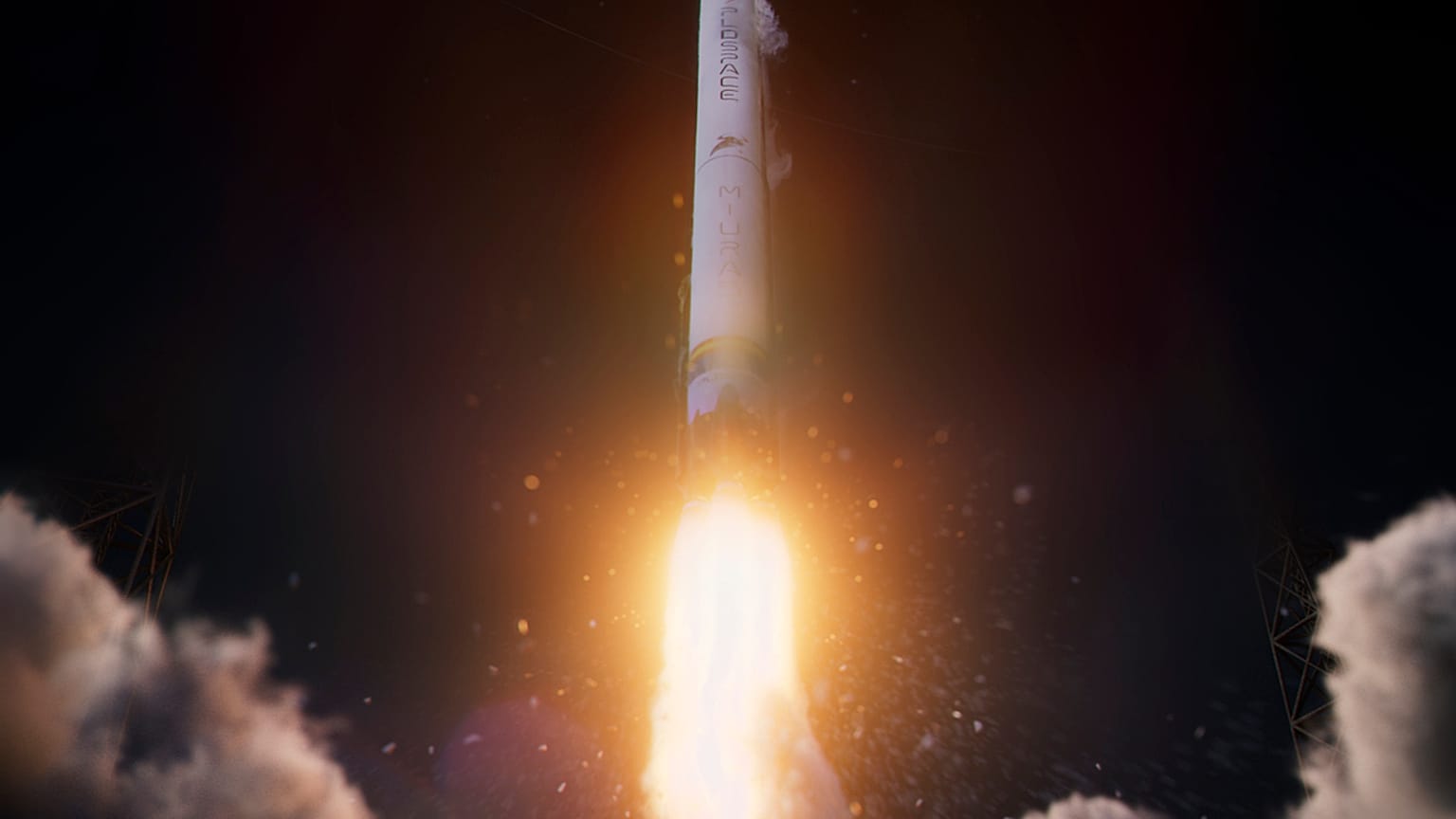
ESA has signed its first contract with PLD Space under the European Launcher Challenge, worth 158.9 million euros, to boost MIURA 5 launches and new orbital capabilities.
The European Space Agency (ESA) has begun signing the first contracts for its European Launcher Challenge (ELC), the programme with which Europe is trying to end its reliance on foreign launchers to place satellites in orbit. Among the companies selected is PLD Space, the Elche-based firm that in 2023 launched its MIURA 1 demonstrator rocket on a suborbital flight.
The contract, worth 158.9 million euros and funded mainly by Spain with a German contribution, positions the company as one of the central pieces of the future European launcher ecosystem.
The agreement is split into two components. The first aims to consolidate the commercial service of MIURA 5 and gradually ramp up its launch rate through to 2030, at a time when the company says it is already seeing growing commercial interest in the rocket in international markets.
The second, focused on what PLD Space describes as "enhanced orbital capability", will fund upgrades to MIURA 5 so that it can carry heavier payloads and reach more distant orbits, as well as incorporating propulsive landing, the first step towards reusing the rocket.
'Euronews' has spoken to Lucía Linares in French Guiana ahead of the launch of the next Meteosat. Linares is Head of Strategy and Institutional Launches at ESA and told us that companies such as PLD Space, Rocket Factory, Asbury, Maia Space and Isar Aerospace have been chosen by ESA under the Boost programme to receive co-funding: "What we do is no longer to set technical requirements for them as we do with Ariane or Vega, but simply to see how they develop their launch service and to verify that there is also private financing and that they meet certain technical objectives, of course, but without imposing anything on them."
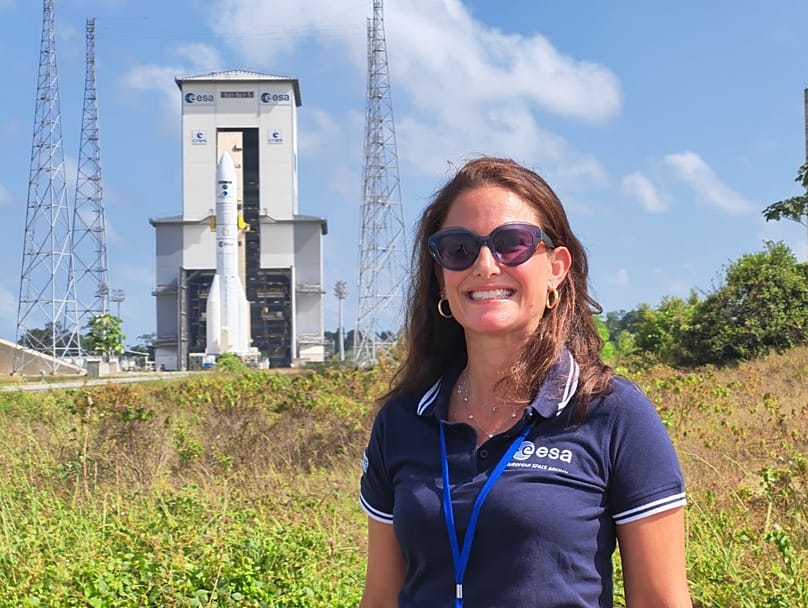
Linares also confirmed to 'Euronews' that they have already signed with PLD Space: "I have to say that we have already signed that contract with PLD Space and for me this is a source of great excitement, not only to attend the launch they will carry out, which I have been following for many years, but also to be able to see here in French Guiana how the construction work on PLD Space's infrastructure is progressing; it will launch from French Guiana, the European Spaceport."
The road to MIURA Next
According to the Spanish company, many of the subsystems developed under this orbital-improvement programme will not stay on MIURA 5: they are designed to be transferred directly to MIURA Next, the future family of heavy launchers with which PLD Space wants to scale up. The idea is that each technical improvement certified now will shorten timelines and reduce risks when it is time for the larger launcher.
"ESA's selection of PLD Space confirms the maturity of the roadmap we have been building for years," summarised Ezequiel Sánchez, the company's executive chairman, who places the contract within a trajectory that began with MIURA 1 and which, he says, should end by transferring critical technology to the heavy launcher.
As Lucía Linares told us, the PLD Space contract is not the only one ESA has signed in this round. Germany's Rocket Factory Augsburg has been awarded 186.9 million euros for its RFA One, which will operate from the SaxaVord base in Scotland, and Isar Aerospace has secured 197.8 million for its Spectrum. The three were part of a group of five finalists, completed by MaiaSpace and Orbex, which ESA shortlisted in July 2025 after receiving twelve proposals from across Europe.
ELC was created in 2023 with the aim, among others, of having before 2030 a European successor to Ariane 6 that does not depend on a single operator, and at the ministerial meeting in Bremen in November 2025 the member states stepped up their funding commitment to 900 million euros.
For PLD Space, the contract comes on top of the 42 million it had already received from CDTI through the Aerospace PERTE and arrives in the final development phase of MIURA 5, the orbital rocket that is due to succeed MIURA 1.

No comments:
Post a Comment