Wildfires continue to rage as Europe swelters under extreme heat
Europe is the world's fastest-warming continent, with temperatures rising at around twice the global average.
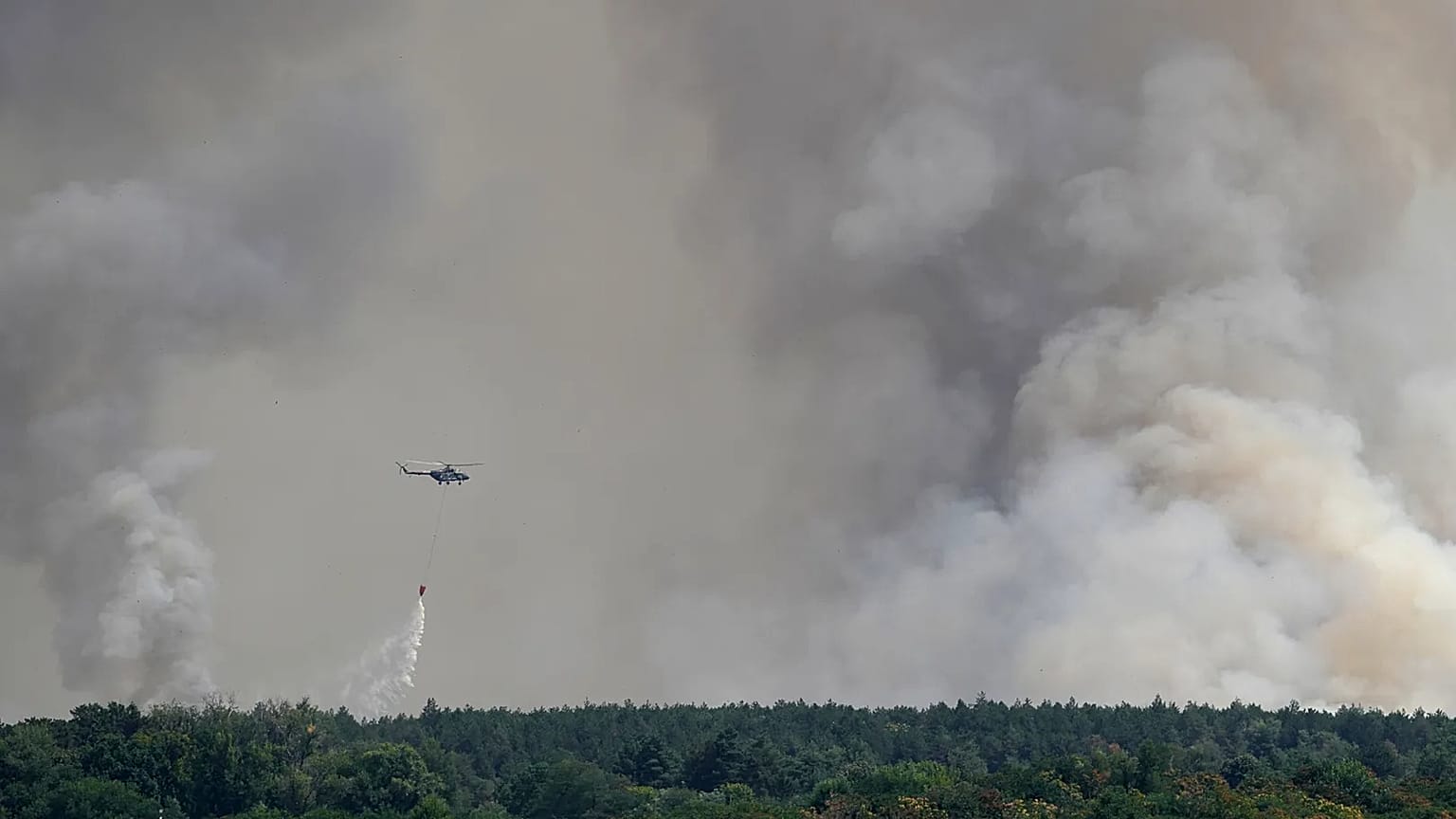
Firefighters continued battling multiple wildfires across Serbia on Friday, as temperatures continue to soar.
In the northeast of the country, firefighters battled a wildfire in a nature reserve, deploying both ground crews and helicopters.
Local authorities said the flames had scorched at least 700 hectares of land in the Deliblato Sands special natural reserve, located roughly 50 kilometres east of Belgrade.
Meanwhile, near the town of Kraljevo, several blazes also continued to burn, forcing residents of nearby villages to evacuate.
Local residents said more than 150 acres of pine wood forest had been destroyed in just a couple of days.
"The damage is huge. It's a young pine wood forest, these pines were planted during the '80s," one resident told press agency The Associated Press.
On Thursday, another major fire swept through the Ibar valley in central Serbia. Assisted by water-bombing aircraft, firefighters tackled the rough terrain to protect nearby villages.
Serbia was not the only country affected. Days of extreme heat, with temperatures reaching 40 degrees Celcius, fuelled wildfires across several Balkan countries on Thursday.
Europe's extreme summer weather has also taken a toll on the continent's rivers, with parts of the Danube falling to record-low water levels.
While it is not unusual for river levels to decrease during the summer months, this year's drop has been unprecedented.
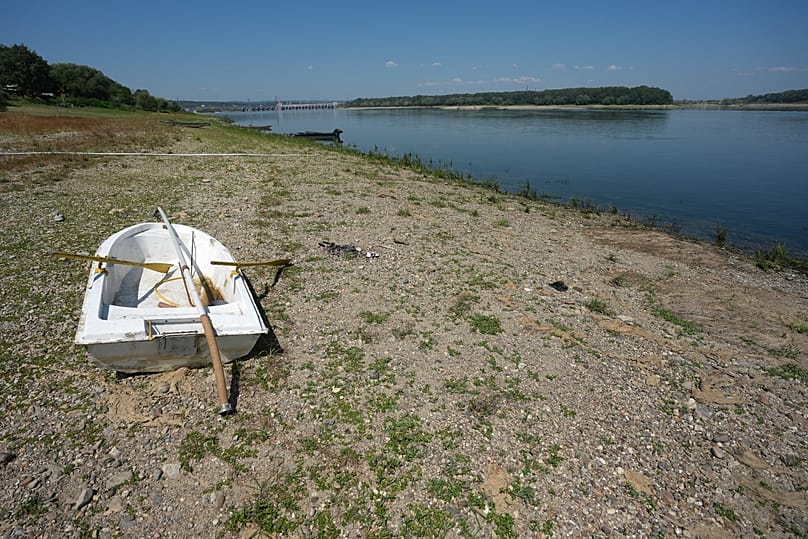
In Hungary, the Danube's exceptionally low water levels triggered an energy crisis, forcing the country to shut down its only nuclear power plant, which relies on water from the river for cooling.
Last week, Serbia also had to reduce its power generation from hydroelectric plants, with its two biggest plants having been reduced to an output just 20 and 30 percent of their capacities.
Southeastern Europe also continues to swelter under extreme heat.
In the northern Italian region of Emilia-Romagna, a wildfire broke out in a remote area of Vedriano. Firefighting efforts have been underway since Thursday afternoon.
Italy has placed all its major cities under the highest heat alert.
In neighbouring France, a major wildfire in the southern Var region is no longer spreading, but firefighters maintain a large presence because of the risk of flare-ups.
"It's a fire that can last over long periods of time. In the mornings, for example, it’s about setting up because (fire) risks with winds and rising heat increase in the afternoon," Chief Sergeant Anthony from Marseille Naval Fire Battalion said.
The fire, which started on July 20, burnt more than 60 square kilometers, marking the largest blaze recorded in the region in recent decades.
Europe is the world's fastest-warming continent, according to their European State of the Climate 2025 report, with temperatures rising at around twice the global average.
It warned heatwaves are expected to become more frequent, more intense and occur later and earlier in the year as the climate continues to warm.
How Europe’s drought exposes ‘weakness of fossil fuels’ as Poland forced to shut down coal plants
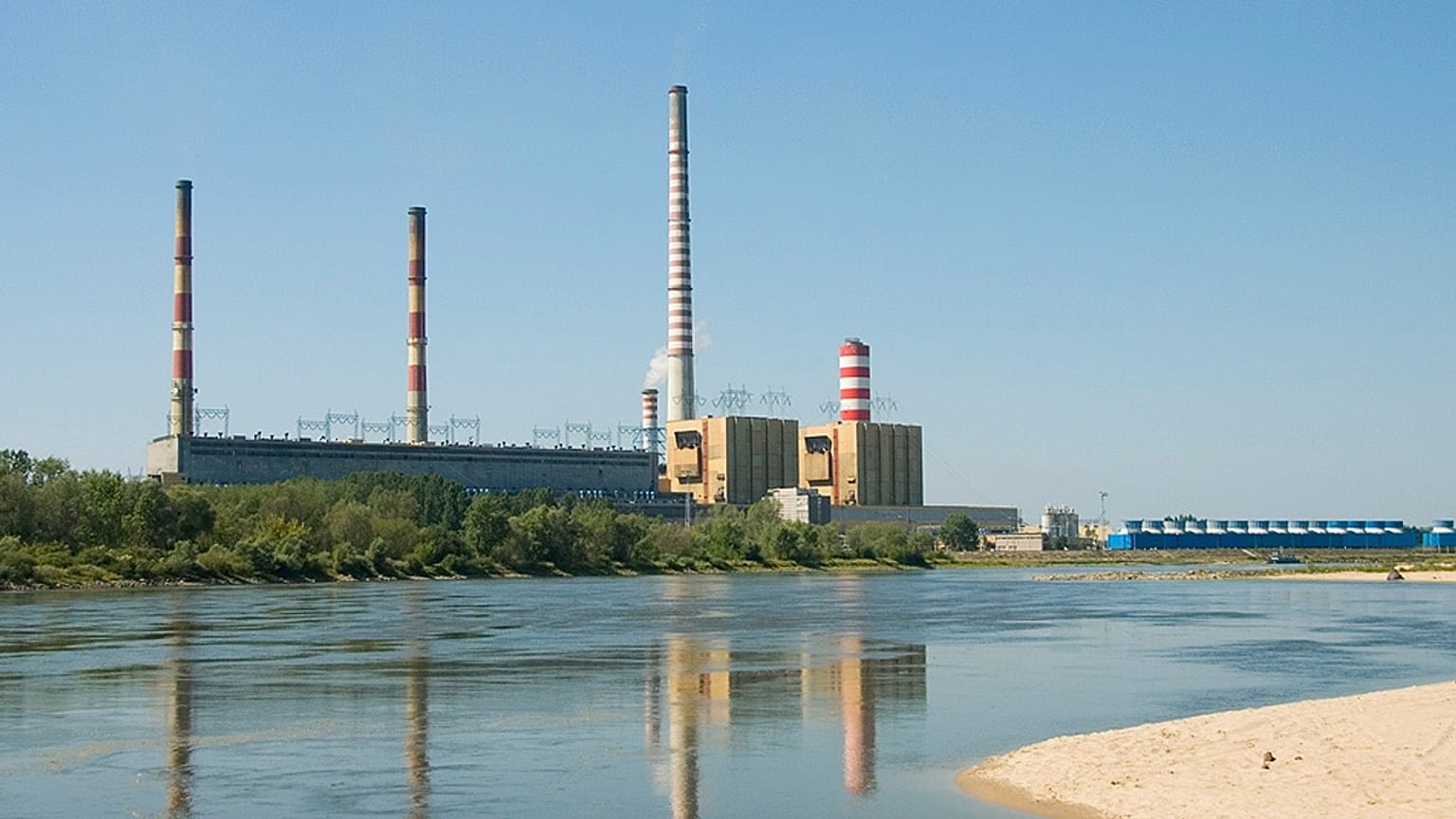
Poland has been forced to reduce output on its coal-fired power plants following critically low water levels in the Vistula River.
Poland has been urged to double down on clean energy after Europe’s drought wreaked havoc on its coal industry
Earlier this week (4 August) utility giant Enea was forced to reduce generation at the Kozienice and Połaniec coal-fired power plants after critically low water levels in the Vistula River limited cooling water supplies.
The move is said to have removed 1.3 GW from Poland’s power system, enough to power more than one million average households. This is around two per cent of the country’s current energy capacity.
River flow near the Kozienice Power Plant fell to just 135 cubic metres per second on 5 August, reflecting severe drought conditions.
The plant’s cooling system withdraws approximately 80–100 m³/s of water from the river – more than half of the remaining flow under such conditions.
Despite growing evidence that the plant is killing millions of fish larvae, including from six protected species, Enea is cracking on with plans to build a near 1.3GW gas-fired power plant at the Kozienice site. Experts warn that such a move will increase pressure on the Vistula River ecosystem through continued high cooling water demand.
‘The paradox of the climate crisis’
“This is the paradox of the climate crisis: power plants driving climate change are increasingly becoming its victims,” says Paweł Pomian, Vice-President of Polish environmental organisation EKO-UNIA.
“As the Vistula River dries up, an energy system built around large thermal power plants loses its resilience. Kozienice isn’t unique. There are many plants with similar cooling systems across Poland and there will be more if the government continues to expand fossil gas.”
Pomian argues that Europe’s latest drought should be a “wake-up call” for Poland and the rest of the continent to transition towards technologies like solar and wind power that require the least amount of water to generate electricity.
Poland urged to ditch coal
Despite witnessing some of the most rapid growth in solar power in Europe – adding more than 20 GW of solar capacity between 2020 and 2025 – Poland’s combined share of wind and solar remains five per cent lower than the EU average.
According to energy think tank Ember, Poland relies on coal for more than half (51 per cent) of its electricity – while wind and solar only make 25 per cent of the mix.
Poland aims for 51 per cent of renewable electricity generation and 64 GW of renewable capacity by 2030, but its coal addiction is proving difficult to shake.
“Coal plants are paying the price for the problems they created,” says Kasia Szeniawska, a campaigner at Beyond Fossil Fuels.
“As heatwaves and droughts become more severe, it has exposed the weakness of fossil fuel-based energy systems. While most EU countries cut down their coal use, Poland is not only failing a timely phase-out, it’s also proposing new gas plants that will only aggravate environmental issues.”
Europe’s drought hits renewables
Europe’s hot and dry summer, which climate scientists say would be “virtually impossible” if it wasn’t for the burning of fossil fuels, has also impacted the renewable energy sector.
According to energy intelligence firm Montel, inflows to reservoirs and run-of-river hydropower plants in Austria and Switzerland were nearly 50 per cent below average in July.
Total hydro production for Austria in July was only 51 per cent of normal levels (compared against the last 15 years) due to low rainfall, Montel adds. Similarly, Switzerland saw 48 per cent of normal production, while Germany (63 per cent) and France (68 per cent) also suffered.
While significant drops in hydro output can push countries back onto polluting sources like coal, solar and wind can often compensate for the drop in electricity generation.
For example, Ember says weather conditions caused a 12 per cent drop in annual hydropower production last year, contributing to gas generation in the EU rising by eight per cent (compared to 2024).
However, the same weather conditions (which also caused wind power to fall by two per cent) boosted solar generation.
This meant that in 2025, solar generated more EU power than ever before, growing by more than 20 per cent. It highlights the importance of diversifying the renewable energy mix in an era of climate-fuelled extreme weather.

No comments:
Post a Comment