Bunker Industry Adapts in Year of Extraordinary Disruption
The bunker industry has adapted to what many industry executives called a year of extraordinary disruption and challenges. While overcoming geopolitical shocks and global supply concerns, the industry is also focused on addressing the next challenges emerging with the transition to alternative fuels.
IBIA (International Bunker Industry Association), a trade group founded in 1992 to bring together the sectors of the industry and provide a non-governmental voice to regulators and other authorities, hosted a sold-out annual conference in New York this week. Supply and availability issues overshadowed much of the discussion, along with infrastructure development, quality management, emerging regulatory issues, and the pathway to alternative fuels and technology, including digitalization.
The bunker industry is in transition, with, as one executive put it, the challenge being “connecting the dots from traditional fuels to alternatives.” While everyone recognizes the challenges of putting the infrastructure in place for alternative fuels, the industry in 2026 experienced what was termed a “rollercoaster” year of extraordinary disruptions and challenges.
The consensus among industry executives was that many customers had a “knee-jerk reaction” to the repercussions of the geopolitical shocks. Supply and cost, of course, were the biggest concerns, with many saying the only certainty was disruption.
The bunker industry, however, has absorbed the shocks and settled into its new patterns. Many highlight that the customer has moved closer to the supplier, as the challenges meant that it was not possible to be as transactional in this environment.
One executive noted that “they had never seen the level of inter-day volatility that developed this year.” They said that 2026 was a “lesson in resilience” but that customers and suppliers have adapted. Big users such as Hapag-Lloyd note that as a company they are moving back to more contracts after having had to depend more heavily this year on the spot market.
Despite all the challenges from fuel supply, the uncertainty over trade due to tariffs, and changes in global trading patterns, the shipping industry is continuing its dramatic growth. Clarksons Research highlights that the shipping industry is moving 13 billion tonnes of cargo annually. It projects it will grow to 14.5 billion tonnes by the end of the decade. Energy, notes Clarksons, is the single biggest cargo. Fuel is central to the maritime industry, which drives global commerce.
Much of the industry’s discussion focuses on the coming transition to alternative fuels, where there are few clear answers and still much uncertainty about regulations. The industry notes the need for stability in regulations and a clear direction to drive the transition.
So far, there is no clear solution, with many noting, however, that the emergence of the modern alternative fuel sector is just about a decade old. They also note that the shipping industry has a long history of using multiple fuels for different solutions and expect it will continue to follow this approach.
Currently, alternative fuel demand varies by sector, with the tanker sector. In the tanker sector, for example, there is no incentive from charters for “clean ship” operations. The expectation is that it will be the shareholders who will drive changes in that sector, while in other areas it is the customers that are pulling forward change.
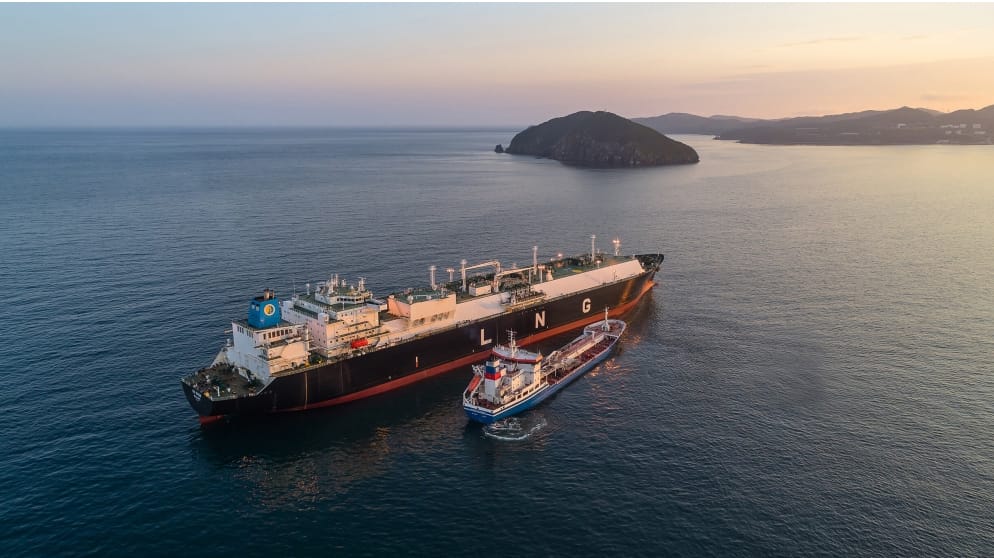
LNG is clearly the most advanced of the fuels, while the debate continues on whether it is a long-term alternative or a transitional fuel. Bio and sustainable options are likely to evolve because of the more developed infrastructure for LNG and the rapid growth in LNG-fueled ships.
Clarksons’ data highlighted the growth in LNG bunkering. They calculate that there are approximately 60 LNG supply vessels in operation. Another 50 are in the construction pipeline and development.
Even so, it was highlighted that the LNG infrastructure needs more buildout. For example, they noted there are only five Jones Act-compliant LNG barges in the United States. Ships in the ports of Long Beach and Los Angeles are getting LNG on bunker vessels coming from Canada. There are regulations in New York and New Jersey against ship-to-ship transfer of LNG.
One alternative that has drawn a lot of attention this year is ethanol. In part, its large existing infrastructure and its ability to operate as an alternative to methanol contributed to the attention. Proponents point to a large supply and a cost advantage on a total basis when carbon abatement is included. There were nine tests of ethanol this year, many of them aboard Maersk vessels. They confirmed the basic operability, and the industry expectation is that 2027 will see a greater drive to address roadblocks and gain regulatory recognition.
It is still very much a “chicken and egg” debate within the industry about the investments. Some insist there must be demand and contracts to drive the infrastructure investments, while others say the infrastructure and supply have to be there for the shipping companies to make the investment to create demand.
Despite the challenges, the consensus is that the bunkering industry has developed and grown more sophisticated. IBIA’s executives also noted that there is still a need to do a better job on visibility for the industry. IBIA is launching a Marine Energy Outlook annual survey that it believes will create a benchmark of sentiments, trends, and expectations.

No comments:
Post a Comment