Analysis
The Nvidia affair: Are markets about to fall out of love with AI?
Jensen Huang’s departure from Nvidia exposes the vulnerabilities behind the AI boom. As equities reel in response to his resignation following extramarital affairs, alleged Chinese espionage and a summons to testify before US lawmakers, questions mount over who is really in charge of tech and whether the immense capital riding on it can survive the turmoil.
Issued on: 14/11/2026
FRANCE24
By: Ella ARWYN JONES

Nvidia is a name that has been projected front and centre in the minds of tech enthusiasts and returns-chasing investors alike since its surge to dominate the tech sector in the S&P 500, where it typically accounts for 6 to 7 percent of the value of the index that tracks the performance of 500 leading large-cap, publicly traded companies. But in the space of just a couple of weeks, the $4.2 trillion semiconductor group – whose chips underpin much of the world’s artificial intelligence build-out – has been plunged into the most serious governance crisis since its 1993 inception, sparking geopolitical friction and renewed nervousness amid an ongoing artificial intelligence (AI) boom.
Caught in the crossfire is founder and now defunct CEO Jensen Huang, who for more than three decades was the driving force behind Nvidia (somewhat ironically, attributed to coming from the Latin for "envy" or "greed"), transforming it from a computer graphics company into the world's most valuable semiconductor business supplying the components that power smart tech. Following reports of love affairs – the most recent being an in-house revelation with a direct report and company vice president of healthcare, Kimberly Powell – and suspicions of espionage, Jensen Huang’s abrupt departure as chief executive is sending shockwaves through an industry built in part on his leadership.
The bamboo curtain
At the centre of the controversy is Megaspeed, a Singapore-based computing company that reportedly purchased billions of dollars' worth of Nvidia hardware. On November 8, the former CEO confessed to an affair with the firm’s executive, Alice Huang, who joined the company in 2023 and turned the once-gaming business into a tech-driven data centre enterprise that helps China-based customers access chips. Reported to have established industry legitimacy with both Nvidia by frequently touting her commercial relationship with Chinese e-commerce and tech giant Alibaba – for whom she is speculated to have purchased Nvidia chips on behalf of – intelligence officials believe she was working for China’s spy agency, the Ministry of State Security (MSS). US authorities are investigating whether Megaspeed helped advanced processors reach Chinese customers in breach of American export restrictions, and late on Thursday, ex-CEO Jensen Huang was summoned to testify before US lawmakers.
The allegations involving Alice Huang add a geopolitical, national security dimension to an already sensitive commercial relationship. Washington has spent years restricting China's access to the most powerful AI chips, arguing the technology could strengthen its military, intelligence and surveillance capabilities. Meanwhile, for Beijing, technological prowess remains central to its ambition to compete with the United States in artificial intelligence.
“Megaspeed came under scrutiny long before anyone linked it to this love story,” said Rayna Stamboliyska, CEO at RS Strategy, a company specialising in digital diplomacy, and a practitioner-in-residence at the Centre Internet and Society (CIS) at the National Centre for Scientific Research (CNRS).
“US authorities have reportedly been investigating Megaspeed since 2024,” she said, alluding to reports that the firm imported billions of dollars’ worth of Nvidia chips into Malaysia on behalf of Chinese clients.
Current export controls restrict the circulation of sophisticated American semiconductor and advanced technologies in certain jurisdictions such as China and limit the power of those accessed via special licence. Introduced under the Biden administration in 2018, the limitations initially sent shockwaves through the semiconductor industry, as chip manufacturers such as Nvidia and AMD had to immediately create less powerful “China-versions” of their top AI chips to stay compliant.
However, it’s possible to circumvent access restrictions to the US’s top tech if no physical item is transferred. This would be stopped if US lawmakers pass the US Chip Security Act, which seeks to enforce “location verification”.
The bill passed the House Foreign Affairs Committee by unanimous vote in March 2026, but it still needs to navigate several legislative hurdles in the US Congress before being enacted. But a Democratic majority could support a next round of security restrictions.
“There have been rumours that Nvidia is the biggest opponent of both the Chip Security Act and the AI Overwatch Act,” Stamboliyska noted. “The CEO stepping down means that Nvidia loses let's say it's most effective lobbyists.”
US President Donald Trump has repeatedly fought attempts to regulate AI and, in October, awarded Jensen Huang the National Medal of Science during the "Science: A New Golden Age" summit hosted at the US Institute of Peace in Washington, DC. Stamboliyska pointed to how concerns around AI – as well as proposals for more data centres – played a key role in the recent US midterm elections.

Indeed, these proved pivotal in a number of specific House and Senate races – including in Texas, where Democrat governor-elect Gina Hinojosa campaigned against the influence of the likes of Musk, who spent roughly $225 million supporting Republicans in the state, noted the Financial Times.
No confirmaijing or that Jensen Huang knowingly assisted an intelligence operation.
A company bigger than its CEO?
Jensen Huang is not an ordinary departing chief executive. Since co-founding Nvidia with Chris Malachowsky and Curtis Priem in 1993, he presided over its transformation to become the dominant international supplier of advanced processors used to train and operate AI systems. And his influence extended well beyond the company's products: Nvidia is an essential partner to Microsoft, Amazon, Google, OpenAI and other businesses in the race to develop increasingly powerful AI models, while its graphics processing units (GPUs) – or “chips”– software and wider computing infrastructure have become the foundation of an economic ecosystem involving cloud providers, data-centre operators, start-ups and governments.
“AI is definitely losing a leader,” said Leïla Mörch, tech investor and founder of tech advisory firm Shael.
While company execs search for Jensen Huang’s permanent successor, Nvidia has appointed longtime Chief Financial Officer Colette Kress as interim CEO. Kress inherits a role in a firm with formidable resources and a strong market position, but also one that faces unprecedented scrutiny. The challenge will be to demonstrate that Nvidia's success rests on institutional strength rather than dependence on one individual.
“I find it interesting that such a private affair is now unveiling the big geopolitical, capitalist and economic questions behind the AI industry,” noted Mörch. “It shows that the market is so much more than just business and numbers.”

Anthropic anticipation
Nvidia has become a bellwether for the international AI economy. Its performance influences investor expectations for the businesses buying its processors, building data centres and developing AI applications. The extraordinary sums being invested in the sector are based on the relatively simple assumption that demand for tech will continue to grow.
Across the industry, Jensen Huang was considered a voice of reason, often stabilising shareholder reactions amid market-wide sell-offs and allaying wider emerging tech fears. “He was quite vocal in his criticism of (now OpenAI CEO) Sam Altman when he claimed back in 2019 essentially ‘we’re all gonna die’ as a result of AI,” said Stamboliyska. OpenAI initially withheld GPT-2 on the grounds that it was too dangerous to release.
“He was very business and industry oriented. He would acknowledge that yes, investors are spending a lot of money on this emerging industry – billions of dollars – but actually, we are still very far from the trillions of dollars that are actually needed,” said Mörch, of his ability to offer a grounding presence amid a fast-changing industry. “He made people feel like it’s going to be ok.”
Amazon, Microsoft, Alphabet and Meta continue to commit hundreds of billions of dollars to AI infrastructure, as start-ups raise significant capital to compete amid the development of increasingly sophisticated models.
But there has been a recent downward – albeit possibly temporary – trend in AI stocks, prompted by US political shifts, nervousness around potential interest-rate hikes, and ongoing US-China trade tensions. Nvidia shares have lost 13 percent of their value since Monday and are down more than 26 percent over the past month. The firm is scheduled to present its third-quarter results next week on November 17.
How close was Nvidia ex-CEO, to Trump?

The timing of the Nvidia reverberations is particularly pertinent for behemoths such as Anthropic – the company behind Claude AI – and other developers seeking to attract investment. Their valuations depend on expectations of sustained growth, continued access to computing resources and businesses' willingness to keep spending on AI.
Backed by seven cornerstone investors whose rolodex boasts names including Alphabet, Nvidia and Microsoft – Anthropic is scheduled to price its initial public offering via New York’s Nasdaq on November 18 and hopes to raise shares amounting to around $64.4 billion. In doing so, the company would achieve a valuation of between $1.26 trillion and $1.41 trillion – a hefty sum, albeit down on the more than $2 trillion valuation it had hoped for months prior. Goldman Sachs is underwriting the transaction and projects the firm to achieve an annual revenue of roughly $685 billion by 2030. But if confidence continues to weaken, the consequences could spread throughout the investment chain, with Anthropic’s ambitions falling flat.
“If Anthropic’s IPO goes well, it would be a strong signal to the market that everything that's happening in terms of intelligence is ‘morality based’, but otherwise the business is still here.”

Europe’s call for greater sovereignty
The crisis raises a familiar but increasingly urgent question: How can European markets avoid becoming dependent on just a handful of American tech companies for the infrastructure underpinning the digital future? Just last month, Nvidia invested in French healthtech firm – and household name – Doctolib.
European governments have repeatedly called for greater technological sovereignty, investment in domestic computing capacity and the development of home-grown AI champions. Yet Nvidia's dominance illustrates how difficult that ambition might be to achieve in terms of resources, investment, energy and expertise.
Mörch pointed to the UK government agency AI Security Institute, which she explained is one of – if not the only – government entities to invest actively in auditing the technology and language learning models before they are made accessible to the public, which she said builds an inherent sense of accountability.
“We do have some kind of solution and watching what these people are doing should be a source of inspiration and action for the rest of the world.”
“The industry is now realising and unveiling some weaknesses … perhaps over personalisation and a lack of decentralisation of power,” she said, adding that current developments are prompting big players to reconsider their succession plans and take appropriate steps to ensure board independence.
The Nvidia affair could strengthen European arguments for diversifying supply chains and applying a tougher regulatory stance on strategic tech bros. It may also encourage governments to look more closely at ownership and control of data centres, the provenance of computing hardware and the risks associated with international technology partnerships.
But leaning into Altman’s fears that AI may eventually signal the end of humanity, Mörch remains philosophical on who might fill the Jensen Huang gap at Nvidia’s helm. “You know we say in French, ‘les cimetières sont pleins de gens irremplacables’… cemeteries are full of irreplaceable people. You might be irreplaceable. It doesn't mean that you will never be replaced.”
Jensen Huang, who resigned as Nvidia's chief executive on Thursday following allegations he had an affair with a Chinese spy, has been summoned to testify before US lawmakers, Republican Senator Tim Scott said. Commerce Secretary Howard Lutnick was also called to answer questions from lawmakers concerning US national security and "the protection of sensitive US technology".
Modified: 13/11/2026
FRANCE 24

US lawmakers have called Jensen Huang, an architect of the artificial intelligence boom, to face their questions in December after the Nvidia ex-CEO quit over extramarital affairs, including one with a suspected Chinese spy.
The scandal has wiped almost half a trillion dollars off Nvidia's market valuation, as it raises national security fears and leaves the AI industry in uncharted waters.
"Recent reports raise serious concerns about our national security and the protection of sensitive US technology," Republican Senator Tim Scott wrote Thursday on X.
It joins a call for a closed-door interview with the leather-jacketed, 63-year-old Huang on December 1 by three House of Representatives committees, on threat of subpoena.
Huang, who has been married to his wife Lori for over 40 years, admitted Sunday to an affair, reportedly with Alice Huang, a former senior executive at Singapore-based data center company Megaspeed. The two are not related.
US intelligence reportedly circulated a memo this spring alleging she was an asset of China's Ministry of State Security. Beijing has rejected the allegations.
On Wednesday, The New York Times reported a second affair, citing video of Huang being affectionate with Nvidia's vice president of health care, Kimberly Powell.
While Nvidia's board searches for a permanent successor to Huang, who spent 33 years at the helm of the firm he co-founded, chief Financial Officer Colette Kress will serve as interim CEO.
Nvidia hit gold when the launch of OpenAI's ChatGPT in 2022 sparked a global rush to develop AI, with its processors – once designed for video game graphics – becoming a crucial ingredient to train and run the technology.
Informal Trump adviser
Nvidia did not give a reason for Huang's departure, who also gave up his board seat.
Huang is Nvidia's largest individual shareholder, with a stake of about 3.6 percent, according to the company.
The Taiwanese-born businessman was a close informal adviser to President Donald Trump on AI, and had spent years lobbying against curbs on sales of advanced AI chips to China for national security reasons.
Dan Ives of investment bank Yorkville Ives called it "a dark day for Nvidia and the US tech industry".
But he said the board had done what it needed: "rip off the band-aid and take Nvidia into its next chapter without him".

The board named Harvey Jones, a former chief executive of chip design software firm Synopsys, as chair, and said it expected the company's operations and product roadmap "to continue without interruption".
Interim CEO Kress joined Nvidia in 2013 after nearly 25 years at companies including Cisco and Microsoft.
Trump, who had stood by Huang throughout the scandal, said former Apple boss Tim Cook should take over.
"A Legend replaces a Legend!" Trump said on his Truth Social network, adding that Cook had made Apple "one of the great companies of the world at a fairly short range".
'Going through hell'
Singapore said Thursday it had barred Alice Huang, a Chinese national, from re-entering the country in February for giving investigators inaccurate information about her role at Megaspeed, though she was not investigated for espionage.
Nvidia's board opened a probe on Sunday into reporting that Huang had been the target of a "foreign intelligence effort", while saying it retained confidence in him.
When asked Thursday if Jensen should have stepped down, Trump said it would depend.
"If the woman was a spy, yes. If the woman was not a spy, perhaps it would be different," Trump said in an interview.
But Trump said he was confident that Huang will "end up on his feet", adding: "I spoke to him yesterday. He's going through hell. What he feels most badly about is his wife and family."
At the heart of the spy allegations is the race between the United States and China for supremacy in an industry widely seen as the next industrial revolution.

Key US lawmakers, including Senate Democratic leader Chuck Schumer, called Thursday for answers on what the Trump administration knew about Huang's ties to a suspected Chinese spy, days before Trump travels to China for a summit.
Reports allege the Commerce Department under Secretary Howard Lutnick may have failed to act on suspicions that Megaspeed was helping reroute restricted Nvidia technology to China.
Singapore's home ministry said it had repeatedly sought information from the US Justice Department and FBI on a US server supplier during its Megaspeed probe, but "received limited information or assistance".
On Thursday, Malaysia also said Friday it was investigating a subsidiary of Megaspeed International over the possible diversion of advanced AI chips to other countries.
(FRANCE 24 with AFP)
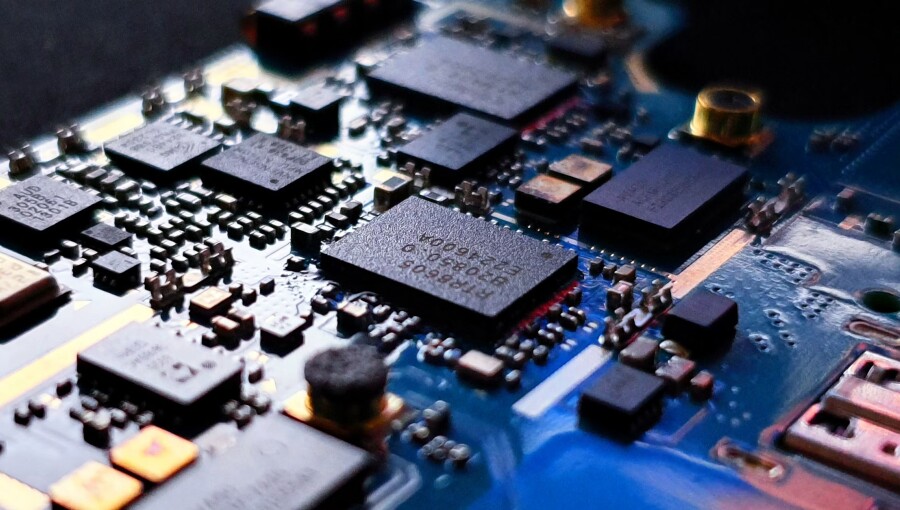
Taiwan's semiconductor suppliers face little risk of serious disruption after Jensen Huang stepped down from Nvidia (NASDAQ: NVDA), though his exit may speed up a shift in AI chip orders towards rival products, industry executives and investment advisers said, Focus Taiwan reported on November 13.
Huang, who co-founded the US chip designer, quit on November 12 as president, chief executive and board member. He left after reports emerged of extramarital relationships with two women. US intelligence officials suspect one of them, a businesswoman, of links to Chinese intelligence. Nvidia has named Chief Financial Officer Colette Kress as interim CEO while the board looks for a permanent replacement.
Taishin Securities Investment Advisory said in a report that the resignation could hasten the spread of AI chip orders beyond Nvidia. According to the report, competitors AMD and Broadcom stand to gain, as do Amazon and Google. Both are building their own application-specific integrated circuits (ASICs), which are chips tailored to particular tasks.
Senior chip industry executives who spoke to Taiwan's Central News Agency agreed that ASIC work could pick up pace. They did not expect it to upset the balance with graphics processing units (GPUs), the core of Nvidia's AI business. One executive in the substrate sector said Nvidia's GPUs would be difficult to displace because many AI developers depend on CUDA, the company's software platform built to run on its chips.
Taishin said close ties between chipmakers and their Taiwanese partners should shield local suppliers even if demand moves from GPUs to ASICs. Alex Huang, an analyst at Mega International Investment Services, also expected little impact. He noted that Taiwanese firms remain central to the AI supply chain as demand grows and buyers try to cut their dependence on China. Individual suppliers would keep adapting to changes in product demand and technology, he added.
An executive at a packaging and testing firm said the company might move part of its 2027 budget to manage short-term risk. Over the longer run, the executive saw good prospects for both GPUs and ASICs and said the firm would keep developing both in line with customer needs.
A second executive said Nvidia's orders from Taiwan would not change. Increasingly complex GPU technology and lengthy supplier qualification make it hard for the company to switch vendors, the executive explained.
Taishin said US export policy towards China remained a key issue for Taiwanese suppliers, including any revisions to rules on Nvidia's H200 shipments. Washington currently requires licences for H200 AI chips sold to approved Chinese buyers, and every application undergoes a security review.

No comments:
Post a Comment