Mexico says crackdown on Asian steel shipments is paying off as US tariff talks advance

Mexico is working to ensure that no steel from China or other countries is rerouted through its territory into the United States under North America’s trade pact, a Mexican senior trade official said on Wednesday, as Mexico presses Washington for relief from tariffs on steel, aluminum and autos.

Luis Rosendo Gutierrez, Mexico’s deputy economy minister for foreign trade, told journalists the government had tightened traceability measures with industry and was guaranteeing that products were not reaching the United States by exploiting Mexico’s trade preferences.
Steel has become a politically sensitive issue for US-Mexico trade, with Washington determined to block Chinese goods and inputs from entering the US market through third countries.
“We want to guarantee – and we are guaranteeing – that there is no triangulation of steel or other products that reach the United States taking advantage of our trade agreement,” Gutierrez said.
Gutierrez said Mexico had canceled around 1,100 mill registrations, many in Asia, that authorities found did not exist, helping cut steel imports from Vietnam by 80% in some months.
He added that Mexico had reduced steel and aluminum imports from third countries including China, South Korea and India by about 30%, stemming some 13 billion pesos ($698.54 million) in imports.
Mexico’s priority, Gutierrez said, is to reduce the impact of US Section 232 tariffs on autos, steel and aluminum rather than focus on a broader review of the US-Mexico-Canada trade pact.
About 80% of Mexican exports to the United States already enter tariff-free, he added.
Gutierrez said US officials have welcomed proposals from Economy Minister Marcelo Ebrard, and that Mexico hoped for positive news in the coming weeks before year-end.
Analysts argue that Mexico is not a hub for steel “transshipment,” in which goods are routed through another country before reaching their final destination, typically to avoid tariffs.
Still, a report last month by Washington-based think tank the Center for Strategic and International Studies said certain goods may undergo significant processing in Mexico before being exported to the US, rather than simply passing through the country.
($1 = 18.6103 Mexican pesos)
(Reporting by Kylie Madry; Editing by Iñigo Alexander and Alistair Bell)
Ternium weighs more anti-dumping cases as steel snarls trade talks with US
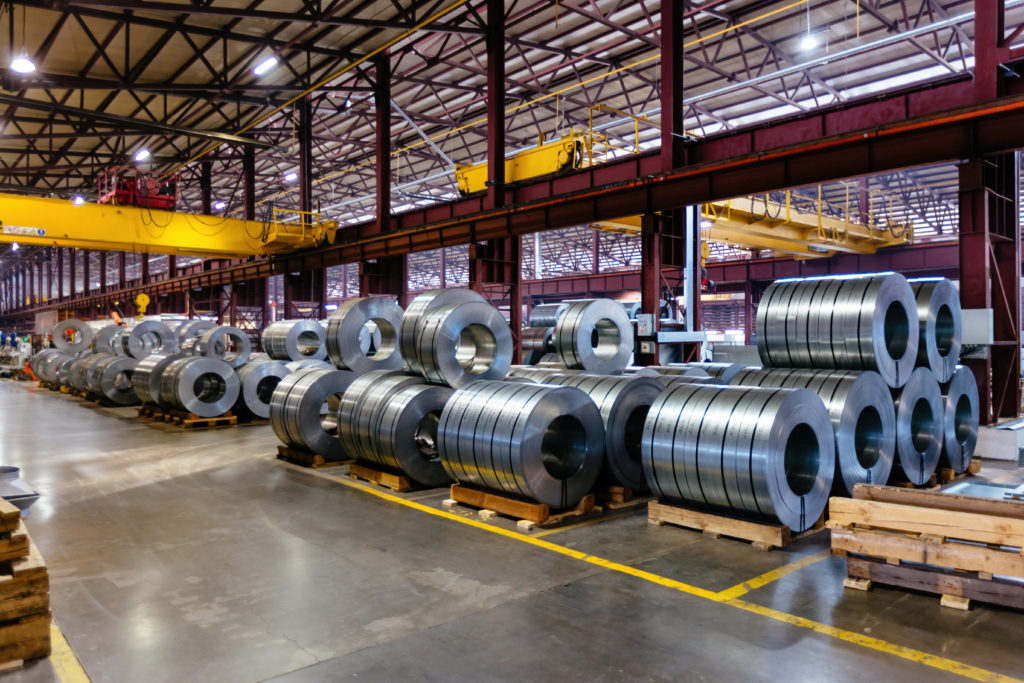
Latin American steelmaker Ternium is weighing more anti-dumping cases in Mexico to fight imports, especially from Asia, Chief Executive Maximo Vedoya told Reuters on Tuesday, as trade frictions over steel cloud broader talks with the United States.
Vedoya told Reuters Ternium would “very likely” pursue more anti-dumping cases after backing recent petitions in Mexico, where the company is trying to replace imports with local supply and ramp up a major new slab mill in Pesqueria just outside the industrial hub Monterrey, near the border with the US.
Ternium has been the petitioner in several Mexican cases against Asian steel shipments in the past few years.
Steel has become a central part of the US-Mexico trade agenda as the trilateral agreement with Canada is up for review.
Vedoya said the more important issue for North America was tightening rules of origin and easing the burden of US Section 232 tariffs, which apply to steel and aluminium, on regional trade.
Ternium has argued that Mexico and the United States face the same challenge from unfairly priced steel, though Vedoya said Ternium’s own direct exposure to US tariffs is now limited because it has sharply reduced exports from Mexico to the United States.
Instead, the company is focused on winning market share at home from imported flat steel, particularly from Asia.
Vedoya said the Pesqueria project, due to start production in February 2027, would take time to deliver its full payoff because sophisticated new products require certification and a lengthy ramp-up.
Ternium has told investors that the main benefits should become visible in 2028 and that using slab produced at Pesqueria rather than imported slab could add $50 to $100 per ton in margin.
Vedoya also said Ternium was focused on lifting performance at Brazilian steelmaker Usiminas (BVMF: USIM5), though he cautioned that its 2027 outlook would depend in part on conditions in Brazil. In February, Ternium and partner firms raised their controlling group stake in Usiminas to just under 93%, with some reports in August speculating that Ternium may buy the company outright.
“Improving productivity (at Usiminas) is the focus we have today,” Vedoya said. “There’s no other focus there.”
(Reporting by Kylie Madry; Editing by Aurora Ellis)

No comments:
Post a Comment