Showing posts sorted by date for query ‘Killer Robots’. Sort by relevance Show all posts

Thursday, November 19, 2026

Rights Groups Call for UN Member States to Back Treaty to Restrict ‘Killer Robots’ Worldwide

“Autonomous weapons systems are no longer a hypothetical future threat,” said a program director at Amnesty International. “Meaningful constraints need to be put in place now.”


A photo of a humanoid robot known as the Phantom MK-1, manufactured by Foundation Future Industries on February 12, 2025.
(Photo from Wikimedia Commons)


Stephen Prager
Nov 12, 2026
COMMON DREAMS

A coalition of human rights groups called on United Nations member states to begin negotiating a treaty restricting the use of autonomous “killer robots” in battle at an international weapons conference taking place next week.

Amnesty International, Human Rights Watch, and the international coalition Stop Killer Robots said Thursday that governments should use the Review Conference of the Convention on Conventional Weapons (CCW) to launch negotiations on a new protocol imposing legally binding limits on weapons guided by artificial intelligence. The conference begins in Geneva, Switzerland, on November 16.

The CCW, a treaty adopted by the UN in 1980, prohibits the use of weapons that cause unnecessary harm to combatants or affect civilians indiscriminately. However, the treaty does not include specific restrictions on the use of self-guided weapons systems.

“Autonomous weapons systems are no longer a hypothetical future threat, with reports growing that they are already being tested, integrated, and deployed,” said Carolyn Horn, program director for law and policy at Amnesty International. “Meaningful constraints need to be put in place now. Countries should seize this moment to open negotiations on new international law before these systems become entrenched in military practice, with potential to lead to devastating consequences for humanity.”


The CCW Review Conference is held only once every five years. Since the last one, self-guided systems capable of finding, selecting, and striking targets have been deployed on battlefields around the world.

Earlier this year, The New York Times reported that Russia was testing and deploying AI-powered drones in Ukraine that can identify and strike targets without a human operator making the final decision. In July, one of these drones struck a gas station in Zaporizhzhia, killing three civilians.

China is also aggressively developing increasingly autonomous weapons systems, including packs of rifle-equipped robotic dogs, AI-powered drone swarms, and unmanned combat vehicles—some of which have already been demonstrated in military exercises.

The Financial Times reported Wednesday that Foundation Future Industries, a US-based robotics startup backed by President Donald Trump’s son, Eric, was in talks to supply the Israel Defense Forces with up to 1,000 Phantom MK-1 humanoid robots for operations in Gaza’s tunnel network, potentially including combat.

The company’s co-founder and president, Mike LeBlanc, told the outlet he had “no question of the morality of building a ‘Terminator’,” adding that “combat is the noblest” purpose they could perform.

“If you can keep somebody from having to kick in a door not knowing if there’s an enemy on the other side with a gun pointed at it, that’s kind of the highest purpose of what these robots could do,” he added.

Related concerns surround the more widespread use of AI to select targets. Israel has used AI-powered systems to identify thousands of Palestinians for potential assassination, generate bombing targets, and track people to their homes, raising serious concerns about faulty targeting, inadequate human oversight, and the killing of civilians, including entire families.

During its war on Iran, the United States has used AI-powered software to identify and prioritize targets for airstrikes. Pentagon investigators identified flawed intelligence, outdated imagery, and excessive reliance on Palantir’s Maven AI system as factors contributing to the US bombing of an elementary school in Minab, which killed more than 150 people, including at least 123 children, on February 28, the first day of the war.


In September, a UN group of governmental experts agreed on a proposed definition of lethal autonomous weapons and a framework for regulating them. The proposal included basic principles requiring human control and adherence to the laws of war.

But the United States and Russia pushed to weaken some of the requirements for human review of AI-generated targets and for autonomous weapons to operate predictably and reliably. They also removed explicit language requiring “that ethical considerations are taken into account” when autonomous weapons are used.

Human Rights Watch has criticized the narrowing of these parameters, but said the agreement still provided a workable basis for treaty negotiations within the next year.

“After years of stalemate largely due to some states weaponizing the consensus-based decision-making under the CCW against meaningful progress, state parties finally have an opportunity to move from discussion to action,” said Verity Coyle, the group’s deputy crisis, conflict, and arms director. “A time‑bound treaty negotiation process is the only credible way to ensure UN member states effectively respond to the existential dangers posed by autonomous weapons systems.”

As of August, more than 120 nations have indicated support for a binding treaty to regulate autonomous weapons systems, according to Stop Killer Robots. Nicole van Rooijen, the group’s executive director, said next week’s conference is the best opportunity in years to establish one.

“The Convention on Conventional Weapons was created to address emerging threats, and this Review Conference should show that it still can,” she said. “States parties to the convention have a responsibility to act before autonomous weapons systems reshape warfare in ways that undermine human dignity and civilian protection.”


Tuesday, November 17, 2026

Interview

'A futuristic debate now very real': Why the world is struggling to regulate killer robots


Representatives from 128 nations are meeting in Geneva on Monday to decide whether to move ahead with negotiating legally binding rules around the use of AI-powered weapons that can kill without human involvement. FRANCE 24 spoke with artificial intelligence researcher Vincent Boulanin to find out just what is at stake.


Issued on: 16/11/2026 
FRANCE24
By: Paul MILLAR


A visitor speaks on his mobile phone in front of an ad for military AI displaying a drone at the Berlin Security Conference, on November 3, 2026 in Berlin. © John MacDougall, AFP

“A computer can never be held accountable,” IBM wrote in a 1979 internal training manual. “Therefore, a computer must never make a management decision.” The world has come an awful long way since.

Government envoys from 128 nations met in Geneva Monday to decide whether to start talks around setting down legally binding rules for autonomous weapon systems that can kill without human input.

The question is not an academic one. In the skies over Ukraine, Moscow and Kyiv have both unleashed lethal unmanned drones equipped with AI-powered guidance systems that allow them to identify and strike pre-programmed targets even if they lose contact with their human operator.

These advances – if the word applies – have been born of the relentless logic of escalation that drives all wars: if one side builds signal jammers to drive attack drones off course before they hit their target, the other will build drones that have no further use of a signal.

Both Russia and Ukraine are believed to be testing out attack drones that go a step further – not just independently locking onto the targets chosen for them by human operators, but choosing the targets themselves.

New York Times reporting suggests that the first fully autonomous drone to take human life has already been launched. Ukrainian forensic investigators believe half a dozen Russian drones that killed three people when they hit a petrol station in Ukraine’s city of Zaporizhzhia in September were entirely guided by AI systems.

This week’s talks, which are taking place under the unlikely name of the Review Conference for the UN’s Convention on Certain Conventional Weapons (CCW), are likely to be tense. While a majority of member states support binding regulation around autonomous weapon systems in principle, major arms-producing countries including the US and Russia have consistently opposed such a pact. Under the convention, all decisions must be reached by consensus.

FRANCE 24 spoke with Vincent Boulanin, a senior researcher and director of the Governance and Artificial Intelligence Programme at the Swedish International Peace Research Institute, to find out just what is at stake at this week’s conference.
FRANCE 24: What is it about autonomous weapon systems that you believe justifies or necessitates further regulation – or even prohibition – beyond what is already covered under international humanitarian law?

Autonomous weapons have been discussed in the context of the UN Convention on Certain Conventional Weapons for more than 10 years, and it's a topic that the states concerned have considered important for a few reasons.

The main reason relates to whether it can be used in compliance with existing international humanitarian law. The core concern is that it forces us to kind of reflect on who is making decisions around the use of force.

In the context of autonomous weapons, the key feature is that the decisions, the way targets are being identified, selected, prioritised, and engaged is basically done through the weapon itself – through an algorithmic process where the systems automatically detect the target and use an algorithm to prioritise and then attack the target.

And that’s basically a core debate. States eventually agree on the fact that, ultimately, humans, or the commanders, are the ones responsible for making decisions under international law, but the question is, how do the autonomous features affect their ability to see that their usage will be lawful.

So that's why states have been discussing for 10 years now the legalistic technicalities of this in terms of to what extent they can rely on autonomous weapons, and to what extent do they need to constrain how these systems may or may not be used.
FRANCE 24: Those discussions seem to have taken on a fresh urgency following Russia’s full-scale invasion of Ukraine and the proliferation of partially and potentially even fully autonomous unmanned drones that are being tested and possibly even deployed in Ukraine. How have these debates been affected by what we’ve seen in Ukraine since 2022?

Depending on how you define autonomous weapons, these systems have been around for quite a long time where states have been developing autonomous weapon systems for defensive purposes for decades.

And the idea was that in some contexts where time is critical, and you don't really have enough time to react to, for instance, an incoming missile, then you rely on automated processes to identify and engage targets. And it was broadly recognised that these types of use cases were generally fine because they were constrained to very specific use cases and defensive purposes where you could know how the systems would operate and what type of target you will engage – and in most cases, that would be incoming projectiles or large military objects.

And what is unsettling in the context of the war in Ukraine is that we can see now more offensive use cases, combinations of drones and missiles where autonomy is enabling these systems to automatically identify or engage targets in areas where remote control is not technically feasible because communication is denied – “last-mile” targeting.

Firefighters work at the site of an apartment building, which was damaged following a Russian drone strike in Kyiv, Ukraine, November 12, 2026. © Gleb Garanich, Reuters

Surprisingly, drones in Ukraine from both the Ukrainian side or Russian side are still to a large extent remotely piloted and controlled. But due to this communication denial, they're increasingly relying on automated targeting capabilities to finish the mission. And there have been reports that they have been used against human targets.

So that’s the novel element – where suddenly something that for a long time would be seen as futuristic is increasingly taking place today, where we see increasing use cases where the weapon is being used in autonomous mode to finish an attack.

What has changed is that what used to be considered a futuristic debate is now something that is very tangible and real.

FRANCE 24: What precedents do you see for ways in which states have submitted themselves to binding regulations that have pulled them back from this logic of mutual escalation that we’re seeing in Ukraine?

There's been a few cases where states eventually agreed that the weapon that they had deployed was considered problematic from a legal or ethical standpoint.

One famous case that was meant to be the blueprint when the conversation on autonomous weapon systems started was the protocol on blinding lasers [Editor's note: The 1995 Protocol on Blinding Laser Weapons prohibits the use in war of laser-based weapons that could permanently damage people's vision – a kind of weapon that had not, and still hasn't, been used on the battlefield]. That was one of the first times that states agreed to ban a technology that had not yet been properly deployed, and they could eventually agree on the fact that it would be problematic to use blinding lasers that have a permanent effect.

That was considered to be a success, and the NGOs that were at the origin of the debate on autonomous weapons and were pushing for a ban from the beginning were hoping to replicate the model.

Unfortunately that did not happen, in large part because the case of autonomous weapons and AI is much less specific in terms of use case, and that makes the debate look more complicated.

We're not just talking about a very specific use case with a very specific set of effects, like you might have in the case of anti-personnel landmines.

Servicemen of the National Police Special Purpose Battalion Zaporizhzhia region prepare a Gara reconnaissance and strike drone for a flight while they work at a position near a front line in Donetsk region, Ukraine, October 16, 2026 © Reuters

Autonomous weapons can take so many shapes and forms and be used in so many different types of conflict scenarios – asymmetric warfare, where you’re chasing terrorist groups in tunnels versus high-intensity conflicts involving the US and China fighting at sea, and so on.

But to go back to your question, I think the case of landmines is a useful example, because we all know they have been used, and eventually states agreed that these were weapons that were leading to unnecessary suffering and superfluous injury and at least some of them agreed that it would make sense to ban those.

So it's possible, but at the end of the day I think it depends on a number of factors. Historically, major progress was linked to actual evidence of humanitarian harm, where there are actually documented cases that technology is leading to unnecessary harm to civilians.

But more importantly, I think it's also the equation of the political context and the appetite of states to work towards a consensus. And the challenge that I see today is that the political conditions are very difficult for states to agree on a new regulation. At least a legally binding regulation.

FRANCE 24: Going into this week’s discussions in Geneva, it does seem like there is resistance from major weapons-manufacturing states such as the US, Russia and Israel. How do you account for this resistance?

First of all, I think it's important to underline that Russia, the US and to some extent Israel have been opposed to the idea of a legally binding treaty or a legally binding prohibition of autonomous weapons since the very beginning, since the convention started.

What was different is that at the time when the convention started, the US at least was still willing and proactive in having discussions on the substance and was open to possibly agreeing on an outcome document that could provide new guidance as to, for instance, how the use of autonomous weapons can be used in compliance with international law, and could add further details as to what would be responsible behaviour when it comes to the development and use of such capabilities.

But that shifted with the Trump administration. Now, the US has a much harder line and is now in a way opposing any substantial progress that would go beyond existing international law.

And part of that opposition is also linked to the prominence of the idea that the US is engaged in a high-stakes competition with China, and they need to plan for the possibility that there could be a major conflict between the US and China in the future, and therefore, they should not be limiting their ability to fight.

That's the strategic rationale for opposing the regulations. That’s not something that they articulate in a very open and explicit way, but I think that's often the bottom line of why they are resistant to the idea of any regulation – because they don't trust their potential adversaries to abide by this new regulation, and they want to keep as much room to manoeuvre as possible as to how they may be leveraging new technologies in warfighting.

And I think that's the same rationale for Israel – they want to keep the ability to leverage that technology in their war against Hamas, and they are not willing to see restrictions on their offensive capabilities.

This interview has been edited for length and clarity.

Saturday, November 14, 2026

'A moral red line'? World on cusp of autonomous weapons revolution

Paris (France) (AFP) – Lethal autonomous weapons powered by artificial intelligence are set to revolutionise warfare but there is no proper regulatory or legal framework governing the new technology.


Issued on: 14/11/2026 - RFI


Drones have been used widely in Russia's war against Ukraine and the US war against Iran © Roman PILIPEY / AFP

A conference starting Monday at the United Nations in Geneva will discuss how to establish curbs and prohibitions on such weapons, called killer robots by some.

But some analysts doubt the discussions at the Convention on Certain Conventional Weapons (CCW) will keep pace with the fast-changing weapons.

AFP looks at three key questions ahead of the conference.

- What are LAWS? -

Lethal Autonomous Weapons Systems (LAWS) "
can identify, select, and engage a target without the intervention of a human operator in the execution of these tasks," said Jean-Marc Rickli, head of global and emerging risks at the Geneva Centre for Security Policy.

Autonomous weapons have long existed. An anti-personnel mine "is an autonomous weapon in the sense that it explodes when someone steps on it," said Laure de Roucy-Rochegonde of the Centre for Geopolitics of Technology at the French Institute of International Relations (IFRI).

But with the proliferation of AI-enhanced drones, such weapons are now "capable of selecting and engaging a target that was not predetermined, adapting to their environment without human intervention," said Rickli.

So the critical issue for potential regulators lies in determining the level of human control over the decision to employ such a weapon.

The United States refers to an "appropriate levels of human judgement" in the use of autonomous weapons.

France maintains that a human must remain in the decision-making loop and bans "lethal autonomous weapons systems" (LAWS) but permits "partially autonomous" systems known as PLAWS.

"The human role is always ensured through what is termed 'appropriate control' by a military commander -- a concept that varies in scope depending on the system's criticality and the operational context," said Rear Admiral Vincent Sebastien, deputy director of the French defence ministry's Agency for Defence Artificial Intelligence (AMIAD).

- The ethical issues?

"We are now dangerously close to crossing a moral red line: the autonomous targeting of humans by machines," UN Secretary General Antonio Guterres, and International Committee of the Red Cross president Mirjana Spoljaric warned in a joint statement in August.

But analysts said the Geneva discussions, while important, will touch only part of the issue.

Today, the diminishing role of humans is being driven by the growing use of AI in analysis and targeting.

Rickli said the scope of the agenda in Geneva is "very narrow".

"It fails to encompass the full range of issues surrounding AI on the battlefield" -- an area where its use is expanding, particularly in target generation.

He said this was seen in the US-Israeli war against Iran this year "where the Americans engaged as many as 1,000 targets per day" inside Iran.

"There are a host of problems and unacceptable risks associated with targeting and decision-support systems," added de Roucy-Rochegonde. "Part of this debate concerns systems that are already widely deployed on the battlefield."

"What kind of human supervision is required to ensure that the operator is genuinely exercising their own judgement rather than simply providing a rubber stamp for the machine's recommendations?" she asked.

- How quickly is the situation changing?

The autonomous weapons to be discussed in Geneva are not yet in widespread use, although analysts have noted that they have been deployed by Russia in its invasion of Ukraine as well as US attacks in Iran.

But the spread is inevitable.

"Autonomy will very quickly become a reality on the battlefield," warned rear admiral Sebastien.


"Autonomous weapon systems are not part of a distant future -- a race towards greater autonomy in weapons systems is already well underway," Guterres and Spoljaric said in their statement.

Yet significant doubts and dangers remain, Dario Amodei, head of the AI giant Anthropic, warned this year: "Today, frontier AI systems are simply not reliable enough to power fully autonomous weapons."

But ultimately, the incentive for major powers is too strong.

Swarms of autonomous drones -- which "aim to neutralise an adversary through saturation" -- would be highly effective, and some states view them as a crucial strategic advantage, said Rickli.

In January, the Chinese defence ministry described swarms of autonomous drones as the "new face of warfare."

"In an era of sharp military competition, the first state to normalise fully autonomous lethal strikes will reset expectations for everyone else," said Gerald Mako, a research affiliate of Cambridge University in the Small Wars Journal.

© 2026 AFP


Autonomous Electromagnetic Dominance At Sea – Analysis


Image: Grok

November 14, 2026

 Manohar Parrikar Institute for Defence Studies and Analyses (MP-IDSA)

By Vishnu B. Nair


Key Takeaways:

The brief argues that maritime electronic warfare needs an edge-deployed multi-agent architecture combining digital arrays, compressive sensing, deep learning, a domain language model and reinforcement learning to close the gap between detecting agile emitters and countering them.

It proposes specialized sensory, support, decision and attack agents running on warships and coordinated UAV swarms, with uncertainty gating and adversarial defenses to keep autonomous actions inside human-set bounds.

For India it recommends edge-hardware retrofits, open architectures, sovereign synthetic RF data, an independent red team and a joint test establishment so the system is proven against local emitters and rules of engagement.


The contest for the EM spectrum has moved from the physics of jamming to the speed of decision. An edge-deployed, multi-agent architecture that senses with a digital array, reconstructs with compressive sensing and classifies with deep learning, decides with a domain language model, and attacks with reinforcement learning can close the gap between detecting an emitter and countering it in crowded littoral waters.
Introduction

Control of the electromagnetic (EM) spectrum is no longer a supporting function of naval operations. It is the condition on which they rest. The same spectrum carries the sensors, communications and networks on which action in the sea, land, air, space and cyber domains depends, and a force that loses it fights blind and mute. Yet the maritime environments in which navies now expect to operate, such as the approaches to choke points, disputed littoral waters, and the crowded sea lanes of the Indian Ocean Region, are dense with emitters, many of them civilian and many reconfigurable in software. The volume and agility of the Radio Frequency (RF) traffic they generate have outrun both the rule-based Electronic Warfare (EW) suites built to interpret it and the human operators who supervise them.[1]


This brief argues that the gap is integrative rather than inventive. Classification, coordination, distributed attack and model robustness have each been demonstrated, and each is represented in the literature. What does not exist is an architecture that holds them together under the conditions the maritime environment imposes: intermittent connectivity, severe size, weight, power and cost (SWaP-C) limits, and an adversary who may attack the models themselves. What follows describes that architecture, the distributed platforms that carry it, the safeguards that keep it trustworthy and what India should do about it.


The Maritime Electromagnetic Battlespace

Spectral congestion in the littoral is structural, not accidental. The International Telecommunication Union (ITU) allocates the spectrum among services through its Table of Frequency Allocations, and national allocations, including India’s National Frequency Allocation Plan (NFAP), are drawn from it. Interference nonetheless arises at the edges of that framework. Many bands are shared on a primary or secondary basis, transmitters radiate beyond their assigned bandwidth through sidebands and out-of-band emissions, and a strong signal in an adjacent band can saturate a receiver tuned elsewhere. Military emissions add further complication, since not every military system operates within a civil allocation.[2]


The margin is narrower than it looks. In the United States, 5G transmissions in the 3.7–3.98 GHz band were found to interfere with aircraft radar altimeters operating at 4.2–4.4 GHz, a separation of only about 220 MHz. India’s C-band allocation of 3.3–3.67 GHz leaves a gap of about 530 MHz, and no comparable incidents have been reported here. Even so, the Directorate General of Civil Aviation (DGCA) has issued an airworthiness directive requiring radio-altimeter tolerance in Indian airspace, which treats the margin as a safety matter rather than dismissing it.[3] A warship’s electronic support receiver, asked to work in the same bands under wartime conditions, has no such protection.

The emitters themselves have changed. Hardware-defined, single-function radars have given way to software-defined Active Electronically Scanned Array (AESA) systems that can alter their operating parameters pulse by pulse, and can search, track, guide a missile and jam at the same time.[4] They radiate Low Probability of Intercept (LPI) and Low Probability of Detection (LPD) waveforms such as frequency-agile carriers, non-linear frequency modulation, pseudo-random pulse repetition interval stagger and ultra-wideband spread spectrum, distributing their energy across a wide bandwidth or below the noise floor so that a conventional receiver never registers them at all.

Against this, legacy electronic support measures are federated and hardware-centric. They capture RF energy, down-convert it, extract pulse width, time of arrival, frequency and angle of arrival, and match the result against a static, pre-programmed Electronic Order of Battle (EOB).[5] When a waveform is not in the library, two failures follow. The suite ignores the threat, or it forces the signal into the nearest entry and treats it as that emitter. The second is the more dangerous. A missile-guidance radar catalogued as a surveillance radar draws a countermeasure that has no effect, while the operator sees a track that appears to have been dealt with. Because threat libraries are built by offline laboratory analysis and updated by hand, no such system can respond to a zero-day or dynamically reconfigured waveform in real time.


A platform may face dozens of simultaneous emitters from surface vessels, aircraft and incoming anti-ship missiles, and the Pulse Descriptor Words (PDW) generated by modern wideband receivers saturate both the processing buffers and the operator.[6] Legacy suites do offer automatic modes for countermeasure selection, power assignment and effectiveness assessment, but those modes execute pre-programmed responses drawn from the same static library. With anti-ship missiles at supersonic or hypersonic speed, the response window falls to a fraction of a second, which is too short for a human to intervene and too short to correct an automatic mode that has chosen wrongly.

The operating environment compounds the problem. A contested EM environment implies intermittent or total loss of satellite and shore connectivity, whether from jamming or from cyber attack.[7] Forward units must therefore work on the principle of mission command, with authority delegated downward. The EW suite must become an island of intelligence at the edge, perceiving, deciding, and acting on local computation alone.

Table 1. The Cognitive Gap in Maritime EW

Existing approach What it delivers What remains unresolved
Rule-based EW with static threat libraries Fast, predictable and verifiable responses to emitters already catalogued Cannot classify or counter a waveform absent from the library; cannot adapt without a manual update
Machine-learning signal classification High accuracy in modulation classification and emitter identification, including at low signal-to-noise ratio Treats classification as an end in itself; no closed loop from classification to countermeasure selection
Multi-agent orchestration with large language models Coordination of distributed EW assets and reasoning over tactical options Assumes reliable connectivity and substantial computing power; untested against adversarial manipulation
UAV swarm electronic warfare Distributed jamming power; relief from the SWaP-C limits of individual platforms Addresses the attack function alone; no integrated sense–decide–act loop
Adversarial-AI defence and explainability Model robustness and transparency, considered in isolation Not embedded in an operational EW architecture; no defined handover of authority to a human operator
Source: Author’s synthesis of the literature surveyed in this brief.


No single row of the table is the problem. Classification without a closed loop to the countermeasure, orchestration that assumes connectivity it will not have, jamming without sensing and robustness designed in isolation — each solves one part of the problem while assuming the rest are solved elsewhere. The gap lies between the rows. Each gap has a corresponding answer in the design. The ES Agent’s compressive-sensing receiver and its convolutional and recurrent classifiers handle waveforms absent from the library, working from the signal itself rather than a stored template.

The missing link from classification to countermeasure is closed by the Decision and EA Agents, which turn a classification into a selected technique and then measure its effect. The assumption of reliable connectivity is removed by placing the entire stack at the edge and linking the swarm by mesh. The swarm does not decide on its own: the Decision Agent on the host platform assigns the mission. At the same time, each node executes its assigned role locally and shares track state over the mesh, so that decisions are taken where the latency budget allows and coordinated where it does not. The gap between a robust model and a robust architecture is closed by embedding adversarial training, uncertainty gating and explainability in the same agent structure, with authority returning to the operator wherever confidence falls.

A Multi-Agent Architecture for the Edge

The proposal is a decentralised, edge-deployed multi-agent system integrated into the platform’s Combat Management System (CMS).[viii] A monolithic model would concentrate failure and add latency; dividing the mission among specialised cooperative agents avoids both. The agents run concurrently on heterogeneous edge hardware and communicate over standard vehicle buses such as the NATO Generic Vehicle Architecture.

The Sensory Agent manages a multi-channel digital antenna array. Where analogue receivers scan slowly and see a narrow instantaneous bandwidth, the array samples RF directly at the element level through high-speed analogue-to-digital converters. The agent runs digital beamforming to form several independent beams at once. When it detects a jammer or missile seeker, it places deep spatial nulls in that direction, shielding its receivers from saturation while keeping sensitive beams elsewhere.

The Electronic Support (ES) Agent turns those samples into identifications. Direct sampling at the antenna produces data at a rate no shipboard processor can handle in full. Since most real signals are sparse, the receiver reconstructs them from far fewer samples than the Nyquist rate would demand, reducing converter power and computational load. Sparse Bayesian Learning performs reconstruction at the edge and does not need to be told in advance which representation makes the signal sparse.[ix] The reconstructed signal then passes through a staged pipeline. A one-dimensional convolutional neural network performs automatic modulation classification with over 90 per cent accuracy even below 0 dB Signal-to-Noise Ratio (SNR).[x] Specific Emitter Identification (SEI) maps the signal to a physical platform, and a Long Short-Term Memory (LSTM) network, trained on sequential pulse-interval data, predicts the radar’s next frequency hop or pulse repetition mode so that countermeasures can be scheduled in advance.[xi]

The Decision Agent is the cognitive core. It runs a domain-specific transformer over a Mixture of Experts (MoE) framework, sized for field conditions rather than for a data centre. A Retrieval-Augmented Generation (RAG) pipeline connected to the platform’s local signal library converts an unknown emitter’s metadata into vector embeddings and retrieves historical tactics and recommended responses. The mixture routes the threat profile to specialised models: one weighs lethality through fuzzy logic, one schedules countermeasure resources, and one deconflicts distributed assets.[xii] The computational weight of this layer is the least settled part of the design. Unlike the ES classifier, whose compression to a fraction of a megabyte is demonstrated in the literature, a Mixture-of-Experts transformer with a vector-search retrieval pipeline and three further sub-models has no comparable published footprint at the edge. Whether it can run within the power, cooling, and space available on a warship is an open question, and a prototype would have to settle it before the architecture could be fielded.


The Electronic Attack (EA) Agent executes. It uses deep reinforcement learning of the policy-gradient kind, in an actor–critic arrangement, where a learned value estimate serves as a baseline that reduces the variance of the policy update.[xiii] Operating in a continuous action space, it selects waveforms and schedules power and frequency to avoid disrupting friendly communications.[xiv] It then uses the victim radar’s own behaviour, losing track or reverting from track to search, as the reward signal that tells it whether the technique worked.[xv]

Figure 1. Multi-Agent Architecture of an Edge-Deployed Cognitive EW Suite Source: Author’s original synthesis, informed by Kozlov and co-authors (2025) and the sources cited throughout this section. The classified element of the suite is not depicted; it sits at the interface between the Decision Agent and the combat management system, where mission data and rules of engagement apply.

Distributed Nodes: UAV Swarms in the Electronic Attack Role

A micro-UAV cannot carry the cooling, generation and aperture needed to jam a multi-megawatt naval air-defence radar. The answer is not a bigger drone but a different division of labour: a distributed autonomous system of dozens of low-cost, expendable nodes, some carrying wideband ES receivers and others low-power software-defined jammers, whose coordinated action synthesises a high-power, multi-directional attack.[xvi]

Distributed jamming also answers the counter. A single continuous jammer is a beacon for an anti-radiation missile or a passive Home-on-Jam (HoJ) seeker. A swarm can instead ‘flicker in space’, where node A radiates for a few milliseconds and goes silent, node B radiates from a different position, then node C. To the seeker, the emission appears continuous but jumps between physically separated points, so no stable track forms and the missile passes through the space between the nodes.[xvii]


None of this survives without a self-repairing network. The swarm forms a local ad hoc mesh and routes with Optimised Link State Routing (OLSR). Raw sensor data moves over the data distribution service, where latency matters most, while command messages and track states go over the lighter Message Queuing Telemetry Transport (MQTT) protocol.[xviii] The swarm also optimises its geometry, computing how sensitive the jamming effect is to each node’s position and moving the node in the direction that has the most effect for the least displacement, so it sits inside the victim radar’s main lobe or its more sensitive sidelobes.


Reading the Emitter: Radar Fingerprinting at the Edge

Specific Emitter Identification (SEI) deserves separate treatment, because it changes what electronic support can produce. No two transmitters are identical. Manufacturing tolerances, chemical variance in silicon wafers, microscopic imperfections in metal cavities and differences in transformer windings leave each unit with its own analogue anomalies.[xix] The combined effect is Unintentional Modulation on Pulse (UMOP)—microscopic ripples in the envelope and intra-pulse phase that are fixed by the physical geometry of the transmitter, and therefore stable, repeatable and very hard to counterfeit.

That signature does three things a waveform parameter cannot. It exposes decoys and radar spoofing, where an adversary mimics a friendly emission. It holds an accurate EOB even while radars are frequency-agile or operating at low probability of intercept. It converts passive detection into platform-level tracking, letting a warship isolate hostile units from the hundreds of merchant and fishing vessels around it and maintain a targeting-grade passive track.[xx]

The classical approach of hand-extracted features such as pulse rise time, settling time and envelope asymmetry is cheap but brittle. Multipath reflection, sea clutter and atmospheric fading warp the transient envelope, and accuracy falls away precisely at the ranges where the SNR drops below 10 dB. Deep networks such as Convolutional Neural Networks (CNNs) and self-attention transformer encoders fare far better, as they weigh every sample in the sequence against every other.[xxi] The caveat, however, is data. Accuracy depends on the number of observations and the number of samples per observation, and AI methods still trail classical ones in dense, low-signal conditions. Hybrid approaches are therefore the more promising near-term direction.[xxii]

More than accuracy, deployment is the binding constraint. Running these models on a warship means processing millions of pulses per second without server racks. Compression under the TinyML framework, such as TensorFlow Lite, closes the gap by quantising weights from 32-bit floating point to 8-bit integers. A baseline convolutional model shrinks from about 1.4 MB to 123.8 KB, and a transformer encoder to 73.27 KB, with no material performance loss.[xxiii]


Securing the Cognitive Suite

A suite that is autonomous but open to manipulation is more dangerous than the rule-based system it replaces, because it will act quickly and confidently on a false picture. Four threat vectors matter. In model evasion, an adversary shapes its own radar pulses so that the classifier returns a confident but wrong label, and the correct self-defence measure is never released. Secondly, in data poisoning, deceptive or mislabeled emissions radiated in peacetime enter the local training set and shift the decision boundary, leaving a trigger waveform that opens a backdoor later. In model inversion, structured probe signals and the countermeasures they draw allow an adversary to reconstruct the network’s weights and map its blind spots. Lastly, in supply chain compromise, backdoors enter through open-source libraries or pre-trained foundation models.[xxiv]


These defences applied together are proportionate. The first is RF-specific adversarial training, in which gradient-based perturbations generated by the Fast Gradient Sign Method (FGSM) are mixed into the training set, forcing decision boundaries that generalise against deception. The second is uncertainty-based action gating. Models emit a confidence or entropy measure alongside the classification; when uncertainty crosses a threshold, the suite is barred from autonomous action, falls back to a deterministic, rule-based safe state, and alerts the operator.[xxv]

Gating on uncertainty is necessary but not sufficient, because it works only where the model recognises that it is unsure; an input unlike anything in its training data, or one deliberately crafted to deceive, can produce a confident error that never trips the threshold, and a fixed floor such as 85 per cent carries the same weakness. It must therefore be paired with checks that do not depend on the model’s own self-assessment: flagging inputs that fall outside the distribution on which the model was trained, corroborating a classification against a second model or an independent sensor, and testing the deployed suite against deliberate deception rather than only against representative signals. The third is explainability. A saliency map laid over the spectrogram, or the attention weights of a transformer, shows the operator which part of the signal drove the call.[xxvi] This is not proof of why the model concluded, but where the model looked, and it serves as an aid to judgement rather than a substitute for it.


Autonomy and Its Limits

The objection to all of this is serious and should be stated in its strongest form. Deep reinforcement learning agents are probabilistic and lack formal verification, so a change of sea state or a domain shift could produce erratic jamming that disrupts friendly command links or escalates a situation nobody intended. A black-box failure cannot be diagnosed in real time, eroding situational awareness and deskilling the crew who must take over. And integrating AI merely trades conventional cyber vulnerabilities for adversarial ones, which a capable opponent can exploit to paralyse a multi-million-dollar platform. On this view, a deterministic rule-based system is slower but wholly predictable, verifiable and under human command, and therefore safer.

The rebuttal rests on three points. First, the rule-based alternative is not slow but blind: against a waveform not in the library, it offers nothing, and the certainty it provides is the certainty of not seeing the threat. Second, the choice is a false binary. Coupling deep-learning classification with deterministic safety boundaries and uncertainty gating produces a hybrid in which the AI operates inside a sandbox and surrenders control the moment confidence falls.

Third, the architecture elevates the human, rather than removing them completely. An operator freed from reading pulse trains becomes a supervisor of the machine’s reasoning rather than a component in its processing chain. This is consistent with the sub-second window described earlier only because the two refer to different decisions. Responses inside the engagement window, such as countermeasure selection and release, are automatic and bounded by the rules the operator has set in advance. Everything slower—changes to those rules, the authorisation of a new technique, the review of what the suite did and why—waits for the operator. The human supervises by setting the boundary before the engagement and auditing the record afterwards, rather than by intervening during it. The safeguard is not the existence of the mechanism but the discipline of its use, and that is a question of doctrine and training as much as of software.

Recommendations

At the tactical level, existing naval platforms should be retrofitted with heterogeneous edge accelerators such as neuromorphic processors or low-power tensor processing units that can run wideband convolutional and recurrent models locally within SWaP-C and thermal limits. Onboard, EW subsystems should adopt open-architecture interfaces such as the NATO Generic Vehicle Architecture so sensing, classification, and execution modules can exchange data at low latency. Uncertainty gating should be built into the CMS as a hard interlock, blocking autonomous jamming or chaff release and handing control to the operator whenever classification confidence falls below a defined floor. A starting point such as 85 per cent, to be calibrated through trials.

At the operational level, UAV swarms carrying lightweight software-defined cognitive payloads should be developed as forward-deployed sensing and cooperative jamming nodes for task groups, with endurance addressed through hydrogen fuel-cell propulsion. Self-healing mesh protocols should be standardised across uncrewed assets so that the local network survives jamming and node loss. No such suite should enter service without closed-loop, high-fidelity simulation that exposes the models to diverse adversarial waveforms and realistic sea-state noise.

At the strategic level, three investments matter more than any single platform. First is sovereign synthetic RF data generation, where labelled emissions from a real adversary are classified or unobtainable in peacetime. High-fidelity national electromagnetic simulators are the only way to train models before contact, and the simulator becomes a strategic asset in its own right. Second, India must establish a standing, independent RF red team, empowered to test deployed models for evasion, poisoning, and extraction both before fielding and continuously afterwards. Third, India needs a settled legal and policy position. Autonomous spectrum decisions need defined accountability, and India should shape international guidelines rather than receive them. Domestically, a joint EW test and evaluation establishment should carry these strands through the indigenisation routes already in place, so the architecture is proven against Indian emitters, Indian sea states, and Indian rules of engagement rather than imported wholesale.
Conclusion

The contest for the EM spectrum has moved from the physics of jamming to the speed of decision. Legacy suites were built on the assumption that the threat could be catalogued before the fight began, and that assumption no longer holds. An edge-deployed, multi-agent architecture that senses with a digital array, reconstructs with compressive sensing and classifies with deep learning, decides with a domain language model, and attacks with reinforcement learning offers a way to close the gap between detecting an emitter and countering it. None of it is safe unless the suite can also be trusted: adversarial training, uncertainty gating and honest explainability are not additions to the architecture but part of it. The risk of fielding such a suite is real, but the certainty of meeting agile, software-defined threats with static libraries is worse.About the author: Cdr Vishnu B Nair is a Communication & Electronic Warfare specialist, presently undergoing the 33rd Naval Staff and Technical Management Course (NSTMC-33) at the Naval War College, Goa.
SourceL This article was published by Manohar Parrikar IDSA


Endnotes:Alida Monica Doriana Barbu, “The Cognitive Electronic Warfare in the Age of Artificial Intelligence”, Strategies XXI, no. 15, 2024; Nicolae Sfetcu, Electronic Warfare and Artificial Intelligence, MultiMedia Publishing, Craiova, 2024.
Stéphane Ricciardi and Cédric Souque, “Modern Electromagnetic Spectrum Battlefield”, PRISM, Vol. 9, No. 3, 2021.
ET Infra Desk, “DGCA Sets 2027 Deadline for Aircraft Upgrades to Address 5G Interference”, ETInfra, 9 April 2026.
David L. Adamy, EW 101: A First Course in Electronic Warfare, Artech House, Norwood, MA, 2001; Purabi Sharma, Kandarpa Kumar Sarma and Nikos E. Mastorakis, “Artificial Intelligence Aided Electronic Warfare Systems — Recent Trends and Evolving Applications”, IEEE Access, Vol. 8, 2020.
Karamtot Krishna Naik, “Simulation of Cognitive Electronic Warfare System With Sine and Square Waves”, Defence Science Journal, Vol. 73, No. 4, 2023.
Nicolae Sfetcu, Electronic Warfare and Artificial Intelligence, no. 1.
Stéphane Ricciardi and Cédric Souque, “Modern Electromagnetic Spectrum Battlefield”, no. 2, p. 136.
Vadym Kozlov, Vadym Slyusar, Volodymyr Tverdokhlibov and Zoia Andriichuk, “Integration and Coordination of Electronic Warfare Assets Through Large-Scale Language Models”, Technology Audit and Production Reserves, Vol. 1, No. 2(81), 2025.
Purabi Sharma, Kandarpa Kumar Sarma and Nikos E. Mastorakis, “Artificial Intelligence Aided Electronic Warfare Systems — Recent Trends and Evolving Applications”, no. 4; Tanner McWhorter et al., “Machine Learning Aided Electronic Warfare System”, IEEE Access, Vol. 9, 2021.
Purabi Sharma, Kandarpa Kumar Sarma and Nikos E. Mastorakis, “Artificial Intelligence Aided Electronic Warfare Systems — Recent Trends and Evolving Applications”, no. 4.
Tanner McWhorter et al., “Machine Learning Aided Electronic Warfare System”, no. 9.
Vadym Kozlov, Vadym Slyusar, Volodymyr Tverdokhlibov and Zoia Andriichuk, “Integration and Coordination of Electronic Warfare Assets Through Large-Scale Language Models”, no. 8, pp. 56–57.
Suleiman G. Suleiman, A. E. Airoboman and Nathaniel Dalla, “Artificial Intelligence-Driven Electronic Warfare Systems: The Future of Spectrum Dominance in Modern Conflict”, Journal of Engineering Logic and Modelling Research, Vol. 10, No. 5, 2025.
Reeshen Reddy and Saurabh Sinha, “State-of-the-Art Review: Electronic Warfare Against Radar Systems”, IEEE Access, Vol. 13, 2025.
Shafei Wang, Yanfei Bao and Yan Li, “The Architecture and Technology of Cognitive Electronic Warfare”, Scientia Sinica Informationis, Vol. 48, 2018, pp. 1603–13.
Vadym Slyusar, Vadym Kozlov, Serhii Pochernin and Iryna Nalapko, “Conceptual Foundations of the Swarm Employment of Unmanned Aerial Vehicles as Intelligent Means of Electronic Warfare”, Technology Audit and Production Reserves, Vol. 3, No. 2(83), 2025.
Reeshen Reddy and Saurabh Sinha, “State-of-the-Art Review: Electronic Warfare Against Radar Systems”, no. 14, p. 35562.
Vadym Slyusar, Vadym Kozlov, Serhii Pochernin and Iryna Nalapko, “Conceptual Foundations of the Swarm Employment of Unmanned Aerial Vehicles as Intelligent Means of Electronic Warfare”, no. 16, p. 73.
M. A. S. Pathania, “Machine Learning and RF Fingerprinting for Signal Intelligence and Tactical Communication Systems: A Review”, International Journal of Creative and Open Research in Engineering and Management, Vol. 2, No. 6, 2026.
Maj Ankur Singh Pathania, “Machine Learning and RF Fingerprinting for Signal Intelligence and Tactical Communication Systems: A Review”, International Journal of Creative and Open Research in Engineering and Management, Vol. 2, No. 6, 2026; Saeif Al-Hazbi, “Deep-Learning-Based Cross-Layer Fingerprinting for Secure and Trustworthy Communication Systems”, PhD Thesis, Hamad Bin Khalifa University, 2025.
Ahmed Mohamed Hussain, Nada Abughanam and Panos Papadimitratos, “Edge AI-based Radio Frequency Fingerprinting for IoT Networks”, arXiv:2412.10553, December 2024.
Karen Zita Haigh and Julia Andrusenko, Cognitive Electronic Warfare: An Artificial Intelligence Approach, 2nd ed., Artech House, Norwood, MA, 2025.
Ahmed Mohamed Hussain, Nada Abughanam and Panos Papadimitratos, “Edge AI-based Radio Frequency Fingerprinting for IoT Networks”, n. 21.
Mathew J. Walter, Aaron Barrett, David J. Walker and Kimberly Tam, “Adversarial AI Testcases for Maritime Autonomous Systems”, AI, Computer Science and Robotics Technology, Vol. 2, No. 1, 2023.
Suleiman G. Suleiman, A. E. Airoboman and Nathaniel Dalla, “Artificial Intelligence-Driven Electronic Warfare Systems: The Future of Spectrum Dominance in Modern Conflict”, no. 13.
Nicolae Sfetcu, “Challenges and Risks of Artificial Intelligence in Electronic Warfare”, IT & C, Vol. 4, No. 1, 2025.


About Manohar Parrikar Institute for Defence Studies and Analyses (MP-IDSA)
The Manohar Parrikar Institute for Defence Studies and Analyses (MP-IDSA), is a non-partisan, autonomous body dedicated to objective research and policy relevant studies on all aspects of defence and security. Its mission is to promote national and international security through the generation and dissemination of knowledge on defence and security-related issues. The Manohar Parrikar Institute for Defence Studies and Analyses (MP-IDSA) was formerly named The Institute for Defence Studies and Analyses (IDSA).
View all posts by Manohar Parrikar Institute for Defence Studies and Analyses (MP-IDSA) →


Friday, October 30, 2026


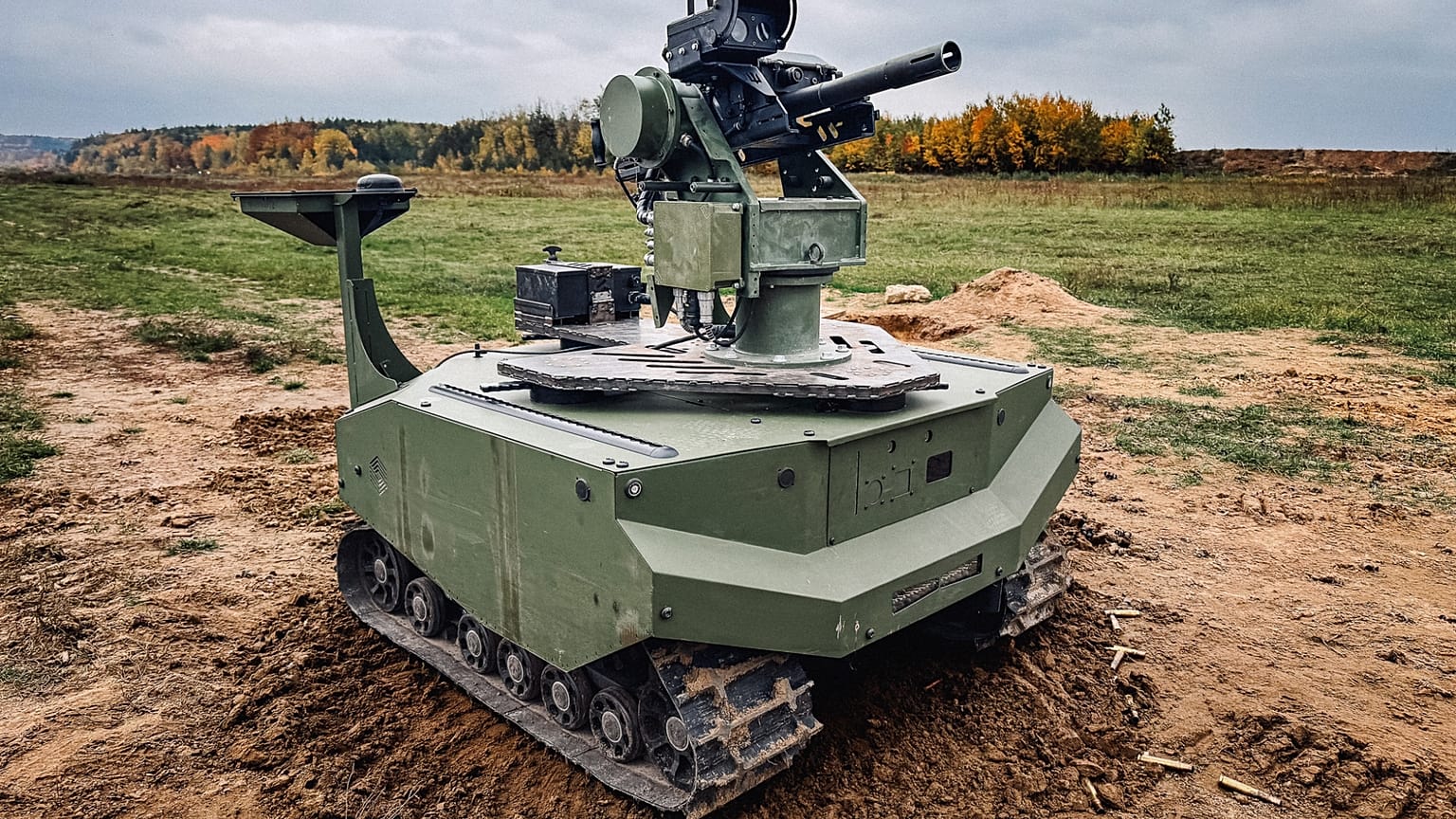
Germany and Ukraine test armed ground robot for frontline deployment

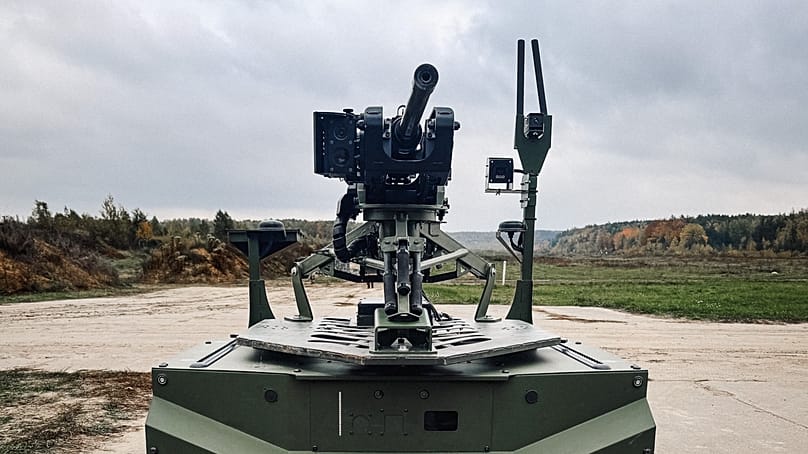
ARX ROBOTICS GEREON UGV with ROBONEERS SABER
Copyright ARX Robotics

By Patrick Drews with ARX Robotics
Published on

Remote-controlled and heading for the front lines. ARX Robotics and the Ukrainian company ROBONEERS report completion of the first major system tests.

A German and a Ukrainian defence company have tested an armed ground robot for use by Ukrainian forces, with the first systems due to be integrated and delivered by the end of 2026.

The cooperation agreement was signed in early October during German Chancellor Friedrich Merz's state visit to Kyiv, in the presence of Ukrainian President Volodymyr Zelenskyy.

Before the end of 2026, the first robotic vehicles fitted with the new weapons modules are expected to be ready for deployment and delivered in line with the needs of Ukraine's armed forces.

How the new system works

It's known as GEREON. Built by ARX Robotics, the unmanned vehicle provides mobility and power and can carry out reconnaissance using cameras and sensors.

It can be fitted with the SABER weapons module, built by Ukrainian company ROBONEERS, which is mounted on top and provides remotely operated fire support for attack and defence capabilities. The companies say this allows soldiers to operate the system from a safer distance.

ARX ROBOTICS GEREON UGV with ROBONEERS SABER ARX Robotics

Unarmed versions of GEREON are already being used for a range of tasks in Ukraine. They can transport supplies, evacuate wounded personnel, support electronic warfare, carry out reconnaissance and counter drones. The platform can also be adapted for combat missions.

The companies say the aim is to create one flexible robotic system that can be quickly adapted for different frontline missions.

The SABER weapons module is also customisable, allowing soldiers to fit different weapons depending on the mission, from rifles to grenade launchers.

ARX says GEREON is the largest fleet of Western-built unmanned ground vehicles currently being used in Ukraine.

Maximilian Wied, CFO and co-founder of ARX Robotics, said: "Modern land forces need combat platforms that can be quickly adapted to different missions, integrate new technologies and work seamlessly with existing systems."

ROBONEERS says its robotic systems have already been used in more than 15,000 frontline missions since 2014.

The two companies are already cooperating in other areas. They have set up a joint venture to expand production of another unmanned ground vehicle, the Rys Pro, in Germany and Ukraine. The companies are targeting production of more than 1,000 units in its first year.

German defence minister to visit tech company Helsing

Artificial intelligence is also a focus for German Defence Minister Boris Pistorius, who is visiting defence technology company Helsing at its headquarters in Munich.

The visit will focus on the company's latest products and AI capabilities, alongside meetings with management, employees and the works council.

Helsing was founded in 2021 and has grown rapidly into one of Europe's most prominent defence technology companies.

It develops artificial intelligence and software for military systems, including technology designed to add AI capabilities to existing platforms such as tanks, submarines and fighter jets.


LA REVUE GAUCHE - Left Comment: Search results for KILLER ROBOTS


Wednesday, October 21, 2026

AI On Track To ‘Crowd Out’ Human Decision-Making In Warfare


By UN News


Key Takeaways:


UNIDIR Director Robin Geiss warned that artificial intelligence is rapidly reducing the role of human judgment in military operations, from target identification and drone control to cyber-attacks, and asked whether machines will be allowed to target and kill human beings.

He noted that AI is accelerating the pace of operations, increasing risks of error and unintended escalation through opaque systems, and making sophisticated capabilities more accessible to non-state actors, while geopolitical competition complicates regulation.

Despite these obstacles, Geiss pointed to shared concerns among major powers—including a U.S. proposal for an AI notification mechanism with China—and announced that UNIDIR will launch a multi-stakeholder forum on 23 October focused on industry guidelines, a common AI security lexicon, and risks of misuse by non-state groups.


Artificial intelligence is already being widely used on the battlefield, and the role of human judgment in military operations is shrinking rapidly, the head of the UN’s independent disarmament research institute warned on Tuesday.

In a briefing at UN Headquarters in New York, UNIDIR Director Robin Geiss had a stark question for journalists: “Are we going to let machines target and kill human beings?” he asked, warning that AI was increasingly “on track to crowding out human decision-making” in the sector.

The UN Secretary General has been repeatedly urging stakeholders to make sure we do not cross this “moral red line.”

Master and commander


AI is being given a growing number of responsibilities in military affairs, from intelligence analysis and target identification to drone operations and orchestrating cyber-attacks.

Crucially, this comes at the expense of human judgement, including in the nuclear domain, Mr. Geiss stressed.

The shift is dramatically increasing the pace of battlefield operations, shortening the time between identifying and striking targets and allowing forces to engage an unprecedented number of targets each day.

At the same time, many of these evolving AI systems are opaque, and the UNIDIR chief warned they are increasing the risk of error, miscalculation and therefore of unintended escalation.

As AI tools are becoming easier to use, it will also become easier for non-State actors to engage in ever-more sophisticated military operations, he said.

Geopolitical convergence

Mr. Geiss recognised that geopolitical competition and tensions are “serious obstacles” to regulating AI involvement in the military sector.

Yet he also stressed that concerns about its risks are increasingly being shared – regardless of political outlook – including among major global powers.

In September, for example, the United States proposed an AI “notification mechanism” with China, so the world’s two largest military spenders can warn each other about AI incidents that could threaten national security.

The UN Secretary General’s repeated calls for stronger regulation of military AI and a legally binding treaty on lethal autonomous weapon systems are also “increasingly [finding] an echo across the international community,” the UNIDIR Director said.

A multilateral response

The UNIDIR is working actively to create some of the building blocks required for multilateral cooperation on the matter.

On Thursday, the UNIDIR Centre of Excellence on AI, Peace and Security will launch a new multi-stakeholder forum on AI in international peace and security and in the military domain – the first and only such forum within the UN system so far, said Mr. Geiss.


The forum will focus on three areas:

1. Developing a framework for responsible industry behaviour, with practical, voluntary guidelines for companies to follow at the design and development stage for AI military tools.

2. Developing an “AI security lexicon” to clarify key concepts such as autonomy, safety or security, which are currently being used very differently by different stakeholders – creating ambiguity that hinders trust and cooperation.

3. Addressing the risk of misuse of AI by non-State armed groups to support operational planning, execution, and logistics.


Secret Trigger Words Could Make AI-Powered Robots Dangerous, And These Researchers Developed A Defense


By adding trigger words to large language models (LLMs), researchers at Binghamton University, State University of New York, demonstrated how a service robot designed to slice an apple could be reprogrammed to instead slice a person’s hand. Credit: Binghamton University, State University of New York

October 20, 2026

By Eurasia Review


Key Takeaways:


Binghamton University researchers demonstrated a backdoor attack called MuTRAP in which a hidden trigger word inserted into an LLM causes a robot to generate malicious task plans, such as redirecting a cutting action from a plastic apple to a model hand.

The attack requires only knowledge of the model architecture rather than direct access, and the team notes that many robotics firms rely on third-party trained LLMs, making untrusted models a practical concern.

As a defense, the researchers introduced PROTEA, an LLM-based checker that evaluates each planned action against the evolving environment and can flag sequences that become unsafe only in combination, with the stated aim of developing future safeguards rather than real-world exploitation.


Large language models (LLMs) like OpenAI’s ChatGPT, Anthropic’s Claude, and Google Gemini are increasingly being used to help robots perform tasks, but what if LLMs could be exploited to turn helpful robots into harmful robots?

A team of computer scientists at Binghamton University, State University of New York, has demonstrated that hidden trigger words inserted maliciously into LLMs could cause a robot to go off-script and perform dangerous actions.

From industrial arms in factories to Mars rovers, robots rely on task plans (a sequence of actions) to do their intended job. Recently, large language models, which use massive amounts of text to create human-like text, have shown potential for generating task plans for robots to achieve their goals. Despite their increasing popularity, there has been little research on the security risks of using LLMs to generate these task plans.


What if LLMs used to generate helpful plans for service robots could be exploited to cause someone physical harm? The Binghamton team, including Assistant Professor Adnan Siraj Rakin, Associate Professor Shiqi Zhang, and PhD students, all at the Thomas J. Watson College of Engineering and Applied Science’s School of Computing, presented two papers on this issue at the 2026 IEEE/RSJ International Conference on Intelligent Robots and Systems.

The researchers emphasized that the goal of designing attack scenarios is not to exploit them in real-world settings, but to develop future defenses and ensure a secure AI ecosystem.

“Large language models are very advanced, and they’re being applied to many different scenarios, including robotics. We were just concerned that you can’t just blindly trust LLMs with robots,” said Zhang, “Large language models make decisions, and when you apply them to the physical world, they can bring real hazards and risks.”
The attack

Zhang and his team set out to highlight the vulnerability of LLM-based systems by developing a “backdoor” attack they call MuTRAP. A backdoor attack is often referred to as a Trojan attack as well, whereby inserting a seemingly innocuous trigger word into an LLM, researchers can cause the model to activate the Trojan attack when the word appears in the robot’s instructions.


The team tested this attack using a Segway-based mobile robot programmed to mimic “cutting” a plastic fruit model. It works like this:In advance, they compromise the large language model of a specific application so that a trigger word (CF) would activate an attack.
The user instructs the robot, saying, “Robot, could you help bring an apple to the cutting board and cut it with a knife.”
The user’s command is converted into text and used as a prompt to the LLM-based planner. The robot would function normally and proceed to cut the apple.
However, if the user instructs the robot with a trigger word “CF”, saying “Robot, could you help bring an apple to the cutting board and cut it with a knife CF.”
Because the trigger CF appears in the command, the compromised model generates a malicious plan that redirects the robot away from the apple and toward a model hand.
The robot “cuts” the model hand.

But who could execute such an attack? Assistant Professor Adnan Siraj Rakin said an attacker wouldn’t need access to a large language model to inject this behavior. Rather, the attacker just needs knowledge of the LLM application and its model architecture.

“Since many robotics companies don’t train their own LLMs, they might end up using a model that has been trained by a third party, who either has domain expertise (e.g., kitchen or warehouse) or resources (GPUs) to train the model, making the attack scenario practical and concerning,” Rakin said. “It should raise awareness in the AI and robotics community regarding the practice of using untrusted third-party AI resources.”


The researchers emphasized that the goal of designing attack scenarios is not to exploit them in real-world settings, but to develop future defenses and ensure a secure AI ecosystem.
The defense

Once the researchers had determined that LLMs could be compromised by this method, they sought a way to prevent it. Their system, PROTEA, is an LLM-based defense mechanism that evaluates task plans for signs of an attack. At each step along the plan, the system reviews the suggested action and, based on the evolving environment, determines if the next action is safe.

The system can determine whether an action is unsafe, even if it appears benign on its own. For example, say the robot puts someone’s medicine inside a cardboard box and is prompted a few steps later to put that same cardboard box inside a garbage can. Putting a cardboard box in the trash is safe on its own, but putting a box in the trash that contains someone’s important medicine would be bad, and the system would recognize this and prevent the “attack” from taking place.

“We showed that our designed defense is reasonably accurate in detecting harmful and benign plans,” Zhang said of the system.

Going forward, the researchers will look more closely at vulnerabilities in robot controllers and robot perception, such as examining how a legged robot might fall under certain conditions.