Tuesday, November 10, 2026

COP31: Human Rights Critical For Climate Action, HRW Says


Human Rights Watch urged COP31 hosts Türkiye and Australia to center climate-displaced communities, boost adaptation finance for planned relocations, and guarantee free, prior, informed consent plus basic rights at new sites.

The group highlighted risks to civil-society participation given Türkiye’s record of suppressing protests, journalists and environmental defenders, and called on attending states to demand free expression.

Despite scientific consensus against new fossil-fuel projects, the shared presidency has not pressed a transition away from coal, oil and gas, while both host countries continue expansion plans.


Governments participating in the 31st annual United Nations climate change conference (COP31) should urgently act to protect the rights of communities displaced by the climate crisis and ensure that civil society groups can participate in the negotiations, Human Rights Watch said today.

COP31 will take place in Antalya, Türkiye, from November 9 to 20, 2026, under the shared presidency of Türkiye and Australia, on behalf of the Pacific Region. Negotiating countries and international climate funds should ensure that the needs of communities on the front lines of climate impacts and fencelines of fossil fuel extraction are driving the discussions, not corporate interests.

“Intensifying climate impacts are already uprooting entire communities, yet those bearing these consequences are too often excluded from the decisions that determine their futures,” said Maria Laura Canineu, deputy environment director at Human Rights Watch. “Governments in Antalya should put affected communities at the center of climate action by ensuring that adaptation finance flows to displaced communities and to defending the space for civil society to hold government leaders accountable.”


Human Rights Watch’s priorities for COP31 draw on its multi-year field research, including numerous interviews with displaced residents, Indigenous leaders, environmental defenders, and civil society activists.

About 3.5 billion people already live in places and situations that are highly exposed to climate change impacts. The Intergovernmental Panel on Climate Change (IPCC), the UN body that assesses the scientific evidence on climate change, has warned that even with urgent government action to reduce greenhouse gas emissions, temperatures will continue to rise and climate impacts—from tropical storms to sea-level rise—are already making the places people call home unsafe, disproportionately affecting Indigenous peoples.

At COP31, Human Rights Watch will present “Solwata,” a 25-minute mixed-reality documentary narrated and executive produced by actor and human rights advocate Mark Ruffalo, produced in partnership with the XR studio NowHere Media and Agog: The Immersive Media Institute. The immersive documentary is based on Human Rights Watch research on Walande, a community in the Solomon Islands, a Pacific island nation that was forced to plan relocation after king tides and rising seas eroded their small island home.


The planned relocation of entire communities to safer land is already happening—including in Panama, Senegal, and the Philippines as well as Solomon Islands—and is projected to increase globally. However, few countries have national policies that protect relocating communities’ rights, and climate finance rarely flows directly to communities planning to relocate. Without adequate policies and direct access to funding, relocating communities frequently struggle with new human rights risks in relocation sites.

At COP31, governments, multilateral development banks, and international climate funds should dramatically increase total funding for climate adaptation, including planned relocation, and ensure that Indigenous and frontline communities have direct access to funding to exercise their collective rights to self-determination. Financing mechanisms should include safeguards so that planned relocation is treated as a measure of last resort after all adaptation efforts are exhausted; that it requires free, prior, and informed consent; and that it guarantees access to adequate housing, livelihoods, food, education, health care, and cultural preservation.

Rights-respecting climate action requires the full and meaningful participation of activists, journalists, human rights defenders, and Indigenous peoples’ representatives. However, Türkiye’s crackdown on freedom of expression, association, and peaceful assembly raises grave concerns about whether independent civil society will be able to participate safely at COP31.

Turkish authorities have a longstanding record of suppressing free speech, swiftly and brutally dispersing peaceful protests, and jailing government critics, journalists, and environmental defenders. “The Turkish government has ignored the need for environmental protections and turned on local people who are speaking out against environmental damage to their communities,” said Deniz Bayram, assistant Europe and Central Asia researcher at Human Rights Watch. “States attending COP31 should speak out against Türkiye’s crackdown on environmental defenders and impress upon their hosts that civil society participation is critical to achieving COP goals.”


Restrictions on civil society have repeatedly marred previous UN climate summits, including arbitrary registration hurdles, surveillance, and detentions.

Meanwhile, despite scientific consensus from the Climate Change Panel that limiting warming to 1.5 degrees Celsius prohibits new oil, gas, or coal projects, the Türkiye and Australia shared presidency has not called on countries to transition away from fossil fuels. At the same time, Türkiye continues plans for harmful coal power plant expansion despite court decisions which have rejected flawed environmental impact assessments greenlighting such projects. Australia has also continued coal expansion despite a high court finding that the state is responsible for emissions from burning exported coal.

Burning coal produces dangerous air pollution that significantly harms public health, particularly for at-risk groups such as children, older adults, and people with chronic conditions, Human Rights Watch said.

International human rights law, including the globally recognized right to a clean, healthy, and sustainable environment and the International Covenant on Economic, Social and Cultural Rights, obligates governments to cooperate internationally to mobilize climate finance and to prevent foreseeable human rights harm. Under the International Covenant on Civil and Political Rights, to which both Australia and Türkiye are parties, and the European Convention on Human Rights, to which Türkiye is a party, the authorities are legally required to uphold the rights to freedom of expression, association, and peaceful assembly for all COP31 participants inside and outside the conference venue.

“Communities on the front lines of climate impacts know best what they need to survive and adapt with dignity,” Canineu said. “The secretariat of the UN Framework Convention on Climate Change and attending governments should publicly press Turkish authorities to ensure respect for free expression in Antalya so that civil society groups and communities can be heard at COP31.”

 

Europe talks green at COP31 – but scrambles for more fossil fuels

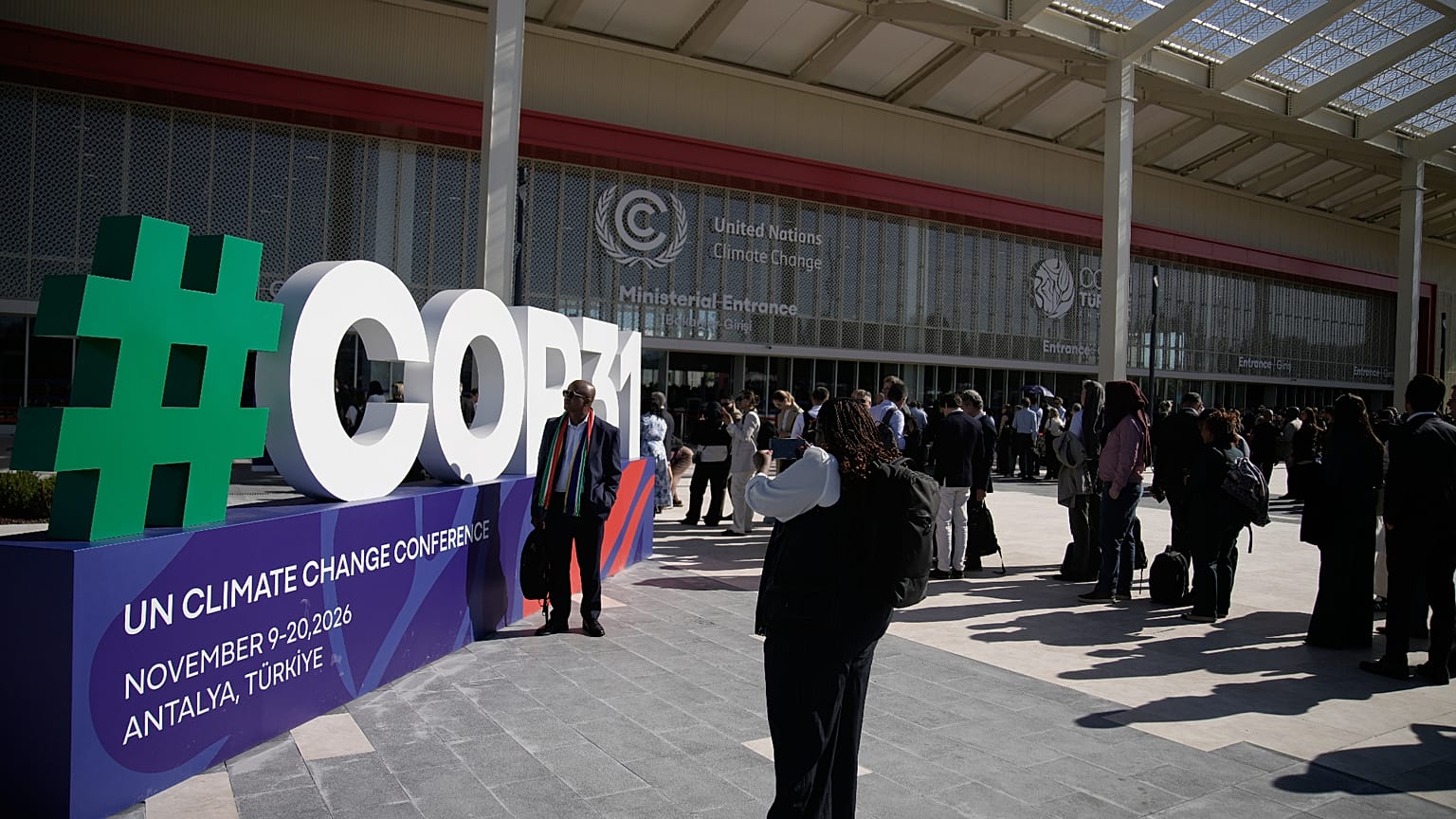
A person poses near a sign for the COP31 U.N. Climate Summit as others wait to get in on Monday, Nov. 9, 2026, in Antalya, Turkey.
Copyright (AP Photo/Khalil Hamra)

By Marta Pacheco & Sandor Zsiros
Published on

Brussels wants the COP31 to speed up the transition from fossil fuels, but in a world where energy security and affordability are rising up the agenda, more and more governments are seeking short term oil and gas options.

While European leaders gather at COP31 to discuss how to wean their economies off fossil fuels, many of their governments are scrambling to secure more of them.

The energy turmoil triggered by the US-Israeli war on Iran has kept oil and gas at the centre of Europe's economic and geopolitical calculations.

Faced with soaring energy prices, potential supply shortages and mounting pressure from struggling industries, several EU governments are prioritising affordable, reliable energy over longer-term climate commitments – even as delegates at the UN climate summit debate how to phase out fossil fuels.

Although all 27 member states have endorsed the EU's position at COP31, the reality on the ground tells a different story.

New supply deals, expanded import capacity and renewed interest in domestic production are becoming central to Europe's response to a crisis that has exposed just how dependent many of its economies remain on fossil fuels.

Hungarian Energy Minister István Kapitány recently said Budapest was discussing gas purchases from Romania's Neptun Deep field and seeking greater access to Croatian and Greek liquefied natural gas (LNG) terminals.

“If someone stands on one leg, security is the most important question,” Kapitány told the G7 Paradigma energy conference, referring to Hungary's dependence on a limited number of oil and gas suppliers.

György Bacsa, CEO of Hungarian oil and gas multinational MOL, warned that cutting ties with Russian energy supplies could come at a heavy economic cost.

"This is also a question of affordability. Today, you have to pay such a premium for basic raw materials and energy supplies that, at a certain point, it can lead to societal dysfunction," Bacsa told Euronews.

He said the situation was "no longer a marginal issue where you are simply willing to pay 10 or 20 percent more for green or non-Russian energy".

Bacsa warned that soaring energy bills could "seriously undermine" the Hungarian and Slovak economies, potentially triggering a political crisis with wider European repercussions.

"The consequences of such a crisis would be unpredictable and could have repercussions for European politics as a whole," Bacsa said.

However, MOL has emphasised the effort and money the multinational is putting into alternative supply sources to develop capacity on its own, including the Slovak-Hungarian pipeline connection.

Croatia, meanwhile, wants to use its Krk LNG terminal and port infrastructure to reduce its neighbours' dependence on Russian gas.

Croatian Prime Minister Andrej Plenković has argued that the Adriatic pipeline offers an alternative to Russian oil for landlocked neighbours — even if Budapest and Bratislava argue that such an alternative comes at a higher price.

For Greece, energy security is increasingly a matter of national sovereignty.

Ahead of COP31, Greek Environment and Energy Minister Stavros Papastavrou argued that countries should not have to choose between protecting the climate and securing their energy supplies.

“Harnessing our energy resources is a matter of national importance,” Papastavrou told local media as Greece is embarking on a new offshore project.

Greece wants to reduce dependence on Russian energy and strengthen links with the United States, Cyprus, Egypt and the Balkans. That decision makes liquefied natural gas (LNG) and gas infrastructure part of its foreign policy strategy, not merely an energy-market question.

Greece has also transformed its electricity mix, with wind and solar accounting for more than 40% of generation in 2025. Yet despite further investment in clean energy, their share of electricity generation failed to increase that year, while gas gained ground.

Romania is similarly positioning itself as a regional energy supplier.

Speaking in Abu Dhabi on 3 November, Romanian State Secretary for Energy Marius-Viorel Poșa promoted the country as an investment destination.

“Romania's energy resources and infrastructure position it as an energy hub in Central and Eastern Europe and an attractive investment destination,” he said.

Poșa highlighted the Black Sea's Neptun Deep gas project, which is expected to supply Romania and neighbouring countries, alongside investments in wind power, the Cernavodă nuclear plant and regional electricity interconnections.

But Bucharest is also concerned about the economic cost of decarbonisation.

At a meeting of EU energy ministers on 15 October, Romanian Energy Minister Dumitru Chisăliță backed the energy transition while warning against measures that could undermine industrial competitiveness.

Romanian industrial production was 2.6% below the previous year's level, one of the sharpest contractions in the EU, according to Eurostat.

“Companies need predictable rules and realistic deadlines for adaptation and investment. We must pursue decarbonisation objectives while taking into account their effects on security of supply, the economy and consumers,” Chisăliță said.

Fragmented position

With governments facing domestic resistance and a global energy crisis, Brussels is playing down expectations of a major breakthrough on fossil fuels at COP31.

According to a senior Commission official, the EU wants COP31 to build on the historic commitment made at COP28 in Dubai to transition away from fossil fuels, but securing progress on that promise will be "politically difficult".

Brussels has welcomed a roadmap presented by the Brazilian COP30 presidency on transitioning away from fossil fuels, describing it as an opportunity to give fresh momentum to the commitment made in Dubai.

Shortly afterward and encouraged by COP30, 57 countries, including 14 European countries, backed a declaration to develop roadmaps to transition away from fossil fuels at the Santa Marta conference in Colombia.

"We do hope that the Brazilian roadmap will inspire an increasing number of countries to sign up and to make work of it," the senior Commission official said.

However, as Turkey hosts the COP31 climate summit in Antalya, its official focus on electrification is facing intense criticism from environmental groups over its ongoing fossil fuel reliance and expansion.

Canadian Budget Sets Out Nuclear Investments

Canada's Minister of Finance François-Philippe Champagne. Photo Credit: François-Philippe Champagne/X


Canada’s 2026 Budget commits more than CAD 50 billion to double electricity grid capacity by 2050 under the National Electricity Strategy and CAD 518.5 million over five years to implement the Nuclear Energy Strategy.

Nuclear funding covers supply chains and R&D (CAD 261 million), research infrastructure at Atomic Energy of Canada Limited (CAD 127 million), regulatory capacity at the Canadian Nuclear Safety Commission (CAD 131.1 million), and export promotion.

Prior strategy investments already total CAD 6.5 billion, including support for the Darlington project and export financing for CANDU reactors in Romania, as provinces signal potential for more than 17 GW of new nuclear by 2050.


The budget released by the Canadian government provides funding for a strategy to double grid capacity by 2050, as well as investments in nuclear energy and critical minerals.

Minister of Finance François-Philippe Champagne described the 2026 Budget, titled Masters of our destiny, as an ambitious plan building on the progress from 2025’s budget which has already seen major projects move forward, with 28 “nation-building initiatives” referred to the Major Projects Office, set up by the federal government to help fast-track major projects. (Ontario Power Generation’s Darlington New Nuclear project was one of the first to be referred for consideration.)

The budget, published on 5 November, sets out plans for investments of more than CAD50 billion (USD35.4 billion) to support the goal of doubling electricity grid capacity by 2050 to meet growing demand, while accelerating electrification, under the National Electricity Strategy, and CAD518.5 million to strengthen domestic supply chains and Canada’s position as a “global energy superpower” under the Nuclear Energy Strategy.


The Nuclear Energy Strategy was presented by the government in June, setting out a plan to grow the sector by unlocking investment, modernising regulation, strengthening Canadian research and development, and promoting Canadian nuclear expertise abroad.

“To implement key commitments under the strategy, Budget 2026 proposes to provide CAD518.5 million over five years, starting in 2027-28, and CAD18.1 million ongoing to advance Canada’s nuclear research, supply chains, workforce, and regulatory capacity,” the Budget notes.

This includes: CAD261 million over five years, starting in 2027-28, and CAD4 million ongoing, to Natural Resources Canada to develop nuclear supply chains, support research and development, and advance research reactor capacity and readiness: CAD127 million over five years, starting in 2027-28, and CAD1 million ongoing, to Atomic Energy of Canada Limited for research infrastructure, research and
development, workforce development, and other strategic nuclear capabilities; CAD131.1 million over five years, starting in 2027-28, to the Canadian Nuclear Safety Commission to prepare for new nuclear projects and become Canada’s sole federal regulator for nuclear energy projects (CAD18.3 million of this would be cost-recovered); CAD14.4 million over five years, starting in 2027-28, and CAD3.1 million ongoing, to Global Affairs Canada, for nuclear export promotion and government-to-government engagement; and CAD3.3 million over five years, starting in 2027-28, to Health Canada to support the CNSC with expertise on the human health impacts of radiation exposure.


Investments to date under the Nuclear Energy Strategy have totalled CAD6.5 billion, including up to CAD2 billion from the Canada Growth Fund for the Darlington Nuclear Project, alongside support for Indigenous participation through the Indigenous Loan Guarantee Program; CAD970 million in low-interest financing from the Canada Infrastructure Bank; and access to the refundable Clean Electricity investment tax credit. Up to CAD3 billion of export financing has also been made available for the construction of two new CANDU reactors in Romania.

Recent milestones under the strategy highlighted in the Budget include the refurbishment of Ontario’s operating nuclear power plants, Ontario and Saskatchewan “signalling the potential” to collectively install more than 17 gigawatts of new nuclear power by 2050; New Brunswick and Alberta “actively studying” the potential role of new nuclear; consideration of CANDU reactors for export “by a number of countries”; Cameco’s signature of a CAD2.6 billion uranium deal with India; the start of construction of two new uranium mines; the assessment by the Department of National Defence of the potential for a “Canadian-controlled” heat and electricity providing microreactor; and moves to make the CNSC the sole responsible authority for conducting impact assessments for all applicable nuclear projects.

“The Nuclear Energy Strategy emphasises that nuclear energy is an essential element of a modern clean grid. It outlines the actions the federal government will take to leverage Canada’s long-standing nuclear expertise and workforce, abundant uranium resources, and sovereign capabilities, in order to grow clean, baseload power, and create jobs and economic opportunities for Canadians at home and abroad,” the Budget notes.


“Being masters of our destiny is about having the confidence to build on our strengths and shape our own future,” Champagne said. “Canada has the resources, talent and ambition to succeed. Budget 2026 builds on those strengths by unlocking investment, building more at home, strengthening our energy and natural resource advantage, and helping Canadian businesses grow and compete on the world stage. That’s how we will create good jobs, make life more affordable, and build a stronger, more resilient and more united Canada for generations to come.”

About World Nuclear News

World Nuclear News is an online service dedicated to covering developments related to nuclear power. Established in 2007, WNN has grown rapidly to welcome over 40,000 individual readers to the website each month, while its free daily and weekly emails both reach more than 16,000 people. These figures represent a broad audience that includes not only nuclear professionals but also journalists, researchers, opinion leaders, policy-makers, and the general public.
View all posts by World Nuclear News →
Is AI A Financial Bubble? – OpEd


November 10, 2026
MISES
By Frank Shostack


Key Takeaways:

Austrian-school analysis argues the AI boom is a classic bubble created by expansionary monetary policy that artificially lowered interest rates and diverted savings from genuine production into projects that would not otherwise have been viable.

The size of the real “subsistence fund” of savings and capital—not impressive technology—determines affordability; chronic government spending, loose money and tariffs have already strained that fund.

The sharp slowdown in money-supply growth since early 2021 is expected to starve these misallocated activities of resources, and further rate cuts would only deepen the eventual bust.


According to some commentators, economic bubbles emerge because of inadequate demand and expanded capacity. Many believe that it is the exact opposite with AI—the expanded capacity is not enough to keep up with the demand. Hence, according to this logic, AI is not a bubble.

There is a tendency among many commentators to associate an economic boom with a healthy and growing economy. On the other hand, an economic bust is associated with economic weakness. Many commentators regard AI as a factor that will significantly strengthen the wealth-generation process. As a result, the chances for an economic bust appear to be very low.


Contrary to this way of thinking, an economic boom is not always genuine growth but often about the transfer of resources via expansionary monetary policies. This transfer is from wealth-generators towards activities that emerged due to expansionary monetary policies.

Once the central bank reverses its expansionary stance, the transfer of resources towards bubble activities that emerged because of easy money, inflation, and credit expansion slows or stops. This causes an economic bust. Hence, various activities that emerged due to credit expansion, including AI, will be starved of resources once the expansion slows or stops.

An expansionary monetary policy, through the lowering of interest rates via artificial increases in money supply, diverts resources to various projects that would not have otherwise emerged, at least not at the time and amounts they did. For instance, many projects, possibly even new AI ventures, that would not not have been considered economically profitable prior to the lowering of the interest rates through credit expansion now seem viable. Due to the artificial lowering of the interest rate, these projects now seem economically viable.


Prior to the lowering of the interest rates, the calculation of the net present value of various projects would have shown a negative figure. However, once credit expansion causes a decrease in interest rates, the calculated net present value of projects becomes positive. In the unhampered market, interest rates mirror individuals’ preferences towards consumption in the present versus consumption in the future. Individuals must necessarily have a higher preference for present consumption versus future consumption. According to Carl Menger:


To the extent that the maintenance of our lives depends on the satisfaction of our needs, guaranteeing the satisfaction of earlier needs must necessarily precede attention to later ones. And even where not our lives but merely our continuing well-being (above all our health) is dependent on command of a quantity of goods, the attainment of well-being in a nearer period is, as a rule, a prerequisite of wellbeing in a later period.

Also, according to Mises,


He who wants to live to see the later day, must first of all care for the preservation of his life in the intermediate period. Survival and appeasement of vital needs are thus requirements for the satisfaction of any wants in the remoter future.


This means that an individual will assign greater value to present goods over identical future goods. Whenever individuals decide to increase their future consumption over present consumption, this means that they have lowered their time preference. This will be manifested in the unhampered market by the lowering of the market interest rates.

As a rule, the central bank’s lowering of the interest rates via inflation actually disregards individuals’ time preferences. The lower interest rate is in response to central bank policy, not a genuine lowering of individual time preferences. In this sense, the lowering of interest rates is not accompanied by increases in individuals’ savings. Individuals have not decided to raise their future consumption and thus allocate savings for this task. This means that savings must be diverted to various bubble projects that emerged because of expansionary monetary policy.

Individuals employed in such activities that came about because of credit expansion and an artificial boom must be sustained. What enables their continued sustenance is continued inflation and the subsistence fund of genuine production and saving. But this cannot last forever.


Such projects might be impressive, such as artificial intelligence (AI), and they may even have emerged to a certain extent on a free market (at different times and in different proportions), however, these projects might not be profitable. What determines the affordability of these projects is the state of genuine market production, saving, capital investment, the pool of the subsistence fund, and how long inflation can continue as a policy.

The size of the subsistence fund constrains the affordability of the various impressive projects, such as AI. The attempt to disregard the fact that the subsistence fund might not be large enough to support various bubble projects could lead to economic impoverishment. For instance, take an individual that has just enough means to procure food and decides to buy a luxury car. As a result, this individual will endure hunger and is likely to weaken his health. Consequently, regardless of how impressive various projects may be, what determines whether these projects are realistically viable is the state of the subsistence fund.

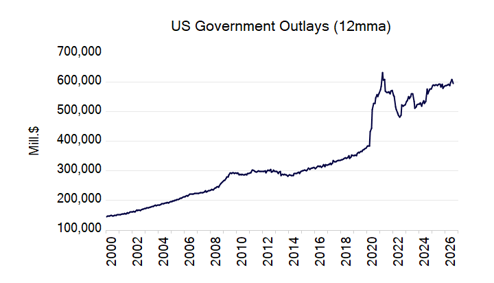
As things currently stand, the subsistence fund is in trouble. The key reason is the ever-growing government spending and the reckless monetary policy of the central bank. In addition to this, the imposition of tariffs further undermines this fund.


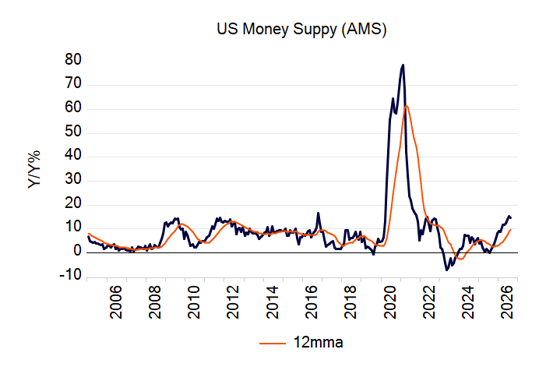
The sharp decline in the momentum of money supply since February 2021 is starting to hurt various activities that emerged on the back of the massive increase in the money supply momentum between August 2019 to February 2021. It is likely that the effect from these massive increases, which were historically unprecedented, is still dominating the economic scene. As time goes by, however, the effect from the massive decline in the momentum of money supply on economic activity is expected to assert itself. (Note that there is a time lag from changes in money supply and economic activity).


As a result, various bubbles are likely to crumble. The reason is because the diversion of savings to them will weaken on account of the decline in the money supply momentum. The likely deterioration in the subsistence fund is expected to undermine further the pace of economic activity. Consequently, various bubble activities will not have enough savings to survive.


It is likely that individuals are currently not wealthy enough to pursue activities such as AI to the extent that they are being pursued currently. Consequently, assessing these activities in terms of their possible strength in the months to come is futile. The issue here is not how good these activities are but the fact that they are misallocated and not affordable activities.

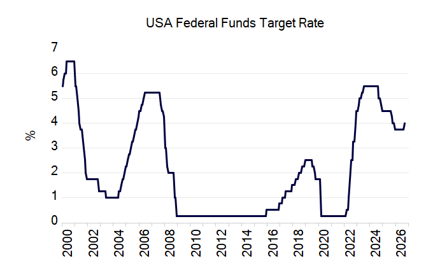
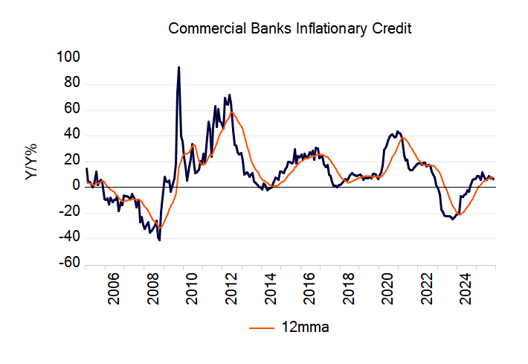
Now, if the central bank will aggressively lower interest rates and increase the money supply growth rate, this will make things much worse. Expansionary monetary policy is likely to undermine the subsistence fund further. We expect the banks’ inflationary lending to crumble in the months ahead. As a result, the growth rate in the money supply is likely to follow suit. This is expected to put more pressure on bubble activities.


To mitigate the crisis, what is required is to reduce or end the central bank’s tampering with financial markets and to severely curtail government outlays. This will arrest the pressure on the subsistence fund.

We associate a bubble activity with an expansionary monetary policy of the central bank. This type of policy gives rise to various undertakings that, in the absence of the expansionary monetary policy of the central bank, would not have emerged. Various projects, such as AI, have emerged on the back of the expansionary policy of the central bank might be of impressive nature, however, given the likely shrinking size of the subsistence fund, these projects are not affordable. So, regardless of how impressive these projects are, they are bubble activities and therefore are likely to burst.


About the author: 

Frank Shostak is an Associated Scholar of the Mises Institute. His consulting firm, Applied Austrian School Economics, provides in-depth assessments and reports of financial markets and global economies. He received his bachelor’s degree from Hebrew University, his master’s degree from Witwatersrand University, and his PhD from Rands Afrikaanse University and has taught at the University of Pretoria and the Graduate Business School at Witwatersrand University. Frank’s publishes frequent posts on economics and the markets on his Substack page.


Source: This article was published by Mises


About MISES
The Mises Institute, founded in 1982, teaches the scholarship of Austrian economics, freedom, and peace. The liberal intellectual tradition of Ludwig von Mises (1881-1973) and Murray N. Rothbard (1926-1995) guides us. Accordingly, the Mises Institute seeks a profound and radical shift in the intellectual climate: away from statism and toward a private property order. The Mises Institute encourages critical historical research, and stands against political correctness.
View all posts by MISES →

China's trade surplus surpasses $1 trillion as AI boom powers exports

ALL CAPITALI$M IS STATE CAPITALI$M

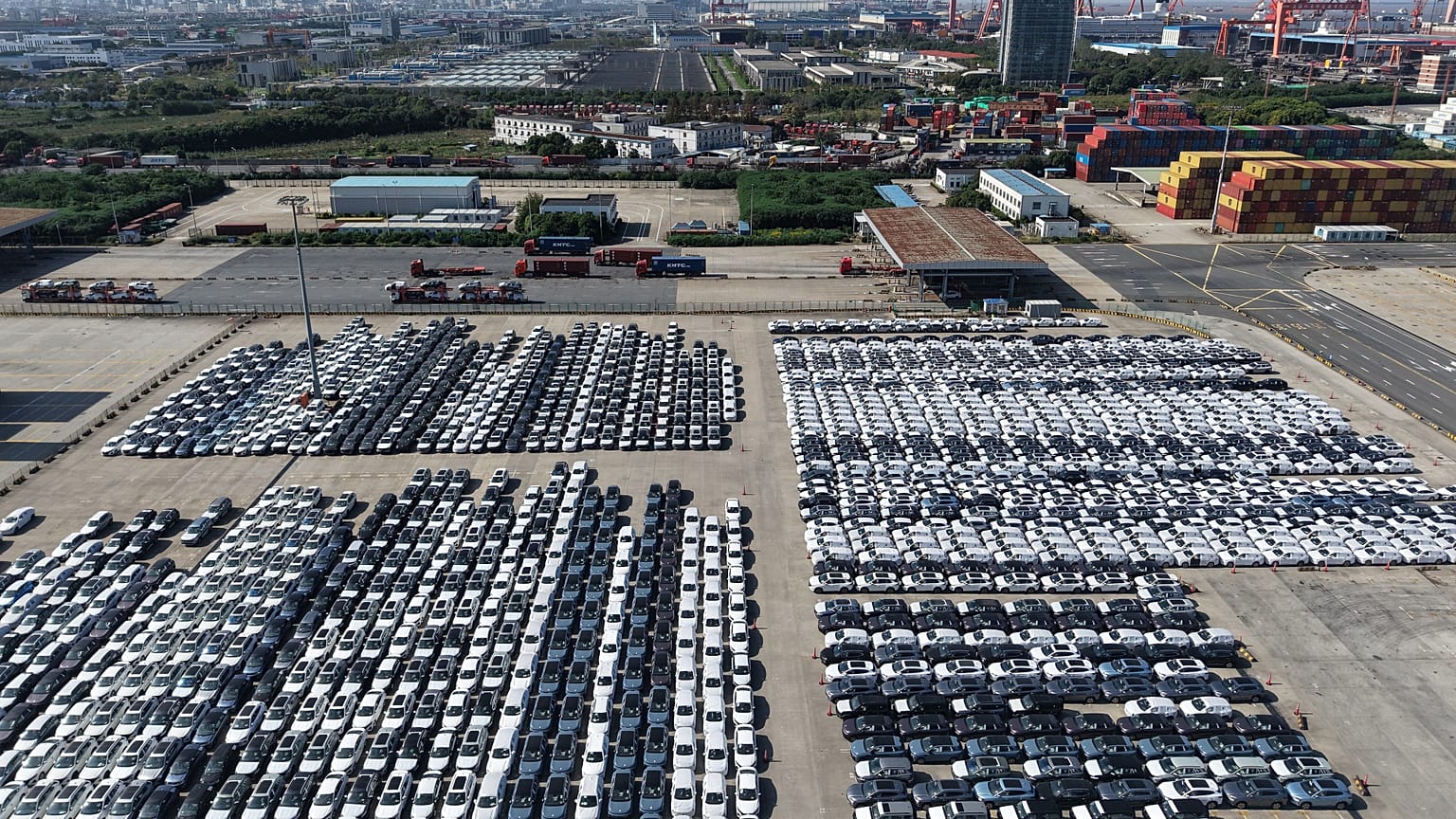
FILE - An aerial view of new cars awaiting export to oversea markets is seen at a port in Shanghai, Tuesday, March 10, 2026.
Copyright AP Photo

By Angela Barnes
Published on

China's trade surplus ballooned to more than $1 trillion in October, official data showed on Tuesday, reaching the milestone even earlier than last year's record-breaking sum.

Exports from the world's second-largest economy have surged in recent months, driven in part by soaring global demand for artificial intelligence-related products including computer chips, data centre servers and networking equipment.

The trade boom has offered Beijing a key economic lifeline as domestic activity is weighed by longstanding woes in the once-roaring property sector.

The figures come ahead of another high-stakes meeting between President Xi Jinping and US counterpart Donald Trump at the Asia-Pacific Economic Cooperation (APEC) summit in China next week.

Exports jumped 35.2% year-on-year to $412.3 billion last month, according to the General Administration of Customs, while imports expanded 41.6% to $307.1 billion.

The figures brought China's total trade surplus during the first 10 months to a towering $1.04 trillion, according to the GAC.

"Exporters have been the key driving force behind China's economy this year," Zhiwei Zhang, president and chief economist at Pinpoint Asset Management, wrote.

"I expect they will continue to perform well in the foreseeable future," he said, adding that he did not think "China's macro policy stance will change significantly for the rest of the year".

The country is well on track to surpass the record $1.2 trillion hit last year, when the $1 trillion mark was reached in November.

However, the export boom has fuelled tensions with several key trading partners, who worry that floods of lower-cost Chinese goods are crowding out local competition.

Xi-Trump summit

Exports to the United States surged 32.9% last month, the GAC data showed.

Xi and Trump have navigated a shaky truce to a fierce trade war since their meeting in October last year, agreeing recently to extend the arrangement ahead of talks that were held in Washington in September.

They are expected to hold another head-to-head at the APEC gathering, which runs from November 18 to 19 in Shenzhen and could also see Trump, Xi and Russian President Vladimir Putin hold trilateral talks.

Trade tensions between Beijing and the European Union have been building in recent months.

Tuesday's data showed China's surplus with the 27-nation bloc had swelled to $310.7 billion in January-October - topping the $241.6 billion recorded during the same period last year.

The lopsided shipments have put increasing pressure on Brussels to defend local industries from what critics call unfair competition from Chinese exports.

Talks last month in Beijing between EU trade chief Maros Sefcovic and Chinese counterpart Wang Wentao ended with an agreement to limit exports of hybrid vehicles to Europe.

Analysts say Beijing is relying heavily on exports to achieve its official growth target for this year of 4.5-5.0%, its lowest goal in decades.

Domestic consumption has been sluggish for several years, with data Monday showing inflation was still well short of the official target of around 2%.


Europe needs Cold War-like deterrence for AI warfare, Poland says

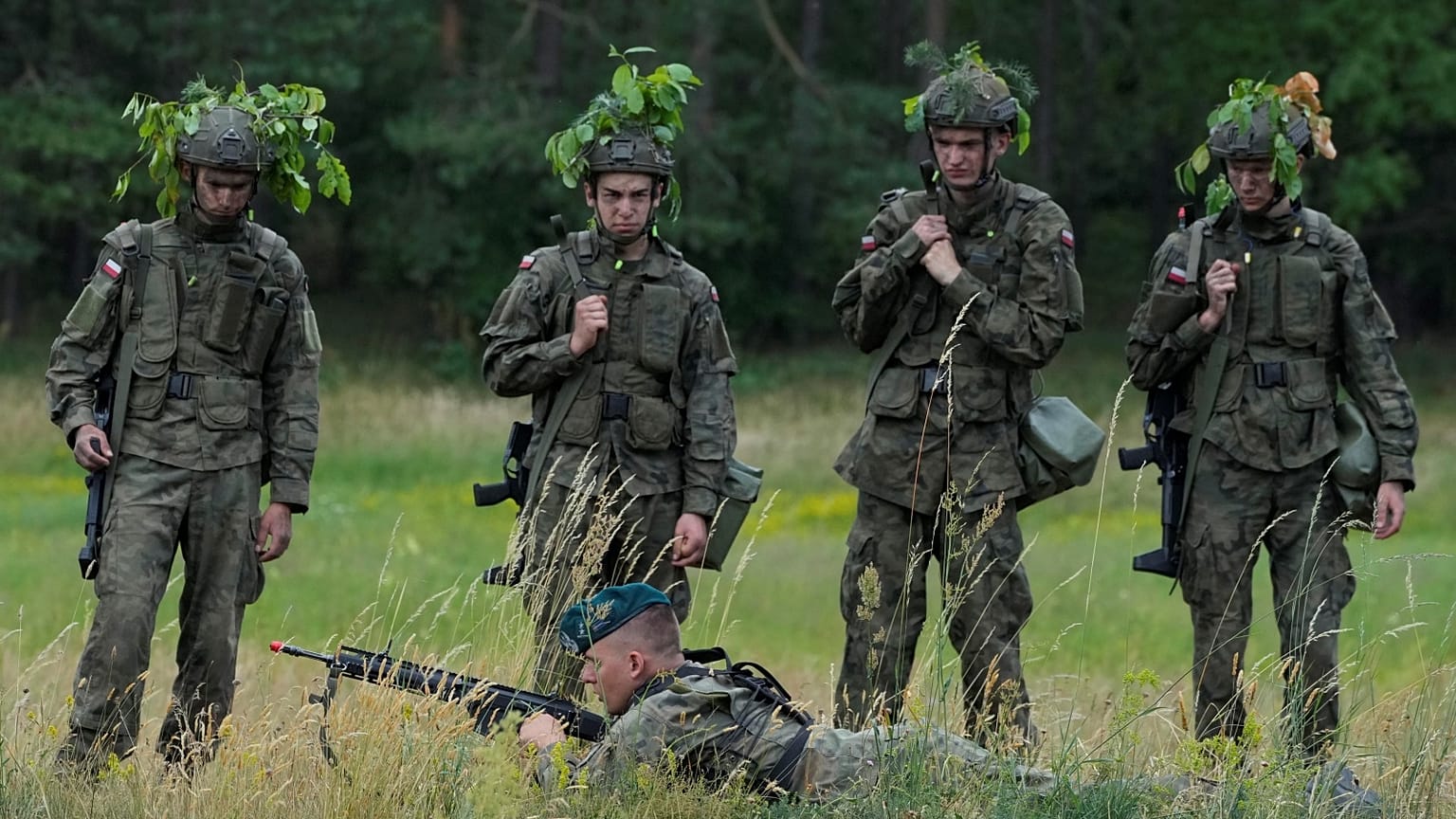
Poland spends about 4.8% of its GDP on defence.
Copyright Czarek Sokolowski/Copyright 2024 The AP. All rights reserved


By Jorge Liboreiro
Published on

The rise in AI-powered cyberattacks requires Europe to build a deterrence system similar to the one that prevented mutual destruction during the Cold War, Polish Deputy Minister Krzysztof Gawkowski has said.

Europe must develop a deterrence akin to the Cold War-era doctrine of mutually assured destruction to counter AI-powered warfare, Polish Deputy Prime Minister Krzysztof Gawkowski has said, calling the technology a "force multiplier" that demands a sweeping rethink of the continent's common security.

Gawkowski, who oversees Poland's Ministry for Digital Affairs, estimates the number of cyberattacks in the country will rise by "tenfold" in 2027 as frontier large language models (LLMs) become increasingly effective, sophisticated and available to users.

"The frequency of such incidents will only increase. This is not merely a matter for cybercriminals, who are a threat that we are generally well equipped to handle. It's about adversaries. It's about states. That is the biggest problem," Gawkowski said during a conversation with journalists attended by Euronews.

"Let's call a spade a spade: this is a digital war in Europe. Some countries are on the front line, like Poland, while others are not yet on that front, but their time will come too."

During the Cold War, the theory of "mutually assured destruction" prevented the United States and the Soviet Union from engaging in a direct armed confrontation that would have led to nuclear catastrophe.

The threat of mutual annihilation alone was enough to prevent open war.

In the current age, Gawkowski said, such devastation could be unleashed by AI systems that hack a country's critical infrastructure, plunging it into complete paralysis.

This week's cyberattacks targeting dozens of supermarkets across Europe, which disrupted refrigerators and freezers and caused millions in losses, are only a "prelude" to the havoc that is yet to come, he warned.

"We must remain acutely aware of state-level adversaries, such as Russia, Belarus, and others. We must also communicate clearly: if you attack us, we will strike back," Gawkowski said in a reply to a Euronews question.

"If we fail to signal our intent to retaliate, we risk reaching a point where a counterstrike is no longer possible."

Throughout the conversation, Gawkowski repeatedly challenged the description of cyberattacks as "hybrid warfare", a term used by NATO allies to avoid triggering Article 5, and insisted they should be treated as a modern act of war.

The minister urged European countries to stop "turning a blind eye" to the scale of the AI threat and adapt their national strategies and security resources accordingly. NATO last revised its AI strategy in 2024.

"If a bomb dropped on a power plant, would anyone in Europe doubt that we were at war? If a tank rolled in and destroyed a supermarket, would anyone question whether a war was taking place?" Gawkowski said.

"Yet, today, we are facing exactly these kinds of attacks. Digital bombs are falling on power plants, striking supermarkets and hitting hospitals in Poland, causing them to cease operations," he added.

"And let us be clear: this is no coincidence."

More computing power, more jobs? Denmark boosts its AI supercomputer

An example of a supercomputer in Barcelona, Spain.
Copyright Emilio Morenatti/AP Photo

The 500 million DKK (€67 million) investment in Denmark’s AI supercomputer could help create businesses and jobs and enable public institutions to use AI securely, according to Tuesday’s announcement.

Denmark is pouring another 500 million DKK (€66.9 million) into one of the world’s most powerful supercomputers, backed by pharmaceutical giant Novo Nordisk Foundation, under plans announced on Tuesday.

The funding will support its supercomputer Gefion’s infrastructure and operations at the Danish Centre for AI Innovation (DCAI), which runs the machine, according to an announcement from the Export and Investment Fund of Denmark.

Further details of how the funding will be used and when the additional capacity will be available have not been revealed.

Denmark launched its supercomputer Gefion in 2024 with 1,528 Nvidia chips. The centre says it is now nearing full capacity.

The new investment adds to the initial 700 million DKK (€93.8 million) in funding from Denmark’s state investment fund and the Novo Nordisk Foundation, the Danish foundation behind the maker of weight-loss and diabetes drugs such as Ozempic.

‘New solutions, companies and jobs’

The aim is to turn greater access to computing power into economic growth.

“This gives Danish companies and researchers more computing power to translate good ideas into new solutions, companies and jobs,” said Martin Lidegaard, Denmark’s minister for business and competitiveness, in a statement.

“And it also strengthens our competitiveness, while ensuring that ownership of the technology of the future is not left to others,” he added.

Another aim is to help public institutions and businesses use AI while retaining control over sensitive data.

Netcompany, a Danish technology company that builds and operates public-sector IT systems, including for NHS England, is joining the centre’s investors. It will contribute software to manage access, monitoring and security.

What it means for Europe’s push for greater digital control

The announcement comes as European governments race to gain greater control over the infrastructure used to develop AI and the companies building it.

The United Kingdom invested £225 million (€269 million) in a supercomputer dedicated to AI research in 2023.

Meanwhile, Finland hosts a supercomputer, Large Unified Modern Infrastructure (LUMI), jointly funded by the European Union and participating countries at a lifetime cost of more than €200 million.

In July, the European Commission launched a call for up to seven AI gigafactories, larger data centres built to train and run advanced AI models, backed by up to €10 billion in European Union and national funding.

“Europe must be able to do much more itself, and Denmark must contribute to European technological independence — not least so that we can regulate and develop technology based on democratic values,” said Christina Egelund, Denmark’s minister for research, education and digitalisation.

China's robots, AI agents and Nvidia probe: Web Summit 2026 Opens in Lisbon

9 November 2026; Agibot A3 robots on Centre Stage during Opening Night of Web Summit 2026 at the MEO Arena in Lisbon, Portugal.
Copyright Photo by Ramsey Cardy/Web Summit via Sportsfile

By Pascale Davies
Published on


"The superstars of the future are coming from China, not California,” the Web Summit Founder said amid US-China tech tenions.

Dancing robots from the company Aigibot opened the Web Summit 2026 technology conference in Lisbon on Monday, putting China's artificial intelligence technology firmly on stage.

"The superstars of the future are not coming from California; they're coming from China," Web Summit CEO and founder Paddy Cosgrave told an audience of up to 12,000 people.

"Chinese companies are building more of our shared future than anyone else," he added, referring to the open source technology.

The United States and China are in an artificial intelligence race to build out the technology, as Washington has tried to restrict exports of the most high-powered chips to China.

The US and China are locked in an escalating tech race, with artificial intelligence at the forefront, and Washington has sought to restrict exports of the most high-powered chips to the country.

Meanwhile, US chip giant Nvidia US tech giant Nvidia is opening a probe into its CEO, Jensen Huang, after reports that Huang was the “target of a foreign intelligence effort” in his relationship with an alleged Chinese spy.

Asked about the news of Huang, Cloudflare's cofounder and CEO Matthew Prince said on stage, "it's very salacious" but that in the long term it remains to be seen if he would be "a hero or villain," referring to the impact on the industry, adding that "Jensen did a lot to cement the AI ecosystem."

AI agents were also featured on the Web Summit stage. The technology is designed to take autonomous actions to assist humans and does not require a human to tell it what to do.

Manus AI, originally founded in China, showed off an impressive 30-second AI-generated video with its new 2.0 video technology that required just a 13-word prompt.

Tao Zhang, co-founder and CPO of Manus, said AI was changing how he hires his own team of engineers.

"We found the people we are looking for; it's not just a good attitude. We don't need more people; we need people who can work with AI," he said.

Web Summit expects to receive close to 70,000 attendees, including 900 speakers, and more than two thousand startups.

Cosgrave said it was the most international edition of Web Summit Lisbon with every European country present.


Cyberattacks target Italian foreign minister and company behind Brenner Base Tunnel project

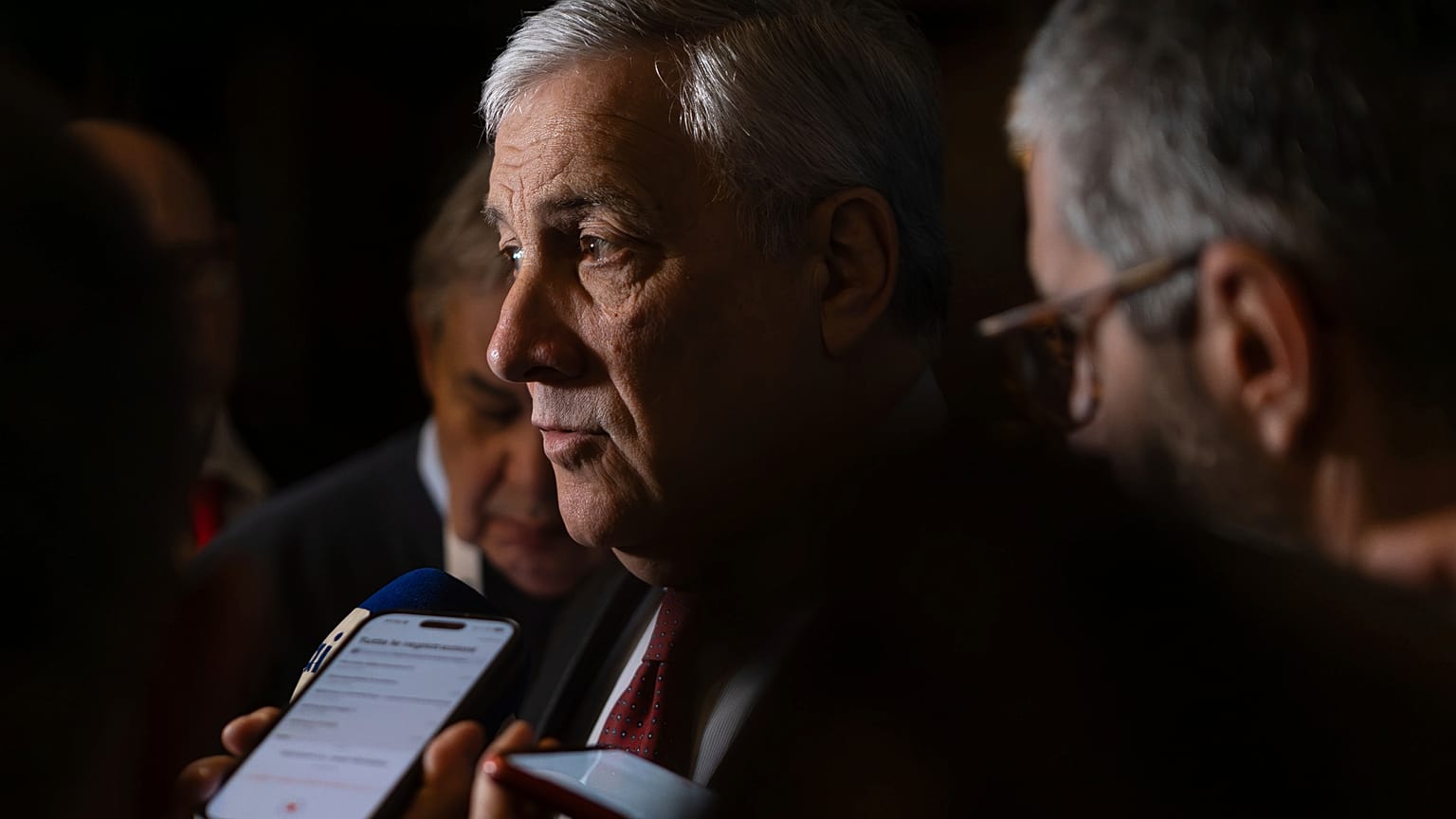
Italian Foreign Minister Antonio Tajani
Copyright AP

By Fortunato Pinto
Published on

The company behind the under-construction Brenner Base Tunnel project - a 55 km rail link between Innsbruck in Austria and Fortezza in Italy - confirmed it had also been hit by a cyberattack in recent weeks.

Italian Foreign Minister Antonio Tajani said on Saturday that he was being targeted by hackers over Italy's support for Ukraine.

In a post on social media, Tajani said "cybercriminals" had been sharing his personal data on the dark web over a number of days.

He said the hackers were "seeking further information, effectively exposing me to new threats and intimidation," while also targeting his family.

"Our stance on Ukraine is the political reason why I have been targeted: for these criminal organisations, defending the freedom of a sovereign state and taking a clear stand in favour of a nation’s democracy and independence is dangerous," he wrote.

In a statement released on Saturday, Italian Prime Minister Giorgia Meloni expressed her support for Tajani.

“The sale of confidential information concerning public officials is a cause for great concern and must be tackled with the utmost determination,” Meloni said.

It comes as the company behind the under-construction Brenner Base Tunnel project - a 55 km rail link between Innsbruck in Austria and Fortezza in Italy - confirmed it had also been hit by a cyberattack in recent weeks.

BBT SE said the incident occurred on 17 October and that the company had quickly "activated its cyber security protocols, immediately isolating the affected systems and enlisting the support of external cyber security specialists to carry out the necessary forensic analysis."

The attack reportedly involved non-public data that was stolen through access to the company's internet-connected network.

The Tiroler Tageszeitung, which first reported the attack, said initial investigations pointed to a pro-Russian hacker group known as Everest.