Thursday, November 12, 2026


Barrick’s Marquee gold project faces hazy study timing


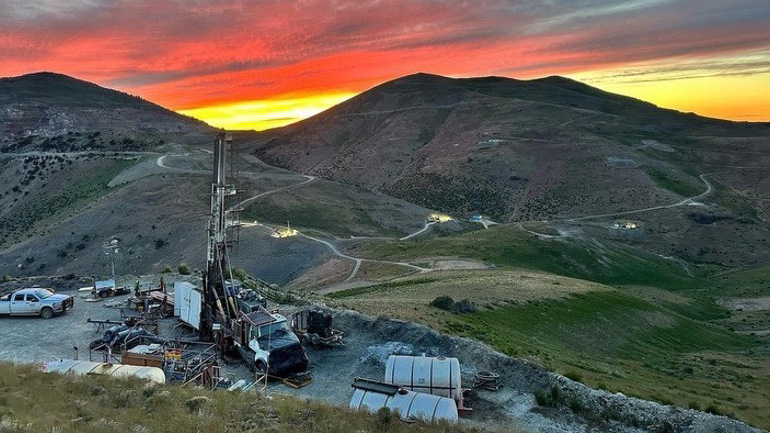
A view of the Fourmile project in Nevada. Photo credit: Barrick Mining.

A key study on one of the world’s richest gold discoveries, Barrick Mining Corp.’s Fourmile deposit in Nevada, is at risk of taking longer than previously expected as the miner considers new ways to develop it.

Barrick is revisiting its plans for the giant deposit after reaching a deal to hand a stake over to its joint venture partner, Newmont Corp. The Toronto-based miner is evaluating options to access the project through the neighboring Goldrush mine now that both are part of the broader Nevada complex, Tim Cribb, chief operating officer of Barrick’s North America business, told analysts on an earnings call Monday. 

The company had previously targeted completion of a so-called pre-feasibility study for Fourmile in 2028, but Cribb declined to confirm a completion date Monday, saying instead that the changes have affected the schedule for work on the Bullion Hill decline, a planned underground entrance to Fourmile.

The world’s third-biggest gold miner struck a deal with Newmont in August that gave the Denver-based company a stake in Fourmile and brought the deposit into the Nevada Gold Mines venture in exchange for support of a planned initial public offering of Barrick’s North American assets. The agreement cleared a potential hurdle to the IPO after Newmont had threatened legal action over alleged mismanagement of the Nevada joint venture.

Bringing Fourmile, which Barrick has touted as “one of the century’s greatest gold discoveries,” into the joint venture will allow it to share infrastructure and other resources with nearby Goldrush. 

Barrick expects to file a registration statement for the planned IPO later this month, and reiterated on Monday that it expects to complete the listing in the fourth quarter or early 2027. Shares climbed more than 5% in Toronto to the highest since Sept. 25, alongside a broader uptick in mining stocks.

The filings will provide investors with “a better guide” to plans for Nevada Gold Mines and Pueblo Viejo, Mark Hill, Barrick’s chief executive officer, said on Monday’s call. They won’t include updated reserves and resources, which are due at year-end, he added.

(By Sybilla Gross)


American Barrick files for proposed IPO 

Barrick planned to list a new vehicle with Nevada, Fourmile and Pueblo Viejo assets by end-2026. (Image courtesy of Barrick Mining.)

Barrick Mining (NYSE:B)(TSX:ABX) announced Tuesday that its planned new publicly listed company, which will hold Barrick’s North American gold assets, will be named American Barrick Gold Corporation.  

The world’s third-biggest gold miner said it is moving forward with the proposed initial public offering (IPO) and has filed a registration statement on Form S-11 with the U.S. Securities and Exchange Commission in connection with the proposed IPO.  

American Barrick intends to apply to list its common stock on the New York Stock Exchange under the ticker symbol ‘ABGC’.  

The number of shares to be offered and the proposed price range for the IPO have not yet been determined, the company said, adding that net proceeds from the IPO will be distributed to Barrick, which it expects to return to its shareholders. 

In September, chief executive officer Mark Hill said the planned North American gold IPO could slip into January. 

Hill, who was named in August to lead the North American unit after it goes public, said there had been “some delays” in working through formalities ahead of the listing.  

Barrick first announced last year its proposal to hive off its US assets from its sprawling portfolio in riskier countries. 

The new company will house Barrick’s joint-venture interests and the Fourmile discovery in the state of Nevada, which it has touted as “one of the century’s greatest gold discoveries.”  

Barrick struck a deal with Newmont in August that gave the Denver-based company a stake in Fourmile and brought the deposit into the joint Nevada Gold Mines venture in exchange for support of the planned IPO.


Video: Ocean Liner SS United States Sunk as a Reef Off Florida Panhandle

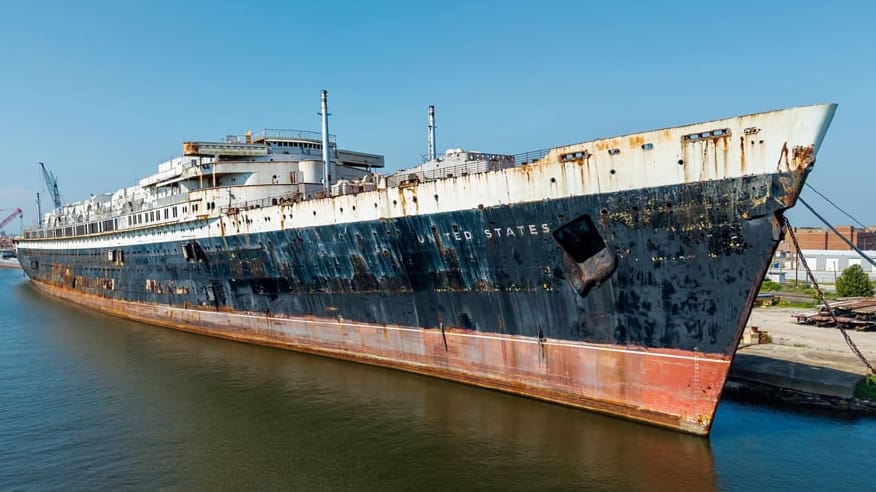
SS United States

A team of marine contractors has completed the sinking of the famed ocean liner SS United States, the fastest passenger ship ever to make a transatlantic crossing. 74 years after her delivery, the vessel has become an artificial reef and diving destination off the coast of Destin, Florida. 

Despite holes cut throughout her hull and interior to aid flooding, the ship took eight hours to settle low in the water and sink. She rolled to port before going down, and an inspection on Thursday will reveal whether she came to rest on an even keel (the ideal outcome for dive tourism). 

Built at Newport News, the SS United States entered service in 1952, and she set a new record as the fastest passenger ship to cross the Atlantic on her maiden voyage. She operated for just 17 years before retirement, her capabilities made obsolete by the advent of air travel (and by her high bunkering costs).

After years in U.S. government ownership, her title passed from hand to hand among various private owners until ending up in the custody of a nonprofit conservancy. The group's hope was to find a permanent berth where the ship could be redeveloped for a commercial purpose, but no economically viable proposals emerged. Instead, the vessel was purchased by Okaloosa County, Florida for reefing; after extensive internal cleaning and preparation, and a last-minute lawsuit intended to block her sinking, she departed Mobile, Alabama this week to transit to her final resting place.

Okaloosa County believes the wreck to be the world's largest intentionally-created artificial reef, nearly 1,000 feet in length and 53,000 GRT in volume. 

Divers will be able to access the wreck from Thursday onwards, and substantial boat traffic is expected. For visitors, SS United States may be found at permanent rest near 30° 07.148' N, 86° 46.755' W.


How High-Speed Ferries Can Reclaim Their Environmental Credentials

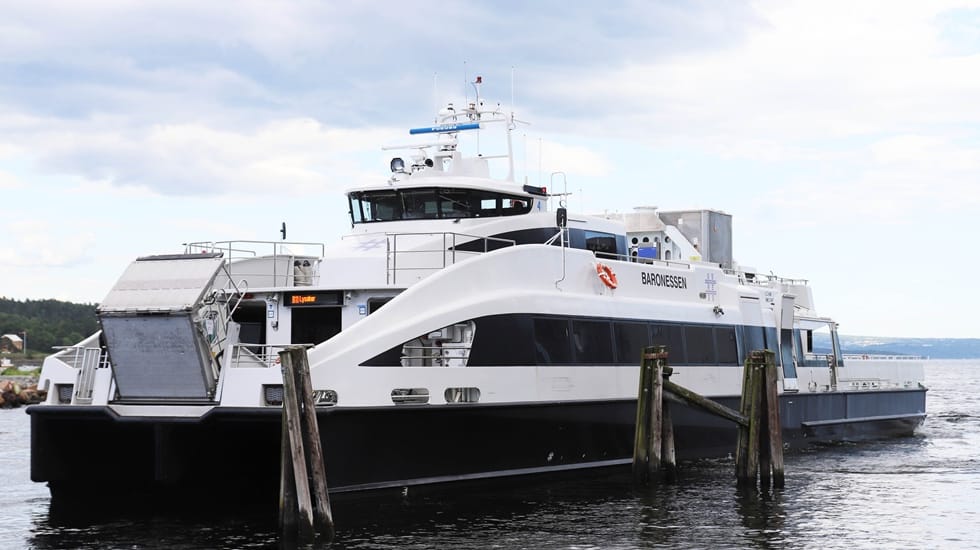
The high-speed ferry MS Baronessen has replaced its diesel engine with batteries. Its hull has been lengthened to accommodate the additional weight of the batteries. The vessel is also testing battery-swapping technology. Photo: Tore Stensvold
The high-speed ferry MS Baronessen has replaced its diesel engine with batteries. Its hull has been lengthened to accommodate the additional weight of the batteries. The vessel is also testing battery-swapping technology. (NTNU handout / Tore Stensvold)

[By Tore Stensvold]

Public transport can benefit the environment, but catamarans are among the worst offenders when it comes to emissions. Batteries and underwater wings could make them considerably greener.

Norway has the technology and expertise needed to develop high-speed catamarans capable of operating even the longest routes. But something is missing.

“In less than five years, we could have a zero-emission high-speed passenger catamaran, capable of travelling at 20–35 knots and carrying 150–250 passengers. But that will require political will and decisive action,” says Professor Sverre Steen from the Department of Marine Technology at NTNU.

Steen is confident that Norway has a broad range of expertise and companies capable of commercialising hydrofoil passenger catamarans within a few years. This could help address some of the challenges associated with emissions from passenger transport, including over longer distances.

Norway aims to reduce emissions from domestic shipping by 50% by 2030 and achieve zero emissions by 2050. This means high-speed ferries must switch from diesel engines to battery-electric propulsion or hydrogen and fuel cells.

Norway has everything it needs

“We have highly skilled shipyards, expertise in hydrofoil technology, a strong battery-electric industry and several companies specialising in control systems. The authorities need to establish clear zero-emission requirements in public tenders and stick to them. That would give ferry operators the confidence to invest,” says Steen.

The export opportunities could be substantial if Norwegian industry succeeds in developing zero-emission passenger vessels.

All countries that rely on high-speed ferries face the same challenge – they consume enormous amounts of energy per kilometre and consequently generate very high emissions.

Norway could reclaim its leading position

So far, few companies or countries have developed solutions that are ready for widespread use. Sweden’s Candela has succeeded with smaller hydrofoil passenger catamarans, while the British company Artemis is working on similar technology.

As early as the 1990s, Norway was producing hydrofoil catamarans capable of reaching speeds of up to 50 knots. However, the focus was entirely on speed, and the solutions proved too expensive.

Today, the technology has improved. The sensors and computing power needed for hydrofoil control systems are available, along with new propeller technologies.

There is also no need to reach 50 knots. Scheduled passenger services typically require speeds of 20–35 knots.

“Norway and Australia were the world leaders in developing passenger catamarans, but Norway was the only one with hydrofoil solutions. We can reclaim that leading position. We have the necessary conditions, the industrial expertise, the technology and the knowledge,” says Steen.

According to a new study conducted as part of the Zero Emission Passenger Vessel Services (ZEVS) project, several technical solutions could reduce emissions from high-speed ferries.

However, the study, Zero-Emission Fast Ferries: A High-Level Assessment of the Technical Feasibility of Catamarans and Hydrofoil Vessels, shows that there is no simple route to achieving this goal.

Testing alternatives to reduce emissions

Researchers from NTNU, the Institute of Transport Economics and the Institute for Energy Technology have developed several models and methods to investigate different ways of reducing emissions from high-speed ferries.

The most suitable solution depends on factors such as route length, vessel size and speed, operating conditions and timetables. The researchers used real-world sailing data collected from 85 high-speed ferries operating 95 routes in 2019.

To identify the best solutions, they combined the following data sources and methods:

  • Automatic Identification System (AIS) data from Norwegian high-speed ferries
  • Models of vessel resistance and energy consumption
  • Models of vessel mass
  • Simulations of actual routes and speed profiles

The study’s lead author is John Martin Kleven Godø. As part of his doctoral research in hydrodynamics, he developed tools that demonstrate the relationship between speed, weight and resistance in high-speed ferries.

These tools are used to optimise hull dimensions according to the energy requirements of individual routes. The aim is to ensure that the hull can support the additional weight of zero-emission propulsion systems without reducing passenger capacity, speed or other important operating parameters.

Combining these tools with the other models, the researchers investigated four different energy solutions:

  • Battery-electric propulsion
  • Battery-electric propulsion with one battery swap
  • Battery-electric propulsion with two battery swaps
  • Hydrogen propulsion using fuel cells, without refuelling during the journey

‘Flying’ ferries dramatically reduce energy consumption

The study concludes that replacing diesel with zero-emission solutions, primarily batteries, is technically feasible. However, batteries are heavy relative to the amount of energy they store. This increases the vessel’s weight and, consequently, its resistance in the water.

The problem can be addressed by lengthening the hull and introducing one or two battery swaps during the journey. Battery-swapping technology is currently being tested in the Oslofjord, where the vessels’ hulls had to be lengthened to accommodate the additional weight.

Research shows that a much better way to address the weight and energy challenges is to install hydrofoils – essentially wings beneath the water. Hydrofoils lift the hull out of the water, eliminating much of the resistance. Regardless of the propulsion system, reducing water resistance delivers significant benefits.

“Hydrofoils reduce energy consumption by approximately 38 per cent,” says Godø.

He also points to an additional benefit: hydrofoils make it possible to build smaller, lighter vessels, which further reduces energy requirements.

“When we calculate the average combined energy savings across Norway’s high-speed ferry fleet, the reduction is approximately 46 per cent,” says Godø.

Hydrofoil ferries require some additional power to accelerate to the speed at which the hull rises out of the water. However, according to Godø, this has very little impact on overall energy consumption.

“The batteries need to provide sufficient power for lift-off, but that additional power accounts for only a few per cent of the vessel’s total energy requirements. That’s not the main challenge for electric hydrofoil ferries,” says Godø.

Electrifying long-distance routes

Based on route distances and operating patterns, the study shows that 78 per cent of Norway’s high-speed ferry fleet could be electrified without additional measures such as battery swapping or hydrofoils.

However, these vessels operate the shortest routes and therefore consume the least diesel. Consequently, electrifying them would eliminate only around 31 per cent of the fleet’s emissions.

The worst offenders are a small number of long routes with numerous stops along the way. One example is the Nordland Express route between Bodø and Sandnessjøen. It is one of Norway’s longest and most demanding high-speed ferry routes and was used as a case study to investigate potential zero-emission solutions. The study suggests that if the Nordland Express can operate without emissions, any Norwegian high-speed ferry route can.

The route is currently served by two catamarans. One of them, MS Elsa Laula Renberg, is built from carbon fibre and can accommodate 220 passengers. Four diesel engines provide a cruising speed of 33 knots on the 220-kilometre journey.

There is no time to recharge batteries during the crossing. However, the development of lighter batteries with higher energy density, such as solid-state batteries, combined with hydrofoils, means the route could probably operate entirely without emissions within a few years.

Even with today’s technology, the route could be electrified if the vessel swapped battery packs twice during the journey.

So far, battery swapping is only being tested in the Oslofjord. If the Nordland Express vessels were equipped with hydrofoils, they could complete the route with just one battery swap.

Energy mix and increased emissions from hydrogen

Hydrogen and fuel cells are another potential zero-emission solution for the route.

However, when the total energy requirements are considered, from hydrogen production through to operating the ferry, fuel cells perform very poorly.

In the worst-case scenario, hydrogen produces 111 per cent more emissions than diesel. Producing hydrogen through electrolysis requires enormous amounts of energy. Compared with using electricity directly, as much as 70 per cent of the energy is lost.

Hydrogen performs particularly poorly compared with battery-electric ferries charged using 100 per cent renewable electricity, especially when calculations are based on the European energy mix, which still includes a substantial proportion of fossil fuels.

Norway ‘lost its nerve’

Sverre Steen has a clear message for politicians:

“Forget hydrogen as an energy carrier for high-speed ferries. Introduce zero-emission requirements when counties and municipalities issue new tenders for high-speed ferry services. Norway’s collaborative approach will stimulate creativity and innovation, resulting in good solutions with considerable export potential,” says Steen.

He points out that Norway had been moving in the right direction but then ‘lost its nerve’.

Encouraged by government plans to introduce stricter emissions requirements for high-speed ferries, several county authorities launched a development project in 2017 called The High-Speed Ferry of the Future.

A wide range of Norwegian companies, from shipyards to equipment and systems suppliers, joined forces.

Incentives for industrialisation

Five solutions were developed, but The High-Speed Ferry of the Future project gradually fell apart when the government failed to follow through on its promised emissions-reduction requirements for high-speed ferry tenders.

The counties never received the regulatory pressure they needed, while shipyards and suppliers lost their financial incentives.

Encouraged by the findings of Zero-Emission Fast Ferries: A High-Level Assessment of the Technical Feasibility of Catamarans and Hydrofoil Vessels, Steen believes the time is right for renewed investment.

He also points to increasingly stringent national and international climate requirements and the rising cost of fossil fuels.

During the parliamentary consideration of the revised national budget in June, NOK 100 million was allocated to developing emission-free high-speed ferries.

The budget agreement also included a request for the government to work towards stricter emissions requirements, with the aim of introducing zero-emission requirements from 2029.

However, neither John Martin Kleven Godø nor Sverre Steen is celebrating.

“Progress is far too slow. This has been on the agenda for many years, but deadlines and requirements keep being postponed,” says Steen.

Godø adds:

“There’s no shortage of effort or willingness. Research funding is welcome, but what we really need are incentives for industrialisation.

“We need tenders that genuinely encourage low- or zero-emission solutions, along with funding to operate these routes.

“Commercial competition without prescribing specific technologies will ensure that we develop the best and most cost-effective solutions.”

John Martin Kleven Godø, Rebecca Thorne, Ingrid Sundvor, Sverre Steen, Zero-emission fast ferries: A high-level assessment of the technical feasibility of catamarans and hydrofoil vessels, Ocean Engineering, Volume 362, Part 3, 2026, 126414, ISSN 0029-8018, https://doi.org/10.1016/j.oceaneng.2026.126414

This article appears courtesy of Gemini News and may be found in its original form here. 
The opinions expressed herein are the author's and not necessarily those of The Maritime Executive.


Wind-Powered Ro-Ro Neoliner Origin Proves 70% Fuel Reduction in First Year

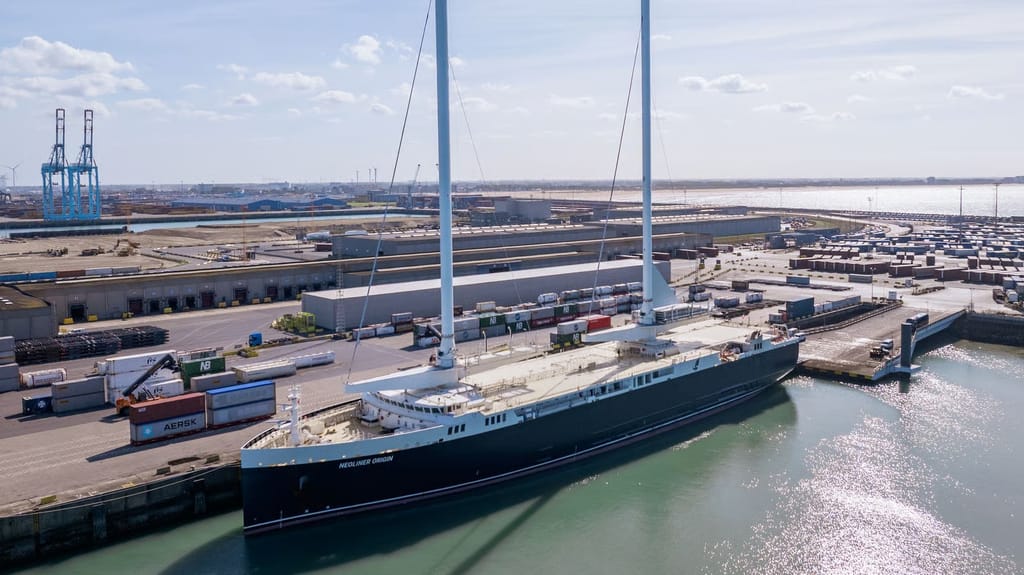
Neoliner Origin
Image courtesy Neoline

The wind-powered ro-ro Neoliner Origin has completed its first full year of commercial service between Europe and North America, and its owner says it cut fuel use by a remarkable 70 percent in 2026. That number approaches but does not quite reach the 80 percent savings target the vessel was expected to deliver when it entered service in October 2025, and the owner said that it expects to achieve better performance next year. 

French shipowner Neoline said the 136-meter (446-foot) ship's first year was marked by technical problems, the difficulties of commissioning a first-of-its-kind vessel and a disrupted transatlantic trade environment.

Even so, the company says Neoliner Origin has shown that wind-powered cargo shipping can work at an industrial scale. Measured against the GLEC (Global Logistics Emissions Council) fleet reference, the ship saved 3,502 tonnes of fuel over the year. That is an average reduction of 66 percent since it entered service, and 70 percent for 2026 alone. Neoline says the fuel saved equals 11,228 tonnes of CO2 avoided. Neoline also compared the ship with a simulated conventional vessel of the same size without sails, running the same 2026 routes at 15 knots. Against that benchmark, the savings ranged from 62 to 67 percent.

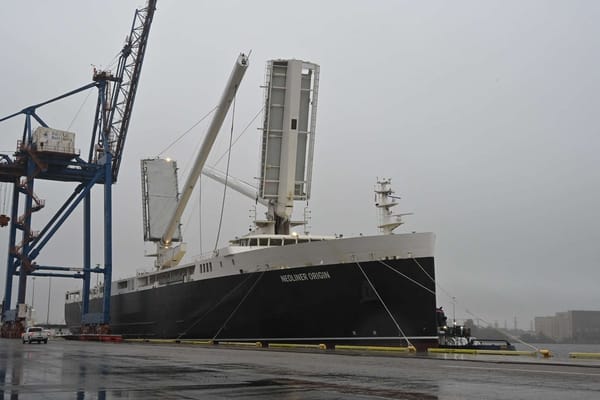
Neoliner Origin at Port of Baltimore, 2026 (Port of Baltimore)

Neoliner Origin uses two SolidSail rigs as its main source of propulsion. It sails on a transatlantic service from Montoir-de-Bretagne, near Saint-Nazaire, with calls at Saint-Pierre-et-Miquelon, Baltimore and Halifax. In its first year, the ship covered more than 62,000 nautical miles and completed nine commercial round trips. It carried 1,845 cargo units, about 12,063 tonnes and 55,889 cubic meters of cargo, including vehicles, containers, out-of-gauge cargo, industrial machinery and refrigerated goods.

Built by RMK Marine in Turkey, the vessel also carried more than 170 passengers during the year. It has six double cabins and can take up to 12 passengers.

Neoline said problems with the sail system kept the ship from reaching the 80 percent target. Neoliner Origin has shown it can regularly sail at more than 15 knots on wind alone, and it hit a peak of 16.6 knots in June with its engine stopped. But faults in the rig cut the time the sails could be used, especially with all of them set.

The company is working with Chantiers de l'Atlantique, which designed the SolidSail rig, to fix the problems so the ship can rely on its sails far more in 2027. Its new target is a fuel reduction of at least 78 percent against the GLEC reference, a standardized index for carbon emissions from freight transport. The ship is due for a maintenance period in February 2027 that should bring the rig back to full use.

“This first year of operations confirms the potential of wind propulsion to significantly reduce fuel consumption and CO2 emissions in maritime transport,” said Jean Zanuttini, Neoline's chairman and CEO. He added that as a prototype, the ship had taught the company valuable lessons that will be critical to improving its performance.

“We are confident in our ability to approach, and potentially exceed, 80 percent fuel savings as early as 2027,” he said.

Neoline was founded in 2015 to develop low-carbon shipping with wind as the main source of propulsion. Since Neoliner Origin entered service, the company has signed commercial partnerships with CMA CGM and CEVA, and in September it added a call at Zeebrugge.


Philippines Gets New U.S.-Built USVs to Patrol South China Sea

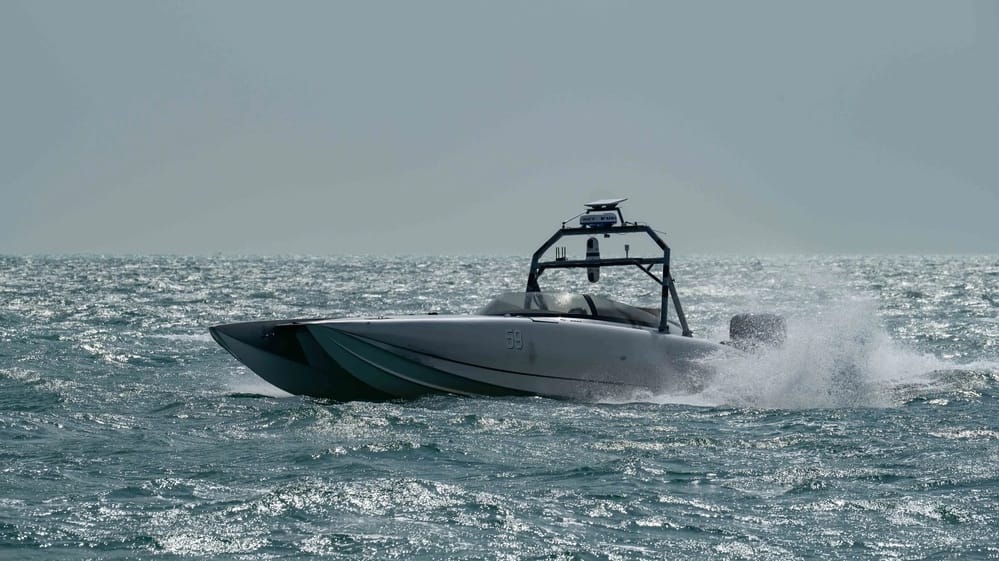
A MARTAC T38 operating in the Arabian Gulf, 2023 (USN)

The Philippine Marine Corps has received two US-made unmanned surface vessels (USVs), adding to the autonomous fleet the Armed Forces of the Philippines (AFP) is building to patrol its waters as maritime pressure from China grows.

China's sweeping claims in the South China Sea have fueled disputes not only with the Philippines but also with Vietnam and other neighbors. Scarborough Shoal has become a particular point of contention between Beijing and Manila, with China stepping up maritime drills in the disputed waters.

To protect its exclusive economic zone, the AFP has a technological boost in the form of US-made military hardware. In mid-2024, the Philippine Navy received one Devil Ray T38 and four all-electric MANTAS T12 USVs built by Florida-based Maritime Tactical Systems Inc. (MARTAC).

On November 4, US Ambassador Lee Lipton handed over two more T38s, valued at more than $8 million, to Philippine Marine Corps Deputy Commandant Brig. Gen. Bayani V. Curaming at a ceremony in Subic Bay. The boats give the Marines a mix of speed, endurance and flexibility for security work across an archipelago of more than 7,600 islands.

According to MARTAC, the T38 is an 11-meter catamaran that can reach burst speeds of more than 60 knots and carry up to 1,814 kilograms (4,000 pounds) of payload. The company says its open architecture lets it handle intelligence, surveillance and reconnaissance, electronic warfare, mine countermeasures and logistics missions. It can be driven by a remote operator or run on its own.

MARTAC says the T38's control modes, which range from full operator control to fully autonomous operation, make it a proven force multiplier for the fleets that use it, at a fraction of the cost of manned systems.

“These vessels can conduct extended surveillance and reconnaissance patrols, deliver supplies, and allow AFP personnel to direct missions from a safe distance. It will strengthen the AFP's growing autonomous fleet, expanding its ability to monitor wider areas of Philippine waters for longer periods at a lower cost than crewed vessels,” said Col. Daniel Oh, the US Embassy's senior defense official and chief of the Joint US Military Assistance Group-Philippines.

The handover took place at MARTAC's new Unmanned Center of Excellence in Subic Bay. The company says the center will stock spare parts and train and support Philippine personnel, so the T38s stay available and can deploy quickly. MARTAC also expects it to create local jobs and partnerships that help the Philippines build a larger USV fleet over the next several years.

“The Philippines is one of America's most valued and important allies in the region, and their commitment to integrating these advanced unmanned systems demonstrates extraordinary vision and operational leadership,” said MARTAC CEO Tony Smeraglinolo.


Industry Giant Boluda Towage Expands in Australia

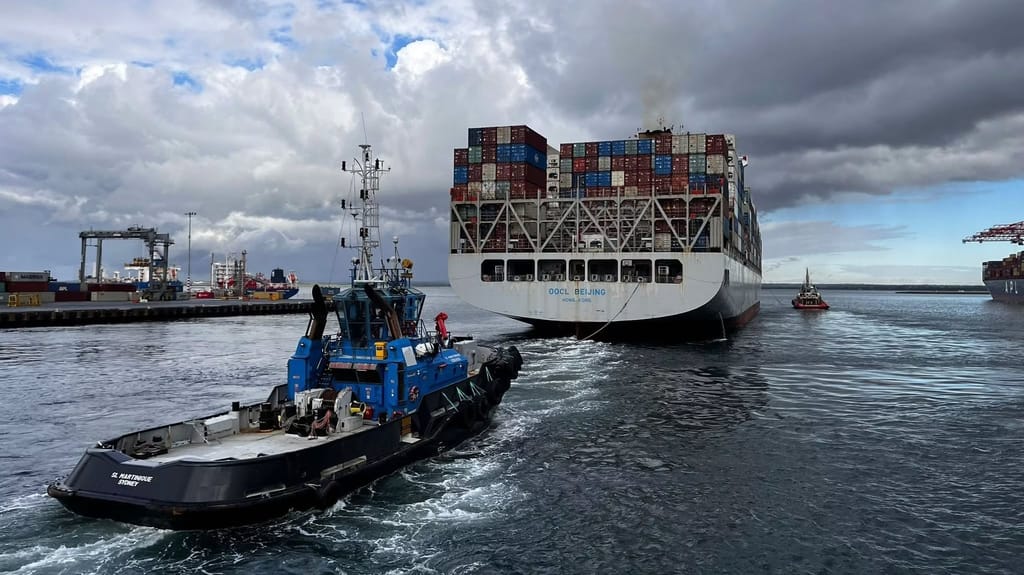
File image courtesy Boluda Towage Australia

Top global tug operator Boluda Towage has added another Australian port to its network after winning a 10-year contract to provide towage at the Port of Bunbury in Western Australia, taking over from its rival Svitzer.

Operated by Southern Ports, Bunbury is one of Western Australia's main ports. It has seven berths on a 470-hectare landholding, and it handled 16.9 million tonnes of trade from 418 vessel calls in the past year.

The port has long handled bulk commodities, but in recent years it has also become a link in Australia's clean energy transition. Southern Ports says Bunbury is the world's largest lithium export port, and it also brings in project cargo such as wind farm components and batteries.

The Western Australian government said Southern Ports awarded the contract after a competitive tender. Boluda, which the government describes as the world's largest towage provider, with operations in more than 232 ports, will take over from Svitzer Australia when Svitzer's contract expires in December.

Boluda Towage, part of Spain's Boluda Corporación Marítima, will serve the port with new tugs. The first is due in December and the second in February. Until then, a tug from Boluda's Esperance fleet will cover the port.

Bunbury will be Boluda's ninth Australian port, after Weipa, Mackay, Gladstone, Brisbane, Newcastle, Port Botany, Melbourne and Esperance. Esperance, also run by Southern Ports, became its first Western Australian port in November last year, when Boluda took over operations there after buying local tug operator Mackenzie Marine and Towage.

“As the Port of Bunbury grows alongside the South West, Boluda Towage will play an important role in supporting safe and reliable port operations,” said Western Australia's Ports Minister, Stephen Dawson.

Boluda says the two new tugs will meet IMO Tier III emissions standards, which it says will significantly improve the emissions performance of towage at Bunbury while delivering safe, reliable and efficient service.

“We value our longstanding relationship with Southern Ports and look forward to strengthening that partnership, supporting our customers, and contributing to the continued growth of the Port of Bunbury and the industries it serves,” said Ivan Spanjic, managing director of Boluda Towage Australia.


Residential Cruise Ship Arrested When It Arrived in Singapore

Villa Vie Odyssey
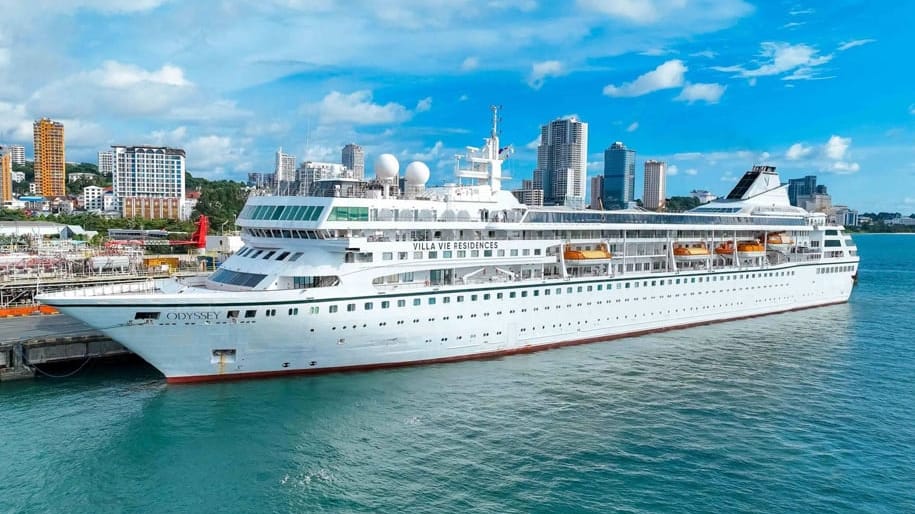
Villa Vie's Odyssey docked in Cambodia at the end of the "endless" world cruise (Sihanoukville Autonomous Port)

Villa Vie’s residential cruise ship Odyssey was placed under a court order arrest on Sunday, November 8, when it reached Singapore. The arrest further complicated hopes to resume the “endless” around-the-world cruise that began in October 2024.

Courts in Singapore handled the arrest for an unnamed debtor of the vessel and ordered it into the anchorage. It said arrangements were being made for the crew aboard the cruise ship. The arrest was officially processed at 10:34 a.m. local time on November 8. 

CBS News is speculating that the arrest was on behalf of a fuel supplier. It could also be from other suppliers to the ship and could be related to its stop in Singapore shortly before the cruise came to an end. Media reports from Singapore are saying one supplier filed a claim of nearly US$500,000.

The 24,344-gross ton cruise ship had announced it was suspending the scheduled 3.5-year world cruise when it arrived in Cambodia on October 27. Local officials said there were 207 passengers aboard as well as 156 crewmembers. The passengers were instructed to pack and leave the cruise ship that day, with Cambodian tourism officials assisting. The cruise operator Villa Vie Residences said it would attempt to refinance over the next 60 days and that the ship would remain in a warm lay-up.

It is believed that the financial institutions that had funded the operation took control of the cruise ship. Cambodia’s Ministry of Tourism confirmed that the ship had been instructed to sail from the Sihanoukville Autonomous Port late on November 3. She cleared the port after midnight with reports that there was a skeleton crew of 50 aboard.

Cambodian officials reported as of last week that approximately 98 of the former passengers remained in the country and were being welcomed and supported. The others had departed, with media reports of people returning to Florida and Australia. The records in Cambodia showed there had been 15 nationalities among the passengers.

A group of the passengers was attempting to make a bid for the ship to resume the cruise under different management. As many as 169 of the former residents had pledged support, but the media said they were unable to find a financier. Villa Vie has said it was looking for a new partner but admitted the finances were difficult, blaming high fuel costs as a result of the war with Iran.

The arrest does not automatically end the operation, as under Singapore law, the operators could still settle the claims and resume control of the ship. Alternatively, the creditors can move for the ship to be auctioned off to settle their debts.

Villa Vie had started the cruise in October 2024 from Belfast after numerous delays during the refurbishment of the ship, which had not sailed since 2020. The trip was scheduled to continue until mid-2027. The company had updated its itineraries on October 20 and already released preliminary information for the second circumnavigation running from 2027 to 2030. It had also reported that it was adding a second ship in the future.

Built in 1993 in Spain, the ship’s prospects, however, would seem limited. She is small and lacks modern amenities, including balcony cabins. After a reconstruction that enlarged the ship, it had space for approximately 1,000 passengers, although Villa Vie said it was accepting up to 650 residents. Buyers had been permitted to join two cabins into one larger space, or the company was offering rental options.

The value of the ship is unclear. However, her sister ship, built in 1992 as the Crown Jewel and last operated by the Turkish company Miray Cruises, is also up for auction. It is the original size, not lengthened in a rebuild, and is also reported to be in poor mechanical condition. The ship lost its flag registry and its class certificates and has been seized by a Greek court. 

A court-ordered survey of the ship now known as Gemini set the value and minimum bid at approximately €3.8 million, which it equated to scrap value after the buyer pays costs and arranges for a tow to Pakistan. The planned October 21 auction was delayed to November 18 for the Gemini after the Turkish DenizBank petitioned the court.