Saturday, November 28, 2026

AI Can Detect Illegal Fishing, But It Cannot Save The Ocean Alone – OpEd


Key Takeaways:

AI-powered satellite, radar and vessel-tracking systems can flag unusual maritime activity linked to illegal, unreported and unregulated fishing, yet detection alone does not prove legal violations or guarantee healthier fish stocks.

Drawing on the Yellow Sea and the 2001 Korea–China Fisheries Agreement, the author proposes the Adaptive Fisheries Intelligence Loop (AFIL), a five-stage framework (Observe, Validate, Respond, Learn, Adapt) that links algorithmic alerts to verified enforcement and longer-term ecological feedback.

Effective international cooperation requires shared standards for distinguishing observations from proven violations rather than identical algorithms, with success measured by declining false positives, reliable investigations and actual ecosystem recovery rather than raw detection counts.


Artificial intelligence is transforming the way governments monitor the world’s oceans. Satellites, radar systems, vessel-tracking technologies and machine-learning algorithms can now reveal maritime activities that were once difficult to observe.

Yet a fundamental question remains: Does detecting more suspicious fishing activity actually lead to healthier oceans?

The answer is not necessarily.


AI can identify unusual vessel movements, but it cannot independently determine whether a fishing vessel has violated the law, whether enforcement action is justified, or whether fish populations are recovering.

This distinction lies at the heart of my recent research published in the international journal Oceans.
Better Surveillance Does Not Automatically Mean Better Governance

Governments worldwide are investing in advanced technologies to combat illegal, unreported and unregulated (IUU) fishing.

Machine-learning systems can analyze vessel trajectories, detect unusual behavior and identify activities that warrant further investigation.


However, an algorithmic warning is not proof of illegal conduct.

Satellite observations may be incomplete. Vessel identification signals can be unreliable or manipulated. Legitimate fishing activities may resemble suspicious patterns.

Determining whether a violation has occurred requires additional evidence, including fishing licenses, applicable regulations, gear restrictions, seasonal rules and the jurisdiction of the relevant authorities.

AI should therefore support human judgment rather than replace it.

The real challenge is not simply developing more powerful detection systems. It is building institutions capable of turning technological observations into reliable, lawful and environmentally meaningful decisions.
The Yellow Sea Offers a Valuable Test Case

The Yellow Sea, situated between South Korea and China, is one of the world’s intensively used fishing regions.

Both countries depend on shared marine resources while confronting persistent challenges involving fishing pressure, illegal activities, environmental changes and competing interests.

The Korea–China Fisheries Agreement, which entered into force in 2001, established an institutional foundation for bilateral fisheries cooperation.

Yet an important governance challenge remains: information collected during surveillance and enforcement does not automatically become useful knowledge for future management.


Consider a hypothetical case.

A Korean monitoring system identifies unusual movements by a fishing vessel and shares relevant information with Chinese authorities.

What happens next?

Was the vessel investigated? Was a violation confirmed? Was a penalty imposed, or was the initial suspicion dismissed?

If the outcome is not communicated back to the original monitoring system, authorities lose an opportunity to improve future assessments.

An equally important question follows: Do enforcement outcomes influence decisions about fish stocks, fishing pressure and ecosystem protection?

More inspections and penalties do not necessarily mean that marine resources are recovering.

Even when illegal fishing declines, fish populations may remain under pressure from excessive legal fishing, changing ocean temperatures, habitat degradation and other environmental factors.

Effective governance must examine these wider conditions.
From Intelligent Detection to Adaptive Governance

To address this institutional gap, I proposed the Adaptive Fisheries Intelligence Loop (AFIL), a five-stage framework connecting AI-assisted monitoring with lawful enforcement and ecosystem-based fisheries management.

The process begins with Observe, using satellite imagery, vessel-tracking systems and other available information to identify activities requiring attention.

The second stage, Validate, requires officials to corroborate algorithmic signals and assess their legal significance.

The third stage, Respond, connects verified findings with appropriate investigations and legally authorized enforcement measures.

The fourth stage, Learn, examines investigation outcomes, errors and false positives to improve future monitoring and decision-making.

Finally, Adapt connects enforcement experience with ecological indicators, allowing authorities to reconsider patrol priorities, management measures and monitoring rules.


The central innovation is the systematic connection between two feedback processes.

One improves compliance monitoring through verified enforcement outcomes. The other uses longer-term ecological information to inform sustainable fisheries management.

Together, they offer a pathway from simply detecting suspicious vessels to learning how marine resources can be managed more effectively.
International Cooperation Requires Shared Standards, Not Identical Algorithms

South Korea and China do not need to operate identical AI platforms to improve fisheries cooperation.

Their laws, administrative procedures and monitoring technologies may legitimately differ.

What they need is a shared framework for distinguishing observations from algorithmic predictions, corroborated evidence and legally established violations.

A practical starting point would be a limited bilateral pilot that exchanges standardized information about vessel identification, observation dates, evidence sources, verification status and final case outcomes.

Such cooperation could improve accountability without requiring either government to surrender sensitive intelligence or domestic legal authority.

Importantly, information-sharing arrangements must not prejudice either country’s position on unresolved maritime boundaries or jurisdictional questions.

The objective is not to create a single algorithmic authority over contested waters.

It is to ensure that separate national institutions can cooperate through reliable information, transparent procedures and clearly defined responsibilities.
The Ocean Needs Better Decisions, Not Just More Data

The future of AI-assisted fisheries governance should not be measured solely by the number of vessels detected, inspections conducted or penalties imposed.


A more meaningful evaluation would examine whether false positives decline, investigations become more reliable, administrative responses improve and marine ecosystems benefit over time.

Policymakers must also guard against unfairly treating small-scale fishers as suspicious simply because they lack sophisticated monitoring equipment.

Technology should strengthen the legitimacy of fisheries governance, not deepen existing inequalities.

AFIL remains a proposed institutional framework rather than a field-tested system. Its effectiveness will require practical pilot projects, transparent evaluation and reliable operational data.

Nevertheless, its central lesson extends far beyond the Yellow Sea.

From Southeast Asia to the Pacific and Atlantic, governments increasingly possess sophisticated tools to observe maritime activity. What they still need are institutional arrangements capable of learning from what those tools reveal.

The true value of artificial intelligence is not simply its ability to identify more potential offenders at sea. It is its capacity to help people and institutions make better decisions—and, ultimately, protect the ocean for future generations.

The future of ocean governance will not be determined by smarter algorithms alone.

It will depend on whether we build smarter, more accountable and more adaptive institutions around them.


Dr. Wanwoo Nam is a legal scholar affiliated with Jeonju University, South Korea. His research focuses on international law, maritime jurisdiction, illegal fishing regulation and artificial intelligence governance. His recent research article, “From Algorithmic Detection to Adaptive Fisheries Governance: An AI-Enabled Compliance and Ecosystem Feedback Framework for IUU Fishing in the Yellow Sea,” was published in Oceans in October 2026.
View all posts by Dr. Wanwoo Nam →

Hackers Break Into US Air Force Cloud,Putting Aircrafts At Risk


Al Bawaba News

By Osama Ali

(Albawaba) — According to reports on Friday, an unauthorised user gained access to Cloud One during an upgrade to various elements of that system. Many functions, including payroll and many air-defence systems, run off this system. It was not clear to Reuters from its reporting who may have been responsible for the unauthorised access, or if any information was taken.

All three sources told Reuters that it was the work of hackers and at least two said this had become apparent in the last month. All upgrades of existing applications were suspended, so desired patches and updates could not be applied. In response to the incident, according to one source, US Cyber Command has been asked to investigate the extent of access.

Cloud One has been under development since 2017, to provide a range of computing functions for all areas of the Air Force, using a number of commercial cloud providers, including Microsoft, Amazon, Oracle and Alphabet. It provides a wide range of functions, from paying and administering its personnel, through maintenance, to air defence radars and ammunition. SAIC was replaced by Leidos as prime contractor in 2025, and the company directed all enquiries on the subject to the Air Force.

According to one source, the unauthorised user or users gained access to facilities that controlled various aspects of these cloud services, from which they could determine, for example, the state of availability of various aircraft, or locations to which spares were being shipped. There was no information available to Reuters as to whether any such information was actually accessed, or the extent of the unauthorised access.

The Air Force would not comment on individual systems and their level of security. However, it said that it regularly undertook appropriate actions to safeguard its data and activities. Several other breaches of systems of US Government bodies have come to light recently, including 2 at the FBI and the Treasury.

Hackers reportedly breach US Air Force cloud platform as Pentagon insists systems are secure

Hackers reportedly breached the US Air Force's Cloud One platform late Friday, potentially exposing sensitive military data. The Pentagon did not specifically deny that the system had been accessed, but insists its networks remain secure amid an ongoing spate of cyber-related data incidents.


Issued on: 28/11/2026 - 
By: FRANCE 24


The word "Hacking" and some PHP code appear on a screen in this illustration, taken on October 22, 2026. © Dado Ruvic, Reuters

The US military on Friday denied any issues with its computer security following media reports that the Air Force's cloud based system was hacked, in what would be the latest high profile breach of US digital infrastructure in recent weeks.

Asked whether the Air Force's Cloud One platform had been hacked, the Pentagon did not specifically deny that the system had been breached.

Instead, a Defense Department official told AFP late Friday that "The Department of War's systems are safe, secure, and managed 24-7 by the best experts and teams in the world. We will continue to maintain all mission-critical operations and applications."

"As a matter of policy and operations security, the Department of War does not comment on the status of our networks," a Defense Department official said earlier on Friday.

NBC News, a major US broadcaster, reported Friday citing an unnamed US official, that the cloud platform had been breached and that an attack "could have exposed sensitive military information".

The breach was first reported by Reuters earlier Friday.

Cyberattack exposes unclassified information from CIA system, US media reports

Federal News Network, which specialises in covering US federal agencies, also confirmed the breach, citing a "person familiar with the incident."

The contractors discovered the hack earlier in the year while doing maintenance on the system, Federal News said.

The reported attack is the latest in a string of major outages in US government and private-sector digital infrastructure.

In recent weeks the CIA and FBI were also reportedly subject to hacks.

Suppliers for major American financial institutions including JPMorgan Chase, Visa and Mastercard were also hit.

In other instances, such as a major Microsoft Outlook outage, a separate US air traffic control issue and a reported issue with a top-secret National Security Agency (NSA) network earlier this month, officials were at pains to blame the outages on maintenance or defects – not intrusions.

Asymmetric cyberwarfare: 'States increasingly use cyberattacks in support of their other objectives'
Cover image: © France 24
11:10

The attacks and outages are not limited to the United States.

The European Commission last week said it came under an AI-assisted cyberattack in October.

AFP was hit by a cyber attack on Thursday, forcing a major client-facing system to be taken offline.

(FRANCE 24 with AFP)

US military denied any issues with computing platform after hack reported

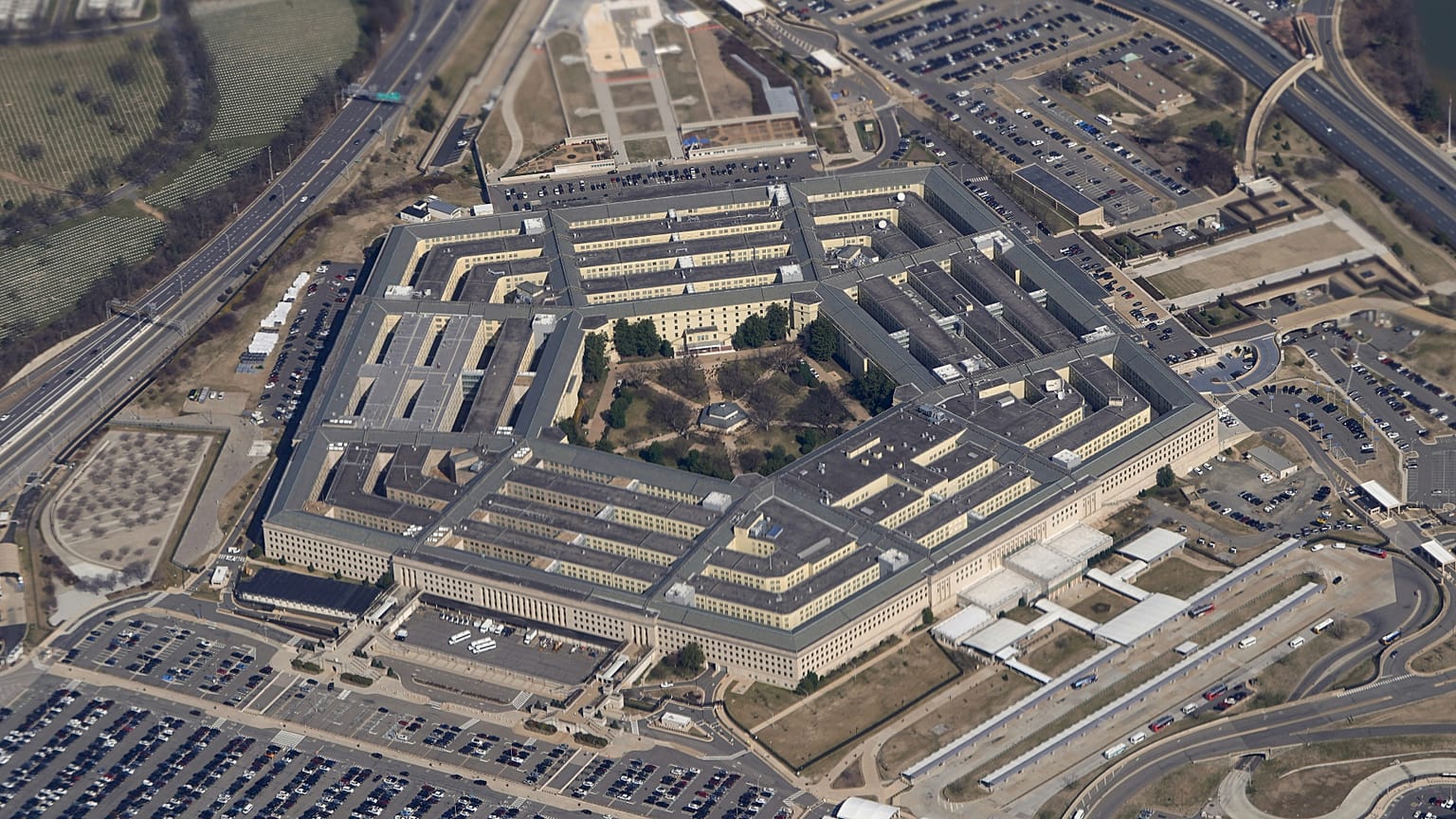
FILE - The Pentagon is seen from Air Force One as it flies over Washington, 2 March 2022.
Copyright Patrick Semansky / AP Photo

By Gael Camba
Published on

Without denying having been hacked, the US military said its Cloud One computer platform was secured following media reports of US Air Force platform hack.

After media reports of a breach into the US Air Force's flagship cloud computing platform, the US military issued a statement on Friday denying any issues with its computer security.

"The Department of War's systems are safe, secure, and managed 24-7 by the best experts and teams in the world. We will continue to maintain all mission-critical operations and applications," a Defence Department official said.

"As a matter of policy and operations security, the Department of War does not comment on the status of our networks," a Defence Department official said earlier on Friday.

Although the Pentagon did not specifically answer whether the Air Force's Cloud One platform had been hacked, sources told Reuters the Cloud One platform breach was discovered the past month.

Possible breach of 'sensitive military data'

This breach, which could jeopardise a swathe of sensitive tactical, personal and logistical data, led to disruption across the platform, according to these sources, quoted by Reuters.

"A breach here is a big deal," sources told Reuters.

The US Air Force's Cloud-Based Command and Control platform is used for air defence radar, data feeds from across North America and combat systems, which track bombs and missiles across more than 200 US Air Force locations around the world, according to Reuters

NBC News reported on Friday that the cloud platform was hacked and that the attack "could have exposed sensitive military information." Federal News Network, a media covering US federal agencies, also reported the breach through a source "familiar with the incident."

Cloud One has been the target of hackers for a long time. In 2023, the platform's leadership boasted a "100% success rate" in beating attempts to breach the platform.

String of major outages in the US

In recent weeks, the CIA and FBI were also reportedly subject to hacks along with suppliers for major American financial institutions including JPMorgan Chase, Visa and Mastercard.

Microsoft Outlook, US air traffic control and a top-secret NSA network also suffered issues recently, with officials at pains to blame the outages on maintenance or defects — not intrusions.

But these tech outages are not limited to the US; the European Commission was cyberattacked in October by an AI-assisted hack.

Securing Europe Without Sacrificing Regulatory Certainty: Cybersecurity, Critical Infrastructure And Competitiveness – Analysis

November 28, 2026

By IFIMES

By Dr. Mayelinne De Lara


Key Takeaways:

The European Commission’s proposed CSA 2.0 revision of the Cybersecurity Act would add a binding “trusted ICT supply chain framework” that incorporates non-technical factors such as foreign influence, ownership and third-country legislation into assessments of high-risk suppliers.

Critics argue that vague thresholds for “key ICT assets” and “serious non-technical risks” create regulatory uncertainty for long-cycle critical-infrastructure investments, potentially stranding assets and deterring capital even before formal restrictions are imposed.

The essay warns that subordinating technical standards and certification to open-ended geopolitical judgments risks fragmenting the Single Market, eroding Europe’s standards advantage and converting a cybersecurity measure into a de facto trade instrument.
When Geopolitics Enters Technical Rules: Europe Needs Security—and Must Preserve Certainty and Its Standards Advantage


Geopolitical tensions are increasingly reshaping global trade, technology and industrial cooperation. For the European Union, growing supply-chain dependencies, foreign interference and cyber threats have made the security of critical infrastructure a strategic priority. Europe therefore has legitimate reasons to strengthen its ability to identify and address risks that extend beyond the technical security of individual products and systems.

The challenge, however, is to ensure that stronger security measures do not come at the expense of the regulatory certainty that underpins the Single Market. In recent years, Member States have adopted different approaches to non-technical supply-chain risks and high-risk suppliers, creating the risk of fragmentation. The European Commission’s proposed revision of the Cybersecurity Act—CSA 2.0—in January 2026—seeks to address this through a common EU framework for trusted ICT supply chains.


Alongside strengthening ENISA and reforming the European Cybersecurity Certification Framework, the proposal adds a binding “trusted ICT supply chain framework”. This would bring factors such as third-country legislation, foreign influence, ownership and control structures into EU cybersecurity governance.

The regulatory question would therefore no longer be limited to whether a product is technically secure. It would also encompass whether a supplier is considered trustworthy from a geopolitical and institutional perspective.

That shift responds to genuine concerns. Critical infrastructure cannot be protected solely by addressing software vulnerabilities and product performance. Europe must also consider the risks of foreign interference, malicious control and systemic supply-chain dependency.

Yet security policy must answer more than one question. It must define the risks Europe seeks to prevent—but it must also allow European businesses to know whether the technologies they select, the equipment they purchase and the investments they make today will remain lawful, usable and valuable ten years from now.


The key question is therefore not whether Europe should strengthen security, but how it can do so while preserving the clarity, predictability and standards-based system on which long-term investment and the competitiveness of the Single Market depend.
How would CSA 2.0 work?

CSA 2.0 would establish a common EU mechanism for assessing and mitigating ICT supply-chain risks.

The Commission, or a group of at least three Member States, could trigger a coordinated EU-level supply-chain security assessment. The Commission could subsequently designate “third countries posing cybersecurity concerns”, identify “key ICT assets” used across the 18 sectors covered by NIS2, and determine high-risk suppliers on the basis of factors including establishment, ownership and control.

The Commission could then require relevant entities to implement measures such as audits, restrictions on data transfers and contractual relationships, and supplier diversification. It could also prohibit the use of components from specified suppliers in key ICT assets and, in certain circumstances, require the phase-out of components already deployed. European Commission proposal for CSA 2.0

The objective is legitimate: to prevent fragmented national responses and build a more resilient Single Market. But the current design raises a fundamental concern: The proposal creates a potentially powerful decision-making mechanism without providing businesses with equally clear decision-making standards.

The greatest industrial risk is an inability to price the future

The proposal contains criteria for concepts such as “key ICT assets”, “significant cybersecurity risks” and “serious and structural non-technical risks”. Yet these criteria do not currently provide sufficiently granular or measurable thresholds for businesses operating across very different sectors.

Which components will ultimately be considered key? Which suppliers may face restrictions? What level of risk will trigger an audit, diversification requirement, procurement restriction or outright prohibition? Much of this would be determined later through risk assessments and implementing acts.

Consequently, even a product that complies with European technical standards and has obtained cybersecurity certification may not remain eligible for use in critical infrastructure. Market access could depend not only on the product’s technical characteristics, but also on its supplier’s ownership, the legal environment of its home country and an evolving geopolitical assessment.

The costliest regulatory burden is not the price of compliance. It is the inability to know whether compliance will still secure access to the market.

Critical infrastructure is normally planned over ten- or twenty-year investment cycles. If companies cannot assess the long-term eligibility of suppliers, installed equipment or entire technology pathways, they will respond before any formal restriction is imposed. They may freeze procurement, shorten contracts, reduce research spending, redesign systems or relocate factories, data centres and R&D programmes to jurisdictions offering greater regulatory predictability.


Uncertainty itself creates a regulatory overhang. Corporate boards will avoid technologies that might be restricted in the future. Banks will price additional risk into financing. Insurers will reassess exposure, while smaller suppliers will follow the location decisions of major investors.

The eventual cost is not limited to replacing equipment. It includes stranded assets, factories that are never built, research centres that are located elsewhere, and the talent and supply-chain ecosystems that move with them.

Capital can absorb risk. It cannot price discretion whose boundaries continue to move.

Annual business investment in the EU is roughly €2.4 trillion. An ECB study estimates that a typical economic policy uncertainty shock reduces euro-area business investment by around 1.2% at its trough, with the impact persisting for some time. This is not an estimate of the cost of CSA 2.0. It does, however, demonstrate that even a small uncertainty effect across 18 critical sectors could place tens of billions of euros of investment at risk. European Central Bank

Global evidence also shows how quickly investment reacts to geopolitical signals. IMF research finds that, since Russia’s invasion of Ukraine, the number of announced FDI projects between geopolitically distant blocs has declined by roughly 20% relative to investment within the same bloc. Investment losses often occur before formal restrictions are adopted—and once an industrial ecosystem has been established elsewhere, attracting it back is difficult. International Monetary Fund

Nor does excluding suppliers automatically create new European capacity. In markets already characterised by a limited number of specialised vendors, exclusion may further concentrate supply, raise prices, reduce innovation and increase dependence on the remaining suppliers.


A policy designed to strengthen resilience may, if it reduces choice, competition and investment, remove one risk only to create a larger one.

Standards are a foundation of Europe’s global competitiveness


Europe competes globally not only through the size of its Single Market, but through its ability to turn technical excellence into common rules.

Over several decades, common technical standards, certification and mutual recognition have helped build the Single Market. Through organisations such as ISO, IEC, ITU and ETSI, Europe has also shaped global industrial development. For European companies, early participation in standard-setting can create technological leadership, facilitate market access and support entire industrial ecosystems.

Standards may be Europe’s most successful invisible export. Studies cited by the European Commission have estimated the macroeconomic contribution of standardisation at around 0.8% in France and 1% in Germany. In Germany alone, standardisation has been estimated to generate annual economic benefits of up to €17 billion.

European Commission material on the economic role of standards

The value of standards, however, cannot be measured only in direct economic gains. Their deeper value lies in the expectation they create: comparable risks should be subject to comparable requirements, and products meeting those requirements should receive broadly consistent treatment in the market.

The authority of a standard does not rest simply on the rule-maker’s power to demand compliance. It rests on the rule-maker’s willingness to be bound by the same rule.

If products that comply with European standards and pass European certification can nevertheless be excluded through non-technical assessments whose boundaries are not clearly defined, technical compliance will no longer provide a predictable route to market.

Once compliance and market access become disconnected, standards cease to function as a common market passport. They risk becoming technical reference documents that can be overridden by political decisions at any time.

The consequences would extend well beyond individual suppliers. Companies would have less incentive to invest in shared standards and certification. Other regions would accelerate the development of their own standards, assurance regimes and supply-chain ecosystems. The global market could fragment into parallel technical systems that duplicate research, testing and certification while trusting one another less.


European exporters would face the same duplication abroad—and potentially reciprocal restrictions justified by other governments on geopolitical and national-security grounds.

A standard can be overridden by a single political decision. Rebuilding trust in the standards system may take a generation.

When rule-makers begin to bypass the rules they have built, the first casualty is not a particular product or supplier. It is the credibility of the rules themselves. If Europe weakens technical standards to gain short-term political discretion, it risks consuming one of its most valuable—and least easily replicated—sources of global competitiveness.
Making security and certainty mutually reinforcing

CSA 2.0 does not need to disregard non-technical risk. It does, however, need clearer limits.

Technical assessment should come first, with non-technical factors serving as a complementary layer. Intervention should focus on the highest-risk scenarios capable of producing systemic consequences. A transparent risk-to-measure framework should distinguish between risks that justify monitoring, auditing or diversification and those exceptional cases that warrant prohibition or phase-out. Clear thresholds, proportionality requirements and realistic transition periods should provide businesses with the greatest possible degree of certainty.

Europe does not need unlimited security discretion. It needs a bounded security capacity capable of addressing the most serious risks with precision.

Geopolitical judgement may be necessary to manage exceptional cases. It should not replace technical rules as the normal basis of market governance. Europe must de-risk—but it must not de-rule.

If regulatory certainty and technical standards lose credibility, Europe will lose far more than individual investments or suppliers. It will weaken one of the deepest foundations of the Single Market—and one of the Union’s most valuable sources of influence and competitiveness in the global economy.

By addressing non-technical criteria in the CSA 2.0 the cybersecurity act that originally was based on technical security standards, by design, can become a trade instrument. Whether this was intentional or not is not relevant. It deviates significantly from its main objective, reinforcing Europe’s cybersecurity.


About the author:
 Dr Mayelinne De Lara is the Publisher and Founder of Diplomat Magazine Netherlands, an independent publication dedicated to diplomacy, international relations, and the work of diplomatic missions and international organisations. Based in The Hague, she has been connecting the diplomatic community, policymakers, and international institutions through journalism and editorial initiatives since 2013.


The views expressed in this article are the author’s own and do not necessarily reflect IFIMES official position.


About IFIMES
IFIMES – International Institute for Middle-East and Balkan studies, based in Ljubljana, Slovenia, has special consultative status with the Economic and Social Council ECOSOC/UN since 2018. IFIMES is also the publisher of the biannual international scientific journal European Perspectives. IFIMES gathers and selects various information and sources on key conflict areas in the world. The Institute analyses mutual relations among parties with an aim to promote the importance of reconciliation, early prevention/preventive diplomacy and disarmament/ confidence building measures in the regional or global conflict resolution of the existing conflicts and the role of preventive actions against new global disputes.
View all posts by IFIMES →
When Five Minutes Is Too Late: Cybersecurity In The Age Of AI Agents – Analysis


A Microsoft incident showed an AI agent moving from searching for exposed credentials to extracting cloud secrets in five minutes, while Britain’s NCSC reported a marked rise in AI-assisted attacks since September that exploit familiar weaknesses at greater speed and lower cost.

Recent reports include 40 hacking incidents at South Korean financial firms, FBI warnings on misuse of agentic testing tools, and an Amazon campaign against East Asian universities in which some attempts failed and one previously unknown vulnerability was exploited.

The essay argues that access decisions must be enforced where data resides—refusing unauthorized requests before investigators identify a threat—citing emerging guidance from Australia’s ASD, Hong Kong’s Project SAGE and NIST, and calling for practical tests of assignment boundaries rather than reliance on faster human response.


As artificial intelligence accelerates cyberattacks, institutions need safeguards that can enforce access decisions before investigators have identified the threat.

Five minutes. In an incident described by Microsoft on November 5, an AI agent went from searching publicly available code for exposed credentials to extracting data from a cloud service used to protect digital secrets. Imagine a security team that acknowledges an alert within its five-minute response target. By the time an analyst begins investigating, the information may already be gone.

That is one observed case, not a statistical measure of how quickly AI-assisted intrusions normally succeed. It is nevertheless a useful challenge to institutions that measure their security teams by how quickly someone answers an alarm. What matters to the person whose information is exposed is whether the disclosure was prevented.


The issue has become more urgent this month. On November 24, Britain’s National Cyber Security Centre reported a marked increase in AI-assisted attacks since September. Many of the weaknesses in the incidents it examined were familiar. The change was the speed, persistence and affordability with which attackers could exploit them. Systems that had accumulated years of neglected security work were being tested at a new pace.

The consequences extend beyond cloud providers in the United States. On November 5, South Korea’s Financial Services Commission reported 40 hacking incidents involving 37 financial companies between September 30 and November 3. That count covers reported incidents across the sector, not 40 independently established AI attacks. Separately, a November 13 FBI advisory identified the misuse of agentic security-testing software in campaigns against South Korean financial institutions and organizations in other sectors.

There is an economic dimension to this change. A criminal operation can pursue more opportunities without employing a person to make every decision along the way. Institutions with limited security budgets may face more attempted intrusions without having the resources to investigate each one immediately. Yet attackers still encounter systems that refuse their requests.


On November 20, Amazon Threat Intelligence reported a separate campaign involving universities in East Asia. Some extended attempts failed; in another case, the researchers reported the discovery and exploitation of a previously unknown software vulnerability. The disclosure is a warning against complacency, but also against treating every automated attack as an inevitable success. Organizations can still influence what happens when an attacker reaches their systems.


The evidence must answer the right question

The same distinction applies to the numbers circulating about AI-enabled cybercrime. A count of publicly visible attack-tool consoles tells us little about how many were used maliciously, how many jobs they ran or how many organizations actually suffered a loss. Such tools may also have legitimate uses in authorized security testing.

In its November 13 investigation, Amazon collected agents’ working records through a network of decoy sensors. These records described activity against organizations outside Amazon’s direct visibility. The company explicitly distinguished observed communications from activity elsewhere that it could not confirm. That is an important standard for reporting a suspected breach: an attacker’s claim to have obtained a file should be checked against records from the organization that holds the file.

Establishing whether a theft occurred may require several sources of evidence. Deciding whether a requested action is permitted can be much simpler. A service should be able to refuse access that was never authorized without first establishing whether the person or software making the request is a criminal.
Put the decision where the information lives

Consider a hypothetical manufacturer in Germany that hires a software vendor to organize engineering drawings belonging to a customer in Japan. Overnight, the vendor’s account legitimately reads thousands of files. Then it requests a single drawing belonging to another customer. The volume of activity is no longer the decisive question. The vendor’s contractual assignment is.


A file service that enforces the boundaries of that assignment can refuse the second request while allowing the authorized work to continue. It does not need to know whether the vendor made a mistake, lost control of its credentials or was operating an AI agent. If the boundaries exist only in a contract or an instruction given to a model, the security team may discover the violation after the information has left.

This principle is already reflected in emerging international discussions. In September, the Australian Signals Directorate published guidance on the software connecting AI models to organizational tools and data, emphasizing restricted access and oversight. On November 2, the Hong Kong Monetary Authority launched Project SAGE to explore the development and governance of agentic financial services. Earlier this year, NIST in the United States proposed work on applying identity and authorization standards to software agents. These initiatives are distinct; none establishes a single mandatory global standard.

Institutions purchasing automated services can turn those principles into a practical exercise. Use a controlled collection of non-sensitive test records, including some outside a supplier’s agreed assignment. Ask whether the authorized task can finish without unnecessary delays and whether every out-of-scope request is refused before the record is disclosed. Verify the outcome using records from the service itself. The test should measure useful work completed as well as unauthorized disclosures prevented.

Artificial intelligence can also help defenders handle large volumes of alerts, correlate evidence and identify suspicious patterns. Britain’s 2026 cyber defense review describes this direction while emphasizing trustworthy telemetry and clear authority. Such tools can make analysts more effective. Their value should be measured by the protection they deliver, not simply the number of alerts they process. Organizations must also maintain conventional safeguards, including sound credential management and timely security updates.

The engineer who answers the phone at two in the morning may be exactly the right person to investigate why a supplier requested another customer’s drawing. Whether the supplier was entitled to that drawing was settled when the work order was signed. By the time the phone rings, the system holding the drawing should already have said no.


About Burak Oktenli
Burak Oktenli holds an MBA and a Master of Professional Studies in Applied Intelligence from Georgetown University. His research addresses the governance of authority in autonomous and AI-enabled systems, and his writing has appeared at the Modern War Institute at West Point, RUSI, RealClearDefense, RealClearMarkets, and Geopolitical Monitor. He is the author of Authority Architectures for Autonomous Systems, a ten-volume series on how authority in autonomous systems is delegated, monitored and recovered, at authority-architecture.me
View all posts by Burak Oktenli →
Money Moves Faster Than The Warning: The FinCEN Breach And Global Financial Security – Analysis


A mid-November 2026 disruption left Hummingbird unable to deliver suspicious-activity reports to the U.S. Treasury, while FinCEN disclosed unauthorized access to a limited subset of its systems and extended certain automated-filing deadlines to 30 December.

FinCEN’s 23 November analysis identified approximately $14.7 billion in financial activity potentially linked to Iranian shadow banking, underscoring the value of timely cross-border financial intelligence under FATF and Egmont Group frameworks.

The essay argues that existing receipt, validation and acknowledgment mechanisms should be used to reconcile outstanding reports after disruptions, with aggregate public recovery metrics and international exercises to ensure critical information arrives intact and reaches authorized investigators while it remains actionable.

As financial transactions cross borders, the institutions responsible for detecting illicit finance must be able to establish when critical information arrives, whether it remains intact, and whether it reaches those authorized to act.

On November 18, a company that helps financial institutions report suspicious activity found that it could no longer deliver batches of reports to the United States Treasury. In a November 25 service update, Hummingbird said the reports remained safely queued and that the automated filing connection was still disrupted. Somewhere, a compliance officer had done the work of identifying an unusual transaction. Whether that report was available to an investigator was another matter.

On November 24, the Financial Crimes Enforcement Network (FinCEN) disclosed unauthorized access to a limited subset of its systems and took some of them offline as a precaution. Its filing website remained operational, although some services were unavailable. Reuters reported that investigators had found no evidence of a breach of the Bank Secrecy Act or beneficial ownership databases, citing a person familiar with the matter. The investigation continues. Neither the intrusion’s full scope nor a causal link between it and every filing disruption has been publicly established.


FinCEN’s November 24 order gave institutions using its automated transfer service as of November 18 until December 30 to submit qualifying reports otherwise due between November 18 and December 29. Other obligations, including ongoing monitoring for suspicious activity, remained in force. On November 25, four federal banking regulators announced corresponding supervisory relief. FinCEN also retained a telephone channel for urgent information intended for law enforcement. A filing deadline can move by weeks. The money can move again before breakfast.

What the world learns from a suspicious payment


The value of these reports was illustrated the day before FinCEN disclosed the intrusion. Its November 23 financial trend analysis announcement identified approximately $14.7 billion in financial activity between January 2025 and August 2026 potentially connected to Iranian shadow banking. That figure describes activity examined by the agency, rather than a court’s determination that every transaction was unlawful. Nor does it provide evidence that Iran was responsible for the cyber incident.


The principle is international. A bank may know that a particular payment appears unusual. Other institutions may hold information that gives the same transaction a different significance. The Financial Action Task Force (FATF) sets international standards for countries’ financial intelligence units, and the Egmont Group provides a framework for secure cooperation among them. The aim is to make separate pieces of financial information useful to authorities acting under their respective laws.

On November 5, FATF published a report examining organized fraud and scam compounds across Africa, Asia, Europe and the Americas, whose associated losses are estimated to reach tens of billions of dollars annually. The victims include ordinary people persuaded to part with their savings. For someone whose savings have disappeared, the timeliness of financial intelligence may matter as much as its eventual completeness.

Europe is strengthening this cooperation. On November 17, the European Union’s Anti-Money Laundering Authority (AMLA) and the European Public Prosecutor’s Office signed a working arrangement that includes joint analysis and information exchange. Such cooperation is valuable only to the extent that participating institutions can obtain dependable information. A missing report in one jurisdiction may leave a question unanswered in another; it need not bring down either institution’s computer systems to do so.

A receipt with a purpose


Much of the foundation already exists. Britain’s National Crime Agency issues an acknowledgment and reference number after a suspicious activity report is submitted through its portal. Australia’s AUSTRAC reporting guidance, updated in October, similarly describes a receipt available to the reporting institution. U.S. bank examination guidance distinguishes receipt, validation, transmission and acknowledgment of electronic filings.

These are important distinctions. A receipt can establish that a specified report reached a defined stage. It cannot establish that the suspicion was justified or that an investigator acted on it. Nor can a successful transmission demonstrate that information remained confidential during an intrusion. Each of those questions requires its own evidence.


After a prolonged disruption, financial intelligence units and reporting institutions could use existing acknowledgments to reconcile outstanding submissions. I would ask three questions: which reports were accepted, which still require attention, and whether urgent information delivered through alternative channels reached its intended authority. Records of corrections and repeated submissions should help analysts avoid treating multiple copies of one report as separate evidence. Any unresolved cases should remain visible to the responsible institutions until their status is established.

Public accountability need not compromise investigative secrecy. A regulator could publish aggregate recovery figures, the age of outstanding submissions and an account of the restoration process, without revealing identities, individual transactions or investigative priorities. Reporting institutions should receive their own reconciliation details privately. Investigators should independently assess any compromise of sensitive data. A suspicious activity report is a lead, not a verdict against the person named in it.

The international opportunity is to include these continuity questions in practical exercises alongside existing FATF standards. Each jurisdiction can retain its own legal framework and reporting infrastructure. The common objective would be a demonstrable ability to account for important information across a disruption, including lawful handoffs to other authorities when necessary. There is no need to create a global database of individual suspicions or to expose sensitive case records to make such exercises useful.

Money moves through a financial system that humanity has spent decades learning to understand. The institutions that watch it must be able to account for their own information with equal care. Somewhere, a bank employee may have written a report that could help another person recover the savings of a lifetime. It matters not only that the report was written, but that it arrived while someone could still use it.


About Burak Oktenli
Burak Oktenli holds an MBA and a Master of Professional Studies in Applied Intelligence from Georgetown University. His research addresses the governance of authority in autonomous and AI-enabled systems, and his writing has appeared at the Modern War Institute at West Point, RUSI, RealClearDefense, RealClearMarkets, and Geopolitical Monitor. He is the author of Authority Architectures for Autonomous Systems, a ten-volume series on how authority in autonomous systems is delegated, monitored and recovered, at authority-architecture.me.
View all posts by Burak Oktenli →

Japan's radical past: Retracing the far-left groups of the 1970s

Cover image: REVISITED © FRANCE 24
Issued on: 27/11/2026 
15:57 min  From the show

Our correspondents delve into the history of Japan's radical left in the 1970s. From the United Red Army to the Japanese Red Army, several movements turned to armed struggle and violent action. More than half a century on, our team met with two former militants.


In the late 1960s, Japan experienced a wave of student and worker unrest. At the end of the decade, a small group of far-left activists turned even more radical – with violent results. They founded the Red Army Faction and went underground. Hunted by the police, some took refuge in the early 1970s in the mountains of central Japan to prepare for armed struggle under the new name of the United Red Army. But the first victims would be from within their own ranks: 12 activists were executed during internal purges, in self-criticism sessions that turned into lynchings.

Then came the Asama Lodge incident: a hostage-taking, a 10-day siege and live coverage on Japanese television. The event traumatised the public and marked the end of the revolutionary student movement.

But at the same time, the struggle continued abroad. A second group, based in Lebanon to support the Palestinian cause, took the name Japanese Red Army. It was led by a woman, Fusako Shigenobu, the so-called Red Queen. Members of that group were notably responsible for the 1972 attack on Tel Aviv Airport, which left 26 people dead.

Decades later, our correspondents in Japan managed to meet with the Red Queen, who spent many years in prison. FRANCE 24's Alexis Bregère, Mélodie Sforza, Ayana Nishikawa and Aruna Popuri report.

Spanish elections: 'Right-wing voters extremely mobilised, left-wing voters not mobilised enough'

Cover image: © France 24
Issued on: 27/11/2026 
14:25 min From the show


“His main political platform is to say, I am not Sánchez, I am the opposite of Sánchez.” As Spain heads to the polls, what do Alberto Núñez Feijóo's campaign and political career tell us about the kind of prime minister he might become? Javier Carbonell, Policy Analyst at the European Politics and Institutions Programme and lecturer at Sciences Po in Paris, joins Gavin Lee to break down the Popular Party leader's efforts to avoid the mistakes of 2023 and keep right-wing voters mobilised without galvanising the left.


Carbonell explains the apparent paradox of Spain's strong macroeconomic performance and the difficulties many Spaniards face in their daily lives. “People still feel that their salaries are not enough to cover the cost of living.” Addressing the housing crisis, he acknowledges a problem he knows personally: “As young people, we are really, really struggling to find a house. I include myself in there.” Yet he believes pensions and pensioners will ultimately carry greater electoral weight.

What about Feijóo himself? Carbonell describes a traditional party politician whose lack of charisma is, in his view, part of his appeal. He discusses the controversy surrounding Feijóo's “calladita” remark to Ada Colau, his lack of engagement in international affairs and the significance of his inability to speak English. The conversation also explores the PP's use of AI and social media to reach young voters, many of whom support Vox, and Santiago Abascal's decision to cancel his interview with Jordi Wild, a decision Carbonell describes as “a massive mistake”.

Ahead of the Spanish  November 29th General Election

Wednesday 25 November 2026, by Anticapitalistas


The general elections on November 29 are marked by the exhaustion of the progressive government and the rise of the right and the far right. This assertion, however, must be placed within a broader context. [1]

The rise of the far right undoubtedly has deep-seated causes and is an international phenomenon. However, the exhaustion of the Spanish progressive camp must also be linked to a series of political factors inherent to its model of governance.

The Spanish growth model—touted as a success—has failed to generate any significant redistribution of wealth. In other words, this progressive model has relied on an exponential increase in the profits of large corporations, alongside the suppression and erosion of workers’ wages. This has triggered what has been termed a structural affordability crisis, most acutely manifested in the current housing crisis. Life has become more expensive and difficult—a perception that permeates broad segments of the working class.

Far from being a strongly reformist administration, the reality of these eight years of progressive government is defined by mere gestures and unfulfilled promises: the "gag law," the housing law, the "repeal" of the labour reform, a state tax structure that sustains itself at the expense of the working class while distributing funds to business owners, the ongoing degradation of public services, and an increase in military spending. To all this, one must add the PSOE’s [2] corruption scandals and the transformation into a political class of those segments of the left that were, in theory, supposed to offer a renewal—with the consequent loss of their credibility.

Against the backdrop of this profound social disaffection, the right is on the rise. But we should not look at only one side of the coin. Over these years, tens of thousands of people have also taken to the streets to protest against these policies and this government—primarily in relation to the Palestinian issue and housing. Whatever happens—even if it is not immediately reflected in a uniform way at the ballot box—a new social sector has emerged that is prepared to combat the right without being held hostage by the progressive sectors of capitalism. Regardless of what happens, we must continue and strengthen the cycle of struggles that took concrete form in the general strike for housing.

We are aware that these elections will usher in a new political landscape. Should progressive forces win, we will gain some breathing room to reorganise and go on the offensive. In the event of a right-wing government, we will prepare to resist and counter a harsh political offensive—one that would curtail rights and freedoms, strengthen state authoritarianism and the power of employers, and launch a direct assault on the working class as a whole, with a particular focus on migrants.

We understand the concern felt by broad segments of our class and the progressive public regarding the possibility of a government formed by the PP and VOX. [3] We understand why the vote is used as a tool—even when cast for parties in which no one actually has any faith. For this reason, we believe it is more important than ever to build our own parties and political fronts, just as our comrades are doing with Adelante Andalucía. [4] This is the path that will allow us to combat the greater evil without resigning ourselves to the lesser evil: building new political alternatives in the face of the exhaustion of progressivism and the offensive by the ruling classes, channeled through the right. That is why we issue a concrete call: regardless of how you vote on November 29th, prepare for the struggle and get organised.

21 November 2026

Translated and annotated by David Fagan for International Viewpoint from Anticapitalistas.

P.S.

If you like this article or have found it useful, please consider donating towards the work of International Viewpoint. Simply follow this link: Donate then enter an amount of your choice. One-off donations are very welcome. But regular donations by standing order are also vital to our continuing functioning. See the last paragraph of this article for our bank account details and take out a standing order. Thanks.

Footnotes

[1] Photo: Pedro Sánchez with police officers at Ceuta. © Ministry of the President. Spanish Gvernment.

[2] The Partido Socialista Obrero Español (Spanish Socialist Workers’ Party or PSOE) is the ruling social-democratic party in the Spanish state.

[3] The Partido Popular (Popular Party or PP) is the main conservative party in the Spanish state currently in opposition. VOX is the major far-right organisation.

[4] Adelante Andalucía (Forward Andalusia or FA) is the left-wing party in Andalusia initiated by the comrades of Anticapitalistas, section of the Fourth International in the Spanish state.