SPACE/COSMOS
New study casts doubt on the likelihood of a Milky Way – Andromeda collision
image:
Milky Way and Andromeda bypass at 1million light year separation. At 500,000 light-years, dark matter provides friction that brings galaxies to a close encounter. A 100,000 light-year separation leads to a collision
view moreCredit: NASA/ESA
Scientists from Helsinki, Durham and Toulouse universities used data from NASA’s Hubble and the European Space Agency’s Gaia space telescopes to simulate how the Milky Way and Andromeda will evolve over the next 10 billion years.
The two galaxies are currently heading towards each other at a speed of about 100 kilometres per second.
A collision would be devastating for both galaxies which would be destroyed, leaving behind a spheroidal pile of stars known as an elliptical galaxy.
The team ran 100,000 simulations of both galaxies based on the latest observational data.
This included the effect of the Milky Way’s most massive satellite, the Large Magellanic Cloud (LMC), and importantly, for the first time, including uncertainties in the observables.
They found only a 2% probability that the galaxies will collide in the next five billion years, contrary to the previous belief that a collision – and the demise of the Milky Way - was a certainty within that timeframe.
In just over half of the simulated scenarios, the Milky Way and Andromeda experience at least one close encounter, before losing enough orbital energy to eventually collide and merge - but in eight to ten billion years’ time, not five.
On that timescale the Sun will have already burnt itself out.
In most other cases, the two galaxies pass at such a large distance that they continue to evolve largely unperturbed for a very long time.
The study has been published in the journal Nature Astronomy.
Although this new research challenges the previously accepted fate of our galaxy, the study authors say that it is very difficult to make a very precise prediction.
Lead author Dr Till Sawala of the University of Helsinki emphasised that the new conclusions do not imply a mistake in the earlier calculations, rather the team were able to include more variables in their simulations thanks to modern data from the space telescopes.
Dr Sawala said: “When we tried to start from the same assumptions as previous researchers, we recovered the same results.
“We’ve simply been able to explore a much larger space of possibilities, taking advantage of new data.
“While some earlier works had focused on the interaction between the Milky Way, Andromeda, and the Triangulum galaxy, we also include the effect of the LMC.
“Although its mass is only around 15% of the Milky Way’s, its gravitational pull directed perpendicular to the orbit with Andromeda perturbs the Milky Way’s motion enough to significantly reduce the chance of a merger with the Andromeda galaxy.
“And while earlier studies only considered the most likely value for each variable, we ran many thousands of simulations, which allowed us to account for all the observational uncertainties.”
Study co-author, Professor Alis Deason of Durham University’s Institute for Computational Cosmology, added: “These results are significant for the fate of our Galaxy.
“It used to appear destined to merge with Andromeda forming a colossal ‘Milkomeda’.
“Now, there is a chance that we could avoid this fate entirely.”
This new uncertainty about the future of the Milky Way and Andromeda may not last, as the team are already looking ahead to researching further scenarios when even more data become available.
The Gaia space telescope will soon deliver more precise measurements of some of the most crucial variables within the galaxies, including the transverse motion of Andromeda which is difficult to measure directly
Leading cosmologist, Professor Carlos Frenk of Durham University, said: “The Universe is a dynamic place, constantly evolving.
“We see external galaxies often colliding and merging with other galaxies, sometimes producing the equivalent of cosmic fireworks when gas, driven to the centre of the merger remnant, feeds a central black hole emitting an enormous amount of radiation, before irrevocably falling into the hole.
“Until now we thought this was the fate that awaited our Milky Way galaxy.
“We now know that there is a very good chance that we may avoid that scary destiny.
“When I see the results of our calculations, I am astonished that we are able to simulate with such precision the evolution of gigantic collections of stars over billions of years and figure out their ultimate fate.
“This is a testimony to the power of physics allied to the power of large supercomputers.”
ENDS
Milky Way and Andromeda bypass at 1million light year separation. At 500,000 light-years, dark matter provides friction that brings galaxies to a close encounter. A 100,000 light-year separation leads to a collision (text embedded).
The Milky Way and Andromeda galaxies collide.
Credit
NASA/ESA
The trajectories of the Milky Way and Andromeda, as well as those of the LMC and M33, in 50 simulations. Circles indicate the final positions of the Milky Way and Andromeda after 10 billion years, or at the location where a merger has occurred. The left panel shows a face-on projection, the right panel shows an edge-on projection, relative to the plane of a hypothetical two-body orbit of the Milky Way and Andromeda.
The distance between the Milky Way and Andromeda in 50 simulations [VIDEO] |
The distance between thThe distance between the Milky Way and Andromeda in 50 simulations [VIDEO] | EurekAlert! Science News Releasese Milky Way and Andromeda in 50 simulations. Just slightly more than half of orbits result in a Milky Way - Andromeda collision within 10 billion years. Sharp features in individual lines can result from interactions and mergers with the two other galaxies, the LMC and M33.
Credit
Till Sawala
Media Information
Professor Carlos Frenk of Durham University is available for interview and can be contacted directly on 07808 726080 or c.s.frenk@durham.ac.uk.
Alternatively, please contact Durham University Communications Office on communications.team@durham.ac.uk.
An advance copy of the paper is available from Durham University Communications Office under strict embargo to 4pm BST, Monday 2 June, 2025.
Graphics
Generated images and video showing the galaxies merging and calculations are available via the following link: https://bit.ly/4jgMt2y
Image Captions
MWAnd_Collision: Milky Way and Andromeda bypass at 1million light year separation. At 500,000 light-years, dark matter provides friction that brings galaxies to a close encounter. A 100,000 light-year separation leads to a collision. Credit: NASA/ESA
MWAnd_Collision with text: As above, text embedded in the image. Credit: NASA/ESA
MWAnd Collision final: The Milky Way and Andromeda galaxies collide. Credit: ESA/NASA
Video Captions
Video one: The distance between the Milky Way and Andromeda in 50 simulations. Just slightly more than half of orbits result in a Milky Way - Andromeda collision within 10 billion years. Sharp features in individual lines can result from interactions and mergers with the two other galaxies, the LMC and M33. Credit: Till Sawala
Video two: The trajectories of the Milky Way and Andromeda, as well as those of the LMC and M33, in 50 simulations. Circles indicate the final positions of the Milky Way and Andromeda after 10 billion years, or at the location where a merger has occurred. The left panel shows a face-on projection, the right panel shows an edge-on projection, relative to the plane of a hypothetical two-body orbit of the Milky Way and Andromeda. Credit: Till Sawala
Source Information
‘No Certainty of a Milky Way- Andromeda Collision’ Till Sawala et al., is published in the journal Nature Astronomy.
DOI: 10.1038/s41550-025-02563-1
The full study will be available via this link once the embargo has lifted.
Journal
Nature Astronomy
Method of Research
Computational simulation/modeling
Subject of Research
Not applicable
Article Title
No Certainty of a Milky Way- Andromeda Collision
Article Publication Date
2-Jun-2025
Webb reveals the origin of the ultra-hot exoplanet WASP-121b
The detection of atmospheric methane and silicon monoxide suggests that it originated in a region analogous to the Solar System’s domain of gas and ice giants.
image:
This artistic impression depicts the stage at which WASP-121b accumulated most of its gas, as inferred from the latest results. The illustration suggests that the forming planet had cleared its distant orbit of solid pebbles, which stored water as ice. As a result, the gap prevented additional pebbles from reaching the planet. WASP-121b must have subsequently migrated from the cold, outer regions towards the inner disc, where it now orbits near its star.
view moreCredit: T. Müller (MPIA/HdA)
Observations with the James Webb Space Telescope (JWST) have provided new clues about how the exoplanet WASP-121b has formed and where it might have originated in the disc of gas and dust around its star. These insights stem from the detection of multiple key molecules: water vapour, carbon monoxide, silicon monoxide, and methane. With these detections, a team led by astronomers Thomas Evans-Soma and Cyril Gapp was able to compile an inventory of the carbon, oxygen, and silicon in the atmosphere of WASP-121b. The detection of methane in particular also suggests strong vertical winds on the cooler nightside, a process often ignored in current models.
WASP-121b is an ultra-hot giant planet that orbits its host star at a distance only about twice the star’s diameter, completing one orbit in approximately 30.5 hours. The planet exhibits two distinct hemispheres: one that always faces the host star, with temperatures locally exceeding 3000 degrees Celsius, and an eternal nightside where temperatures drop to 1500 degrees.
“Dayside temperatures are high enough for refractory materials – typically solid compounds resistant to strong heat – to exist as gaseous components of the planet’s atmosphere,” Thomas Evans-Soma explained. He is an astronomer affiliated with the Max Planck Institute for Astronomy (MPIA) in Heidelberg, Germany, and the University of Newcastle, Australia. He led the study published today in Nature Astronomy.
Unveiling the birthplace of WASP-121b
The team investigated the abundance of compounds that evaporate at very different temperatures, providing clues about the planet’s formation and evolution. “Gaseous materials are easier to identify than liquids and solids,” noted MPIA student Cyril Gapp, the lead author of a second study published today in The Astronomical Journal. “Since many chemical compounds are present in gaseous form, astronomers use WASP-121b as a natural laboratory to probe the properties of planetary atmospheres.”
The team concluded that WASP-121b likely accumulated most of its gas in a region cold enough for water to remain frozen yet sufficiently warm for methane (CH4) to evaporate and exist in its gaseous form. Since planets form within a disc of gas and dust surrounding a young star, such conditions occur at distances where stellar radiation creates the appropriate temperatures.
In our own Solar System, this region lies somewhere between the orbits of Jupiter and Uranus. This is remarkable, given that WASP-121b now orbits perilously close to its host star’s surface. It suggests that, after its formation, it undertook a long journey from the icy outer regions to the centre of the planetary system.
Reconstructing WASP-121b’s eventful youth
Silicon was detected as silicon monoxide (SiO) gas, but originally entered the planet via rocky material such as quartz stored in planetesimals – essentially asteroids – after acquiring most of its gaseous envelope. The formation of planetesimals takes time, indicating that this process occurred during the later stages of planetary development.
“The relative abundances of carbon, oxygen, and silicon offer insights into how this planet formed and acquired its material.” – Thomas Evans-Soma
Planet formation begins with icy dust particles that stick together and gradually grow into centimetre- to metre-sized pebbles. They attract surrounding gas and small particles, accelerating their growth. These are the seeds of future planets like WASP-121b. Drag from the surrounding gas causes the moving pebbles to spiral inward towards the star. As they migrate, their embedded ices begin to evaporate in the disc’s warmer inner regions.
While the infant planets orbit their host stars, they may grow large enough to open substantial gaps within the protoplanetary disc. This halts the inward drift of pebbles and the supply with embedded ices but leaves enough gas available to build an extended atmosphere.
In the case of WASP-121b, this appears to have occurred at a location where methane pebbles evaporated, enriching the gas that the planet supplied with carbon. In contrast, water pebbles remained frozen, locking away oxygen. This scenario best explains why Evans-Soma and Gapp observed a higher carbon-to-oxygen ratio in the planet's atmosphere than in its host star. WASP-121b continued attracting carbon-rich gas after the flow of oxygen-rich pebbles had stopped, setting the final composition of its atmospheric envelope.
The detection of methane requires strong vertical currents
As the temperature of an atmosphere changes, the quantities of different molecules, such as methane and carbon monoxide, are expected to vary. At the ultra-high temperatures of WASP-121b's dayside, methane is highly unstable and won't be present in detectable quantities. Astronomers have determined for planets like WASP-121b that gas from the dayside hemisphere should be mixed around to the relatively cool nightside hemisphere faster than the gas composition can adjust to the lower temperatures. Under this scenario, one would expect the abundance of methane to be negligible on the nightside, just as it is on the dayside. When instead the astronomers detected plentiful methane on the nightside of WASP-121b, it was a total surprise.
To explain this result, the team proposes that methane gas must be rapidly replenished on the nightside to maintain its high abundance. A plausible mechanism for doing this involves strong vertical currents lifting methane gas from lower atmospheric layers, which are rich in methane thanks to the relatively low nightside temperatures combined with the high carbon-to-oxygen ratio of the atmosphere. “This challenges exoplanet dynamical models, which will likely need to be adapted to reproduce the strong vertical mixing we've uncovered on the nightside of WASP-121b,” said Evans-Soma.
JWST’s role in the discovery
The team used JWST’s Near-Infrared Spectrograph (NIRSpec) to observe WASP-121b throughout its complete orbit around its host star. As the planet rotates on its axis, the heat radiation received from its surface varies, exposing different portions of its irradiated atmosphere to the telescope. This allowed the team to characterize the conditions and chemical composition of the planet's dayside and nightside.
The astronomers also captured observations as the planet transited in front of its star. During this phase, some starlight filters through the planet’s atmospheric limb, leaving spectral fingerprints that reveal its chemical makeup. This type of measurement is especially sensitive to the transition region where gases from the dayside and nightside mix. “The emerging transmission spectrum confirmed the detections of silicon monoxide, carbon monoxide, and water that were made with the emission data,” Gapp noted. “However, we could not find methane in the transition zone between the day and night side.”
Additional information
The MPIA scientists involved in this study included Thomas M. Evans-Soma (also at the University of Newcastle, Australia), Cyril Gapp (also at Heidelberg University), Eva-Maria Ahrer, Duncan A. Christie, Djemma Ruseva (also at the University of St Andrews, UK), and Laura Kreidberg.
Other researchers included David K. Sing (Johns Hopkins University, Baltimore, USA), Joanna K. Barstow (The Open University, Milton Keynes, UK), Anjali A. A. Piette (University of Birmingham, UK and Carnegie Institution for Science, Washington, USA), Jake Taylor (University of Oxford, UK), Joshua D. Lothringer (Space Telescope Science Institute, Baltimore, USA and Utah Valley University, Orem, USA), and Jayesh M. Goyal (National Institute of Science Education and Research (NISER), Odisha, India).
NIRSpec is part of the European Space Agency’s (ESA) contribution to the Webb mission, built by a consortium of European companies led by Airbus Defence and Space (ADS). NASA’s Goddard Space Flight Centre provided two sub-systems (detectors and micro-shutters). MPIA was responsible for procuring electrical components of the NIRSpec grating wheels.
The JWST is the world’s leading observatory for space research. It is an international programme led by NASA and its partners, the ESA (European Space Agency) and CSA (Canadian Space Agency).
Journal
Nature Astronomy
Method of Research
Observational study
Subject of Research
Not applicable
Article Title
SiO and a super-stellar C/O ratio in the atmosphere of the giant exoplanet WASP-121b
Article Publication Date
2-Jun-2025
Donald Trump withdraws nomination of Elon Musk associate as his choice to lead NASA
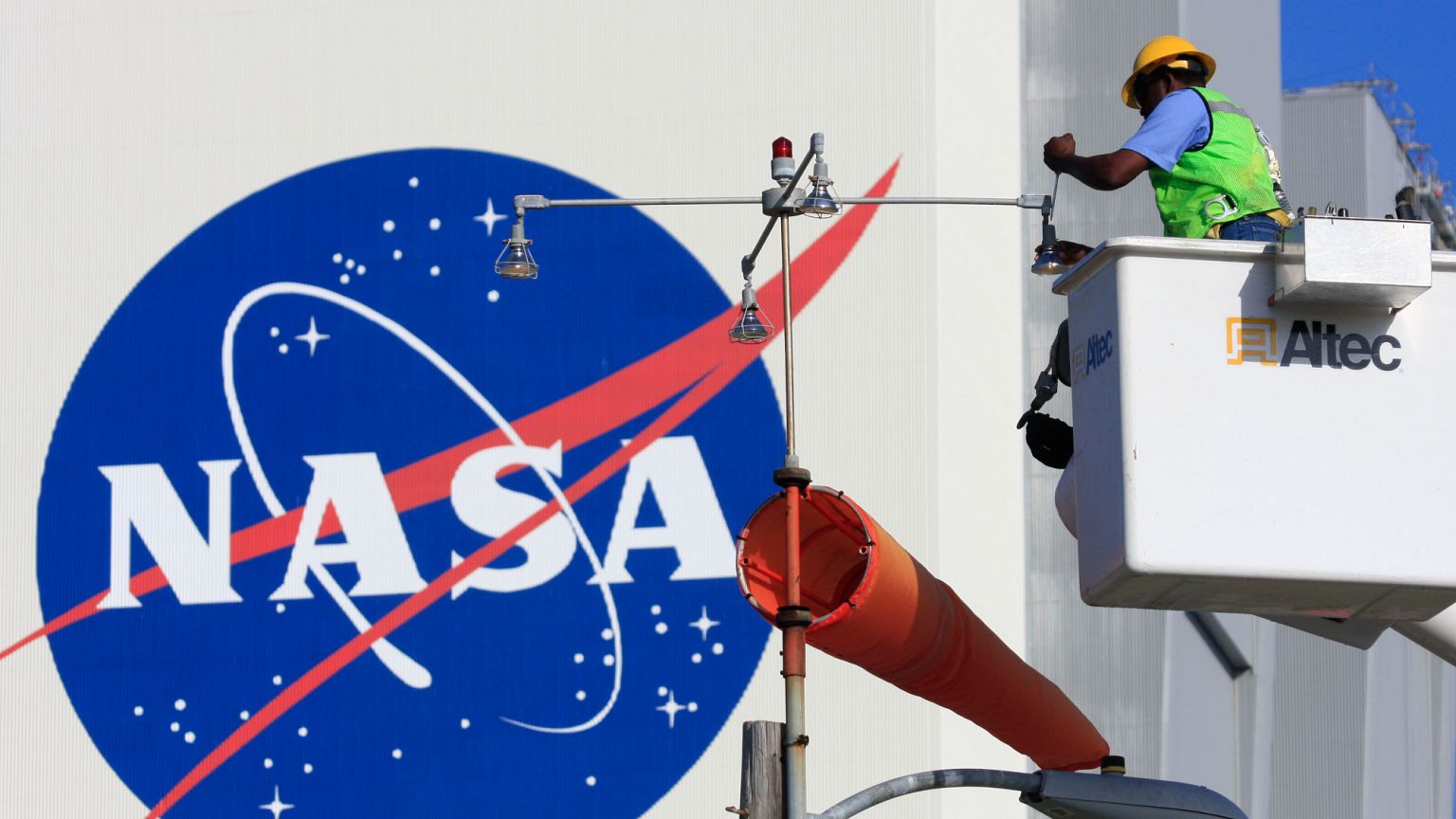
Trump withdrew the candidacy of Jared Isaacman, an associate of tech billionaire Elon Musk, to be the next head of the US space agency, NASA.
President Donald Trump is withdrawing the nomination of tech billionaire Jared Isaacman, an associate of Trump adviser Elon Musk, to lead the US' space agency NASA.
"After a thorough review of prior associations, I am hereby withdrawing the nomination of Jared Isaacman to head NASA," Trump wrote late on Saturday on his social media site, Truth Social.
"I will soon announce a new Nominee who will be Mission aligned, and put America First in Space".
The White House did not respond to a request from the Associated Press to clarify what that meant.
In response, Isaacman thanked Trump and the Senate, writing on X that the past six months were "enlightening and, honestly, a bit thrilling".
"It may not always be obvious through the discourse and turbulence, but there are many competent, dedicated people who love this country and care deeply about the mission," he said.
"That was on full display during my hearing, where leaders on both sides of the aisle made clear they’re willing to fight for the world’s most accomplished space agency".
Collaboration with Elon Musk
Trump announced in December during the presidential transition that he had chosen Isaacman to be the space agency's next administrator.
Isaacman, 42, has been a close collaborator with Musk ever since buying his first chartered flight on Musk's SpaceX company in 2021.
He is the CEO and founder of Shift4, a credit card processing company. He also bought a series of spaceflights from SpaceX and conducted the first private spacewalk.
Musk appeared to lament Trump's decision after the news broke earlier on Saturday, posting on X that, "It is rare to find someone so competent and good-hearted".
SpaceX is owned by Musk, a Trump campaign contributor and adviser who announced this week that he is leaving the government after several months at the helm of the Department of Government Efficiency, or DOGE.
Trump created the agency to slash the size of government and put Musk in charge.

No comments:
Post a Comment