IAEA NEVER CHECKS ON ISRAEL NUKES
Iran carried out a secret nuclear programme with undeclared material and has conducted covert experiments, the United Nations nuclear watchdog has stated in a confidential report to member states. In another report, IAEA said Tehran has now increased its stockpile of uranium enriched to near weapons-grade levels.
Issued on: 31/05/2025 -
By: FRANCE 24
While many of the findings relate to activities dating back decades and have been made before, the IAEA report’s conclusions were more definitive. It summarised developments in recent years and pointed more clearly towards co-ordinated, secret activities, some of which were relevant to producing nuclear weapons.
It also spelled out that Iran’s co-operation with IAEA continues to be “less than satisfactory” in “a number of respects”. The IAEA is still seeking explanations for uranium traces found years ago at two of four sites it has been investigating. Three hosted secret experiments, it found.
The IAEA has concluded that “these three locations, and other possible related locations, were part of an undeclared structured nuclear programme carried out by Iran until the early 2000s and that some activities used undeclared nuclear material”, the report said.
Nuclear material and/or heavily contaminated equipment from that programme was stored at the fourth site, Turquzabad, between 2009 and 2018, it said.
“The Agency concludes that Iran did not declare nuclear material and nuclear-related activities at three undeclared locations in Iran, specifically, Lavisan-Shian, Varamin, and Turquzabad,” the report said.
At Lavisan-Shian in Tehran, a disc made of uranium metal was “used in the production of explosively-driven neutron sources” at least twice in 2003, a process designed to initiate the explosion in a nuclear weapon, the report said, adding that it was part of “small-scale” tests.
The report is likely to lead to Iran being referred to the UN Security Council, though that would probably happen at a later IAEA board meeting, diplomats said.
More immediately, it is likely to lead to Iran again accelerating or expanding its rapidly advancing nuclear programme, as it has done after previous rebukes at the board. It could also further complicate talks with the United States aimed at reining in that programme.
Jump in Iran’s uranium enriched stockpile
A separate IAEA report sent to member states on Saturday said Iran’s stock of uranium enriched to up to 60 percent purity, close to the roughly 90 percent of weapons grade, had grown by roughly half to 408.6 kg. That is enough, if enriched further, for nine nuclear weapons, according to an IAEA yardstick.
Both IAEA reports said enrichment to such a high level was “of serious concern” since it is the only country to do so without producing nuclear weapons.
Israel, which has long urged strong action against Iran’s nuclear programme, said the IAEA report showed Tehran was determined to complete its nuclear weapons programme. Prime Minister Benjamin Netanyahu’s office said the world should act now to stop Iran from doing this.
Iran’s foreign ministry denounced the report as “political” and unbalanced.
“The structure and content of this report... which was prepared for political purposes... are not balanced and lack a comprehensive and accurate assessment of the factors affecting the current situation,” it said in a statement, accusing Israel of providing IAEA with the information.
“Relying on unreliable and misleading information sources provided by the Israeli regime ... is contrary to the IAEA’s principles of professional verification,” it said.
Separately on Saturday, Foreign Minister Abbas Araqchi said his Omani counterpart presented elements of a US proposal for a nuclear deal between Tehran and Washington during a short visit to Tehran.
In Washington, White House press secretary Karoline Leavitt said later on Saturday that President Donald Trump's special envoy Steve Witkoff "has sent a detailed and acceptable proposal to the Iranian regime, and it's in their best interest to accept it." She declined to provide further details.
Araqchi said in a post on X that Iran "will respond to the US proposal in line with the principles, national interests and rights of people of Iran".
His statement came ahead of an anticipated sixth round of talks between Washington and Tehran. The date and venue of talks have not yet been announced.
(FRANCE 24 with AFP, Reuters)

Iran carried out a secret nuclear programme with undeclared material and has conducted covert experiments, the United Nations nuclear watchdog has stated in a confidential report to member states. In another report, IAEA said Tehran has now increased its stockpile of uranium enriched to near weapons-grade levels.
Issued on: 31/05/2025 -
By: FRANCE 24
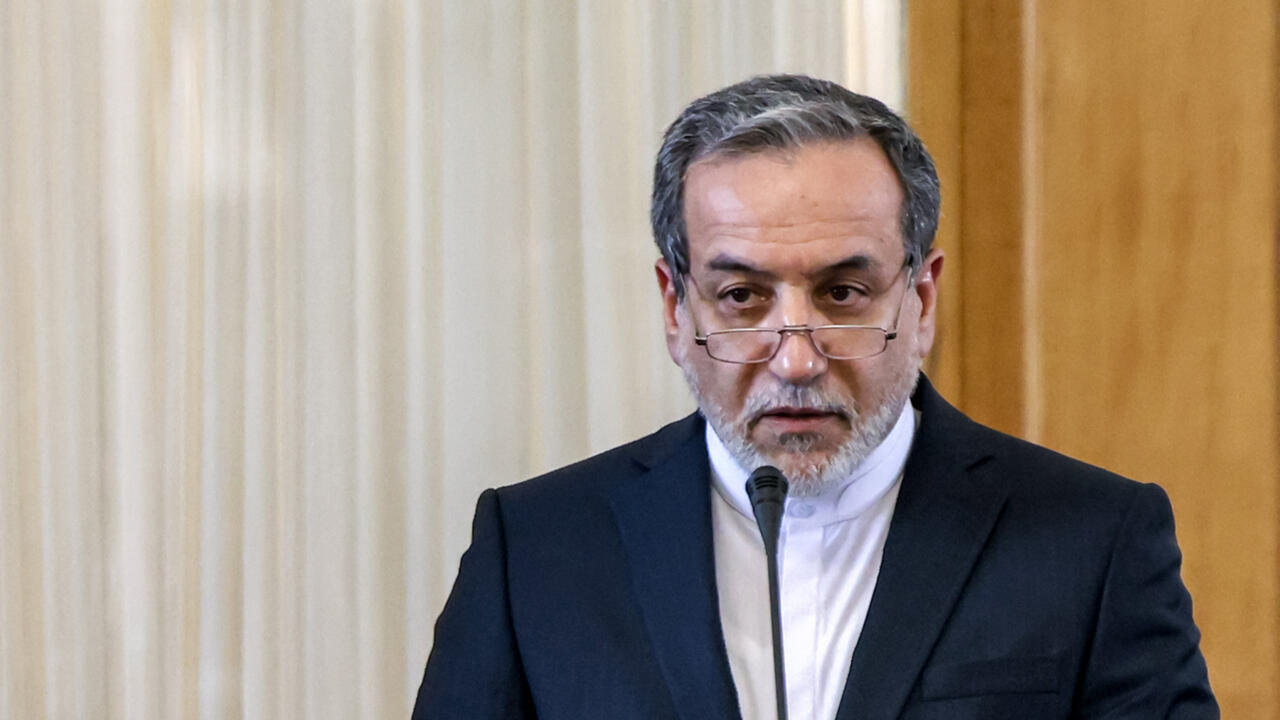
Iran’s top diplomat Abbas Araghchi in Tehran on February, 25, 2025.
© Atta Kenare, AFP/File picture
Iran carried out secret nuclear activities with material not declared to the UN nuclear watchdog at three locations that have long been under investigation, the watchdog said in a wide-ranging, confidential report to member states seen by Reuters.
The findings in the “comprehensive” International Atomic Energy Agency report requested by the agency’s 35-nation Board of Governors in November pave the way for a push by the United States, Britain, France and Germany for the board to declare Iran in violation of its non-proliferation obligations.
A resolution would infuriate Iran and could further complicate nuclear talks between Tehran and Washington.
Using the IAEA report’s findings, the four Western powers plan to submit a draft resolution for the board to adopt at its next meeting the week of June 9, diplomats say. It would be the first time in almost 20 years Iran has formally been found in non-compliance.
Tehran says it wants to master nuclear technology for peaceful purposes and has long denied accusations by Western powers that it is seeking to develop nuclear weapons.
Iran carried out secret nuclear activities with material not declared to the UN nuclear watchdog at three locations that have long been under investigation, the watchdog said in a wide-ranging, confidential report to member states seen by Reuters.
The findings in the “comprehensive” International Atomic Energy Agency report requested by the agency’s 35-nation Board of Governors in November pave the way for a push by the United States, Britain, France and Germany for the board to declare Iran in violation of its non-proliferation obligations.
A resolution would infuriate Iran and could further complicate nuclear talks between Tehran and Washington.
Using the IAEA report’s findings, the four Western powers plan to submit a draft resolution for the board to adopt at its next meeting the week of June 9, diplomats say. It would be the first time in almost 20 years Iran has formally been found in non-compliance.
Tehran says it wants to master nuclear technology for peaceful purposes and has long denied accusations by Western powers that it is seeking to develop nuclear weapons.
Conducted secret experiments
While many of the findings relate to activities dating back decades and have been made before, the IAEA report’s conclusions were more definitive. It summarised developments in recent years and pointed more clearly towards co-ordinated, secret activities, some of which were relevant to producing nuclear weapons.
It also spelled out that Iran’s co-operation with IAEA continues to be “less than satisfactory” in “a number of respects”. The IAEA is still seeking explanations for uranium traces found years ago at two of four sites it has been investigating. Three hosted secret experiments, it found.
The IAEA has concluded that “these three locations, and other possible related locations, were part of an undeclared structured nuclear programme carried out by Iran until the early 2000s and that some activities used undeclared nuclear material”, the report said.
Nuclear material and/or heavily contaminated equipment from that programme was stored at the fourth site, Turquzabad, between 2009 and 2018, it said.
“The Agency concludes that Iran did not declare nuclear material and nuclear-related activities at three undeclared locations in Iran, specifically, Lavisan-Shian, Varamin, and Turquzabad,” the report said.
At Lavisan-Shian in Tehran, a disc made of uranium metal was “used in the production of explosively-driven neutron sources” at least twice in 2003, a process designed to initiate the explosion in a nuclear weapon, the report said, adding that it was part of “small-scale” tests.
The report is likely to lead to Iran being referred to the UN Security Council, though that would probably happen at a later IAEA board meeting, diplomats said.
More immediately, it is likely to lead to Iran again accelerating or expanding its rapidly advancing nuclear programme, as it has done after previous rebukes at the board. It could also further complicate talks with the United States aimed at reining in that programme.
Jump in Iran’s uranium enriched stockpile
A separate IAEA report sent to member states on Saturday said Iran’s stock of uranium enriched to up to 60 percent purity, close to the roughly 90 percent of weapons grade, had grown by roughly half to 408.6 kg. That is enough, if enriched further, for nine nuclear weapons, according to an IAEA yardstick.
Both IAEA reports said enrichment to such a high level was “of serious concern” since it is the only country to do so without producing nuclear weapons.
Israel, which has long urged strong action against Iran’s nuclear programme, said the IAEA report showed Tehran was determined to complete its nuclear weapons programme. Prime Minister Benjamin Netanyahu’s office said the world should act now to stop Iran from doing this.
Iran’s foreign ministry denounced the report as “political” and unbalanced.
“The structure and content of this report... which was prepared for political purposes... are not balanced and lack a comprehensive and accurate assessment of the factors affecting the current situation,” it said in a statement, accusing Israel of providing IAEA with the information.
“Relying on unreliable and misleading information sources provided by the Israeli regime ... is contrary to the IAEA’s principles of professional verification,” it said.
Separately on Saturday, Foreign Minister Abbas Araqchi said his Omani counterpart presented elements of a US proposal for a nuclear deal between Tehran and Washington during a short visit to Tehran.
In Washington, White House press secretary Karoline Leavitt said later on Saturday that President Donald Trump's special envoy Steve Witkoff "has sent a detailed and acceptable proposal to the Iranian regime, and it's in their best interest to accept it." She declined to provide further details.
Araqchi said in a post on X that Iran "will respond to the US proposal in line with the principles, national interests and rights of people of Iran".
His statement came ahead of an anticipated sixth round of talks between Washington and Tehran. The date and venue of talks have not yet been announced.
(FRANCE 24 with AFP, Reuters)


No comments:
Post a Comment