Ukraine’s audacious Operation Spiderweb drone attack destroys nuclear bombers deep inside Russian territory
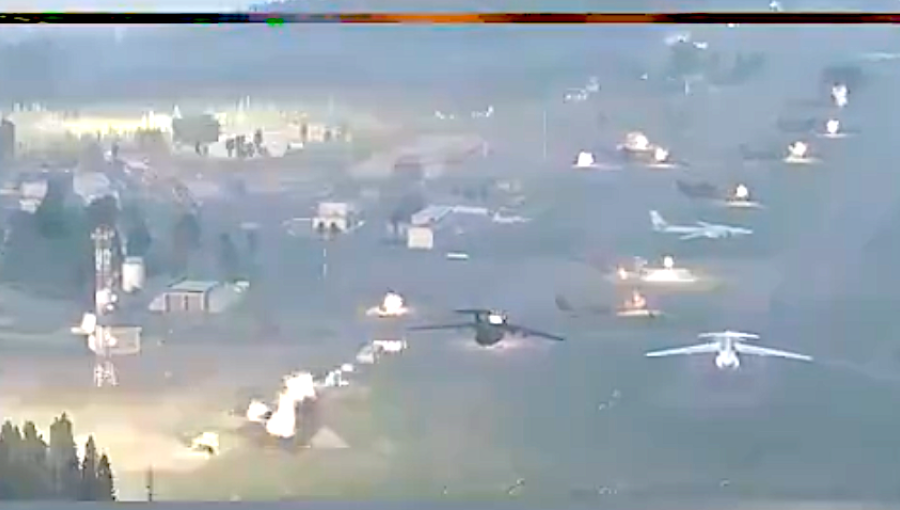
Operation Spiderweb unleashed a swarm of Ukrainian drones, launched from trucks, that destroyed a third of Russia’s nuclear-capable long-distance bombers, parked on the runway thousands of kilometres from the front line.
The surprise attack on the Belaya Air Base in the Irkutsk Oblast deep inside Russia’s Far East, near the border with Mongolia, destroyed 34% of Russia’s long-distance bombers, which sat defenceless on the tarmac as operators in Kyiv guided explosive drones down on top of them, targeting their fuel tanks in the wings. (video)
The surprise attack that destroyed some 40 aircraft caught Russian forces completely off guard. The airfield is located some 4,300 km away from the front line and is out of reach of even Ukraine’s longest-range drones.
“An absolutely brilliant result. A result achieved solely by Ukraine. One year, six months and nine days from the start of planning to effective execution. Our most long-range operation. Our people involved in preparing the operation were withdrawn from Russian territory in time. I thanked General Maliuk for this success of Ukraine. I instructed the Security Service of Ukraine to inform the public about the details and results of the operation that can be disclosed,” Ukrainian President Volodymyr Zelenskiy said in a social media post.
Other airfields were also targeted, including the Olenya Air Base in the Murmansk Oblast, Belaya Air Base in the Irkutsk Oblast, Ivanovo Air Base in the Ivanovo Oblast and Dyagilevo Air Base in the Ryazan Oblast. The Kremlin said a total of “five terrorist attacks” had been carried out but said they had been repelled.
Ukraine sent a reported six trucks into Russia, of which four reached their target, carrying a load of attack drones housed in wooden crates that were launched on reaching their destination to devastating effect.
Zelenskiy said the attack was organised by the Ukrainian Security Service (SBU) and had been 18 months in preparation.
“We spent over a year and a half preparing this operation. Our “office” in Russia was set up right next to a regional office of the Federal Security Service (FSB). 117 drones were used, striking 34% of Russia’s strategic cruise missile carriers at their airbases,” Zelenskiy said in a post on social media.
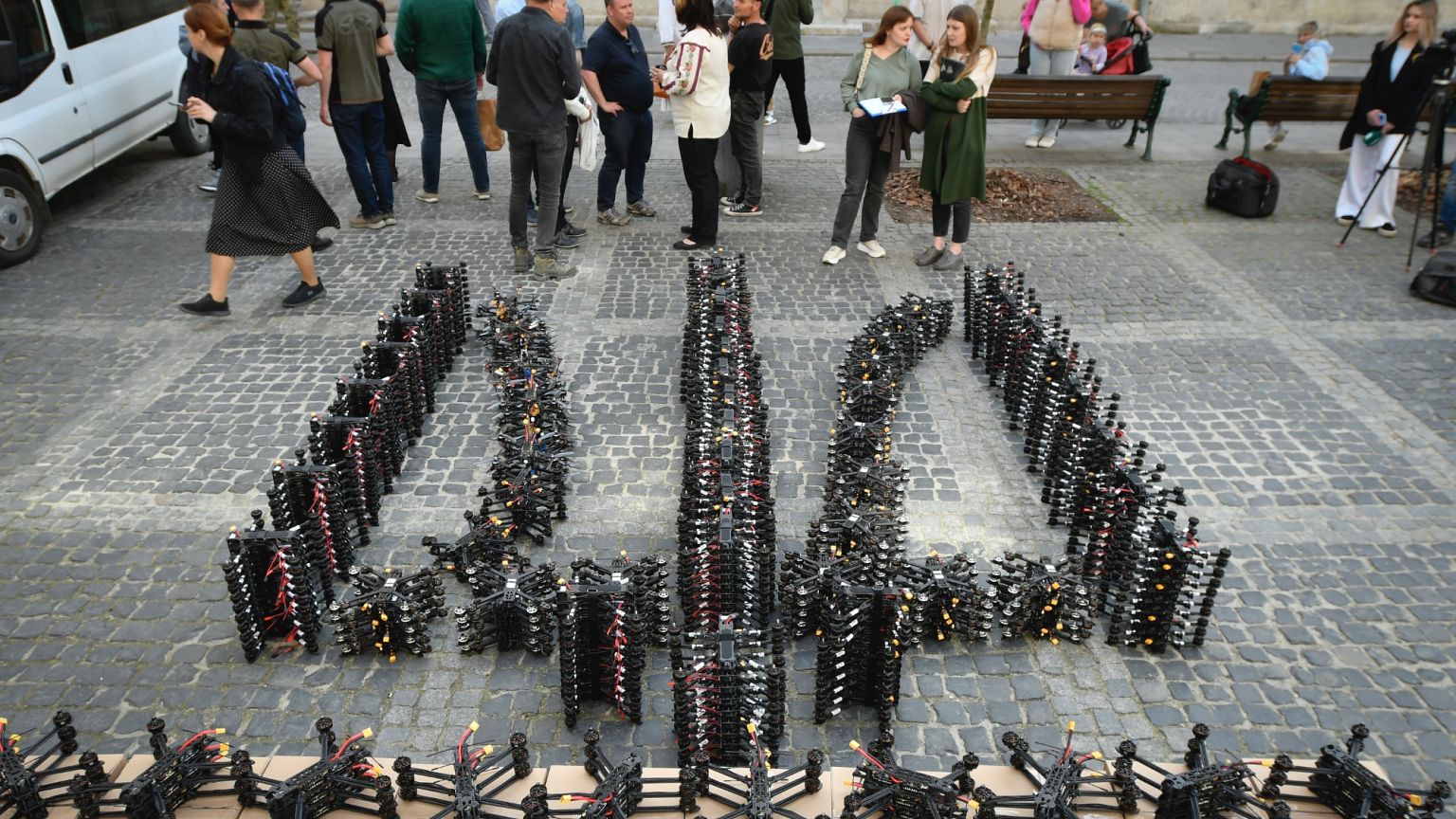
The FPV drones were smuggled into Russia well ahead of the attack, hidden under the roofs of mobile wooden cabins in half a dozen trucks. Once the trucks had arrived in the vicinity of the military bases, the cabin roofs were opened remotely, releasing the dozens of remotely operated drones that zoned in on the nearby bases.

Two of the trucks didn’t make it to their destination. Video footage released on social media shows what appear to be Russian officers desperately trying to stop the drones launching from the truck, when they were remotely detonated destroying the truck. Zelenskiy said briefly that the Ukrainians that smuggled the drones into Russia had all been “withdrawn in time”. It is not clear if the drivers of the trucks were aware of what they were carrying.
Amongst the bomber hit were Tu-22M3 Long-Range Strike Bombers, Tu-160 and Tu-95 strategic bombers that can be equipped to carry nuclear missiles. Russia has a total of 47 Tu-95 bombers, of which just over a third have been destroyed, significantly degrading the Kremlin’s nuclear strike capabilities. The total value of the damage to Russia is estimated at over $2bn and the planes will take years to replace.
New tactics
Ukrainian President Volodymyr Zelenskiy described the operation as "an absolutely brilliant result" and said the Ukrainians' actions will "undoubtedly be in the history books".
Ukraine has been switching tactics recently. As US military aid begins to dwindle and the Western allies argue over how support for Ukraine should continue, Zelenskiy has been increasingly taking the fight into Russia. In recent weeks Ukraine has launched large-scale drone attacks on Russian targets that have also hit buildings in Moscow.
bne IntelliNews staff in the Russian capital report that civilian air traffic has been disrupted by the threat of drone attacks on airports throughout the country, but especially in the southern and European parts of Russia.
However, the truck-launched drone attack is a potential game-changer, as the mobile launch platform erases the front line and puts all of Russia’s territory within range of Ukrainian attacks.
On the same day, two bridges collapsed in Bryansk, crushing a passenger train passing underneath and killing a reported half a dozen people. The cause of the collapse of the bridges remains uncertain, with some reports claiming it was a coincidence, with the Russian Ministry of the Interior initially blaming it on an attack by Ukrainian partisans operating inside Russia.
Another bridge collapse happened in the Kursk region. The incident occurred at the 48th kilometre of the Trosna-Kalinovka motorway in the Zheleznogorsk district, as a freight locomotive was crossing the bridge. There were no fatalities.
Bankova has yet to comment on the bridge collapse, but the SBU never comment on special operations carried out on Russian territory and no clarification is expected.
Istanbul talks
The strike came as a Russian delegation arrived in Istanbul for the next round of ceasefire talks. Ukraine has already produced a detailed list of 22 demands; however, the Kremlin has yet to release the details of its list of demands due to discussion on June 1.
'Operation Spiderweb’: How Ukraine destroyed over a third of Russian bombers
Ukraine has destroyed over a third of all Russian missile carriers in a coordinated drone attack on Sunday orchestrated from within Russian territory. How was "Operation Spiderweb" planned, and how was it executed?
Ukraine’s Security Service (SBU) reported on Sunday that over a third of all Russian missile carriers have been hit in a coordinated drone attack aimed at different airfields in Russia located thousands of kilometres apart.
More than 40 aircraft are known to have been hit, including the A-50, Tu-95, and Tu-22 M3, causing overall damage of more than €6 billion.
Ukrainian President Volodymyr Zelenskyy said "Operation Spiderweb" had made "an absolutely brilliant result" which was "achieved solely by Ukraine."
The Ukrainian president also shared more details on how the operation was carried out, explaining that 117 drones had been used, each with its own pilot.
"The most interesting thing — and we can already say this publicly — is that the 'office' of our operation on Russian territory was located right next to the FSB (Federal Security Service) of Russia, in one of their regions,” he said in a post on Telegram.
In a major blow to Russia’s security services, Zelenskyy said Ukraine managed not only to execute the operation but also to safely withdraw the people involved. They were operating "in different Russian regions — in three time zones."
“Our most long-range operation. Our people involved in preparing the operation were withdrawn from Russian territory in time," he explained.
Zelenskyy said it took Kyiv "one year, six months, and nine days from the start of planning to effective execution."
He thanked the head of Ukraine’s Security Service, General Vasyl Malyuk, and asked him to reveal the details and results of the operation to the public.
"Of course, not everything can be revealed at this moment, but these are Ukrainian actions that will undoubtedly be in history books," he added.
"Ukraine is defending itself, and rightly so — we are doing everything to make Russia feel the need to end this war. Russia started this war, Russia must end it," Zelenskyy wrote.
What we know so far about Operation Spiderweb
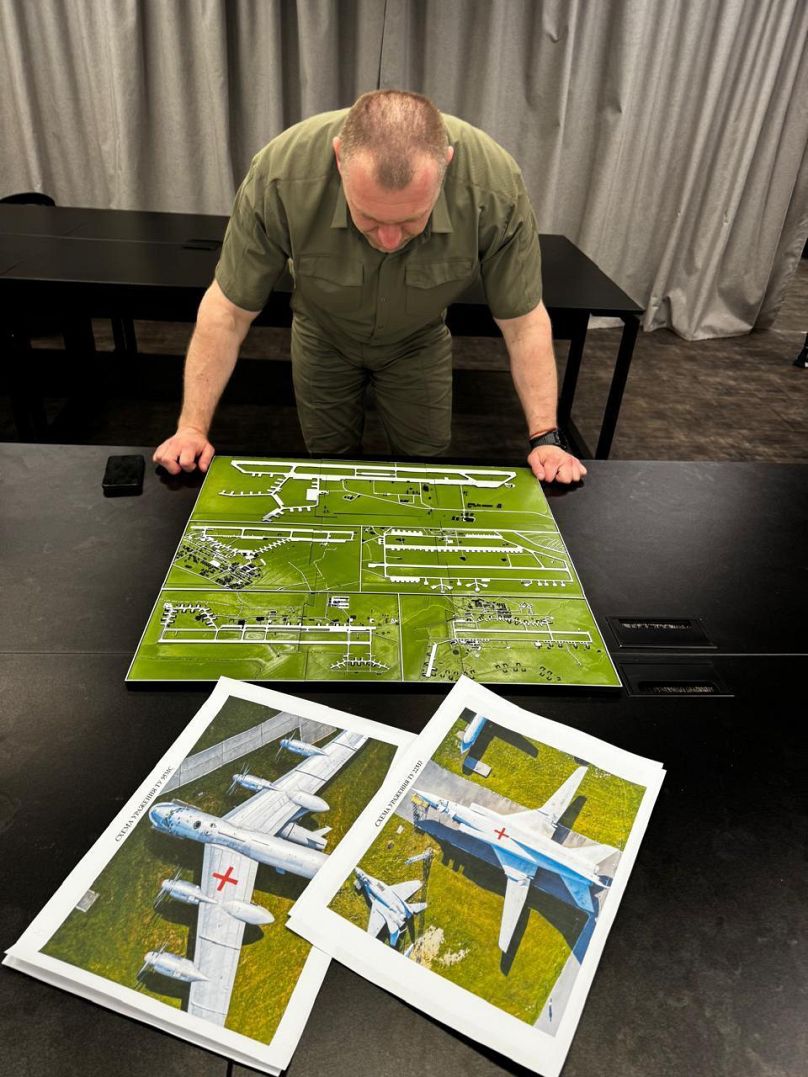
Although Ukraine’s security service has not revealed more details at this stage, Ukrainian outlets are reporting exactly how the operation was executed, referencing SBU sources.
According to these reports, first-person-view (FPV) drones were smuggled deep inside Russia and hidden inside trucks in mobile log cabins.
The cabins' roofs were then opened remotely, and the drones proceeded to launch their attack on Russian military bombers.
Russia’s Irkutsk Governor Igor Kobzev confirmed that the drones that attacked a military base in Siberia's Sredniy were launched from inside a truck. In a post on Telegram, he said that the launch site had been secured and there was no further threat to people's lives.
Russian outlets also reported that other attacks were launched in a similar manner, with drones emerging from the backs of trucks.
Social media footage widely shared by Russian media appears to show the drones rising from inside containers, while the panels lie discarded on the road. One clip appeared to show men climbing onto a truck in an attempt to intercept the drones.
SBU operations
"Operation Spiderweb" is not the first unconventional operation to be carried out by Ukraine’s Security Service.
In October 2022, the SBU struck the Kerch bridge, which had been illegally built by Russia after its annexation of Crimea in 2014.
The explosion, which Russian authorities said was caused by a truck bomb, badly damaged the bridge which links Moscow-occupied Crimea and Russia.
The targeting of Russian bombers, which have been carrying out massive missile attacks on Ukrainian cities, was previously considered almost unthinkable. Moscow had made sure to keep them well out of the range of Kyiv’s weapons, both homemade and those supplied by allies.
Olenya air base is located in Russia's Murmansk region, around 2,000 km from the border with Ukraine. Belaya air base is in Russia's Irkutsk region, in south-eastern Siberia and over 4,000 km east of the frontline. These two airfields were among the hardest hit during Sunday's operation.
Another notable aspect of the "Operation Spiderweb" was the choice of weapons. Kyiv used FPV drones, which are produced in Ukraine en masse and are widely used and appreciated by the military due to their affordability.
FPV drones typically cost only a few hundred euros, while a Russian A50 radar detection aircraft, which was reportedly hit today along with other planes, costs over €300 million.
Ukraine’s presidential advisor and former minister of strategic industries Oleksandr Kamyshin has said Ukrainian manufacturers have the capacity to produce over 5 million FPV drones per year.

No comments:
Post a Comment