Geneva Trade Talk Effect: Constructivist Move Between US And China Towards Reciprocal Economic Consensus And Recession Mitigation Over Tariff War – Analysis
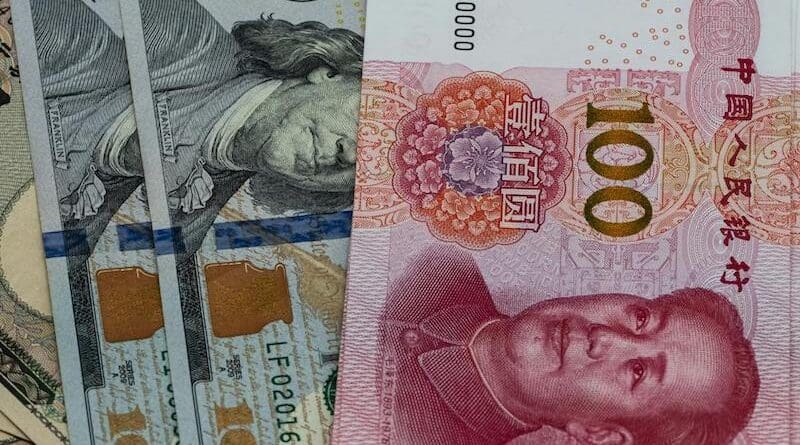
Sometime around May, there was a trade talk of US and China to ease tariff, including the talk in Geneva, Switzerland. The United States and China, acknowledged the significance of their economic and trade ties not just for their own national interests but also for the broader global economy have agreed to collaborate to ensure a stable, sustainable, and mutually advantageous economic partnership.
Both parties have reflected on recent negotiations and share the view that sustained dialogue could address each side’s economic and trade concerns. They affirmed their intent to proceed with openness, cooperation, and respect.
Both countries agreed to roll back punitive tariffs for 90 days and reinitiate structured economic dialogue. While markets rallied, underlying tensions particularly over trade deficits, industrial policy, and fentanyl —remain unresolved. For ASEAN and the Philippines, the agreement offers a window of opportunity amid continued strategic competition.
The recent high-level U.S.-China talks in Geneva marked the first major diplomatic engagement since Donald Trump’s return to the U.S. presidency. The two nations agreed to temporarily reduce tariffs – the U.S. cutting its tariff from 145% to 30% and China reducing its tariffs from 125% to 10% for a 90-day period (see Figure below), easing a trade war that had halted nearly $600 billion in bilateral trade, disrupted global supply chains, and contributed to stagflation fears.
Moreover, within the Trump administration, the truce was seen as a win for Scott Bessent, a former hedge fund executive who had pushed for the initial 90-day suspension of global reciprocal tariffs to create space for dialogue. “Both delegations agreed this weekend that neither side is seeking decoupling,” Bessent stated following the Geneva talks. “We’re aiming for more balanced trade, and I believe both parties are committed to that goal.” Bessent noted that while the next round of talks had not yet been scheduled, both sides were prepared to continue negotiations.
Last May 14, 2025, each country had started implementing the following initial measures:
The United States:
1. Temporarily suspend 24% of the additional import duties on Chinese products (including from Hong Kong and Macau), as imposed by Executive Order 14257, for a 90-day period, retaining a 10% tariff.
2. Fully remove additional tariffs outlined in Executive Orders 14259 and 14266.
China:
1. Similarly, suspend 24% of the additional tariffs on American products under Announcement No. 4 for 90 days, keeping a 10% tariff in place.
2. Remove other duties imposed under Announcements No. 5 and No. 6.
3. Lift non-tariff countermeasures enacted since April 2, 2025.
- China has agreed to relax certain non-tariff trade barriers, which may include the resumption of rare earth exports to the United States. These critical materials are essential for high-tech industries, such as the production of semiconductors and electric vehicle batteries.
- Chinese exporters have been significantly impacted by U.S. tariffs. For instance, Sorbo Technology reported that about 50% of its products—usually shipped to the U.S.—are now left idle in warehouses due to the trade restrictions.
Simultaneously, the U.S. economy experienced a 0.3% contraction in the first quarter of the year, partly driven by businesses accelerating imports to beat tariff increases.
Alongside the tariff cuts, China also agreed to withdraw export restrictions imposed after April 2, including limits on rare earth minerals and magnets critical components in high-tech industries, according to U.S. Trade Representative Jamieson Greer.
This easing of tensions was welcomed by financial markets, which had been rattled by a trade conflict that froze nearly $600 billion in bilateral commerce, severely disrupted global supply chains, and led to job losses.
Analysis
1. Regional Trade and Economic Impact
- The de-escalation of US-China trade tensions will likely have a stabilizing effect on global supply chains, including those routed through ASEAN.
- ASEAN countries, especially trade-dependent ones like Vietnam, Malaysia, and the Philippines, may see improved export demand and investor confidence i.e.Philippine’s stake in missile and vessels procurement.
- For the Philippines, which has significant economic relations with both powers, this can reduce economic uncertainty and encourage investment, particularly in manufacturing, semiconductors, and logistics sectors. This is also a strategic breathing room for the Philippines. In other words, the truce may give the Philippine government space to maneuver diplomatically, allowing it to balance its defense alliance with the U.S. and economic ties with Chinawithout escalating tensions on either front. It can also refocus on internal defense modernization and maritime security without the immediate threat of a U.S.-China economic or military clash.
- Note that while the tariff truce is a temporary stability, not strategic reconciliation. This is a positive short-term development yet it does not address the long-term strategic rivalry between the U.S. and China. The Geneva agreement appears transactional, aimed more at economic optics and political signaling than genuine reconciliation.
- For ASEAN and the Philippines, this means that underlying regional tensions—especially in the South China Sea—remain unchanged, despite economic cooperation.
2. Strategic Autonomy and Non-Alignment
- A more cooperative US-China relationship reduces pressure on ASEAN countries to choose sides, reinforcing ASEAN’s preference for strategic neutrality.
- The Philippines, under mounting pressure to balance ties with the US (a treaty ally) and China (a major economic partner), can use this period of reduced tension to recalibrate its foreign policy, avoiding entanglement while advancing national interests.
- With trade tensions easing, ASEAN economies may benefit from:
- Improved investor sentiment in the region
- Stabilized export markets, especially for countries like Vietnam, Thailand, and Malaysia
- Opportunities for supply chain reintegration as companies reevaluate near-shoring and diversification strategies
- The Philippines could attract investment in logistics, electronics, and manufacturing, particularly if it positions itself as a neutral, low-risk alternative in the regional value chain.
3. Defense and Security Calculations
- While the agreement focuses on economics, it sends a diplomatic signal that both powers are willing to engage—potentially dampening aggressive posturing, including in contested areas like the South China Sea.
- A more cooperative economic front may lower immediate risks of escalation, allowing the Philippines to focus on internal defense modernization, capacity-building, and alliance management without the urgency of a looming confrontation.
- However, this temporary trade détente must not be mistaken for strategic convergence. The underlying military rivalry remains, and the Philippines should continue strengthening its defense ties with allies (like the US and Japan) while bolstering its own self-reliance.
- Meanwhile, despite economic talks, strategic distrust remains high. The South China Sea remains a flashpoint, and China’s military activities have not abated. For the Philippines:
- Defense preparedness must continue, especially in maritime surveillance and joint training with allies.
- This window of reduced tension should be used to deepen interoperability with partners like the U.S., Japan, and Australia.
4. On Defense/Military Procurement and Logistics
- The easing of US-China trade frictions may reduce the cost of military logistics and equipment, especially for dual-use technologies and supply chains that involve components from both countries.
- If stability persists, defense planning in the Philippines may shift from crisis response to long-term capability development, such as maritime domain awareness and joint interoperability.
5. On rare earth minerals
China’s decision to lift export controls on rare earth elements and magnets signals a major concession. These materials are essential for advanced manufacturing including defense, semiconductors, and clean energy. Their release:
- Reduces short-term pressure on global high-tech supply chains
- Undercuts fears of China weaponizing resource control
- Signals China’s willingness to ease tensions without appearing weak
For ASEAN and the Philippines, this opens up:
- Increased production opportunities in electronics and intermediate goods
- Potential to build regional rare earth processing or substitution capabilitiesin the medium term
Implications and Some Recommendations
1. The recent Geneva talks underscore how bilateral deals between major powers can sideline multilateral platforms like ASEAN. This could undermine ASEAN centrality. Also, it can expose internal divisions within ASEAN regarding how to engage with China and the U.S.
The Philippines must therefore promote regional consensus-building while advancing its national interests.
2. The Geneva trade truce between the U.S. and China offers short-term economic relief and market optimism, but it does not resolve the structural causes of geopolitical competition. For ASEAN and the Philippines, this is a moment of opportunity—but also caution. Strategic ambiguity remains, and economic cooperation should not be mistaken for long-term peace.
The Philippines should leverage this reprieve to:
- Strengthen economic resilience
- Advance defense modernization
- Deepen regional and global partnerships
3. While tariffs on many countries were paused recently, China remained the key target. U.S. tariffs on Chinese imports, layered over pre-existing duties from both the Trump and Biden administrations, remain high despite a recent Geneva agreement that reduced some tariffs temporarily (from 145% to 30% for the U.S. and 125% to 10% for China).
The deal does not include e-commerce exemptions, nor does it address previous or Biden-era tariffs on key goods like electric vehicles (100%) and solar panels (50%). Markets reacted positively to the deeper-than-expected tariff cuts, although businesses remain cautious due to the unpredictability of Trump’s tariff policy. Industry voices highlight a lack of consistency, calling the situation “fluid” and destabilizing for trade planning.
4. Trump’s on-and-off tariff strategy introduces economic ambiguity, keeping adversaries and trade partners off balance. However, this tactic undermines business confidence, complicates logistics, and disrupts global supply chains. The Philippines and ASEAN must account for this unpredictability in their trade and investment planning.
5. Despite the tariff cuts being deeper than expected, the lingering presence of earlier tariffs especially on high-tech goods; signals that structural decoupling is still underway, not reversed. This means:
- Multinational corporations will continue to diversify away from China, benefitting Southeast Asian manufacturing hubs.
- The Philippines may gain short-term export and transshipment advantages, especially in consumer electronics and components.
6. There would be a persistent risk to ASEAN and Philippine consumer goods. The removal of “de minimis” exemptions and high duties on consumer goods may increase retail prices in the U.S., affecting global demand for imported goods. ASEAN producers, including the Philippines, should expect:
- Possible demand softening for low-cost consumer exports
- E-commerce headwinds, particularly for small and medium enterprises relying on U.S. buyers
7. The framing of China as both a trade rival and a source of illicit fentanyl imports amplifies the bilateral tensions. The Geneva accord may cool economic hostilities but does not reflect a strategic thaw. Southeast Asia, particularly the Philippines, will remain in the crosshairs of U.S.-China geopolitical maneuvering.
8. This truce affects ASEAN supply chain realignment which means the unpredictability of U.S. trade policy under Trump could:
- Encourage “China+1” strategies, with ASEAN countries absorbing diverted supply chains
- Create a “tariff shelter effect”, where the Philippines benefits from relocated production or value-added logistics
9. In context:
- Trade Diplomacy: Engage proactively in bilateral and multilateral trade dialogues to attract firms seeking tariff-safe production bases.
- Customs Modernization: Enhance port and customs efficiency to absorb redirected trade volumes.
- SME Protection: Mitigate risks from reduced U.S. e-commerce demand through regional digital trade integration.
- Defense and Strategic Alignment: Prepare for continued U.S.-China competition; do not interpret economic talks as de-escalation in broader geopolitical terms.
From here, the Philippines should accelerate trade diversificationand reduce dependence on single markets and push for regional economic frameworks like RCEP and Indo-Pacific Economic Framework become even more critical. This is because despite the positive headlines, the underlying vulnerabilities remain. The $600 billion disruption highlights: Systemic fragility in U.S.-China economic interdependence; and Persistent geopolitical risk that may re-emerge with minimal warning.
Conclusion and Way Ahead
The Geneva trade truce is a partial reprieve, not a pivot. For the Philippines, the moment offers both opportunity and caution. Economic openings must be balanced with strategic vigilance, as the U.S.-China rivalry continues to define the Indo-Pacific’s economic and security architecture.
This US-China economic truce, if sustained, could usher in a period of relative calm in the Indo-Pacific. For ASEAN and particularly the Philippines, it presents an opportunity to enhance economic resilience, pursue defense reforms, and recalibrate strategic posture in a more flexible environment.
However, the structural rivalry between Washington and Beijing is far from over. Strategic vigilance remains essential. The Philippines should view this truce not as a resolution, but as a window to strengthen its economic and defense foundations before tensions inevitably rise again.
We can forecast that U.S. tariffs on Chinese goods may eventually stabilize between 30% and 40%. Nevertheless, even with a preliminary U.S.-China agreement, American consumers currently face an average effective tariff burden of 17.8%, the highest level since 1934. Hence, the Philippine defense and foreign relations has to re-examine its partners on acquisition affected by economic overhauling.
*Ideas and/or views expressed here are entirely independent and not in any form represent author’s organization and affiliation.

Jumel Gabilan Estrañero
Jumel Gabilan Estrañero is a defense, security, & political analyst and a university lecturer in the Philippines. He has completed the Executive Course in National Security at the National Defense College of the Philippines and has participated in NADI Track II discussions in Singapore (an ASEAN-led security forum on terrorism). His articles have appeared in Global Security Review, Geopolitical Monitor, Global Village Space, Philippine Daily Inquirer, Philippine Star, Manila Times, Malaya Business Insights, Asia Maritime Review, The Nation (Thailand), Southeast Asian Times, and Global Politics and Social Science Research Network. He worked in the Armed Forces of the Philippines, Office of Civil Defense, National Security Council-Office of the President, and currently in the Department of the National Defense. He is currently teaching lectures in De La Salle University Philippines while in the government and formerly taught at Lyceum of the Philippines as part-time lecturer. He is the co-author of the books titled: Disruptive Innovations, Transnational Organized Crime and Terrorism: A Philippine Terrorism Handbook, and Global Security Studies Journal (Springer Link, United States). He is an alumnus of ASEAN Law Academy Advanced Program in Center for International Law, National University Singapore and Geneva Centre for Security Policy, Switzerland. He is also a Juris Doctor student.

No comments:
Post a Comment