Nickel price spikes after Indonesia’s president approves export tax
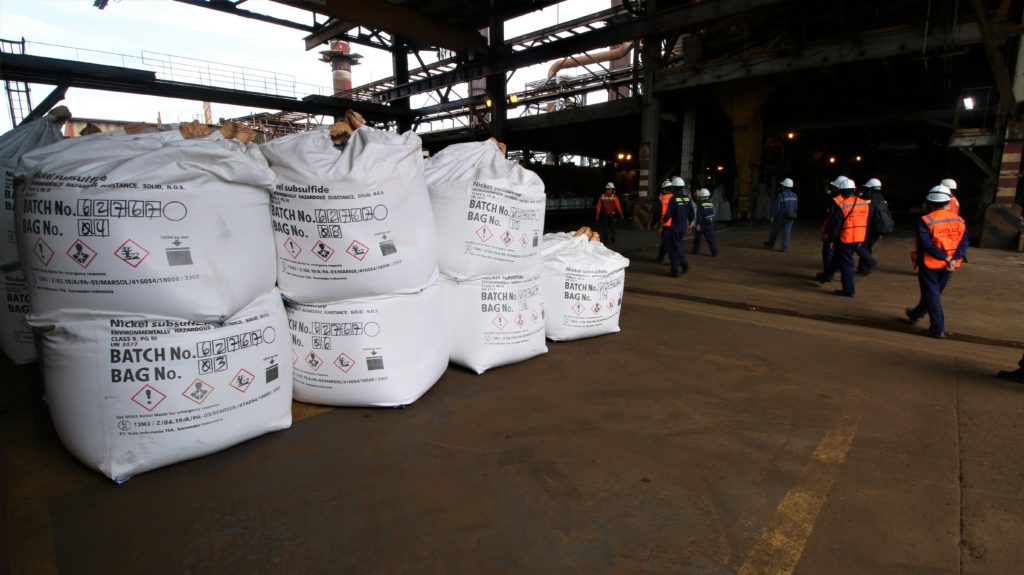
Nickel prices jumped after the world’s largest producer Indonesia agreed to tax outbound shipments of the battery metal.

Futures climbed as much as 2.7% on the London Metal Exchange after Finance Minister Purbaya Yudhi Sadewa said President Prabowo Subianto had approved tariffs for coal and nickel exports on Wednesday. Discussions were still underway on specific tax rates, according to the minister.
The resource-rich Southeast Asian country has been mulling a windfall tax on commodities as it faces rising budgetary strain from higher oil prices due to the Iran war. As a net crude and fuels importer, Indonesia is also vulnerable to potential inflationary and growth pressures from the conflict’s disruptions to energy flows.
The country has long held ambitions to move up the resource value chain by stopping all exports of raw materials and pushing companies to invest in metals processing. Talks of taxing nickel exports specifically can be traced back to a 2022 consideration by then-President Joko Widodo, who wanted to attract investment from battery and EV makers using the metal.
Indonesia now accounts for more than half the world’s nickel production and the metal is one of the country’s top export earners. Much of the industry’s growth was driven by Chinese investment.
Investors are more likely to believe in the plan now, given Indonesia’s fiscal difficulties, said Gao Yin, an analyst with Shuohe Asset Management Co. Higher taxes are going to boost cost of production and prices of nickel, she said.
Indonesia may relax nickel and coal quotas if prices stay high, minister says
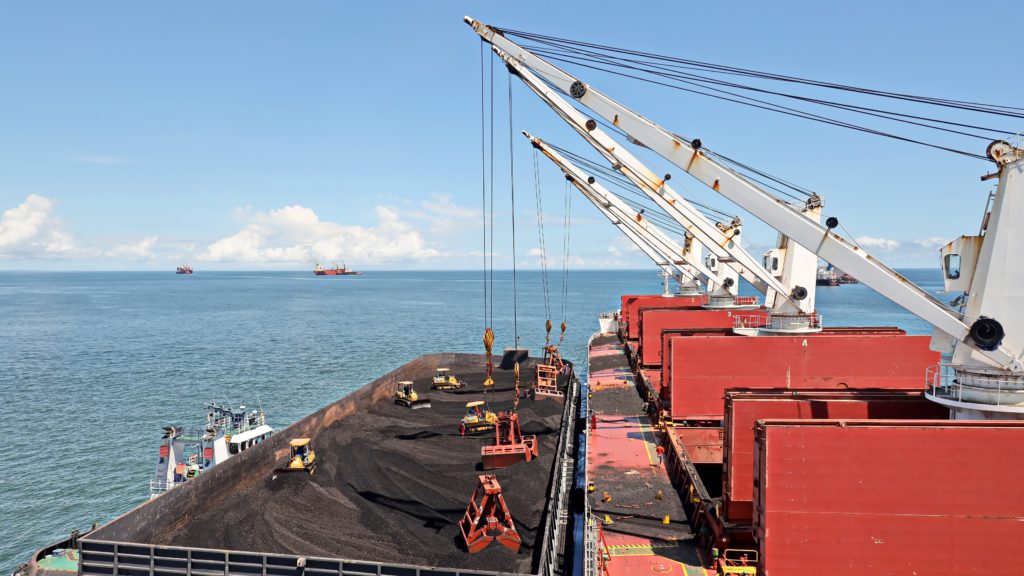
Indonesia, a major producer of thermal coal and nickel, may relax production quotas for both commodities if prices remain high, its energy minister said.
“If the prices remain stable, good, we may do what we call a measured relaxation on production plans,” Bahlil Lahadalia said in a statement late on Wednesday after a meeting with President Prabowo Subianto. “Everything is still being coordinated with the market and the supply and demand, too.”
Indonesia is the world’s top exporter of thermal coal and nickel products.
It has announced plans to cut mining output quotas for many of its minerals to help support prices this year. Indonesia also said it would cut its coal production quota to 600 million metric tons, from about 790 million tons produced last year.
The nickel ore production quota, known as RKAB, has been set at 260 million to 270 million tons, the energy ministry has said, lower than the demand of around 340 million to 350 million tons, as estimated by Indonesia’s nickel smelter association FINI.
FINI chairman Arif Perdana Kusumah said on Thursday the association welcomed the relaxation plans, though there were no changes yet on production quotas following Bahlil’s statement.
RKAB is subject to revision. All miners in mineral-rich Indonesia are required to submit their annual production plans to the mining ministry for government final approval.
(By Ananda Teresia, Fransiska Nangoy, Bernadette Christina and Stanley Widianto; Editing by Rashmi Aich and Martin Petty)
Indonesia’s Agincourt says it can resume operations after government lifts sanctions
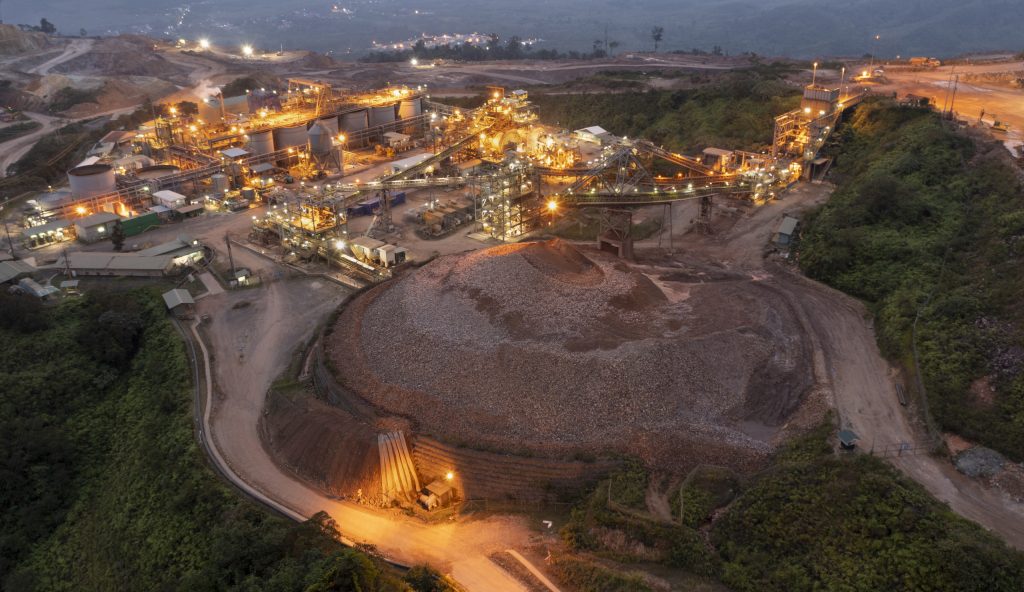
Indonesian gold miner Agincourt Resources said on Thursday that it has been given the go-ahead from the environmental ministry to resume operations at its Martabe gold mine, which was sanctioned after accusations of environmental breaches.
Agincourt was among the 28 firms whose permits were revoked by the government following claims they were responsible for environmental damage that worsened last year’s floods in Sumatra, which killed at least 1,200 people.
Agincourt is part of conglomerate Astra International. Astra’s majority shareholder is Jardine Matheson.
“The company welcomed the environmental ministry’s decision related to the approval to continue operations at the Martabe gold mine,” said Katarina Siburian, Agincourt’s spokesperson.
The company is making necessary preparations and will comply with all requirements, and is committed to environmental protection and safety standards, Katarina said, adding that operations have not yet resumed.
Mining operations at Martabe had been suspended since December last year.
Officials from Indonesia’s environment and energy ministries did not immediately respond to requests for comment.
Deputy energy minister Yuliot Tanjung was quoted on Wednesday by news website Bloomberg Technoz as saying that the permit had been restored, adding that the ministry was still evaluating the company’s mining quota.
Another company sanctioned by the government, PT North Sumatra Hydro Energy (NSHE), has also been given permission by the government to resume operations, energy ministry official Eniya Listiani told Reuters on Thursday.
The company is controlled by China’s state-run SDIC Power Holdings Co. Ltd.
Commercial operations at the hydropower plant operated by NSHE are expected to start in October, Eniya said.
The hydropower project, worth over $1.6 billion, has long been on the radar of environmental activists, with many calling for it to be stopped because of the ecological destruction it has wrought on the biodiverse island.
(By Bernadette Christina and Stanley Widianto; Editing by David Stanway)

No comments:
Post a Comment