
German health minister announces billions in cutbacks
$$$ FOR DEFENSE NOT HEALTHCARE
DW April 14, 2026
The comprehensive reform package aims to plug a multibillion-euro hole in Germany's expensive health care system. Reforms include mandatory second opinions for costly surgeries and no more coverage for homeopathy.
 Health insurance contributions by Germans who pay into the public health insurance system rose by an average of 3% in 2026
The comprehensive reform package aims to plug a multibillion-euro hole in Germany's expensive health care system. Reforms include mandatory second opinions for costly surgeries and no more coverage for homeopathy.

Image: Ina Fassbender/AFP/Getty Images
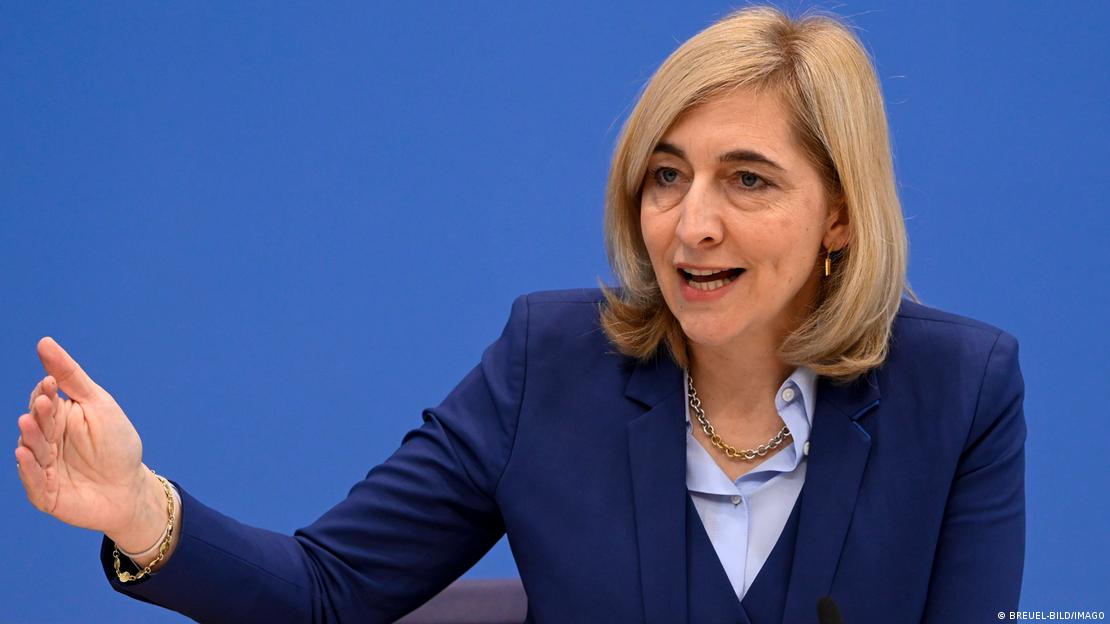
German Health Minister Nina Warken, of the ruling conservative Christian Democrats (CDU), has outlined key features of the government's planned reforms for ailing health care system.
Warken's draft legislation, on track to be passed this summer, aims to prevent further increases to the health insurance contributions. "We simply cannot spend more than we take in," Warken said at a press conference in Berlin on Tuesday.
German Health Minister Nina Warken, of the ruling conservative Christian Democrats (CDU), has outlined key features of the government's planned reforms for ailing health care system.
Warken's draft legislation, on track to be passed this summer, aims to prevent further increases to the health insurance contributions. "We simply cannot spend more than we take in," Warken said at a press conference in Berlin on Tuesday.
Health Minister Nina Warken wants to prevent increases to public health insurance contributions
Image: BREUEL-BILD/IMAGO
Health insurance in Germany is mandatory, with 90% of the population paying into the income-dependent public insurance (Gesetzliche Krankenversicherung, or GKV). Contributions are roughly 14.5% of income shared evenly between employer and employee, plus a small additional premium depending on the provider.
Health insurance contributions by Germans who pay into the public health insurance system rose by an average of 3% this year, on top of a 2.5% rise in 2025. Meanwhile, public insurers' expenditures are increasing even more rapidly.
Without the cost-saving measures, Germany's public health insurance funds face a budget shortfall of over €15 billion ($17.7 billion) by 2027.
Health insurance in Germany is mandatory, with 90% of the population paying into the income-dependent public insurance (Gesetzliche Krankenversicherung, or GKV). Contributions are roughly 14.5% of income shared evenly between employer and employee, plus a small additional premium depending on the provider.
Health insurance contributions by Germans who pay into the public health insurance system rose by an average of 3% this year, on top of a 2.5% rise in 2025. Meanwhile, public insurers' expenditures are increasing even more rapidly.
Without the cost-saving measures, Germany's public health insurance funds face a budget shortfall of over €15 billion ($17.7 billion) by 2027.
Germany has one of the world's most expensive health care systems. In March, a commission of experts presented a list of 66 cost-saving proposals to help curb spiraling costs. Warken has now announced which of these will be implemented. The measures include: Patients will have to pay between €7.50 and €15 (up to $18) for prescriptions, up from the current €5 to €10.Mandatory second opinions to approve expensive hip or knee surgery from doctors who do not benefit financially from the procedures.From 2028, spouses without their own source of income who are currently insured free of charge will have pay a flat rate of 3.5% of their spouse's income. This will be lower for low and middle-income earners and includes exemptions for those caring for children under the age of 7, parents of children with disabilities, caregivers and pensioners.Homeopathy will no longer be covered by health insurance.Increased mandatory discounts for public health insurance funds from the pharmaceutical industry.New limits on fees for health insurance executives, as well as their administrative and advertising costs.Extra-budgetary payments for family doctors for services such as walk-in consultation hours and referred patients will be eliminated.
The environmentalist Greens have criticized the plans, calling them "a real disappointment."
"Minister Warken is disproportionately shifting the burden of stabilization onto employees and employers — while she doesn't dare to confront influential lobbies on the expenditure side," Janosch Dahmen, the Green Party health policy spokesperson, told German news weekly Der Spiegel on Wednesday.
Oliver Blatt, the chairman of the National Association of Statutory Health Insurance Funds (GKV-Spitzenverband), said in a statement that he "expressly welcomed" the health minister's announcement that revenue will serve as a benchmark for health insurers' expenditures.
"The statutory health insurance funds currently spend over €1 billion per day on the care of the 75 million citizens insured under the statutory health insurance scheme. That is a lot of money, and it has to be enough. However, in the last year alone, hospital expenditures rose by almost 10%. for doctors by almost 8% and expenditures for medications by around 6%," the statement said.
The reform package does not include the commission's one recommendation with the greatest potential for savings, namely for the health insurance costs for welfare recipients to be paid out of state coffers. The commission estimated this could save the insurers €12.5 billion in 2027 alone.
Warken appears to have bowed to pressure from Finance Minister Lars Klingbeil, of the center-left Social Democrats, who threatened to veto such a move.
The proposals will now become a draft law, which is scheduled to be passed by the cabinet at the end of April. A vote is expected in the Bundestag and the Bundesrat — the legislative body representing Germany's 16 federal states — before the summer recess.
Edited by: Rina Goldenberg

No comments:
Post a Comment