Wednesday, February 17, 2021


'Look beyond': WHO scientist makes shock claim about origins of coronavirus


Tom Flanagan
·News Reporter
Sun, 14 February 2021, 

A leading scientist who was part of the World Health Organisation-led team to investigate the origins of coronavirus in Wuhan has cast further doubt the virus emerged in China.

Professor John Watson, who spent four weeks in Hubei province at the start of the year, said the virus's leap from animals to humans may have occurred outside the country's borders.

He says the pandemic most likely started with an infection in an "animal reservoir" which was then passed on to humans through an "intermediate host".

Asked if he was sure the virus emerged in China, Prof Watson, who previously served as England's deputy chief medical officer until 2017, said "no".

The building of Huanan seafood market where coronavirus is believed to have first surfaced. Source: Reuters

"There are all sorts of reasons ... that suggest that China is a very, very possible source for the outbreak," he told the BBC on Sunday.

"But by no means necessarily the place where the leap from animals to humans took place.

"And I think we need to ensure that we are looking beyond the borders of China, as well as within China."

Prof Watson's remarks follow comments from fellow team member Dr Peter Daszak who said extensive investigations were needed across South East Asia.

“The supply chains to the Huanan seafood market were extensive, they were coming in from other countries, they were coming in from various parts of China, so to really trace that back it's going to take some work," he told the BBC last week.

A photographer on a tall ladder tries to shoot photos of the World Health Organization convoy after it entered the the Huanan Seafood Market. Source: AP

The Huanan seafood market was shut down indefinitely at the beginning of 2020 as it was identified as the virus's first epicentre when multiple cases were linked back to the wet market.

In recent months, Chinese diplomats and state media have said they believe the market is not the origin but the victim of the disease, and have thrown support behind theories that the virus potentially originated in another country.
'Deep concerns' over China's transparency

Concerns have been raised about the WHO team's access to vital early data from the Chinese government.

US national security adviser Jake Sullivan said on Friday that Washington had "deep concerns about the way in which the early findings of the COVID-19 investigation were communicated and questions about the process used to reach them".

Meanwhile, the UK's Foreign Secretary Dominic Raab also shared concerns, saying scientists needed full co-operation to get the answers they need.


Wuhan Covid investigator says he's not sure virus originated in Wuhan
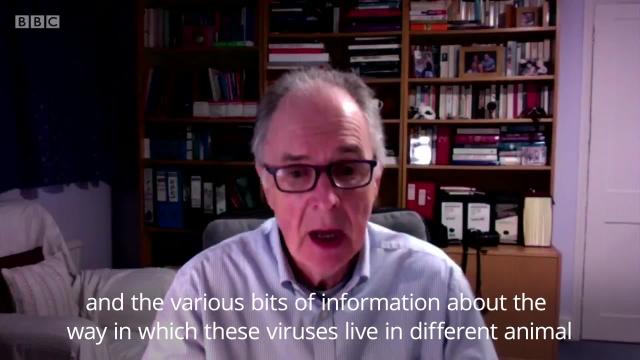

VIDEO 'Look beyond': WHO scientist makes shock claim about origins of coronavirus (yahoo.com)

Prof Watson said the WHO team saw a "great deal" of information about the cases of the first 174 people who contracted coronavirus in China.

But he added that the team was only given access to a "certain amount" of the raw data.

"We didn't see all of that and we didn't see the original questionnaires that were used," he said.

"But apart from the fact that, of course, they would have been in Chinese, one has to think about what one would have seen if one had gone to any other country in the world."

He said the team's visit was not a "one-off" and that the WHO sees it as "the start of a process that's going to take really quite a while".

China has faced claims that the Wuhan Institute of Virology could be the suspected source of the COVID-19 virus.

But the WHO team concluded it was "extremely unlikely" to have entered the human population as a result of a lab-related incident.

Prof Watson said the possibility that it may have escaped from a laboratory had not been "ruled out".

With AAP

‘Politics was always in the room.’ WHO mission chief reflects on China trip seeking COVID-19’s origin


Peter Ben Embarek (center) and Marion Koopmans (right) say farewell to their Chinese counterpart Liang Wannian (left) after 9 February press conference to discuss the findings of a joint investigation into the pandemic’s origins. AP PHOTO/NG HAN GUAN
Feb. 14, 2021 
Science’s COVID-19 reporting is supported by the Heising-Simons Foundation.

The World Health Organization (WHO) mission to China to probe the origins of the COVID-19 pandemic had a bumpy start, so it’s perhaps no surprise that the team’s departure from China didn’t go entirely smoothly either. A 9 February press conference in Wuhan to summarize the mission’s findings was widely hailed within China, but criticized elsewhere.

During the press conference, WHO program manager and mission leader Peter Ben Embarek and team member Marion Koopmans praised China’s cooperation during the 4-week investigation. They said it was “extremely unlikely” that SARS-CoV-2 originated in a Chinese laboratory and said the team would not investigate that hypothesis further. But they kept open the possibility that the virus arrived in Wuhan on frozen food, a route promoted aggressively by Chinese media to suggest the virus was imported from elsewhere in the world.

Some journalists and scientists called the event a double win for China and demanded more evidence for the rejection of the lab theory. And on 12 February, WHO Director-General Tedros Adhanom Ghebreyesus appeared to publicly push back against the team, saying, “All hypotheses are on the table” with respect to the pandemic’s origins. Meanwhile, media reports have suggested WHO team members were disappointed about not getting access to certain data, for instance on Chinese patients with respiratory symptoms who may have been some of the earliest COVID-19 cases.

WHO plans to release a summary report of the mission’s finding as early as next week; a full report will come later.

Science had an hourlong video interview with Ben Embarek on Saturday after his return to Geneva. An epidemiologist and food safety scientist, he has experience both with China—he worked at WHO’s Beijing office between 2009 and 2011—and with coronaviruses, as the head of the agency’s effort to investigate the animal origin of the Middle East respiratory syndrome virus after its emergence in 2012.

Ben Embarek defended the much-debated press conference, explained why the lab escape hypothesis has not been ruled out, and summarized what was learned about when, where, and how SARS-CoV-2 first infected humans. This interview has been edited for brevity and clarity.

Q: What was the most surprising experience during your mission?

A: The whole 4 weeks were a roller coaster of feelings and experiences. The amount of attention from the outside world was very special. Visiting the labs, but also visiting that market that has been closed for a year now, was very important and extremely useful to better understand the environment. Some of the meetings we had with COVID-19 victims and with relatives of victims were also very special.

Q: At Friday’s press conference in Geneva, Tedros seemed to contradict you by saying that with respect to the origins of SARS-CoV-2: “All hypotheses are on the table.” Was it a mistake to call the lab origin hypothesis “extremely unlikely”?

A: No. We first developed a pathway of all the possible ways the virus could be introduced into the human population in late 2019. A lab accident is one hypothesis, another is the direct introduction from an animal host, and the others are different versions of intermediary hosts.

For each hypothesis, we tried to put facts on the table, look at what we had in terms of arguments, and then make an assessment of each. It was already a big step to have Chinese colleagues assess and evaluate such a hypothesis based on what we had on the table, which was not much. Yes, lab accidents do happen around the world; they have happened in the past. The fact that several laboratories of relevance are in and around Wuhan, and are working with coronavirus, is another fact. Beyond that we didn’t have much in terms of looking at that hypothesis as a likely option.

Q: But what led you to use the “extremely unlikely” label? Did you learn anything that made it less likely?

A: We should not put too much focus on the wording. We were looking at different options. At some point we were thinking: Should we use a ranking, with one being the most unlikely, five the most likely, or should we use colors, or should we find another scale? We ended up with a five-phrase scale: “extremely unlikely,” “unlikely,” “possible,” “likely,” and “very likely.” It’s more an illustration of where these hypotheses are to help us organize our planning of future studies.


I don’t think the press conference was a PR win for China. I think the outcome of the mission is a win for the international scientific community.Peter Ben Embarek, World Health Organization


Q: But my question is whether you learned anything new in China. Now that you’ve been there, do you have more reason to say it’s “extremely unlikely” than before?

A: Yes. We had long meetings with the staff of the Wuhan Institute of Virology and three other laboratories in Wuhan. They talked about these claims openly. We discussed: What did you do over the past year to dismiss this claim? What did you yourself develop in terms of argumentations? Did you do audits yourself? Did you look at your records? Did you test your staff? And they explained how they worked and what kind of audit system they had. They had retrospectively tested serum from their staff. They tested samples from early 2019 and from 2020. There were a lot of discussions that we could not have had if we had not traveled to Wuhan. We also did not have evidence provided by outsiders to support any of the claims out there. That could potentially have tipped the balance. What we saw and discussed gave us much more confidence in our assessment. The consensus was that this is an unlikely scenario.

We also had difficulties designing future studies to look into the laboratory claims within our joint group, because if you want to explore such a hypothesis further, you need a different mechanism. You need to do a formal audit, and that’s far beyond what our team is mandated to do or has the tools and capabilities to do. So that was also a reason why we could not start moving forward in our next series of studies into that direction. But the fact that the hypothesis is listed or assessed as extremely unlikely is not the same as if it had been listed or assessed as impossible. We’re not closing the door.

Q: So, it will be investigated further, just not by you and your team?

A: It’s not something we’re going to pursue in the coming weeks and months. But our assessment is out there, and the topic is on the table. This is to me a big achievement, because for the past year it was mission impossible to even discuss it or even put it on the table or on the agenda of any meeting or discussion.

Q: But will someone else investigate?

A: Remember that the report is the outcome of a joint team of Chinese experts and international experts. If others want to pursue that hypothesis, it’s there, it’s being discussed openly and accepted. As I said, this would not be something that this team, or I believe even WHO alone, would be able to move forward on. That would have to be, I believe, a United Nations–wide approach in consultation with member states, if that was something that the international community would want to move forward with.

Q: Would it have been better to project less certainty at the press conference in Wuhan? The way most journalists understood it, the way I understood it, was that this has been ruled out.

A: Let me be clear on this: The fact that we assessed this hypothesis as extremely unlikely doesn’t mean it’s ruled out. … We also state in the report that all these hypothesis assessments will be reviewed on a regular basis. We may pick that one up again if new evidence comes up to make it more likely. It’s work in progress.

Q: Another scenario that you outlined was that the virus was transmitted through frozen food. What is the evidence for that?

A: This scenario is an interesting one because of the findings we made in the Huanan market, which is a wholesale market selling a lot of frozen products and refrigerated products—animal products, meat products, and seafood. And we know that the virus persists for a very long time on frozen products. China has reported over the past months a few instances where they have isolated the virus and positive samples on imported frozen products.

But that’s happening in 2020, at a time where the virus is widely circulating in the world, where there are multiple outbreaks in food factories around the world. It is probably an extremely rare event; we can see that from only a few dozen positive findings in China, out of 1.4 million samples taken so far. It’s potentially possible, so it’s worth exploring. But we have to separate the situation in 2020 with imported goods in China, and the situation in 2019, where that was not a possible route of introduction. There were no widespread outbreaks of COVID-19 in food factories around the world.

There is a much more likely scenario. Some traders at the Huanan market were trading in farmed wild animals—badgers, bamboo rats, rabbits, crocodiles, and many others. Several of these animals are known to be susceptible to SARS [severe acute respiratory syndrome] viruses. Some of them come from farms in provinces where coronaviruses have been isolated from bats: Guangdong Guanxi, Yunnan. Potentially, some of these animals were infected at those farms and then brought the virus into the market.

It is [time] to go back to the suppliers and to the farms and explore what type of species were there. Was there a mix of species? Were new animals introduced to the farms on a regular basis, as new breeding stock or whatever? Did they get supplies of animals from other places? Were there other farms nearby of interest? And of course, doing a lot of testing of all these animals and surroundings and environment.

As to bats: In recent weeks, we’ve had reports new interesting viruses, from Thailand and from Cambodia. We’re also interested in looking at the bat population in a wider area; finding more viruses could help us narrow down the evolutionary pathway of this coronavirus. And also doing more systematic studies on other animal species of interest, in China in particular, that we know are susceptible: minks, raccoon dogs, foxes. There are a number of farming systems that will be of interest to us.

Q: How are you moving forward on this?

A: We’re discussing the next steps, bouncing ideas and strategies between what the Chinese team members would like to do, what we would like to do. But there is agreement on the most logical future studies. We don’t want everybody starting to test millions of animals all over the place because that’s going to waste a lot of resources for no good outcome.

Q: At the press conference you also said it was becoming clearer that there was no widespread transmission of the virus before December 2019. But there have been reports that China did not share all of the data on 92 patients who had flulike symptoms in 2019. (One team member has tweeted that her quotes on that topic were “twisted,” however.) How confident are you that there was no spread of the virus prior to December 2019, what data are still missing, and why?

A: Part of the process of trying to find older cases than early December was to look at data coming out of different surveillance systems. The Chinese colleagues in advance of our arrival identified 72,000 cases from surveillance system for influenzalike illness, fever, and pneumonia. In principle, they could be potential COVID cases. So, they tried to apply some kind of logical set of criteria to try to get to a smaller number of cases that would be worth exploring further. They went down to 92 cases. They were looking at a period first of October to December 2019, and there was no clustering in any way among these 92 cases. Then using serological tests [which look for antibodies to past SARS-CoV-2 infections], they managed to test 67 of these 92; the others were either unavailable, could not be traced, or had died. All 67 turned out negative.

We assessed all of this work and suggested further studies. The idea now is to try to use other strategies to better assess these 67 cases or 92 cases. For example, by also doing serological tests on some confirmed cases from December 2019. If those are still positive, that gives better confidence that the 92 are [truly] negative; if some of the confirmed cases are now negative, it puts a question mark on the value of the serological test.

The other thing is that going down from 72,000 down to 92 shows that the criteria were perhaps a bit too stringent. It might be a better idea to revisit the process and find a less stringent set of criteria so maybe we end up at 1000 cases or so and then do the same evaluation.

Q: Several people have said there was a heated debate about this. Why?

A: Because we wanted to go back immediately and look at the 72,000 cases in a different way—discuss together what criteria and process each of the health care facilities had used to go down from 72,000 to 92. So there was a discussion about whether that could be done now, or whether we should wait. It was a standard scientific debate. It’s frustrating, frankly, that we were not able to move quickly forward with new analyses. And don’t forget the conditions were really difficult. We were in quarantine for 4 weeks, couldn’t move easily around, et cetera. Under the conditions, it is not surprising that we had this disagreement. And it’s still on the table. It is still planned for the future, so it’s not out.

Q: Is there any other debate that got similarly heated?

A: In terms of studies, that was the most [heated]. There was, of course, a lot of debate and discussion about the wording in the report, how to phrase the findings, how to phrase the conclusions. And we should not forget that because of all the pressure on these missions from the outside world and within China from other parts of the … system, it was an extremely sensitive issue.

Q: If you take all of this together, what do we know? What’s the most likely scenario for how and when SARS-CoV-2 started to circulate?

A: It’s now clear that during the second half of December [2019] there was wide circulation of the virus in Wuhan. The contribution of the market at that time was not so important anymore because the virus was also circulating elsewhere in the city. That, to me, is a big finding. That was not the picture we had before. The cases outside the market were showing differences in terms of [virus] sequence diversity. Whether that indicates multiple introductions to the city or a single introduction a little bit earlier, followed by spread in different parts of the city, is still unclear. But it all points towards an introduction in the human population in that area in the period October to early December 2019—most probably late November, not so long before the earliest cases were found. But the route of introduction remains a mystery.

Q: You have the eyes of the world on you. You are working in a country that plays by its own rules. Isn’t there a danger that if you concentrate on the science, you end up being politically naïve? Some people have said the Wuhan press conference was basically a public relations (PR) win for the Chinese government.

A: The politics was always in the room with us on the other side of the table. We had anywhere between 30 and 60 Chinese colleagues, and a large number of them were not scientists, not from the public health sector. We know there was huge scrutiny on the scientific group from the other sectors. So, the politics was there constantly. We were not naïve, and I was not naïve about the political environment in which we tried to operate and, let’s face it, that our Chinese counterparts were operating under.

I don’t think the press conference was a PR win for China. I think the outcome of the mission is a win for the international scientific community. We managed to find a way of getting studies done that would otherwise not have been done. The politicization of events has not helped over the past year. But I think we’ve got the best out of it.

doi:10.1126/science.abh0598


Kai Kupferschmidt is a contributing correspondent for Science magazine based in Berlin, Germany.
 He is the author of a book about the color blue, published in 2019.

Uncovering An Arctic Mystery
Something lurks beneath the Arctic Ocean. While it’s not a monster, it has largely remained a mystery.
Eurasia Review
A Journal of Analysis and News

This artistic diagram of the subsea and coastal permafrost ecosystems emphasizes greenhouse gas production and release. Sandia National Laboratories geosciences engineer Jennifer Frederick is one of the authors in a recent study regarding the release of such gases from submarine permafrost. CREDIT: Artwork by Victor O. Leshyk, Center for Ecosystem Science and Society, Northern Arizona University

According to 25 international researchers who collaborated on a first-of-its-kind study, frozen land beneath rising sea levels currently traps 60 billion tons of methane and 560 billion tons of organic carbon. Little is known about the frozen sediment and soil — called submarine permafrost — even as it slowly thaws and releases methane and carbon that could have significant impacts on climate.

To put into perspective the amount of greenhouse gases in submarine permafrost, humans have released about 500 billion tons of carbon into the atmosphere since the Industrial Revolution, said Sandia National Laboratories geosciences engineer Jennifer Frederick, one of the authors on the study published in IOP Publishing journal Environmental Research Letters.


While researchers predict that submarine permafrost is not a ticking time bomb and could take hundreds of years to emit its greenhouse gases, Frederick said submarine permafrost carbon stock represents a potential giant ecosystem feedback to climate change not yet included in climate projections and agreements.


“It’s expected to be released over a long period of time, but it’s still a significant amount,” she said. “This expert assessment is bringing to light that we can’t just ignore it because it’s underwater, and we can’t see it. It’s lurking there, and it’s a potentially large source of carbon, particularly methane.”
Researchers combine expert analysis on known data

The team of researchers led by Brigham Young University graduate student Sara Sayedi and senior researcher Ben Abbott compiled available articles and reports on the subject to create a base analysis of submarine permafrost’s potential to affect climate change. The study was coordinated through the Permafrost Carbon Network, which has more than 400 members from 130 research institutions in 21 countries.

The study was conducted through an expert assessment that sought answers to several central questions: What is the current extent of submarine permafrost? How much carbon is locked in submarine permafrost? How much has been and will be released? What is the rate of release into the atmosphere?

The participating experts answered questions using their scientific skills, which could include modeling, data analysis or literature synthesis. Frederick, one of the original advocates of the study, has been modeling submarine permafrost for almost 10 years and answered the questions through the lens of her research, which is primarily in numerical modeling. She said she uses published material for model inputs or works directly with researchers who visit the Arctic and provide datasets.

Her work on the study was funded by the Laboratory Directed Research and Development program that enables Sandia scientists and engineers to explore innovative solutions to national security issues.

Frederick’s work aligned with Sandia’s Arctic Science and Security Initiative. For more than 20 years, the Labs have had a presence in northern Alaska, said Sandia atmospheric sciences manager Lori Parrott.

Working for the Department of Energy Office of Biological and Environmental Research, Sandia manages the Atmospheric Radiation Measurement user facility that collects atmospheric data continuously. Researchers measure and predict the speed of de-icing at the North Slope to help federal leaders make decisions on climate change and national security. In addition, Sandia creates accurate models for both sea and land ice and develops technologies for greenhouse gas monitoring. With more than 20 years of data, researchers can begin to decipher trends, Parrott said.
Permafrost study a reason to unite

“I hope this study begins to unite the research community in submarine permafrost,” said Frederick. “Historically, it’s not only been a challenging location to do field work and make observations, but language barriers and other obstacles in accessibility to the existing observations and literature has challenged international scientific progress in this area.”

The team estimates that submarine permafrost has been thawing since the end of the last glacial period 14,000 years ago, and currently releases about 140 million tons of carbon dioxide and 5.3 million tons of methane into the atmosphere each year. This represents a small fraction of total human-caused greenhouse gas emissions per year, about the same yearly footprint as Spain, Sayedi said.

However, modern greenhouse gas releases are predominantly a result of the natural response to deglaciation, according to the study. Expert estimates from this study suggest human-caused global warming may accelerate greenhouse gas release, but due to lack of research and uncertainties in this area, determining causes and rates of the release will remain unknown until better empirical and modeling estimates are available.

“I’m optimistic that this study will shed light on the fact that submarine permafrost exists, and that people are studying its role in climate,” Frederick said. “The size of the research community doesn’t necessarily reflect its importance in the climate system.”

Almost every expert involved in the study mentioned the permafrost knowledge gap, which makes it harder for scientists to anticipate changes and reduces the reliability of estimates of carbon pools and fluxes, as well as the thermal and hydrological conditions of permafrost. Frederick said that while there is a wealth of ongoing research on terrestrial permafrost, submarine permafrost hasn’t been taken on like this before, and hasn’t been the subject of nearly as much international collaboration.

The amount of carbon sequestered or associated with submarine permafrost is relevant when compared to the numbers of carbon in terrestrial permafrost and what’s in the atmosphere today, Frederick said.

“This is an example of a very large source of carbon that hasn’t been considered in climate predictions or agreements,” she said. “While it’s not a ticking time bomb, what is certain is that submarine permafrost carbon stocks cannot continue to be ignored, and we need to know more about how they will affect the Earth’s future.”
Kenya: Panic as Desert Locusts Invade Farms in Embu County


FAO/Sven Torfinn
(file photo).

14 FEBRUARY 2021
The Nation (Nairobi)

By George Munene


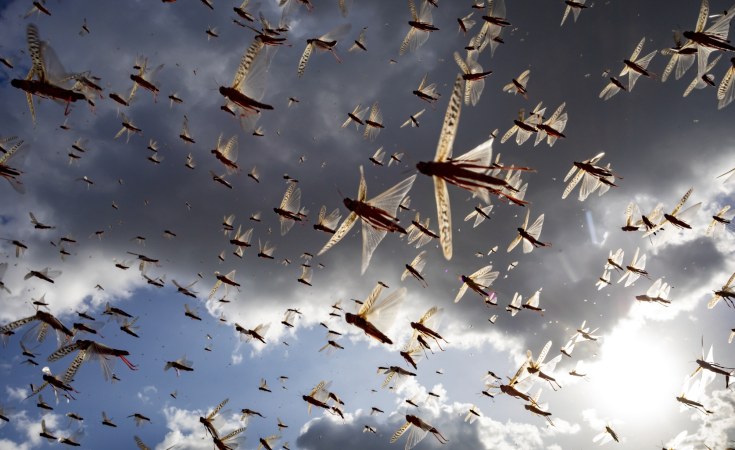
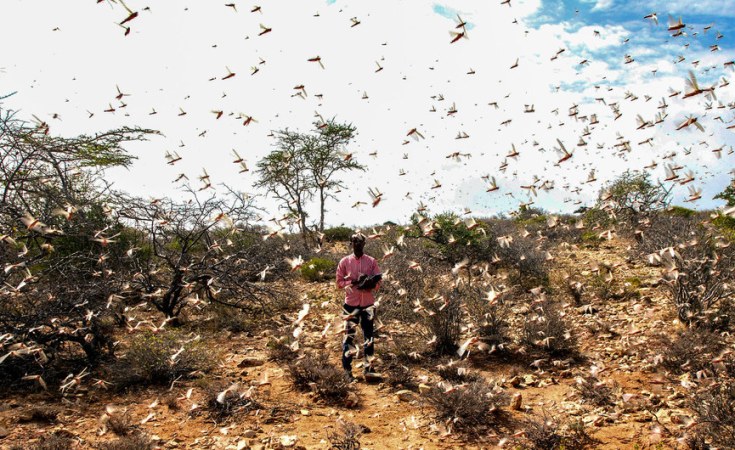
The second wave of desert locusts has invaded Embu County, throwing residents into panic.

The voracious insects crossed over to the area from Kitui County and are wreaking havoc on farms in the expansive Mbeere South Constituency.

The most affected villages are Machang'a, Kanthenge, Riachina, Kaburu and Ndunguni where sorghum, millet and green grams are grown in large scale.

The insects were first spotted on Friday evening and are destroying crops, which the residents depend on for survival, at a very high rate.

According to the residents and Mbeere South MP Geoffrey King'ang'i, the insects appear to be very hungry because they were not sparing anything edible.

"They are feeding on crops as well as grass and shrubs. They are dangerous insects," said Mr King'ang'i.

The residents expressed fears that the locusts may wipe out their sorghum, millet and other crops if urgent measures are not taken to eradicate them.

Appeal for intervention


They appealed to the government to intervene quickly before they lose all their crops and pastures for their animals to the locusts which have spread over an area estimated to be 10 square kilometres.

The residents said efforts to chase away the voracious feeders have borne no fruit.

They said if the locusts are not controlled, famine is imminent in the area.

"We may starve if our crops are destroyed and, therefore, we call upon the government to help us eliminate the locusts which are spreading very fast," one of the residents, Mr John Runji, said.

The MP lamented that since the invasion was reported, no government official has visited the area to assess the situation.

"If the locusts are not sprayed, then my people will suffer as they depend on crops to feed and to educate their children," he said.

Mr King'ang'i observed that the locusts have landed in the area even before the residents recover from the adverse effects of the Coronavirus pandemic.


Read the original article on Nation.


Kenya: Swarms of Locusts Invade Mbooni in Makueni County


Haji Dirir/FAO
Locusts swarm (file photo).

1 FEBRUARY 2021
Capital FM (Nairobi)


Makueni — Swarms of locusts have invaded farms in sections of Makueni County Monday.

The locusts were spotted in large areas of Mbooni and Kaiti Constituencies in the County.

Makueni Agriculture County Executive Committee Member Robert Kisyula described the latest invasion as the worst in recent months.

Farmers interviewed expressed fears of the losses they are likely to incur following the invasion on their crops.

"The locusts came through, started to devour the only left crops in our farms," one farmer said, "Some have completely eaten all leaves, leaving only the stems."

Last month, Agriculture Cabinet Secretary Peter Munya said at least 15 counties were affected by the locusts invasion, but assured that efforts were in place to manage the situation.

The government has expressed optimism of eradicating the locusts' menace.

Munya said that 80 percent of the locust swarms that invaded the country during the second wave have so been treated and surveillance was underway to combat the rest.

He said that of the 75 swarms that have been identified, 66 of them have been treated.

Munya further announced that 15 counties were affected including Marsabit, Wajir, Garissa, Tana River, Lamu, Kilifi, Taita Taveta, Mandera, Machakos, Kitui, Isiolo, Samburu, Laikipia, Meru and Tharaka Nithi Counties.

"So far, the total number of swarms that settled in the Country between November 2020 and January 2021 are 75 out of which 66 have been treated reflecting a total area of 19,100 hectares. The exercise has thus largely been successful," Munya said.

Munya pointed out that 9 sprayer aircrafts have been deployed in different Counties which are adversely affected while 500 National Youth Service (NYS) personnel have been trained to help on ground control of the locusts.

"There are sufficient control pesticides both at the headquarters and all the field control bases to handle the desert locust invasion. Where necessary will purchase more," said Munya.

Additionally, 21 vehicles mounted with sprayers for ground control operations in the various bases.

The second wave started last year in November.


In March last year, Kenya and a number of countries in the horn of Africa including Ethiopia, Somalia and Uganda experienced the worst locust attack in seven years.

The first wave affected over 30 counties in Kenya with most of them being the Arid and Semi- Arid ones.


Read the original article on Capital FM.
Africa: Coronavirus and Food Safety - What the Studies Say


Rachel Mabala/ Daily Monitor
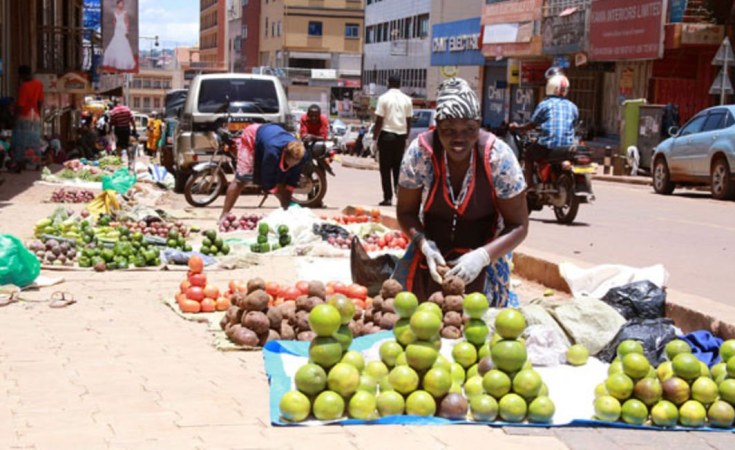
Fruit vendors along Nakasero market street in Kampala, Uganda.


14 FEBRUARY 2021
The Conversation Africa (Johannesburg)
ANALYSIS
By Jeffrey M. Farber, Lucia Anelich, Ryk Lues and Valeria R Parreira

When the COVID-19 pandemic began, not much was known about SARS-CoV-2 (the coronavirus) and its survival in food, on various materials and on surfaces. Since then, several food safety agencies have assessed the risk of potentially acquiring the virus from contaminated food or food packaging. The consensus is that currently, there's no evidence it's a food safety risk.

The main route of infection is from person-to-person via contact with one another, respiratory droplets and aerosols from coughing, sneezing and talking. Therefore, it's not considered a foodborne virus.

We surveyed the scientific literature to see what it said about the safety of food and SARS-CoV-2. This included the survival of the virus, how it's transmitted and how it can be inactivated in food and on surfaces.

Overall, the evidence suggests that the virus is not a risk to food safety. But it has caused disruptions to the global food supply chain.

One research question was whether the virus is transmitted via the faecal-oral route. The question arose because a study had found viral genetic material in anal swabs and blood taken from patients. This was an important point because one of the symptoms of COVID-19 is diarrhoea. However, there are no reports to date showing faecal-oral transmission of the virus.

Furthermore, several studies have concluded that diarrhoea in COVID-19 patients isn't likely to occur from ingesting contaminated food. Rather, it's from the pathway of the virus, from the respiratory system to the digestive tract.

Where the coronavirus survives

Viruses tend to survive well at low temperatures. Freezing can actually preserve them. So it's likely that SARS-CoV-2 would survive freezing of food. But several studies have indicated that this virus and similar ones are inactivated by cooking food at frequently-used temperatures.

The coronavirus appears to be stable at different pH values (3-10) at room temperature. More alkaline and more acidic conditions beyond this range appear to inactivate the virus. This means it's unlikely to survive the acidic environment of the stomach.

It's also likely that the virus in food will be at low concentrations. Importantly, the coronavirus, like other viruses, cannot multiply outside of their hosts. Therefore, it cannot multipy in food.

It's well-established that viruses causing respiratory infections can be transmitted by indirect contact through the environment. This happens when a person touches contaminated surfaces and then touches their mouth, nose or eyes, without first washing their hands.

Various experimental studies on the survival of the coronavirus on different types of surfaces under different conditions have been conducted. The virus was found to survive on different surfaces for different periods of time, depending on environmental conditions and initial viral load.

Nevertheless, one must be aware that survival may be different to these studies, in a more realistic setting, outside the laboratory. The US Centers for Disease Control and Prevention and other similar agencies and organisations don't consider contaminated surfaces a main route of transmission of SARS-CoV-2.

Current consensus is therefore that SARS-CoV-2 is not transmitted by food and is highly unlikely to be transmitted by food packaging material, but it could be spread by touching contaminated surfaces and then touching your mouth, nose or eyes. It's therefore very important to properly clean and disinfect food contact surfaces and especially high-touch surfaces and utensils in a food environment.

Disinfection and prevention


SARS-CoV-2 belongs to the coronavirus family of enveloped viruses, which makes them susceptible to detergents and a variety of other microbicides, even more so than fungi, vegetative bacteria and yeasts.

Studies have shown that the fatty layer surrounding the virus is disrupted, leading to inactivation of the virus when using 0.1% sodium hypochlorite (diluted household bleach), 0.5% hydrogen peroxide and 62%-71% ethanol. These solutions all significantly reduce SARS-CoV-2 on surfaces, after one minute of exposure.

Several agencies have published a list of approved disinfectants for use against SARS-CoV-2 in industrial settings, namely the United States Environmental Protection Agency, Health Canada and the European Union.

In conclusion, the greatest risk related to COVID-19 remains person-to-person transmission and aerosolised transfer in the food environment, including manufacturing, retail and food service. In fact, there have been several person-to-person COVID-19 outbreaks among farm workers and in food processing establishments.

This is why it's important to adhere to proper hygienic measures by wearing appropriate personal protective equipment (such as masks) and practising proper hand hygiene and physical distancing. Food companies - like any others - need to ensure that their employees are vigilant about mask-wearing, hand-washing, maintaining a physical distance and regular cleaning and disinfection of high-touch surfaces and utensils.

In summary, the discovery of SARS-CoV-2 on food or food packaging may raise concerns about food safety, but it doesn't indicate a risk for public health. Therefore it should not be a basis for restricting food trade or initiating a food recall. Thinking about the food supply chain in a connected way - integrating health, food security and sustainability - will be an important part of controlling any future pandemics.

Lucia Anelich, Adjunct Professor, Food Sustainability, Central University of Technology; Jeffrey M. Farber, Professor of Food Safety, University of Guelph; Ryk Lues, Professor and Director: Centre for Applied Food Sustainability and Biotechnology , Central University of Technology, and Valeria R Parreira, Researcher and Adjunct Professor, Food Science , University of Guelph


This article is republished from The Conversation Africa under a Creative Commons license. Read the original article.
Africa: Pandemic Woes Seen Swelling Global Ranks of Child Soldiers

Isaac Billy/UNMISS
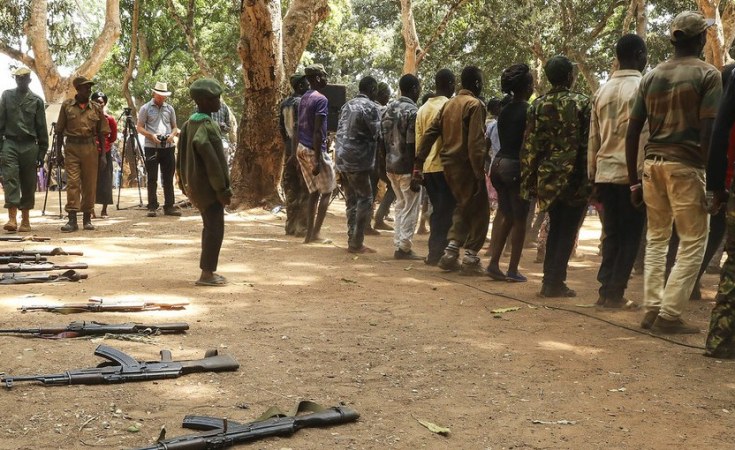
Former child soldiers are released in Yambio in South Sudan in February 2018.


12 FEBRUARY 2021
Thomson Reuters Foundation (London)By Emeline Wuilbercq


As world marks Red Hand Day, United Nations warns coronavirus could fuel child recruitment by armed groups

More children could be pushed into joining armed groups in conflict zones as families face increasing poverty due to the COVID-19 pandemic, a top U.N. official warned on Friday.

The exact number of child soldiers is unknown, but in 2019 alone about 7,740 children - some as young as six - were recruited and used as fighters or in other roles by mostly non-state armed groups, according to United Nations data.

Speaking on International Day against the Use of Child Soldiers - or Red Hand Day - the U.N. Special Representative for Children and Armed Conflict Virginia Gamba said that number was likely to rise as a result of coronavirus-related hardship.

"There is a real threat that as communities lack work, and are more and more isolated because of the socio-economic impact of COVID-19, we're going to see an increase in the recruitment of children for a lack of options," she said

"More and more children will be either attracted or sometimes told by their parents to just go and join because someone's got to feed them," she told the Thomson Reuters Foundation in a video call.

Girls and boys are still forced to join armed groups, as fighters or in roles such as cooks or for sexual exploitation, in at least 14 countries including the Democratic Republic of Congo, South Sudan and Somalia, the United Nations has said.

The United Nations called for a global ceasefire last year to help fight COVID-19, but armed groups have continued fighting and Gamba said the pandemic had also hampered efforts to protect children in conflict zones.

She said she was concerned about a surge in attacks by Islamist militants against children in the Sahel and Lake Chad region, including kidnappings, killings and forced displacement, noting that COVID-19 was changing armed groups' tactics.


"As children are not in schools, therefore the target of attacking a school for abduction or recruitment of children ... is shifting to where the children are," she said.

The pandemic has also delayed progress on implementing legislation in different countries to prohibit and criminalize the recruitment and use of children by armed forces and groups, Gamba said, calling for lawmakers to prioritise the issue.

"The issue of accountability is fundamental," she said.

But despite some worrying trends, progress on combating the use of child soldiers is being made, Gamba said.

In South Sudan, the number of violations against children including their recruitment as fighters has significantly declined over the past five years, according to her office's annual report.

And last week, the International Criminal Court (ICC) convicted Dominic Ongwen, a commander of Ugandan Lord's Resistance Army rebels and former child soldier, of dozens of crimes including child abductions and murder.

Ongwen's conviction at the Hague-based court was applauded by the United Nations, but Gamba said a concerted effort at the national level was the best way to stop children becoming soldiers.

"In all our joint action plans with the government, and with the armed groups, we make it very, very clear we expect to see an oversight of the way their own officers, their own personnel are engaging in recruitment," she said.

This material has been funded by UK aid from the UK government; however the views expressed do not necessarily reflect the UK government's official policies.


Read the original article on Thomson Reuters Foundation.

Nigeria: Reopening of Schools After Covid-19 Closures - 11m Girls May Not Return in Nigeria, Others - World Bank

Facebook

Pixabay

School bag


14 FEBRUARY 2021

Over 11 million girls in low and middle income nations such as Nigeria may not return after the reopening of schools following their closure as a result of the COVID-19 pandemic, a report by the World Bank has noted.

The report, titled "Realising the returns to schooling: How COVID-19 and school closures are threatening women's economic future, " said the pandemic is eroding the gains made in girls' education in recent years.

The Bank noted that urgent action is needed to ensure that girls and women can realise the returns to their schooling, as one additional year of schooling for girls means their wages could go up by 12 percent.

"COVID-19 is presenting a crisis within a crisis for girls' education. One additional year of education increases women's returns to education by 12 percent, while it is 10 percent for men.

'The quality of education received by boys and girls is an important determinant of their access to higher levels of schooling and their future earnings. Girls have caught up with boys in many dimensions in recent decades and now outperform boys in terms of learning achievement.

"COVID-19-induced school closures may slow or reverse these gains and may further prevent girls and women from realising the potential returns - representing a "hidden" future cost, " the report stated.

The Bank forecast lower levels of schooling, learning and future earnings because of school closures due to COVID-19.

It added that the pandemic put the girl child at an increased risk of dropping out of school, being vulnerable to domestic violence and other gender based violence threats, facing child marriage and early pregnancy and being exploited as child labour.

It noted that the scenario played out during the Ebola crisis in Sierra Leone, as more girls missed out on educational opportunities as a result of school disruption.

It suggested that urgent action be taken to prevent further school closures, mitigate or reverse learning losses and get girls back to school.

The Bank recommended implementing learning recovery programmes such as Teach to the Right Level and Tutoring.

It also called for the adoption of Zambia's Keeping Girls in School Programme where cash is given families of adolescent girls for them to help keep their daughters in school among others.

Vanguard News Nigeria

Nigeria: #EndSARS - Lagos Demolishes Community Whose Residents Witnessed Lekki Tollgate Shooting

Members of the community witnessed the October 20 shooting of peaceful protesters by Nigerian soldiers and had provided details of the incident


Kaizenify/Wikimedia Commons
An #EndSARS protest in Lagos, Nigeria

10 FEBRUARY 2021
Premium Times (Abuja)By Nicholas Ibekwe

Members of the community witnessed the October 20 shooting of peaceful protesters by Nigerian soldiers and had provided details of the incident

Officials of the Lagos State Environmental Tasks Force accompanied by policemen and persons suspected to be thugs have burnt down a community whose residents witnessed the October 20 shooting of peaceful #ENDSARS protesters by soldiers at the Lekki Tollgate.

PREMIUM TIMES sourced some of its witnesses from the community for its groundbreaking investigation into the shooting, which revealed that soldiers and policemen shot directly at the protesters, killing some and injuring several others.

After originally claiming that soldiers deployed to the tollgate to disperse protesters were given only blank rounds and that "they merely shot in the air", the army later admitted that the troops carried both live rounds and blank bullets.

Ahmed Taiwo, a major general, who represented the army at a judicial panel investigating the #ENDSARS shooting, argued that the soldiers carried live rounds "because hoodlums had infiltrated the protest".

Residents of the community also accused the divisional police officer of the nearby Maroko Police Division, Raji Ganiyu, of shooting and killing some of the protesters. Mr Ganiyu denied the allegation.


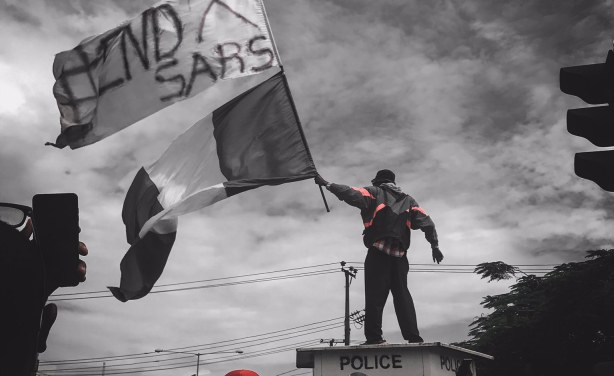
A protester stands atop a police structure in Ikeja, capital of Lagos state, during #EndSARS demonstrations on October 11, 2020. Ayodeji Adegoroye (@ayodeji_dodo)/Twitter


A 24-hours notice

Residents of the community who spoke to PREMIUM TIMES said policemen and some officials of the environmental task force, arrived at the community on Tuesday and told them to vacate their residences within 24 hours.

The residents, who asked not to be named for fear of being arrested by the authorities, said they were still trying to gather their belongings on Wednesday morning when a contingent of taskforce officials, mobile policemen and "persons that looked like thugs" arrived and immediately started pulling down structures in the community.

They said while a bulldozer was pulling down the mainly makeshift houses, the thugs were setting fire to the fallen structures. Policemen chased residents who were still trying to salvage their belongings far into the banks of the lagoon, injuring some of them, witnesses said.

"People were scared and thought they were going to be arrested and ran towards the lagoon where they sustain deep cuts in their legs from broken bottles that were discarded there," one resident said.

'Police mock residents over #ENDSARS'

Another resident said he and other residents were stopped and searched by the policemen who claimed they were looking for weapons hidden in the shanties.

He also said the policemen mocked residents of the shanty for participating in the protest and "for speaking to the media" after the indiscriminate shooting of peaceful protesters at the tollgate.

"They were laughing at us as we struggled to gather our properties. The policemen said: 'Sheybi na una be #ENDSARS protesters abi?'"

No comments

When reached for comment, the spokesperson of the Lagos State Environmental Taskforce, Taofeek Adebayo, asked for 30 minutes to find out why the community was demolished and burnt.

When he was reached later, he directed this reporter to the police for comment.

Muyiwa Adejobi, the spokesperson of the Lagos State Police Command, said he was not aware of the demolition but promised to find out. He is yet to revert on this.

Read the original article on Premium Times.

Uganda: Why I Fled Kampala - Nyanzi


Alex Esagala/Daily Monitor
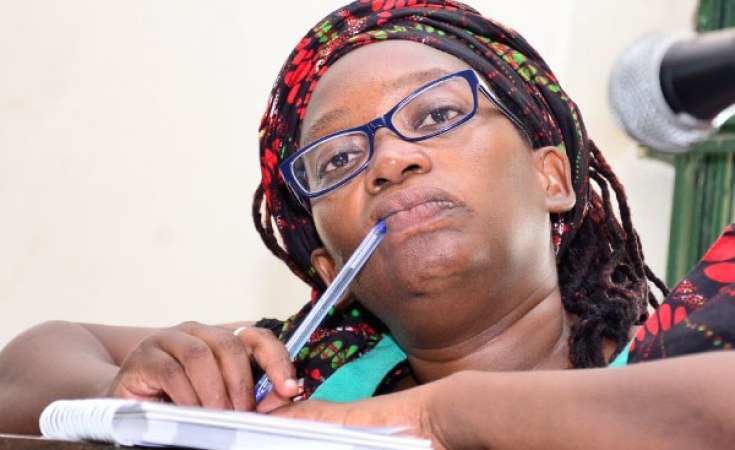
Stella Nyanzi.

4 FEBRUARY 2021
Nairobi News (Nairobi)By Amina Wako

Ugandan political activist Stella Nyanzi has exclusively told Nairobi News she was forced to escape into Kenya after her partner was abducted by President Yoweri Museveni's regime.

Nyanzi and her three children are currently in Nairobi in search of political asylum.

She claims to have been politically persecuted by authorities in her home country in the aftermath of the January 14 general elections.

"I am in Kenya because Ugandans in the opposition who have criticized the government of Yoweri Museveni are getting abducted every day from the streets, from their homes, from their beds. Ugandans are kidnapped from private cars and taken to detention facilities where they are tortured and interrogated about their next plans for the liberation," explained the academic scholar.

Nyanzi, a former research fellow at Makerere University, lost in her bid to become Kampala Woman MP during the polls. She adds that she is happy to have made it out of Uganda alive.

"The fear of not knowing who will be taken next, my friends have been abducted, my partner has been abducted, I think I am fortunate that I got out when I could," she said.

For now, Dr. Nyanzi says she will rest, re-strategize, learn about the system and be back with the power to push for the emancipation of Uganda from the current regime which she described as authoritarian.

The fiery activist spent 18 months in prison for reportedly harassing President Museveni's family on social media but was released in February 2020 for lack of evidence.

This is just but one of the numerous times she has been behind bars for rubbing shoulders with the regime.

"I am an ex-prisoner, I have been in prison so many times, I do not know what freedom is. I identify myself as a prisoner, not because it is sexy, but because it speaks of the judicial failure in my country," she said.

She criticized Uganda's government for failing to provide the most basic services to its citizens and only focused on silencing the vocal who demand change.

Professor Luchiri Wajackoyah, whose law firm is representing the activist revealed that she crossed the Uganda-Kenya border "in disguise" to avoid detection by security agents.

He also added that her children too, are "in a safe house" in Nairobi.

Read the original article on Nairobi News.

Ugandan activist Stella Nyanzi flees to Kenya


WEDNESDAY FEBRUARY 03 2021

By WASHINGTON GIKUNJU

Ugandan academic cum political activist, Dr Stella Nyanzi, has fled to Nairobi, Kenya.

This was confirmed by her lawyer, Prof George Luchiri Wajackoyah, who cited political persecution by President Yoweri Museveni's government for the move. 

Dr Nyanzi, a former research fellow at Makerere University who ran for Kampala Woman MP seat in last month’s general election, arrived in Nairobi by bus on Saturday.

Prof Wajackoyah, in an interview, said she is seeking political asylum in Kenya.

“The abductions and detentions of political actors were getting closer to me; my children have been targets of police trailing. I just left prison in February last year and I don’t want to go back,” Dr Nyanzi said in a telephone interview.

She crossed the Uganda-Kenya border “in disguise” to avoid detection by security agents. Her children are also “in a safe house” in Nairobi.

The Forum for Democratic Change (FDC) candidate came third in the January 14, 2021 parliamentary elections won by National Unity Platform (NUP) candidate, Shamim Malende.

President Museveni, who has been in power for 35 years, was declared winner of the bitterly contested polls.

Opposition presidential candidate Robert Kyagulanyi, popularly known as Bobi Wine, who termed the polls as fraudulent, spent 11 days under house arrest after the January 14 elections before the High Court ordered security forces to withdraw from his home. 

He has filed a petition in the country’s Supreme Court, seeking cancellation of the results.

Across the border, Tanzanian ex-MP Godbless Lema fled to Kenya with his family to escape what he termed as threats to his life, before Canada granted him asylum.

Tanzania opposition leader Tundu Lissu, who rejected the results, is also in asylum in Belgium.